Compare commits
302 Commits
new-releas
...
0.3.74
| Author | SHA1 | Date | |
|---|---|---|---|

|
8dea3f470f | ||
|
|
e02935dc5b | ||
|
|
24ad2fe2dd | ||
|
|
571dda6549 | ||
|
|
006bee4a5a | ||
|
|
dbb751c8f0 | ||
|
|
7047422e48 | ||
|
|
2bdec1fa5a | ||
|
|
f2cb7d506d | ||
|
|
a6dad3fc6d | ||
|
|
73658c758a | ||
|
|
b6af94cbbb | ||
|
|
852729ff38 | ||
|
|
152ac35bc2 | ||
|
|
df63a40606 | ||
|
|
a59c107b23 | ||
|
|
f9fe6f89fe | ||
|
|
2a82455b3d | ||
|
|
3a524a3bdd | ||
|
|
3a66aa8a60 | ||
|
|
4b45b28f25 | ||
|
|
9139ef3125 | ||
|
|
6360d0545a | ||
|
|
1961adb530 | ||
|
|
79feab89c4 | ||
|
|
5d0b13294c | ||
|
|
67edc2d641 | ||
|
|
6b569cceb5 | ||
|
|
6f2fe5954f | ||
|
|
fca1319b7d | ||
|
|
f77f06a3bd | ||
|
|
e62c807295 | ||
|
|
90df6921b7 | ||
|
|
5098442086 | ||
|
|
d0014c6793 | ||
|
|
ae7ebc0bd8 | ||
|
|
1f269f9834 | ||
|
|
7f1ae5adcf | ||
|
|
3d00fee6c2 | ||
|
|
17913f5acf | ||
|
|
c38ac29edb | ||
|
|
38044d4afe | ||
|
|
61b93ebf36 | ||
|
|
bf91adf3f8 | ||
|
|
00026b5f8b | ||
|
|
8c22396d8b | ||
|
|
b6d6631b12 | ||
|
|
a098483cbb | ||
|
|
f9a297e08d | ||
|
|
bcdd80911f | ||
|
|
b120965b6a | ||
|
|
16f918621f | ||
|
|
f7574230a1 | ||
|
|
2879344d9c | ||
|
|
9f5eef1f38 | ||
|
|
c5aa1bec18 | ||
|
|
b51263664e | ||
|
|
1e7db0d293 | ||
|
|
2a54f3c048 | ||
|
|
1c20b815b3 | ||
|
|
43a2b26f63 | ||
|
|
3cf19a1bc2 | ||
|
|
67a23c3182 | ||
|
|
796dbaf08c | ||
|
|
3a3c88a2d0 | ||
|
|
870296fa7e | ||
|
|
a28046c233 | ||
|
|
0bba0e074f | ||
|
|
c4c6227962 | ||
|
|
e6c914d2fa | ||
|
|
be8f4fc59a | ||
|
|
fbdf870fbf | ||
|
|
7b0cca41b4 | ||
|
|
33d0e9ec8c | ||
|
|
42f1c67ca8 | ||
|
|
e28c49a8fe | ||
|
|
54d5a3a259 | ||
|
|
de6b43f334 | ||
|
|
07f508bd0c | ||
|
|
62a86dbe8d | ||
|
|
492ada0ed4 | ||
|
|
d8eef02867 | ||
|
|
6c7235d6a7 | ||
|
|
0a09d78fa5 | ||
|
|
19c3f3efb2 | ||
|
|
e97e8df6ba | ||
|
|
cb6f5323ae | ||
|
|
47464cedec | ||
|
|
982d203d91 | ||
|
|
9307c19f35 | ||
|
|
605a82793b | ||
|
|
df9ee44d42 | ||
|
|
e9f7d5e73a | ||
|
|
3529c2e732 | ||
|
|
d9e0b7abab | ||
|
|
b2800fefc6 | ||
|
|
d913e20edc | ||
|
|
c2a71a5abe | ||
|
|
d61615e0b0 | ||
|
|
ac9d83c72f | ||
|
|
ff9149b5c9 | ||
|
|
4239654722 | ||
|
|
38474bd66a | ||
|
|
bcfe83f702 | ||
|
|
32f57c49d6 | ||
|
|
60ba131ac8 | ||
|
|
a5f627ba1a | ||
|
|
04d16e6d2b | ||
|
|
1dd36f9035 | ||
|
|
6ec4cb33ca | ||
|
|
e7cd8a1c2d | ||
|
|
4e2852d5ff | ||
|
|
b309bc34e1 | ||
|
|
b8147b64e0 | ||
|
|
aab6ea022e | ||
|
|
dd17ed0e63 | ||
|
|
dbb587d681 | ||
|
|
768aa06ceb | ||
|
|
9ffa34b697 | ||
|
|
740802c491 | ||
|
|
b9ac96c332 | ||
|
|
d06535388a | ||
|
|
2b73bdf6b0 | ||
|
|
6aa803d712 | ||
|
|
320afdea64 | ||
|
|
ccbe72cfc1 | ||
|
|
b9bbd42373 | ||
|
|
68e9144ce3 | ||
|
|
9b2b267820 | ||
|
|
ff3524d9b1 | ||
|
|
b99d20b725 | ||
|
|
768b93140f | ||
|
|
4750810a67 | ||
|
|
e0e0db4247 | ||
|
|
bccadec887 | ||
|
|
0759503e50 | ||
|
|
7f1c020746 | ||
|
|
5d4e92db7d | ||
|
|
8b6e88c85c | ||
|
|
64190dd0c4 | ||
|
|
7100bcdf04 | ||
|
|
10cdad039d | ||
|
|
f1eee09cf4 | ||
|
|
4d48bd31ca | ||
|
|
d628bc4034 | ||
|
|
b179aa9b6f | ||
|
|
30807f5535 | ||
|
|
396f430022 | ||
|
|
eb131bebdf | ||
|
|
5c15837677 | ||
|
|
2fada16abb | ||
|
|
c37614cbc8 | ||
|
|
3116f95c1a | ||
|
|
b0e8b66666 | ||
|
|
3caf48c9be | ||
|
|
3c6ebb73ae | ||
|
|
0d9b638636 | ||
|
|
2ba70b9501 | ||
|
|
16f98cebc0 | ||
|
|
fe9ff498ce | ||
|
|
eba831ca30 | ||
|
|
dec3d44224 | ||
|
|
9ed1551125 | ||
|
|
e5e6a34e80 | ||
|
|
897e766728 | ||
|
|
9200a6731d | ||
|
|
61c166ab19 | ||
|
|
659c8cd953 | ||
|
|
9ee988753d | ||
|
|
8ae6c43ca4 | ||
|
|
b6713870ef | ||
|
|
40477493d3 | ||
|
|
efcf3ac6eb | ||
|
|
9e43f7beda | ||
|
|
aa9412e1b4 | ||
|
|
cf6c835e18 | ||
|
|
e5ecf291f3 | ||
|
|
9d0cafcfa6 | ||
|
|
7715623430 | ||
|
|
f5a4e80e2c | ||
|
|
8463aabedf | ||
|
|
7f30144ef2 | ||
|
|
fa5516aad6 | ||
|
|
ca0336af9e | ||
|
|
65ed1aeade | ||
|
|
4d283ab386 | ||
|
|
3ff2a0d0e7 | ||
|
|
3cd1b3719f | ||
|
|
9926eb9f95 | ||
|
|
3abaa82501 | ||
|
|
88d8cd8650 | ||
|
|
a08f21d66c | ||
|
|
d58286989c | ||
|
|
b58af3349c | ||
|
|
940df4631f | ||
|
|
685706e0aa | ||
|
|
7b0979e134 | ||
|
|
61ae2de841 | ||
|
|
5b28eed2c0 | ||
|
|
f8a11779fe | ||
|
|
d11a83c232 | ||
|
|
3255c7a3fa | ||
|
|
4756d0a532 | ||
|
|
7ba2142363 | ||
|
|
96d1eb0d0d | ||
|
|
144cfa0eda | ||
|
|
a0dff192ae | ||
|
|
1fffeeedd2 | ||
|
|
f51b078042 | ||
|
|
b6023a51fb | ||
|
|
78cfad8b2f | ||
|
|
68b3dff74a | ||
|
|
bfc4abd6e8 | ||
|
|
8c77a760fc | ||
|
|
b9bf8ac9d7 | ||
|
|
d6182bedd7 | ||
|
|
2217904876 | ||
|
|
2c2362b4d3 | ||
|
|
612ed3fef2 | ||
|
|
fb2a6d0d04 | ||
|
|
19d3d39115 | ||
|
|
c1413e6916 | ||
|
|
e7705e661a | ||
|
|
21b110bfd7 | ||
|
|
1fcb573909 | ||
|
|
0f6c5f5453 | ||
|
|
350ca1511b | ||
|
|
539263a8ba | ||
|
|
3f0e265baf | ||
|
|
21e2538e57 | ||
|
|
480902bd66 | ||
|
|
853b9d59d8 | ||
|
|
6d04284c44 | ||
|
|
4a50781453 | ||
|
|
18561c55ce | ||
|
|
77da48050d | ||
|
|
9a97aacd85 | ||
|
|
52daf3936a | ||
|
|
2f246d19f4 | ||
|
|
413595542a | ||
|
|
42a5da854d | ||
|
|
d1d83a6ef7 | ||
|
|
194050705d | ||
|
|
989f8c91c8 | ||
|
|
edba5fb5e9 | ||
|
|
faa1defa5c | ||
|
|
f7e0cee1b0 | ||
|
|
b3a0edaa6d | ||
|
|
9c34b30723 | ||
|
|
36a5847df5 | ||
|
|
a19379aa58 | ||
|
|
768d048e1c | ||
|
|
94c11a0262 | ||
|
|
649b0bfd02 | ||
|
|
57a00ec677 | ||
|
|
aeb2114170 | ||
|
|
b8d405fddd | ||
|
|
b32013cb97 | ||
|
|
226a62a3c0 | ||
|
|
8e73a482a2 | ||
|
|
0533aeb814 | ||
|
|
aead6de888 | ||
|
|
8d82fd4cfe | ||
|
|
8f44db6499 | ||
|
|
c7553b1280 | ||
|
|
8b8683f22e | ||
|
|
774ace6e3b | ||
|
|
4a8f91a0fc | ||
|
|
18c9784b61 | ||
|
|
e5d401c67c | ||
|
|
ae77589a98 | ||
|
|
ad373c0e19 | ||
|
|
51f26d12fe | ||
|
|
f1b60b2016 | ||
|
|
8c2dc2b1e4 | ||
|
|
dc9a44c12a | ||
|
|
d9753b6349 | ||
|
|
a554c0b143 | ||
|
|
7381fa95e6 | ||
|
|
53d1176d53 | ||
|
|
52c4be0696 | ||
|
|
13a3b21d19 | ||
|
|
5cee084340 | ||
|
|
bf00c26a83 | ||
|
|
3846648c12 | ||
|
|
eb6423875f | ||
|
|
e3524a10a7 | ||
|
|
468dad6169 | ||
|
|
bc27982992 | ||
|
|
57e5decb55 | ||
|
|
b6319c6f6e | ||
|
|
0a902f562f | ||
|
|
454135856e | ||
|
|
33fddc27ad | ||
|
|
ce052a4eb5 | ||
|
|
b43d77a56b | ||
|
|
1635a92218 | ||
|
|
2a8a1b27e1 | ||
|
|
f5f3cce2c8 | ||
|
|
a085e6315b | ||
|
|
a8d600a3b4 | ||
|
|
4a2e17447b |
19
.do/app.yaml
Normal file
@@ -0,0 +1,19 @@
|
||||
alerts:
|
||||
- rule: DEPLOYMENT_FAILED
|
||||
- rule: DOMAIN_FAILED
|
||||
name: crawl4ai
|
||||
region: nyc
|
||||
services:
|
||||
- dockerfile_path: Dockerfile
|
||||
github:
|
||||
branch: 0.3.74
|
||||
deploy_on_push: true
|
||||
repo: unclecode/crawl4ai
|
||||
health_check:
|
||||
http_path: /health
|
||||
http_port: 11235
|
||||
instance_count: 1
|
||||
instance_size_slug: professional-xs
|
||||
name: web
|
||||
routes:
|
||||
- path: /
|
||||
22
.do/deploy.template.yaml
Normal file
@@ -0,0 +1,22 @@
|
||||
spec:
|
||||
name: crawl4ai
|
||||
services:
|
||||
- name: crawl4ai
|
||||
git:
|
||||
branch: 0.3.74
|
||||
repo_clone_url: https://github.com/unclecode/crawl4ai.git
|
||||
dockerfile_path: Dockerfile
|
||||
http_port: 11235
|
||||
instance_count: 1
|
||||
instance_size_slug: professional-xs
|
||||
health_check:
|
||||
http_path: /health
|
||||
envs:
|
||||
- key: INSTALL_TYPE
|
||||
value: "basic"
|
||||
- key: PYTHON_VERSION
|
||||
value: "3.10"
|
||||
- key: ENABLE_GPU
|
||||
value: "false"
|
||||
routes:
|
||||
- path: /
|
||||
41
.gitignore
vendored
@@ -165,6 +165,8 @@ Crawl4AI.egg-info/
|
||||
Crawl4AI.egg-info/*
|
||||
crawler_data.db
|
||||
.vscode/
|
||||
.tests/
|
||||
.test_pads/
|
||||
test_pad.py
|
||||
test_pad*.py
|
||||
.data/
|
||||
@@ -172,3 +174,42 @@ Crawl4AI.egg-info/
|
||||
|
||||
requirements0.txt
|
||||
a.txt
|
||||
|
||||
*.sh
|
||||
.idea
|
||||
docs/examples/.chainlit/
|
||||
docs/examples/.chainlit/*
|
||||
.chainlit/config.toml
|
||||
.chainlit/translations/en-US.json
|
||||
|
||||
local/
|
||||
.files/
|
||||
|
||||
a.txt
|
||||
.lambda_function.py
|
||||
ec2*
|
||||
|
||||
update_changelog.sh
|
||||
|
||||
.DS_Store
|
||||
docs/.DS_Store
|
||||
tmp/
|
||||
test_env/
|
||||
**/.DS_Store
|
||||
**/.DS_Store
|
||||
|
||||
todo.md
|
||||
todo_executor.md
|
||||
git_changes.py
|
||||
git_changes.md
|
||||
pypi_build.sh
|
||||
git_issues.py
|
||||
git_issues.md
|
||||
|
||||
.tests/
|
||||
.issues/
|
||||
.docs/
|
||||
.issues/
|
||||
.gitboss/
|
||||
|
||||
manage-collab.sh
|
||||
747
CHANGELOG.md
@@ -1,31 +1,742 @@
|
||||
# Changelog
|
||||
|
||||
All notable changes to this project will be documented in this file.
|
||||
## [0.3.74] November 17, 2024
|
||||
|
||||
## [Unreleased]
|
||||
This changelog details the updates and changes introduced in Crawl4AI version 0.3.74. It's designed to inform developers about new features, modifications to existing components, removals, and other important information.
|
||||
|
||||
### 1. File Download Processing
|
||||
|
||||
- Users can now specify download folders using the `downloads_path` parameter in the `AsyncWebCrawler` constructor or the `arun` method. If not specified, downloads are saved to a "downloads" folder within the `.crawl4ai` directory.
|
||||
- File download tracking is integrated into the `CrawlResult` object. Successfully downloaded files are listed in the `downloaded_files` attribute, providing their paths.
|
||||
- Added `accept_downloads` parameter to the crawler strategies (defaults to `False`). If set to True you can add JS code and `wait_for` parameter for file download.
|
||||
|
||||
**Example:**
|
||||
|
||||
```python
|
||||
import asyncio
|
||||
import os
|
||||
from pathlib import Path
|
||||
from crawl4ai import AsyncWebCrawler
|
||||
|
||||
async def download_example():
|
||||
downloads_path = os.path.join(Path.home(), ".crawl4ai", "downloads")
|
||||
os.makedirs(downloads_path, exist_ok=True)
|
||||
|
||||
async with AsyncWebCrawler(
|
||||
accept_downloads=True,
|
||||
downloads_path=downloads_path,
|
||||
verbose=True
|
||||
) as crawler:
|
||||
result = await crawler.arun(
|
||||
url="https://www.python.org/downloads/",
|
||||
js_code="""
|
||||
const downloadLink = document.querySelector('a[href$=".exe"]');
|
||||
if (downloadLink) { downloadLink.click(); }
|
||||
""",
|
||||
wait_for=5 # To ensure download has started
|
||||
)
|
||||
|
||||
if result.downloaded_files:
|
||||
print("Downloaded files:")
|
||||
for file in result.downloaded_files:
|
||||
print(f"- {file}")
|
||||
|
||||
asyncio.run(download_example())
|
||||
|
||||
```
|
||||
|
||||
### 2. Refined Content Filtering
|
||||
|
||||
- Introduced the `RelevanceContentFilter` strategy (and its implementation `BM25ContentFilter`) for extracting relevant content from web pages, replacing Fit Markdown and other content cleaning strategy. This new strategy leverages the BM25 algorithm to identify chunks of text relevant to the page's title, description, keywords, or a user-provided query.
|
||||
- The `fit_markdown` flag in the content scraper is used to filter content based on title, meta description, and keywords.
|
||||
|
||||
**Example:**
|
||||
|
||||
```python
|
||||
from crawl4ai import AsyncWebCrawler
|
||||
from crawl4ai.content_filter_strategy import BM25ContentFilter
|
||||
|
||||
async def filter_content(url, query):
|
||||
async with AsyncWebCrawler() as crawler:
|
||||
content_filter = BM25ContentFilter(user_query=query)
|
||||
result = await crawler.arun(url=url, extraction_strategy=content_filter, fit_markdown=True)
|
||||
print(result.extracted_content) # Or result.fit_markdown for the markdown version
|
||||
print(result.fit_html) # Or result.fit_html to show HTML with only the filtered content
|
||||
|
||||
asyncio.run(filter_content("https://en.wikipedia.org/wiki/Apple", "fruit nutrition health"))
|
||||
```
|
||||
|
||||
### 3. Raw HTML and Local File Support
|
||||
|
||||
- Added support for crawling local files and raw HTML content directly.
|
||||
- Use the `file://` prefix for local file paths.
|
||||
- Use the `raw:` prefix for raw HTML strings.
|
||||
|
||||
**Example:**
|
||||
|
||||
```python
|
||||
async def crawl_local_or_raw(crawler, content, content_type):
|
||||
prefix = "file://" if content_type == "local" else "raw:"
|
||||
url = f"{prefix}{content}"
|
||||
result = await crawler.arun(url=url)
|
||||
if result.success:
|
||||
print(f"Markdown Content from {content_type.title()} Source:")
|
||||
print(result.markdown)
|
||||
|
||||
# Example usage with local file and raw HTML
|
||||
async def main():
|
||||
async with AsyncWebCrawler() as crawler:
|
||||
# Local File
|
||||
await crawl_local_or_raw(
|
||||
crawler, os.path.abspath('tests/async/sample_wikipedia.html'), "local"
|
||||
)
|
||||
# Raw HTML
|
||||
await crawl_raw_html(crawler, "<h1>Raw Test</h1><p>This is raw HTML.</p>")
|
||||
|
||||
|
||||
asyncio.run(main())
|
||||
```
|
||||
|
||||
### 4. Browser Management
|
||||
|
||||
- New asynchronous crawler strategy implemented using Playwright.
|
||||
- `ManagedBrowser` class introduced for improved browser session handling, offering features like persistent browser sessions between requests (using `session_id` parameter) and browser process monitoring.
|
||||
- Updated to tf-playwright-stealth for enhanced stealth capabilities.
|
||||
- Added `use_managed_browser`, `use_persistent_context`, and `chrome_channel` parameters to AsyncPlaywrightCrawlerStrategy.
|
||||
|
||||
|
||||
**Example:**
|
||||
```python
|
||||
async def browser_management_demo():
|
||||
user_data_dir = os.path.join(Path.home(), ".crawl4ai", "user-data-dir")
|
||||
os.makedirs(user_data_dir, exist_ok=True) # Ensure directory exists
|
||||
async with AsyncWebCrawler(
|
||||
use_managed_browser=True,
|
||||
user_data_dir=user_data_dir,
|
||||
use_persistent_context=True,
|
||||
verbose=True
|
||||
) as crawler:
|
||||
result1 = await crawler.arun(
|
||||
url="https://example.com", session_id="my_session"
|
||||
)
|
||||
result2 = await crawler.arun(
|
||||
url="https://example.com/anotherpage", session_id="my_session"
|
||||
)
|
||||
|
||||
asyncio.run(browser_management_demo())
|
||||
```
|
||||
|
||||
|
||||
### 5. API Server & Cache Improvements
|
||||
|
||||
- Added CORS support to API server.
|
||||
- Implemented static file serving.
|
||||
- Enhanced root redirect functionality.
|
||||
- Cache database updated to store response headers and downloaded files information. It utilizes a file system approach to manage large content efficiently.
|
||||
- New, more efficient caching database built using xxhash and file system approach.
|
||||
- Introduced `CacheMode` enum (`ENABLED`, `DISABLED`, `READ_ONLY`, `WRITE_ONLY`, `BYPASS`) and `always_bypass_cache` parameter in AsyncWebCrawler for fine-grained cache control. This replaces `bypass_cache`, `no_cache_read`, `no_cache_write`, and `always_by_pass_cache`.
|
||||
|
||||
|
||||
### 🗑️ Removals
|
||||
|
||||
- Removed deprecated: `crawl4ai/content_cleaning_strategy.py`.
|
||||
- Removed internal class ContentCleaningStrategy
|
||||
- Removed legacy cache control flags: `bypass_cache`, `disable_cache`, `no_cache_read`, `no_cache_write`, and `always_by_pass_cache`. These have been superseded by `cache_mode`.
|
||||
|
||||
|
||||
### ⚙️ Other Changes
|
||||
|
||||
- Moved version file to `crawl4ai/__version__.py`.
|
||||
- Added `crawl4ai/cache_context.py`.
|
||||
- Added `crawl4ai/version_manager.py`.
|
||||
- Added `crawl4ai/migrations.py`.
|
||||
- Added `crawl4ai-migrate` entry point.
|
||||
- Added config `NEED_MIGRATION` and `SHOW_DEPRECATION_WARNINGS`.
|
||||
- API server now requires an API token for authentication, configurable with the `CRAWL4AI_API_TOKEN` environment variable. This enhances API security.
|
||||
- Added synchronous crawl endpoint `/crawl_sync` for immediate result retrieval, and direct crawl endpoint `/crawl_direct` bypassing the task queue.
|
||||
|
||||
|
||||
### ⚠️ Deprecation Notices
|
||||
|
||||
- The synchronous version of `WebCrawler` is being phased out. While still available via `crawl4ai[sync]`, it will eventually be removed. Transition to `AsyncWebCrawler` is strongly recommended. Boolean cache control flags in `arun` are also deprecated, migrate to using the `cache_mode` parameter. See examples in the "New Features" section above for correct usage.
|
||||
|
||||
|
||||
### 🐛 Bug Fixes
|
||||
|
||||
- Resolved issue with browser context closing unexpectedly in Docker. This significantly improves stability, particularly within containerized environments.
|
||||
- Fixed memory leaks associated with incorrect asynchronous cleanup by removing the `__del__` method and ensuring the browser context is closed explicitly using context managers.
|
||||
- Improved error handling in `WebScrapingStrategy`. More detailed error messages and suggestions for debugging will minimize frustration when running into unexpected issues.
|
||||
- Fixed issue with incorrect text parsing in specific HTML structures.
|
||||
|
||||
|
||||
### Example of migrating to the new CacheMode:
|
||||
|
||||
**Old way:**
|
||||
|
||||
```python
|
||||
crawler = AsyncWebCrawler(always_by_pass_cache=True)
|
||||
result = await crawler.arun(url="https://example.com", bypass_cache=True)
|
||||
```
|
||||
|
||||
**New way:**
|
||||
|
||||
```python
|
||||
from crawl4ai import CacheMode
|
||||
|
||||
crawler = AsyncWebCrawler(always_bypass_cache=True)
|
||||
result = await crawler.arun(url="https://example.com", cache_mode=CacheMode.BYPASS)
|
||||
```
|
||||
|
||||
|
||||
## [0.3.74] - November 13, 2024
|
||||
|
||||
1. **File Download Processing** (Nov 14, 2024)
|
||||
- Added capability for users to specify download folders
|
||||
- Implemented file download tracking in crowd result object
|
||||
- Created new file: `tests/async/test_async_doanloader.py`
|
||||
|
||||
2. **Content Filtering Improvements** (Nov 14, 2024)
|
||||
- Introduced Relevance Content Filter as an improvement over Fit Markdown
|
||||
- Implemented BM25 algorithm for content relevance matching
|
||||
- Added new file: `crawl4ai/content_filter_strategy.py`
|
||||
- Removed deprecated: `crawl4ai/content_cleaning_strategy.py`
|
||||
|
||||
3. **Local File and Raw HTML Support** (Nov 13, 2024)
|
||||
- Added support for processing local files
|
||||
- Implemented raw HTML input handling in AsyncWebCrawler
|
||||
- Enhanced `crawl4ai/async_webcrawler.py` with significant performance improvements
|
||||
|
||||
4. **Browser Management Enhancements** (Nov 12, 2024)
|
||||
- Implemented new async crawler strategy using Playwright
|
||||
- Introduced ManagedBrowser for better browser session handling
|
||||
- Added support for persistent browser sessions
|
||||
- Updated from playwright_stealth to tf-playwright-stealth
|
||||
|
||||
5. **API Server Component**
|
||||
- Added CORS support
|
||||
- Implemented static file serving
|
||||
- Enhanced root redirect functionality
|
||||
|
||||
|
||||
|
||||
## [0.3.731] - November 13, 2024
|
||||
|
||||
### Added
|
||||
- 🔧 Separate Crawl and Extract JSON Semantic Chunk: Enhancing flexibility and efficiency in large-scale web crawling tasks.
|
||||
- 🔍 Colab Integration: Exploring integration with Google Colab for easy experimentation in a collaborative notebook environment.
|
||||
- 🎯 XPath and CSS Selector Support: Adding support for selective retrieval of specific elements from web pages.
|
||||
- 📷 Image Captioning: Incorporating image captioning capabilities to extract meaningful descriptions from images.
|
||||
- 💾 Embedding Data Generation and Storage: Developing functionalities to generate and store embedding data for each crawled website.
|
||||
- 🔍 Semantic Search Engine: Building a semantic search engine that fetches content, performs vector search similarity, and generates labeled chunk data based on user queries and URLs.
|
||||
- Support for raw HTML and local file crawling via URL prefixes ('raw:', 'file://')
|
||||
- Browser process monitoring for managed browser instances
|
||||
- Screenshot capability for raw HTML and local file content
|
||||
- Response headers storage in cache database
|
||||
- New `fit_markdown` flag for optional markdown generation
|
||||
|
||||
### Changed
|
||||
- None
|
||||
|
||||
### Deprecated
|
||||
- None
|
||||
- Switched HTML parser from 'html.parser' to 'lxml' for ~4x performance improvement
|
||||
- Optimized BeautifulSoup text conversion and element selection
|
||||
- Pre-compiled regular expressions for better performance
|
||||
- Improved metadata extraction efficiency
|
||||
- Response headers now stored alongside HTML in cache
|
||||
|
||||
### Removed
|
||||
- None
|
||||
- `__del__` method from AsyncPlaywrightCrawlerStrategy to prevent async cleanup issues
|
||||
|
||||
### Fixed
|
||||
- Issue #256: Added support for crawling raw HTML content
|
||||
- Issue #253: Implemented file:// protocol handling
|
||||
- Missing response headers in cached results
|
||||
- Memory leaks from improper async cleanup
|
||||
|
||||
## [v0.3.731] - 2024-11-13 Changelog for Issue 256 Fix
|
||||
- Fixed: Browser context unexpectedly closing in Docker environment during crawl operations.
|
||||
- Removed: __del__ method from AsyncPlaywrightCrawlerStrategy to prevent unreliable asynchronous cleanup, ensuring - browser context is closed explicitly within context managers.
|
||||
- Added: Monitoring for ManagedBrowser subprocess to detect and log unexpected terminations.
|
||||
- Updated: Dockerfile configurations to expose debugging port (9222) and allocate additional shared memory for improved browser stability.
|
||||
- Improved: Error handling and resource cleanup processes for browser lifecycle management within the Docker environment.
|
||||
|
||||
## [v0.3.73] - 2024-11-05
|
||||
|
||||
### Major Features
|
||||
- **New Doctor Feature**
|
||||
- Added comprehensive system diagnostics tool
|
||||
- Available through package hub and CLI
|
||||
- Provides automated troubleshooting and system health checks
|
||||
- Includes detailed reporting of configuration issues
|
||||
|
||||
- **Dockerized API Server**
|
||||
- Released complete Docker implementation for API server
|
||||
- Added comprehensive documentation for Docker deployment
|
||||
- Implemented container communication protocols
|
||||
- Added environment configuration guides
|
||||
|
||||
- **Managed Browser Integration**
|
||||
- Added support for user-controlled browser instances
|
||||
- Implemented `ManagedBrowser` class for better browser lifecycle management
|
||||
- Added ability to connect to existing Chrome DevTools Protocol (CDP) endpoints
|
||||
- Introduced user data directory support for persistent browser profiles
|
||||
|
||||
- **Enhanced HTML Processing**
|
||||
- Added HTML tag preservation feature during markdown conversion
|
||||
- Introduced configurable tag preservation system
|
||||
- Improved pre-tag and code block handling
|
||||
- Added support for nested preserved tags with attribute retention
|
||||
|
||||
### Improvements
|
||||
- **Browser Handling**
|
||||
- Added flag to ignore body visibility for problematic pages
|
||||
- Improved browser process cleanup and management
|
||||
- Enhanced temporary directory handling for browser profiles
|
||||
- Added configurable browser launch arguments
|
||||
|
||||
- **Database Management**
|
||||
- Implemented connection pooling for better performance
|
||||
- Added retry logic for database operations
|
||||
- Improved error handling and logging
|
||||
- Enhanced cleanup procedures for database connections
|
||||
|
||||
- **Resource Management**
|
||||
- Added memory and CPU monitoring
|
||||
- Implemented dynamic task slot allocation based on system resources
|
||||
- Added configurable cleanup intervals
|
||||
|
||||
### Technical Improvements
|
||||
- **Code Structure**
|
||||
- Moved version management to dedicated _version.py file
|
||||
- Improved error handling throughout the codebase
|
||||
- Enhanced logging system with better error reporting
|
||||
- Reorganized core components for better maintainability
|
||||
|
||||
### Bug Fixes
|
||||
- Fixed issues with browser process termination
|
||||
- Improved handling of connection timeouts
|
||||
- Enhanced error recovery in database operations
|
||||
- Fixed memory leaks in long-running processes
|
||||
|
||||
### Dependencies
|
||||
- Updated Playwright to v1.47
|
||||
- Updated core dependencies with more flexible version constraints
|
||||
- Added new development dependencies for testing
|
||||
|
||||
### Breaking Changes
|
||||
- Changed default browser handling behavior
|
||||
- Modified database connection management approach
|
||||
- Updated API response structure for better consistency
|
||||
|
||||
### Migration Guide
|
||||
When upgrading to v0.3.73, be aware of the following changes:
|
||||
|
||||
1. Docker Deployment:
|
||||
- Review Docker documentation for new deployment options
|
||||
- Update environment configurations as needed
|
||||
- Check container communication settings
|
||||
|
||||
2. If using custom browser management:
|
||||
- Update browser initialization code to use new ManagedBrowser class
|
||||
- Review browser cleanup procedures
|
||||
|
||||
3. For database operations:
|
||||
- Check custom database queries for compatibility with new connection pooling
|
||||
- Update error handling to work with new retry logic
|
||||
|
||||
4. Using the Doctor:
|
||||
- Run doctor command for system diagnostics: `crawl4ai doctor`
|
||||
- Review generated reports for potential issues
|
||||
- Follow recommended fixes for any identified problems
|
||||
|
||||
|
||||
## [v0.3.73] - 2024-11-04
|
||||
This commit introduces several key enhancements, including improved error handling and robust database operations in `async_database.py`, which now features a connection pool and retry logic for better reliability. Updates to the README.md provide clearer instructions and a better user experience with links to documentation sections. The `.gitignore` file has been refined to include additional directories, while the async web crawler now utilizes a managed browser for more efficient crawling. Furthermore, multiple dependency updates and introduction of the `CustomHTML2Text` class enhance text extraction capabilities.
|
||||
|
||||
## [v0.3.73] - 2024-10-24
|
||||
|
||||
### Added
|
||||
- preserve_tags: Added support for preserving specific HTML tags during markdown conversion.
|
||||
- Smart overlay removal system in AsyncPlaywrightCrawlerStrategy:
|
||||
- Automatic removal of popups, modals, and cookie notices
|
||||
- Detection and removal of fixed/sticky position elements
|
||||
- Cleaning of empty block elements
|
||||
- Configurable via `remove_overlay_elements` parameter
|
||||
- Enhanced screenshot capabilities:
|
||||
- Added `screenshot_wait_for` parameter to control timing
|
||||
- Improved screenshot handling with existing page context
|
||||
- Better error handling with fallback error images
|
||||
- New URL normalization utilities:
|
||||
- `normalize_url` function for consistent URL formatting
|
||||
- `is_external_url` function for better link classification
|
||||
- Custom base directory support for cache storage:
|
||||
- New `base_directory` parameter in AsyncWebCrawler
|
||||
- Allows specifying alternative locations for `.crawl4ai` folder
|
||||
|
||||
### Enhanced
|
||||
- Link handling improvements:
|
||||
- Better duplicate link detection
|
||||
- Enhanced internal/external link classification
|
||||
- Improved handling of special URL protocols
|
||||
- Support for anchor links and protocol-relative URLs
|
||||
- Configuration refinements:
|
||||
- Streamlined social media domain list
|
||||
- More focused external content filtering
|
||||
- LLM extraction strategy:
|
||||
- Added support for separate API base URL via `api_base` parameter
|
||||
- Better handling of base URLs in configuration
|
||||
|
||||
### Fixed
|
||||
- None
|
||||
- Screenshot functionality:
|
||||
- Resolved issues with screenshot timing and context
|
||||
- Improved error handling and recovery
|
||||
- Link processing:
|
||||
- Fixed URL normalization edge cases
|
||||
- Better handling of invalid URLs
|
||||
- Improved error messages for link processing failures
|
||||
|
||||
### Security
|
||||
- None
|
||||
### Developer Notes
|
||||
- The overlay removal system uses advanced JavaScript injection for better compatibility
|
||||
- URL normalization handles special cases like mailto:, tel:, and protocol-relative URLs
|
||||
- Screenshot system now reuses existing page context for better performance
|
||||
- Link processing maintains separate dictionaries for internal and external links to ensure uniqueness
|
||||
|
||||
## [1.0.0] - YYYY-MM-DD
|
||||
- Initial release
|
||||
## [v0.3.72] - 2024-10-22
|
||||
|
||||
### Added
|
||||
- New `ContentCleaningStrategy` class:
|
||||
- Smart content extraction based on text density and element scoring
|
||||
- Automatic removal of boilerplate content
|
||||
- DOM tree analysis for better content identification
|
||||
- Configurable thresholds for content detection
|
||||
- Advanced proxy support:
|
||||
- Added `proxy_config` option for authenticated proxy connections
|
||||
- Support for username/password in proxy configuration
|
||||
- New content output formats:
|
||||
- `fit_markdown`: Optimized markdown output with main content focus
|
||||
- `fit_html`: Clean HTML with only essential content
|
||||
|
||||
### Enhanced
|
||||
- Image source detection:
|
||||
- Support for multiple image source attributes (`src`, `data-src`, `srcset`, etc.)
|
||||
- Automatic fallback through potential source attributes
|
||||
- Smart handling of srcset attribute
|
||||
- External content handling:
|
||||
- Made external link exclusion optional (disabled by default)
|
||||
- Improved detection and handling of social media links
|
||||
- Better control over external image filtering
|
||||
|
||||
### Fixed
|
||||
- Image extraction reliability with multiple source attribute checks
|
||||
- External link and image handling logic for better accuracy
|
||||
|
||||
### Developer Notes
|
||||
- The new `ContentCleaningStrategy` uses configurable thresholds for customization
|
||||
- Proxy configuration now supports more complex authentication scenarios
|
||||
- Content extraction process now provides both regular and optimized outputs
|
||||
|
||||
## [v0.3.72] - 2024-10-20
|
||||
|
||||
### Fixed
|
||||
- Added support for parsing Base64 encoded images in WebScrapingStrategy
|
||||
|
||||
### Added
|
||||
- Forked and integrated a customized version of the html2text library for more control over Markdown generation
|
||||
- New configuration options for controlling external content:
|
||||
- Ability to exclude all external links
|
||||
- Option to specify domains to exclude (default includes major social media platforms)
|
||||
- Control over excluding external images
|
||||
|
||||
### Changed
|
||||
- Improved Markdown generation process:
|
||||
- Added fine-grained control over character escaping in Markdown output
|
||||
- Enhanced handling of code blocks and pre-formatted text
|
||||
- Updated `AsyncPlaywrightCrawlerStrategy.close()` method to use a shorter sleep time (0.5 seconds instead of 500)
|
||||
- Enhanced flexibility in `CosineStrategy` with a more generic `load_HF_embedding_model` function
|
||||
|
||||
### Improved
|
||||
- Optimized content scraping and processing for better efficiency
|
||||
- Enhanced error handling and logging in various components
|
||||
|
||||
### Developer Notes
|
||||
- The customized html2text library is now located within the crawl4ai package
|
||||
- New configuration options are available in the `config.py` file for external content handling
|
||||
- The `WebScrapingStrategy` class has been updated to accommodate new external content exclusion options
|
||||
|
||||
## [v0.3.71] - 2024-10-19
|
||||
|
||||
### Added
|
||||
- New chunking strategies:
|
||||
- `OverlappingWindowChunking`: Allows for overlapping chunks of text, useful for maintaining context between chunks.
|
||||
- Enhanced `SlidingWindowChunking`: Improved to handle edge cases and last chunks more effectively.
|
||||
|
||||
### Changed
|
||||
- Updated `CHUNK_TOKEN_THRESHOLD` in config to 2048 tokens (2^11) for better compatibility with most LLM models.
|
||||
- Improved `AsyncPlaywrightCrawlerStrategy.close()` method to use a shorter sleep time (0.5 seconds instead of 500), significantly reducing wait time when closing the crawler.
|
||||
- Enhanced flexibility in `CosineStrategy`:
|
||||
- Now uses a more generic `load_HF_embedding_model` function, allowing for easier swapping of embedding models.
|
||||
- Updated `JsonCssExtractionStrategy` and `JsonXPATHExtractionStrategy` for better JSON-based extraction.
|
||||
|
||||
### Fixed
|
||||
- Addressed potential issues with the sliding window chunking strategy to ensure all text is properly chunked.
|
||||
|
||||
### Developer Notes
|
||||
- Added more comprehensive docstrings to chunking strategies for better code documentation.
|
||||
- Removed hardcoded device setting in `CosineStrategy`, now using the automatically detected device.
|
||||
- Added a new example in `quickstart_async.py` for generating a knowledge graph from crawled content.
|
||||
|
||||
These updates aim to provide more flexibility in text processing, improve performance, and enhance the overall capabilities of the crawl4ai library. The new chunking strategies, in particular, offer more options for handling large texts in various scenarios.
|
||||
|
||||
## [v0.3.71] - 2024-10-18
|
||||
|
||||
### Changes
|
||||
1. **Version Update**:
|
||||
- Updated version number from 0.3.7 to 0.3.71.
|
||||
|
||||
2. **Crawler Enhancements**:
|
||||
- Added `sleep_on_close` option to AsyncPlaywrightCrawlerStrategy for delayed browser closure.
|
||||
- Improved context creation with additional options:
|
||||
- Enabled `accept_downloads` and `java_script_enabled`.
|
||||
- Added a cookie to enable cookies by default.
|
||||
|
||||
3. **Error Handling Improvements**:
|
||||
- Enhanced error messages in AsyncWebCrawler's `arun` method.
|
||||
- Updated error reporting format for better visibility and consistency.
|
||||
|
||||
4. **Performance Optimization**:
|
||||
- Commented out automatic page and context closure in `crawl` method to potentially improve performance in certain scenarios.
|
||||
|
||||
### Documentation
|
||||
- Updated quickstart notebook:
|
||||
- Changed installation command to use the released package instead of GitHub repository.
|
||||
- Updated kernel display name.
|
||||
|
||||
### Developer Notes
|
||||
- Minor code refactoring and cleanup.
|
||||
|
||||
## [v0.3.7] - 2024-10-17
|
||||
|
||||
### New Features
|
||||
1. **Enhanced Browser Stealth**:
|
||||
- Implemented `playwright_stealth` for improved bot detection avoidance.
|
||||
- Added `StealthConfig` for fine-tuned control over stealth parameters.
|
||||
|
||||
2. **User Simulation**:
|
||||
- New `simulate_user` option to mimic human-like interactions (mouse movements, clicks, keyboard presses).
|
||||
|
||||
3. **Navigator Override**:
|
||||
- Added `override_navigator` option to modify navigator properties, further improving bot detection evasion.
|
||||
|
||||
4. **Improved iframe Handling**:
|
||||
- New `process_iframes` parameter to extract and integrate iframe content into the main page.
|
||||
|
||||
5. **Flexible Browser Selection**:
|
||||
- Support for choosing between Chromium, Firefox, and WebKit browsers.
|
||||
|
||||
6. **Include Links in Markdown**:
|
||||
- Added support for including links in Markdown content, by definin g a new flag `include_links_on_markdown` in `crawl` method.
|
||||
|
||||
### Improvements
|
||||
1. **Better Error Handling**:
|
||||
- Enhanced error reporting in WebScrapingStrategy with detailed error messages and suggestions.
|
||||
- Added console message and error logging for better debugging.
|
||||
|
||||
2. **Image Processing Enhancements**:
|
||||
- Improved image dimension updating and filtering logic.
|
||||
|
||||
3. **Crawling Flexibility**:
|
||||
- Added support for custom viewport sizes.
|
||||
- Implemented delayed content retrieval with `delay_before_return_html` parameter.
|
||||
|
||||
4. **Performance Optimization**:
|
||||
- Adjusted default semaphore count for parallel crawling.
|
||||
|
||||
### Bug Fixes
|
||||
- Fixed an issue where the HTML content could be empty after processing.
|
||||
|
||||
### Examples
|
||||
- Added new example `crawl_with_user_simulation()` demonstrating the use of user simulation and navigator override features.
|
||||
|
||||
### Developer Notes
|
||||
- Refactored code for better maintainability and readability.
|
||||
- Updated browser launch arguments for improved compatibility and performance.
|
||||
|
||||
## [v0.3.6] - 2024-10-12
|
||||
|
||||
### 1. Improved Crawling Control
|
||||
- **New Hook**: Added `before_retrieve_html` hook in `AsyncPlaywrightCrawlerStrategy`.
|
||||
- **Delayed HTML Retrieval**: Introduced `delay_before_return_html` parameter to allow waiting before retrieving HTML content.
|
||||
- Useful for pages with delayed content loading.
|
||||
- **Flexible Timeout**: `smart_wait` function now uses `page_timeout` (default 60 seconds) instead of a fixed 30-second timeout.
|
||||
- Provides better handling for slow-loading pages.
|
||||
- **How to use**: Set `page_timeout=your_desired_timeout` (in milliseconds) when calling `crawler.arun()`.
|
||||
|
||||
### 2. Browser Type Selection
|
||||
- Added support for different browser types (Chromium, Firefox, WebKit).
|
||||
- Users can now specify the browser type when initializing AsyncWebCrawler.
|
||||
- **How to use**: Set `browser_type="firefox"` or `browser_type="webkit"` when initializing AsyncWebCrawler.
|
||||
|
||||
### 3. Screenshot Capture
|
||||
- Added ability to capture screenshots during crawling.
|
||||
- Useful for debugging and content verification.
|
||||
- **How to use**: Set `screenshot=True` when calling `crawler.arun()`.
|
||||
|
||||
### 4. Enhanced LLM Extraction Strategy
|
||||
- Added support for multiple LLM providers (OpenAI, Hugging Face, Ollama).
|
||||
- **Custom Arguments**: Added support for passing extra arguments to LLM providers via `extra_args` parameter.
|
||||
- **Custom Headers**: Users can now pass custom headers to the extraction strategy.
|
||||
- **How to use**: Specify the desired provider and custom arguments when using `LLMExtractionStrategy`.
|
||||
|
||||
### 5. iframe Content Extraction
|
||||
- New feature to process and extract content from iframes.
|
||||
- **How to use**: Set `process_iframes=True` in the crawl method.
|
||||
|
||||
### 6. Delayed Content Retrieval
|
||||
- Introduced `get_delayed_content` method in `AsyncCrawlResponse`.
|
||||
- Allows retrieval of content after a specified delay, useful for dynamically loaded content.
|
||||
- **How to use**: Access `result.get_delayed_content(delay_in_seconds)` after crawling.
|
||||
|
||||
### Improvements and Optimizations
|
||||
|
||||
#### 1. AsyncWebCrawler Enhancements
|
||||
- **Flexible Initialization**: Now accepts arbitrary keyword arguments, passed directly to the crawler strategy.
|
||||
- Allows for more customized setups.
|
||||
|
||||
#### 2. Image Processing Optimization
|
||||
- Enhanced image handling in WebScrapingStrategy.
|
||||
- Added filtering for small, invisible, or irrelevant images.
|
||||
- Improved image scoring system for better content relevance.
|
||||
- Implemented JavaScript-based image dimension updating for more accurate representation.
|
||||
|
||||
#### 3. Database Schema Auto-updates
|
||||
- Automatic database schema updates ensure compatibility with the latest version.
|
||||
|
||||
#### 4. Enhanced Error Handling and Logging
|
||||
- Improved error messages and logging for easier debugging.
|
||||
|
||||
#### 5. Content Extraction Refinements
|
||||
- Refined HTML sanitization process.
|
||||
- Improved handling of base64 encoded images.
|
||||
- Enhanced Markdown conversion process.
|
||||
- Optimized content extraction algorithms.
|
||||
|
||||
#### 6. Utility Function Enhancements
|
||||
- `perform_completion_with_backoff` function now supports additional arguments for more customized API calls to LLM providers.
|
||||
|
||||
### Bug Fixes
|
||||
- Fixed an issue where image tags were being prematurely removed during content extraction.
|
||||
|
||||
### Examples and Documentation
|
||||
- Updated `quickstart_async.py` with examples of:
|
||||
- Using custom headers in LLM extraction.
|
||||
- Different LLM provider usage (OpenAI, Hugging Face, Ollama).
|
||||
- Custom browser type usage.
|
||||
|
||||
### Developer Notes
|
||||
- Refactored code for better maintainability, flexibility, and performance.
|
||||
- Enhanced type hinting throughout the codebase for improved development experience.
|
||||
- Expanded error handling for more robust operation.
|
||||
|
||||
These updates significantly enhance the flexibility, accuracy, and robustness of crawl4ai, providing users with more control and options for their web crawling and content extraction tasks.
|
||||
|
||||
## [v0.3.5] - 2024-09-02
|
||||
|
||||
Enhance AsyncWebCrawler with smart waiting and screenshot capabilities
|
||||
|
||||
- Implement smart_wait function in AsyncPlaywrightCrawlerStrategy
|
||||
- Add screenshot support to AsyncCrawlResponse and AsyncWebCrawler
|
||||
- Improve error handling and timeout management in crawling process
|
||||
- Fix typo in CrawlResult model (responser_headers -> response_headers)
|
||||
|
||||
## [v0.2.77] - 2024-08-04
|
||||
|
||||
Significant improvements in text processing and performance:
|
||||
|
||||
- 🚀 **Dependency reduction**: Removed dependency on spaCy model for text chunk labeling in cosine extraction strategy.
|
||||
- 🤖 **Transformer upgrade**: Implemented text sequence classification using a transformer model for labeling text chunks.
|
||||
- ⚡ **Performance enhancement**: Improved model loading speed due to removal of spaCy dependency.
|
||||
- 🔧 **Future-proofing**: Laid groundwork for potential complete removal of spaCy dependency in future versions.
|
||||
|
||||
These changes address issue #68 and provide a foundation for faster, more efficient text processing in Crawl4AI.
|
||||
|
||||
## [v0.2.76] - 2024-08-02
|
||||
|
||||
Major improvements in functionality, performance, and cross-platform compatibility! 🚀
|
||||
|
||||
- 🐳 **Docker enhancements**: Significantly improved Dockerfile for easy installation on Linux, Mac, and Windows.
|
||||
- 🌐 **Official Docker Hub image**: Launched our first official image on Docker Hub for streamlined deployment.
|
||||
- 🔧 **Selenium upgrade**: Removed dependency on ChromeDriver, now using Selenium's built-in capabilities for better compatibility.
|
||||
- 🖼️ **Image description**: Implemented ability to generate textual descriptions for extracted images from web pages.
|
||||
- ⚡ **Performance boost**: Various improvements to enhance overall speed and performance.
|
||||
|
||||
A big shoutout to our amazing community contributors:
|
||||
- [@aravindkarnam](https://github.com/aravindkarnam) for developing the textual description extraction feature.
|
||||
- [@FractalMind](https://github.com/FractalMind) for creating the first official Docker Hub image and fixing Dockerfile errors.
|
||||
- [@ketonkss4](https://github.com/ketonkss4) for identifying Selenium's new capabilities, helping us reduce dependencies.
|
||||
|
||||
Your contributions are driving Crawl4AI forward! 🙌
|
||||
|
||||
## [v0.2.75] - 2024-07-19
|
||||
|
||||
Minor improvements for a more maintainable codebase:
|
||||
|
||||
- 🔄 Fixed typos in `chunking_strategy.py` and `crawler_strategy.py` to improve code readability
|
||||
- 🔄 Removed `.test_pads/` directory from `.gitignore` to keep our repository clean and organized
|
||||
|
||||
These changes may seem small, but they contribute to a more stable and sustainable codebase. By fixing typos and updating our `.gitignore` settings, we're ensuring that our code is easier to maintain and scale in the long run.
|
||||
|
||||
## [v0.2.74] - 2024-07-08
|
||||
A slew of exciting updates to improve the crawler's stability and robustness! 🎉
|
||||
|
||||
- 💻 **UTF encoding fix**: Resolved the Windows \"charmap\" error by adding UTF encoding.
|
||||
- 🛡️ **Error handling**: Implemented MaxRetryError exception handling in LocalSeleniumCrawlerStrategy.
|
||||
- 🧹 **Input sanitization**: Improved input sanitization and handled encoding issues in LLMExtractionStrategy.
|
||||
- 🚮 **Database cleanup**: Removed existing database file and initialized a new one.
|
||||
|
||||
|
||||
## [v0.2.73] - 2024-07-03
|
||||
|
||||
💡 In this release, we've bumped the version to v0.2.73 and refreshed our documentation to ensure you have the best experience with our project.
|
||||
|
||||
* Supporting website need "with-head" mode to crawl the website with head.
|
||||
* Fixing the installation issues for setup.py and dockerfile.
|
||||
* Resolve multiple issues.
|
||||
|
||||
## [v0.2.72] - 2024-06-30
|
||||
|
||||
This release brings exciting updates and improvements to our project! 🎉
|
||||
|
||||
* 📚 **Documentation Updates**: Our documentation has been revamped to reflect the latest changes and additions.
|
||||
* 🚀 **New Modes in setup.py**: We've added support for three new modes in setup.py: default, torch, and transformers. This enhances the project's flexibility and usability.
|
||||
* 🐳 **Docker File Updates**: The Docker file has been updated to ensure seamless compatibility with the new modes and improvements.
|
||||
* 🕷️ **Temporary Solution for Headless Crawling**: We've implemented a temporary solution to overcome issues with crawling websites in headless mode.
|
||||
|
||||
These changes aim to improve the overall user experience, provide more flexibility, and enhance the project's performance. We're thrilled to share these updates with you and look forward to continuing to evolve and improve our project!
|
||||
|
||||
## [0.2.71] - 2024-06-26
|
||||
|
||||
**Improved Error Handling and Performance** 🚧
|
||||
|
||||
* 🚫 Refactored `crawler_strategy.py` to handle exceptions and provide better error messages, making it more robust and reliable.
|
||||
* 💻 Optimized the `get_content_of_website_optimized` function in `utils.py` for improved performance, reducing potential bottlenecks.
|
||||
* 💻 Updated `utils.py` with the latest changes, ensuring consistency and accuracy.
|
||||
* 🚫 Migrated to `ChromeDriverManager` to resolve Chrome driver download issues, providing a smoother user experience.
|
||||
|
||||
These changes focus on refining the existing codebase, resulting in a more stable, efficient, and user-friendly experience. With these improvements, you can expect fewer errors and better performance in the crawler strategy and utility functions.
|
||||
|
||||
## [0.2.71] - 2024-06-25
|
||||
### Fixed
|
||||
- Speed up twice the extraction function.
|
||||
|
||||
|
||||
## [0.2.6] - 2024-06-22
|
||||
### Fixed
|
||||
- Fix issue #19: Update Dockerfile to ensure compatibility across multiple platforms.
|
||||
|
||||
## [0.2.5] - 2024-06-18
|
||||
### Added
|
||||
- Added five important hooks to the crawler:
|
||||
- on_driver_created: Called when the driver is ready for initializations.
|
||||
- before_get_url: Called right before Selenium fetches the URL.
|
||||
- after_get_url: Called after Selenium fetches the URL.
|
||||
- before_return_html: Called when the data is parsed and ready.
|
||||
- on_user_agent_updated: Called when the user changes the user_agent, causing the driver to reinitialize.
|
||||
- Added an example in `quickstart.py` in the example folder under the docs.
|
||||
- Enhancement issue #24: Replaced inline HTML tags (e.g., DEL, INS, SUB, ABBR) with textual format for better context handling in LLM.
|
||||
- Maintaining the semantic context of inline tags (e.g., abbreviation, DEL, INS) for improved LLM-friendliness.
|
||||
- Updated Dockerfile to ensure compatibility across multiple platforms (Hopefully!).
|
||||
|
||||
## [0.2.4] - 2024-06-17
|
||||
### Fixed
|
||||
- Fix issue #22: Use MD5 hash for caching HTML files to handle long URLs
|
||||
|
||||
32
CONTRIBUTORS.md
Normal file
@@ -0,0 +1,32 @@
|
||||
# Contributors to Crawl4AI
|
||||
|
||||
We would like to thank the following people for their contributions to Crawl4AI:
|
||||
|
||||
## Core Team
|
||||
|
||||
- [Unclecode](https://github.com/unclecode) - Project Creator and Main Developer
|
||||
- [Nasrin](https://github.com/ntohidi) - Project Manager and Developer
|
||||
- [Aravind Karnam](https://github.com/aravindkarnam) - Developer
|
||||
|
||||
## Community Contributors
|
||||
|
||||
- [FractalMind](https://github.com/FractalMind) - Created the first official Docker Hub image and fixed Dockerfile errors
|
||||
- [ketonkss4](https://github.com/ketonkss4) - Identified Selenium's new capabilities, helping reduce dependencies
|
||||
- [jonymusky](https://github.com/jonymusky) - Javascript execution documentation, and wait_for
|
||||
- [datehoer](https://github.com/datehoer) - Add browser prxy support
|
||||
|
||||
## Other Contributors
|
||||
|
||||
- [Gokhan](https://github.com/gkhngyk)
|
||||
- [Shiv Kumar](https://github.com/shivkumar0757)
|
||||
- [QIN2DIM](https://github.com/QIN2DIM)
|
||||
|
||||
## Acknowledgements
|
||||
|
||||
We also want to thank all the users who have reported bugs, suggested features, or helped in any other way to make Crawl4AI better.
|
||||
|
||||
---
|
||||
|
||||
If you've contributed to Crawl4AI and your name isn't on this list, please [open a pull request](https://github.com/unclecode/crawl4ai/pulls) with your name, link, and contribution, and we'll review it promptly.
|
||||
|
||||
Thank you all for your contributions!
|
||||
147
Dockerfile
@@ -1,40 +1,129 @@
|
||||
# Use an official Python runtime as a parent image
|
||||
FROM python:3.10-slim
|
||||
# syntax=docker/dockerfile:1.4
|
||||
|
||||
# Set the working directory in the container
|
||||
WORKDIR /usr/src/app
|
||||
# Build arguments
|
||||
ARG PYTHON_VERSION=3.10
|
||||
|
||||
# Copy the current directory contents into the container at /usr/src/app
|
||||
COPY . .
|
||||
# Base stage with system dependencies
|
||||
FROM python:${PYTHON_VERSION}-slim as base
|
||||
|
||||
# Install any needed packages specified in requirements.txt
|
||||
RUN pip install --no-cache-dir -r requirements.txt
|
||||
# Declare ARG variables again within the build stage
|
||||
ARG INSTALL_TYPE=all
|
||||
ARG ENABLE_GPU=false
|
||||
|
||||
# Install dependencies for Chrome and ChromeDriver
|
||||
# Platform-specific labels
|
||||
LABEL maintainer="unclecode"
|
||||
LABEL description="🔥🕷️ Crawl4AI: Open-source LLM Friendly Web Crawler & scraper"
|
||||
LABEL version="1.0"
|
||||
|
||||
# Environment setup
|
||||
ENV PYTHONUNBUFFERED=1 \
|
||||
PYTHONDONTWRITEBYTECODE=1 \
|
||||
PIP_NO_CACHE_DIR=1 \
|
||||
PIP_DISABLE_PIP_VERSION_CHECK=1 \
|
||||
PIP_DEFAULT_TIMEOUT=100 \
|
||||
DEBIAN_FRONTEND=noninteractive
|
||||
|
||||
# Install system dependencies
|
||||
RUN apt-get update && apt-get install -y --no-install-recommends \
|
||||
wget \
|
||||
xvfb \
|
||||
unzip \
|
||||
build-essential \
|
||||
curl \
|
||||
gnupg2 \
|
||||
ca-certificates \
|
||||
apt-transport-https \
|
||||
software-properties-common \
|
||||
&& wget -q -O - https://dl-ssl.google.com/linux/linux_signing_key.pub | apt-key add - \
|
||||
&& echo "deb [arch=amd64] http://dl.google.com/linux/chrome/deb/ stable main" >> /etc/apt/sources.list.d/google-chrome.list \
|
||||
&& apt-get update \
|
||||
&& apt-get install -y google-chrome-stable \
|
||||
wget \
|
||||
gnupg \
|
||||
git \
|
||||
cmake \
|
||||
pkg-config \
|
||||
python3-dev \
|
||||
libjpeg-dev \
|
||||
libpng-dev \
|
||||
&& rm -rf /var/lib/apt/lists/*
|
||||
|
||||
# Set display port and dbus env to avoid hanging
|
||||
ENV DISPLAY=:99
|
||||
ENV DBUS_SESSION_BUS_ADDRESS=/dev/null
|
||||
# Playwright system dependencies for Linux
|
||||
RUN apt-get update && apt-get install -y --no-install-recommends \
|
||||
libglib2.0-0 \
|
||||
libnss3 \
|
||||
libnspr4 \
|
||||
libatk1.0-0 \
|
||||
libatk-bridge2.0-0 \
|
||||
libcups2 \
|
||||
libdrm2 \
|
||||
libdbus-1-3 \
|
||||
libxcb1 \
|
||||
libxkbcommon0 \
|
||||
libx11-6 \
|
||||
libxcomposite1 \
|
||||
libxdamage1 \
|
||||
libxext6 \
|
||||
libxfixes3 \
|
||||
libxrandr2 \
|
||||
libgbm1 \
|
||||
libpango-1.0-0 \
|
||||
libcairo2 \
|
||||
libasound2 \
|
||||
libatspi2.0-0 \
|
||||
&& rm -rf /var/lib/apt/lists/*
|
||||
|
||||
# Make port 80 available to the world outside this container
|
||||
EXPOSE 80
|
||||
# GPU support if enabled and architecture is supported
|
||||
RUN if [ "$ENABLE_GPU" = "true" ] && [ "$(dpkg --print-architecture)" != "arm64" ] ; then \
|
||||
apt-get update && apt-get install -y --no-install-recommends \
|
||||
nvidia-cuda-toolkit \
|
||||
&& rm -rf /var/lib/apt/lists/* ; \
|
||||
else \
|
||||
echo "Skipping NVIDIA CUDA Toolkit installation (unsupported architecture or GPU disabled)"; \
|
||||
fi
|
||||
|
||||
# Define environment variable
|
||||
ENV PYTHONUNBUFFERED 1
|
||||
# Create and set working directory
|
||||
WORKDIR /app
|
||||
|
||||
# Run uvicorn
|
||||
CMD ["uvicorn", "main:app", "--host", "0.0.0.0", "--port", "80", "--workers", "4"]
|
||||
# Copy the entire project
|
||||
COPY . .
|
||||
|
||||
# Install base requirements
|
||||
RUN pip install --no-cache-dir -r requirements.txt
|
||||
|
||||
# Install required library for FastAPI
|
||||
RUN pip install fastapi uvicorn psutil
|
||||
|
||||
# Install ML dependencies first for better layer caching
|
||||
RUN if [ "$INSTALL_TYPE" = "all" ] ; then \
|
||||
pip install --no-cache-dir \
|
||||
torch \
|
||||
torchvision \
|
||||
torchaudio \
|
||||
scikit-learn \
|
||||
nltk \
|
||||
transformers \
|
||||
tokenizers && \
|
||||
python -m nltk.downloader punkt stopwords ; \
|
||||
fi
|
||||
|
||||
# Install the package
|
||||
RUN if [ "$INSTALL_TYPE" = "all" ] ; then \
|
||||
pip install ".[all]" && \
|
||||
python -m crawl4ai.model_loader ; \
|
||||
elif [ "$INSTALL_TYPE" = "torch" ] ; then \
|
||||
pip install ".[torch]" ; \
|
||||
elif [ "$INSTALL_TYPE" = "transformer" ] ; then \
|
||||
pip install ".[transformer]" && \
|
||||
python -m crawl4ai.model_loader ; \
|
||||
else \
|
||||
pip install "." ; \
|
||||
fi
|
||||
|
||||
# Install MkDocs and required plugins
|
||||
RUN pip install --no-cache-dir \
|
||||
mkdocs \
|
||||
mkdocs-material \
|
||||
mkdocs-terminal \
|
||||
pymdown-extensions
|
||||
|
||||
# Build MkDocs documentation
|
||||
RUN mkdocs build
|
||||
|
||||
# Install Playwright and browsers
|
||||
RUN playwright install
|
||||
|
||||
# Expose port
|
||||
EXPOSE 8000 11235 9222 8080
|
||||
|
||||
# Start the FastAPI server
|
||||
CMD ["uvicorn", "main:app", "--host", "0.0.0.0", "--port", "11235"]
|
||||
1
MANIFEST.in
Normal file
@@ -0,0 +1 @@
|
||||
include requirements.txt
|
||||
46
MISSION.md
Normal file
@@ -0,0 +1,46 @@
|
||||
# Mission
|
||||
|
||||

|
||||
|
||||
### 1. The Data Capitalization Opportunity
|
||||
|
||||
We live in an unprecedented era of digital wealth creation. Every day, individuals and enterprises generate massive amounts of valuable digital footprints across various platforms, social media channels, messenger apps, and cloud services. While people can interact with their data within these platforms, there's an immense untapped opportunity to transform this data into true capital assets. Just as physical property became a foundational element of wealth creation, personal and enterprise data has the potential to become a new form of capital on balance sheets.
|
||||
|
||||
For individuals, this represents an opportunity to transform their digital activities into valuable assets. For enterprises, their internal communications, team discussions, and collaborative documents contain rich insights that could be structured and valued as intellectual capital. This wealth of information represents an unprecedented opportunity for value creation in the digital age.
|
||||
|
||||
### 2. The Potential of Authentic Data
|
||||
|
||||
While synthetic data has played a crucial role in AI development, there's an enormous untapped potential in the authentic data generated by individuals and organizations. Every message, document, and interaction contains unique insights and patterns that could enhance AI development. The challenge isn't a lack of data - it's that most authentic human-generated data remains inaccessible for productive use.
|
||||
|
||||
By enabling willing participation in data sharing, we can unlock this vast reservoir of authentic human knowledge. This represents an opportunity to enhance AI development with diverse, real-world data that reflects the full spectrum of human experience and knowledge.
|
||||
|
||||
## Our Pathway to Data Democracy
|
||||
|
||||
### 1. Open-Source Foundation
|
||||
|
||||
Our first step is creating an open-source data extraction engine that empowers developers and innovators to build tools for data structuring and organization. This foundation ensures transparency, security, and community-driven development. By making these tools openly available, we enable the technical infrastructure needed for true data ownership and capitalization.
|
||||
|
||||
### 2. Data Capitalization Platform
|
||||
|
||||
Building on this open-source foundation, we're developing a platform that helps individuals and enterprises transform their digital footprints into structured, valuable assets. This platform will provide the tools and frameworks needed to organize, understand, and value personal and organizational data as true capital assets.
|
||||
|
||||
### 3. Creating a Data Marketplace
|
||||
|
||||
The final piece is establishing a marketplace where individuals and organizations can willingly share their data assets. This creates opportunities for:
|
||||
- Individuals to earn equity, revenue, or other forms of value from their data
|
||||
- Enterprises to access diverse, high-quality data for AI development
|
||||
- Researchers to work with authentic human-generated data
|
||||
- Startups to build innovative solutions using real-world data
|
||||
|
||||
## Economic Vision: A Shared Data Economy
|
||||
|
||||
We envision a future where data becomes a fundamental asset class in a thriving shared economy. This transformation will democratize AI development by enabling willing participation in data sharing, ensuring that the benefits of AI advancement flow back to data creators. Just as property rights revolutionized economic systems, establishing data as a capital asset will create new opportunities for wealth creation and economic participation.
|
||||
|
||||
This shared data economy will:
|
||||
- Enable individuals to capitalize on their digital footprints
|
||||
- Create new revenue streams for data creators
|
||||
- Provide AI developers with access to diverse, authentic data
|
||||
- Foster innovation through broader access to real-world data
|
||||
- Ensure more equitable distribution of AI's economic benefits
|
||||
|
||||
Our vision is to facilitate this transformation from the ground up - starting with open-source tools, progressing to data capitalization platforms, and ultimately creating a thriving marketplace where data becomes a true asset class in a shared economy. This approach ensures that the future of AI is built on a foundation of authentic human knowledge, with benefits flowing back to the individuals and organizations who create and share their valuable data.
|
||||
872
README.md
@@ -1,495 +1,481 @@
|
||||
# Crawl4AI 🕷️🤖
|
||||
# 🔥🕷️ Crawl4AI: LLM Friendly Web Crawler & Scraper
|
||||
|
||||
<a href="https://trendshift.io/repositories/11716" target="_blank"><img src="https://trendshift.io/api/badge/repositories/11716" alt="unclecode%2Fcrawl4ai | Trendshift" style="width: 250px; height: 55px;" width="250" height="55"/></a>
|
||||
|
||||
[](https://github.com/unclecode/crawl4ai/stargazers)
|
||||

|
||||
[](https://github.com/unclecode/crawl4ai/network/members)
|
||||
[](https://github.com/unclecode/crawl4ai/issues)
|
||||
[](https://github.com/unclecode/crawl4ai/pulls)
|
||||
[](https://github.com/unclecode/crawl4ai/blob/main/LICENSE)
|
||||
|
||||
Crawl4AI has one clear task: to simplify crawling and extract useful information from web pages, making it accessible for large language models (LLMs) and AI applications. 🆓🌐
|
||||
Crawl4AI simplifies asynchronous web crawling and data extraction, making it accessible for large language models (LLMs) and AI applications. 🆓🌐
|
||||
|
||||
[](https://colab.research.google.com/drive/1wz8u30rvbq6Scodye9AGCw8Qg_Z8QGsk)
|
||||
## New in 0.3.74 ✨
|
||||
|
||||
## Recent Changes
|
||||
|
||||
- 🚀 10x faster!!
|
||||
- 📜 Execute custom JavaScript before crawling!
|
||||
- 🤝 Colab friendly!
|
||||
- 📚 Chunking strategies: topic-based, regex, sentence, and more!
|
||||
- 🧠 Extraction strategies: cosine clustering, LLM, and more!
|
||||
- 🎯 CSS selector support
|
||||
- 📝 Pass instructions/keywords to refine extraction
|
||||
|
||||
## Power and Simplicity of Crawl4AI 🚀
|
||||
|
||||
To show the simplicity take a look at the first example:
|
||||
|
||||
```python
|
||||
from crawl4ai import WebCrawler
|
||||
|
||||
# Create the WebCrawler instance
|
||||
crawler = WebCrawler()
|
||||
|
||||
# Run the crawler with keyword filtering and CSS selector
|
||||
result = crawler.run(url="https://www.nbcnews.com/business")
|
||||
print(result) # {url, html, markdown, extracted_content, metadata}
|
||||
```
|
||||
|
||||
Now let's try a complex task. Below is an example of how you can execute JavaScript, filter data using keywords, and use a CSS selector to extract specific content—all in one go!
|
||||
|
||||
1. Instantiate a WebCrawler object.
|
||||
2. Execute custom JavaScript to click a "Load More" button.
|
||||
3. Extract semantical chunks of content and filter the data to include only content related to technology.
|
||||
4. Use a CSS selector to extract only paragraphs (`<p>` tags).
|
||||
|
||||
```python
|
||||
# Import necessary modules
|
||||
from crawl4ai import WebCrawler
|
||||
from crawl4ai.chunking_strategy import *
|
||||
from crawl4ai.extraction_strategy import *
|
||||
from crawl4ai.crawler_strategy import *
|
||||
|
||||
# Define the JavaScript code to click the "Load More" button
|
||||
js_code = """
|
||||
const loadMoreButton = Array.from(document.querySelectorAll('button')).find(button => button.textContent.includes('Load More'));
|
||||
loadMoreButton && loadMoreButton.click();
|
||||
"""
|
||||
|
||||
# Define the crawling strategy
|
||||
crawler_strategy = LocalSeleniumCrawlerStrategy(js_code=js_code)
|
||||
|
||||
# Create the WebCrawler instance with the defined strategy
|
||||
crawler = WebCrawler(crawler_strategy=crawler_strategy)
|
||||
|
||||
# Run the crawler with keyword filtering and CSS selector
|
||||
result = crawler.run(
|
||||
url="https://www.nbcnews.com/business",
|
||||
extraction_strategy=CosineStrategy(
|
||||
semantic_filter="technology",
|
||||
),
|
||||
)
|
||||
|
||||
# Run the crawler with LLM extraction strategy
|
||||
result = crawler.run(
|
||||
url="https://www.nbcnews.com/business",
|
||||
extraction_strategy=LLMExtractionStrategy(
|
||||
provider="openai/gpt-4o",
|
||||
api_token=os.getenv('OPENAI_API_KEY'),
|
||||
instruction="Extract only content related to technology"
|
||||
),
|
||||
css_selector="p"
|
||||
)
|
||||
|
||||
# Display the extracted result
|
||||
print(result)
|
||||
```
|
||||
|
||||
With Crawl4AI, you can perform advanced web crawling and data extraction tasks with just a few lines of code. This example demonstrates how you can harness the power of Crawl4AI to simplify your workflow and get the data you need efficiently.
|
||||
|
||||
---
|
||||
|
||||
*Continue reading to learn more about the features, installation process, usage, and more.*
|
||||
- 🚀 **Blazing Fast Scraping**: Significantly improved scraping speed.
|
||||
- 📥 **Download Manager**: Integrated file crawling, downloading, and tracking within `CrawlResult`.
|
||||
- 📝 **Markdown Strategy**: Flexible system for custom markdown generation and formats.
|
||||
- 🔗 **LLM-Friendly Citations**: Auto-converts links to numbered citations with reference lists.
|
||||
- 🔎 **Markdown Filter**: BM25-based content extraction for cleaner, relevant markdown.
|
||||
- 🖼️ **Image Extraction**: Supports `srcset`, `picture`, and responsive image formats.
|
||||
- 🗂️ **Local/Raw HTML**: Crawl `file://` paths and raw HTML (`raw:`) directly.
|
||||
- 🤖 **Browser Control**: Custom browser setups with stealth integration to bypass bots.
|
||||
- ☁️ **API & Cache Boost**: CORS, static serving, and enhanced filesystem-based caching.
|
||||
- 🐳 **API Gateway**: Run as an API service with secure token authentication.
|
||||
- 🛠️ **Database Upgrades**: Optimized for larger content sets with faster caching.
|
||||
- 🐛 **Bug Fixes**: Resolved browser context issues, memory leaks, and improved error handling.
|
||||
|
||||
|
||||
## Table of Contents
|
||||
## Try it Now!
|
||||
|
||||
1. [Features](#features-)
|
||||
2. [Installation](#installation-)
|
||||
3. [REST API/Local Server](#using-the-local-server-ot-rest-api-)
|
||||
4. [Python Library Usage](#python-library-usage-)
|
||||
5. [Parameters](#parameters-)
|
||||
6. [Chunking Strategies](#chunking-strategies-)
|
||||
7. [Extraction Strategies](#extraction-strategies-)
|
||||
8. [Contributing](#contributing-)
|
||||
9. [License](#license-)
|
||||
10. [Contact](#contact-)
|
||||
✨ Play around with this [](https://colab.research.google.com/drive/1SgRPrByQLzjRfwoRNq1wSGE9nYY_EE8C?usp=sharing)
|
||||
|
||||
✨ Visit our [Documentation Website](https://crawl4ai.com/mkdocs/)
|
||||
|
||||
## Features ✨
|
||||
|
||||
- 🕷️ Efficient web crawling to extract valuable data from websites
|
||||
- 🆓 Completely free and open-source
|
||||
- 🚀 Blazing fast performance, outperforming many paid services
|
||||
- 🤖 LLM-friendly output formats (JSON, cleaned HTML, markdown)
|
||||
- 🌐 Multi-browser support (Chromium, Firefox, WebKit)
|
||||
- 🌍 Supports crawling multiple URLs simultaneously
|
||||
- 🌃 Replace media tags with ALT.
|
||||
- 🆓 Completely free to use and open-source
|
||||
- 📜 Execute custom JavaScript before crawling
|
||||
- 📚 Chunking strategies: topic-based, regex, sentence, and more
|
||||
- 🧠 Extraction strategies: cosine clustering, LLM, and more
|
||||
- 🎯 CSS selector support
|
||||
- 📝 Pass instructions/keywords to refine extraction
|
||||
- 🎨 Extracts and returns all media tags (Images, Audio, and Video)
|
||||
- 🔗 Extracts all external and internal links
|
||||
- 📚 Extracts metadata from the page
|
||||
- 🔄 Custom hooks for authentication, headers, and page modifications
|
||||
- 🕵️ User-agent customization
|
||||
- 🖼️ Takes screenshots of pages with enhanced error handling
|
||||
- 📜 Executes multiple custom JavaScripts before crawling
|
||||
- 📊 Generates structured output without LLM using JsonCssExtractionStrategy
|
||||
- 📚 Various chunking strategies: topic-based, regex, sentence, and more
|
||||
- 🧠 Advanced extraction strategies: cosine clustering, LLM, and more
|
||||
- 🎯 CSS selector support for precise data extraction
|
||||
- 📝 Passes instructions/keywords to refine extraction
|
||||
- 🔒 Proxy support with authentication for enhanced access
|
||||
- 🔄 Session management for complex multi-page crawling
|
||||
- 🌐 Asynchronous architecture for improved performance
|
||||
- 🖼️ Improved image processing with lazy-loading detection
|
||||
- 🕰️ Enhanced handling of delayed content loading
|
||||
- 🔑 Custom headers support for LLM interactions
|
||||
- 🖼️ iframe content extraction for comprehensive analysis
|
||||
- ⏱️ Flexible timeout and delayed content retrieval options
|
||||
|
||||
## Installation 💻
|
||||
## Installation 🛠️
|
||||
|
||||
There are three ways to use Crawl4AI:
|
||||
1. As a library (Recommended)
|
||||
2. As a local server (Docker) or using the REST API
|
||||
4. As a Google Colab notebook. [](https://colab.research.google.com/drive/1wz8u30rvbq6Scodye9AGCw8Qg_Z8QGsk)
|
||||
Crawl4AI offers flexible installation options to suit various use cases. You can install it as a Python package or use Docker.
|
||||
|
||||
To install Crawl4AI as a library, follow these steps:
|
||||
### Using pip 🐍
|
||||
|
||||
Choose the installation option that best fits your needs:
|
||||
|
||||
#### Basic Installation
|
||||
|
||||
For basic web crawling and scraping tasks:
|
||||
|
||||
1. Install the package from GitHub:
|
||||
```bash
|
||||
virtualenv venv
|
||||
source venv/bin/activate
|
||||
pip install "crawl4ai[all] @ git+https://github.com/unclecode/crawl4ai.git"
|
||||
pip install crawl4ai
|
||||
```
|
||||
|
||||
💡 Better to run the following CLI-command to load the required models. This is optional, but it will boost the performance and speed of the crawler. You need to do this only once.
|
||||
By default, this will install the asynchronous version of Crawl4AI, using Playwright for web crawling.
|
||||
|
||||
crawl4ai-download-models
|
||||
👉 Note: When you install Crawl4AI, the setup script should automatically install and set up Playwright. However, if you encounter any Playwright-related errors, you can manually install it using one of these methods:
|
||||
|
||||
1. Through the command line:
|
||||
|
||||
```bash
|
||||
playwright install
|
||||
```
|
||||
|
||||
2. If the above doesn't work, try this more specific command:
|
||||
|
||||
```bash
|
||||
python -m playwright install chromium
|
||||
```
|
||||
|
||||
This second method has proven to be more reliable in some cases.
|
||||
|
||||
#### Installation with Synchronous Version
|
||||
|
||||
If you need the synchronous version using Selenium:
|
||||
|
||||
```bash
|
||||
pip install crawl4ai[sync]
|
||||
```
|
||||
|
||||
#### Development Installation
|
||||
|
||||
For contributors who plan to modify the source code:
|
||||
|
||||
2. Alternatively, you can clone the repository and install the package locally:
|
||||
```bash
|
||||
virtualenv venv
|
||||
source venv/bin/activate
|
||||
git clone https://github.com/unclecode/crawl4ai.git
|
||||
cd crawl4ai
|
||||
pip install -e .[all]
|
||||
pip install -e .
|
||||
```
|
||||
|
||||
3. Use docker to run the local server:
|
||||
## One-Click Deployment 🚀
|
||||
|
||||
Deploy your own instance of Crawl4AI with one click:
|
||||
|
||||
[](https://www.digitalocean.com/?repo=https://github.com/unclecode/crawl4ai/tree/0.3.74&refcode=a0780f1bdb3d&utm_campaign=Referral_Invite&utm_medium=Referral_Program&utm_source=badge)
|
||||
|
||||
> 💡 **Recommended specs**: 4GB RAM minimum. Select "professional-xs" or higher when deploying for stable operation.
|
||||
|
||||
The deploy will:
|
||||
- Set up a Docker container with Crawl4AI
|
||||
- Configure Playwright and all dependencies
|
||||
- Start the FastAPI server on port 11235
|
||||
- Set up health checks and auto-deployment
|
||||
|
||||
### Using Docker 🐳
|
||||
|
||||
Crawl4AI is available as Docker images for easy deployment. You can either pull directly from Docker Hub (recommended) or build from the repository.
|
||||
|
||||
#### Option 1: Docker Hub (Recommended)
|
||||
|
||||
```bash
|
||||
docker build -t crawl4ai .
|
||||
# For Mac users
|
||||
# docker build --platform linux/amd64 -t crawl4ai .
|
||||
docker run -d -p 8000:80 crawl4ai
|
||||
# Pull and run from Docker Hub (choose one):
|
||||
docker pull unclecode/crawl4ai:basic # Basic crawling features
|
||||
docker pull unclecode/crawl4ai:all # Full installation (ML, LLM support)
|
||||
docker pull unclecode/crawl4ai:gpu # GPU-enabled version
|
||||
|
||||
# Run the container
|
||||
docker run -p 11235:11235 unclecode/crawl4ai:basic # Replace 'basic' with your chosen version
|
||||
|
||||
# In case to allocate more shared memory for the container
|
||||
docker run --shm-size=2gb -p 11235:11235 unclecode/crawl4ai:basic
|
||||
```
|
||||
|
||||
For more information about how to run Crawl4AI as a local server, please refer to the [GitHub repository](https://github.com/unclecode/crawl4ai).
|
||||
#### Option 2: Build from Repository
|
||||
|
||||
## Using the Local server ot REST API 🌐
|
||||
```bash
|
||||
# Clone the repository
|
||||
git clone https://github.com/unclecode/crawl4ai.git
|
||||
cd crawl4ai
|
||||
|
||||
You can also use Crawl4AI through the REST API. This method allows you to send HTTP requests to the Crawl4AI server and receive structured data in response. The base URL for the API is `https://crawl4ai.com/crawl`. If you run the local server, you can use `http://localhost:8000/crawl`. (Port is dependent on your docker configuration)
|
||||
# Build the image
|
||||
docker build -t crawl4ai:local \
|
||||
--build-arg INSTALL_TYPE=basic \ # Options: basic, all
|
||||
.
|
||||
|
||||
### Example Usage
|
||||
# Run your local build
|
||||
docker run -p 11235:11235 crawl4ai:local
|
||||
```
|
||||
|
||||
To use the REST API, send a POST request to `https://crawl4ai.com/crawl` with the following parameters in the request body.
|
||||
Quick test (works for both options):
|
||||
```python
|
||||
import requests
|
||||
|
||||
**Example Request:**
|
||||
```json
|
||||
{
|
||||
"urls": ["https://www.nbcnews.com/business"],
|
||||
"include_raw_html": false,
|
||||
"bypass_cache": true,
|
||||
"word_count_threshold": 5,
|
||||
"extraction_strategy": "CosineStrategy",
|
||||
"chunking_strategy": "RegexChunking",
|
||||
"css_selector": "p",
|
||||
"verbose": true,
|
||||
"extraction_strategy_args": {
|
||||
"semantic_filter": "finance economy and stock market",
|
||||
"word_count_threshold": 20,
|
||||
"max_dist": 0.2,
|
||||
"linkage_method": "ward",
|
||||
"top_k": 3
|
||||
},
|
||||
"chunking_strategy_args": {
|
||||
"patterns": ["\n\n"]
|
||||
# Submit a crawl job
|
||||
response = requests.post(
|
||||
"http://localhost:11235/crawl",
|
||||
json={"urls": "https://example.com", "priority": 10}
|
||||
)
|
||||
task_id = response.json()["task_id"]
|
||||
|
||||
# Get results
|
||||
result = requests.get(f"http://localhost:11235/task/{task_id}")
|
||||
```
|
||||
|
||||
For advanced configuration, environment variables, and usage examples, see our [Docker Deployment Guide](https://crawl4ai.com/mkdocs/basic/docker-deployment/).
|
||||
|
||||
|
||||
## Quick Start 🚀
|
||||
|
||||
```python
|
||||
import asyncio
|
||||
from crawl4ai import AsyncWebCrawler
|
||||
|
||||
async def main():
|
||||
async with AsyncWebCrawler(verbose=True) as crawler:
|
||||
result = await crawler.arun(url="https://www.nbcnews.com/business")
|
||||
print(result.markdown)
|
||||
|
||||
if __name__ == "__main__":
|
||||
asyncio.run(main())
|
||||
```
|
||||
|
||||
## Advanced Usage 🔬
|
||||
|
||||
### Executing JavaScript and Using CSS Selectors
|
||||
|
||||
```python
|
||||
import asyncio
|
||||
from crawl4ai import AsyncWebCrawler
|
||||
|
||||
async def main():
|
||||
async with AsyncWebCrawler(verbose=True) as crawler:
|
||||
js_code = ["const loadMoreButton = Array.from(document.querySelectorAll('button')).find(button => button.textContent.includes('Load More')); loadMoreButton && loadMoreButton.click();"]
|
||||
result = await crawler.arun(
|
||||
url="https://www.nbcnews.com/business",
|
||||
js_code=js_code,
|
||||
css_selector=".wide-tease-item__description",
|
||||
bypass_cache=True
|
||||
)
|
||||
print(result.extracted_content)
|
||||
|
||||
if __name__ == "__main__":
|
||||
asyncio.run(main())
|
||||
```
|
||||
|
||||
### Using a Proxy
|
||||
|
||||
```python
|
||||
import asyncio
|
||||
from crawl4ai import AsyncWebCrawler
|
||||
|
||||
async def main():
|
||||
async with AsyncWebCrawler(verbose=True, proxy="http://127.0.0.1:7890") as crawler:
|
||||
result = await crawler.arun(
|
||||
url="https://www.nbcnews.com/business",
|
||||
bypass_cache=True
|
||||
)
|
||||
print(result.markdown)
|
||||
|
||||
if __name__ == "__main__":
|
||||
asyncio.run(main())
|
||||
```
|
||||
|
||||
### Extracting Structured Data without LLM
|
||||
|
||||
The `JsonCssExtractionStrategy` allows for precise extraction of structured data from web pages using CSS selectors.
|
||||
|
||||
```python
|
||||
import asyncio
|
||||
import json
|
||||
from crawl4ai import AsyncWebCrawler
|
||||
from crawl4ai.extraction_strategy import JsonCssExtractionStrategy
|
||||
|
||||
async def extract_news_teasers():
|
||||
schema = {
|
||||
"name": "News Teaser Extractor",
|
||||
"baseSelector": ".wide-tease-item__wrapper",
|
||||
"fields": [
|
||||
{
|
||||
"name": "category",
|
||||
"selector": ".unibrow span[data-testid='unibrow-text']",
|
||||
"type": "text",
|
||||
},
|
||||
{
|
||||
"name": "headline",
|
||||
"selector": ".wide-tease-item__headline",
|
||||
"type": "text",
|
||||
},
|
||||
{
|
||||
"name": "summary",
|
||||
"selector": ".wide-tease-item__description",
|
||||
"type": "text",
|
||||
},
|
||||
{
|
||||
"name": "time",
|
||||
"selector": "[data-testid='wide-tease-date']",
|
||||
"type": "text",
|
||||
},
|
||||
{
|
||||
"name": "image",
|
||||
"type": "nested",
|
||||
"selector": "picture.teasePicture img",
|
||||
"fields": [
|
||||
{"name": "src", "type": "attribute", "attribute": "src"},
|
||||
{"name": "alt", "type": "attribute", "attribute": "alt"},
|
||||
],
|
||||
},
|
||||
{
|
||||
"name": "link",
|
||||
"selector": "a[href]",
|
||||
"type": "attribute",
|
||||
"attribute": "href",
|
||||
},
|
||||
],
|
||||
}
|
||||
}
|
||||
|
||||
extraction_strategy = JsonCssExtractionStrategy(schema, verbose=True)
|
||||
|
||||
async with AsyncWebCrawler(verbose=True) as crawler:
|
||||
result = await crawler.arun(
|
||||
url="https://www.nbcnews.com/business",
|
||||
extraction_strategy=extraction_strategy,
|
||||
bypass_cache=True,
|
||||
)
|
||||
|
||||
assert result.success, "Failed to crawl the page"
|
||||
|
||||
news_teasers = json.loads(result.extracted_content)
|
||||
print(f"Successfully extracted {len(news_teasers)} news teasers")
|
||||
print(json.dumps(news_teasers[0], indent=2))
|
||||
|
||||
if __name__ == "__main__":
|
||||
asyncio.run(extract_news_teasers())
|
||||
```
|
||||
|
||||
**Example Response:**
|
||||
```json
|
||||
{
|
||||
"status": "success",
|
||||
"data": [
|
||||
{
|
||||
"url": "https://www.nbcnews.com/business",
|
||||
"extracted_content": "...",
|
||||
"html": "...",
|
||||
"markdown": "...",
|
||||
"metadata": {...}
|
||||
}
|
||||
]
|
||||
}
|
||||
```
|
||||
For more advanced usage examples, check out our [Examples](https://crawl4ai.com/mkdocs/extraction/css-advanced/) section in the documentation.
|
||||
|
||||
For more information about the available parameters and their descriptions, refer to the [Parameters](#parameters) section.
|
||||
|
||||
|
||||
## Python Library Usage 🚀
|
||||
|
||||
🔥 A great way to try out Crawl4AI is to run `quickstart.py` in the `docs/examples` directory. This script demonstrates how to use Crawl4AI to crawl a website and extract content from it.
|
||||
|
||||
### Quickstart Guide
|
||||
|
||||
Create an instance of WebCrawler and call the `warmup()` function.
|
||||
```python
|
||||
crawler = WebCrawler()
|
||||
crawler.warmup()
|
||||
```
|
||||
|
||||
### Understanding 'bypass_cache' and 'include_raw_html' parameters
|
||||
|
||||
First crawl (caches the result):
|
||||
```python
|
||||
result = crawler.run(url="https://www.nbcnews.com/business")
|
||||
```
|
||||
|
||||
Second crawl (Force to crawl again):
|
||||
```python
|
||||
result = crawler.run(url="https://www.nbcnews.com/business", bypass_cache=True)
|
||||
```
|
||||
💡 Don't forget to set `bypass_cache` to True if you want to try different strategies for the same URL. Otherwise, the cached result will be returned. You can also set `always_by_pass_cache` in constructor to True to always bypass the cache.
|
||||
|
||||
Crawl result without raw HTML content:
|
||||
```python
|
||||
result = crawler.run(url="https://www.nbcnews.com/business", include_raw_html=False)
|
||||
```
|
||||
|
||||
### Adding a chunking strategy: RegexChunking
|
||||
|
||||
Using RegexChunking:
|
||||
```python
|
||||
result = crawler.run(
|
||||
url="https://www.nbcnews.com/business",
|
||||
chunking_strategy=RegexChunking(patterns=["\n\n"])
|
||||
)
|
||||
```
|
||||
|
||||
Using NlpSentenceChunking:
|
||||
```python
|
||||
result = crawler.run(
|
||||
url="https://www.nbcnews.com/business",
|
||||
chunking_strategy=NlpSentenceChunking()
|
||||
)
|
||||
```
|
||||
|
||||
### Extraction strategy: CosineStrategy
|
||||
|
||||
So far, the extracted content is just the result of chunking. To extract meaningful content, you can use extraction strategies. These strategies cluster consecutive chunks into meaningful blocks, keeping the same order as the text in the HTML. This approach is perfect for use in RAG applications and semantical search queries.
|
||||
|
||||
Using CosineStrategy:
|
||||
```python
|
||||
result = crawler.run(
|
||||
url="https://www.nbcnews.com/business",
|
||||
extraction_strategy=CosineStrategy(
|
||||
semantic_filter="",
|
||||
word_count_threshold=10,
|
||||
max_dist=0.2,
|
||||
linkage_method="ward",
|
||||
top_k=3
|
||||
)
|
||||
)
|
||||
```
|
||||
|
||||
You can set `semantic_filter` to filter relevant documents before clustering. Documents are filtered based on their cosine similarity to the keyword filter embedding.
|
||||
### Extracting Structured Data with OpenAI
|
||||
|
||||
```python
|
||||
result = crawler.run(
|
||||
url="https://www.nbcnews.com/business",
|
||||
extraction_strategy=CosineStrategy(
|
||||
semantic_filter="finance economy and stock market",
|
||||
word_count_threshold=10,
|
||||
max_dist=0.2,
|
||||
linkage_method="ward",
|
||||
top_k=3
|
||||
)
|
||||
)
|
||||
import os
|
||||
import asyncio
|
||||
from crawl4ai import AsyncWebCrawler
|
||||
from crawl4ai.extraction_strategy import LLMExtractionStrategy
|
||||
from pydantic import BaseModel, Field
|
||||
|
||||
class OpenAIModelFee(BaseModel):
|
||||
model_name: str = Field(..., description="Name of the OpenAI model.")
|
||||
input_fee: str = Field(..., description="Fee for input token for the OpenAI model.")
|
||||
output_fee: str = Field(..., description="Fee for output token for the OpenAI model.")
|
||||
|
||||
async def main():
|
||||
async with AsyncWebCrawler(verbose=True) as crawler:
|
||||
result = await crawler.arun(
|
||||
url='https://openai.com/api/pricing/',
|
||||
word_count_threshold=1,
|
||||
extraction_strategy=LLMExtractionStrategy(
|
||||
provider="openai/gpt-4o", api_token=os.getenv('OPENAI_API_KEY'),
|
||||
schema=OpenAIModelFee.schema(),
|
||||
extraction_type="schema",
|
||||
instruction="""From the crawled content, extract all mentioned model names along with their fees for input and output tokens.
|
||||
Do not miss any models in the entire content. One extracted model JSON format should look like this:
|
||||
{"model_name": "GPT-4", "input_fee": "US$10.00 / 1M tokens", "output_fee": "US$30.00 / 1M tokens"}."""
|
||||
),
|
||||
bypass_cache=True,
|
||||
)
|
||||
print(result.extracted_content)
|
||||
|
||||
if __name__ == "__main__":
|
||||
asyncio.run(main())
|
||||
```
|
||||
|
||||
### Using LLMExtractionStrategy
|
||||
### Session Management and Dynamic Content Crawling
|
||||
|
||||
Crawl4AI excels at handling complex scenarios, such as crawling multiple pages with dynamic content loaded via JavaScript. Here's an example of crawling GitHub commits across multiple pages:
|
||||
|
||||
Without instructions:
|
||||
```python
|
||||
result = crawler.run(
|
||||
url="https://www.nbcnews.com/business",
|
||||
extraction_strategy=LLMExtractionStrategy(
|
||||
provider="openai/gpt-4o",
|
||||
api_token=os.getenv('OPENAI_API_KEY')
|
||||
)
|
||||
)
|
||||
import asyncio
|
||||
import re
|
||||
from bs4 import BeautifulSoup
|
||||
from crawl4ai import AsyncWebCrawler
|
||||
|
||||
async def crawl_typescript_commits():
|
||||
first_commit = ""
|
||||
async def on_execution_started(page):
|
||||
nonlocal first_commit
|
||||
try:
|
||||
while True:
|
||||
await page.wait_for_selector('li.Box-sc-g0xbh4-0 h4')
|
||||
commit = await page.query_selector('li.Box-sc-g0xbh4-0 h4')
|
||||
commit = await commit.evaluate('(element) => element.textContent')
|
||||
commit = re.sub(r'\s+', '', commit)
|
||||
if commit and commit != first_commit:
|
||||
first_commit = commit
|
||||
break
|
||||
await asyncio.sleep(0.5)
|
||||
except Exception as e:
|
||||
print(f"Warning: New content didn't appear after JavaScript execution: {e}")
|
||||
|
||||
async with AsyncWebCrawler(verbose=True) as crawler:
|
||||
crawler.crawler_strategy.set_hook('on_execution_started', on_execution_started)
|
||||
|
||||
url = "https://github.com/microsoft/TypeScript/commits/main"
|
||||
session_id = "typescript_commits_session"
|
||||
all_commits = []
|
||||
|
||||
js_next_page = """
|
||||
const button = document.querySelector('a[data-testid="pagination-next-button"]');
|
||||
if (button) button.click();
|
||||
"""
|
||||
|
||||
for page in range(3): # Crawl 3 pages
|
||||
result = await crawler.arun(
|
||||
url=url,
|
||||
session_id=session_id,
|
||||
css_selector="li.Box-sc-g0xbh4-0",
|
||||
js=js_next_page if page > 0 else None,
|
||||
bypass_cache=True,
|
||||
js_only=page > 0
|
||||
)
|
||||
|
||||
assert result.success, f"Failed to crawl page {page + 1}"
|
||||
|
||||
soup = BeautifulSoup(result.cleaned_html, 'html.parser')
|
||||
commits = soup.select("li")
|
||||
all_commits.extend(commits)
|
||||
|
||||
print(f"Page {page + 1}: Found {len(commits)} commits")
|
||||
|
||||
await crawler.crawler_strategy.kill_session(session_id)
|
||||
print(f"Successfully crawled {len(all_commits)} commits across 3 pages")
|
||||
|
||||
if __name__ == "__main__":
|
||||
asyncio.run(crawl_typescript_commits())
|
||||
```
|
||||
|
||||
With instructions:
|
||||
```python
|
||||
result = crawler.run(
|
||||
url="https://www.nbcnews.com/business",
|
||||
extraction_strategy=LLMExtractionStrategy(
|
||||
provider="openai/gpt-4o",
|
||||
api_token=os.getenv('OPENAI_API_KEY'),
|
||||
instruction="I am interested in only financial news"
|
||||
)
|
||||
)
|
||||
This example demonstrates Crawl4AI's ability to handle complex scenarios where content is loaded asynchronously. It crawls multiple pages of GitHub commits, executing JavaScript to load new content and using custom hooks to ensure data is loaded before proceeding.
|
||||
|
||||
For more advanced usage examples, check out our [Examples](https://crawl4ai.com/mkdocs/tutorial/episode_12_Session-Based_Crawling_for_Dynamic_Websites/) section in the documentation.
|
||||
</details>
|
||||
|
||||
|
||||
## Speed Comparison 🚀
|
||||
|
||||
Crawl4AI is designed with speed as a primary focus. Our goal is to provide the fastest possible response with high-quality data extraction, minimizing abstractions between the data and the user.
|
||||
|
||||
We've conducted a speed comparison between Crawl4AI and Firecrawl, a paid service. The results demonstrate Crawl4AI's superior performance:
|
||||
|
||||
```bash
|
||||
Firecrawl:
|
||||
Time taken: 7.02 seconds
|
||||
Content length: 42074 characters
|
||||
Images found: 49
|
||||
|
||||
Crawl4AI (simple crawl):
|
||||
Time taken: 1.60 seconds
|
||||
Content length: 18238 characters
|
||||
Images found: 49
|
||||
|
||||
Crawl4AI (with JavaScript execution):
|
||||
Time taken: 4.64 seconds
|
||||
Content length: 40869 characters
|
||||
Images found: 89
|
||||
```
|
||||
|
||||
### Targeted extraction using CSS selector
|
||||
As you can see, Crawl4AI outperforms Firecrawl significantly:
|
||||
|
||||
Extract only H2 tags:
|
||||
```python
|
||||
result = crawler.run(
|
||||
url="https://www.nbcnews.com/business",
|
||||
css_selector="h2"
|
||||
)
|
||||
```
|
||||
- Simple crawl: Crawl4AI is over 4 times faster than Firecrawl.
|
||||
- With JavaScript execution: Even when executing JavaScript to load more content (doubling the number of images found), Crawl4AI is still faster than Firecrawl's simple crawl.
|
||||
|
||||
### Passing JavaScript code to click 'Load More' button
|
||||
You can find the full comparison code in our repository at `docs/examples/crawl4ai_vs_firecrawl.py`.
|
||||
|
||||
Using JavaScript to click 'Load More' button:
|
||||
```python
|
||||
js_code = """
|
||||
const loadMoreButton = Array.from(document.querySelectorAll('button')).find(button => button.textContent.includes('Load More'));
|
||||
loadMoreButton && loadMoreButton.click();
|
||||
"""
|
||||
crawler_strategy = LocalSeleniumCrawlerStrategy(js_code=js_code)
|
||||
crawler = WebCrawler(crawler_strategy=crawler_strategy, always_by_pass_cache=True)
|
||||
result = crawler.run(url="https://www.nbcnews.com/business")
|
||||
```
|
||||
## Documentation 📚
|
||||
|
||||
## Parameters 📖
|
||||
For detailed documentation, including installation instructions, advanced features, and API reference, visit our [Documentation Website](https://crawl4ai.com/mkdocs/).
|
||||
|
||||
| Parameter | Description | Required | Default Value |
|
||||
|-----------------------|-------------------------------------------------------------------------------------------------------|----------|---------------------|
|
||||
| `urls` | A list of URLs to crawl and extract data from. | Yes | - |
|
||||
| `include_raw_html` | Whether to include the raw HTML content in the response. | No | `false` |
|
||||
| `bypass_cache` | Whether to force a fresh crawl even if the URL has been previously crawled. | No | `false` |
|
||||
| `word_count_threshold`| The minimum number of words a block must contain to be considered meaningful (minimum value is 5). | No | `5` |
|
||||
| `extraction_strategy` | The strategy to use for extracting content from the HTML (e.g., "CosineStrategy"). | No | `NoExtractionStrategy` |
|
||||
| `chunking_strategy` | The strategy to use for chunking the text before processing (e.g., "RegexChunking"). | No | `RegexChunking` |
|
||||
| `css_selector` | The CSS selector to target specific parts of the HTML for extraction. | No | `None` |
|
||||
| `verbose` | Whether to enable verbose logging. | No | `true` |
|
||||
## Crawl4AI Roadmap 🗺️
|
||||
|
||||
## Chunking Strategies 📚
|
||||
For detailed information on our development plans and upcoming features, check out our [Roadmap](https://github.com/unclecode/crawl4ai/blob/main/ROADMAP.md).
|
||||
|
||||
### RegexChunking
|
||||
### Advanced Crawling Systems 🔧
|
||||
- [x] 0. Graph Crawler: Smart website traversal using graph search algorithms for comprehensive nested page extraction
|
||||
- [ ] 1. Question-Based Crawler: Natural language driven web discovery and content extraction
|
||||
- [ ] 2. Knowledge-Optimal Crawler: Smart crawling that maximizes knowledge while minimizing data extraction
|
||||
- [ ] 3. Agentic Crawler: Autonomous system for complex multi-step crawling operations
|
||||
|
||||
`RegexChunking` is a text chunking strategy that splits a given text into smaller parts using regular expressions. This is useful for preparing large texts for processing by language models, ensuring they are divided into manageable segments.
|
||||
### Specialized Features 🛠️
|
||||
- [ ] 4. Automated Schema Generator: Convert natural language to extraction schemas
|
||||
- [ ] 5. Domain-Specific Scrapers: Pre-configured extractors for common platforms (academic, e-commerce)
|
||||
- [ ] 6. Web Embedding Index: Semantic search infrastructure for crawled content
|
||||
|
||||
**Constructor Parameters:**
|
||||
- `patterns` (list, optional): A list of regular expression patterns used to split the text. Default is to split by double newlines (`['\n\n']`).
|
||||
### Development Tools 🔨
|
||||
- [ ] 7. Interactive Playground: Web UI for testing, comparing strategies with AI assistance
|
||||
- [ ] 8. Performance Monitor: Real-time insights into crawler operations
|
||||
- [ ] 9. Cloud Integration: One-click deployment solutions across cloud providers
|
||||
|
||||
**Example usage:**
|
||||
```python
|
||||
chunker = RegexChunking(patterns=[r'\n\n', r'\. '])
|
||||
chunks = chunker.chunk("This is a sample text. It will be split into chunks.")
|
||||
```
|
||||
|
||||
### NlpSentenceChunking
|
||||
|
||||
`NlpSentenceChunking` uses a natural language processing model to chunk a given text into sentences. This approach leverages SpaCy to accurately split text based on sentence boundaries.
|
||||
|
||||
**Constructor Parameters:**
|
||||
- None.
|
||||
|
||||
**Example usage:**
|
||||
```python
|
||||
chunker = NlpSentenceChunking()
|
||||
chunks = chunker.chunk("This is a sample text. It will be split into sentences.")
|
||||
```
|
||||
|
||||
### TopicSegmentationChunking
|
||||
|
||||
`TopicSegmentationChunking` uses the TextTiling algorithm to segment a given text into topic-based chunks. This method identifies thematic boundaries in the text.
|
||||
|
||||
**Constructor Parameters:**
|
||||
- `num_keywords` (int, optional): The number of keywords to extract for each topic segment. Default is `3`.
|
||||
|
||||
**Example usage:**
|
||||
```python
|
||||
chunker = TopicSegmentationChunking(num_keywords=3)
|
||||
chunks = chunker.chunk("This is a sample text. It will be split into topic-based segments.")
|
||||
```
|
||||
|
||||
### FixedLengthWordChunking
|
||||
|
||||
`FixedLengthWordChunking` splits a given text into chunks of fixed length, based on the number of words.
|
||||
|
||||
**Constructor Parameters:**
|
||||
- `chunk_size` (int, optional): The number of words in each chunk. Default is `100`.
|
||||
|
||||
**Example usage:**
|
||||
```python
|
||||
chunker = FixedLengthWordChunking(chunk_size=100)
|
||||
chunks = chunker.chunk("This is a sample text. It will be split into fixed-length word chunks.")
|
||||
```
|
||||
|
||||
### SlidingWindowChunking
|
||||
|
||||
`SlidingWindowChunking` uses a sliding window approach to chunk a given text. Each chunk has a fixed length, and the window slides by a specified step size.
|
||||
|
||||
**Constructor Parameters:**
|
||||
- `window_size` (int, optional): The number of words in each chunk. Default is `100`.
|
||||
- `step` (int, optional): The number of words to slide the window. Default is `50`.
|
||||
|
||||
**Example usage:**
|
||||
```python
|
||||
chunker = SlidingWindowChunking(window_size=100, step=50)
|
||||
chunks = chunker.chunk("This is a sample text. It will be split using a sliding window approach.")
|
||||
```
|
||||
|
||||
## Extraction Strategies 🧠
|
||||
|
||||
### NoExtractionStrategy
|
||||
|
||||
`NoExtractionStrategy` is a basic extraction strategy that returns the entire HTML content without any modification. It is useful for cases where no specific extraction is required.
|
||||
|
||||
**Constructor Parameters:**
|
||||
None.
|
||||
|
||||
**Example usage:**
|
||||
```python
|
||||
extractor = NoExtractionStrategy()
|
||||
extracted_content = extractor.extract(url, html)
|
||||
```
|
||||
|
||||
### LLMExtractionStrategy
|
||||
|
||||
`LLMExtractionStrategy` uses a Language Model (LLM) to extract meaningful blocks or chunks from the given HTML content. This strategy leverages an external provider for language model completions.
|
||||
|
||||
**Constructor Parameters:**
|
||||
- `provider` (str, optional): The provider to use for the language model completions. Default is `DEFAULT_PROVIDER` (e.g., openai/gpt-4).
|
||||
- `api_token` (str, optional): The API token for the provider. If not provided, it will try to load from the environment variable `OPENAI_API_KEY`.
|
||||
- `instruction` (str, optional): An instruction to guide the LLM on how to perform the extraction. This allows users to specify the type of data they are interested in or set the tone of the response. Default is `None`.
|
||||
|
||||
**Example usage:**
|
||||
```python
|
||||
extractor = LLMExtractionStrategy(provider='openai', api_token='your_api_token', instruction='Extract only news about AI.')
|
||||
extracted_content = extractor.extract(url, html)
|
||||
```
|
||||
|
||||
### CosineStrategy
|
||||
|
||||
`CosineStrategy` uses hierarchical clustering based on cosine similarity to extract clusters of text from the given HTML content. This strategy is suitable for identifying related content sections.
|
||||
|
||||
**Constructor Parameters:**
|
||||
- `semantic_filter` (str, optional): A string containing keywords for filtering relevant documents before clustering. If provided, documents are filtered based on their cosine similarity to the keyword filter embedding. Default is `None`.
|
||||
- `word_count_threshold` (int, optional): Minimum number of words per cluster. Default is `20`.
|
||||
- `max_dist` (float, optional): The maximum cophenetic distance on the dendrogram to form clusters. Default is `0.2`.
|
||||
- `linkage_method` (str, optional): The linkage method for hierarchical clustering. Default is `'ward'`.
|
||||
- `top_k` (int, optional): Number of top categories to extract. Default is `3`.
|
||||
- `model_name` (str, optional): The model name for embedding generation. Default is `'BAAI/bge-small-en-v1.5'`.
|
||||
|
||||
**Example usage:**
|
||||
```python
|
||||
extractor = CosineStrategy(semantic_filter='finance rental prices', word_count_threshold=10, max_dist=0.2, linkage_method='ward', top_k=3, model_name='BAAI/bge-small-en-v1.5')
|
||||
extracted_content = extractor.extract(url, html)
|
||||
```
|
||||
|
||||
### TopicExtractionStrategy
|
||||
|
||||
`TopicExtractionStrategy` uses the TextTiling algorithm to segment the HTML content into topics and extracts keywords for each segment. This strategy is useful for identifying and summarizing thematic content.
|
||||
|
||||
**Constructor Parameters:**
|
||||
- `num_keywords` (int, optional): Number of keywords to represent each topic segment. Default is `3`.
|
||||
|
||||
**Example usage:**
|
||||
```python
|
||||
extractor = TopicExtractionStrategy(num_keywords=3)
|
||||
extracted_content = extractor.extract(url, html)
|
||||
```
|
||||
### Community & Growth 🌱
|
||||
- [ ] 10. Sponsorship Program: Structured support system with tiered benefits
|
||||
- [ ] 11. Educational Content: "How to Crawl" video series and interactive tutorials
|
||||
|
||||
## Contributing 🤝
|
||||
|
||||
We welcome contributions from the open-source community to help improve Crawl4AI and make it even more valuable for AI enthusiasts and developers. To contribute, please follow these steps:
|
||||
|
||||
1. Fork the repository.
|
||||
2. Create a new branch for your feature or bug fix.
|
||||
3. Make your changes and commit them with descriptive messages.
|
||||
4. Push your changes to your forked repository.
|
||||
5. Submit a pull request to the main repository.
|
||||
|
||||
For more information on contributing, please see our [contribution guidelines](https://github.com/unclecode/crawl4ai/blob/main/CONTRIBUTING.md).
|
||||
We welcome contributions from the open-source community. Check out our [contribution guidelines](https://github.com/unclecode/crawl4ai/blob/main/CONTRIBUTING.md) for more information.
|
||||
|
||||
## License 📄
|
||||
|
||||
@@ -497,10 +483,42 @@ Crawl4AI is released under the [Apache 2.0 License](https://github.com/unclecode
|
||||
|
||||
## Contact 📧
|
||||
|
||||
If you have any questions, suggestions, or feedback, please feel free to reach out to us:
|
||||
For questions, suggestions, or feedback, feel free to reach out:
|
||||
|
||||
- GitHub: [unclecode](https://github.com/unclecode)
|
||||
- Twitter: [@unclecode](https://twitter.com/unclecode)
|
||||
- Website: [crawl4ai.com](https://crawl4ai.com)
|
||||
|
||||
Let's work together to make the web more accessible and useful for AI applications! 💪🌐🤖
|
||||
Happy Crawling! 🕸️🚀
|
||||
|
||||
|
||||
# Mission
|
||||
|
||||
Our mission is to unlock the untapped potential of personal and enterprise data in the digital age. In today's world, individuals and organizations generate vast amounts of valuable digital footprints, yet this data remains largely uncapitalized as a true asset.
|
||||
|
||||
Our open-source solution empowers developers and innovators to build tools for data extraction and structuring, laying the foundation for a new era of data ownership. By transforming personal and enterprise data into structured, tradeable assets, we're creating opportunities for individuals to capitalize on their digital footprints and for organizations to unlock the value of their collective knowledge.
|
||||
|
||||
This democratization of data represents the first step toward a shared data economy, where willing participation in data sharing drives AI advancement while ensuring the benefits flow back to data creators. Through this approach, we're building a future where AI development is powered by authentic human knowledge rather than synthetic alternatives.
|
||||
|
||||

|
||||
|
||||
For a detailed exploration of our vision, opportunities, and pathway forward, please see our [full mission statement](./MISSION.md).
|
||||
|
||||
## Key Opportunities
|
||||
|
||||
- **Data Capitalization**: Transform digital footprints into valuable assets that can appear on personal and enterprise balance sheets
|
||||
- **Authentic Data**: Unlock the vast reservoir of real human insights and knowledge for AI advancement
|
||||
- **Shared Economy**: Create new value streams where data creators directly benefit from their contributions
|
||||
|
||||
## Development Pathway
|
||||
|
||||
1. **Open-Source Foundation**: Building transparent, community-driven data extraction tools
|
||||
2. **Data Capitalization Platform**: Creating tools to structure and value digital assets
|
||||
3. **Shared Data Marketplace**: Establishing an economic platform for ethical data exchange
|
||||
|
||||
For a detailed exploration of our vision, challenges, and solutions, please see our [full mission statement](./MISSION.md).
|
||||
|
||||
|
||||
## Star History
|
||||
|
||||
[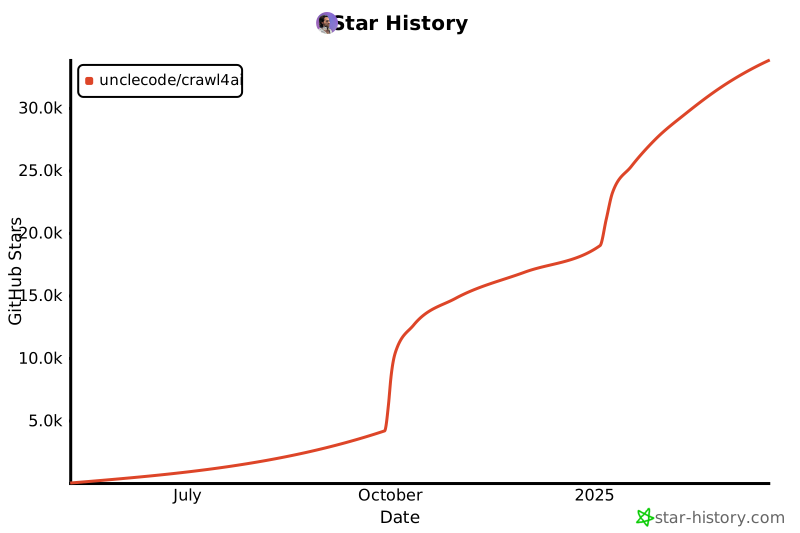](https://star-history.com/#unclecode/crawl4ai&Date)
|
||||
|
||||
244
README.sync.md
Normal file
@@ -0,0 +1,244 @@
|
||||
# Crawl4AI v0.2.77 🕷️🤖
|
||||
|
||||
[](https://github.com/unclecode/crawl4ai/stargazers)
|
||||
[](https://github.com/unclecode/crawl4ai/network/members)
|
||||
[](https://github.com/unclecode/crawl4ai/issues)
|
||||
[](https://github.com/unclecode/crawl4ai/pulls)
|
||||
[](https://github.com/unclecode/crawl4ai/blob/main/LICENSE)
|
||||
|
||||
Crawl4AI simplifies web crawling and data extraction, making it accessible for large language models (LLMs) and AI applications. 🆓🌐
|
||||
|
||||
#### [v0.2.77] - 2024-08-02
|
||||
|
||||
Major improvements in functionality, performance, and cross-platform compatibility! 🚀
|
||||
|
||||
- 🐳 **Docker enhancements**:
|
||||
- Significantly improved Dockerfile for easy installation on Linux, Mac, and Windows.
|
||||
- 🌐 **Official Docker Hub image**:
|
||||
- Launched our first official image on Docker Hub for streamlined deployment (unclecode/crawl4ai).
|
||||
- 🔧 **Selenium upgrade**:
|
||||
- Removed dependency on ChromeDriver, now using Selenium's built-in capabilities for better compatibility.
|
||||
- 🖼️ **Image description**:
|
||||
- Implemented ability to generate textual descriptions for extracted images from web pages.
|
||||
- ⚡ **Performance boost**:
|
||||
- Various improvements to enhance overall speed and performance.
|
||||
|
||||
## Try it Now!
|
||||
|
||||
✨ Play around with this [](https://colab.research.google.com/drive/1sJPAmeLj5PMrg2VgOwMJ2ubGIcK0cJeX?usp=sharing)
|
||||
|
||||
✨ visit our [Documentation Website](https://crawl4ai.com/mkdocs/)
|
||||
|
||||
✨ Check [Demo](https://crawl4ai.com/mkdocs/demo)
|
||||
|
||||
## Features ✨
|
||||
|
||||
- 🆓 Completely free and open-source
|
||||
- 🤖 LLM-friendly output formats (JSON, cleaned HTML, markdown)
|
||||
- 🌍 Supports crawling multiple URLs simultaneously
|
||||
- 🎨 Extracts and returns all media tags (Images, Audio, and Video)
|
||||
- 🔗 Extracts all external and internal links
|
||||
- 📚 Extracts metadata from the page
|
||||
- 🔄 Custom hooks for authentication, headers, and page modifications before crawling
|
||||
- 🕵️ User-agent customization
|
||||
- 🖼️ Takes screenshots of the page
|
||||
- 📜 Executes multiple custom JavaScripts before crawling
|
||||
- 📚 Various chunking strategies: topic-based, regex, sentence, and more
|
||||
- 🧠 Advanced extraction strategies: cosine clustering, LLM, and more
|
||||
- 🎯 CSS selector support
|
||||
- 📝 Passes instructions/keywords to refine extraction
|
||||
|
||||
# Crawl4AI
|
||||
|
||||
## 🌟 Shoutout to Contributors of v0.2.77!
|
||||
|
||||
A big thank you to the amazing contributors who've made this release possible:
|
||||
|
||||
- [@aravindkarnam](https://github.com/aravindkarnam) for the new image description feature
|
||||
- [@FractalMind](https://github.com/FractalMind) for our official Docker Hub image
|
||||
- [@ketonkss4](https://github.com/ketonkss4) for helping streamline our Selenium setup
|
||||
|
||||
Your contributions are driving Crawl4AI forward! 🚀
|
||||
|
||||
## Cool Examples 🚀
|
||||
|
||||
### Quick Start
|
||||
|
||||
```python
|
||||
from crawl4ai import WebCrawler
|
||||
|
||||
# Create an instance of WebCrawler
|
||||
crawler = WebCrawler()
|
||||
|
||||
# Warm up the crawler (load necessary models)
|
||||
crawler.warmup()
|
||||
|
||||
# Run the crawler on a URL
|
||||
result = crawler.run(url="https://www.nbcnews.com/business")
|
||||
|
||||
# Print the extracted content
|
||||
print(result.markdown)
|
||||
```
|
||||
|
||||
## How to install 🛠
|
||||
|
||||
### Using pip 🐍
|
||||
```bash
|
||||
virtualenv venv
|
||||
source venv/bin/activate
|
||||
pip install "crawl4ai @ git+https://github.com/unclecode/crawl4ai.git"
|
||||
```
|
||||
|
||||
### Using Docker 🐳
|
||||
|
||||
```bash
|
||||
# For Mac users (M1/M2)
|
||||
# docker build --platform linux/amd64 -t crawl4ai .
|
||||
docker build -t crawl4ai .
|
||||
docker run -d -p 8000:80 crawl4ai
|
||||
```
|
||||
|
||||
### Using Docker Hub 🐳
|
||||
|
||||
```bash
|
||||
docker pull unclecode/crawl4ai:latest
|
||||
docker run -d -p 8000:80 unclecode/crawl4ai:latest
|
||||
```
|
||||
|
||||
|
||||
## Speed-First Design 🚀
|
||||
|
||||
Perhaps the most important design principle for this library is speed. We need to ensure it can handle many links and resources in parallel as quickly as possible. By combining this speed with fast LLMs like Groq, the results will be truly amazing.
|
||||
|
||||
```python
|
||||
import time
|
||||
from crawl4ai.web_crawler import WebCrawler
|
||||
crawler = WebCrawler()
|
||||
crawler.warmup()
|
||||
|
||||
start = time.time()
|
||||
url = r"https://www.nbcnews.com/business"
|
||||
result = crawler.run( url, word_count_threshold=10, bypass_cache=True)
|
||||
end = time.time()
|
||||
print(f"Time taken: {end - start}")
|
||||
```
|
||||
|
||||
Let's take a look the calculated time for the above code snippet:
|
||||
|
||||
```bash
|
||||
[LOG] 🚀 Crawling done, success: True, time taken: 1.3623387813568115 seconds
|
||||
[LOG] 🚀 Content extracted, success: True, time taken: 0.05715131759643555 seconds
|
||||
[LOG] 🚀 Extraction, time taken: 0.05750393867492676 seconds.
|
||||
Time taken: 1.439958095550537
|
||||
```
|
||||
Fetching the content from the page took 1.3623 seconds, and extracting the content took 0.0575 seconds. 🚀
|
||||
|
||||
### Extract Structured Data from Web Pages 📊
|
||||
|
||||
Crawl all OpenAI models and their fees from the official page.
|
||||
|
||||
```python
|
||||
import os
|
||||
from crawl4ai import WebCrawler
|
||||
from crawl4ai.extraction_strategy import LLMExtractionStrategy
|
||||
from pydantic import BaseModel, Field
|
||||
|
||||
class OpenAIModelFee(BaseModel):
|
||||
model_name: str = Field(..., description="Name of the OpenAI model.")
|
||||
input_fee: str = Field(..., description="Fee for input token for the OpenAI model.")
|
||||
output_fee: str = Field(..., description="Fee for output token ßfor the OpenAI model.")
|
||||
|
||||
url = 'https://openai.com/api/pricing/'
|
||||
crawler = WebCrawler()
|
||||
crawler.warmup()
|
||||
|
||||
result = crawler.run(
|
||||
url=url,
|
||||
word_count_threshold=1,
|
||||
extraction_strategy= LLMExtractionStrategy(
|
||||
provider= "openai/gpt-4o", api_token = os.getenv('OPENAI_API_KEY'),
|
||||
schema=OpenAIModelFee.schema(),
|
||||
extraction_type="schema",
|
||||
instruction="""From the crawled content, extract all mentioned model names along with their fees for input and output tokens.
|
||||
Do not miss any models in the entire content. One extracted model JSON format should look like this:
|
||||
{"model_name": "GPT-4", "input_fee": "US$10.00 / 1M tokens", "output_fee": "US$30.00 / 1M tokens"}."""
|
||||
),
|
||||
bypass_cache=True,
|
||||
)
|
||||
|
||||
print(result.extracted_content)
|
||||
```
|
||||
|
||||
### Execute JS, Filter Data with CSS Selector, and Clustering
|
||||
|
||||
```python
|
||||
from crawl4ai import WebCrawler
|
||||
from crawl4ai.chunking_strategy import CosineStrategy
|
||||
|
||||
js_code = ["const loadMoreButton = Array.from(document.querySelectorAll('button')).find(button => button.textContent.includes('Load More')); loadMoreButton && loadMoreButton.click();"]
|
||||
|
||||
crawler = WebCrawler()
|
||||
crawler.warmup()
|
||||
|
||||
result = crawler.run(
|
||||
url="https://www.nbcnews.com/business",
|
||||
js=js_code,
|
||||
css_selector="p",
|
||||
extraction_strategy=CosineStrategy(semantic_filter="technology")
|
||||
)
|
||||
|
||||
print(result.extracted_content)
|
||||
```
|
||||
|
||||
### Extract Structured Data from Web Pages With Proxy and BaseUrl
|
||||
|
||||
```python
|
||||
from crawl4ai import WebCrawler
|
||||
from crawl4ai.extraction_strategy import LLMExtractionStrategy
|
||||
|
||||
def create_crawler():
|
||||
crawler = WebCrawler(verbose=True, proxy="http://127.0.0.1:7890")
|
||||
crawler.warmup()
|
||||
return crawler
|
||||
|
||||
crawler = create_crawler()
|
||||
|
||||
crawler.warmup()
|
||||
|
||||
result = crawler.run(
|
||||
url="https://www.nbcnews.com/business",
|
||||
extraction_strategy=LLMExtractionStrategy(
|
||||
provider="openai/gpt-4o",
|
||||
api_token="sk-",
|
||||
base_url="https://api.openai.com/v1"
|
||||
)
|
||||
)
|
||||
|
||||
print(result.markdown)
|
||||
```
|
||||
|
||||
## Documentation 📚
|
||||
|
||||
For detailed documentation, including installation instructions, advanced features, and API reference, visit our [Documentation Website](https://crawl4ai.com/mkdocs/).
|
||||
|
||||
## Contributing 🤝
|
||||
|
||||
We welcome contributions from the open-source community. Check out our [contribution guidelines](https://github.com/unclecode/crawl4ai/blob/main/CONTRIBUTING.md) for more information.
|
||||
|
||||
## License 📄
|
||||
|
||||
Crawl4AI is released under the [Apache 2.0 License](https://github.com/unclecode/crawl4ai/blob/main/LICENSE).
|
||||
|
||||
## Contact 📧
|
||||
|
||||
For questions, suggestions, or feedback, feel free to reach out:
|
||||
|
||||
- GitHub: [unclecode](https://github.com/unclecode)
|
||||
- Twitter: [@unclecode](https://twitter.com/unclecode)
|
||||
- Website: [crawl4ai.com](https://crawl4ai.com)
|
||||
|
||||
Happy Crawling! 🕸️🚀
|
||||
|
||||
## Star History
|
||||
|
||||
[](https://star-history.com/#unclecode/crawl4ai&Date)
|
||||
503
ROADMAP.md
Normal file
@@ -0,0 +1,503 @@
|
||||
# Crawl4AI Strategic Roadmap
|
||||
|
||||
```mermaid
|
||||
%%{init: {'themeVariables': { 'fontSize': '14px'}}}%%
|
||||
graph TD
|
||||
subgraph A1[Advanced Crawling Systems 🔧]
|
||||
A["`
|
||||
• Graph Crawler ✓
|
||||
• Question-Based Crawler
|
||||
• Knowledge-Optimal Crawler
|
||||
• Agentic Crawler
|
||||
`"]
|
||||
end
|
||||
|
||||
subgraph A2[Specialized Features 🛠️]
|
||||
B["`
|
||||
• Automated Schema Generator
|
||||
• Domain-Specific Scrapers
|
||||
•
|
||||
•
|
||||
`"]
|
||||
end
|
||||
|
||||
subgraph A3[Development Tools 🔨]
|
||||
C["`
|
||||
• Interactive Playground
|
||||
• Performance Monitor
|
||||
• Cloud Integration
|
||||
•
|
||||
`"]
|
||||
end
|
||||
|
||||
subgraph A4[Community & Growth 🌱]
|
||||
D["`
|
||||
• Sponsorship Program
|
||||
• Educational Content
|
||||
•
|
||||
•
|
||||
`"]
|
||||
end
|
||||
|
||||
classDef default fill:#f9f9f9,stroke:#333,stroke-width:2px
|
||||
classDef section fill:#f0f0f0,stroke:#333,stroke-width:4px,rx:10
|
||||
class A1,A2,A3,A4 section
|
||||
|
||||
%% Layout hints
|
||||
A1 --> A2[" "]
|
||||
A3 --> A4[" "]
|
||||
linkStyle 0,1 stroke:none
|
||||
```
|
||||
|
||||
Crawl4AI is evolving to provide more intelligent, efficient, and versatile web crawling capabilities. This roadmap outlines the key developments and features planned for the project, organized into strategic sections that build upon our current foundation.
|
||||
|
||||
## 1. Advanced Crawling Systems 🔧
|
||||
|
||||
This section introduces three powerful crawling systems that extend Crawl4AI's capabilities from basic web crawling to intelligent, purpose-driven data extraction.
|
||||
|
||||
### 1.1 Question-Based Crawler
|
||||
The Question-Based Crawler enhances our core engine by enabling automatic discovery and extraction of relevant web content based on natural language questions.
|
||||
|
||||
Key Features:
|
||||
- SerpiAPI integration for intelligent web search
|
||||
- Relevancy scoring for search results
|
||||
- Automatic URL discovery and prioritization
|
||||
- Cross-source validation
|
||||
|
||||
```python
|
||||
from crawl4ai import AsyncWebCrawler
|
||||
from crawl4ai.discovery import QuestionBasedDiscovery
|
||||
|
||||
async with AsyncWebCrawler() as crawler:
|
||||
discovery = QuestionBasedDiscovery(crawler)
|
||||
results = await discovery.arun(
|
||||
question="What are the system requirements for major cloud providers' GPU instances?",
|
||||
max_urls=5,
|
||||
relevance_threshold=0.7
|
||||
)
|
||||
|
||||
for result in results:
|
||||
print(f"Source: {result.url} (Relevance: {result.relevance_score})")
|
||||
print(f"Content: {result.markdown}\n")
|
||||
```
|
||||
|
||||
### 1.2 Knowledge-Optimal Crawler
|
||||
An intelligent crawling system that solves the optimization problem of minimizing data extraction while maximizing knowledge acquisition for specific objectives.
|
||||
|
||||
Key Features:
|
||||
- Smart content prioritization
|
||||
- Minimal data extraction for maximum knowledge
|
||||
- Probabilistic relevance assessment
|
||||
- Objective-driven crawling paths
|
||||
|
||||
```python
|
||||
from crawl4ai import AsyncWebCrawler
|
||||
from crawl4ai.optimization import KnowledgeOptimizer
|
||||
|
||||
async with AsyncWebCrawler() as crawler:
|
||||
optimizer = KnowledgeOptimizer(
|
||||
objective="Understand GPU instance pricing and limitations across cloud providers",
|
||||
required_knowledge=[
|
||||
"pricing structure",
|
||||
"GPU specifications",
|
||||
"usage limits",
|
||||
"availability zones"
|
||||
],
|
||||
confidence_threshold=0.85
|
||||
)
|
||||
|
||||
result = await crawler.arun(
|
||||
urls=[
|
||||
"https://aws.amazon.com/ec2/pricing/",
|
||||
"https://cloud.google.com/gpu",
|
||||
"https://azure.microsoft.com/pricing/"
|
||||
],
|
||||
optimizer=optimizer,
|
||||
optimization_mode="minimal_extraction"
|
||||
)
|
||||
|
||||
print(f"Knowledge Coverage: {result.knowledge_coverage}")
|
||||
print(f"Data Efficiency: {result.efficiency_ratio}")
|
||||
print(f"Extracted Content: {result.optimal_content}")
|
||||
```
|
||||
|
||||
### 1.3 Agentic Crawler
|
||||
An autonomous system capable of understanding complex goals and automatically planning and executing multi-step crawling operations.
|
||||
|
||||
Key Features:
|
||||
- Autonomous goal interpretation
|
||||
- Dynamic step planning
|
||||
- Interactive navigation capabilities
|
||||
- Visual recognition and interaction
|
||||
- Automatic error recovery
|
||||
|
||||
```python
|
||||
from crawl4ai import AsyncWebCrawler
|
||||
from crawl4ai.agents import CrawlerAgent
|
||||
|
||||
async with AsyncWebCrawler() as crawler:
|
||||
agent = CrawlerAgent(crawler)
|
||||
|
||||
# Automatic planning and execution
|
||||
result = await agent.arun(
|
||||
goal="Find research papers about quantum computing published in 2023 with more than 50 citations",
|
||||
auto_retry=True
|
||||
)
|
||||
print("Generated Plan:", result.executed_steps)
|
||||
print("Extracted Data:", result.data)
|
||||
|
||||
# Using custom steps with automatic execution
|
||||
result = await agent.arun(
|
||||
goal="Extract conference deadlines from ML conferences",
|
||||
custom_plan=[
|
||||
"Navigate to conference page",
|
||||
"Find important dates section",
|
||||
"Extract submission deadlines",
|
||||
"Verify dates are for 2024"
|
||||
]
|
||||
)
|
||||
|
||||
# Monitoring execution
|
||||
print("Step Completion:", result.step_status)
|
||||
print("Execution Time:", result.execution_time)
|
||||
print("Success Rate:", result.success_rate)
|
||||
```
|
||||
|
||||
# Section 2: Specialized Features 🛠️
|
||||
|
||||
This section introduces specialized tools and features that enhance Crawl4AI's capabilities for specific use cases and data extraction needs.
|
||||
|
||||
### 2.1 Automated Schema Generator
|
||||
A system that automatically generates JsonCssExtractionStrategy schemas from natural language descriptions, making structured data extraction accessible to all users.
|
||||
|
||||
Key Features:
|
||||
- Natural language schema generation
|
||||
- Automatic pattern detection
|
||||
- Predefined schema templates
|
||||
- Chrome extension for visual schema building
|
||||
|
||||
```python
|
||||
from crawl4ai import AsyncWebCrawler
|
||||
from crawl4ai.schema import SchemaGenerator
|
||||
|
||||
# Generate schema from natural language description
|
||||
generator = SchemaGenerator()
|
||||
schema = await generator.generate(
|
||||
url="https://news-website.com",
|
||||
description="For each news article on the page, I need the headline, publication date, and main image"
|
||||
)
|
||||
|
||||
# Use generated schema with crawler
|
||||
async with AsyncWebCrawler() as crawler:
|
||||
result = await crawler.arun(
|
||||
url="https://news-website.com",
|
||||
extraction_strategy=schema
|
||||
)
|
||||
|
||||
# Example of generated schema:
|
||||
"""
|
||||
{
|
||||
"name": "News Article Extractor",
|
||||
"baseSelector": "article.news-item",
|
||||
"fields": [
|
||||
{
|
||||
"name": "headline",
|
||||
"selector": "h2.article-title",
|
||||
"type": "text"
|
||||
},
|
||||
{
|
||||
"name": "date",
|
||||
"selector": "span.publish-date",
|
||||
"type": "text"
|
||||
},
|
||||
{
|
||||
"name": "image",
|
||||
"selector": "img.article-image",
|
||||
"type": "attribute",
|
||||
"attribute": "src"
|
||||
}
|
||||
]
|
||||
}
|
||||
"""
|
||||
```
|
||||
|
||||
### 2.2 Domain Specific Scrapers
|
||||
Specialized extraction strategies optimized for common website types and platforms, providing consistent and reliable data extraction without additional configuration.
|
||||
|
||||
Key Features:
|
||||
- Pre-configured extractors for popular platforms
|
||||
- Academic site specialization (arXiv, NCBI)
|
||||
- E-commerce standardization
|
||||
- Documentation site handling
|
||||
|
||||
```python
|
||||
from crawl4ai import AsyncWebCrawler
|
||||
from crawl4ai.extractors import AcademicExtractor, EcommerceExtractor
|
||||
|
||||
async with AsyncWebCrawler() as crawler:
|
||||
# Academic paper extraction
|
||||
papers = await crawler.arun(
|
||||
url="https://arxiv.org/list/cs.AI/recent",
|
||||
extractor="academic", # Built-in extractor type
|
||||
site_type="arxiv", # Specific site optimization
|
||||
extract_fields=[
|
||||
"title",
|
||||
"authors",
|
||||
"abstract",
|
||||
"citations"
|
||||
]
|
||||
)
|
||||
|
||||
# E-commerce product data
|
||||
products = await crawler.arun(
|
||||
url="https://store.example.com/products",
|
||||
extractor="ecommerce",
|
||||
extract_fields=[
|
||||
"name",
|
||||
"price",
|
||||
"availability",
|
||||
"reviews"
|
||||
]
|
||||
)
|
||||
```
|
||||
|
||||
### 2.3 Web Embedding Index
|
||||
Creates and maintains a semantic search infrastructure for crawled content, enabling efficient retrieval and querying of web content through vector embeddings.
|
||||
|
||||
Key Features:
|
||||
- Automatic embedding generation
|
||||
- Intelligent content chunking
|
||||
- Efficient vector storage and indexing
|
||||
- Semantic search capabilities
|
||||
|
||||
```python
|
||||
from crawl4ai import AsyncWebCrawler
|
||||
from crawl4ai.indexing import WebIndex
|
||||
|
||||
# Initialize and build index
|
||||
index = WebIndex(model="efficient-mini")
|
||||
|
||||
async with AsyncWebCrawler() as crawler:
|
||||
# Crawl and index content
|
||||
await index.build(
|
||||
urls=["https://docs.example.com"],
|
||||
crawler=crawler,
|
||||
options={
|
||||
"chunk_method": "semantic",
|
||||
"update_policy": "incremental",
|
||||
"embedding_batch_size": 100
|
||||
}
|
||||
)
|
||||
|
||||
# Search through indexed content
|
||||
results = await index.search(
|
||||
query="How to implement OAuth authentication?",
|
||||
filters={
|
||||
"content_type": "technical",
|
||||
"recency": "6months"
|
||||
},
|
||||
top_k=5
|
||||
)
|
||||
|
||||
# Get similar content
|
||||
similar = await index.find_similar(
|
||||
url="https://docs.example.com/auth/oauth",
|
||||
threshold=0.85
|
||||
)
|
||||
```
|
||||
|
||||
Each of these specialized features builds upon Crawl4AI's core functionality while providing targeted solutions for specific use cases. They can be used independently or combined for more complex data extraction and processing needs.
|
||||
|
||||
# Section 3: Development Tools 🔧
|
||||
|
||||
This section covers tools designed to enhance the development experience, monitoring, and deployment of Crawl4AI applications.
|
||||
|
||||
### 3.1 Crawl4AI Playground 🎮
|
||||
|
||||
The Crawl4AI Playground is an interactive web-based development environment that simplifies web scraping experimentation, development, and deployment. With its intuitive interface and AI-powered assistance, users can quickly prototype, test, and deploy web scraping solutions.
|
||||
|
||||
#### Key Features 🌟
|
||||
|
||||
##### Visual Strategy Builder
|
||||
- Interactive point-and-click interface for building extraction strategies
|
||||
- Real-time preview of selected elements
|
||||
- Side-by-side comparison of different extraction approaches
|
||||
- Visual validation of CSS selectors and XPath queries
|
||||
|
||||
##### AI Assistant Integration
|
||||
- Strategy recommendations based on target website analysis
|
||||
- Parameter optimization suggestions
|
||||
- Best practices guidance for specific use cases
|
||||
- Automated error detection and resolution
|
||||
- Performance optimization tips
|
||||
|
||||
##### Real-Time Testing & Validation
|
||||
- Live preview of extraction results
|
||||
- Side-by-side comparison of multiple strategies
|
||||
- Performance metrics visualization
|
||||
- Automatic validation of extracted data
|
||||
- Error detection and debugging tools
|
||||
|
||||
##### Project Management
|
||||
- Save and organize multiple scraping projects
|
||||
- Version control for configurations
|
||||
- Export/import project settings
|
||||
- Share configurations with team members
|
||||
- Project templates for common use cases
|
||||
|
||||
##### Deployment Pipeline
|
||||
- One-click deployment to various environments
|
||||
- Docker container generation
|
||||
- Cloud deployment templates (AWS, GCP, Azure)
|
||||
- Scaling configuration management
|
||||
- Monitoring setup automation
|
||||
|
||||
|
||||
### 3.2 Performance Monitoring System
|
||||
A comprehensive monitoring solution providing real-time insights into crawler operations, resource usage, and system health through both CLI and GUI interfaces.
|
||||
|
||||
Key Features:
|
||||
- Real-time resource tracking
|
||||
- Active crawl monitoring
|
||||
- Performance statistics
|
||||
- Customizable alerting system
|
||||
|
||||
```python
|
||||
from crawl4ai import AsyncWebCrawler
|
||||
from crawl4ai.monitor import CrawlMonitor
|
||||
|
||||
# Initialize monitoring
|
||||
monitor = CrawlMonitor()
|
||||
|
||||
# Start monitoring with CLI interface
|
||||
await monitor.start(
|
||||
mode="cli", # or "gui"
|
||||
refresh_rate="1s",
|
||||
metrics={
|
||||
"resources": ["cpu", "memory", "network"],
|
||||
"crawls": ["active", "queued", "completed"],
|
||||
"performance": ["success_rate", "response_times"]
|
||||
}
|
||||
)
|
||||
|
||||
# Example CLI output:
|
||||
"""
|
||||
Crawl4AI Monitor (Live) - Press Q to exit
|
||||
────────────────────────────────────────
|
||||
System Usage:
|
||||
├─ CPU: ███████░░░ 70%
|
||||
└─ Memory: ████░░░░░ 2.1GB/8GB
|
||||
|
||||
Active Crawls:
|
||||
ID URL Status Progress
|
||||
001 docs.example.com 🟢 Active 75%
|
||||
002 api.service.com 🟡 Queue -
|
||||
|
||||
Metrics (Last 5min):
|
||||
├─ Success Rate: 98%
|
||||
├─ Avg Response: 0.6s
|
||||
└─ Pages/sec: 8.5
|
||||
"""
|
||||
```
|
||||
|
||||
### 3.3 Cloud Integration
|
||||
Streamlined deployment tools for setting up Crawl4AI in various cloud environments, with support for scaling and monitoring.
|
||||
|
||||
Key Features:
|
||||
- One-click deployment solutions
|
||||
- Auto-scaling configuration
|
||||
- Load balancing setup
|
||||
- Cloud-specific optimizations
|
||||
- Monitoring integration
|
||||
|
||||
```python
|
||||
from crawl4ai import AsyncWebCrawler
|
||||
from crawl4ai.deploy import CloudDeployer
|
||||
|
||||
# Initialize deployer
|
||||
deployer = CloudDeployer()
|
||||
|
||||
# Deploy crawler service
|
||||
deployment = await deployer.deploy(
|
||||
service_name="crawler-cluster",
|
||||
platform="aws", # or "gcp", "azure"
|
||||
config={
|
||||
"instance_type": "compute-optimized",
|
||||
"auto_scaling": {
|
||||
"min_instances": 2,
|
||||
"max_instances": 10,
|
||||
"scale_based_on": "cpu_usage"
|
||||
},
|
||||
"region": "us-east-1",
|
||||
"monitoring": True
|
||||
}
|
||||
)
|
||||
|
||||
# Get deployment status and endpoints
|
||||
print(f"Service Status: {deployment.status}")
|
||||
print(f"API Endpoint: {deployment.endpoint}")
|
||||
print(f"Monitor URL: {deployment.monitor_url}")
|
||||
```
|
||||
|
||||
These development tools work together to provide a comprehensive environment for developing, testing, monitoring, and deploying Crawl4AI applications. The Playground helps users experiment and generate optimal configurations, the Performance Monitor ensures smooth operation, and the Cloud Integration tools simplify deployment and scaling.
|
||||
|
||||
# Section 4: Community & Growth 🌱
|
||||
|
||||
This section outlines initiatives designed to build and support the Crawl4AI community, provide educational resources, and ensure sustainable project growth.
|
||||
|
||||
### 4.1 Sponsorship Program
|
||||
A structured program to support ongoing development and maintenance of Crawl4AI while providing valuable benefits to sponsors.
|
||||
|
||||
Key Features:
|
||||
- Multiple sponsorship tiers
|
||||
- Sponsor recognition system
|
||||
- Priority support for sponsors
|
||||
- Early access to new features
|
||||
- Custom feature development opportunities
|
||||
|
||||
Program Structure (not yet finalized):
|
||||
```
|
||||
Sponsorship Tiers:
|
||||
|
||||
🥉 Bronze Supporter
|
||||
- GitHub Sponsor badge
|
||||
- Priority issue response
|
||||
- Community Discord role
|
||||
|
||||
🥈 Silver Supporter
|
||||
- All Bronze benefits
|
||||
- Technical support channel
|
||||
- Vote on roadmap priorities
|
||||
- Early access to beta features
|
||||
|
||||
🥇 Gold Supporter
|
||||
- All Silver benefits
|
||||
- Custom feature requests
|
||||
- Direct developer access
|
||||
- Private support sessions
|
||||
|
||||
💎 Diamond Partner
|
||||
- All Gold benefits
|
||||
- Custom development
|
||||
- On-demand consulting
|
||||
- Integration support
|
||||
```
|
||||
|
||||
### 4.2 "How to Crawl" Video Series
|
||||
A comprehensive educational resource teaching users how to effectively use Crawl4AI for various web scraping and data extraction scenarios.
|
||||
|
||||
Key Features:
|
||||
- Step-by-step tutorials
|
||||
- Real-world use cases
|
||||
- Best practices
|
||||
- Integration guides
|
||||
- Advanced feature deep-dives
|
||||
|
||||
These community initiatives are designed to:
|
||||
- Provide comprehensive learning resources
|
||||
- Foster a supportive user community
|
||||
- Ensure sustainable project development
|
||||
- Share knowledge and best practices
|
||||
- Create opportunities for collaboration
|
||||
|
||||
The combination of structured support through sponsorship, educational content through video series, and interactive learning through the playground creates a robust ecosystem for both new and experienced users of Crawl4AI.
|
||||
@@ -1 +1,32 @@
|
||||
from .web_crawler import WebCrawler
|
||||
# __init__.py
|
||||
|
||||
from .async_webcrawler import AsyncWebCrawler, CacheMode
|
||||
|
||||
from .models import CrawlResult
|
||||
from .__version__ import __version__
|
||||
# __version__ = "0.3.73"
|
||||
|
||||
__all__ = [
|
||||
"AsyncWebCrawler",
|
||||
"CrawlResult",
|
||||
"CacheMode",
|
||||
]
|
||||
|
||||
def is_sync_version_installed():
|
||||
try:
|
||||
import selenium
|
||||
return True
|
||||
except ImportError:
|
||||
return False
|
||||
|
||||
if is_sync_version_installed():
|
||||
try:
|
||||
from .web_crawler import WebCrawler
|
||||
__all__.append("WebCrawler")
|
||||
except ImportError:
|
||||
import warnings
|
||||
print("Warning: Failed to import WebCrawler even though selenium is installed. This might be due to other missing dependencies.")
|
||||
else:
|
||||
WebCrawler = None
|
||||
# import warnings
|
||||
# print("Warning: Synchronous WebCrawler is not available. Install crawl4ai[sync] for synchronous support. However, please note that the synchronous version will be deprecated soon.")
|
||||
2
crawl4ai/__version__.py
Normal file
@@ -0,0 +1,2 @@
|
||||
# crawl4ai/_version.py
|
||||
__version__ = "0.3.74"
|
||||
1239
crawl4ai/async_crawler_strategy.py
Normal file
421
crawl4ai/async_database.py
Normal file
@@ -0,0 +1,421 @@
|
||||
import os
|
||||
from pathlib import Path
|
||||
import aiosqlite
|
||||
import asyncio
|
||||
from typing import Optional, Tuple, Dict
|
||||
from contextlib import asynccontextmanager
|
||||
import logging
|
||||
import json # Added for serialization/deserialization
|
||||
from .utils import ensure_content_dirs, generate_content_hash
|
||||
from .models import CrawlResult
|
||||
import xxhash
|
||||
import aiofiles
|
||||
from .config import NEED_MIGRATION
|
||||
from .version_manager import VersionManager
|
||||
from .async_logger import AsyncLogger
|
||||
# Set up logging
|
||||
logging.basicConfig(level=logging.INFO)
|
||||
logger = logging.getLogger(__name__)
|
||||
|
||||
base_directory = DB_PATH = os.path.join(os.getenv("CRAWL4_AI_BASE_DIRECTORY", Path.home()), ".crawl4ai")
|
||||
os.makedirs(DB_PATH, exist_ok=True)
|
||||
DB_PATH = os.path.join(base_directory, "crawl4ai.db")
|
||||
|
||||
class AsyncDatabaseManager:
|
||||
def __init__(self, pool_size: int = 10, max_retries: int = 3):
|
||||
self.db_path = DB_PATH
|
||||
self.content_paths = ensure_content_dirs(os.path.dirname(DB_PATH))
|
||||
self.pool_size = pool_size
|
||||
self.max_retries = max_retries
|
||||
self.connection_pool: Dict[int, aiosqlite.Connection] = {}
|
||||
self.pool_lock = asyncio.Lock()
|
||||
self.init_lock = asyncio.Lock()
|
||||
self.connection_semaphore = asyncio.Semaphore(pool_size)
|
||||
self._initialized = False
|
||||
self.version_manager = VersionManager()
|
||||
self.logger = AsyncLogger(
|
||||
log_file=os.path.join(base_directory, ".crawl4ai", "crawler_db.log"),
|
||||
verbose=False,
|
||||
tag_width=10
|
||||
)
|
||||
|
||||
|
||||
async def initialize(self):
|
||||
"""Initialize the database and connection pool"""
|
||||
try:
|
||||
self.logger.info("Initializing database", tag="INIT")
|
||||
# Ensure the database file exists
|
||||
os.makedirs(os.path.dirname(self.db_path), exist_ok=True)
|
||||
|
||||
# Check if version update is needed
|
||||
needs_update = self.version_manager.needs_update()
|
||||
|
||||
# Always ensure base table exists
|
||||
await self.ainit_db()
|
||||
|
||||
# Verify the table exists
|
||||
async with aiosqlite.connect(self.db_path, timeout=30.0) as db:
|
||||
async with db.execute(
|
||||
"SELECT name FROM sqlite_master WHERE type='table' AND name='crawled_data'"
|
||||
) as cursor:
|
||||
result = await cursor.fetchone()
|
||||
if not result:
|
||||
raise Exception("crawled_data table was not created")
|
||||
|
||||
# If version changed or fresh install, run updates
|
||||
if needs_update:
|
||||
self.logger.info("New version detected, running updates", tag="INIT")
|
||||
await self.update_db_schema()
|
||||
from .migrations import run_migration # Import here to avoid circular imports
|
||||
await run_migration()
|
||||
self.version_manager.update_version() # Update stored version after successful migration
|
||||
self.logger.success("Version update completed successfully", tag="COMPLETE")
|
||||
else:
|
||||
self.logger.success("Database initialization completed successfully", tag="COMPLETE")
|
||||
|
||||
|
||||
except Exception as e:
|
||||
self.logger.error(
|
||||
message="Database initialization error: {error}",
|
||||
tag="ERROR",
|
||||
params={"error": str(e)}
|
||||
)
|
||||
self.logger.info(
|
||||
message="Database will be initialized on first use",
|
||||
tag="INIT"
|
||||
)
|
||||
|
||||
raise
|
||||
|
||||
|
||||
async def cleanup(self):
|
||||
"""Cleanup connections when shutting down"""
|
||||
async with self.pool_lock:
|
||||
for conn in self.connection_pool.values():
|
||||
await conn.close()
|
||||
self.connection_pool.clear()
|
||||
|
||||
@asynccontextmanager
|
||||
async def get_connection(self):
|
||||
"""Connection pool manager"""
|
||||
if not self._initialized:
|
||||
# Use an asyncio.Lock to ensure only one initialization occurs
|
||||
async with self.init_lock:
|
||||
if not self._initialized:
|
||||
await self.initialize()
|
||||
self._initialized = True
|
||||
|
||||
await self.connection_semaphore.acquire()
|
||||
task_id = id(asyncio.current_task())
|
||||
try:
|
||||
async with self.pool_lock:
|
||||
if task_id not in self.connection_pool:
|
||||
conn = await aiosqlite.connect(
|
||||
self.db_path,
|
||||
timeout=30.0
|
||||
)
|
||||
await conn.execute('PRAGMA journal_mode = WAL')
|
||||
await conn.execute('PRAGMA busy_timeout = 5000')
|
||||
self.connection_pool[task_id] = conn
|
||||
|
||||
yield self.connection_pool[task_id]
|
||||
|
||||
except Exception as e:
|
||||
self.logger.error(
|
||||
message="Connection error: {error}",
|
||||
tag="ERROR",
|
||||
force_verbose=True,
|
||||
params={"error": str(e)}
|
||||
)
|
||||
raise
|
||||
finally:
|
||||
async with self.pool_lock:
|
||||
if task_id in self.connection_pool:
|
||||
await self.connection_pool[task_id].close()
|
||||
del self.connection_pool[task_id]
|
||||
self.connection_semaphore.release()
|
||||
|
||||
|
||||
async def execute_with_retry(self, operation, *args):
|
||||
"""Execute database operations with retry logic"""
|
||||
for attempt in range(self.max_retries):
|
||||
try:
|
||||
async with self.get_connection() as db:
|
||||
result = await operation(db, *args)
|
||||
await db.commit()
|
||||
return result
|
||||
except Exception as e:
|
||||
if attempt == self.max_retries - 1:
|
||||
self.logger.error(
|
||||
message="Operation failed after {retries} attempts: {error}",
|
||||
tag="ERROR",
|
||||
force_verbose=True,
|
||||
params={
|
||||
"retries": self.max_retries,
|
||||
"error": str(e)
|
||||
}
|
||||
)
|
||||
raise
|
||||
await asyncio.sleep(1 * (attempt + 1)) # Exponential backoff
|
||||
|
||||
async def ainit_db(self):
|
||||
"""Initialize database schema"""
|
||||
async with aiosqlite.connect(self.db_path, timeout=30.0) as db:
|
||||
await db.execute('''
|
||||
CREATE TABLE IF NOT EXISTS crawled_data (
|
||||
url TEXT PRIMARY KEY,
|
||||
html TEXT,
|
||||
cleaned_html TEXT,
|
||||
markdown TEXT,
|
||||
extracted_content TEXT,
|
||||
success BOOLEAN,
|
||||
media TEXT DEFAULT "{}",
|
||||
links TEXT DEFAULT "{}",
|
||||
metadata TEXT DEFAULT "{}",
|
||||
screenshot TEXT DEFAULT "",
|
||||
response_headers TEXT DEFAULT "{}",
|
||||
downloaded_files TEXT DEFAULT "{}" -- New column added
|
||||
)
|
||||
''')
|
||||
await db.commit()
|
||||
|
||||
|
||||
|
||||
async def update_db_schema(self):
|
||||
"""Update database schema if needed"""
|
||||
async with aiosqlite.connect(self.db_path, timeout=30.0) as db:
|
||||
cursor = await db.execute("PRAGMA table_info(crawled_data)")
|
||||
columns = await cursor.fetchall()
|
||||
column_names = [column[1] for column in columns]
|
||||
|
||||
# List of new columns to add
|
||||
new_columns = ['media', 'links', 'metadata', 'screenshot', 'response_headers', 'downloaded_files']
|
||||
|
||||
for column in new_columns:
|
||||
if column not in column_names:
|
||||
await self.aalter_db_add_column(column, db)
|
||||
await db.commit()
|
||||
|
||||
async def aalter_db_add_column(self, new_column: str, db):
|
||||
"""Add new column to the database"""
|
||||
if new_column == 'response_headers':
|
||||
await db.execute(f'ALTER TABLE crawled_data ADD COLUMN {new_column} TEXT DEFAULT "{{}}"')
|
||||
else:
|
||||
await db.execute(f'ALTER TABLE crawled_data ADD COLUMN {new_column} TEXT DEFAULT ""')
|
||||
self.logger.info(
|
||||
message="Added column '{column}' to the database",
|
||||
tag="INIT",
|
||||
params={"column": new_column}
|
||||
)
|
||||
|
||||
|
||||
async def aget_cached_url(self, url: str) -> Optional[CrawlResult]:
|
||||
"""Retrieve cached URL data as CrawlResult"""
|
||||
async def _get(db):
|
||||
async with db.execute(
|
||||
'SELECT * FROM crawled_data WHERE url = ?', (url,)
|
||||
) as cursor:
|
||||
row = await cursor.fetchone()
|
||||
if not row:
|
||||
return None
|
||||
|
||||
# Get column names
|
||||
columns = [description[0] for description in cursor.description]
|
||||
# Create dict from row data
|
||||
row_dict = dict(zip(columns, row))
|
||||
|
||||
# Load content from files using stored hashes
|
||||
content_fields = {
|
||||
'html': row_dict['html'],
|
||||
'cleaned_html': row_dict['cleaned_html'],
|
||||
'markdown': row_dict['markdown'],
|
||||
'extracted_content': row_dict['extracted_content'],
|
||||
'screenshot': row_dict['screenshot']
|
||||
}
|
||||
|
||||
for field, hash_value in content_fields.items():
|
||||
if hash_value:
|
||||
content = await self._load_content(
|
||||
hash_value,
|
||||
field.split('_')[0] # Get content type from field name
|
||||
)
|
||||
row_dict[field] = content or ""
|
||||
else:
|
||||
row_dict[field] = ""
|
||||
|
||||
# Parse JSON fields
|
||||
json_fields = ['media', 'links', 'metadata', 'response_headers']
|
||||
for field in json_fields:
|
||||
try:
|
||||
row_dict[field] = json.loads(row_dict[field]) if row_dict[field] else {}
|
||||
except json.JSONDecodeError:
|
||||
row_dict[field] = {}
|
||||
|
||||
# Parse downloaded_files
|
||||
try:
|
||||
row_dict['downloaded_files'] = json.loads(row_dict['downloaded_files']) if row_dict['downloaded_files'] else []
|
||||
except json.JSONDecodeError:
|
||||
row_dict['downloaded_files'] = []
|
||||
|
||||
# Remove any fields not in CrawlResult model
|
||||
valid_fields = CrawlResult.__annotations__.keys()
|
||||
filtered_dict = {k: v for k, v in row_dict.items() if k in valid_fields}
|
||||
|
||||
return CrawlResult(**filtered_dict)
|
||||
|
||||
try:
|
||||
return await self.execute_with_retry(_get)
|
||||
except Exception as e:
|
||||
self.logger.error(
|
||||
message="Error retrieving cached URL: {error}",
|
||||
tag="ERROR",
|
||||
force_verbose=True,
|
||||
params={"error": str(e)}
|
||||
)
|
||||
return None
|
||||
|
||||
async def acache_url(self, result: CrawlResult):
|
||||
"""Cache CrawlResult data"""
|
||||
# Store content files and get hashes
|
||||
content_map = {
|
||||
'html': (result.html, 'html'),
|
||||
'cleaned_html': (result.cleaned_html or "", 'cleaned'),
|
||||
'markdown': (result.markdown or "", 'markdown'),
|
||||
'extracted_content': (result.extracted_content or "", 'extracted'),
|
||||
'screenshot': (result.screenshot or "", 'screenshots')
|
||||
}
|
||||
|
||||
content_hashes = {}
|
||||
for field, (content, content_type) in content_map.items():
|
||||
content_hashes[field] = await self._store_content(content, content_type)
|
||||
|
||||
async def _cache(db):
|
||||
await db.execute('''
|
||||
INSERT INTO crawled_data (
|
||||
url, html, cleaned_html, markdown,
|
||||
extracted_content, success, media, links, metadata,
|
||||
screenshot, response_headers, downloaded_files
|
||||
)
|
||||
VALUES (?, ?, ?, ?, ?, ?, ?, ?, ?, ?, ?, ?)
|
||||
ON CONFLICT(url) DO UPDATE SET
|
||||
html = excluded.html,
|
||||
cleaned_html = excluded.cleaned_html,
|
||||
markdown = excluded.markdown,
|
||||
extracted_content = excluded.extracted_content,
|
||||
success = excluded.success,
|
||||
media = excluded.media,
|
||||
links = excluded.links,
|
||||
metadata = excluded.metadata,
|
||||
screenshot = excluded.screenshot,
|
||||
response_headers = excluded.response_headers,
|
||||
downloaded_files = excluded.downloaded_files
|
||||
''', (
|
||||
result.url,
|
||||
content_hashes['html'],
|
||||
content_hashes['cleaned_html'],
|
||||
content_hashes['markdown'],
|
||||
content_hashes['extracted_content'],
|
||||
result.success,
|
||||
json.dumps(result.media),
|
||||
json.dumps(result.links),
|
||||
json.dumps(result.metadata or {}),
|
||||
content_hashes['screenshot'],
|
||||
json.dumps(result.response_headers or {}),
|
||||
json.dumps(result.downloaded_files or [])
|
||||
))
|
||||
|
||||
try:
|
||||
await self.execute_with_retry(_cache)
|
||||
except Exception as e:
|
||||
self.logger.error(
|
||||
message="Error caching URL: {error}",
|
||||
tag="ERROR",
|
||||
force_verbose=True,
|
||||
params={"error": str(e)}
|
||||
)
|
||||
|
||||
|
||||
async def aget_total_count(self) -> int:
|
||||
"""Get total number of cached URLs"""
|
||||
async def _count(db):
|
||||
async with db.execute('SELECT COUNT(*) FROM crawled_data') as cursor:
|
||||
result = await cursor.fetchone()
|
||||
return result[0] if result else 0
|
||||
|
||||
try:
|
||||
return await self.execute_with_retry(_count)
|
||||
except Exception as e:
|
||||
self.logger.error(
|
||||
message="Error getting total count: {error}",
|
||||
tag="ERROR",
|
||||
force_verbose=True,
|
||||
params={"error": str(e)}
|
||||
)
|
||||
return 0
|
||||
|
||||
async def aclear_db(self):
|
||||
"""Clear all data from the database"""
|
||||
async def _clear(db):
|
||||
await db.execute('DELETE FROM crawled_data')
|
||||
|
||||
try:
|
||||
await self.execute_with_retry(_clear)
|
||||
except Exception as e:
|
||||
self.logger.error(
|
||||
message="Error clearing database: {error}",
|
||||
tag="ERROR",
|
||||
force_verbose=True,
|
||||
params={"error": str(e)}
|
||||
)
|
||||
|
||||
async def aflush_db(self):
|
||||
"""Drop the entire table"""
|
||||
async def _flush(db):
|
||||
await db.execute('DROP TABLE IF EXISTS crawled_data')
|
||||
|
||||
try:
|
||||
await self.execute_with_retry(_flush)
|
||||
except Exception as e:
|
||||
self.logger.error(
|
||||
message="Error flushing database: {error}",
|
||||
tag="ERROR",
|
||||
force_verbose=True,
|
||||
params={"error": str(e)}
|
||||
)
|
||||
|
||||
|
||||
async def _store_content(self, content: str, content_type: str) -> str:
|
||||
"""Store content in filesystem and return hash"""
|
||||
if not content:
|
||||
return ""
|
||||
|
||||
content_hash = generate_content_hash(content)
|
||||
file_path = os.path.join(self.content_paths[content_type], content_hash)
|
||||
|
||||
# Only write if file doesn't exist
|
||||
if not os.path.exists(file_path):
|
||||
async with aiofiles.open(file_path, 'w', encoding='utf-8') as f:
|
||||
await f.write(content)
|
||||
|
||||
return content_hash
|
||||
|
||||
async def _load_content(self, content_hash: str, content_type: str) -> Optional[str]:
|
||||
"""Load content from filesystem by hash"""
|
||||
if not content_hash:
|
||||
return None
|
||||
|
||||
file_path = os.path.join(self.content_paths[content_type], content_hash)
|
||||
try:
|
||||
async with aiofiles.open(file_path, 'r', encoding='utf-8') as f:
|
||||
return await f.read()
|
||||
except:
|
||||
self.logger.error(
|
||||
message="Failed to load content: {file_path}",
|
||||
tag="ERROR",
|
||||
force_verbose=True,
|
||||
params={"file_path": file_path}
|
||||
)
|
||||
return None
|
||||
|
||||
# Create a singleton instance
|
||||
async_db_manager = AsyncDatabaseManager()
|
||||
231
crawl4ai/async_logger.py
Normal file
@@ -0,0 +1,231 @@
|
||||
from enum import Enum
|
||||
from typing import Optional, Dict, Any, Union
|
||||
from colorama import Fore, Back, Style, init
|
||||
import time
|
||||
import os
|
||||
from datetime import datetime
|
||||
|
||||
class LogLevel(Enum):
|
||||
DEBUG = 1
|
||||
INFO = 2
|
||||
SUCCESS = 3
|
||||
WARNING = 4
|
||||
ERROR = 5
|
||||
|
||||
class AsyncLogger:
|
||||
"""
|
||||
Asynchronous logger with support for colored console output and file logging.
|
||||
Supports templated messages with colored components.
|
||||
"""
|
||||
|
||||
DEFAULT_ICONS = {
|
||||
'INIT': '→',
|
||||
'READY': '✓',
|
||||
'FETCH': '↓',
|
||||
'SCRAPE': '◆',
|
||||
'EXTRACT': '■',
|
||||
'COMPLETE': '●',
|
||||
'ERROR': '×',
|
||||
'DEBUG': '⋯',
|
||||
'INFO': 'ℹ',
|
||||
'WARNING': '⚠',
|
||||
}
|
||||
|
||||
DEFAULT_COLORS = {
|
||||
LogLevel.DEBUG: Fore.LIGHTBLACK_EX,
|
||||
LogLevel.INFO: Fore.CYAN,
|
||||
LogLevel.SUCCESS: Fore.GREEN,
|
||||
LogLevel.WARNING: Fore.YELLOW,
|
||||
LogLevel.ERROR: Fore.RED,
|
||||
}
|
||||
|
||||
def __init__(
|
||||
self,
|
||||
log_file: Optional[str] = None,
|
||||
log_level: LogLevel = LogLevel.INFO,
|
||||
tag_width: int = 10,
|
||||
icons: Optional[Dict[str, str]] = None,
|
||||
colors: Optional[Dict[LogLevel, str]] = None,
|
||||
verbose: bool = True
|
||||
):
|
||||
"""
|
||||
Initialize the logger.
|
||||
|
||||
Args:
|
||||
log_file: Optional file path for logging
|
||||
log_level: Minimum log level to display
|
||||
tag_width: Width for tag formatting
|
||||
icons: Custom icons for different tags
|
||||
colors: Custom colors for different log levels
|
||||
verbose: Whether to output to console
|
||||
"""
|
||||
init() # Initialize colorama
|
||||
self.log_file = log_file
|
||||
self.log_level = log_level
|
||||
self.tag_width = tag_width
|
||||
self.icons = icons or self.DEFAULT_ICONS
|
||||
self.colors = colors or self.DEFAULT_COLORS
|
||||
self.verbose = verbose
|
||||
|
||||
# Create log file directory if needed
|
||||
if log_file:
|
||||
os.makedirs(os.path.dirname(os.path.abspath(log_file)), exist_ok=True)
|
||||
|
||||
def _format_tag(self, tag: str) -> str:
|
||||
"""Format a tag with consistent width."""
|
||||
return f"[{tag}]".ljust(self.tag_width, ".")
|
||||
|
||||
def _get_icon(self, tag: str) -> str:
|
||||
"""Get the icon for a tag, defaulting to info icon if not found."""
|
||||
return self.icons.get(tag, self.icons['INFO'])
|
||||
|
||||
def _write_to_file(self, message: str):
|
||||
"""Write a message to the log file if configured."""
|
||||
if self.log_file:
|
||||
timestamp = datetime.now().strftime('%Y-%m-%d %H:%M:%S.%f')[:-3]
|
||||
with open(self.log_file, 'a', encoding='utf-8') as f:
|
||||
# Strip ANSI color codes for file output
|
||||
clean_message = message.replace(Fore.RESET, '').replace(Style.RESET_ALL, '')
|
||||
for color in vars(Fore).values():
|
||||
if isinstance(color, str):
|
||||
clean_message = clean_message.replace(color, '')
|
||||
f.write(f"[{timestamp}] {clean_message}\n")
|
||||
|
||||
def _log(
|
||||
self,
|
||||
level: LogLevel,
|
||||
message: str,
|
||||
tag: str,
|
||||
params: Optional[Dict[str, Any]] = None,
|
||||
colors: Optional[Dict[str, str]] = None,
|
||||
base_color: Optional[str] = None,
|
||||
**kwargs
|
||||
):
|
||||
"""
|
||||
Core logging method that handles message formatting and output.
|
||||
|
||||
Args:
|
||||
level: Log level for this message
|
||||
message: Message template string
|
||||
tag: Tag for the message
|
||||
params: Parameters to format into the message
|
||||
colors: Color overrides for specific parameters
|
||||
base_color: Base color for the entire message
|
||||
"""
|
||||
if level.value < self.log_level.value:
|
||||
return
|
||||
|
||||
# Format the message with parameters if provided
|
||||
if params:
|
||||
try:
|
||||
# First format the message with raw parameters
|
||||
formatted_message = message.format(**params)
|
||||
|
||||
# Then apply colors if specified
|
||||
if colors:
|
||||
for key, color in colors.items():
|
||||
# Find the formatted value in the message and wrap it with color
|
||||
if key in params:
|
||||
value_str = str(params[key])
|
||||
formatted_message = formatted_message.replace(
|
||||
value_str,
|
||||
f"{color}{value_str}{Style.RESET_ALL}"
|
||||
)
|
||||
|
||||
except KeyError as e:
|
||||
formatted_message = f"LOGGING ERROR: Missing parameter {e} in message template"
|
||||
level = LogLevel.ERROR
|
||||
else:
|
||||
formatted_message = message
|
||||
|
||||
# Construct the full log line
|
||||
color = base_color or self.colors[level]
|
||||
log_line = f"{color}{self._format_tag(tag)} {self._get_icon(tag)} {formatted_message}{Style.RESET_ALL}"
|
||||
|
||||
# Output to console if verbose
|
||||
if self.verbose or kwargs.get("force_verbose", False):
|
||||
print(log_line)
|
||||
|
||||
# Write to file if configured
|
||||
self._write_to_file(log_line)
|
||||
|
||||
def debug(self, message: str, tag: str = "DEBUG", **kwargs):
|
||||
"""Log a debug message."""
|
||||
self._log(LogLevel.DEBUG, message, tag, **kwargs)
|
||||
|
||||
def info(self, message: str, tag: str = "INFO", **kwargs):
|
||||
"""Log an info message."""
|
||||
self._log(LogLevel.INFO, message, tag, **kwargs)
|
||||
|
||||
def success(self, message: str, tag: str = "SUCCESS", **kwargs):
|
||||
"""Log a success message."""
|
||||
self._log(LogLevel.SUCCESS, message, tag, **kwargs)
|
||||
|
||||
def warning(self, message: str, tag: str = "WARNING", **kwargs):
|
||||
"""Log a warning message."""
|
||||
self._log(LogLevel.WARNING, message, tag, **kwargs)
|
||||
|
||||
def error(self, message: str, tag: str = "ERROR", **kwargs):
|
||||
"""Log an error message."""
|
||||
self._log(LogLevel.ERROR, message, tag, **kwargs)
|
||||
|
||||
def url_status(
|
||||
self,
|
||||
url: str,
|
||||
success: bool,
|
||||
timing: float,
|
||||
tag: str = "FETCH",
|
||||
url_length: int = 50
|
||||
):
|
||||
"""
|
||||
Convenience method for logging URL fetch status.
|
||||
|
||||
Args:
|
||||
url: The URL being processed
|
||||
success: Whether the operation was successful
|
||||
timing: Time taken for the operation
|
||||
tag: Tag for the message
|
||||
url_length: Maximum length for URL in log
|
||||
"""
|
||||
self._log(
|
||||
level=LogLevel.SUCCESS if success else LogLevel.ERROR,
|
||||
message="{url:.{url_length}}... | Status: {status} | Time: {timing:.2f}s",
|
||||
tag=tag,
|
||||
params={
|
||||
"url": url,
|
||||
"url_length": url_length,
|
||||
"status": success,
|
||||
"timing": timing
|
||||
},
|
||||
colors={
|
||||
"status": Fore.GREEN if success else Fore.RED,
|
||||
"timing": Fore.YELLOW
|
||||
}
|
||||
)
|
||||
|
||||
def error_status(
|
||||
self,
|
||||
url: str,
|
||||
error: str,
|
||||
tag: str = "ERROR",
|
||||
url_length: int = 50
|
||||
):
|
||||
"""
|
||||
Convenience method for logging error status.
|
||||
|
||||
Args:
|
||||
url: The URL being processed
|
||||
error: Error message
|
||||
tag: Tag for the message
|
||||
url_length: Maximum length for URL in log
|
||||
"""
|
||||
self._log(
|
||||
level=LogLevel.ERROR,
|
||||
message="{url:.{url_length}}... | Error: {error}",
|
||||
tag=tag,
|
||||
params={
|
||||
"url": url,
|
||||
"url_length": url_length,
|
||||
"error": error
|
||||
}
|
||||
)
|
||||
572
crawl4ai/async_webcrawler.py
Normal file
@@ -0,0 +1,572 @@
|
||||
import os
|
||||
import time
|
||||
import warnings
|
||||
from enum import Enum
|
||||
from colorama import init, Fore, Back, Style
|
||||
from pathlib import Path
|
||||
from typing import Optional, List, Union
|
||||
import json
|
||||
import asyncio
|
||||
from .models import CrawlResult, MarkdownGenerationResult
|
||||
from .async_database import async_db_manager
|
||||
from .chunking_strategy import *
|
||||
from .content_filter_strategy import *
|
||||
from .extraction_strategy import *
|
||||
from .async_crawler_strategy import AsyncCrawlerStrategy, AsyncPlaywrightCrawlerStrategy, AsyncCrawlResponse
|
||||
from .cache_context import CacheMode, CacheContext, _legacy_to_cache_mode
|
||||
from .content_scraping_strategy import WebScrapingStrategy
|
||||
from .async_logger import AsyncLogger
|
||||
|
||||
from .config import (
|
||||
MIN_WORD_THRESHOLD,
|
||||
IMAGE_DESCRIPTION_MIN_WORD_THRESHOLD,
|
||||
URL_LOG_SHORTEN_LENGTH
|
||||
)
|
||||
from .utils import (
|
||||
sanitize_input_encode,
|
||||
InvalidCSSSelectorError,
|
||||
format_html
|
||||
)
|
||||
from urllib.parse import urlparse
|
||||
import random
|
||||
from .__version__ import __version__ as crawl4ai_version
|
||||
|
||||
|
||||
class AsyncWebCrawler:
|
||||
"""
|
||||
Asynchronous web crawler with flexible caching capabilities.
|
||||
|
||||
Migration Guide (from version X.X.X):
|
||||
Old way (deprecated):
|
||||
crawler = AsyncWebCrawler(always_by_pass_cache=True)
|
||||
result = await crawler.arun(
|
||||
url="https://example.com",
|
||||
bypass_cache=True,
|
||||
no_cache_read=True,
|
||||
no_cache_write=False
|
||||
)
|
||||
|
||||
New way (recommended):
|
||||
crawler = AsyncWebCrawler(always_bypass_cache=True)
|
||||
result = await crawler.arun(
|
||||
url="https://example.com",
|
||||
cache_mode=CacheMode.WRITE_ONLY
|
||||
)
|
||||
|
||||
To disable deprecation warnings:
|
||||
Pass warning=False to suppress the warning.
|
||||
"""
|
||||
_domain_last_hit = {}
|
||||
|
||||
def __init__(
|
||||
self,
|
||||
crawler_strategy: Optional[AsyncCrawlerStrategy] = None,
|
||||
always_bypass_cache: bool = False,
|
||||
always_by_pass_cache: Optional[bool] = None, # Deprecated parameter
|
||||
base_directory: str = str(os.getenv("CRAWL4_AI_BASE_DIRECTORY", Path.home())),
|
||||
**kwargs,
|
||||
):
|
||||
"""
|
||||
Initialize the AsyncWebCrawler.
|
||||
|
||||
Args:
|
||||
crawler_strategy: Strategy for crawling web pages
|
||||
always_bypass_cache: Whether to always bypass cache (new parameter)
|
||||
always_by_pass_cache: Deprecated, use always_bypass_cache instead
|
||||
base_directory: Base directory for storing cache
|
||||
"""
|
||||
self.verbose = kwargs.get("verbose", False)
|
||||
self.logger = AsyncLogger(
|
||||
log_file=os.path.join(base_directory, ".crawl4ai", "crawler.log"),
|
||||
verbose=self.verbose,
|
||||
tag_width=10
|
||||
)
|
||||
|
||||
self.crawler_strategy = crawler_strategy or AsyncPlaywrightCrawlerStrategy(
|
||||
logger = self.logger,
|
||||
**kwargs
|
||||
)
|
||||
|
||||
# Handle deprecated parameter
|
||||
if always_by_pass_cache is not None:
|
||||
if kwargs.get("warning", True):
|
||||
warnings.warn(
|
||||
"'always_by_pass_cache' is deprecated and will be removed in version X.X.X. "
|
||||
"Use 'always_bypass_cache' instead. "
|
||||
"Pass warning=False to suppress this warning.",
|
||||
DeprecationWarning,
|
||||
stacklevel=2
|
||||
)
|
||||
self.always_bypass_cache = always_by_pass_cache
|
||||
else:
|
||||
self.always_bypass_cache = always_bypass_cache
|
||||
|
||||
self.crawl4ai_folder = os.path.join(base_directory, ".crawl4ai")
|
||||
os.makedirs(self.crawl4ai_folder, exist_ok=True)
|
||||
os.makedirs(f"{self.crawl4ai_folder}/cache", exist_ok=True)
|
||||
self.ready = False
|
||||
self.verbose = kwargs.get("verbose", False)
|
||||
|
||||
async def __aenter__(self):
|
||||
await self.crawler_strategy.__aenter__()
|
||||
await self.awarmup()
|
||||
return self
|
||||
|
||||
async def __aexit__(self, exc_type, exc_val, exc_tb):
|
||||
await self.crawler_strategy.__aexit__(exc_type, exc_val, exc_tb)
|
||||
|
||||
async def awarmup(self):
|
||||
"""Initialize the crawler with warm-up sequence."""
|
||||
self.logger.info(f"Crawl4AI {crawl4ai_version}", tag="INIT")
|
||||
# if self.verbose:
|
||||
# print(f"{Fore.CYAN}{self.tag_format('INIT')} {self.log_icons['INIT']} Crawl4AI {crawl4ai_version}{Style.RESET_ALL}")
|
||||
# print(f"{Fore.CYAN}{self.tag_format('INIT')} {self.log_icons['INIT']} Warming up AsyncWebCrawler{Style.RESET_ALL}")
|
||||
self.ready = True
|
||||
# if self.verbose:
|
||||
# print(f"{Fore.GREEN}{self.tag_format('READY')} {self.log_icons['READY']} AsyncWebCrawler initialized{Style.RESET_ALL}")
|
||||
|
||||
async def arun(
|
||||
self,
|
||||
url: str,
|
||||
word_count_threshold=MIN_WORD_THRESHOLD,
|
||||
extraction_strategy: ExtractionStrategy = None,
|
||||
chunking_strategy: ChunkingStrategy = RegexChunking(),
|
||||
content_filter: RelevantContentFilter = None,
|
||||
cache_mode: Optional[CacheMode] = None,
|
||||
# Deprecated parameters
|
||||
bypass_cache: bool = False,
|
||||
disable_cache: bool = False,
|
||||
no_cache_read: bool = False,
|
||||
no_cache_write: bool = False,
|
||||
# Other parameters
|
||||
css_selector: str = None,
|
||||
screenshot: bool = False,
|
||||
user_agent: str = None,
|
||||
verbose=True,
|
||||
**kwargs,
|
||||
) -> CrawlResult:
|
||||
"""
|
||||
Runs the crawler for a single source: URL (web, local file, or raw HTML).
|
||||
|
||||
Migration from legacy cache parameters:
|
||||
Old way (deprecated):
|
||||
await crawler.arun(url, bypass_cache=True, no_cache_read=True)
|
||||
|
||||
New way:
|
||||
await crawler.arun(url, cache_mode=CacheMode.BYPASS)
|
||||
|
||||
Args:
|
||||
url: The URL to crawl (http://, https://, file://, or raw:)
|
||||
cache_mode: Cache behavior control (recommended)
|
||||
word_count_threshold: Minimum word count threshold
|
||||
extraction_strategy: Strategy for content extraction
|
||||
chunking_strategy: Strategy for content chunking
|
||||
css_selector: CSS selector for content extraction
|
||||
screenshot: Whether to capture screenshot
|
||||
user_agent: Custom user agent
|
||||
verbose: Enable verbose logging
|
||||
|
||||
Deprecated Args:
|
||||
bypass_cache: Use cache_mode=CacheMode.BYPASS instead
|
||||
disable_cache: Use cache_mode=CacheMode.DISABLED instead
|
||||
no_cache_read: Use cache_mode=CacheMode.WRITE_ONLY instead
|
||||
no_cache_write: Use cache_mode=CacheMode.READ_ONLY instead
|
||||
|
||||
Returns:
|
||||
CrawlResult: The result of crawling and processing
|
||||
"""
|
||||
try:
|
||||
# Handle deprecated parameters
|
||||
if any([bypass_cache, disable_cache, no_cache_read, no_cache_write]):
|
||||
if kwargs.get("warning", True):
|
||||
warnings.warn(
|
||||
"Cache control boolean flags are deprecated and will be removed in version X.X.X. "
|
||||
"Use 'cache_mode' parameter instead. Examples:\n"
|
||||
"- For bypass_cache=True, use cache_mode=CacheMode.BYPASS\n"
|
||||
"- For disable_cache=True, use cache_mode=CacheMode.DISABLED\n"
|
||||
"- For no_cache_read=True, use cache_mode=CacheMode.WRITE_ONLY\n"
|
||||
"- For no_cache_write=True, use cache_mode=CacheMode.READ_ONLY\n"
|
||||
"Pass warning=False to suppress this warning.",
|
||||
DeprecationWarning,
|
||||
stacklevel=2
|
||||
)
|
||||
|
||||
# Convert legacy parameters if cache_mode not provided
|
||||
if cache_mode is None:
|
||||
cache_mode = _legacy_to_cache_mode(
|
||||
disable_cache=disable_cache,
|
||||
bypass_cache=bypass_cache,
|
||||
no_cache_read=no_cache_read,
|
||||
no_cache_write=no_cache_write
|
||||
)
|
||||
|
||||
# Default to ENABLED if no cache mode specified
|
||||
if cache_mode is None:
|
||||
cache_mode = CacheMode.ENABLED
|
||||
|
||||
# Create cache context
|
||||
cache_context = CacheContext(url, cache_mode, self.always_bypass_cache)
|
||||
|
||||
extraction_strategy = extraction_strategy or NoExtractionStrategy()
|
||||
extraction_strategy.verbose = verbose
|
||||
if not isinstance(extraction_strategy, ExtractionStrategy):
|
||||
raise ValueError("Unsupported extraction strategy")
|
||||
if not isinstance(chunking_strategy, ChunkingStrategy):
|
||||
raise ValueError("Unsupported chunking strategy")
|
||||
|
||||
word_count_threshold = max(word_count_threshold, MIN_WORD_THRESHOLD)
|
||||
|
||||
async_response: AsyncCrawlResponse = None
|
||||
cached_result = None
|
||||
screenshot_data = None
|
||||
extracted_content = None
|
||||
|
||||
start_time = time.perf_counter()
|
||||
|
||||
# Try to get cached result if appropriate
|
||||
if cache_context.should_read():
|
||||
cached_result = await async_db_manager.aget_cached_url(url)
|
||||
|
||||
if cached_result:
|
||||
html = sanitize_input_encode(cached_result.html)
|
||||
extracted_content = sanitize_input_encode(cached_result.extracted_content or "")
|
||||
if screenshot:
|
||||
screenshot_data = cached_result.screenshot
|
||||
if not screenshot_data:
|
||||
cached_result = None
|
||||
# if verbose:
|
||||
# print(f"{Fore.BLUE}{self.tag_format('FETCH')} {self.log_icons['FETCH']} Cache hit for {cache_context.display_url} | Status: {Fore.GREEN if bool(html) else Fore.RED}{bool(html)}{Style.RESET_ALL} | Time: {time.perf_counter() - start_time:.2f}s")
|
||||
self.logger.url_status(
|
||||
url=cache_context.display_url,
|
||||
success=bool(html),
|
||||
timing=time.perf_counter() - start_time,
|
||||
tag="FETCH"
|
||||
)
|
||||
|
||||
|
||||
# Fetch fresh content if needed
|
||||
if not cached_result or not html:
|
||||
t1 = time.perf_counter()
|
||||
|
||||
if user_agent:
|
||||
self.crawler_strategy.update_user_agent(user_agent)
|
||||
async_response: AsyncCrawlResponse = await self.crawler_strategy.crawl(
|
||||
url,
|
||||
screenshot=screenshot,
|
||||
**kwargs
|
||||
)
|
||||
html = sanitize_input_encode(async_response.html)
|
||||
screenshot_data = async_response.screenshot
|
||||
t2 = time.perf_counter()
|
||||
self.logger.url_status(
|
||||
url=cache_context.display_url,
|
||||
success=bool(html),
|
||||
timing=t2 - t1,
|
||||
tag="FETCH"
|
||||
)
|
||||
# if verbose:
|
||||
# print(f"{Fore.BLUE}{self.tag_format('FETCH')} {self.log_icons['FETCH']} Live fetch for {cache_context.display_url}... | Status: {Fore.GREEN if bool(html) else Fore.RED}{bool(html)}{Style.RESET_ALL} | Time: {t2 - t1:.2f}s")
|
||||
|
||||
# Process the HTML content
|
||||
crawl_result = await self.aprocess_html(
|
||||
url=url,
|
||||
html=html,
|
||||
extracted_content=extracted_content,
|
||||
word_count_threshold=word_count_threshold,
|
||||
extraction_strategy=extraction_strategy,
|
||||
chunking_strategy=chunking_strategy,
|
||||
content_filter=content_filter,
|
||||
css_selector=css_selector,
|
||||
screenshot=screenshot_data,
|
||||
verbose=verbose,
|
||||
is_cached=bool(cached_result),
|
||||
async_response=async_response,
|
||||
is_web_url=cache_context.is_web_url,
|
||||
is_local_file=cache_context.is_local_file,
|
||||
is_raw_html=cache_context.is_raw_html,
|
||||
**kwargs,
|
||||
)
|
||||
|
||||
# Set response data
|
||||
if async_response:
|
||||
crawl_result.status_code = async_response.status_code
|
||||
crawl_result.response_headers = async_response.response_headers
|
||||
crawl_result.downloaded_files = async_response.downloaded_files
|
||||
else:
|
||||
crawl_result.status_code = 200
|
||||
crawl_result.response_headers = cached_result.response_headers if cached_result else {}
|
||||
|
||||
crawl_result.success = bool(html)
|
||||
crawl_result.session_id = kwargs.get("session_id", None)
|
||||
|
||||
# if verbose:
|
||||
# print(f"{Fore.GREEN}{self.tag_format('COMPLETE')} {self.log_icons['COMPLETE']} {cache_context.display_url[:URL_LOG_SHORTEN_LENGTH]}... | Status: {Fore.GREEN if crawl_result.success else Fore.RED}{crawl_result.success} | {Fore.YELLOW}Total: {time.perf_counter() - start_time:.2f}s{Style.RESET_ALL}")
|
||||
self.logger.success(
|
||||
message="{url:.50}... | Status: {status} | Total: {timing}",
|
||||
tag="COMPLETE",
|
||||
params={
|
||||
"url": cache_context.display_url,
|
||||
"status": crawl_result.success,
|
||||
"timing": f"{time.perf_counter() - start_time:.2f}s"
|
||||
},
|
||||
colors={
|
||||
"status": Fore.GREEN if crawl_result.success else Fore.RED,
|
||||
"timing": Fore.YELLOW
|
||||
}
|
||||
)
|
||||
|
||||
# Update cache if appropriate
|
||||
if cache_context.should_write() and not bool(cached_result):
|
||||
await async_db_manager.acache_url(crawl_result)
|
||||
|
||||
return crawl_result
|
||||
|
||||
except Exception as e:
|
||||
if not hasattr(e, "msg"):
|
||||
e.msg = str(e)
|
||||
# print(f"{Fore.RED}{self.tag_format('ERROR')} {self.log_icons['ERROR']} Failed to crawl {cache_context.display_url[:URL_LOG_SHORTEN_LENGTH]}... | {e.msg}{Style.RESET_ALL}")
|
||||
self.logger.error_status(
|
||||
url=cache_context.display_url,
|
||||
error=e.msg,
|
||||
tag="ERROR"
|
||||
)
|
||||
return CrawlResult(
|
||||
url=url,
|
||||
html="",
|
||||
markdown=f"[ERROR] 🚫 arun(): Failed to crawl {cache_context.display_url}, error: {e.msg}",
|
||||
success=False,
|
||||
error_message=e.msg
|
||||
)
|
||||
|
||||
async def arun_many(
|
||||
self,
|
||||
urls: List[str],
|
||||
word_count_threshold=MIN_WORD_THRESHOLD,
|
||||
extraction_strategy: ExtractionStrategy = None,
|
||||
chunking_strategy: ChunkingStrategy = RegexChunking(),
|
||||
content_filter: RelevantContentFilter = None,
|
||||
cache_mode: Optional[CacheMode] = None,
|
||||
# Deprecated parameters
|
||||
bypass_cache: bool = False,
|
||||
css_selector: str = None,
|
||||
screenshot: bool = False,
|
||||
user_agent: str = None,
|
||||
verbose=True,
|
||||
**kwargs,
|
||||
) -> List[CrawlResult]:
|
||||
"""
|
||||
Runs the crawler for multiple URLs concurrently.
|
||||
|
||||
Migration from legacy parameters:
|
||||
Old way (deprecated):
|
||||
results = await crawler.arun_many(urls, bypass_cache=True)
|
||||
|
||||
New way:
|
||||
results = await crawler.arun_many(urls, cache_mode=CacheMode.BYPASS)
|
||||
|
||||
Args:
|
||||
urls: List of URLs to crawl
|
||||
cache_mode: Cache behavior control (recommended)
|
||||
[other parameters same as arun()]
|
||||
|
||||
Returns:
|
||||
List[CrawlResult]: Results for each URL
|
||||
"""
|
||||
if bypass_cache:
|
||||
if kwargs.get("warning", True):
|
||||
warnings.warn(
|
||||
"'bypass_cache' is deprecated and will be removed in version X.X.X. "
|
||||
"Use 'cache_mode=CacheMode.BYPASS' instead. "
|
||||
"Pass warning=False to suppress this warning.",
|
||||
DeprecationWarning,
|
||||
stacklevel=2
|
||||
)
|
||||
if cache_mode is None:
|
||||
cache_mode = CacheMode.BYPASS
|
||||
|
||||
semaphore_count = kwargs.get('semaphore_count', 10)
|
||||
semaphore = asyncio.Semaphore(semaphore_count)
|
||||
|
||||
async def crawl_with_semaphore(url):
|
||||
domain = urlparse(url).netloc
|
||||
current_time = time.time()
|
||||
|
||||
# print(f"{Fore.LIGHTBLACK_EX}{self.tag_format('PARALLEL')} Started task for {url[:50]}...{Style.RESET_ALL}")
|
||||
self.logger.debug(
|
||||
message="Started task for {url:.50}...",
|
||||
tag="PARALLEL",
|
||||
params={"url": url}
|
||||
)
|
||||
|
||||
# Get delay settings from kwargs or use defaults
|
||||
mean_delay = kwargs.get('mean_delay', 0.1) # 0.5 seconds default mean delay
|
||||
max_range = kwargs.get('max_range', 0.3) # 1 seconds default max additional delay
|
||||
|
||||
# Check if we need to wait
|
||||
if domain in self._domain_last_hit:
|
||||
time_since_last = current_time - self._domain_last_hit[domain]
|
||||
if time_since_last < mean_delay:
|
||||
delay = mean_delay + random.uniform(0, max_range)
|
||||
await asyncio.sleep(delay)
|
||||
|
||||
# Update last hit time
|
||||
self._domain_last_hit[domain] = current_time
|
||||
|
||||
async with semaphore:
|
||||
return await self.arun(
|
||||
url,
|
||||
word_count_threshold=word_count_threshold,
|
||||
extraction_strategy=extraction_strategy,
|
||||
chunking_strategy=chunking_strategy,
|
||||
content_filter=content_filter,
|
||||
cache_mode=cache_mode,
|
||||
css_selector=css_selector,
|
||||
screenshot=screenshot,
|
||||
user_agent=user_agent,
|
||||
verbose=verbose,
|
||||
**kwargs,
|
||||
)
|
||||
|
||||
# Print start message
|
||||
# print(f"{Fore.CYAN}{self.tag_format('INIT')} {self.log_icons['INIT']} Starting concurrent crawling for {len(urls)} URLs...{Style.RESET_ALL}")
|
||||
self.logger.info(
|
||||
message="Starting concurrent crawling for {count} URLs...",
|
||||
tag="INIT",
|
||||
params={"count": len(urls)}
|
||||
)
|
||||
start_time = time.perf_counter()
|
||||
tasks = [crawl_with_semaphore(url) for url in urls]
|
||||
results = await asyncio.gather(*tasks, return_exceptions=True)
|
||||
end_time = time.perf_counter()
|
||||
# print(f"{Fore.YELLOW}{self.tag_format('COMPLETE')} {self.log_icons['COMPLETE']} Concurrent crawling completed for {len(urls)} URLs | Total time: {end_time - start_time:.2f}s{Style.RESET_ALL}")
|
||||
self.logger.success(
|
||||
message="Concurrent crawling completed for {count} URLs | " + Fore.YELLOW + " Total time: {timing}" + Style.RESET_ALL,
|
||||
tag="COMPLETE",
|
||||
params={
|
||||
"count": len(urls),
|
||||
"timing": f"{end_time - start_time:.2f}s"
|
||||
},
|
||||
colors={"timing": Fore.YELLOW}
|
||||
)
|
||||
return [result if not isinstance(result, Exception) else str(result) for result in results]
|
||||
|
||||
|
||||
async def aprocess_html(
|
||||
self,
|
||||
url: str,
|
||||
html: str,
|
||||
extracted_content: str,
|
||||
word_count_threshold: int,
|
||||
extraction_strategy: ExtractionStrategy,
|
||||
chunking_strategy: ChunkingStrategy,
|
||||
content_filter: RelevantContentFilter,
|
||||
css_selector: str,
|
||||
screenshot: str,
|
||||
verbose: bool,
|
||||
**kwargs,
|
||||
) -> CrawlResult:
|
||||
# Extract content from HTML
|
||||
try:
|
||||
_url = url if not kwargs.get("is_raw_html", False) else "Raw HTML"
|
||||
t1 = time.perf_counter()
|
||||
scrapping_strategy = WebScrapingStrategy()
|
||||
# result = await scrapping_strategy.ascrap(
|
||||
result = scrapping_strategy.scrap(
|
||||
url,
|
||||
html,
|
||||
word_count_threshold=word_count_threshold,
|
||||
css_selector=css_selector,
|
||||
only_text=kwargs.pop("only_text", False),
|
||||
image_description_min_word_threshold=kwargs.get(
|
||||
"image_description_min_word_threshold", IMAGE_DESCRIPTION_MIN_WORD_THRESHOLD
|
||||
),
|
||||
content_filter = content_filter,
|
||||
**kwargs,
|
||||
)
|
||||
|
||||
if result is None:
|
||||
raise ValueError(f"Process HTML, Failed to extract content from the website: {url}")
|
||||
except InvalidCSSSelectorError as e:
|
||||
raise ValueError(str(e))
|
||||
except Exception as e:
|
||||
raise ValueError(f"Process HTML, Failed to extract content from the website: {url}, error: {str(e)}")
|
||||
|
||||
markdown_v2: MarkdownGenerationResult = result.get("markdown_v2", None)
|
||||
|
||||
cleaned_html = sanitize_input_encode(result.get("cleaned_html", ""))
|
||||
markdown = sanitize_input_encode(result.get("markdown", ""))
|
||||
fit_markdown = sanitize_input_encode(result.get("fit_markdown", ""))
|
||||
fit_html = sanitize_input_encode(result.get("fit_html", ""))
|
||||
media = result.get("media", [])
|
||||
links = result.get("links", [])
|
||||
metadata = result.get("metadata", {})
|
||||
|
||||
# if verbose:
|
||||
# print(f"{Fore.MAGENTA}{self.tag_format('SCRAPE')} {self.log_icons['SCRAPE']} Processed {_url[:URL_LOG_SHORTEN_LENGTH]}...{Style.RESET_ALL} | Time: {int((time.perf_counter() - t1) * 1000)}ms")
|
||||
self.logger.info(
|
||||
message="Processed {url:.50}... | Time: {timing}ms",
|
||||
tag="SCRAPE",
|
||||
params={
|
||||
"url": _url,
|
||||
"timing": int((time.perf_counter() - t1) * 1000)
|
||||
}
|
||||
)
|
||||
|
||||
|
||||
if extracted_content is None and extraction_strategy and chunking_strategy and not isinstance(extraction_strategy, NoExtractionStrategy):
|
||||
t1 = time.perf_counter()
|
||||
# Check if extraction strategy is type of JsonCssExtractionStrategy
|
||||
if isinstance(extraction_strategy, JsonCssExtractionStrategy) or isinstance(extraction_strategy, JsonCssExtractionStrategy):
|
||||
extraction_strategy.verbose = verbose
|
||||
extracted_content = extraction_strategy.run(url, [html])
|
||||
extracted_content = json.dumps(extracted_content, indent=4, default=str, ensure_ascii=False)
|
||||
else:
|
||||
sections = chunking_strategy.chunk(markdown)
|
||||
extracted_content = extraction_strategy.run(url, sections)
|
||||
extracted_content = json.dumps(extracted_content, indent=4, default=str, ensure_ascii=False)
|
||||
# if verbose:
|
||||
# print(f"{Fore.YELLOW}{self.tag_format('EXTRACT')} {self.log_icons['EXTRACT']} Completed for {_url[:URL_LOG_SHORTEN_LENGTH]}...{Style.RESET_ALL} | Time: {time.perf_counter() - t1:.2f}s{Style.RESET_ALL}")
|
||||
self.logger.info(
|
||||
message="Completed for {url:.50}... | Time: {timing}s",
|
||||
tag="EXTRACT",
|
||||
params={
|
||||
"url": _url,
|
||||
"timing": time.perf_counter() - t1
|
||||
}
|
||||
)
|
||||
|
||||
|
||||
|
||||
|
||||
screenshot = None if not screenshot else screenshot
|
||||
|
||||
return CrawlResult(
|
||||
url=url,
|
||||
html=html,
|
||||
cleaned_html=format_html(cleaned_html),
|
||||
markdown_v2=markdown_v2,
|
||||
markdown=markdown,
|
||||
fit_markdown=fit_markdown,
|
||||
fit_html= fit_html,
|
||||
media=media,
|
||||
links=links,
|
||||
metadata=metadata,
|
||||
screenshot=screenshot,
|
||||
extracted_content=extracted_content,
|
||||
success=True,
|
||||
error_message="",
|
||||
)
|
||||
|
||||
async def aclear_cache(self):
|
||||
"""Clear the cache database."""
|
||||
await async_db_manager.cleanup()
|
||||
|
||||
async def aflush_cache(self):
|
||||
"""Flush the cache database."""
|
||||
await async_db_manager.aflush_db()
|
||||
|
||||
async def aget_cache_size(self):
|
||||
"""Get the total number of cached items."""
|
||||
return await async_db_manager.aget_total_count()
|
||||
|
||||
|
||||
79
crawl4ai/cache_context.py
Normal file
@@ -0,0 +1,79 @@
|
||||
from enum import Enum
|
||||
|
||||
|
||||
class CacheMode(Enum):
|
||||
"""
|
||||
Defines the caching behavior for web crawling operations.
|
||||
|
||||
Modes:
|
||||
- ENABLED: Normal caching behavior (read and write)
|
||||
- DISABLED: No caching at all
|
||||
- READ_ONLY: Only read from cache, don't write
|
||||
- WRITE_ONLY: Only write to cache, don't read
|
||||
- BYPASS: Bypass cache for this operation
|
||||
"""
|
||||
ENABLED = "enabled"
|
||||
DISABLED = "disabled"
|
||||
READ_ONLY = "read_only"
|
||||
WRITE_ONLY = "write_only"
|
||||
BYPASS = "bypass"
|
||||
|
||||
|
||||
class CacheContext:
|
||||
"""
|
||||
Encapsulates cache-related decisions and URL handling.
|
||||
|
||||
This class centralizes all cache-related logic and URL type checking,
|
||||
making the caching behavior more predictable and maintainable.
|
||||
"""
|
||||
def __init__(self, url: str, cache_mode: CacheMode, always_bypass: bool = False):
|
||||
self.url = url
|
||||
self.cache_mode = cache_mode
|
||||
self.always_bypass = always_bypass
|
||||
self.is_cacheable = url.startswith(('http://', 'https://', 'file://'))
|
||||
self.is_web_url = url.startswith(('http://', 'https://'))
|
||||
self.is_local_file = url.startswith("file://")
|
||||
self.is_raw_html = url.startswith("raw:")
|
||||
self._url_display = url if not self.is_raw_html else "Raw HTML"
|
||||
|
||||
def should_read(self) -> bool:
|
||||
"""Determines if cache should be read based on context."""
|
||||
if self.always_bypass or not self.is_cacheable:
|
||||
return False
|
||||
return self.cache_mode in [CacheMode.ENABLED, CacheMode.READ_ONLY]
|
||||
|
||||
def should_write(self) -> bool:
|
||||
"""Determines if cache should be written based on context."""
|
||||
if self.always_bypass or not self.is_cacheable:
|
||||
return False
|
||||
return self.cache_mode in [CacheMode.ENABLED, CacheMode.WRITE_ONLY]
|
||||
|
||||
@property
|
||||
def display_url(self) -> str:
|
||||
"""Returns the URL in display format."""
|
||||
return self._url_display
|
||||
|
||||
|
||||
def _legacy_to_cache_mode(
|
||||
disable_cache: bool = False,
|
||||
bypass_cache: bool = False,
|
||||
no_cache_read: bool = False,
|
||||
no_cache_write: bool = False
|
||||
) -> CacheMode:
|
||||
"""
|
||||
Converts legacy cache parameters to the new CacheMode enum.
|
||||
|
||||
This is an internal function to help transition from the old boolean flags
|
||||
to the new CacheMode system.
|
||||
"""
|
||||
if disable_cache:
|
||||
return CacheMode.DISABLED
|
||||
if bypass_cache:
|
||||
return CacheMode.BYPASS
|
||||
if no_cache_read and no_cache_write:
|
||||
return CacheMode.DISABLED
|
||||
if no_cache_read:
|
||||
return CacheMode.WRITE_ONLY
|
||||
if no_cache_write:
|
||||
return CacheMode.READ_ONLY
|
||||
return CacheMode.ENABLED
|
||||
@@ -3,6 +3,7 @@ import re
|
||||
from collections import Counter
|
||||
import string
|
||||
from .model_loader import load_nltk_punkt
|
||||
from .utils import *
|
||||
|
||||
# Define the abstract base class for chunking strategies
|
||||
class ChunkingStrategy(ABC):
|
||||
@@ -16,7 +17,7 @@ class ChunkingStrategy(ABC):
|
||||
|
||||
# Regex-based chunking
|
||||
class RegexChunking(ChunkingStrategy):
|
||||
def __init__(self, patterns=None):
|
||||
def __init__(self, patterns=None, **kwargs):
|
||||
if patterns is None:
|
||||
patterns = [r'\n\n'] # Default split pattern
|
||||
self.patterns = patterns
|
||||
@@ -32,7 +33,7 @@ class RegexChunking(ChunkingStrategy):
|
||||
|
||||
# NLP-based sentence chunking
|
||||
class NlpSentenceChunking(ChunkingStrategy):
|
||||
def __init__(self):
|
||||
def __init__(self, **kwargs):
|
||||
load_nltk_punkt()
|
||||
pass
|
||||
|
||||
@@ -52,9 +53,9 @@ class NlpSentenceChunking(ChunkingStrategy):
|
||||
# Topic-based segmentation using TextTiling
|
||||
class TopicSegmentationChunking(ChunkingStrategy):
|
||||
|
||||
def __init__(self, num_keywords=3):
|
||||
def __init__(self, num_keywords=3, **kwargs):
|
||||
import nltk as nl
|
||||
self.tokenizer = nl.toknize.TextTilingTokenizer()
|
||||
self.tokenizer = nl.tokenize.TextTilingTokenizer()
|
||||
self.num_keywords = num_keywords
|
||||
|
||||
def chunk(self, text: str) -> list:
|
||||
@@ -82,7 +83,13 @@ class TopicSegmentationChunking(ChunkingStrategy):
|
||||
|
||||
# Fixed-length word chunks
|
||||
class FixedLengthWordChunking(ChunkingStrategy):
|
||||
def __init__(self, chunk_size=100):
|
||||
def __init__(self, chunk_size=100, **kwargs):
|
||||
"""
|
||||
Initialize the fixed-length word chunking strategy with the given chunk size.
|
||||
|
||||
Args:
|
||||
chunk_size (int): The size of each chunk in words.
|
||||
"""
|
||||
self.chunk_size = chunk_size
|
||||
|
||||
def chunk(self, text: str) -> list:
|
||||
@@ -91,15 +98,65 @@ class FixedLengthWordChunking(ChunkingStrategy):
|
||||
|
||||
# Sliding window chunking
|
||||
class SlidingWindowChunking(ChunkingStrategy):
|
||||
def __init__(self, window_size=100, step=50):
|
||||
def __init__(self, window_size=100, step=50, **kwargs):
|
||||
"""
|
||||
Initialize the sliding window chunking strategy with the given window size and
|
||||
step size.
|
||||
|
||||
Args:
|
||||
window_size (int): The size of the sliding window in words.
|
||||
step (int): The step size for sliding the window in words.
|
||||
"""
|
||||
self.window_size = window_size
|
||||
self.step = step
|
||||
|
||||
def chunk(self, text: str) -> list:
|
||||
words = text.split()
|
||||
chunks = []
|
||||
for i in range(0, len(words), self.step):
|
||||
chunks.append(' '.join(words[i:i + self.window_size]))
|
||||
|
||||
if len(words) <= self.window_size:
|
||||
return [text]
|
||||
|
||||
for i in range(0, len(words) - self.window_size + 1, self.step):
|
||||
chunk = ' '.join(words[i:i + self.window_size])
|
||||
chunks.append(chunk)
|
||||
|
||||
# Handle the last chunk if it doesn't align perfectly
|
||||
if i + self.window_size < len(words):
|
||||
chunks.append(' '.join(words[-self.window_size:]))
|
||||
|
||||
return chunks
|
||||
|
||||
|
||||
class OverlappingWindowChunking(ChunkingStrategy):
|
||||
def __init__(self, window_size=1000, overlap=100, **kwargs):
|
||||
"""
|
||||
Initialize the overlapping window chunking strategy with the given window size and
|
||||
overlap size.
|
||||
|
||||
Args:
|
||||
window_size (int): The size of the window in words.
|
||||
overlap (int): The size of the overlap between consecutive chunks in words.
|
||||
"""
|
||||
self.window_size = window_size
|
||||
self.overlap = overlap
|
||||
|
||||
def chunk(self, text: str) -> list:
|
||||
words = text.split()
|
||||
chunks = []
|
||||
|
||||
if len(words) <= self.window_size:
|
||||
return [text]
|
||||
|
||||
start = 0
|
||||
while start < len(words):
|
||||
end = start + self.window_size
|
||||
chunk = ' '.join(words[start:end])
|
||||
chunks.append(chunk)
|
||||
|
||||
if end >= len(words):
|
||||
break
|
||||
|
||||
start = end - self.overlap
|
||||
|
||||
return chunks
|
||||
@@ -4,24 +4,56 @@ from dotenv import load_dotenv
|
||||
load_dotenv() # Load environment variables from .env file
|
||||
|
||||
# Default provider, ONLY used when the extraction strategy is LLMExtractionStrategy
|
||||
DEFAULT_PROVIDER = "openai/gpt-4-turbo"
|
||||
DEFAULT_PROVIDER = "openai/gpt-4o-mini"
|
||||
MODEL_REPO_BRANCH = "new-release-0.0.2"
|
||||
# Provider-model dictionary, ONLY used when the extraction strategy is LLMExtractionStrategy
|
||||
PROVIDER_MODELS = {
|
||||
"ollama/llama3": "no-token-needed", # Any model from Ollama no need for API token
|
||||
"groq/llama3-70b-8192": os.getenv("GROQ_API_KEY"),
|
||||
"groq/llama3-8b-8192": os.getenv("GROQ_API_KEY"),
|
||||
"openai/gpt-3.5-turbo": os.getenv("OPENAI_API_KEY"),
|
||||
"openai/gpt-4-turbo": os.getenv("OPENAI_API_KEY"),
|
||||
"openai/gpt-4o-mini": os.getenv("OPENAI_API_KEY"),
|
||||
"openai/gpt-4o": os.getenv("OPENAI_API_KEY"),
|
||||
"anthropic/claude-3-haiku-20240307": os.getenv("ANTHROPIC_API_KEY"),
|
||||
"anthropic/claude-3-opus-20240229": os.getenv("ANTHROPIC_API_KEY"),
|
||||
"anthropic/claude-3-sonnet-20240229": os.getenv("ANTHROPIC_API_KEY"),
|
||||
"anthropic/claude-3-5-sonnet-20240620": os.getenv("ANTHROPIC_API_KEY"),
|
||||
}
|
||||
|
||||
|
||||
# Chunk token threshold
|
||||
CHUNK_TOKEN_THRESHOLD = 1000
|
||||
CHUNK_TOKEN_THRESHOLD = 2 ** 11 # 2048 tokens
|
||||
OVERLAP_RATE = 0.1
|
||||
WORD_TOKEN_RATE = 1.3
|
||||
|
||||
# Threshold for the minimum number of word in a HTML tag to be considered
|
||||
MIN_WORD_THRESHOLD = 5
|
||||
MIN_WORD_THRESHOLD = 1
|
||||
IMAGE_DESCRIPTION_MIN_WORD_THRESHOLD = 1
|
||||
|
||||
IMPORTANT_ATTRS = ['src', 'href', 'alt', 'title', 'width', 'height']
|
||||
ONLY_TEXT_ELIGIBLE_TAGS = ['b', 'i', 'u', 'span', 'del', 'ins', 'sub', 'sup', 'strong', 'em', 'code', 'kbd', 'var', 's', 'q', 'abbr', 'cite', 'dfn', 'time', 'small', 'mark']
|
||||
SOCIAL_MEDIA_DOMAINS = [
|
||||
'facebook.com',
|
||||
'twitter.com',
|
||||
'x.com',
|
||||
'linkedin.com',
|
||||
'instagram.com',
|
||||
'pinterest.com',
|
||||
'tiktok.com',
|
||||
'snapchat.com',
|
||||
'reddit.com',
|
||||
]
|
||||
|
||||
# Threshold for the Image extraction - Range is 1 to 6
|
||||
# Images are scored based on point based system, to filter based on usefulness. Points are assigned
|
||||
# to each image based on the following aspects.
|
||||
# If either height or width exceeds 150px
|
||||
# If image size is greater than 10Kb
|
||||
# If alt property is set
|
||||
# If image format is in jpg, png or webp
|
||||
# If image is in the first half of the total images extracted from the page
|
||||
IMAGE_SCORE_THRESHOLD = 2
|
||||
|
||||
MAX_METRICS_HISTORY = 1000
|
||||
|
||||
NEED_MIGRATION = True
|
||||
URL_LOG_SHORTEN_LENGTH = 30
|
||||
SHOW_DEPRECATION_WARNINGS = True
|
||||
328
crawl4ai/content_filter_strategy.py
Normal file
@@ -0,0 +1,328 @@
|
||||
import re
|
||||
from bs4 import BeautifulSoup, Tag
|
||||
from typing import List, Tuple, Dict
|
||||
from rank_bm25 import BM25Okapi
|
||||
from time import perf_counter
|
||||
from collections import deque
|
||||
from bs4 import BeautifulSoup, NavigableString, Tag
|
||||
from .utils import clean_tokens
|
||||
from abc import ABC, abstractmethod
|
||||
|
||||
from snowballstemmer import stemmer
|
||||
|
||||
# from nltk.stem import PorterStemmer
|
||||
# ps = PorterStemmer()
|
||||
class RelevantContentFilter(ABC):
|
||||
def __init__(self, user_query: str = None):
|
||||
self.user_query = user_query
|
||||
self.included_tags = {
|
||||
# Primary structure
|
||||
'article', 'main', 'section', 'div',
|
||||
# List structures
|
||||
'ul', 'ol', 'li', 'dl', 'dt', 'dd',
|
||||
# Text content
|
||||
'p', 'span', 'blockquote', 'pre', 'code',
|
||||
# Headers
|
||||
'h1', 'h2', 'h3', 'h4', 'h5', 'h6',
|
||||
# Tables
|
||||
'table', 'thead', 'tbody', 'tr', 'td', 'th',
|
||||
# Other semantic elements
|
||||
'figure', 'figcaption', 'details', 'summary',
|
||||
# Text formatting
|
||||
'em', 'strong', 'b', 'i', 'mark', 'small',
|
||||
# Rich content
|
||||
'time', 'address', 'cite', 'q'
|
||||
}
|
||||
self.excluded_tags = {
|
||||
'nav', 'footer', 'header', 'aside', 'script',
|
||||
'style', 'form', 'iframe', 'noscript'
|
||||
}
|
||||
self.header_tags = {'h1', 'h2', 'h3', 'h4', 'h5', 'h6'}
|
||||
self.negative_patterns = re.compile(
|
||||
r'nav|footer|header|sidebar|ads|comment|promo|advert|social|share',
|
||||
re.I
|
||||
)
|
||||
self.min_word_count = 2
|
||||
|
||||
@abstractmethod
|
||||
def filter_content(self, html: str) -> List[str]:
|
||||
"""Abstract method to be implemented by specific filtering strategies"""
|
||||
pass
|
||||
|
||||
def extract_page_query(self, soup: BeautifulSoup, body: Tag) -> str:
|
||||
"""Common method to extract page metadata with fallbacks"""
|
||||
if self.user_query:
|
||||
return self.user_query
|
||||
|
||||
query_parts = []
|
||||
|
||||
# Title
|
||||
if soup.title:
|
||||
query_parts.append(soup.title.string)
|
||||
elif soup.find('h1'):
|
||||
query_parts.append(soup.find('h1').get_text())
|
||||
|
||||
# Meta tags
|
||||
temp = ""
|
||||
for meta_name in ['keywords', 'description']:
|
||||
meta = soup.find('meta', attrs={'name': meta_name})
|
||||
if meta and meta.get('content'):
|
||||
query_parts.append(meta['content'])
|
||||
temp += meta['content']
|
||||
|
||||
# If still empty, grab first significant paragraph
|
||||
if not temp:
|
||||
# Find the first tag P thatits text contains more than 50 characters
|
||||
for p in body.find_all('p'):
|
||||
if len(p.get_text()) > 150:
|
||||
query_parts.append(p.get_text()[:150])
|
||||
break
|
||||
|
||||
return ' '.join(filter(None, query_parts))
|
||||
|
||||
|
||||
def extract_text_chunks(self, body: Tag) -> List[Tuple[str, str]]:
|
||||
"""
|
||||
Extracts text chunks from a BeautifulSoup body element while preserving order.
|
||||
Returns list of tuples (text, tag_name) for classification.
|
||||
|
||||
Args:
|
||||
body: BeautifulSoup Tag object representing the body element
|
||||
|
||||
Returns:
|
||||
List of (text, tag_name) tuples
|
||||
"""
|
||||
# Tags to ignore - inline elements that shouldn't break text flow
|
||||
INLINE_TAGS = {
|
||||
'a', 'abbr', 'acronym', 'b', 'bdo', 'big', 'br', 'button', 'cite', 'code',
|
||||
'dfn', 'em', 'i', 'img', 'input', 'kbd', 'label', 'map', 'object', 'q',
|
||||
'samp', 'script', 'select', 'small', 'span', 'strong', 'sub', 'sup',
|
||||
'textarea', 'time', 'tt', 'var'
|
||||
}
|
||||
|
||||
# Tags that typically contain meaningful headers
|
||||
HEADER_TAGS = {'h1', 'h2', 'h3', 'h4', 'h5', 'h6', 'header'}
|
||||
|
||||
chunks = []
|
||||
current_text = []
|
||||
chunk_index = 0
|
||||
|
||||
def should_break_chunk(tag: Tag) -> bool:
|
||||
"""Determine if a tag should cause a break in the current text chunk"""
|
||||
return (
|
||||
tag.name not in INLINE_TAGS
|
||||
and not (tag.name == 'p' and len(current_text) == 0)
|
||||
)
|
||||
|
||||
# Use deque for efficient push/pop operations
|
||||
stack = deque([(body, False)])
|
||||
|
||||
while stack:
|
||||
element, visited = stack.pop()
|
||||
|
||||
if visited:
|
||||
# End of block element - flush accumulated text
|
||||
if current_text and should_break_chunk(element):
|
||||
text = ' '.join(''.join(current_text).split())
|
||||
if text:
|
||||
tag_type = 'header' if element.name in HEADER_TAGS else 'content'
|
||||
chunks.append((chunk_index, text, tag_type, element))
|
||||
chunk_index += 1
|
||||
current_text = []
|
||||
continue
|
||||
|
||||
if isinstance(element, NavigableString):
|
||||
if str(element).strip():
|
||||
current_text.append(str(element).strip())
|
||||
continue
|
||||
|
||||
# Pre-allocate children to avoid multiple list operations
|
||||
children = list(element.children)
|
||||
if not children:
|
||||
continue
|
||||
|
||||
# Mark block for revisit after processing children
|
||||
stack.append((element, True))
|
||||
|
||||
# Add children in reverse order for correct processing
|
||||
for child in reversed(children):
|
||||
if isinstance(child, (Tag, NavigableString)):
|
||||
stack.append((child, False))
|
||||
|
||||
# Handle any remaining text
|
||||
if current_text:
|
||||
text = ' '.join(''.join(current_text).split())
|
||||
if text:
|
||||
chunks.append((chunk_index, text, 'content', body))
|
||||
|
||||
return chunks
|
||||
|
||||
|
||||
def extract_text_chunks1(self, soup: BeautifulSoup) -> List[Tuple[int, str, Tag]]:
|
||||
"""Common method for extracting text chunks"""
|
||||
_text_cache = {}
|
||||
def fast_text(element: Tag) -> str:
|
||||
elem_id = id(element)
|
||||
if elem_id in _text_cache:
|
||||
return _text_cache[elem_id]
|
||||
texts = []
|
||||
for content in element.contents:
|
||||
if isinstance(content, str):
|
||||
text = content.strip()
|
||||
if text:
|
||||
texts.append(text)
|
||||
result = ' '.join(texts)
|
||||
_text_cache[elem_id] = result
|
||||
return result
|
||||
|
||||
candidates = []
|
||||
index = 0
|
||||
|
||||
def dfs(element):
|
||||
nonlocal index
|
||||
if isinstance(element, Tag):
|
||||
if element.name in self.included_tags:
|
||||
if not self.is_excluded(element):
|
||||
text = fast_text(element)
|
||||
word_count = len(text.split())
|
||||
|
||||
# Headers pass through with adjusted minimum
|
||||
if element.name in self.header_tags:
|
||||
if word_count >= 3: # Minimal sanity check for headers
|
||||
candidates.append((index, text, element))
|
||||
index += 1
|
||||
# Regular content uses standard minimum
|
||||
elif word_count >= self.min_word_count:
|
||||
candidates.append((index, text, element))
|
||||
index += 1
|
||||
|
||||
for child in element.children:
|
||||
dfs(child)
|
||||
|
||||
dfs(soup.body if soup.body else soup)
|
||||
return candidates
|
||||
|
||||
def is_excluded(self, tag: Tag) -> bool:
|
||||
"""Common method for exclusion logic"""
|
||||
if tag.name in self.excluded_tags:
|
||||
return True
|
||||
class_id = ' '.join(filter(None, [
|
||||
' '.join(tag.get('class', [])),
|
||||
tag.get('id', '')
|
||||
]))
|
||||
return bool(self.negative_patterns.search(class_id))
|
||||
|
||||
def clean_element(self, tag: Tag) -> str:
|
||||
"""Common method for cleaning HTML elements with minimal overhead"""
|
||||
if not tag or not isinstance(tag, Tag):
|
||||
return ""
|
||||
|
||||
unwanted_tags = {'script', 'style', 'aside', 'form', 'iframe', 'noscript'}
|
||||
unwanted_attrs = {'style', 'onclick', 'onmouseover', 'align', 'bgcolor', 'class', 'id'}
|
||||
|
||||
# Use string builder pattern for better performance
|
||||
builder = []
|
||||
|
||||
def render_tag(elem):
|
||||
if not isinstance(elem, Tag):
|
||||
if isinstance(elem, str):
|
||||
builder.append(elem.strip())
|
||||
return
|
||||
|
||||
if elem.name in unwanted_tags:
|
||||
return
|
||||
|
||||
# Start tag
|
||||
builder.append(f'<{elem.name}')
|
||||
|
||||
# Add cleaned attributes
|
||||
attrs = {k: v for k, v in elem.attrs.items() if k not in unwanted_attrs}
|
||||
for key, value in attrs.items():
|
||||
builder.append(f' {key}="{value}"')
|
||||
|
||||
builder.append('>')
|
||||
|
||||
# Process children
|
||||
for child in elem.children:
|
||||
render_tag(child)
|
||||
|
||||
# Close tag
|
||||
builder.append(f'</{elem.name}>')
|
||||
|
||||
try:
|
||||
render_tag(tag)
|
||||
return ''.join(builder)
|
||||
except Exception:
|
||||
return str(tag) # Fallback to original if anything fails
|
||||
|
||||
class BM25ContentFilter(RelevantContentFilter):
|
||||
def __init__(self, user_query: str = None, bm25_threshold: float = 1.0, language: str = 'english'):
|
||||
super().__init__(user_query=user_query)
|
||||
self.bm25_threshold = bm25_threshold
|
||||
self.priority_tags = {
|
||||
'h1': 5.0,
|
||||
'h2': 4.0,
|
||||
'h3': 3.0,
|
||||
'title': 4.0,
|
||||
'strong': 2.0,
|
||||
'b': 1.5,
|
||||
'em': 1.5,
|
||||
'blockquote': 2.0,
|
||||
'code': 2.0,
|
||||
'pre': 1.5,
|
||||
'th': 1.5, # Table headers
|
||||
}
|
||||
self.stemmer = stemmer(language)
|
||||
|
||||
def filter_content(self, html: str) -> List[str]:
|
||||
"""Implements content filtering using BM25 algorithm with priority tag handling"""
|
||||
if not html or not isinstance(html, str):
|
||||
return []
|
||||
|
||||
soup = BeautifulSoup(html, 'lxml')
|
||||
body = soup.find('body')
|
||||
query = self.extract_page_query(soup.find('head'), body)
|
||||
candidates = self.extract_text_chunks(body)
|
||||
|
||||
if not candidates:
|
||||
return []
|
||||
|
||||
# Tokenize corpus
|
||||
# tokenized_corpus = [chunk.lower().split() for _, chunk, _, _ in candidates]
|
||||
# tokenized_query = query.lower().split()
|
||||
|
||||
# tokenized_corpus = [[ps.stem(word) for word in chunk.lower().split()]
|
||||
# for _, chunk, _, _ in candidates]
|
||||
# tokenized_query = [ps.stem(word) for word in query.lower().split()]
|
||||
|
||||
tokenized_corpus = [[self.stemmer.stemWord(word) for word in chunk.lower().split()]
|
||||
for _, chunk, _, _ in candidates]
|
||||
tokenized_query = [self.stemmer.stemWord(word) for word in query.lower().split()]
|
||||
|
||||
# Clean from stop words and noise
|
||||
tokenized_corpus = [clean_tokens(tokens) for tokens in tokenized_corpus]
|
||||
tokenized_query = clean_tokens(tokenized_query)
|
||||
|
||||
bm25 = BM25Okapi(tokenized_corpus)
|
||||
scores = bm25.get_scores(tokenized_query)
|
||||
|
||||
# Adjust scores with tag weights
|
||||
adjusted_candidates = []
|
||||
for score, (index, chunk, tag_type, tag) in zip(scores, candidates):
|
||||
tag_weight = self.priority_tags.get(tag.name, 1.0)
|
||||
adjusted_score = score * tag_weight
|
||||
adjusted_candidates.append((adjusted_score, index, chunk, tag))
|
||||
|
||||
# Filter candidates by threshold
|
||||
selected_candidates = [
|
||||
(index, chunk, tag) for adjusted_score, index, chunk, tag in adjusted_candidates
|
||||
if adjusted_score >= self.bm25_threshold
|
||||
]
|
||||
|
||||
if not selected_candidates:
|
||||
return []
|
||||
|
||||
# Sort selected candidates by original document order
|
||||
selected_candidates.sort(key=lambda x: x[0])
|
||||
|
||||
return [self.clean_element(tag) for _, _, tag in selected_candidates]
|
||||
687
crawl4ai/content_scraping_strategy.py
Normal file
@@ -0,0 +1,687 @@
|
||||
import re # Point 1: Pre-Compile Regular Expressions
|
||||
from abc import ABC, abstractmethod
|
||||
from typing import Dict, Any, Optional
|
||||
from bs4 import BeautifulSoup
|
||||
from concurrent.futures import ThreadPoolExecutor
|
||||
import asyncio, requests, re, os
|
||||
from .config import *
|
||||
from bs4 import element, NavigableString, Comment
|
||||
from urllib.parse import urljoin
|
||||
from requests.exceptions import InvalidSchema
|
||||
# from .content_cleaning_strategy import ContentCleaningStrategy
|
||||
from .content_filter_strategy import RelevantContentFilter, BM25ContentFilter
|
||||
from .markdown_generation_strategy import MarkdownGenerationStrategy, DefaultMarkdownGenerationStrategy
|
||||
from .models import MarkdownGenerationResult
|
||||
from .utils import (
|
||||
sanitize_input_encode,
|
||||
sanitize_html,
|
||||
extract_metadata,
|
||||
InvalidCSSSelectorError,
|
||||
CustomHTML2Text,
|
||||
normalize_url,
|
||||
is_external_url
|
||||
)
|
||||
from .tools import profile_and_time
|
||||
|
||||
# Pre-compile regular expressions for Open Graph and Twitter metadata
|
||||
OG_REGEX = re.compile(r'^og:')
|
||||
TWITTER_REGEX = re.compile(r'^twitter:')
|
||||
DIMENSION_REGEX = re.compile(r"(\d+)(\D*)")
|
||||
|
||||
# Function to parse image height/width value and units
|
||||
def parse_dimension(dimension):
|
||||
if dimension:
|
||||
# match = re.match(r"(\d+)(\D*)", dimension)
|
||||
match = DIMENSION_REGEX.match(dimension)
|
||||
if match:
|
||||
number = int(match.group(1))
|
||||
unit = match.group(2) or 'px' # Default unit is 'px' if not specified
|
||||
return number, unit
|
||||
return None, None
|
||||
|
||||
# Fetch image file metadata to extract size and extension
|
||||
def fetch_image_file_size(img, base_url):
|
||||
#If src is relative path construct full URL, if not it may be CDN URL
|
||||
img_url = urljoin(base_url,img.get('src'))
|
||||
try:
|
||||
response = requests.head(img_url)
|
||||
if response.status_code == 200:
|
||||
return response.headers.get('Content-Length',None)
|
||||
else:
|
||||
print(f"Failed to retrieve file size for {img_url}")
|
||||
return None
|
||||
except InvalidSchema as e:
|
||||
return None
|
||||
finally:
|
||||
return
|
||||
|
||||
class ContentScrapingStrategy(ABC):
|
||||
@abstractmethod
|
||||
def scrap(self, url: str, html: str, **kwargs) -> Dict[str, Any]:
|
||||
pass
|
||||
|
||||
@abstractmethod
|
||||
async def ascrap(self, url: str, html: str, **kwargs) -> Dict[str, Any]:
|
||||
pass
|
||||
|
||||
class WebScrapingStrategy(ContentScrapingStrategy):
|
||||
def __init__(self, logger=None):
|
||||
self.logger = logger
|
||||
|
||||
def _log(self, level, message, tag="SCRAPE", **kwargs):
|
||||
"""Helper method to safely use logger."""
|
||||
if self.logger:
|
||||
log_method = getattr(self.logger, level)
|
||||
log_method(message=message, tag=tag, **kwargs)
|
||||
|
||||
def scrap(self, url: str, html: str, **kwargs) -> Dict[str, Any]:
|
||||
return self._get_content_of_website_optimized(url, html, is_async=False, **kwargs)
|
||||
|
||||
async def ascrap(self, url: str, html: str, **kwargs) -> Dict[str, Any]:
|
||||
return await asyncio.to_thread(self._get_content_of_website_optimized, url, html, **kwargs)
|
||||
|
||||
|
||||
def _generate_markdown_content(self,
|
||||
cleaned_html: str,
|
||||
html: str,
|
||||
url: str,
|
||||
success: bool,
|
||||
**kwargs) -> Dict[str, Any]:
|
||||
"""Generate markdown content using either new strategy or legacy method.
|
||||
|
||||
Args:
|
||||
cleaned_html: Sanitized HTML content
|
||||
html: Original HTML content
|
||||
url: Base URL of the page
|
||||
success: Whether scraping was successful
|
||||
**kwargs: Additional options including:
|
||||
- markdown_generator: Optional[MarkdownGenerationStrategy]
|
||||
- html2text: Dict[str, Any] options for HTML2Text
|
||||
- content_filter: Optional[RelevantContentFilter]
|
||||
- fit_markdown: bool
|
||||
- fit_markdown_user_query: Optional[str]
|
||||
- fit_markdown_bm25_threshold: float
|
||||
|
||||
Returns:
|
||||
Dict containing markdown content in various formats
|
||||
"""
|
||||
markdown_generator: Optional[MarkdownGenerationStrategy] = kwargs.get('markdown_generator', DefaultMarkdownGenerationStrategy())
|
||||
|
||||
if markdown_generator:
|
||||
try:
|
||||
markdown_result: MarkdownGenerationResult = markdown_generator.generate_markdown(
|
||||
cleaned_html=cleaned_html,
|
||||
base_url=url,
|
||||
html2text_options=kwargs.get('html2text', {}),
|
||||
content_filter=kwargs.get('content_filter', None)
|
||||
)
|
||||
|
||||
return {
|
||||
'markdown': markdown_result.raw_markdown,
|
||||
'fit_markdown': markdown_result.fit_markdown or "Set flag 'fit_markdown' to True to get cleaned HTML content.",
|
||||
'fit_html': markdown_result.fit_html or "Set flag 'fit_markdown' to True to get cleaned HTML content.",
|
||||
'markdown_v2': markdown_result
|
||||
}
|
||||
except Exception as e:
|
||||
self._log('error',
|
||||
message="Error using new markdown generation strategy: {error}",
|
||||
tag="SCRAPE",
|
||||
params={"error": str(e)}
|
||||
)
|
||||
markdown_generator = None
|
||||
|
||||
# Legacy method
|
||||
h = CustomHTML2Text()
|
||||
h.update_params(**kwargs.get('html2text', {}))
|
||||
markdown = h.handle(cleaned_html)
|
||||
markdown = markdown.replace(' ```', '```')
|
||||
|
||||
fit_markdown = "Set flag 'fit_markdown' to True to get cleaned HTML content."
|
||||
fit_html = "Set flag 'fit_markdown' to True to get cleaned HTML content."
|
||||
|
||||
if kwargs.get('content_filter', None) or kwargs.get('fit_markdown', False):
|
||||
content_filter = kwargs.get('content_filter', None)
|
||||
if not content_filter:
|
||||
content_filter = BM25ContentFilter(
|
||||
user_query=kwargs.get('fit_markdown_user_query', None),
|
||||
bm25_threshold=kwargs.get('fit_markdown_bm25_threshold', 1.0)
|
||||
)
|
||||
fit_html = content_filter.filter_content(html)
|
||||
fit_html = '\n'.join('<div>{}</div>'.format(s) for s in fit_html)
|
||||
fit_markdown = h.handle(fit_html)
|
||||
|
||||
markdown_v2 = MarkdownGenerationResult(
|
||||
raw_markdown=markdown,
|
||||
markdown_with_citations=markdown,
|
||||
references_markdown=markdown,
|
||||
fit_markdown=fit_markdown
|
||||
)
|
||||
|
||||
return {
|
||||
'markdown': markdown,
|
||||
'fit_markdown': fit_markdown,
|
||||
'fit_html': fit_html,
|
||||
'markdown_v2' : markdown_v2
|
||||
}
|
||||
|
||||
|
||||
def _get_content_of_website_optimized(self, url: str, html: str, word_count_threshold: int = MIN_WORD_THRESHOLD, css_selector: str = None, **kwargs) -> Dict[str, Any]:
|
||||
success = True
|
||||
if not html:
|
||||
return None
|
||||
|
||||
# soup = BeautifulSoup(html, 'html.parser')
|
||||
soup = BeautifulSoup(html, 'lxml')
|
||||
body = soup.body
|
||||
|
||||
try:
|
||||
meta = extract_metadata("", soup)
|
||||
except Exception as e:
|
||||
self._log('error',
|
||||
message="Error extracting metadata: {error}",
|
||||
tag="SCRAPE",
|
||||
params={"error": str(e)}
|
||||
)
|
||||
# print('Error extracting metadata:', str(e))
|
||||
meta = {}
|
||||
|
||||
|
||||
image_description_min_word_threshold = kwargs.get('image_description_min_word_threshold', IMAGE_DESCRIPTION_MIN_WORD_THRESHOLD)
|
||||
|
||||
for tag in kwargs.get('excluded_tags', []) or []:
|
||||
for el in body.select(tag):
|
||||
el.decompose()
|
||||
|
||||
if css_selector:
|
||||
selected_elements = body.select(css_selector)
|
||||
if not selected_elements:
|
||||
return {
|
||||
'markdown': '',
|
||||
'cleaned_html': '',
|
||||
'success': True,
|
||||
'media': {'images': [], 'videos': [], 'audios': []},
|
||||
'links': {'internal': [], 'external': []},
|
||||
'metadata': {},
|
||||
'message': f"No elements found for CSS selector: {css_selector}"
|
||||
}
|
||||
# raise InvalidCSSSelectorError(f"Invalid CSS selector, No elements found for CSS selector: {css_selector}")
|
||||
body = soup.new_tag('div')
|
||||
for el in selected_elements:
|
||||
body.append(el)
|
||||
|
||||
links = {'internal': [], 'external': []}
|
||||
media = {'images': [], 'videos': [], 'audios': []}
|
||||
internal_links_dict = {}
|
||||
external_links_dict = {}
|
||||
|
||||
# Extract meaningful text for media files from closest parent
|
||||
def find_closest_parent_with_useful_text(tag):
|
||||
current_tag = tag
|
||||
while current_tag:
|
||||
current_tag = current_tag.parent
|
||||
# Get the text content of the parent tag
|
||||
if current_tag:
|
||||
text_content = current_tag.get_text(separator=' ',strip=True)
|
||||
# Check if the text content has at least word_count_threshold
|
||||
if len(text_content.split()) >= image_description_min_word_threshold:
|
||||
return text_content
|
||||
return None
|
||||
|
||||
def process_image_old(img, url, index, total_images):
|
||||
def parse_srcset(srcset_str):
|
||||
"""Parse srcset attribute into list of image URLs with their sizes."""
|
||||
if not srcset_str:
|
||||
return []
|
||||
|
||||
sources = []
|
||||
# Split on http/https and filter empty strings
|
||||
urls = [f"http{part}" for part in srcset_str.split("http") if part]
|
||||
|
||||
for url in urls:
|
||||
# Remove trailing comma and whitespace, then split to get width
|
||||
url = url.strip().rstrip(',')
|
||||
parts = url.rsplit(' ', 1)
|
||||
img_url = parts[0].strip()
|
||||
width = parts[1].rstrip('w') if len(parts) > 1 else None
|
||||
sources.append({'url': img_url, 'width': width})
|
||||
|
||||
return sources
|
||||
|
||||
#Check if an image has valid display and inside undesired html elements
|
||||
def is_valid_image(img, parent, parent_classes):
|
||||
style = img.get('style', '')
|
||||
src = img.get('src', '')
|
||||
classes_to_check = ['button', 'icon', 'logo']
|
||||
tags_to_check = ['button', 'input']
|
||||
return all([
|
||||
'display:none' not in style,
|
||||
src,
|
||||
not any(s in var for var in [src, img.get('alt', ''), *parent_classes] for s in classes_to_check),
|
||||
parent.name not in tags_to_check
|
||||
])
|
||||
|
||||
#Score an image for it's usefulness
|
||||
def score_image_for_usefulness(img, base_url, index, images_count):
|
||||
image_height = img.get('height')
|
||||
height_value, height_unit = parse_dimension(image_height)
|
||||
image_width = img.get('width')
|
||||
width_value, width_unit = parse_dimension(image_width)
|
||||
image_size = 0 #int(fetch_image_file_size(img,base_url) or 0)
|
||||
image_src = img.get('src','')
|
||||
if "data:image/" in image_src:
|
||||
image_format = image_src.split(',')[0].split(';')[0].split('/')[1]
|
||||
else:
|
||||
image_format = os.path.splitext(img.get('src',''))[1].lower()
|
||||
# Remove . from format
|
||||
image_format = image_format.strip('.').split('?')[0]
|
||||
score = 0
|
||||
if height_value:
|
||||
if height_unit == 'px' and height_value > 150:
|
||||
score += 1
|
||||
if height_unit in ['%','vh','vmin','vmax'] and height_value >30:
|
||||
score += 1
|
||||
if width_value:
|
||||
if width_unit == 'px' and width_value > 150:
|
||||
score += 1
|
||||
if width_unit in ['%','vh','vmin','vmax'] and width_value >30:
|
||||
score += 1
|
||||
if image_size > 10000:
|
||||
score += 1
|
||||
if img.get('alt') != '':
|
||||
score+=1
|
||||
if any(image_format==format for format in ['jpg','png','webp']):
|
||||
score+=1
|
||||
if index/images_count<0.5:
|
||||
score+=1
|
||||
return score
|
||||
|
||||
if not is_valid_image(img, img.parent, img.parent.get('class', [])):
|
||||
return None
|
||||
|
||||
score = score_image_for_usefulness(img, url, index, total_images)
|
||||
if score <= kwargs.get('image_score_threshold', IMAGE_SCORE_THRESHOLD):
|
||||
return None
|
||||
|
||||
base_result = {
|
||||
'src': img.get('src', ''),
|
||||
'data-src': img.get('data-src', ''),
|
||||
'alt': img.get('alt', ''),
|
||||
'desc': find_closest_parent_with_useful_text(img),
|
||||
'score': score,
|
||||
'type': 'image'
|
||||
}
|
||||
|
||||
sources = []
|
||||
srcset = img.get('srcset', '')
|
||||
if srcset:
|
||||
sources = parse_srcset(srcset)
|
||||
if sources:
|
||||
return [dict(base_result, src=source['url'], width=source['width'])
|
||||
for source in sources]
|
||||
|
||||
return [base_result] # Always return a list
|
||||
|
||||
def process_image(img, url, index, total_images):
|
||||
parse_srcset = lambda s: [{'url': u.strip().split()[0], 'width': u.strip().split()[-1].rstrip('w')
|
||||
if ' ' in u else None}
|
||||
for u in [f"http{p}" for p in s.split("http") if p]]
|
||||
|
||||
# Constants for checks
|
||||
classes_to_check = frozenset(['button', 'icon', 'logo'])
|
||||
tags_to_check = frozenset(['button', 'input'])
|
||||
|
||||
# Pre-fetch commonly used attributes
|
||||
style = img.get('style', '')
|
||||
alt = img.get('alt', '')
|
||||
src = img.get('src', '')
|
||||
data_src = img.get('data-src', '')
|
||||
width = img.get('width')
|
||||
height = img.get('height')
|
||||
parent = img.parent
|
||||
parent_classes = parent.get('class', [])
|
||||
|
||||
# Quick validation checks
|
||||
if ('display:none' in style or
|
||||
parent.name in tags_to_check or
|
||||
any(c in cls for c in parent_classes for cls in classes_to_check) or
|
||||
any(c in src for c in classes_to_check) or
|
||||
any(c in alt for c in classes_to_check)):
|
||||
return None
|
||||
|
||||
# Quick score calculation
|
||||
score = 0
|
||||
if width and width.isdigit():
|
||||
width_val = int(width)
|
||||
score += 1 if width_val > 150 else 0
|
||||
if height and height.isdigit():
|
||||
height_val = int(height)
|
||||
score += 1 if height_val > 150 else 0
|
||||
if alt:
|
||||
score += 1
|
||||
score += index/total_images < 0.5
|
||||
|
||||
image_format = ''
|
||||
if "data:image/" in src:
|
||||
image_format = src.split(',')[0].split(';')[0].split('/')[1].split(';')[0]
|
||||
else:
|
||||
image_format = os.path.splitext(src)[1].lower().strip('.').split('?')[0]
|
||||
|
||||
if image_format in ('jpg', 'png', 'webp', 'avif'):
|
||||
score += 1
|
||||
|
||||
if score <= kwargs.get('image_score_threshold', IMAGE_SCORE_THRESHOLD):
|
||||
return None
|
||||
|
||||
# Use set for deduplication
|
||||
unique_urls = set()
|
||||
image_variants = []
|
||||
|
||||
# Base image info template
|
||||
base_info = {
|
||||
'alt': alt,
|
||||
'desc': find_closest_parent_with_useful_text(img),
|
||||
'score': score,
|
||||
'type': 'image'
|
||||
}
|
||||
|
||||
# Inline function for adding variants
|
||||
def add_variant(src, width=None):
|
||||
if src and not src.startswith('data:') and src not in unique_urls:
|
||||
unique_urls.add(src)
|
||||
image_variants.append({**base_info, 'src': src, 'width': width})
|
||||
|
||||
# Process all sources
|
||||
add_variant(src)
|
||||
add_variant(data_src)
|
||||
|
||||
# Handle srcset and data-srcset in one pass
|
||||
for attr in ('srcset', 'data-srcset'):
|
||||
if value := img.get(attr):
|
||||
for source in parse_srcset(value):
|
||||
add_variant(source['url'], source['width'])
|
||||
|
||||
# Quick picture element check
|
||||
if picture := img.find_parent('picture'):
|
||||
for source in picture.find_all('source'):
|
||||
if srcset := source.get('srcset'):
|
||||
for src in parse_srcset(srcset):
|
||||
add_variant(src['url'], src['width'])
|
||||
|
||||
# Framework-specific attributes in one pass
|
||||
for attr, value in img.attrs.items():
|
||||
if attr.startswith('data-') and ('src' in attr or 'srcset' in attr) and 'http' in value:
|
||||
add_variant(value)
|
||||
|
||||
return image_variants if image_variants else None
|
||||
|
||||
def remove_unwanted_attributes(element, important_attrs, keep_data_attributes=False):
|
||||
attrs_to_remove = []
|
||||
for attr in element.attrs:
|
||||
if attr not in important_attrs:
|
||||
if keep_data_attributes:
|
||||
if not attr.startswith('data-'):
|
||||
attrs_to_remove.append(attr)
|
||||
else:
|
||||
attrs_to_remove.append(attr)
|
||||
|
||||
for attr in attrs_to_remove:
|
||||
del element[attr]
|
||||
|
||||
def process_element(element: element.PageElement) -> bool:
|
||||
try:
|
||||
if isinstance(element, NavigableString):
|
||||
if isinstance(element, Comment):
|
||||
element.extract()
|
||||
return False
|
||||
|
||||
# if element.name == 'img':
|
||||
# process_image(element, url, 0, 1)
|
||||
# return True
|
||||
|
||||
if element.name in ['script', 'style', 'link', 'meta', 'noscript']:
|
||||
element.decompose()
|
||||
return False
|
||||
|
||||
keep_element = False
|
||||
|
||||
exclude_social_media_domains = SOCIAL_MEDIA_DOMAINS + kwargs.get('exclude_social_media_domains', [])
|
||||
exclude_social_media_domains = list(set(exclude_social_media_domains))
|
||||
|
||||
try:
|
||||
if element.name == 'a' and element.get('href'):
|
||||
href = element.get('href', '').strip()
|
||||
if not href: # Skip empty hrefs
|
||||
return False
|
||||
|
||||
url_base = url.split('/')[2]
|
||||
|
||||
# Normalize the URL
|
||||
try:
|
||||
normalized_href = normalize_url(href, url)
|
||||
except ValueError as e:
|
||||
# logging.warning(f"Invalid URL format: {href}, Error: {str(e)}")
|
||||
return False
|
||||
|
||||
link_data = {
|
||||
'href': normalized_href,
|
||||
'text': element.get_text().strip(),
|
||||
'title': element.get('title', '').strip()
|
||||
}
|
||||
|
||||
# Check for duplicates and add to appropriate dictionary
|
||||
is_external = is_external_url(normalized_href, url_base)
|
||||
if is_external:
|
||||
if normalized_href not in external_links_dict:
|
||||
external_links_dict[normalized_href] = link_data
|
||||
else:
|
||||
if normalized_href not in internal_links_dict:
|
||||
internal_links_dict[normalized_href] = link_data
|
||||
|
||||
keep_element = True
|
||||
|
||||
# Handle external link exclusions
|
||||
if is_external:
|
||||
if kwargs.get('exclude_external_links', False):
|
||||
element.decompose()
|
||||
return False
|
||||
elif kwargs.get('exclude_social_media_links', False):
|
||||
if any(domain in normalized_href.lower() for domain in exclude_social_media_domains):
|
||||
element.decompose()
|
||||
return False
|
||||
elif kwargs.get('exclude_domains', []):
|
||||
if any(domain in normalized_href.lower() for domain in kwargs.get('exclude_domains', [])):
|
||||
element.decompose()
|
||||
return False
|
||||
|
||||
except Exception as e:
|
||||
raise Exception(f"Error processing links: {str(e)}")
|
||||
|
||||
try:
|
||||
if element.name == 'img':
|
||||
potential_sources = ['src', 'data-src', 'srcset' 'data-lazy-src', 'data-original']
|
||||
src = element.get('src', '')
|
||||
while not src and potential_sources:
|
||||
src = element.get(potential_sources.pop(0), '')
|
||||
if not src:
|
||||
element.decompose()
|
||||
return False
|
||||
|
||||
# If it is srcset pick up the first image
|
||||
if 'srcset' in element.attrs:
|
||||
src = element.attrs['srcset'].split(',')[0].split(' ')[0]
|
||||
|
||||
# Check flag if we should remove external images
|
||||
if kwargs.get('exclude_external_images', False):
|
||||
src_url_base = src.split('/')[2]
|
||||
url_base = url.split('/')[2]
|
||||
if url_base not in src_url_base:
|
||||
element.decompose()
|
||||
return False
|
||||
|
||||
if not kwargs.get('exclude_external_images', False) and kwargs.get('exclude_social_media_links', False):
|
||||
src_url_base = src.split('/')[2]
|
||||
url_base = url.split('/')[2]
|
||||
if any(domain in src for domain in exclude_social_media_domains):
|
||||
element.decompose()
|
||||
return False
|
||||
|
||||
# Handle exclude domains
|
||||
if kwargs.get('exclude_domains', []):
|
||||
if any(domain in src for domain in kwargs.get('exclude_domains', [])):
|
||||
element.decompose()
|
||||
return False
|
||||
|
||||
return True # Always keep image elements
|
||||
except Exception as e:
|
||||
raise "Error processing images"
|
||||
|
||||
|
||||
# Check if flag to remove all forms is set
|
||||
if kwargs.get('remove_forms', False) and element.name == 'form':
|
||||
element.decompose()
|
||||
return False
|
||||
|
||||
if element.name in ['video', 'audio']:
|
||||
media[f"{element.name}s"].append({
|
||||
'src': element.get('src'),
|
||||
'alt': element.get('alt'),
|
||||
'type': element.name,
|
||||
'description': find_closest_parent_with_useful_text(element)
|
||||
})
|
||||
source_tags = element.find_all('source')
|
||||
for source_tag in source_tags:
|
||||
media[f"{element.name}s"].append({
|
||||
'src': source_tag.get('src'),
|
||||
'alt': element.get('alt'),
|
||||
'type': element.name,
|
||||
'description': find_closest_parent_with_useful_text(element)
|
||||
})
|
||||
return True # Always keep video and audio elements
|
||||
|
||||
if element.name in ONLY_TEXT_ELIGIBLE_TAGS:
|
||||
if kwargs.get('only_text', False):
|
||||
element.replace_with(element.get_text())
|
||||
|
||||
try:
|
||||
remove_unwanted_attributes(element, IMPORTANT_ATTRS, kwargs.get('keep_data_attributes', False))
|
||||
except Exception as e:
|
||||
# print('Error removing unwanted attributes:', str(e))
|
||||
self._log('error',
|
||||
message="Error removing unwanted attributes: {error}",
|
||||
tag="SCRAPE",
|
||||
params={"error": str(e)}
|
||||
)
|
||||
# Process children
|
||||
for child in list(element.children):
|
||||
if isinstance(child, NavigableString) and not isinstance(child, Comment):
|
||||
if len(child.strip()) > 0:
|
||||
keep_element = True
|
||||
else:
|
||||
if process_element(child):
|
||||
keep_element = True
|
||||
|
||||
|
||||
# Check word count
|
||||
if not keep_element:
|
||||
word_count = len(element.get_text(strip=True).split())
|
||||
keep_element = word_count >= word_count_threshold
|
||||
|
||||
if not keep_element:
|
||||
element.decompose()
|
||||
|
||||
return keep_element
|
||||
except Exception as e:
|
||||
# print('Error processing element:', str(e))
|
||||
self._log('error',
|
||||
message="Error processing element: {error}",
|
||||
tag="SCRAPE",
|
||||
params={"error": str(e)}
|
||||
)
|
||||
return False
|
||||
|
||||
process_element(body)
|
||||
|
||||
# Update the links dictionary with unique links
|
||||
links['internal'] = list(internal_links_dict.values())
|
||||
links['external'] = list(external_links_dict.values())
|
||||
|
||||
# # Process images using ThreadPoolExecutor
|
||||
imgs = body.find_all('img')
|
||||
|
||||
# For test we use for loop instead of thread
|
||||
media['images'] = [
|
||||
img for result in (process_image(img, url, i, len(imgs))
|
||||
for i, img in enumerate(imgs))
|
||||
if result is not None
|
||||
for img in result
|
||||
]
|
||||
|
||||
def flatten_nested_elements(node):
|
||||
if isinstance(node, NavigableString):
|
||||
return node
|
||||
if len(node.contents) == 1 and isinstance(node.contents[0], element.Tag) and node.contents[0].name == node.name:
|
||||
return flatten_nested_elements(node.contents[0])
|
||||
node.contents = [flatten_nested_elements(child) for child in node.contents]
|
||||
return node
|
||||
|
||||
body = flatten_nested_elements(body)
|
||||
base64_pattern = re.compile(r'data:image/[^;]+;base64,([^"]+)')
|
||||
for img in imgs:
|
||||
src = img.get('src', '')
|
||||
if base64_pattern.match(src):
|
||||
# Replace base64 data with empty string
|
||||
img['src'] = base64_pattern.sub('', src)
|
||||
|
||||
str_body = ""
|
||||
try:
|
||||
str_body = body.encode_contents().decode('utf-8')
|
||||
except Exception as e:
|
||||
# Reset body to the original HTML
|
||||
success = False
|
||||
body = BeautifulSoup(html, 'html.parser')
|
||||
|
||||
# Create a new div with a special ID
|
||||
error_div = body.new_tag('div', id='crawl4ai_error_message')
|
||||
error_div.string = '''
|
||||
Crawl4AI Error: This page is not fully supported.
|
||||
|
||||
Possible reasons:
|
||||
1. The page may have restrictions that prevent crawling.
|
||||
2. The page might not be fully loaded.
|
||||
|
||||
Suggestions:
|
||||
- Try calling the crawl function with these parameters:
|
||||
magic=True,
|
||||
- Set headless=False to visualize what's happening on the page.
|
||||
|
||||
If the issue persists, please check the page's structure and any potential anti-crawling measures.
|
||||
'''
|
||||
|
||||
# Append the error div to the body
|
||||
body.body.append(error_div)
|
||||
str_body = body.encode_contents().decode('utf-8')
|
||||
|
||||
print(f"[LOG] 😧 Error: After processing the crawled HTML and removing irrelevant tags, nothing was left in the page. Check the markdown for further details.")
|
||||
self._log('error',
|
||||
message="After processing the crawled HTML and removing irrelevant tags, nothing was left in the page. Check the markdown for further details.",
|
||||
tag="SCRAPE"
|
||||
)
|
||||
|
||||
cleaned_html = str_body.replace('\n\n', '\n').replace(' ', ' ')
|
||||
|
||||
markdown_content = self._generate_markdown_content(
|
||||
cleaned_html=cleaned_html,
|
||||
html=html,
|
||||
url=url,
|
||||
success=success,
|
||||
**kwargs
|
||||
)
|
||||
|
||||
return {
|
||||
**markdown_content,
|
||||
'cleaned_html': cleaned_html,
|
||||
'success': success,
|
||||
'media': media,
|
||||
'links': links,
|
||||
'metadata': meta
|
||||
}
|
||||
@@ -5,17 +5,58 @@ from selenium.webdriver.common.by import By
|
||||
from selenium.webdriver.support.ui import WebDriverWait
|
||||
from selenium.webdriver.support import expected_conditions as EC
|
||||
from selenium.webdriver.chrome.options import Options
|
||||
from selenium.common.exceptions import InvalidArgumentException
|
||||
from selenium.common.exceptions import InvalidArgumentException, WebDriverException
|
||||
# from selenium.webdriver.chrome.service import Service as ChromeService
|
||||
# from webdriver_manager.chrome import ChromeDriverManager
|
||||
# from urllib3.exceptions import MaxRetryError
|
||||
|
||||
from typing import List
|
||||
from .config import *
|
||||
import logging, time
|
||||
import base64
|
||||
from PIL import Image, ImageDraw, ImageFont
|
||||
from io import BytesIO
|
||||
from typing import List, Callable
|
||||
import requests
|
||||
import os
|
||||
from pathlib import Path
|
||||
from .utils import *
|
||||
|
||||
logger = logging.getLogger('selenium.webdriver.remote.remote_connection')
|
||||
logger.setLevel(logging.WARNING)
|
||||
|
||||
logger_driver = logging.getLogger('selenium.webdriver.common.service')
|
||||
logger_driver.setLevel(logging.WARNING)
|
||||
|
||||
urllib3_logger = logging.getLogger('urllib3.connectionpool')
|
||||
urllib3_logger.setLevel(logging.WARNING)
|
||||
|
||||
# Disable http.client logging
|
||||
http_client_logger = logging.getLogger('http.client')
|
||||
http_client_logger.setLevel(logging.WARNING)
|
||||
|
||||
# Disable driver_finder and service logging
|
||||
driver_finder_logger = logging.getLogger('selenium.webdriver.common.driver_finder')
|
||||
driver_finder_logger.setLevel(logging.WARNING)
|
||||
|
||||
|
||||
|
||||
|
||||
class CrawlerStrategy(ABC):
|
||||
@abstractmethod
|
||||
def crawl(self, url: str, **kwargs) -> str:
|
||||
pass
|
||||
|
||||
@abstractmethod
|
||||
def take_screenshot(self, save_path: str):
|
||||
pass
|
||||
|
||||
@abstractmethod
|
||||
def update_user_agent(self, user_agent: str):
|
||||
pass
|
||||
|
||||
@abstractmethod
|
||||
def set_hook(self, hook_type: str, hook: Callable):
|
||||
pass
|
||||
|
||||
class CloudCrawlerStrategy(CrawlerStrategy):
|
||||
def __init__(self, use_cached_html = False):
|
||||
@@ -33,60 +74,287 @@ class CloudCrawlerStrategy(CrawlerStrategy):
|
||||
response = requests.post("http://crawl4ai.uccode.io/crawl", json=data)
|
||||
response = response.json()
|
||||
html = response["results"][0]["html"]
|
||||
return html
|
||||
return sanitize_input_encode(html)
|
||||
|
||||
class LocalSeleniumCrawlerStrategy(CrawlerStrategy):
|
||||
def __init__(self, use_cached_html=False, js_code=None):
|
||||
def __init__(self, use_cached_html=False, js_code=None, **kwargs):
|
||||
super().__init__()
|
||||
print("[LOG] 🚀 Initializing LocalSeleniumCrawlerStrategy")
|
||||
self.options = Options()
|
||||
self.options.headless = True
|
||||
if kwargs.get("proxy"):
|
||||
self.options.add_argument("--proxy-server={}".format(kwargs.get("proxy")))
|
||||
if kwargs.get("user_agent"):
|
||||
self.options.add_argument("--user-agent=" + kwargs.get("user_agent"))
|
||||
else:
|
||||
user_agent = kwargs.get("user_agent", "Mozilla/5.0 (Windows NT 10.0; Win64; x64) AppleWebKit/537.36 (KHTML, like Gecko) Chrome/91.0.4472.124 Safari/537.36")
|
||||
self.options.add_argument(f"--user-agent={user_agent}")
|
||||
self.options.add_argument("user-agent=Mozilla/5.0 (Windows NT 10.0; Win64; x64) AppleWebKit/537.36 (KHTML, like Gecko) Chrome/91.0.4472.124 Safari/537.36")
|
||||
|
||||
self.options.headless = kwargs.get("headless", True)
|
||||
if self.options.headless:
|
||||
self.options.add_argument("--headless")
|
||||
|
||||
self.options.add_argument("--disable-gpu")
|
||||
self.options.add_argument("--window-size=1920,1080")
|
||||
self.options.add_argument("--no-sandbox")
|
||||
self.options.add_argument("--disable-dev-shm-usage")
|
||||
self.options.add_argument("--disable-blink-features=AutomationControlled")
|
||||
|
||||
# self.options.add_argument("--disable-dev-shm-usage")
|
||||
self.options.add_argument("--disable-gpu")
|
||||
self.options.add_argument("--disable-extensions")
|
||||
self.options.add_argument("--headless")
|
||||
# self.options.add_argument("--disable-extensions")
|
||||
# self.options.add_argument("--disable-infobars")
|
||||
# self.options.add_argument("--disable-logging")
|
||||
# self.options.add_argument("--disable-popup-blocking")
|
||||
# self.options.add_argument("--disable-translate")
|
||||
# self.options.add_argument("--disable-default-apps")
|
||||
# self.options.add_argument("--disable-background-networking")
|
||||
# self.options.add_argument("--disable-sync")
|
||||
# self.options.add_argument("--disable-features=NetworkService,NetworkServiceInProcess")
|
||||
# self.options.add_argument("--disable-browser-side-navigation")
|
||||
# self.options.add_argument("--dns-prefetch-disable")
|
||||
# self.options.add_argument("--disable-web-security")
|
||||
self.options.add_argument("--log-level=3")
|
||||
self.use_cached_html = use_cached_html
|
||||
self.use_cached_html = use_cached_html
|
||||
self.js_code = js_code
|
||||
self.verbose = kwargs.get("verbose", False)
|
||||
|
||||
# Hooks
|
||||
self.hooks = {
|
||||
'on_driver_created': None,
|
||||
'on_user_agent_updated': None,
|
||||
'before_get_url': None,
|
||||
'after_get_url': None,
|
||||
'before_return_html': None
|
||||
}
|
||||
|
||||
# chromedriver_autoinstaller.install()
|
||||
import chromedriver_autoinstaller
|
||||
self.service = Service(chromedriver_autoinstaller.install())
|
||||
self.driver = webdriver.Chrome(service=self.service, options=self.options)
|
||||
# import chromedriver_autoinstaller
|
||||
# crawl4ai_folder = os.path.join(os.getenv("CRAWL4_AI_BASE_DIRECTORY", Path.home()), ".crawl4ai")
|
||||
# driver = webdriver.Chrome(service=ChromeService(ChromeDriverManager().install()), options=self.options)
|
||||
# chromedriver_path = chromedriver_autoinstaller.install()
|
||||
# chromedriver_path = chromedriver_autoinstaller.utils.download_chromedriver()
|
||||
# self.service = Service(chromedriver_autoinstaller.install())
|
||||
|
||||
|
||||
# chromedriver_path = ChromeDriverManager().install()
|
||||
# self.service = Service(chromedriver_path)
|
||||
# self.service.log_path = "NUL"
|
||||
# self.driver = webdriver.Chrome(service=self.service, options=self.options)
|
||||
|
||||
# Use selenium-manager (built into Selenium 4.10.0+)
|
||||
self.service = Service()
|
||||
self.driver = webdriver.Chrome(options=self.options)
|
||||
|
||||
self.driver = self.execute_hook('on_driver_created', self.driver)
|
||||
|
||||
if kwargs.get("cookies"):
|
||||
for cookie in kwargs.get("cookies"):
|
||||
self.driver.add_cookie(cookie)
|
||||
|
||||
|
||||
|
||||
def crawl(self, url: str) -> str:
|
||||
def set_hook(self, hook_type: str, hook: Callable):
|
||||
if hook_type in self.hooks:
|
||||
self.hooks[hook_type] = hook
|
||||
else:
|
||||
raise ValueError(f"Invalid hook type: {hook_type}")
|
||||
|
||||
def execute_hook(self, hook_type: str, *args):
|
||||
hook = self.hooks.get(hook_type)
|
||||
if hook:
|
||||
result = hook(*args)
|
||||
if result is not None:
|
||||
if isinstance(result, webdriver.Chrome):
|
||||
return result
|
||||
else:
|
||||
raise TypeError(f"Hook {hook_type} must return an instance of webdriver.Chrome or None.")
|
||||
# If the hook returns None or there is no hook, return self.driver
|
||||
return self.driver
|
||||
|
||||
def update_user_agent(self, user_agent: str):
|
||||
self.options.add_argument(f"user-agent={user_agent}")
|
||||
self.driver.quit()
|
||||
self.driver = webdriver.Chrome(service=self.service, options=self.options)
|
||||
self.driver = self.execute_hook('on_user_agent_updated', self.driver)
|
||||
|
||||
def set_custom_headers(self, headers: dict):
|
||||
# Enable Network domain for sending headers
|
||||
self.driver.execute_cdp_cmd('Network.enable', {})
|
||||
# Set extra HTTP headers
|
||||
self.driver.execute_cdp_cmd('Network.setExtraHTTPHeaders', {'headers': headers})
|
||||
|
||||
def _ensure_page_load(self, max_checks=6, check_interval=0.01):
|
||||
initial_length = len(self.driver.page_source)
|
||||
|
||||
for ix in range(max_checks):
|
||||
# print(f"Checking page load: {ix}")
|
||||
time.sleep(check_interval)
|
||||
current_length = len(self.driver.page_source)
|
||||
|
||||
if current_length != initial_length:
|
||||
break
|
||||
|
||||
return self.driver.page_source
|
||||
|
||||
def crawl(self, url: str, **kwargs) -> str:
|
||||
# Create md5 hash of the URL
|
||||
import hashlib
|
||||
url_hash = hashlib.md5(url.encode()).hexdigest()
|
||||
|
||||
if self.use_cached_html:
|
||||
cache_file_path = os.path.join(Path.home(), ".crawl4ai", "cache", url.replace("/", "_"))
|
||||
cache_file_path = os.path.join(os.getenv("CRAWL4_AI_BASE_DIRECTORY", Path.home()), ".crawl4ai", "cache", url_hash)
|
||||
if os.path.exists(cache_file_path):
|
||||
with open(cache_file_path, "r") as f:
|
||||
return f.read()
|
||||
return sanitize_input_encode(f.read())
|
||||
|
||||
try:
|
||||
self.driver.get(url)
|
||||
self.driver = self.execute_hook('before_get_url', self.driver)
|
||||
if self.verbose:
|
||||
print(f"[LOG] 🕸️ Crawling {url} using LocalSeleniumCrawlerStrategy...")
|
||||
self.driver.get(url) #<html><head></head><body></body></html>
|
||||
|
||||
WebDriverWait(self.driver, 20).until(
|
||||
lambda d: d.execute_script('return document.readyState') == 'complete'
|
||||
)
|
||||
WebDriverWait(self.driver, 10).until(
|
||||
EC.presence_of_all_elements_located((By.TAG_NAME, "html"))
|
||||
EC.presence_of_all_elements_located((By.TAG_NAME, "body"))
|
||||
)
|
||||
|
||||
self.driver.execute_script("window.scrollTo(0, document.body.scrollHeight);")
|
||||
|
||||
self.driver = self.execute_hook('after_get_url', self.driver)
|
||||
html = sanitize_input_encode(self._ensure_page_load()) # self.driver.page_source
|
||||
can_not_be_done_headless = False # Look at my creativity for naming variables
|
||||
|
||||
# TODO: Very ugly approach, but promise to change it!
|
||||
if kwargs.get('bypass_headless', False) or html == "<html><head></head><body></body></html>":
|
||||
print("[LOG] 🙌 Page could not be loaded in headless mode. Trying non-headless mode...")
|
||||
can_not_be_done_headless = True
|
||||
options = Options()
|
||||
options.headless = False
|
||||
# set window size very small
|
||||
options.add_argument("--window-size=5,5")
|
||||
driver = webdriver.Chrome(service=self.service, options=options)
|
||||
driver.get(url)
|
||||
self.driver = self.execute_hook('after_get_url', driver)
|
||||
html = sanitize_input_encode(driver.page_source)
|
||||
driver.quit()
|
||||
|
||||
# Execute JS code if provided
|
||||
if self.js_code:
|
||||
self.js_code = kwargs.get("js_code", self.js_code)
|
||||
if self.js_code and type(self.js_code) == str:
|
||||
self.driver.execute_script(self.js_code)
|
||||
# Optionally, wait for some condition after executing the JS code
|
||||
WebDriverWait(self.driver, 10).until(
|
||||
lambda driver: driver.execute_script("return document.readyState") == "complete"
|
||||
)
|
||||
elif self.js_code and type(self.js_code) == list:
|
||||
for js in self.js_code:
|
||||
self.driver.execute_script(js)
|
||||
WebDriverWait(self.driver, 10).until(
|
||||
lambda driver: driver.execute_script("return document.readyState") == "complete"
|
||||
)
|
||||
|
||||
html = self.driver.page_source
|
||||
# Optionally, wait for some condition after executing the JS code : Contributed by (https://github.com/jonymusky)
|
||||
wait_for = kwargs.get('wait_for', False)
|
||||
if wait_for:
|
||||
if callable(wait_for):
|
||||
print("[LOG] 🔄 Waiting for condition...")
|
||||
WebDriverWait(self.driver, 20).until(wait_for)
|
||||
else:
|
||||
print("[LOG] 🔄 Waiting for condition...")
|
||||
WebDriverWait(self.driver, 20).until(
|
||||
EC.presence_of_element_located((By.CSS_SELECTOR, wait_for))
|
||||
)
|
||||
|
||||
if not can_not_be_done_headless:
|
||||
html = sanitize_input_encode(self.driver.page_source)
|
||||
self.driver = self.execute_hook('before_return_html', self.driver, html)
|
||||
|
||||
# Store in cache
|
||||
cache_file_path = os.path.join(Path.home(), ".crawl4ai", "cache", url.replace("/", "_"))
|
||||
with open(cache_file_path, "w") as f:
|
||||
cache_file_path = os.path.join(os.getenv("CRAWL4_AI_BASE_DIRECTORY", Path.home()), ".crawl4ai", "cache", url_hash)
|
||||
with open(cache_file_path, "w", encoding="utf-8") as f:
|
||||
f.write(html)
|
||||
|
||||
if self.verbose:
|
||||
print(f"[LOG] ✅ Crawled {url} successfully!")
|
||||
|
||||
return html
|
||||
except InvalidArgumentException:
|
||||
raise InvalidArgumentException(f"Invalid URL {url}")
|
||||
if not hasattr(e, 'msg'):
|
||||
e.msg = sanitize_input_encode(str(e))
|
||||
raise InvalidArgumentException(f"Failed to crawl {url}: {e.msg}")
|
||||
except WebDriverException as e:
|
||||
# If e does nlt have msg attribute create it and set it to str(e)
|
||||
if not hasattr(e, 'msg'):
|
||||
e.msg = sanitize_input_encode(str(e))
|
||||
raise WebDriverException(f"Failed to crawl {url}: {e.msg}")
|
||||
except Exception as e:
|
||||
raise Exception(f"Failed to crawl {url}: {str(e)}")
|
||||
if not hasattr(e, 'msg'):
|
||||
e.msg = sanitize_input_encode(str(e))
|
||||
raise Exception(f"Failed to crawl {url}: {e.msg}")
|
||||
|
||||
def take_screenshot(self) -> str:
|
||||
try:
|
||||
# Get the dimensions of the page
|
||||
total_width = self.driver.execute_script("return document.body.scrollWidth")
|
||||
total_height = self.driver.execute_script("return document.body.scrollHeight")
|
||||
|
||||
# Set the window size to the dimensions of the page
|
||||
self.driver.set_window_size(total_width, total_height)
|
||||
|
||||
# Take screenshot
|
||||
screenshot = self.driver.get_screenshot_as_png()
|
||||
|
||||
# Open the screenshot with PIL
|
||||
image = Image.open(BytesIO(screenshot))
|
||||
|
||||
# Convert image to RGB mode (this will handle both RGB and RGBA images)
|
||||
rgb_image = image.convert('RGB')
|
||||
|
||||
# Convert to JPEG and compress
|
||||
buffered = BytesIO()
|
||||
rgb_image.save(buffered, format="JPEG", quality=85)
|
||||
img_base64 = base64.b64encode(buffered.getvalue()).decode('utf-8')
|
||||
|
||||
if self.verbose:
|
||||
print(f"[LOG] 📸 Screenshot taken and converted to base64")
|
||||
|
||||
return img_base64
|
||||
except Exception as e:
|
||||
error_message = sanitize_input_encode(f"Failed to take screenshot: {str(e)}")
|
||||
print(error_message)
|
||||
|
||||
# Generate an image with black background
|
||||
img = Image.new('RGB', (800, 600), color='black')
|
||||
draw = ImageDraw.Draw(img)
|
||||
|
||||
# Load a font
|
||||
try:
|
||||
font = ImageFont.truetype("arial.ttf", 40)
|
||||
except IOError:
|
||||
font = ImageFont.load_default()
|
||||
|
||||
# Define text color and wrap the text
|
||||
text_color = (255, 255, 255)
|
||||
max_width = 780
|
||||
wrapped_text = wrap_text(draw, error_message, font, max_width)
|
||||
|
||||
# Calculate text position
|
||||
text_position = (10, 10)
|
||||
|
||||
# Draw the text on the image
|
||||
draw.text(text_position, wrapped_text, fill=text_color, font=font)
|
||||
|
||||
# Convert to base64
|
||||
buffered = BytesIO()
|
||||
img.save(buffered, format="JPEG")
|
||||
img_base64 = base64.b64encode(buffered.getvalue()).decode('utf-8')
|
||||
|
||||
return img_base64
|
||||
|
||||
def quit(self):
|
||||
self.driver.quit()
|
||||
self.driver.quit()
|
||||
|
||||
@@ -1,13 +1,12 @@
|
||||
import os
|
||||
from pathlib import Path
|
||||
import sqlite3
|
||||
from typing import Optional
|
||||
from typing import Optional, Tuple
|
||||
|
||||
DB_PATH = os.path.join(Path.home(), ".crawl4ai")
|
||||
DB_PATH = os.path.join(os.getenv("CRAWL4_AI_BASE_DIRECTORY", Path.home()), ".crawl4ai")
|
||||
os.makedirs(DB_PATH, exist_ok=True)
|
||||
DB_PATH = os.path.join(DB_PATH, "crawl4ai.db")
|
||||
|
||||
|
||||
def init_db():
|
||||
global DB_PATH
|
||||
conn = sqlite3.connect(DB_PATH)
|
||||
@@ -19,22 +18,37 @@ def init_db():
|
||||
cleaned_html TEXT,
|
||||
markdown TEXT,
|
||||
extracted_content TEXT,
|
||||
success BOOLEAN
|
||||
success BOOLEAN,
|
||||
media TEXT DEFAULT "{}",
|
||||
links TEXT DEFAULT "{}",
|
||||
metadata TEXT DEFAULT "{}",
|
||||
screenshot TEXT DEFAULT ""
|
||||
)
|
||||
''')
|
||||
conn.commit()
|
||||
conn.close()
|
||||
|
||||
def check_db_path():
|
||||
if not DB_PATH:
|
||||
raise ValueError("Database path is not set or is empty.")
|
||||
|
||||
def get_cached_url(url: str) -> Optional[Tuple[str, str, str, str, str, bool]]:
|
||||
def alter_db_add_screenshot(new_column: str = "media"):
|
||||
check_db_path()
|
||||
try:
|
||||
conn = sqlite3.connect(DB_PATH)
|
||||
cursor = conn.cursor()
|
||||
cursor.execute('SELECT url, html, cleaned_html, markdown, extracted_content, success FROM crawled_data WHERE url = ?', (url,))
|
||||
cursor.execute(f'ALTER TABLE crawled_data ADD COLUMN {new_column} TEXT DEFAULT ""')
|
||||
conn.commit()
|
||||
conn.close()
|
||||
except Exception as e:
|
||||
print(f"Error altering database to add screenshot column: {e}")
|
||||
|
||||
def check_db_path():
|
||||
if not DB_PATH:
|
||||
raise ValueError("Database path is not set or is empty.")
|
||||
|
||||
def get_cached_url(url: str) -> Optional[Tuple[str, str, str, str, str, str, str, bool, str]]:
|
||||
check_db_path()
|
||||
try:
|
||||
conn = sqlite3.connect(DB_PATH)
|
||||
cursor = conn.cursor()
|
||||
cursor.execute('SELECT url, html, cleaned_html, markdown, extracted_content, success, media, links, metadata, screenshot FROM crawled_data WHERE url = ?', (url,))
|
||||
result = cursor.fetchone()
|
||||
conn.close()
|
||||
return result
|
||||
@@ -42,21 +56,25 @@ def get_cached_url(url: str) -> Optional[Tuple[str, str, str, str, str, bool]]:
|
||||
print(f"Error retrieving cached URL: {e}")
|
||||
return None
|
||||
|
||||
def cache_url(url: str, html: str, cleaned_html: str, markdown: str, extracted_content: str, success: bool):
|
||||
def cache_url(url: str, html: str, cleaned_html: str, markdown: str, extracted_content: str, success: bool, media : str = "{}", links : str = "{}", metadata : str = "{}", screenshot: str = ""):
|
||||
check_db_path()
|
||||
try:
|
||||
conn = sqlite3.connect(DB_PATH)
|
||||
cursor = conn.cursor()
|
||||
cursor.execute('''
|
||||
INSERT INTO crawled_data (url, html, cleaned_html, markdown, extracted_content, success)
|
||||
VALUES (?, ?, ?, ?, ?, ?)
|
||||
INSERT INTO crawled_data (url, html, cleaned_html, markdown, extracted_content, success, media, links, metadata, screenshot)
|
||||
VALUES (?, ?, ?, ?, ?, ?, ?, ?, ?, ?)
|
||||
ON CONFLICT(url) DO UPDATE SET
|
||||
html = excluded.html,
|
||||
cleaned_html = excluded.cleaned_html,
|
||||
markdown = excluded.markdown,
|
||||
extracted_content = excluded.extracted_content,
|
||||
success = excluded.success
|
||||
''', (url, html, cleaned_html, markdown, extracted_content, success))
|
||||
success = excluded.success,
|
||||
media = excluded.media,
|
||||
links = excluded.links,
|
||||
metadata = excluded.metadata,
|
||||
screenshot = excluded.screenshot
|
||||
''', (url, html, cleaned_html, markdown, extracted_content, success, media, links, metadata, screenshot))
|
||||
conn.commit()
|
||||
conn.close()
|
||||
except Exception as e:
|
||||
@@ -95,4 +113,23 @@ def flush_db():
|
||||
conn.commit()
|
||||
conn.close()
|
||||
except Exception as e:
|
||||
print(f"Error flushing database: {e}")
|
||||
print(f"Error flushing database: {e}")
|
||||
|
||||
def update_existing_records(new_column: str = "media", default_value: str = "{}"):
|
||||
check_db_path()
|
||||
try:
|
||||
conn = sqlite3.connect(DB_PATH)
|
||||
cursor = conn.cursor()
|
||||
cursor.execute(f'UPDATE crawled_data SET {new_column} = "{default_value}" WHERE screenshot IS NULL')
|
||||
conn.commit()
|
||||
conn.close()
|
||||
except Exception as e:
|
||||
print(f"Error updating existing records: {e}")
|
||||
|
||||
if __name__ == "__main__":
|
||||
# Delete the existing database file
|
||||
if os.path.exists(DB_PATH):
|
||||
os.remove(DB_PATH)
|
||||
init_db()
|
||||
# alter_db_add_screenshot("COL_NAME")
|
||||
|
||||
|
||||
@@ -3,14 +3,15 @@ from typing import Any, List, Dict, Optional, Union
|
||||
from concurrent.futures import ThreadPoolExecutor, as_completed
|
||||
import json, time
|
||||
# from optimum.intel import IPEXModel
|
||||
from .prompts import PROMPT_EXTRACT_BLOCKS, PROMPT_EXTRACT_BLOCKS_WITH_INSTRUCTION
|
||||
from .prompts import *
|
||||
from .config import *
|
||||
from .utils import *
|
||||
from functools import partial
|
||||
from .model_loader import *
|
||||
|
||||
|
||||
import math
|
||||
import numpy as np
|
||||
from lxml import etree
|
||||
|
||||
class ExtractionStrategy(ABC):
|
||||
"""
|
||||
Abstract base class for all extraction strategies.
|
||||
@@ -46,6 +47,7 @@ class ExtractionStrategy(ABC):
|
||||
for future in as_completed(futures):
|
||||
extracted_content.extend(future.result())
|
||||
return extracted_content
|
||||
|
||||
class NoExtractionStrategy(ExtractionStrategy):
|
||||
def extract(self, url: str, html: str, *q, **kwargs) -> List[Dict[str, Any]]:
|
||||
return [{"index": 0, "content": html}]
|
||||
@@ -54,7 +56,9 @@ class NoExtractionStrategy(ExtractionStrategy):
|
||||
return [{"index": i, "tags": [], "content": section} for i, section in enumerate(sections)]
|
||||
|
||||
class LLMExtractionStrategy(ExtractionStrategy):
|
||||
def __init__(self, provider: str = DEFAULT_PROVIDER, api_token: Optional[str] = None, instruction:str = None, **kwargs):
|
||||
def __init__(self,
|
||||
provider: str = DEFAULT_PROVIDER, api_token: Optional[str] = None,
|
||||
instruction:str = None, schema:Dict = None, extraction_type = "block", **kwargs):
|
||||
"""
|
||||
Initialize the strategy with clustering parameters.
|
||||
|
||||
@@ -64,8 +68,23 @@ class LLMExtractionStrategy(ExtractionStrategy):
|
||||
"""
|
||||
super().__init__()
|
||||
self.provider = provider
|
||||
self.api_token = api_token or PROVIDER_MODELS.get(provider, None) or os.getenv("OPENAI_API_KEY")
|
||||
self.api_token = api_token or PROVIDER_MODELS.get(provider, "no-token") or os.getenv("OPENAI_API_KEY")
|
||||
self.instruction = instruction
|
||||
self.extract_type = extraction_type
|
||||
self.schema = schema
|
||||
if schema:
|
||||
self.extract_type = "schema"
|
||||
|
||||
self.chunk_token_threshold = kwargs.get("chunk_token_threshold", CHUNK_TOKEN_THRESHOLD)
|
||||
self.overlap_rate = kwargs.get("overlap_rate", OVERLAP_RATE)
|
||||
self.word_token_rate = kwargs.get("word_token_rate", WORD_TOKEN_RATE)
|
||||
self.apply_chunking = kwargs.get("apply_chunking", True)
|
||||
self.base_url = kwargs.get("base_url", None)
|
||||
self.api_base = kwargs.get("api_base", kwargs.get("base_url", None))
|
||||
self.extra_args = kwargs.get("extra_args", {})
|
||||
if not self.apply_chunking:
|
||||
self.chunk_token_threshold = 1e9
|
||||
|
||||
self.verbose = kwargs.get("verbose", False)
|
||||
|
||||
if not self.api_token:
|
||||
@@ -80,23 +99,33 @@ class LLMExtractionStrategy(ExtractionStrategy):
|
||||
"HTML": escape_json_string(sanitize_html(html)),
|
||||
}
|
||||
|
||||
prompt_with_variables = PROMPT_EXTRACT_BLOCKS
|
||||
if self.instruction:
|
||||
variable_values["REQUEST"] = self.instruction
|
||||
prompt_with_variables = PROMPT_EXTRACT_BLOCKS_WITH_INSTRUCTION
|
||||
|
||||
if self.extract_type == "schema" and self.schema:
|
||||
variable_values["SCHEMA"] = json.dumps(self.schema, indent=2)
|
||||
prompt_with_variables = PROMPT_EXTRACT_SCHEMA_WITH_INSTRUCTION
|
||||
|
||||
prompt_with_variables = PROMPT_EXTRACT_BLOCKS if not self.instruction else PROMPT_EXTRACT_BLOCKS_WITH_INSTRUCTION
|
||||
for variable in variable_values:
|
||||
prompt_with_variables = prompt_with_variables.replace(
|
||||
"{" + variable + "}", variable_values[variable]
|
||||
)
|
||||
|
||||
response = perform_completion_with_backoff(self.provider, prompt_with_variables, self.api_token)
|
||||
response = perform_completion_with_backoff(
|
||||
self.provider,
|
||||
prompt_with_variables,
|
||||
self.api_token,
|
||||
base_url=self.api_base or self.base_url,
|
||||
extra_args = self.extra_args
|
||||
) # , json_response=self.extract_type == "schema")
|
||||
try:
|
||||
blocks = extract_xml_data(["blocks"], response.choices[0].message.content)['blocks']
|
||||
blocks = json.loads(blocks)
|
||||
for block in blocks:
|
||||
block['error'] = False
|
||||
except Exception as e:
|
||||
print("Error extracting blocks:", str(e))
|
||||
parsed, unparsed = split_and_parse_json_objects(response.choices[0].message.content)
|
||||
blocks = parsed
|
||||
if unparsed:
|
||||
@@ -111,110 +140,213 @@ class LLMExtractionStrategy(ExtractionStrategy):
|
||||
print("[LOG] Extracted", len(blocks), "blocks from URL:", url, "block index:", ix)
|
||||
return blocks
|
||||
|
||||
def _merge(self, documents):
|
||||
def _merge(self, documents, chunk_token_threshold, overlap):
|
||||
chunks = []
|
||||
sections = []
|
||||
total_tokens = 0
|
||||
|
||||
# Calculate the total tokens across all documents
|
||||
for document in documents:
|
||||
total_tokens += len(document.split(' ')) * self.word_token_rate
|
||||
|
||||
# Calculate the number of sections needed
|
||||
num_sections = math.floor(total_tokens / chunk_token_threshold)
|
||||
if num_sections < 1:
|
||||
num_sections = 1 # Ensure there is at least one section
|
||||
adjusted_chunk_threshold = total_tokens / num_sections
|
||||
|
||||
total_token_so_far = 0
|
||||
current_chunk = []
|
||||
|
||||
for document in documents:
|
||||
if total_token_so_far < CHUNK_TOKEN_THRESHOLD:
|
||||
chunk = document.split(' ')
|
||||
total_token_so_far += len(chunk) * 1.3
|
||||
chunks.append(document)
|
||||
else:
|
||||
sections.append('\n\n'.join(chunks))
|
||||
chunks = [document]
|
||||
total_token_so_far = len(document.split(' ')) * 1.3
|
||||
|
||||
if chunks:
|
||||
sections.append('\n\n'.join(chunks))
|
||||
tokens = document.split(' ')
|
||||
token_count = len(tokens) * self.word_token_rate
|
||||
|
||||
return sections
|
||||
if total_token_so_far + token_count <= adjusted_chunk_threshold:
|
||||
current_chunk.extend(tokens)
|
||||
total_token_so_far += token_count
|
||||
else:
|
||||
# Ensure to handle the last section properly
|
||||
if len(sections) == num_sections - 1:
|
||||
current_chunk.extend(tokens)
|
||||
continue
|
||||
|
||||
# Add overlap if specified
|
||||
if overlap > 0 and current_chunk:
|
||||
overlap_tokens = current_chunk[-overlap:]
|
||||
current_chunk.extend(overlap_tokens)
|
||||
|
||||
sections.append(' '.join(current_chunk))
|
||||
current_chunk = tokens
|
||||
total_token_so_far = token_count
|
||||
|
||||
# Add the last chunk
|
||||
if current_chunk:
|
||||
sections.append(' '.join(current_chunk))
|
||||
|
||||
return sections
|
||||
|
||||
|
||||
def run(self, url: str, sections: List[str]) -> List[Dict[str, Any]]:
|
||||
"""
|
||||
Process sections sequentially with a delay for rate limiting issues, specifically for LLMExtractionStrategy.
|
||||
"""
|
||||
|
||||
merged_sections = self._merge(sections)
|
||||
merged_sections = self._merge(
|
||||
sections, self.chunk_token_threshold,
|
||||
overlap= int(self.chunk_token_threshold * self.overlap_rate)
|
||||
)
|
||||
extracted_content = []
|
||||
if self.provider.startswith("groq/"):
|
||||
# Sequential processing with a delay
|
||||
for ix, section in enumerate(merged_sections):
|
||||
extracted_content.extend(self.extract(ix, url, section))
|
||||
extract_func = partial(self.extract, url)
|
||||
extracted_content.extend(extract_func(ix, sanitize_input_encode(section)))
|
||||
time.sleep(0.5) # 500 ms delay between each processing
|
||||
else:
|
||||
# Parallel processing using ThreadPoolExecutor
|
||||
# extract_func = partial(self.extract, url)
|
||||
# for ix, section in enumerate(merged_sections):
|
||||
# extracted_content.append(extract_func(ix, section))
|
||||
|
||||
with ThreadPoolExecutor(max_workers=4) as executor:
|
||||
extract_func = partial(self.extract, url)
|
||||
futures = [executor.submit(extract_func, ix, section) for ix, section in enumerate(merged_sections)]
|
||||
futures = [executor.submit(extract_func, ix, sanitize_input_encode(section)) for ix, section in enumerate(merged_sections)]
|
||||
|
||||
for future in as_completed(futures):
|
||||
extracted_content.extend(future.result())
|
||||
try:
|
||||
extracted_content.extend(future.result())
|
||||
except Exception as e:
|
||||
if self.verbose:
|
||||
print(f"Error in thread execution: {e}")
|
||||
# Add error information to extracted_content
|
||||
extracted_content.append({
|
||||
"index": 0,
|
||||
"error": True,
|
||||
"tags": ["error"],
|
||||
"content": str(e)
|
||||
})
|
||||
|
||||
|
||||
return extracted_content
|
||||
|
||||
class CosineStrategy(ExtractionStrategy):
|
||||
def __init__(self, semantic_filter = None, word_count_threshold=10, max_dist=0.2, linkage_method='ward', top_k=3, model_name = 'BAAI/bge-small-en-v1.5', **kwargs):
|
||||
def __init__(self, semantic_filter = None, word_count_threshold=10, max_dist=0.2, linkage_method='ward', top_k=3, model_name = 'sentence-transformers/all-MiniLM-L6-v2', sim_threshold = 0.3, **kwargs):
|
||||
"""
|
||||
Initialize the strategy with clustering parameters.
|
||||
|
||||
:param semantic_filter: A keyword filter for document filtering.
|
||||
:param word_count_threshold: Minimum number of words per cluster.
|
||||
:param max_dist: The maximum cophenetic distance on the dendrogram to form clusters.
|
||||
:param linkage_method: The linkage method for hierarchical clustering.
|
||||
:param top_k: Number of top categories to extract.
|
||||
Args:
|
||||
semantic_filter (str): A keyword filter for document filtering.
|
||||
word_count_threshold (int): Minimum number of words per cluster.
|
||||
max_dist (float): The maximum cophenetic distance on the dendrogram to form clusters.
|
||||
linkage_method (str): The linkage method for hierarchical clustering.
|
||||
top_k (int): Number of top categories to extract.
|
||||
"""
|
||||
super().__init__()
|
||||
|
||||
import numpy as np
|
||||
|
||||
self.semantic_filter = semantic_filter
|
||||
self.word_count_threshold = word_count_threshold
|
||||
self.max_dist = max_dist
|
||||
self.linkage_method = linkage_method
|
||||
self.top_k = top_k
|
||||
self.sim_threshold = sim_threshold
|
||||
self.timer = time.time()
|
||||
self.verbose = kwargs.get("verbose", False)
|
||||
|
||||
self.buffer_embeddings = np.array([])
|
||||
self.get_embedding_method = "direct"
|
||||
|
||||
self.device = get_device()
|
||||
# import torch
|
||||
# self.device = torch.device('cpu')
|
||||
|
||||
self.default_batch_size = calculate_batch_size(self.device)
|
||||
|
||||
if model_name == "bert-base-uncased":
|
||||
self.tokenizer, self.model = load_bert_base_uncased()
|
||||
elif model_name == "BAAI/bge-small-en-v1.5":
|
||||
self.tokenizer, self.model = load_bge_small_en_v1_5()
|
||||
if self.verbose:
|
||||
print(f"[LOG] Loading Extraction Model for {self.device.type} device.")
|
||||
|
||||
self.nlp = load_text_multilabel_classifier()
|
||||
# if False and self.device.type == "cpu":
|
||||
# self.model = load_onnx_all_MiniLM_l6_v2()
|
||||
# self.tokenizer = self.model.tokenizer
|
||||
# self.get_embedding_method = "direct"
|
||||
# else:
|
||||
|
||||
self.tokenizer, self.model = load_HF_embedding_model(model_name)
|
||||
self.model.to(self.device)
|
||||
self.model.eval()
|
||||
|
||||
self.get_embedding_method = "batch"
|
||||
|
||||
self.buffer_embeddings = np.array([])
|
||||
|
||||
# if model_name == "bert-base-uncased":
|
||||
# self.tokenizer, self.model = load_bert_base_uncased()
|
||||
# self.model.eval() # Ensure the model is in evaluation mode
|
||||
# self.get_embedding_method = "batch"
|
||||
# elif model_name == "BAAI/bge-small-en-v1.5":
|
||||
# self.tokenizer, self.model = load_bge_small_en_v1_5()
|
||||
# self.model.eval() # Ensure the model is in evaluation mode
|
||||
# self.get_embedding_method = "batch"
|
||||
# elif model_name == "sentence-transformers/all-MiniLM-L6-v2":
|
||||
# self.model = load_onnx_all_MiniLM_l6_v2()
|
||||
# self.tokenizer = self.model.tokenizer
|
||||
# self.get_embedding_method = "direct"
|
||||
|
||||
|
||||
if self.verbose:
|
||||
print(f"[LOG] Loading Multilabel Classifier for {self.device.type} device.")
|
||||
|
||||
self.nlp, _ = load_text_multilabel_classifier()
|
||||
# self.default_batch_size = 16 if self.device.type == 'cpu' else 64
|
||||
|
||||
if self.verbose:
|
||||
print(f"[LOG] Model loaded {model_name}, models/reuters, took " + str(time.time() - self.timer) + " seconds")
|
||||
|
||||
def filter_documents_embeddings(self, documents: List[str], semantic_filter: str, threshold: float = 0.5) -> List[str]:
|
||||
def filter_documents_embeddings(self, documents: List[str], semantic_filter: str, at_least_k: int = 20) -> List[str]:
|
||||
"""
|
||||
Filter documents based on the cosine similarity of their embeddings with the semantic_filter embedding.
|
||||
Filter and sort documents based on the cosine similarity of their embeddings with the semantic_filter embedding.
|
||||
|
||||
:param documents: List of text chunks (documents).
|
||||
:param semantic_filter: A string containing the keywords for filtering.
|
||||
:param threshold: Cosine similarity threshold for filtering documents.
|
||||
:return: Filtered list of documents.
|
||||
:param at_least_k: Minimum number of documents to return.
|
||||
:return: List of filtered documents, ensuring at least `at_least_k` documents.
|
||||
"""
|
||||
from sklearn.metrics.pairwise import cosine_similarity
|
||||
|
||||
if not semantic_filter:
|
||||
return documents
|
||||
|
||||
if len(documents) < at_least_k:
|
||||
at_least_k = len(documents) // 2
|
||||
|
||||
from sklearn.metrics.pairwise import cosine_similarity
|
||||
|
||||
# Compute embedding for the keyword filter
|
||||
query_embedding = self.get_embeddings([semantic_filter])[0]
|
||||
|
||||
# Compute embeddings for the docu ments
|
||||
# Compute embeddings for the documents
|
||||
document_embeddings = self.get_embeddings(documents)
|
||||
|
||||
# Calculate cosine similarity between the query embedding and document embeddings
|
||||
similarities = cosine_similarity([query_embedding], document_embeddings).flatten()
|
||||
|
||||
# Filter documents based on the similarity threshold
|
||||
filtered_docs = [doc for doc, sim in zip(documents, similarities) if sim >= threshold]
|
||||
filtered_docs = [(doc, sim) for doc, sim in zip(documents, similarities) if sim >= self.sim_threshold]
|
||||
|
||||
return filtered_docs
|
||||
|
||||
def get_embeddings(self, sentences: List[str], bypass_buffer=True):
|
||||
# If the number of filtered documents is less than at_least_k, sort remaining documents by similarity
|
||||
if len(filtered_docs) < at_least_k:
|
||||
remaining_docs = [(doc, sim) for doc, sim in zip(documents, similarities) if sim < self.sim_threshold]
|
||||
remaining_docs.sort(key=lambda x: x[1], reverse=True)
|
||||
filtered_docs.extend(remaining_docs[:at_least_k - len(filtered_docs)])
|
||||
|
||||
# Extract the document texts from the tuples
|
||||
filtered_docs = [doc for doc, _ in filtered_docs]
|
||||
|
||||
return filtered_docs[:at_least_k]
|
||||
|
||||
def get_embeddings(self, sentences: List[str], batch_size=None, bypass_buffer=False):
|
||||
"""
|
||||
Get BERT embeddings for a list of sentences.
|
||||
|
||||
@@ -224,19 +356,42 @@ class CosineStrategy(ExtractionStrategy):
|
||||
# if self.buffer_embeddings.any() and not bypass_buffer:
|
||||
# return self.buffer_embeddings
|
||||
|
||||
import torch
|
||||
# Tokenize sentences and convert to tensor
|
||||
encoded_input = self.tokenizer(sentences, padding=True, truncation=True, return_tensors='pt')
|
||||
# Compute token embeddings
|
||||
with torch.no_grad():
|
||||
model_output = self.model(**encoded_input)
|
||||
if self.device.type in [ "cpu", "gpu", "cuda", "mps"]:
|
||||
import torch
|
||||
# Tokenize sentences and convert to tensor
|
||||
if batch_size is None:
|
||||
batch_size = self.default_batch_size
|
||||
|
||||
all_embeddings = []
|
||||
for i in range(0, len(sentences), batch_size):
|
||||
batch_sentences = sentences[i:i + batch_size]
|
||||
encoded_input = self.tokenizer(batch_sentences, padding=True, truncation=True, return_tensors='pt')
|
||||
encoded_input = {key: tensor.to(self.device) for key, tensor in encoded_input.items()}
|
||||
|
||||
# Ensure no gradients are calculated
|
||||
with torch.no_grad():
|
||||
model_output = self.model(**encoded_input)
|
||||
|
||||
# Get embeddings from the last hidden state (mean pooling)
|
||||
embeddings = model_output.last_hidden_state.mean(dim=1).cpu().numpy()
|
||||
all_embeddings.append(embeddings)
|
||||
|
||||
# Get embeddings from the last hidden state (mean pooling)
|
||||
embeddings = model_output.last_hidden_state.mean(1)
|
||||
self.buffer_embeddings = embeddings.numpy()
|
||||
return embeddings.numpy()
|
||||
self.buffer_embeddings = np.vstack(all_embeddings)
|
||||
elif self.device.type == "cpu":
|
||||
# self.buffer_embeddings = self.model(sentences)
|
||||
if batch_size is None:
|
||||
batch_size = self.default_batch_size
|
||||
|
||||
all_embeddings = []
|
||||
for i in range(0, len(sentences), batch_size):
|
||||
batch_sentences = sentences[i:i + batch_size]
|
||||
embeddings = self.model(batch_sentences)
|
||||
all_embeddings.append(embeddings)
|
||||
|
||||
self.buffer_embeddings = np.vstack(all_embeddings)
|
||||
return self.buffer_embeddings
|
||||
|
||||
def hierarchical_clustering(self, sentences: List[str]):
|
||||
def hierarchical_clustering(self, sentences: List[str], embeddings = None):
|
||||
"""
|
||||
Perform hierarchical clustering on sentences and return cluster labels.
|
||||
|
||||
@@ -247,7 +402,7 @@ class CosineStrategy(ExtractionStrategy):
|
||||
from scipy.cluster.hierarchy import linkage, fcluster
|
||||
from scipy.spatial.distance import pdist
|
||||
self.timer = time.time()
|
||||
embeddings = self.get_embeddings(sentences, bypass_buffer=False)
|
||||
embeddings = self.get_embeddings(sentences, bypass_buffer=True)
|
||||
# print(f"[LOG] 🚀 Embeddings computed in {time.time() - self.timer:.2f} seconds")
|
||||
# Compute pairwise cosine distances
|
||||
distance_matrix = pdist(embeddings, 'cosine')
|
||||
@@ -311,20 +466,33 @@ class CosineStrategy(ExtractionStrategy):
|
||||
# Convert filtered clusters to a sorted list of dictionaries
|
||||
cluster_list = [{"index": int(idx), "tags" : [], "content": " ".join(filtered_clusters[idx])} for idx in sorted(filtered_clusters)]
|
||||
|
||||
labels = self.nlp([cluster['content'] for cluster in cluster_list])
|
||||
if self.verbose:
|
||||
print(f"[LOG] 🚀 Assign tags using {self.device}")
|
||||
|
||||
for cluster, label in zip(cluster_list, labels):
|
||||
cluster['tags'] = label
|
||||
if self.device.type in ["gpu", "cuda", "mps", "cpu"]:
|
||||
labels = self.nlp([cluster['content'] for cluster in cluster_list])
|
||||
|
||||
for cluster, label in zip(cluster_list, labels):
|
||||
cluster['tags'] = label
|
||||
# elif self.device.type == "cpu":
|
||||
# # Process the text with the loaded model
|
||||
# texts = [cluster['content'] for cluster in cluster_list]
|
||||
# # Batch process texts
|
||||
# docs = self.nlp.pipe(texts, disable=["tagger", "parser", "ner", "lemmatizer"])
|
||||
|
||||
# Process the text with the loaded model
|
||||
# for cluster in cluster_list:
|
||||
# cluster['tags'] = self.nlp(cluster['content'])[0]['label']
|
||||
# doc = self.nlp(cluster['content'])
|
||||
# tok_k = self.top_k
|
||||
# top_categories = sorted(doc.cats.items(), key=lambda x: x[1], reverse=True)[:tok_k]
|
||||
# cluster['tags'] = [cat for cat, _ in top_categories]
|
||||
# for doc, cluster in zip(docs, cluster_list):
|
||||
# tok_k = self.top_k
|
||||
# top_categories = sorted(doc.cats.items(), key=lambda x: x[1], reverse=True)[:tok_k]
|
||||
# cluster['tags'] = [cat for cat, _ in top_categories]
|
||||
|
||||
# for cluster in cluster_list:
|
||||
# doc = self.nlp(cluster['content'])
|
||||
# tok_k = self.top_k
|
||||
# top_categories = sorted(doc.cats.items(), key=lambda x: x[1], reverse=True)[:tok_k]
|
||||
# cluster['tags'] = [cat for cat, _ in top_categories]
|
||||
|
||||
# print(f"[LOG] 🚀 Categorization done in {time.time() - t:.2f} seconds")
|
||||
if self.verbose:
|
||||
print(f"[LOG] 🚀 Categorization done in {time.time() - t:.2f} seconds")
|
||||
|
||||
return cluster_list
|
||||
|
||||
@@ -463,4 +631,241 @@ class ContentSummarizationStrategy(ExtractionStrategy):
|
||||
|
||||
# Sort summaries by the original section index to maintain order
|
||||
summaries.sort(key=lambda x: x[0])
|
||||
return [summary for _, summary in summaries]
|
||||
return [summary for _, summary in summaries]
|
||||
|
||||
class JsonCssExtractionStrategy(ExtractionStrategy):
|
||||
def __init__(self, schema: Dict[str, Any], **kwargs):
|
||||
super().__init__(**kwargs)
|
||||
self.schema = schema
|
||||
|
||||
def extract(self, url: str, html: str, *q, **kwargs) -> List[Dict[str, Any]]:
|
||||
soup = BeautifulSoup(html, 'html.parser')
|
||||
base_elements = soup.select(self.schema['baseSelector'])
|
||||
|
||||
results = []
|
||||
for element in base_elements:
|
||||
item = self._extract_item(element, self.schema['fields'])
|
||||
if item:
|
||||
results.append(item)
|
||||
|
||||
return results
|
||||
|
||||
|
||||
|
||||
def _extract_field(self, element, field):
|
||||
try:
|
||||
if field['type'] == 'nested':
|
||||
nested_element = element.select_one(field['selector'])
|
||||
return self._extract_item(nested_element, field['fields']) if nested_element else {}
|
||||
|
||||
if field['type'] == 'list':
|
||||
elements = element.select(field['selector'])
|
||||
return [self._extract_list_item(el, field['fields']) for el in elements]
|
||||
|
||||
if field['type'] == 'nested_list':
|
||||
elements = element.select(field['selector'])
|
||||
return [self._extract_item(el, field['fields']) for el in elements]
|
||||
|
||||
return self._extract_single_field(element, field)
|
||||
except Exception as e:
|
||||
if self.verbose:
|
||||
print(f"Error extracting field {field['name']}: {str(e)}")
|
||||
return field.get('default')
|
||||
|
||||
def _extract_list_item(self, element, fields):
|
||||
item = {}
|
||||
for field in fields:
|
||||
value = self._extract_single_field(element, field)
|
||||
if value is not None:
|
||||
item[field['name']] = value
|
||||
return item
|
||||
|
||||
def _extract_single_field(self, element, field):
|
||||
if 'selector' in field:
|
||||
selected = element.select_one(field['selector'])
|
||||
if not selected:
|
||||
return field.get('default')
|
||||
else:
|
||||
selected = element
|
||||
|
||||
value = None
|
||||
if field['type'] == 'text':
|
||||
value = selected.get_text(strip=True)
|
||||
elif field['type'] == 'attribute':
|
||||
value = selected.get(field['attribute'])
|
||||
elif field['type'] == 'html':
|
||||
value = str(selected)
|
||||
elif field['type'] == 'regex':
|
||||
text = selected.get_text(strip=True)
|
||||
match = re.search(field['pattern'], text)
|
||||
value = match.group(1) if match else None
|
||||
|
||||
if 'transform' in field:
|
||||
value = self._apply_transform(value, field['transform'])
|
||||
|
||||
return value if value is not None else field.get('default')
|
||||
|
||||
def _extract_item(self, element, fields):
|
||||
item = {}
|
||||
for field in fields:
|
||||
if field['type'] == 'computed':
|
||||
value = self._compute_field(item, field)
|
||||
else:
|
||||
value = self._extract_field(element, field)
|
||||
if value is not None:
|
||||
item[field['name']] = value
|
||||
return item
|
||||
|
||||
def _apply_transform(self, value, transform):
|
||||
if transform == 'lowercase':
|
||||
return value.lower()
|
||||
elif transform == 'uppercase':
|
||||
return value.upper()
|
||||
elif transform == 'strip':
|
||||
return value.strip()
|
||||
return value
|
||||
|
||||
def _compute_field(self, item, field):
|
||||
try:
|
||||
if 'expression' in field:
|
||||
return eval(field['expression'], {}, item)
|
||||
elif 'function' in field:
|
||||
return field['function'](item)
|
||||
except Exception as e:
|
||||
if self.verbose:
|
||||
print(f"Error computing field {field['name']}: {str(e)}")
|
||||
return field.get('default')
|
||||
|
||||
def run(self, url: str, sections: List[str], *q, **kwargs) -> List[Dict[str, Any]]:
|
||||
combined_html = self.DEL.join(sections)
|
||||
return self.extract(url, combined_html, **kwargs)
|
||||
|
||||
class JsonXPATHExtractionStrategy(ExtractionStrategy):
|
||||
def __init__(self, schema: Dict[str, Any], **kwargs):
|
||||
super().__init__(**kwargs)
|
||||
self.schema = schema
|
||||
self.use_cssselect = self._check_cssselect()
|
||||
|
||||
def _check_cssselect(self):
|
||||
try:
|
||||
import cssselect
|
||||
return True
|
||||
except ImportError:
|
||||
print("Warning: cssselect is not installed. Falling back to XPath for all selectors.")
|
||||
return False
|
||||
|
||||
def extract(self, url: str, html: str, *q, **kwargs) -> List[Dict[str, Any]]:
|
||||
self.soup = BeautifulSoup(html, 'lxml')
|
||||
self.tree = etree.HTML(str(self.soup))
|
||||
|
||||
selector_type = 'xpath' if not self.use_cssselect else self.schema.get('selectorType', 'css')
|
||||
base_selector = self.schema.get('baseXPath' if selector_type == 'xpath' else 'baseSelector')
|
||||
base_elements = self._select_elements(base_selector, selector_type)
|
||||
|
||||
results = []
|
||||
for element in base_elements:
|
||||
item = self._extract_item(element, self.schema['fields'])
|
||||
if item:
|
||||
results.append(item)
|
||||
|
||||
return results
|
||||
|
||||
def _select_elements(self, selector, selector_type, element=None):
|
||||
if selector_type == 'xpath' or not self.use_cssselect:
|
||||
return self.tree.xpath(selector) if element is None else element.xpath(selector)
|
||||
else: # CSS
|
||||
return self.tree.cssselect(selector) if element is None else element.cssselect(selector)
|
||||
|
||||
def _extract_field(self, element, field):
|
||||
try:
|
||||
selector_type = 'xpath' if not self.use_cssselect else field.get('selectorType', 'css')
|
||||
selector = field.get('xpathSelector' if selector_type == 'xpath' else 'selector')
|
||||
|
||||
if field['type'] == 'nested':
|
||||
nested_element = self._select_elements(selector, selector_type, element)
|
||||
return self._extract_item(nested_element[0], field['fields']) if nested_element else {}
|
||||
|
||||
if field['type'] == 'list':
|
||||
elements = self._select_elements(selector, selector_type, element)
|
||||
return [self._extract_list_item(el, field['fields']) for el in elements]
|
||||
|
||||
if field['type'] == 'nested_list':
|
||||
elements = self._select_elements(selector, selector_type, element)
|
||||
return [self._extract_item(el, field['fields']) for el in elements]
|
||||
|
||||
return self._extract_single_field(element, field)
|
||||
except Exception as e:
|
||||
if self.verbose:
|
||||
print(f"Error extracting field {field['name']}: {str(e)}")
|
||||
return field.get('default')
|
||||
|
||||
def _extract_list_item(self, element, fields):
|
||||
item = {}
|
||||
for field in fields:
|
||||
value = self._extract_single_field(element, field)
|
||||
if value is not None:
|
||||
item[field['name']] = value
|
||||
return item
|
||||
|
||||
def _extract_single_field(self, element, field):
|
||||
selector_type = field.get('selectorType', 'css')
|
||||
|
||||
if 'selector' in field:
|
||||
selected = self._select_elements(field['selector'], selector_type, element)
|
||||
if not selected:
|
||||
return field.get('default')
|
||||
selected = selected[0]
|
||||
else:
|
||||
selected = element
|
||||
|
||||
value = None
|
||||
if field['type'] == 'text':
|
||||
value = selected.text_content().strip() if hasattr(selected, 'text_content') else selected.text.strip()
|
||||
elif field['type'] == 'attribute':
|
||||
value = selected.get(field['attribute'])
|
||||
elif field['type'] == 'html':
|
||||
value = etree.tostring(selected, encoding='unicode')
|
||||
elif field['type'] == 'regex':
|
||||
text = selected.text_content().strip() if hasattr(selected, 'text_content') else selected.text.strip()
|
||||
match = re.search(field['pattern'], text)
|
||||
value = match.group(1) if match else None
|
||||
|
||||
if 'transform' in field:
|
||||
value = self._apply_transform(value, field['transform'])
|
||||
|
||||
return value if value is not None else field.get('default')
|
||||
|
||||
def _extract_item(self, element, fields):
|
||||
item = {}
|
||||
for field in fields:
|
||||
if field['type'] == 'computed':
|
||||
value = self._compute_field(item, field)
|
||||
else:
|
||||
value = self._extract_field(element, field)
|
||||
if value is not None:
|
||||
item[field['name']] = value
|
||||
return item
|
||||
|
||||
def _apply_transform(self, value, transform):
|
||||
if transform == 'lowercase':
|
||||
return value.lower()
|
||||
elif transform == 'uppercase':
|
||||
return value.upper()
|
||||
elif transform == 'strip':
|
||||
return value.strip()
|
||||
return value
|
||||
|
||||
def _compute_field(self, item, field):
|
||||
try:
|
||||
if 'expression' in field:
|
||||
return eval(field['expression'], {}, item)
|
||||
elif 'function' in field:
|
||||
return field['function'](item)
|
||||
except Exception as e:
|
||||
if self.verbose:
|
||||
print(f"Error computing field {field['name']}: {str(e)}")
|
||||
return field.get('default')
|
||||
|
||||
def run(self, url: str, sections: List[str], *q, **kwargs) -> List[Dict[str, Any]]:
|
||||
combined_html = self.DEL.join(sections)
|
||||
return self.extract(url, combined_html, **kwargs)
|
||||
1015
crawl4ai/html2text/__init__.py
Normal file
3
crawl4ai/html2text/__main__.py
Normal file
@@ -0,0 +1,3 @@
|
||||
from .cli import main
|
||||
|
||||
main()
|
||||
2
crawl4ai/html2text/_typing.py
Normal file
@@ -0,0 +1,2 @@
|
||||
class OutCallback:
|
||||
def __call__(self, s: str) -> None: ...
|
||||
330
crawl4ai/html2text/cli.py
Normal file
@@ -0,0 +1,330 @@
|
||||
import argparse
|
||||
import sys
|
||||
|
||||
from . import HTML2Text, __version__, config
|
||||
|
||||
|
||||
def main() -> None:
|
||||
baseurl = ""
|
||||
|
||||
class bcolors:
|
||||
HEADER = "\033[95m"
|
||||
OKBLUE = "\033[94m"
|
||||
OKGREEN = "\033[92m"
|
||||
WARNING = "\033[93m"
|
||||
FAIL = "\033[91m"
|
||||
ENDC = "\033[0m"
|
||||
BOLD = "\033[1m"
|
||||
UNDERLINE = "\033[4m"
|
||||
|
||||
p = argparse.ArgumentParser()
|
||||
p.add_argument(
|
||||
"--default-image-alt",
|
||||
dest="default_image_alt",
|
||||
default=config.DEFAULT_IMAGE_ALT,
|
||||
help="The default alt string for images with missing ones",
|
||||
)
|
||||
p.add_argument(
|
||||
"--pad-tables",
|
||||
dest="pad_tables",
|
||||
action="store_true",
|
||||
default=config.PAD_TABLES,
|
||||
help="pad the cells to equal column width in tables",
|
||||
)
|
||||
p.add_argument(
|
||||
"--no-wrap-links",
|
||||
dest="wrap_links",
|
||||
action="store_false",
|
||||
default=config.WRAP_LINKS,
|
||||
help="don't wrap links during conversion",
|
||||
)
|
||||
p.add_argument(
|
||||
"--wrap-list-items",
|
||||
dest="wrap_list_items",
|
||||
action="store_true",
|
||||
default=config.WRAP_LIST_ITEMS,
|
||||
help="wrap list items during conversion",
|
||||
)
|
||||
p.add_argument(
|
||||
"--wrap-tables",
|
||||
dest="wrap_tables",
|
||||
action="store_true",
|
||||
default=config.WRAP_TABLES,
|
||||
help="wrap tables",
|
||||
)
|
||||
p.add_argument(
|
||||
"--ignore-emphasis",
|
||||
dest="ignore_emphasis",
|
||||
action="store_true",
|
||||
default=config.IGNORE_EMPHASIS,
|
||||
help="don't include any formatting for emphasis",
|
||||
)
|
||||
p.add_argument(
|
||||
"--reference-links",
|
||||
dest="inline_links",
|
||||
action="store_false",
|
||||
default=config.INLINE_LINKS,
|
||||
help="use reference style links instead of inline links",
|
||||
)
|
||||
p.add_argument(
|
||||
"--ignore-links",
|
||||
dest="ignore_links",
|
||||
action="store_true",
|
||||
default=config.IGNORE_ANCHORS,
|
||||
help="don't include any formatting for links",
|
||||
)
|
||||
p.add_argument(
|
||||
"--ignore-mailto-links",
|
||||
action="store_true",
|
||||
dest="ignore_mailto_links",
|
||||
default=config.IGNORE_MAILTO_LINKS,
|
||||
help="don't include mailto: links",
|
||||
)
|
||||
p.add_argument(
|
||||
"--protect-links",
|
||||
dest="protect_links",
|
||||
action="store_true",
|
||||
default=config.PROTECT_LINKS,
|
||||
help="protect links from line breaks surrounding them with angle brackets",
|
||||
)
|
||||
p.add_argument(
|
||||
"--ignore-images",
|
||||
dest="ignore_images",
|
||||
action="store_true",
|
||||
default=config.IGNORE_IMAGES,
|
||||
help="don't include any formatting for images",
|
||||
)
|
||||
p.add_argument(
|
||||
"--images-as-html",
|
||||
dest="images_as_html",
|
||||
action="store_true",
|
||||
default=config.IMAGES_AS_HTML,
|
||||
help=(
|
||||
"Always write image tags as raw html; preserves `height`, `width` and "
|
||||
"`alt` if possible."
|
||||
),
|
||||
)
|
||||
p.add_argument(
|
||||
"--images-to-alt",
|
||||
dest="images_to_alt",
|
||||
action="store_true",
|
||||
default=config.IMAGES_TO_ALT,
|
||||
help="Discard image data, only keep alt text",
|
||||
)
|
||||
p.add_argument(
|
||||
"--images-with-size",
|
||||
dest="images_with_size",
|
||||
action="store_true",
|
||||
default=config.IMAGES_WITH_SIZE,
|
||||
help=(
|
||||
"Write image tags with height and width attrs as raw html to retain "
|
||||
"dimensions"
|
||||
),
|
||||
)
|
||||
p.add_argument(
|
||||
"-g",
|
||||
"--google-doc",
|
||||
action="store_true",
|
||||
dest="google_doc",
|
||||
default=False,
|
||||
help="convert an html-exported Google Document",
|
||||
)
|
||||
p.add_argument(
|
||||
"-d",
|
||||
"--dash-unordered-list",
|
||||
action="store_true",
|
||||
dest="ul_style_dash",
|
||||
default=False,
|
||||
help="use a dash rather than a star for unordered list items",
|
||||
)
|
||||
p.add_argument(
|
||||
"-e",
|
||||
"--asterisk-emphasis",
|
||||
action="store_true",
|
||||
dest="em_style_asterisk",
|
||||
default=False,
|
||||
help="use an asterisk rather than an underscore for emphasized text",
|
||||
)
|
||||
p.add_argument(
|
||||
"-b",
|
||||
"--body-width",
|
||||
dest="body_width",
|
||||
type=int,
|
||||
default=config.BODY_WIDTH,
|
||||
help="number of characters per output line, 0 for no wrap",
|
||||
)
|
||||
p.add_argument(
|
||||
"-i",
|
||||
"--google-list-indent",
|
||||
dest="list_indent",
|
||||
type=int,
|
||||
default=config.GOOGLE_LIST_INDENT,
|
||||
help="number of pixels Google indents nested lists",
|
||||
)
|
||||
p.add_argument(
|
||||
"-s",
|
||||
"--hide-strikethrough",
|
||||
action="store_true",
|
||||
dest="hide_strikethrough",
|
||||
default=False,
|
||||
help="hide strike-through text. only relevant when -g is " "specified as well",
|
||||
)
|
||||
p.add_argument(
|
||||
"--escape-all",
|
||||
action="store_true",
|
||||
dest="escape_snob",
|
||||
default=False,
|
||||
help=(
|
||||
"Escape all special characters. Output is less readable, but avoids "
|
||||
"corner case formatting issues."
|
||||
),
|
||||
)
|
||||
p.add_argument(
|
||||
"--bypass-tables",
|
||||
action="store_true",
|
||||
dest="bypass_tables",
|
||||
default=config.BYPASS_TABLES,
|
||||
help="Format tables in HTML rather than Markdown syntax.",
|
||||
)
|
||||
p.add_argument(
|
||||
"--ignore-tables",
|
||||
action="store_true",
|
||||
dest="ignore_tables",
|
||||
default=config.IGNORE_TABLES,
|
||||
help="Ignore table-related tags (table, th, td, tr) " "while keeping rows.",
|
||||
)
|
||||
p.add_argument(
|
||||
"--single-line-break",
|
||||
action="store_true",
|
||||
dest="single_line_break",
|
||||
default=config.SINGLE_LINE_BREAK,
|
||||
help=(
|
||||
"Use a single line break after a block element rather than two line "
|
||||
"breaks. NOTE: Requires --body-width=0"
|
||||
),
|
||||
)
|
||||
p.add_argument(
|
||||
"--unicode-snob",
|
||||
action="store_true",
|
||||
dest="unicode_snob",
|
||||
default=config.UNICODE_SNOB,
|
||||
help="Use unicode throughout document",
|
||||
)
|
||||
p.add_argument(
|
||||
"--no-automatic-links",
|
||||
action="store_false",
|
||||
dest="use_automatic_links",
|
||||
default=config.USE_AUTOMATIC_LINKS,
|
||||
help="Do not use automatic links wherever applicable",
|
||||
)
|
||||
p.add_argument(
|
||||
"--no-skip-internal-links",
|
||||
action="store_false",
|
||||
dest="skip_internal_links",
|
||||
default=config.SKIP_INTERNAL_LINKS,
|
||||
help="Do not skip internal links",
|
||||
)
|
||||
p.add_argument(
|
||||
"--links-after-para",
|
||||
action="store_true",
|
||||
dest="links_each_paragraph",
|
||||
default=config.LINKS_EACH_PARAGRAPH,
|
||||
help="Put links after each paragraph instead of document",
|
||||
)
|
||||
p.add_argument(
|
||||
"--mark-code",
|
||||
action="store_true",
|
||||
dest="mark_code",
|
||||
default=config.MARK_CODE,
|
||||
help="Mark program code blocks with [code]...[/code]",
|
||||
)
|
||||
p.add_argument(
|
||||
"--decode-errors",
|
||||
dest="decode_errors",
|
||||
default=config.DECODE_ERRORS,
|
||||
help=(
|
||||
"What to do in case of decode errors.'ignore', 'strict' and 'replace' are "
|
||||
"acceptable values"
|
||||
),
|
||||
)
|
||||
p.add_argument(
|
||||
"--open-quote",
|
||||
dest="open_quote",
|
||||
default=config.OPEN_QUOTE,
|
||||
help="The character used to open quotes",
|
||||
)
|
||||
p.add_argument(
|
||||
"--close-quote",
|
||||
dest="close_quote",
|
||||
default=config.CLOSE_QUOTE,
|
||||
help="The character used to close quotes",
|
||||
)
|
||||
p.add_argument(
|
||||
"--version", action="version", version=".".join(map(str, __version__))
|
||||
)
|
||||
p.add_argument("filename", nargs="?")
|
||||
p.add_argument("encoding", nargs="?", default="utf-8")
|
||||
p.add_argument(
|
||||
"--include-sup-sub",
|
||||
dest="include_sup_sub",
|
||||
action="store_true",
|
||||
default=config.INCLUDE_SUP_SUB,
|
||||
help="Include the sup and sub tags",
|
||||
)
|
||||
args = p.parse_args()
|
||||
|
||||
if args.filename and args.filename != "-":
|
||||
with open(args.filename, "rb") as fp:
|
||||
data = fp.read()
|
||||
else:
|
||||
data = sys.stdin.buffer.read()
|
||||
|
||||
try:
|
||||
html = data.decode(args.encoding, args.decode_errors)
|
||||
except UnicodeDecodeError as err:
|
||||
warning = bcolors.WARNING + "Warning:" + bcolors.ENDC
|
||||
warning += " Use the " + bcolors.OKGREEN
|
||||
warning += "--decode-errors=ignore" + bcolors.ENDC + " flag."
|
||||
print(warning)
|
||||
raise err
|
||||
|
||||
h = HTML2Text(baseurl=baseurl)
|
||||
# handle options
|
||||
if args.ul_style_dash:
|
||||
h.ul_item_mark = "-"
|
||||
if args.em_style_asterisk:
|
||||
h.emphasis_mark = "*"
|
||||
h.strong_mark = "__"
|
||||
|
||||
h.body_width = args.body_width
|
||||
h.google_list_indent = args.list_indent
|
||||
h.ignore_emphasis = args.ignore_emphasis
|
||||
h.ignore_links = args.ignore_links
|
||||
h.ignore_mailto_links = args.ignore_mailto_links
|
||||
h.protect_links = args.protect_links
|
||||
h.ignore_images = args.ignore_images
|
||||
h.images_as_html = args.images_as_html
|
||||
h.images_to_alt = args.images_to_alt
|
||||
h.images_with_size = args.images_with_size
|
||||
h.google_doc = args.google_doc
|
||||
h.hide_strikethrough = args.hide_strikethrough
|
||||
h.escape_snob = args.escape_snob
|
||||
h.bypass_tables = args.bypass_tables
|
||||
h.ignore_tables = args.ignore_tables
|
||||
h.single_line_break = args.single_line_break
|
||||
h.inline_links = args.inline_links
|
||||
h.unicode_snob = args.unicode_snob
|
||||
h.use_automatic_links = args.use_automatic_links
|
||||
h.skip_internal_links = args.skip_internal_links
|
||||
h.links_each_paragraph = args.links_each_paragraph
|
||||
h.mark_code = args.mark_code
|
||||
h.wrap_links = args.wrap_links
|
||||
h.wrap_list_items = args.wrap_list_items
|
||||
h.wrap_tables = args.wrap_tables
|
||||
h.pad_tables = args.pad_tables
|
||||
h.default_image_alt = args.default_image_alt
|
||||
h.open_quote = args.open_quote
|
||||
h.close_quote = args.close_quote
|
||||
h.include_sup_sub = args.include_sup_sub
|
||||
|
||||
sys.stdout.write(h.handle(html))
|
||||
172
crawl4ai/html2text/config.py
Normal file
@@ -0,0 +1,172 @@
|
||||
import re
|
||||
|
||||
# Use Unicode characters instead of their ascii pseudo-replacements
|
||||
UNICODE_SNOB = False
|
||||
|
||||
# Marker to use for marking tables for padding post processing
|
||||
TABLE_MARKER_FOR_PAD = "special_marker_for_table_padding"
|
||||
# Escape all special characters. Output is less readable, but avoids
|
||||
# corner case formatting issues.
|
||||
ESCAPE_SNOB = False
|
||||
ESCAPE_BACKSLASH = False
|
||||
ESCAPE_DOT = False
|
||||
ESCAPE_PLUS = False
|
||||
ESCAPE_DASH = False
|
||||
|
||||
# Put the links after each paragraph instead of at the end.
|
||||
LINKS_EACH_PARAGRAPH = False
|
||||
|
||||
# Wrap long lines at position. 0 for no wrapping.
|
||||
BODY_WIDTH = 78
|
||||
|
||||
# Don't show internal links (href="#local-anchor") -- corresponding link
|
||||
# targets won't be visible in the plain text file anyway.
|
||||
SKIP_INTERNAL_LINKS = True
|
||||
|
||||
# Use inline, rather than reference, formatting for images and links
|
||||
INLINE_LINKS = True
|
||||
|
||||
# Protect links from line breaks surrounding them with angle brackets (in
|
||||
# addition to their square brackets)
|
||||
PROTECT_LINKS = False
|
||||
# WRAP_LINKS = True
|
||||
WRAP_LINKS = True
|
||||
|
||||
# Wrap list items.
|
||||
WRAP_LIST_ITEMS = False
|
||||
|
||||
# Wrap tables
|
||||
WRAP_TABLES = False
|
||||
|
||||
# Number of pixels Google indents nested lists
|
||||
GOOGLE_LIST_INDENT = 36
|
||||
|
||||
# Values Google and others may use to indicate bold text
|
||||
BOLD_TEXT_STYLE_VALUES = ("bold", "700", "800", "900")
|
||||
|
||||
IGNORE_ANCHORS = False
|
||||
IGNORE_MAILTO_LINKS = False
|
||||
IGNORE_IMAGES = False
|
||||
IMAGES_AS_HTML = False
|
||||
IMAGES_TO_ALT = False
|
||||
IMAGES_WITH_SIZE = False
|
||||
IGNORE_EMPHASIS = False
|
||||
MARK_CODE = False
|
||||
DECODE_ERRORS = "strict"
|
||||
DEFAULT_IMAGE_ALT = ""
|
||||
PAD_TABLES = False
|
||||
|
||||
# Convert links with same href and text to <href> format
|
||||
# if they are absolute links
|
||||
USE_AUTOMATIC_LINKS = True
|
||||
|
||||
# For checking space-only lines on line 771
|
||||
RE_SPACE = re.compile(r"\s\+")
|
||||
|
||||
RE_ORDERED_LIST_MATCHER = re.compile(r"\d+\.\s")
|
||||
RE_UNORDERED_LIST_MATCHER = re.compile(r"[-\*\+]\s")
|
||||
RE_MD_CHARS_MATCHER = re.compile(r"([\\\[\]\(\)])")
|
||||
RE_MD_CHARS_MATCHER_ALL = re.compile(r"([`\*_{}\[\]\(\)#!])")
|
||||
|
||||
# to find links in the text
|
||||
RE_LINK = re.compile(r"(\[.*?\] ?\(.*?\))|(\[.*?\]:.*?)")
|
||||
|
||||
# to find table separators
|
||||
RE_TABLE = re.compile(r" \| ")
|
||||
|
||||
RE_MD_DOT_MATCHER = re.compile(
|
||||
r"""
|
||||
^ # start of line
|
||||
(\s*\d+) # optional whitespace and a number
|
||||
(\.) # dot
|
||||
(?=\s) # lookahead assert whitespace
|
||||
""",
|
||||
re.MULTILINE | re.VERBOSE,
|
||||
)
|
||||
RE_MD_PLUS_MATCHER = re.compile(
|
||||
r"""
|
||||
^
|
||||
(\s*)
|
||||
(\+)
|
||||
(?=\s)
|
||||
""",
|
||||
flags=re.MULTILINE | re.VERBOSE,
|
||||
)
|
||||
RE_MD_DASH_MATCHER = re.compile(
|
||||
r"""
|
||||
^
|
||||
(\s*)
|
||||
(-)
|
||||
(?=\s|\-) # followed by whitespace (bullet list, or spaced out hr)
|
||||
# or another dash (header or hr)
|
||||
""",
|
||||
flags=re.MULTILINE | re.VERBOSE,
|
||||
)
|
||||
RE_SLASH_CHARS = r"\`*_{}[]()#+-.!"
|
||||
RE_MD_BACKSLASH_MATCHER = re.compile(
|
||||
r"""
|
||||
(\\) # match one slash
|
||||
(?=[%s]) # followed by a char that requires escaping
|
||||
"""
|
||||
% re.escape(RE_SLASH_CHARS),
|
||||
flags=re.VERBOSE,
|
||||
)
|
||||
|
||||
UNIFIABLE = {
|
||||
"rsquo": "'",
|
||||
"lsquo": "'",
|
||||
"rdquo": '"',
|
||||
"ldquo": '"',
|
||||
"copy": "(C)",
|
||||
"mdash": "--",
|
||||
"nbsp": " ",
|
||||
"rarr": "->",
|
||||
"larr": "<-",
|
||||
"middot": "*",
|
||||
"ndash": "-",
|
||||
"oelig": "oe",
|
||||
"aelig": "ae",
|
||||
"agrave": "a",
|
||||
"aacute": "a",
|
||||
"acirc": "a",
|
||||
"atilde": "a",
|
||||
"auml": "a",
|
||||
"aring": "a",
|
||||
"egrave": "e",
|
||||
"eacute": "e",
|
||||
"ecirc": "e",
|
||||
"euml": "e",
|
||||
"igrave": "i",
|
||||
"iacute": "i",
|
||||
"icirc": "i",
|
||||
"iuml": "i",
|
||||
"ograve": "o",
|
||||
"oacute": "o",
|
||||
"ocirc": "o",
|
||||
"otilde": "o",
|
||||
"ouml": "o",
|
||||
"ugrave": "u",
|
||||
"uacute": "u",
|
||||
"ucirc": "u",
|
||||
"uuml": "u",
|
||||
"lrm": "",
|
||||
"rlm": "",
|
||||
}
|
||||
|
||||
# Format tables in HTML rather than Markdown syntax
|
||||
BYPASS_TABLES = False
|
||||
# Ignore table-related tags (table, th, td, tr) while keeping rows
|
||||
IGNORE_TABLES = False
|
||||
|
||||
|
||||
# Use a single line break after a block element rather than two line breaks.
|
||||
# NOTE: Requires body width setting to be 0.
|
||||
SINGLE_LINE_BREAK = False
|
||||
|
||||
|
||||
# Use double quotation marks when converting the <q> tag.
|
||||
OPEN_QUOTE = '"'
|
||||
CLOSE_QUOTE = '"'
|
||||
|
||||
# Include the <sup> and <sub> tags
|
||||
INCLUDE_SUP_SUB = False
|
||||
18
crawl4ai/html2text/elements.py
Normal file
@@ -0,0 +1,18 @@
|
||||
from typing import Dict, Optional
|
||||
|
||||
|
||||
class AnchorElement:
|
||||
__slots__ = ["attrs", "count", "outcount"]
|
||||
|
||||
def __init__(self, attrs: Dict[str, Optional[str]], count: int, outcount: int):
|
||||
self.attrs = attrs
|
||||
self.count = count
|
||||
self.outcount = outcount
|
||||
|
||||
|
||||
class ListElement:
|
||||
__slots__ = ["name", "num"]
|
||||
|
||||
def __init__(self, name: str, num: int):
|
||||
self.name = name
|
||||
self.num = num
|
||||
303
crawl4ai/html2text/utils.py
Normal file
@@ -0,0 +1,303 @@
|
||||
import html.entities
|
||||
from typing import Dict, List, Optional
|
||||
|
||||
from . import config
|
||||
|
||||
unifiable_n = {
|
||||
html.entities.name2codepoint[k]: v
|
||||
for k, v in config.UNIFIABLE.items()
|
||||
if k != "nbsp"
|
||||
}
|
||||
|
||||
|
||||
def hn(tag: str) -> int:
|
||||
if tag[0] == "h" and len(tag) == 2:
|
||||
n = tag[1]
|
||||
if "0" < n <= "9":
|
||||
return int(n)
|
||||
return 0
|
||||
|
||||
|
||||
def dumb_property_dict(style: str) -> Dict[str, str]:
|
||||
"""
|
||||
:returns: A hash of css attributes
|
||||
"""
|
||||
return {
|
||||
x.strip().lower(): y.strip().lower()
|
||||
for x, y in [z.split(":", 1) for z in style.split(";") if ":" in z]
|
||||
}
|
||||
|
||||
|
||||
def dumb_css_parser(data: str) -> Dict[str, Dict[str, str]]:
|
||||
"""
|
||||
:type data: str
|
||||
|
||||
:returns: A hash of css selectors, each of which contains a hash of
|
||||
css attributes.
|
||||
:rtype: dict
|
||||
"""
|
||||
# remove @import sentences
|
||||
data += ";"
|
||||
importIndex = data.find("@import")
|
||||
while importIndex != -1:
|
||||
data = data[0:importIndex] + data[data.find(";", importIndex) + 1 :]
|
||||
importIndex = data.find("@import")
|
||||
|
||||
# parse the css. reverted from dictionary comprehension in order to
|
||||
# support older pythons
|
||||
pairs = [x.split("{") for x in data.split("}") if "{" in x.strip()]
|
||||
try:
|
||||
elements = {a.strip(): dumb_property_dict(b) for a, b in pairs}
|
||||
except ValueError:
|
||||
elements = {} # not that important
|
||||
|
||||
return elements
|
||||
|
||||
|
||||
def element_style(
|
||||
attrs: Dict[str, Optional[str]],
|
||||
style_def: Dict[str, Dict[str, str]],
|
||||
parent_style: Dict[str, str],
|
||||
) -> Dict[str, str]:
|
||||
"""
|
||||
:type attrs: dict
|
||||
:type style_def: dict
|
||||
:type style_def: dict
|
||||
|
||||
:returns: A hash of the 'final' style attributes of the element
|
||||
:rtype: dict
|
||||
"""
|
||||
style = parent_style.copy()
|
||||
if "class" in attrs:
|
||||
assert attrs["class"] is not None
|
||||
for css_class in attrs["class"].split():
|
||||
css_style = style_def.get("." + css_class, {})
|
||||
style.update(css_style)
|
||||
if "style" in attrs:
|
||||
assert attrs["style"] is not None
|
||||
immediate_style = dumb_property_dict(attrs["style"])
|
||||
style.update(immediate_style)
|
||||
|
||||
return style
|
||||
|
||||
|
||||
def google_list_style(style: Dict[str, str]) -> str:
|
||||
"""
|
||||
Finds out whether this is an ordered or unordered list
|
||||
|
||||
:type style: dict
|
||||
|
||||
:rtype: str
|
||||
"""
|
||||
if "list-style-type" in style:
|
||||
list_style = style["list-style-type"]
|
||||
if list_style in ["disc", "circle", "square", "none"]:
|
||||
return "ul"
|
||||
|
||||
return "ol"
|
||||
|
||||
|
||||
def google_has_height(style: Dict[str, str]) -> bool:
|
||||
"""
|
||||
Check if the style of the element has the 'height' attribute
|
||||
explicitly defined
|
||||
|
||||
:type style: dict
|
||||
|
||||
:rtype: bool
|
||||
"""
|
||||
return "height" in style
|
||||
|
||||
|
||||
def google_text_emphasis(style: Dict[str, str]) -> List[str]:
|
||||
"""
|
||||
:type style: dict
|
||||
|
||||
:returns: A list of all emphasis modifiers of the element
|
||||
:rtype: list
|
||||
"""
|
||||
emphasis = []
|
||||
if "text-decoration" in style:
|
||||
emphasis.append(style["text-decoration"])
|
||||
if "font-style" in style:
|
||||
emphasis.append(style["font-style"])
|
||||
if "font-weight" in style:
|
||||
emphasis.append(style["font-weight"])
|
||||
|
||||
return emphasis
|
||||
|
||||
|
||||
def google_fixed_width_font(style: Dict[str, str]) -> bool:
|
||||
"""
|
||||
Check if the css of the current element defines a fixed width font
|
||||
|
||||
:type style: dict
|
||||
|
||||
:rtype: bool
|
||||
"""
|
||||
font_family = ""
|
||||
if "font-family" in style:
|
||||
font_family = style["font-family"]
|
||||
return "courier new" == font_family or "consolas" == font_family
|
||||
|
||||
|
||||
def list_numbering_start(attrs: Dict[str, Optional[str]]) -> int:
|
||||
"""
|
||||
Extract numbering from list element attributes
|
||||
|
||||
:type attrs: dict
|
||||
|
||||
:rtype: int or None
|
||||
"""
|
||||
if "start" in attrs:
|
||||
assert attrs["start"] is not None
|
||||
try:
|
||||
return int(attrs["start"]) - 1
|
||||
except ValueError:
|
||||
pass
|
||||
|
||||
return 0
|
||||
|
||||
|
||||
def skipwrap(
|
||||
para: str, wrap_links: bool, wrap_list_items: bool, wrap_tables: bool
|
||||
) -> bool:
|
||||
# If it appears to contain a link
|
||||
# don't wrap
|
||||
if not wrap_links and config.RE_LINK.search(para):
|
||||
return True
|
||||
# If the text begins with four spaces or one tab, it's a code block;
|
||||
# don't wrap
|
||||
if para[0:4] == " " or para[0] == "\t":
|
||||
return True
|
||||
|
||||
# If the text begins with only two "--", possibly preceded by
|
||||
# whitespace, that's an emdash; so wrap.
|
||||
stripped = para.lstrip()
|
||||
if stripped[0:2] == "--" and len(stripped) > 2 and stripped[2] != "-":
|
||||
return False
|
||||
|
||||
# I'm not sure what this is for; I thought it was to detect lists,
|
||||
# but there's a <br>-inside-<span> case in one of the tests that
|
||||
# also depends upon it.
|
||||
if stripped[0:1] in ("-", "*") and not stripped[0:2] == "**":
|
||||
return not wrap_list_items
|
||||
|
||||
# If text contains a pipe character it is likely a table
|
||||
if not wrap_tables and config.RE_TABLE.search(para):
|
||||
return True
|
||||
|
||||
# If the text begins with a single -, *, or +, followed by a space,
|
||||
# or an integer, followed by a ., followed by a space (in either
|
||||
# case optionally proceeded by whitespace), it's a list; don't wrap.
|
||||
return bool(
|
||||
config.RE_ORDERED_LIST_MATCHER.match(stripped)
|
||||
or config.RE_UNORDERED_LIST_MATCHER.match(stripped)
|
||||
)
|
||||
|
||||
|
||||
def escape_md(text: str) -> str:
|
||||
"""
|
||||
Escapes markdown-sensitive characters within other markdown
|
||||
constructs.
|
||||
"""
|
||||
return config.RE_MD_CHARS_MATCHER.sub(r"\\\1", text)
|
||||
|
||||
|
||||
def escape_md_section(
|
||||
text: str,
|
||||
escape_backslash: bool = True,
|
||||
snob: bool = False,
|
||||
escape_dot: bool = True,
|
||||
escape_plus: bool = True,
|
||||
escape_dash: bool = True
|
||||
) -> str:
|
||||
"""
|
||||
Escapes markdown-sensitive characters across whole document sections.
|
||||
Each escaping operation can be controlled individually.
|
||||
"""
|
||||
if escape_backslash:
|
||||
text = config.RE_MD_BACKSLASH_MATCHER.sub(r"\\\1", text)
|
||||
|
||||
if snob:
|
||||
text = config.RE_MD_CHARS_MATCHER_ALL.sub(r"\\\1", text)
|
||||
|
||||
if escape_dot:
|
||||
text = config.RE_MD_DOT_MATCHER.sub(r"\1\\\2", text)
|
||||
|
||||
if escape_plus:
|
||||
text = config.RE_MD_PLUS_MATCHER.sub(r"\1\\\2", text)
|
||||
|
||||
if escape_dash:
|
||||
text = config.RE_MD_DASH_MATCHER.sub(r"\1\\\2", text)
|
||||
|
||||
return text
|
||||
|
||||
def reformat_table(lines: List[str], right_margin: int) -> List[str]:
|
||||
"""
|
||||
Given the lines of a table
|
||||
padds the cells and returns the new lines
|
||||
"""
|
||||
# find the maximum width of the columns
|
||||
max_width = [len(x.rstrip()) + right_margin for x in lines[0].split("|")]
|
||||
max_cols = len(max_width)
|
||||
for line in lines:
|
||||
cols = [x.rstrip() for x in line.split("|")]
|
||||
num_cols = len(cols)
|
||||
|
||||
# don't drop any data if colspan attributes result in unequal lengths
|
||||
if num_cols < max_cols:
|
||||
cols += [""] * (max_cols - num_cols)
|
||||
elif max_cols < num_cols:
|
||||
max_width += [len(x) + right_margin for x in cols[-(num_cols - max_cols) :]]
|
||||
max_cols = num_cols
|
||||
|
||||
max_width = [
|
||||
max(len(x) + right_margin, old_len) for x, old_len in zip(cols, max_width)
|
||||
]
|
||||
|
||||
# reformat
|
||||
new_lines = []
|
||||
for line in lines:
|
||||
cols = [x.rstrip() for x in line.split("|")]
|
||||
if set(line.strip()) == set("-|"):
|
||||
filler = "-"
|
||||
new_cols = [
|
||||
x.rstrip() + (filler * (M - len(x.rstrip())))
|
||||
for x, M in zip(cols, max_width)
|
||||
]
|
||||
new_lines.append("|-" + "|".join(new_cols) + "|")
|
||||
else:
|
||||
filler = " "
|
||||
new_cols = [
|
||||
x.rstrip() + (filler * (M - len(x.rstrip())))
|
||||
for x, M in zip(cols, max_width)
|
||||
]
|
||||
new_lines.append("| " + "|".join(new_cols) + "|")
|
||||
return new_lines
|
||||
|
||||
|
||||
def pad_tables_in_text(text: str, right_margin: int = 1) -> str:
|
||||
"""
|
||||
Provide padding for tables in the text
|
||||
"""
|
||||
lines = text.split("\n")
|
||||
table_buffer = [] # type: List[str]
|
||||
table_started = False
|
||||
new_lines = []
|
||||
for line in lines:
|
||||
# Toggle table started
|
||||
if config.TABLE_MARKER_FOR_PAD in line:
|
||||
table_started = not table_started
|
||||
if not table_started:
|
||||
table = reformat_table(table_buffer, right_margin)
|
||||
new_lines.extend(table)
|
||||
table_buffer = []
|
||||
new_lines.append("")
|
||||
continue
|
||||
# Process lines
|
||||
if table_started:
|
||||
table_buffer.append(line)
|
||||
else:
|
||||
new_lines.append(line)
|
||||
return "\n".join(new_lines)
|
||||
116
crawl4ai/markdown_generation_strategy.py
Normal file
@@ -0,0 +1,116 @@
|
||||
from abc import ABC, abstractmethod
|
||||
from typing import Optional, Dict, Any, Tuple
|
||||
from .models import MarkdownGenerationResult
|
||||
from .utils import CustomHTML2Text
|
||||
from .content_filter_strategy import RelevantContentFilter, BM25ContentFilter
|
||||
import re
|
||||
from urllib.parse import urljoin
|
||||
|
||||
# Pre-compile the regex pattern
|
||||
LINK_PATTERN = re.compile(r'!?\[([^\]]+)\]\(([^)]+?)(?:\s+"([^"]*)")?\)')
|
||||
|
||||
class MarkdownGenerationStrategy(ABC):
|
||||
"""Abstract base class for markdown generation strategies."""
|
||||
|
||||
@abstractmethod
|
||||
def generate_markdown(self,
|
||||
cleaned_html: str,
|
||||
base_url: str = "",
|
||||
html2text_options: Optional[Dict[str, Any]] = None,
|
||||
content_filter: Optional[RelevantContentFilter] = None,
|
||||
citations: bool = True,
|
||||
**kwargs) -> MarkdownGenerationResult:
|
||||
"""Generate markdown from cleaned HTML."""
|
||||
pass
|
||||
|
||||
class DefaultMarkdownGenerationStrategy(MarkdownGenerationStrategy):
|
||||
"""Default implementation of markdown generation strategy."""
|
||||
|
||||
def convert_links_to_citations(self, markdown: str, base_url: str = "") -> Tuple[str, str]:
|
||||
link_map = {}
|
||||
url_cache = {} # Cache for URL joins
|
||||
parts = []
|
||||
last_end = 0
|
||||
counter = 1
|
||||
|
||||
for match in LINK_PATTERN.finditer(markdown):
|
||||
parts.append(markdown[last_end:match.start()])
|
||||
text, url, title = match.groups()
|
||||
|
||||
# Use cached URL if available, otherwise compute and cache
|
||||
if base_url and not url.startswith(('http://', 'https://', 'mailto:')):
|
||||
if url not in url_cache:
|
||||
url_cache[url] = fast_urljoin(base_url, url)
|
||||
url = url_cache[url]
|
||||
|
||||
if url not in link_map:
|
||||
desc = []
|
||||
if title: desc.append(title)
|
||||
if text and text != title: desc.append(text)
|
||||
link_map[url] = (counter, ": " + " - ".join(desc) if desc else "")
|
||||
counter += 1
|
||||
|
||||
num = link_map[url][0]
|
||||
parts.append(f"{text}⟨{num}⟩" if not match.group(0).startswith('!') else f"![{text}⟨{num}⟩]")
|
||||
last_end = match.end()
|
||||
|
||||
parts.append(markdown[last_end:])
|
||||
converted_text = ''.join(parts)
|
||||
|
||||
# Pre-build reference strings
|
||||
references = ["\n\n## References\n\n"]
|
||||
references.extend(
|
||||
f"⟨{num}⟩ {url}{desc}\n"
|
||||
for url, (num, desc) in sorted(link_map.items(), key=lambda x: x[1][0])
|
||||
)
|
||||
|
||||
return converted_text, ''.join(references)
|
||||
|
||||
def generate_markdown(self,
|
||||
cleaned_html: str,
|
||||
base_url: str = "",
|
||||
html2text_options: Optional[Dict[str, Any]] = None,
|
||||
content_filter: Optional[RelevantContentFilter] = None,
|
||||
citations: bool = True,
|
||||
**kwargs) -> MarkdownGenerationResult:
|
||||
"""Generate markdown with citations from cleaned HTML."""
|
||||
# Initialize HTML2Text with options
|
||||
h = CustomHTML2Text()
|
||||
if html2text_options:
|
||||
h.update_params(**html2text_options)
|
||||
|
||||
# Generate raw markdown
|
||||
raw_markdown = h.handle(cleaned_html)
|
||||
raw_markdown = raw_markdown.replace(' ```', '```')
|
||||
|
||||
# Convert links to citations
|
||||
if citations:
|
||||
markdown_with_citations, references_markdown = self.convert_links_to_citations(
|
||||
raw_markdown, base_url
|
||||
)
|
||||
|
||||
# Generate fit markdown if content filter is provided
|
||||
fit_markdown: Optional[str] = None
|
||||
if content_filter:
|
||||
filtered_html = content_filter.filter_content(cleaned_html)
|
||||
filtered_html = '\n'.join('<div>{}</div>'.format(s) for s in filtered_html)
|
||||
fit_markdown = h.handle(filtered_html)
|
||||
|
||||
return MarkdownGenerationResult(
|
||||
raw_markdown=raw_markdown,
|
||||
markdown_with_citations=markdown_with_citations,
|
||||
references_markdown=references_markdown,
|
||||
fit_markdown=fit_markdown,
|
||||
fit_html=filtered_html
|
||||
)
|
||||
|
||||
def fast_urljoin(base: str, url: str) -> str:
|
||||
"""Fast URL joining for common cases."""
|
||||
if url.startswith(('http://', 'https://', 'mailto:', '//')):
|
||||
return url
|
||||
if url.startswith('/'):
|
||||
# Handle absolute paths
|
||||
if base.endswith('/'):
|
||||
return base[:-1] + url
|
||||
return base + url
|
||||
return urljoin(base, url)
|
||||
152
crawl4ai/migrations.py
Normal file
@@ -0,0 +1,152 @@
|
||||
import os
|
||||
import asyncio
|
||||
import logging
|
||||
from pathlib import Path
|
||||
import aiosqlite
|
||||
from typing import Optional
|
||||
import xxhash
|
||||
import aiofiles
|
||||
import shutil
|
||||
import time
|
||||
from datetime import datetime
|
||||
|
||||
logging.basicConfig(level=logging.INFO)
|
||||
logger = logging.getLogger(__name__)
|
||||
|
||||
class DatabaseMigration:
|
||||
def __init__(self, db_path: str):
|
||||
self.db_path = db_path
|
||||
self.content_paths = self._ensure_content_dirs(os.path.dirname(db_path))
|
||||
|
||||
def _ensure_content_dirs(self, base_path: str) -> dict:
|
||||
dirs = {
|
||||
'html': 'html_content',
|
||||
'cleaned': 'cleaned_html',
|
||||
'markdown': 'markdown_content',
|
||||
'extracted': 'extracted_content',
|
||||
'screenshots': 'screenshots'
|
||||
}
|
||||
content_paths = {}
|
||||
for key, dirname in dirs.items():
|
||||
path = os.path.join(base_path, dirname)
|
||||
os.makedirs(path, exist_ok=True)
|
||||
content_paths[key] = path
|
||||
return content_paths
|
||||
|
||||
def _generate_content_hash(self, content: str) -> str:
|
||||
x = xxhash.xxh64()
|
||||
x.update(content.encode())
|
||||
content_hash = x.hexdigest()
|
||||
return content_hash
|
||||
# return hashlib.sha256(content.encode()).hexdigest()
|
||||
|
||||
async def _store_content(self, content: str, content_type: str) -> str:
|
||||
if not content:
|
||||
return ""
|
||||
|
||||
content_hash = self._generate_content_hash(content)
|
||||
file_path = os.path.join(self.content_paths[content_type], content_hash)
|
||||
|
||||
if not os.path.exists(file_path):
|
||||
async with aiofiles.open(file_path, 'w', encoding='utf-8') as f:
|
||||
await f.write(content)
|
||||
|
||||
return content_hash
|
||||
|
||||
async def migrate_database(self):
|
||||
"""Migrate existing database to file-based storage"""
|
||||
logger.info("Starting database migration...")
|
||||
|
||||
try:
|
||||
async with aiosqlite.connect(self.db_path) as db:
|
||||
# Get all rows
|
||||
async with db.execute(
|
||||
'''SELECT url, html, cleaned_html, markdown,
|
||||
extracted_content, screenshot FROM crawled_data'''
|
||||
) as cursor:
|
||||
rows = await cursor.fetchall()
|
||||
|
||||
migrated_count = 0
|
||||
for row in rows:
|
||||
url, html, cleaned_html, markdown, extracted_content, screenshot = row
|
||||
|
||||
# Store content in files and get hashes
|
||||
html_hash = await self._store_content(html, 'html')
|
||||
cleaned_hash = await self._store_content(cleaned_html, 'cleaned')
|
||||
markdown_hash = await self._store_content(markdown, 'markdown')
|
||||
extracted_hash = await self._store_content(extracted_content, 'extracted')
|
||||
screenshot_hash = await self._store_content(screenshot, 'screenshots')
|
||||
|
||||
# Update database with hashes
|
||||
await db.execute('''
|
||||
UPDATE crawled_data
|
||||
SET html = ?,
|
||||
cleaned_html = ?,
|
||||
markdown = ?,
|
||||
extracted_content = ?,
|
||||
screenshot = ?
|
||||
WHERE url = ?
|
||||
''', (html_hash, cleaned_hash, markdown_hash,
|
||||
extracted_hash, screenshot_hash, url))
|
||||
|
||||
migrated_count += 1
|
||||
if migrated_count % 100 == 0:
|
||||
logger.info(f"Migrated {migrated_count} records...")
|
||||
|
||||
await db.commit()
|
||||
logger.info(f"Migration completed. {migrated_count} records processed.")
|
||||
|
||||
except Exception as e:
|
||||
logger.error(f"Migration failed: {e}")
|
||||
raise
|
||||
|
||||
async def backup_database(db_path: str) -> str:
|
||||
"""Create backup of existing database"""
|
||||
if not os.path.exists(db_path):
|
||||
logger.info("No existing database found. Skipping backup.")
|
||||
return None
|
||||
|
||||
# Create backup with timestamp
|
||||
timestamp = datetime.now().strftime('%Y%m%d_%H%M%S')
|
||||
backup_path = f"{db_path}.backup_{timestamp}"
|
||||
|
||||
try:
|
||||
# Wait for any potential write operations to finish
|
||||
await asyncio.sleep(1)
|
||||
|
||||
# Create backup
|
||||
shutil.copy2(db_path, backup_path)
|
||||
logger.info(f"Database backup created at: {backup_path}")
|
||||
return backup_path
|
||||
except Exception as e:
|
||||
logger.error(f"Backup failed: {e}")
|
||||
raise
|
||||
|
||||
async def run_migration(db_path: Optional[str] = None):
|
||||
"""Run database migration"""
|
||||
if db_path is None:
|
||||
db_path = os.path.join(Path.home(), ".crawl4ai", "crawl4ai.db")
|
||||
|
||||
if not os.path.exists(db_path):
|
||||
logger.info("No existing database found. Skipping migration.")
|
||||
return
|
||||
|
||||
# Create backup first
|
||||
backup_path = await backup_database(db_path)
|
||||
if not backup_path:
|
||||
return
|
||||
|
||||
migration = DatabaseMigration(db_path)
|
||||
await migration.migrate_database()
|
||||
|
||||
def main():
|
||||
"""CLI entry point for migration"""
|
||||
import argparse
|
||||
parser = argparse.ArgumentParser(description='Migrate Crawl4AI database to file-based storage')
|
||||
parser.add_argument('--db-path', help='Custom database path')
|
||||
args = parser.parse_args()
|
||||
|
||||
asyncio.run(run_migration(args.db_path))
|
||||
|
||||
if __name__ == "__main__":
|
||||
main()
|
||||
@@ -2,11 +2,61 @@ from functools import lru_cache
|
||||
from pathlib import Path
|
||||
import subprocess, os
|
||||
import shutil
|
||||
from crawl4ai.config import MODEL_REPO_BRANCH
|
||||
import tarfile
|
||||
from .model_loader import *
|
||||
import argparse
|
||||
import urllib.request
|
||||
from crawl4ai.config import MODEL_REPO_BRANCH
|
||||
__location__ = os.path.realpath(os.path.join(os.getcwd(), os.path.dirname(__file__)))
|
||||
|
||||
@lru_cache()
|
||||
def get_available_memory(device):
|
||||
import torch
|
||||
if device.type == 'cuda':
|
||||
return torch.cuda.get_device_properties(device).total_memory
|
||||
elif device.type == 'mps':
|
||||
return 48 * 1024 ** 3 # Assuming 8GB for MPS, as a conservative estimate
|
||||
else:
|
||||
return 0
|
||||
|
||||
@lru_cache()
|
||||
def calculate_batch_size(device):
|
||||
available_memory = get_available_memory(device)
|
||||
|
||||
if device.type == 'cpu':
|
||||
return 16
|
||||
elif device.type in ['cuda', 'mps']:
|
||||
# Adjust these thresholds based on your model size and available memory
|
||||
if available_memory >= 31 * 1024 ** 3: # > 32GB
|
||||
return 256
|
||||
elif available_memory >= 15 * 1024 ** 3: # > 16GB to 32GB
|
||||
return 128
|
||||
elif available_memory >= 8 * 1024 ** 3: # 8GB to 16GB
|
||||
return 64
|
||||
else:
|
||||
return 32
|
||||
else:
|
||||
return 16 # Default batch size
|
||||
|
||||
@lru_cache()
|
||||
def get_device():
|
||||
import torch
|
||||
if torch.cuda.is_available():
|
||||
device = torch.device('cuda')
|
||||
elif torch.backends.mps.is_available():
|
||||
device = torch.device('mps')
|
||||
else:
|
||||
device = torch.device('cpu')
|
||||
return device
|
||||
|
||||
def set_model_device(model):
|
||||
device = get_device()
|
||||
model.to(device)
|
||||
return model, device
|
||||
|
||||
@lru_cache()
|
||||
def get_home_folder():
|
||||
home_folder = os.path.join(Path.home(), ".crawl4ai")
|
||||
home_folder = os.path.join(os.getenv("CRAWL4_AI_BASE_DIRECTORY", Path.home()), ".crawl4ai")
|
||||
os.makedirs(home_folder, exist_ok=True)
|
||||
os.makedirs(f"{home_folder}/cache", exist_ok=True)
|
||||
os.makedirs(f"{home_folder}/models", exist_ok=True)
|
||||
@@ -17,25 +67,38 @@ def load_bert_base_uncased():
|
||||
from transformers import BertTokenizer, BertModel, AutoTokenizer, AutoModel
|
||||
tokenizer = BertTokenizer.from_pretrained('bert-base-uncased', resume_download=None)
|
||||
model = BertModel.from_pretrained('bert-base-uncased', resume_download=None)
|
||||
model.eval()
|
||||
model, device = set_model_device(model)
|
||||
return tokenizer, model
|
||||
|
||||
@lru_cache()
|
||||
def load_bge_small_en_v1_5():
|
||||
def load_HF_embedding_model(model_name="BAAI/bge-small-en-v1.5") -> tuple:
|
||||
"""Load the Hugging Face model for embedding.
|
||||
|
||||
Args:
|
||||
model_name (str, optional): The model name to load. Defaults to "BAAI/bge-small-en-v1.5".
|
||||
|
||||
Returns:
|
||||
tuple: The tokenizer and model.
|
||||
"""
|
||||
from transformers import BertTokenizer, BertModel, AutoTokenizer, AutoModel
|
||||
tokenizer = AutoTokenizer.from_pretrained('BAAI/bge-small-en-v1.5', resume_download=None)
|
||||
model = AutoModel.from_pretrained('BAAI/bge-small-en-v1.5', resume_download=None)
|
||||
tokenizer = AutoTokenizer.from_pretrained(model_name, resume_download=None)
|
||||
model = AutoModel.from_pretrained(model_name, resume_download=None)
|
||||
model.eval()
|
||||
model, device = set_model_device(model)
|
||||
return tokenizer, model
|
||||
|
||||
@lru_cache()
|
||||
def load_text_classifier():
|
||||
from transformers import AutoTokenizer, AutoModelForSequenceClassification
|
||||
from transformers import pipeline
|
||||
import torch
|
||||
|
||||
tokenizer = AutoTokenizer.from_pretrained("dstefa/roberta-base_topic_classification_nyt_news")
|
||||
model = AutoModelForSequenceClassification.from_pretrained("dstefa/roberta-base_topic_classification_nyt_news")
|
||||
model.eval()
|
||||
model, device = set_model_device(model)
|
||||
pipe = pipeline("text-classification", model=model, tokenizer=tokenizer)
|
||||
|
||||
return pipe
|
||||
|
||||
@lru_cache()
|
||||
@@ -45,21 +108,23 @@ def load_text_multilabel_classifier():
|
||||
from scipy.special import expit
|
||||
import torch
|
||||
|
||||
# # Check for available device: CUDA, MPS (for Apple Silicon), or CPU
|
||||
# if torch.cuda.is_available():
|
||||
# device = torch.device("cuda")
|
||||
# elif torch.backends.mps.is_available():
|
||||
# device = torch.device("mps")
|
||||
# else:
|
||||
# device = torch.device("cpu")
|
||||
# # return load_spacy_model(), torch.device("cpu")
|
||||
|
||||
|
||||
MODEL = "cardiffnlp/tweet-topic-21-multi"
|
||||
tokenizer = AutoTokenizer.from_pretrained(MODEL, resume_download=None)
|
||||
model = AutoModelForSequenceClassification.from_pretrained(MODEL, resume_download=None)
|
||||
model.eval()
|
||||
model, device = set_model_device(model)
|
||||
class_mapping = model.config.id2label
|
||||
|
||||
# Check for available device: CUDA, MPS (for Apple Silicon), or CPU
|
||||
if torch.cuda.is_available():
|
||||
device = torch.device("cuda")
|
||||
elif torch.backends.mps.is_available():
|
||||
device = torch.device("mps")
|
||||
else:
|
||||
device = torch.device("cpu")
|
||||
|
||||
model.to(device)
|
||||
|
||||
def _classifier(texts, threshold=0.5, max_length=64):
|
||||
tokens = tokenizer(texts, return_tensors='pt', padding=True, truncation=True, max_length=max_length)
|
||||
tokens = {key: val.to(device) for key, val in tokens.items()} # Move tokens to the selected device
|
||||
@@ -78,7 +143,7 @@ def load_text_multilabel_classifier():
|
||||
|
||||
return batch_labels
|
||||
|
||||
return _classifier
|
||||
return _classifier, device
|
||||
|
||||
@lru_cache()
|
||||
def load_nltk_punkt():
|
||||
@@ -89,6 +154,67 @@ def load_nltk_punkt():
|
||||
nltk.download('punkt')
|
||||
return nltk.data.find('tokenizers/punkt')
|
||||
|
||||
@lru_cache()
|
||||
def load_spacy_model():
|
||||
import spacy
|
||||
name = "models/reuters"
|
||||
home_folder = get_home_folder()
|
||||
model_folder = Path(home_folder) / name
|
||||
|
||||
# Check if the model directory already exists
|
||||
if not (model_folder.exists() and any(model_folder.iterdir())):
|
||||
repo_url = "https://github.com/unclecode/crawl4ai.git"
|
||||
branch = MODEL_REPO_BRANCH
|
||||
repo_folder = Path(home_folder) / "crawl4ai"
|
||||
|
||||
print("[LOG] ⏬ Downloading Spacy model for the first time...")
|
||||
|
||||
# Remove existing repo folder if it exists
|
||||
if repo_folder.exists():
|
||||
try:
|
||||
shutil.rmtree(repo_folder)
|
||||
if model_folder.exists():
|
||||
shutil.rmtree(model_folder)
|
||||
except PermissionError:
|
||||
print("[WARNING] Unable to remove existing folders. Please manually delete the following folders and try again:")
|
||||
print(f"- {repo_folder}")
|
||||
print(f"- {model_folder}")
|
||||
return None
|
||||
|
||||
try:
|
||||
# Clone the repository
|
||||
subprocess.run(
|
||||
["git", "clone", "-b", branch, repo_url, str(repo_folder)],
|
||||
stdout=subprocess.DEVNULL,
|
||||
stderr=subprocess.DEVNULL,
|
||||
check=True
|
||||
)
|
||||
|
||||
# Create the models directory if it doesn't exist
|
||||
models_folder = Path(home_folder) / "models"
|
||||
models_folder.mkdir(parents=True, exist_ok=True)
|
||||
|
||||
# Copy the reuters model folder to the models directory
|
||||
source_folder = repo_folder / "models" / "reuters"
|
||||
shutil.copytree(source_folder, model_folder)
|
||||
|
||||
# Remove the cloned repository
|
||||
shutil.rmtree(repo_folder)
|
||||
|
||||
print("[LOG] ✅ Spacy Model downloaded successfully")
|
||||
except subprocess.CalledProcessError as e:
|
||||
print(f"An error occurred while cloning the repository: {e}")
|
||||
return None
|
||||
except Exception as e:
|
||||
print(f"An error occurred: {e}")
|
||||
return None
|
||||
|
||||
try:
|
||||
return spacy.load(str(model_folder))
|
||||
except Exception as e:
|
||||
print(f"Error loading spacy model: {e}")
|
||||
return None
|
||||
|
||||
def download_all_models(remove_existing=False):
|
||||
"""Download all models required for Crawl4AI."""
|
||||
if remove_existing:
|
||||
@@ -104,12 +230,15 @@ def download_all_models(remove_existing=False):
|
||||
print("[LOG] Existing models removed.")
|
||||
|
||||
# Load each model to trigger download
|
||||
print("[LOG] Downloading BERT Base Uncased...")
|
||||
load_bert_base_uncased()
|
||||
print("[LOG] Downloading BGE Small EN v1.5...")
|
||||
load_bge_small_en_v1_5()
|
||||
# print("[LOG] Downloading BERT Base Uncased...")
|
||||
# load_bert_base_uncased()
|
||||
# print("[LOG] Downloading BGE Small EN v1.5...")
|
||||
# load_bge_small_en_v1_5()
|
||||
# print("[LOG] Downloading ONNX model...")
|
||||
# load_onnx_all_MiniLM_l6_v2()
|
||||
print("[LOG] Downloading text classifier...")
|
||||
load_text_multilabel_classifier
|
||||
_, device = load_text_multilabel_classifier()
|
||||
print(f"[LOG] Text classifier loaded on {device}")
|
||||
print("[LOG] Downloading custom NLTK Punkt model...")
|
||||
load_nltk_punkt()
|
||||
print("[LOG] ✅ All models downloaded successfully.")
|
||||
@@ -124,4 +253,4 @@ def main():
|
||||
download_all_models(remove_existing=args.remove_existing)
|
||||
|
||||
if __name__ == "__main__":
|
||||
main()
|
||||
main()
|
||||
|
||||
@@ -1,16 +1,48 @@
|
||||
from pydantic import BaseModel, HttpUrl
|
||||
from typing import List
|
||||
from typing import List, Dict, Optional, Callable, Awaitable, Union
|
||||
|
||||
|
||||
|
||||
class UrlModel(BaseModel):
|
||||
url: HttpUrl
|
||||
forced: bool = False
|
||||
|
||||
class MarkdownGenerationResult(BaseModel):
|
||||
raw_markdown: str
|
||||
markdown_with_citations: str
|
||||
references_markdown: str
|
||||
fit_markdown: Optional[str] = None
|
||||
fit_html: Optional[str] = None
|
||||
|
||||
class CrawlResult(BaseModel):
|
||||
url: str
|
||||
html: str
|
||||
success: bool
|
||||
cleaned_html: str = None
|
||||
markdown: str = None
|
||||
extracted_content: str = None
|
||||
metadata: dict = None
|
||||
error_message: str = None
|
||||
cleaned_html: Optional[str] = None
|
||||
media: Dict[str, List[Dict]] = {}
|
||||
links: Dict[str, List[Dict]] = {}
|
||||
downloaded_files: Optional[List[str]] = None
|
||||
screenshot: Optional[str] = None
|
||||
markdown: Optional[Union[str, MarkdownGenerationResult]] = None
|
||||
markdown_v2: Optional[MarkdownGenerationResult] = None
|
||||
fit_markdown: Optional[str] = None
|
||||
fit_html: Optional[str] = None
|
||||
extracted_content: Optional[str] = None
|
||||
metadata: Optional[dict] = None
|
||||
error_message: Optional[str] = None
|
||||
session_id: Optional[str] = None
|
||||
response_headers: Optional[dict] = None
|
||||
status_code: Optional[int] = None
|
||||
|
||||
class AsyncCrawlResponse(BaseModel):
|
||||
html: str
|
||||
response_headers: Dict[str, str]
|
||||
status_code: int
|
||||
screenshot: Optional[str] = None
|
||||
get_delayed_content: Optional[Callable[[Optional[float]], Awaitable[str]]] = None
|
||||
downloaded_files: Optional[List[str]] = None
|
||||
|
||||
class Config:
|
||||
arbitrary_types_allowed = True
|
||||
|
||||
|
||||
|
||||
@@ -1,4 +1,4 @@
|
||||
PROMPT_EXTRACT_BLOCKS = """YHere is the URL of the webpage:
|
||||
PROMPT_EXTRACT_BLOCKS = """Here is the URL of the webpage:
|
||||
<url>{URL}</url>
|
||||
|
||||
And here is the cleaned HTML content of that webpage:
|
||||
@@ -29,7 +29,7 @@ To generate the JSON objects:
|
||||
|
||||
5. Make sure the generated JSON is complete and parsable, with no errors or omissions.
|
||||
|
||||
6. Make sur to escape any special characters in the HTML content, and also single or double quote to avoid JSON parsing issues.
|
||||
6. Make sure to escape any special characters in the HTML content, and also single or double quote to avoid JSON parsing issues.
|
||||
|
||||
Please provide your output within <blocks> tags, like this:
|
||||
|
||||
@@ -79,7 +79,7 @@ To generate the JSON objects:
|
||||
2. For each block:
|
||||
a. Assign it an index based on its order in the content.
|
||||
b. Analyze the content and generate ONE semantic tag that describe what the block is about.
|
||||
c. Extract the text content, EXACTLY SAME AS GIVE DATA, clean it up if needed, and store it as a list of strings in the "content" field.
|
||||
c. Extract the text content, EXACTLY SAME AS THE GIVE DATA, clean it up if needed, and store it as a list of strings in the "content" field.
|
||||
|
||||
3. Ensure that the order of the JSON objects matches the order of the blocks as they appear in the original HTML content.
|
||||
|
||||
@@ -87,7 +87,7 @@ To generate the JSON objects:
|
||||
|
||||
5. Make sure the generated JSON is complete and parsable, with no errors or omissions.
|
||||
|
||||
6. Make sur to escape any special characters in the HTML content, and also single or double quote to avoid JSON parsing issues.
|
||||
6. Make sure to escape any special characters in the HTML content, and also single or double quote to avoid JSON parsing issues.
|
||||
|
||||
7. Never alter the extracted content, just copy and paste it as it is.
|
||||
|
||||
@@ -142,7 +142,7 @@ To generate the JSON objects:
|
||||
|
||||
5. Make sure the generated JSON is complete and parsable, with no errors or omissions.
|
||||
|
||||
6. Make sur to escape any special characters in the HTML content, and also single or double quote to avoid JSON parsing issues.
|
||||
6. Make sure to escape any special characters in the HTML content, and also single or double quote to avoid JSON parsing issues.
|
||||
|
||||
7. Never alter the extracted content, just copy and paste it as it is.
|
||||
|
||||
@@ -164,4 +164,41 @@ Please provide your output within <blocks> tags, like this:
|
||||
|
||||
**Make sure to follow the user instruction to extract blocks aligin with the instruction.**
|
||||
|
||||
Remember, the output should be a complete, parsable JSON wrapped in <blocks> tags, with no omissions or errors. The JSON objects should semantically break down the content into relevant blocks, maintaining the original order."""
|
||||
Remember, the output should be a complete, parsable JSON wrapped in <blocks> tags, with no omissions or errors. The JSON objects should semantically break down the content into relevant blocks, maintaining the original order."""
|
||||
|
||||
PROMPT_EXTRACT_SCHEMA_WITH_INSTRUCTION = """Here is the content from the URL:
|
||||
<url>{URL}</url>
|
||||
|
||||
<url_content>
|
||||
{HTML}
|
||||
</url_content>
|
||||
|
||||
The user has made the following request for what information to extract from the above content:
|
||||
|
||||
<user_request>
|
||||
{REQUEST}
|
||||
</user_request>
|
||||
|
||||
<schema_block>
|
||||
{SCHEMA}
|
||||
</schema_block>
|
||||
|
||||
Please carefully read the URL content and the user's request. If the user provided a desired JSON schema in the <schema_block> above, extract the requested information from the URL content according to that schema. If no schema was provided, infer an appropriate JSON schema based on the user's request that will best capture the key information they are looking for.
|
||||
|
||||
Extraction instructions:
|
||||
Return the extracted information as a list of JSON objects, with each object in the list corresponding to a block of content from the URL, in the same order as it appears on the page. Wrap the entire JSON list in <blocks>...</blocks> XML tags.
|
||||
|
||||
Quality Reflection:
|
||||
Before outputting your final answer, double check that the JSON you are returning is complete, containing all the information requested by the user, and is valid JSON that could be parsed by json.loads() with no errors or omissions. The outputted JSON objects should fully match the schema, either provided or inferred.
|
||||
|
||||
Quality Score:
|
||||
After reflecting, score the quality and completeness of the JSON data you are about to return on a scale of 1 to 5. Write the score inside <score> tags.
|
||||
|
||||
Avoid Common Mistakes:
|
||||
- Do NOT add any comments using "//" or "#" in the JSON output. It causes parsing errors.
|
||||
- Make sure the JSON is properly formatted with curly braces, square brackets, and commas in the right places.
|
||||
- Do not miss closing </blocks> tag at the end of the JSON output.
|
||||
- Do not generate the Python coee show me how to do the task, this is your task to extract the information and return it in JSON format.
|
||||
|
||||
Result
|
||||
Output the final list of JSON objects, wrapped in <blocks>...</blocks> XML tags. Make sure to close the tag properly."""
|
||||
|
||||
34
crawl4ai/tools.py
Normal file
@@ -0,0 +1,34 @@
|
||||
import time
|
||||
import cProfile
|
||||
import pstats
|
||||
from functools import wraps
|
||||
|
||||
def profile_and_time(func):
|
||||
@wraps(func)
|
||||
def wrapper(self, *args, **kwargs):
|
||||
# Start timer
|
||||
start_time = time.perf_counter()
|
||||
|
||||
# Setup profiler
|
||||
profiler = cProfile.Profile()
|
||||
profiler.enable()
|
||||
|
||||
# Run function
|
||||
result = func(self, *args, **kwargs)
|
||||
|
||||
# Stop profiler
|
||||
profiler.disable()
|
||||
|
||||
# Calculate elapsed time
|
||||
elapsed_time = time.perf_counter() - start_time
|
||||
|
||||
# Print timing
|
||||
print(f"[PROFILER] Scraping completed in {elapsed_time:.2f} seconds")
|
||||
|
||||
# Print profiling stats
|
||||
stats = pstats.Stats(profiler)
|
||||
stats.sort_stats('cumulative') # Sort by cumulative time
|
||||
stats.print_stats(20) # Print top 20 time-consuming functions
|
||||
|
||||
return result
|
||||
return wrapper
|
||||
@@ -1,146 +0,0 @@
|
||||
import spacy
|
||||
from spacy.training import Example
|
||||
import random
|
||||
import nltk
|
||||
from nltk.corpus import reuters
|
||||
import torch
|
||||
|
||||
def save_spacy_model_as_torch(nlp, model_dir="models/reuters"):
|
||||
# Extract the TextCategorizer component
|
||||
textcat = nlp.get_pipe("textcat_multilabel")
|
||||
|
||||
# Convert the weights to a PyTorch state dictionary
|
||||
state_dict = {name: torch.tensor(param.data) for name, param in textcat.model.named_parameters()}
|
||||
|
||||
# Save the state dictionary
|
||||
torch.save(state_dict, f"{model_dir}/model_weights.pth")
|
||||
|
||||
# Extract and save the vocabulary
|
||||
vocab = extract_vocab(nlp)
|
||||
with open(f"{model_dir}/vocab.txt", "w") as vocab_file:
|
||||
for word, idx in vocab.items():
|
||||
vocab_file.write(f"{word}\t{idx}\n")
|
||||
|
||||
print(f"Model weights and vocabulary saved to: {model_dir}")
|
||||
|
||||
def extract_vocab(nlp):
|
||||
# Extract vocabulary from the SpaCy model
|
||||
vocab = {word: i for i, word in enumerate(nlp.vocab.strings)}
|
||||
return vocab
|
||||
|
||||
nlp = spacy.load("models/reuters")
|
||||
save_spacy_model_as_torch(nlp, model_dir="models")
|
||||
|
||||
def train_and_save_reuters_model(model_dir="models/reuters"):
|
||||
# Ensure the Reuters corpus is downloaded
|
||||
nltk.download('reuters')
|
||||
nltk.download('punkt')
|
||||
if not reuters.fileids():
|
||||
print("Reuters corpus not found.")
|
||||
return
|
||||
|
||||
# Load a blank English spaCy model
|
||||
nlp = spacy.blank("en")
|
||||
|
||||
# Create a TextCategorizer with the ensemble model for multi-label classification
|
||||
textcat = nlp.add_pipe("textcat_multilabel")
|
||||
|
||||
# Add labels to text classifier
|
||||
for label in reuters.categories():
|
||||
textcat.add_label(label)
|
||||
|
||||
# Prepare training data
|
||||
train_examples = []
|
||||
for fileid in reuters.fileids():
|
||||
categories = reuters.categories(fileid)
|
||||
text = reuters.raw(fileid)
|
||||
cats = {label: label in categories for label in reuters.categories()}
|
||||
# Prepare spacy Example objects
|
||||
doc = nlp.make_doc(text)
|
||||
example = Example.from_dict(doc, {'cats': cats})
|
||||
train_examples.append(example)
|
||||
|
||||
# Initialize the text categorizer with the example objects
|
||||
nlp.initialize(lambda: train_examples)
|
||||
|
||||
# Train the model
|
||||
random.seed(1)
|
||||
spacy.util.fix_random_seed(1)
|
||||
for i in range(5): # Adjust iterations for better accuracy
|
||||
random.shuffle(train_examples)
|
||||
losses = {}
|
||||
# Create batches of data
|
||||
batches = spacy.util.minibatch(train_examples, size=8)
|
||||
for batch in batches:
|
||||
nlp.update(batch, drop=0.2, losses=losses)
|
||||
print(f"Losses at iteration {i}: {losses}")
|
||||
|
||||
# Save the trained model
|
||||
nlp.to_disk(model_dir)
|
||||
print(f"Model saved to: {model_dir}")
|
||||
|
||||
def train_model(model_dir, additional_epochs=0):
|
||||
# Load the model if it exists, otherwise start with a blank model
|
||||
try:
|
||||
nlp = spacy.load(model_dir)
|
||||
print("Model loaded from disk.")
|
||||
except IOError:
|
||||
print("No existing model found. Starting with a new model.")
|
||||
nlp = spacy.blank("en")
|
||||
textcat = nlp.add_pipe("textcat_multilabel")
|
||||
for label in reuters.categories():
|
||||
textcat.add_label(label)
|
||||
|
||||
# Prepare training data
|
||||
train_examples = []
|
||||
for fileid in reuters.fileids():
|
||||
categories = reuters.categories(fileid)
|
||||
text = reuters.raw(fileid)
|
||||
cats = {label: label in categories for label in reuters.categories()}
|
||||
doc = nlp.make_doc(text)
|
||||
example = Example.from_dict(doc, {'cats': cats})
|
||||
train_examples.append(example)
|
||||
|
||||
# Initialize the model if it was newly created
|
||||
if 'textcat_multilabel' not in nlp.pipe_names:
|
||||
nlp.initialize(lambda: train_examples)
|
||||
else:
|
||||
print("Continuing training with existing model.")
|
||||
|
||||
# Train the model
|
||||
random.seed(1)
|
||||
spacy.util.fix_random_seed(1)
|
||||
num_epochs = 5 + additional_epochs
|
||||
for i in range(num_epochs):
|
||||
random.shuffle(train_examples)
|
||||
losses = {}
|
||||
batches = spacy.util.minibatch(train_examples, size=8)
|
||||
for batch in batches:
|
||||
nlp.update(batch, drop=0.2, losses=losses)
|
||||
print(f"Losses at iteration {i}: {losses}")
|
||||
|
||||
# Save the trained model
|
||||
nlp.to_disk(model_dir)
|
||||
print(f"Model saved to: {model_dir}")
|
||||
|
||||
def load_model_and_predict(model_dir, text, tok_k = 3):
|
||||
# Load the trained model from the specified directory
|
||||
nlp = spacy.load(model_dir)
|
||||
|
||||
# Process the text with the loaded model
|
||||
doc = nlp(text)
|
||||
|
||||
# gee top 3 categories
|
||||
top_categories = sorted(doc.cats.items(), key=lambda x: x[1], reverse=True)[:tok_k]
|
||||
print(f"Top {tok_k} categories:")
|
||||
|
||||
return top_categories
|
||||
|
||||
if __name__ == "__main__":
|
||||
train_and_save_reuters_model()
|
||||
train_model("models/reuters", additional_epochs=5)
|
||||
model_directory = "reuters_model_10"
|
||||
print(reuters.categories())
|
||||
example_text = "Apple Inc. is reportedly buying a startup for $1 billion"
|
||||
r =load_model_and_predict(model_directory, example_text)
|
||||
print(r)
|
||||
@@ -1,22 +1,157 @@
|
||||
import time
|
||||
from concurrent.futures import ThreadPoolExecutor, as_completed
|
||||
from bs4 import BeautifulSoup, Comment, element, Tag, NavigableString
|
||||
import html2text
|
||||
import json
|
||||
import html
|
||||
import re
|
||||
import os
|
||||
from html2text import HTML2Text
|
||||
import platform
|
||||
from .html2text import HTML2Text
|
||||
from .prompts import PROMPT_EXTRACT_BLOCKS
|
||||
from .config import *
|
||||
from pathlib import Path
|
||||
from typing import Dict, Any
|
||||
from urllib.parse import urljoin
|
||||
import requests
|
||||
from requests.exceptions import InvalidSchema
|
||||
import hashlib
|
||||
from typing import Optional, Tuple, Dict, Any
|
||||
import xxhash
|
||||
|
||||
|
||||
from .html2text import HTML2Text
|
||||
class CustomHTML2Text(HTML2Text):
|
||||
def __init__(self, *args, **kwargs):
|
||||
super().__init__(*args, **kwargs)
|
||||
self.inside_pre = False
|
||||
self.inside_code = False
|
||||
self.preserve_tags = set() # Set of tags to preserve
|
||||
self.current_preserved_tag = None
|
||||
self.preserved_content = []
|
||||
self.preserve_depth = 0
|
||||
|
||||
# Configuration options
|
||||
self.skip_internal_links = False
|
||||
self.single_line_break = False
|
||||
self.mark_code = False
|
||||
self.include_sup_sub = False
|
||||
self.body_width = 0
|
||||
self.ignore_mailto_links = True
|
||||
self.ignore_links = False
|
||||
self.escape_backslash = False
|
||||
self.escape_dot = False
|
||||
self.escape_plus = False
|
||||
self.escape_dash = False
|
||||
self.escape_snob = False
|
||||
|
||||
def update_params(self, **kwargs):
|
||||
"""Update parameters and set preserved tags."""
|
||||
for key, value in kwargs.items():
|
||||
if key == 'preserve_tags':
|
||||
self.preserve_tags = set(value)
|
||||
else:
|
||||
setattr(self, key, value)
|
||||
|
||||
def handle_tag(self, tag, attrs, start):
|
||||
# Handle preserved tags
|
||||
if tag in self.preserve_tags:
|
||||
if start:
|
||||
if self.preserve_depth == 0:
|
||||
self.current_preserved_tag = tag
|
||||
self.preserved_content = []
|
||||
# Format opening tag with attributes
|
||||
attr_str = ''.join(f' {k}="{v}"' for k, v in attrs.items() if v is not None)
|
||||
self.preserved_content.append(f'<{tag}{attr_str}>')
|
||||
self.preserve_depth += 1
|
||||
return
|
||||
else:
|
||||
self.preserve_depth -= 1
|
||||
if self.preserve_depth == 0:
|
||||
self.preserved_content.append(f'</{tag}>')
|
||||
# Output the preserved HTML block with proper spacing
|
||||
preserved_html = ''.join(self.preserved_content)
|
||||
self.o('\n' + preserved_html + '\n')
|
||||
self.current_preserved_tag = None
|
||||
return
|
||||
|
||||
# If we're inside a preserved tag, collect all content
|
||||
if self.preserve_depth > 0:
|
||||
if start:
|
||||
# Format nested tags with attributes
|
||||
attr_str = ''.join(f' {k}="{v}"' for k, v in attrs.items() if v is not None)
|
||||
self.preserved_content.append(f'<{tag}{attr_str}>')
|
||||
else:
|
||||
self.preserved_content.append(f'</{tag}>')
|
||||
return
|
||||
|
||||
# Handle pre tags
|
||||
if tag == 'pre':
|
||||
if start:
|
||||
self.o('```\n')
|
||||
self.inside_pre = True
|
||||
else:
|
||||
self.o('\n```')
|
||||
self.inside_pre = False
|
||||
# elif tag in ["h1", "h2", "h3", "h4", "h5", "h6"]:
|
||||
# pass
|
||||
else:
|
||||
super().handle_tag(tag, attrs, start)
|
||||
|
||||
def handle_data(self, data, entity_char=False):
|
||||
"""Override handle_data to capture content within preserved tags."""
|
||||
if self.preserve_depth > 0:
|
||||
self.preserved_content.append(data)
|
||||
return
|
||||
super().handle_data(data, entity_char)
|
||||
|
||||
|
||||
|
||||
class InvalidCSSSelectorError(Exception):
|
||||
pass
|
||||
|
||||
def calculate_semaphore_count():
|
||||
cpu_count = os.cpu_count()
|
||||
memory_gb = get_system_memory() / (1024 ** 3) # Convert to GB
|
||||
base_count = max(1, cpu_count // 2)
|
||||
memory_based_cap = int(memory_gb / 2) # Assume 2GB per instance
|
||||
return min(base_count, memory_based_cap)
|
||||
|
||||
def get_system_memory():
|
||||
system = platform.system()
|
||||
if system == "Linux":
|
||||
with open('/proc/meminfo', 'r') as mem:
|
||||
for line in mem:
|
||||
if line.startswith('MemTotal:'):
|
||||
return int(line.split()[1]) * 1024 # Convert KB to bytes
|
||||
elif system == "Darwin": # macOS
|
||||
import subprocess
|
||||
output = subprocess.check_output(['sysctl', '-n', 'hw.memsize']).decode('utf-8')
|
||||
return int(output.strip())
|
||||
elif system == "Windows":
|
||||
import ctypes
|
||||
kernel32 = ctypes.windll.kernel32
|
||||
c_ulonglong = ctypes.c_ulonglong
|
||||
class MEMORYSTATUSEX(ctypes.Structure):
|
||||
_fields_ = [
|
||||
('dwLength', ctypes.c_ulong),
|
||||
('dwMemoryLoad', ctypes.c_ulong),
|
||||
('ullTotalPhys', c_ulonglong),
|
||||
('ullAvailPhys', c_ulonglong),
|
||||
('ullTotalPageFile', c_ulonglong),
|
||||
('ullAvailPageFile', c_ulonglong),
|
||||
('ullTotalVirtual', c_ulonglong),
|
||||
('ullAvailVirtual', c_ulonglong),
|
||||
('ullAvailExtendedVirtual', c_ulonglong),
|
||||
]
|
||||
memoryStatus = MEMORYSTATUSEX()
|
||||
memoryStatus.dwLength = ctypes.sizeof(MEMORYSTATUSEX)
|
||||
kernel32.GlobalMemoryStatusEx(ctypes.byref(memoryStatus))
|
||||
return memoryStatus.ullTotalPhys
|
||||
else:
|
||||
raise OSError("Unsupported operating system")
|
||||
|
||||
def get_home_folder():
|
||||
home_folder = os.path.join(Path.home(), ".crawl4ai")
|
||||
home_folder = os.path.join(os.getenv("CRAWL4_AI_BASE_DIRECTORY", os.getenv("CRAWL4_AI_BASE_DIRECTORY", Path.home())), ".crawl4ai")
|
||||
os.makedirs(home_folder, exist_ok=True)
|
||||
os.makedirs(f"{home_folder}/cache", exist_ok=True)
|
||||
os.makedirs(f"{home_folder}/models", exist_ok=True)
|
||||
@@ -86,7 +221,7 @@ def split_and_parse_json_objects(json_string):
|
||||
return parsed_objects, unparsed_segments
|
||||
|
||||
def sanitize_html(html):
|
||||
# Replace all weird and special characters with an empty string
|
||||
# Replace all unwanted and special characters with an empty string
|
||||
sanitized_html = html
|
||||
# sanitized_html = re.sub(r'[^\w\s.,;:!?=\[\]{}()<>\/\\\-"]', '', html)
|
||||
|
||||
@@ -95,6 +230,16 @@ def sanitize_html(html):
|
||||
|
||||
return sanitized_html
|
||||
|
||||
def sanitize_input_encode(text: str) -> str:
|
||||
"""Sanitize input to handle potential encoding issues."""
|
||||
try:
|
||||
# Attempt to encode and decode as UTF-8 to handle potential encoding issues
|
||||
return text.encode('utf-8', errors='ignore').decode('utf-8')
|
||||
except UnicodeEncodeError as e:
|
||||
print(f"Warning: Encoding issue detected. Some characters may be lost. Error: {e}")
|
||||
# Fall back to ASCII if UTF-8 fails
|
||||
return text.encode('ascii', errors='ignore').decode('ascii')
|
||||
|
||||
def escape_json_string(s):
|
||||
"""
|
||||
Escapes characters in a string to be JSON safe.
|
||||
@@ -124,12 +269,25 @@ def escape_json_string(s):
|
||||
|
||||
return s
|
||||
|
||||
class CustomHTML2Text(HTML2Text):
|
||||
class CustomHTML2Text_v0(HTML2Text):
|
||||
def __init__(self, *args, **kwargs):
|
||||
super().__init__(*args, **kwargs)
|
||||
self.ignore_links = True
|
||||
self.inside_pre = False
|
||||
self.inside_code = False
|
||||
|
||||
self.skip_internal_links = False
|
||||
self.single_line_break = False
|
||||
self.mark_code = False
|
||||
self.include_sup_sub = False
|
||||
self.body_width = 0
|
||||
self.ignore_mailto_links = True
|
||||
self.ignore_links = False
|
||||
self.escape_backslash = False
|
||||
self.escape_dot = False
|
||||
self.escape_plus = False
|
||||
self.escape_dash = False
|
||||
self.escape_snob = False
|
||||
|
||||
|
||||
def handle_tag(self, tag, attrs, start):
|
||||
if tag == 'pre':
|
||||
@@ -139,6 +297,10 @@ class CustomHTML2Text(HTML2Text):
|
||||
else:
|
||||
self.o('\n```')
|
||||
self.inside_pre = False
|
||||
elif tag in ["h1", "h2", "h3", "h4", "h5", "h6"]:
|
||||
pass
|
||||
|
||||
|
||||
# elif tag == 'code' and not self.inside_pre:
|
||||
# if start:
|
||||
# if not self.inside_pre:
|
||||
@@ -151,7 +313,51 @@ class CustomHTML2Text(HTML2Text):
|
||||
|
||||
super().handle_tag(tag, attrs, start)
|
||||
|
||||
def get_content_of_website(html, word_count_threshold = MIN_WORD_THRESHOLD, css_selector = None):
|
||||
def replace_inline_tags(soup, tags, only_text=False):
|
||||
tag_replacements = {
|
||||
'b': lambda tag: f"**{tag.text}**",
|
||||
'i': lambda tag: f"*{tag.text}*",
|
||||
'u': lambda tag: f"__{tag.text}__",
|
||||
'span': lambda tag: f"{tag.text}",
|
||||
'del': lambda tag: f"~~{tag.text}~~",
|
||||
'ins': lambda tag: f"++{tag.text}++",
|
||||
'sub': lambda tag: f"~{tag.text}~",
|
||||
'sup': lambda tag: f"^^{tag.text}^^",
|
||||
'strong': lambda tag: f"**{tag.text}**",
|
||||
'em': lambda tag: f"*{tag.text}*",
|
||||
'code': lambda tag: f"`{tag.text}`",
|
||||
'kbd': lambda tag: f"`{tag.text}`",
|
||||
'var': lambda tag: f"_{tag.text}_",
|
||||
's': lambda tag: f"~~{tag.text}~~",
|
||||
'q': lambda tag: f'"{tag.text}"',
|
||||
'abbr': lambda tag: f"{tag.text} ({tag.get('title', '')})",
|
||||
'cite': lambda tag: f"_{tag.text}_",
|
||||
'dfn': lambda tag: f"_{tag.text}_",
|
||||
'time': lambda tag: f"{tag.text}",
|
||||
'small': lambda tag: f"<small>{tag.text}</small>",
|
||||
'mark': lambda tag: f"=={tag.text}=="
|
||||
}
|
||||
|
||||
replacement_data = [(tag, tag_replacements.get(tag, lambda t: t.text)) for tag in tags]
|
||||
|
||||
for tag_name, replacement_func in replacement_data:
|
||||
for tag in soup.find_all(tag_name):
|
||||
replacement_text = tag.text if only_text else replacement_func(tag)
|
||||
tag.replace_with(replacement_text)
|
||||
|
||||
return soup
|
||||
|
||||
# for tag_name in tags:
|
||||
# for tag in soup.find_all(tag_name):
|
||||
# if not only_text:
|
||||
# replacement_text = tag_replacements.get(tag_name, lambda t: t.text)(tag)
|
||||
# tag.replace_with(replacement_text)
|
||||
# else:
|
||||
# tag.replace_with(tag.text)
|
||||
|
||||
# return soup
|
||||
|
||||
def get_content_of_website(url, html, word_count_threshold = MIN_WORD_THRESHOLD, css_selector = None, **kwargs):
|
||||
try:
|
||||
if not html:
|
||||
return None
|
||||
@@ -170,6 +376,28 @@ def get_content_of_website(html, word_count_threshold = MIN_WORD_THRESHOLD, css_
|
||||
for el in selected_elements:
|
||||
div_tag.append(el)
|
||||
body = div_tag
|
||||
|
||||
links = {
|
||||
'internal': [],
|
||||
'external': []
|
||||
}
|
||||
|
||||
# Extract all internal and external links
|
||||
for a in body.find_all('a', href=True):
|
||||
href = a['href']
|
||||
url_base = url.split('/')[2]
|
||||
if href.startswith('http') and url_base not in href:
|
||||
links['external'].append({
|
||||
'href': href,
|
||||
'text': a.get_text()
|
||||
})
|
||||
else:
|
||||
links['internal'].append(
|
||||
{
|
||||
'href': href,
|
||||
'text': a.get_text()
|
||||
}
|
||||
)
|
||||
|
||||
# Remove script, style, and other tags that don't carry useful content from body
|
||||
for tag in body.find_all(['script', 'style', 'link', 'meta', 'noscript']):
|
||||
@@ -180,6 +408,35 @@ def get_content_of_website(html, word_count_threshold = MIN_WORD_THRESHOLD, css_
|
||||
if tag.name != 'img':
|
||||
tag.attrs = {}
|
||||
|
||||
# Extract all img tgas int0 [{src: '', alt: ''}]
|
||||
media = {
|
||||
'images': [],
|
||||
'videos': [],
|
||||
'audios': []
|
||||
}
|
||||
for img in body.find_all('img'):
|
||||
media['images'].append({
|
||||
'src': img.get('src'),
|
||||
'alt': img.get('alt'),
|
||||
"type": "image"
|
||||
})
|
||||
|
||||
# Extract all video tags into [{src: '', alt: ''}]
|
||||
for video in body.find_all('video'):
|
||||
media['videos'].append({
|
||||
'src': video.get('src'),
|
||||
'alt': video.get('alt'),
|
||||
"type": "video"
|
||||
})
|
||||
|
||||
# Extract all audio tags into [{src: '', alt: ''}]
|
||||
for audio in body.find_all('audio'):
|
||||
media['audios'].append({
|
||||
'src': audio.get('src'),
|
||||
'alt': audio.get('alt'),
|
||||
"type": "audio"
|
||||
})
|
||||
|
||||
# Replace images with their alt text or remove them if no alt text is available
|
||||
for img in body.find_all('img'):
|
||||
alt_text = img.get('alt')
|
||||
@@ -189,7 +446,7 @@ def get_content_of_website(html, word_count_threshold = MIN_WORD_THRESHOLD, css_
|
||||
img.decompose()
|
||||
|
||||
|
||||
# Create a function that replace content of all"pre" tage with its inner text
|
||||
# Create a function that replace content of all"pre" tag with its inner text
|
||||
def replace_pre_tags_with_text(node):
|
||||
for child in node.find_all('pre'):
|
||||
# set child inner html to its text
|
||||
@@ -198,6 +455,13 @@ def get_content_of_website(html, word_count_threshold = MIN_WORD_THRESHOLD, css_
|
||||
|
||||
# Replace all "pre" tags with their inner text
|
||||
body = replace_pre_tags_with_text(body)
|
||||
|
||||
# Replace inline tags with their text content
|
||||
body = replace_inline_tags(
|
||||
body,
|
||||
['b', 'i', 'u', 'span', 'del', 'ins', 'sub', 'sup', 'strong', 'em', 'code', 'kbd', 'var', 's', 'q', 'abbr', 'cite', 'dfn', 'time', 'small', 'mark'],
|
||||
only_text=kwargs.get('only_text', False)
|
||||
)
|
||||
|
||||
# Recursively remove empty elements, their parent elements, and elements with word count below threshold
|
||||
def remove_empty_and_low_word_count_elements(node, word_count_threshold):
|
||||
@@ -295,17 +559,322 @@ def get_content_of_website(html, word_count_threshold = MIN_WORD_THRESHOLD, css_
|
||||
markdown = h.handle(cleaned_html)
|
||||
markdown = markdown.replace(' ```', '```')
|
||||
|
||||
try:
|
||||
meta = extract_metadata(html, soup)
|
||||
except Exception as e:
|
||||
print('Error extracting metadata:', str(e))
|
||||
meta = {}
|
||||
|
||||
|
||||
# Return the Markdown content
|
||||
return{
|
||||
'markdown': markdown,
|
||||
'cleaned_html': cleaned_html,
|
||||
'success': True
|
||||
'success': True,
|
||||
'media': media,
|
||||
'links': links,
|
||||
'metadata': meta
|
||||
}
|
||||
|
||||
except Exception as e:
|
||||
print('Error processing HTML content:', str(e))
|
||||
raise InvalidCSSSelectorError(f"Invalid CSS selector: {css_selector}") from e
|
||||
|
||||
def get_content_of_website_optimized(url: str, html: str, word_count_threshold: int = MIN_WORD_THRESHOLD, css_selector: str = None, **kwargs) -> Dict[str, Any]:
|
||||
if not html:
|
||||
return None
|
||||
|
||||
soup = BeautifulSoup(html, 'html.parser')
|
||||
body = soup.body
|
||||
|
||||
image_description_min_word_threshold = kwargs.get('image_description_min_word_threshold', IMAGE_DESCRIPTION_MIN_WORD_THRESHOLD)
|
||||
|
||||
for tag in kwargs.get('excluded_tags', []) or []:
|
||||
for el in body.select(tag):
|
||||
el.decompose()
|
||||
|
||||
if css_selector:
|
||||
selected_elements = body.select(css_selector)
|
||||
if not selected_elements:
|
||||
raise InvalidCSSSelectorError(f"Invalid CSS selector, No elements found for CSS selector: {css_selector}")
|
||||
body = soup.new_tag('div')
|
||||
for el in selected_elements:
|
||||
body.append(el)
|
||||
|
||||
links = {'internal': [], 'external': []}
|
||||
media = {'images': [], 'videos': [], 'audios': []}
|
||||
|
||||
# Extract meaningful text for media files from closest parent
|
||||
def find_closest_parent_with_useful_text(tag):
|
||||
current_tag = tag
|
||||
while current_tag:
|
||||
current_tag = current_tag.parent
|
||||
# Get the text content from the parent tag
|
||||
if current_tag:
|
||||
text_content = current_tag.get_text(separator=' ',strip=True)
|
||||
# Check if the text content has at least word_count_threshold
|
||||
if len(text_content.split()) >= image_description_min_word_threshold:
|
||||
return text_content
|
||||
return None
|
||||
|
||||
def process_image(img, url, index, total_images):
|
||||
#Check if an image has valid display and inside undesired html elements
|
||||
def is_valid_image(img, parent, parent_classes):
|
||||
style = img.get('style', '')
|
||||
src = img.get('src', '')
|
||||
classes_to_check = ['button', 'icon', 'logo']
|
||||
tags_to_check = ['button', 'input']
|
||||
return all([
|
||||
'display:none' not in style,
|
||||
src,
|
||||
not any(s in var for var in [src, img.get('alt', ''), *parent_classes] for s in classes_to_check),
|
||||
parent.name not in tags_to_check
|
||||
])
|
||||
|
||||
#Score an image for it's usefulness
|
||||
def score_image_for_usefulness(img, base_url, index, images_count):
|
||||
# Function to parse image height/width value and units
|
||||
def parse_dimension(dimension):
|
||||
if dimension:
|
||||
match = re.match(r"(\d+)(\D*)", dimension)
|
||||
if match:
|
||||
number = int(match.group(1))
|
||||
unit = match.group(2) or 'px' # Default unit is 'px' if not specified
|
||||
return number, unit
|
||||
return None, None
|
||||
|
||||
# Fetch image file metadata to extract size and extension
|
||||
def fetch_image_file_size(img, base_url):
|
||||
#If src is relative path construct full URL, if not it may be CDN URL
|
||||
img_url = urljoin(base_url,img.get('src'))
|
||||
try:
|
||||
response = requests.head(img_url)
|
||||
if response.status_code == 200:
|
||||
return response.headers.get('Content-Length',None)
|
||||
else:
|
||||
print(f"Failed to retrieve file size for {img_url}")
|
||||
return None
|
||||
except InvalidSchema as e:
|
||||
return None
|
||||
finally:
|
||||
return
|
||||
|
||||
image_height = img.get('height')
|
||||
height_value, height_unit = parse_dimension(image_height)
|
||||
image_width = img.get('width')
|
||||
width_value, width_unit = parse_dimension(image_width)
|
||||
image_size = 0 #int(fetch_image_file_size(img,base_url) or 0)
|
||||
image_format = os.path.splitext(img.get('src',''))[1].lower()
|
||||
# Remove . from format
|
||||
image_format = image_format.strip('.')
|
||||
score = 0
|
||||
if height_value:
|
||||
if height_unit == 'px' and height_value > 150:
|
||||
score += 1
|
||||
if height_unit in ['%','vh','vmin','vmax'] and height_value >30:
|
||||
score += 1
|
||||
if width_value:
|
||||
if width_unit == 'px' and width_value > 150:
|
||||
score += 1
|
||||
if width_unit in ['%','vh','vmin','vmax'] and width_value >30:
|
||||
score += 1
|
||||
if image_size > 10000:
|
||||
score += 1
|
||||
if img.get('alt') != '':
|
||||
score+=1
|
||||
if any(image_format==format for format in ['jpg','png','webp']):
|
||||
score+=1
|
||||
if index/images_count<0.5:
|
||||
score+=1
|
||||
return score
|
||||
|
||||
if not is_valid_image(img, img.parent, img.parent.get('class', [])):
|
||||
return None
|
||||
score = score_image_for_usefulness(img, url, index, total_images)
|
||||
if score <= IMAGE_SCORE_THRESHOLD:
|
||||
return None
|
||||
return {
|
||||
'src': img.get('src', '').replace('\\"', '"').strip(),
|
||||
'alt': img.get('alt', ''),
|
||||
'desc': find_closest_parent_with_useful_text(img),
|
||||
'score': score,
|
||||
'type': 'image'
|
||||
}
|
||||
|
||||
def process_element(element: element.PageElement) -> bool:
|
||||
try:
|
||||
if isinstance(element, NavigableString):
|
||||
if isinstance(element, Comment):
|
||||
element.extract()
|
||||
return False
|
||||
|
||||
if element.name in ['script', 'style', 'link', 'meta', 'noscript']:
|
||||
element.decompose()
|
||||
return False
|
||||
|
||||
keep_element = False
|
||||
|
||||
if element.name == 'a' and element.get('href'):
|
||||
href = element['href']
|
||||
url_base = url.split('/')[2]
|
||||
link_data = {'href': href, 'text': element.get_text()}
|
||||
if href.startswith('http') and url_base not in href:
|
||||
links['external'].append(link_data)
|
||||
else:
|
||||
links['internal'].append(link_data)
|
||||
keep_element = True
|
||||
|
||||
elif element.name == 'img':
|
||||
return True # Always keep image elements
|
||||
|
||||
elif element.name in ['video', 'audio']:
|
||||
media[f"{element.name}s"].append({
|
||||
'src': element.get('src'),
|
||||
'alt': element.get('alt'),
|
||||
'type': element.name,
|
||||
'description': find_closest_parent_with_useful_text(element)
|
||||
})
|
||||
source_tags = element.find_all('source')
|
||||
for source_tag in source_tags:
|
||||
media[f"{element.name}s"].append({
|
||||
'src': source_tag.get('src'),
|
||||
'alt': element.get('alt'),
|
||||
'type': element.name,
|
||||
'description': find_closest_parent_with_useful_text(element)
|
||||
})
|
||||
return True # Always keep video and audio elements
|
||||
|
||||
if element.name != 'pre':
|
||||
if element.name in ['b', 'i', 'u', 'span', 'del', 'ins', 'sub', 'sup', 'strong', 'em', 'code', 'kbd', 'var', 's', 'q', 'abbr', 'cite', 'dfn', 'time', 'small', 'mark']:
|
||||
if kwargs.get('only_text', False):
|
||||
element.replace_with(element.get_text())
|
||||
else:
|
||||
element.unwrap()
|
||||
elif element.name != 'img':
|
||||
element.attrs = {}
|
||||
|
||||
# Process children
|
||||
for child in list(element.children):
|
||||
if isinstance(child, NavigableString) and not isinstance(child, Comment):
|
||||
if len(child.strip()) > 0:
|
||||
keep_element = True
|
||||
else:
|
||||
if process_element(child):
|
||||
keep_element = True
|
||||
|
||||
|
||||
# Check word count
|
||||
if not keep_element:
|
||||
word_count = len(element.get_text(strip=True).split())
|
||||
keep_element = word_count >= word_count_threshold
|
||||
|
||||
if not keep_element:
|
||||
element.decompose()
|
||||
|
||||
return keep_element
|
||||
except Exception as e:
|
||||
print('Error processing element:', str(e))
|
||||
return False
|
||||
|
||||
#process images by filtering and extracting contextual text from the page
|
||||
imgs = body.find_all('img')
|
||||
media['images'] = [
|
||||
result for result in
|
||||
(process_image(img, url, i, len(imgs)) for i, img in enumerate(imgs))
|
||||
if result is not None
|
||||
]
|
||||
|
||||
process_element(body)
|
||||
|
||||
def flatten_nested_elements(node):
|
||||
if isinstance(node, NavigableString):
|
||||
return node
|
||||
if len(node.contents) == 1 and isinstance(node.contents[0], element.Tag) and node.contents[0].name == node.name:
|
||||
return flatten_nested_elements(node.contents[0])
|
||||
node.contents = [flatten_nested_elements(child) for child in node.contents]
|
||||
return node
|
||||
|
||||
body = flatten_nested_elements(body)
|
||||
base64_pattern = re.compile(r'data:image/[^;]+;base64,([^"]+)')
|
||||
for img in imgs:
|
||||
try:
|
||||
src = img.get('src', '')
|
||||
if base64_pattern.match(src):
|
||||
img['src'] = base64_pattern.sub('', src)
|
||||
except:
|
||||
pass
|
||||
|
||||
cleaned_html = str(body).replace('\n\n', '\n').replace(' ', ' ')
|
||||
cleaned_html = sanitize_html(cleaned_html)
|
||||
|
||||
h = CustomHTML2Text()
|
||||
h.ignore_links = True
|
||||
markdown = h.handle(cleaned_html)
|
||||
markdown = markdown.replace(' ```', '```')
|
||||
|
||||
try:
|
||||
meta = extract_metadata(html, soup)
|
||||
except Exception as e:
|
||||
print('Error extracting metadata:', str(e))
|
||||
meta = {}
|
||||
|
||||
return {
|
||||
'markdown': markdown,
|
||||
'cleaned_html': cleaned_html,
|
||||
'success': True,
|
||||
'media': media,
|
||||
'links': links,
|
||||
'metadata': meta
|
||||
}
|
||||
|
||||
def extract_metadata(html, soup=None):
|
||||
metadata = {}
|
||||
|
||||
if not html and not soup:
|
||||
return {}
|
||||
|
||||
if not soup:
|
||||
soup = BeautifulSoup(html, 'lxml')
|
||||
|
||||
head = soup.head
|
||||
if not head:
|
||||
return metadata
|
||||
|
||||
# Title
|
||||
title_tag = head.find('title')
|
||||
metadata['title'] = title_tag.string.strip() if title_tag and title_tag.string else None
|
||||
|
||||
# Meta description
|
||||
description_tag = head.find('meta', attrs={'name': 'description'})
|
||||
metadata['description'] = description_tag.get('content', '').strip() if description_tag else None
|
||||
|
||||
# Meta keywords
|
||||
keywords_tag = head.find('meta', attrs={'name': 'keywords'})
|
||||
metadata['keywords'] = keywords_tag.get('content', '').strip() if keywords_tag else None
|
||||
|
||||
# Meta author
|
||||
author_tag = head.find('meta', attrs={'name': 'author'})
|
||||
metadata['author'] = author_tag.get('content', '').strip() if author_tag else None
|
||||
|
||||
# Open Graph metadata
|
||||
og_tags = head.find_all('meta', attrs={'property': re.compile(r'^og:')})
|
||||
for tag in og_tags:
|
||||
property_name = tag.get('property', '').strip()
|
||||
content = tag.get('content', '').strip()
|
||||
if property_name and content:
|
||||
metadata[property_name] = content
|
||||
|
||||
# Twitter Card metadata
|
||||
twitter_tags = head.find_all('meta', attrs={'name': re.compile(r'^twitter:')})
|
||||
for tag in twitter_tags:
|
||||
property_name = tag.get('name', '').strip()
|
||||
content = tag.get('content', '').strip()
|
||||
if property_name and content:
|
||||
metadata[property_name] = content
|
||||
|
||||
return metadata
|
||||
|
||||
|
||||
def extract_xml_tags(string):
|
||||
tags = re.findall(r'<(\w+)>', string)
|
||||
return list(set(tags))
|
||||
@@ -324,12 +893,26 @@ def extract_xml_data(tags, string):
|
||||
return data
|
||||
|
||||
# Function to perform the completion with exponential backoff
|
||||
def perform_completion_with_backoff(provider, prompt_with_variables, api_token):
|
||||
def perform_completion_with_backoff(
|
||||
provider,
|
||||
prompt_with_variables,
|
||||
api_token,
|
||||
json_response = False,
|
||||
base_url=None,
|
||||
**kwargs
|
||||
):
|
||||
from litellm import completion
|
||||
from litellm.exceptions import RateLimitError
|
||||
max_attempts = 3
|
||||
base_delay = 2 # Base delay in seconds, you can adjust this based on your needs
|
||||
|
||||
extra_args = {}
|
||||
if json_response:
|
||||
extra_args["response_format"] = { "type": "json_object" }
|
||||
|
||||
if kwargs.get("extra_args"):
|
||||
extra_args.update(kwargs["extra_args"])
|
||||
|
||||
for attempt in range(max_attempts):
|
||||
try:
|
||||
response =completion(
|
||||
@@ -338,7 +921,9 @@ def perform_completion_with_backoff(provider, prompt_with_variables, api_token):
|
||||
{"role": "user", "content": prompt_with_variables}
|
||||
],
|
||||
temperature=0.01,
|
||||
api_key=api_token
|
||||
api_key=api_token,
|
||||
base_url=base_url,
|
||||
**extra_args
|
||||
)
|
||||
return response # Return the successful response
|
||||
except RateLimitError as e:
|
||||
@@ -358,7 +943,7 @@ def perform_completion_with_backoff(provider, prompt_with_variables, api_token):
|
||||
"content": ["Rate limit error. Please try again later."]
|
||||
}]
|
||||
|
||||
def extract_blocks(url, html, provider = DEFAULT_PROVIDER, api_token = None):
|
||||
def extract_blocks(url, html, provider = DEFAULT_PROVIDER, api_token = None, base_url = None):
|
||||
# api_token = os.getenv('GROQ_API_KEY', None) if not api_token else api_token
|
||||
api_token = PROVIDER_MODELS.get(provider, None) if not api_token else api_token
|
||||
|
||||
@@ -373,7 +958,7 @@ def extract_blocks(url, html, provider = DEFAULT_PROVIDER, api_token = None):
|
||||
"{" + variable + "}", variable_values[variable]
|
||||
)
|
||||
|
||||
response = perform_completion_with_backoff(provider, prompt_with_variables, api_token)
|
||||
response = perform_completion_with_backoff(provider, prompt_with_variables, api_token, base_url=base_url)
|
||||
|
||||
try:
|
||||
blocks = extract_xml_data(["blocks"], response.choices[0].message.content)['blocks']
|
||||
@@ -382,7 +967,6 @@ def extract_blocks(url, html, provider = DEFAULT_PROVIDER, api_token = None):
|
||||
for block in blocks:
|
||||
block['error'] = False
|
||||
except Exception as e:
|
||||
print("Error extracting blocks:", str(e))
|
||||
parsed, unparsed = split_and_parse_json_objects(response.choices[0].message.content)
|
||||
blocks = parsed
|
||||
# Append all unparsed segments as onr error block and content is list of unparsed segments
|
||||
@@ -428,7 +1012,6 @@ def extract_blocks_batch(batch_data, provider = "groq/llama3-70b-8192", api_toke
|
||||
blocks = json.loads(blocks)
|
||||
|
||||
except Exception as e:
|
||||
print("Error extracting blocks:", str(e))
|
||||
blocks = [{
|
||||
"index": 0,
|
||||
"tags": ["error"],
|
||||
@@ -439,7 +1022,6 @@ def extract_blocks_batch(batch_data, provider = "groq/llama3-70b-8192", api_toke
|
||||
|
||||
return sum(all_blocks, [])
|
||||
|
||||
|
||||
def merge_chunks_based_on_token_threshold(chunks, token_threshold):
|
||||
"""
|
||||
Merges small chunks into larger ones based on the total token threshold.
|
||||
@@ -469,18 +1051,176 @@ def merge_chunks_based_on_token_threshold(chunks, token_threshold):
|
||||
|
||||
return merged_sections
|
||||
|
||||
def process_sections(url: str, sections: list, provider: str, api_token: str) -> list:
|
||||
def process_sections(url: str, sections: list, provider: str, api_token: str, base_url=None) -> list:
|
||||
extracted_content = []
|
||||
if provider.startswith("groq/"):
|
||||
# Sequential processing with a delay
|
||||
for section in sections:
|
||||
extracted_content.extend(extract_blocks(url, section, provider, api_token))
|
||||
extracted_content.extend(extract_blocks(url, section, provider, api_token, base_url=base_url))
|
||||
time.sleep(0.5) # 500 ms delay between each processing
|
||||
else:
|
||||
# Parallel processing using ThreadPoolExecutor
|
||||
with ThreadPoolExecutor() as executor:
|
||||
futures = [executor.submit(extract_blocks, url, section, provider, api_token) for section in sections]
|
||||
futures = [executor.submit(extract_blocks, url, section, provider, api_token, base_url=base_url) for section in sections]
|
||||
for future in as_completed(futures):
|
||||
extracted_content.extend(future.result())
|
||||
|
||||
return extracted_content
|
||||
return extracted_content
|
||||
|
||||
def wrap_text(draw, text, font, max_width):
|
||||
# Wrap the text to fit within the specified width
|
||||
lines = []
|
||||
words = text.split()
|
||||
while words:
|
||||
line = ''
|
||||
while words and draw.textbbox((0, 0), line + words[0], font=font)[2] <= max_width:
|
||||
line += (words.pop(0) + ' ')
|
||||
lines.append(line)
|
||||
return '\n'.join(lines)
|
||||
|
||||
def format_html(html_string):
|
||||
soup = BeautifulSoup(html_string, 'html.parser')
|
||||
return soup.prettify()
|
||||
|
||||
def normalize_url(href, base_url):
|
||||
"""Normalize URLs to ensure consistent format"""
|
||||
from urllib.parse import urljoin, urlparse
|
||||
|
||||
# Parse base URL to get components
|
||||
parsed_base = urlparse(base_url)
|
||||
if not parsed_base.scheme or not parsed_base.netloc:
|
||||
raise ValueError(f"Invalid base URL format: {base_url}")
|
||||
|
||||
# Use urljoin to handle all cases
|
||||
normalized = urljoin(base_url, href.strip())
|
||||
return normalized
|
||||
|
||||
def normalize_url_tmp(href, base_url):
|
||||
"""Normalize URLs to ensure consistent format"""
|
||||
# Extract protocol and domain from base URL
|
||||
try:
|
||||
base_parts = base_url.split('/')
|
||||
protocol = base_parts[0]
|
||||
domain = base_parts[2]
|
||||
except IndexError:
|
||||
raise ValueError(f"Invalid base URL format: {base_url}")
|
||||
|
||||
# Handle special protocols
|
||||
special_protocols = {'mailto:', 'tel:', 'ftp:', 'file:', 'data:', 'javascript:'}
|
||||
if any(href.lower().startswith(proto) for proto in special_protocols):
|
||||
return href.strip()
|
||||
|
||||
# Handle anchor links
|
||||
if href.startswith('#'):
|
||||
return f"{base_url}{href}"
|
||||
|
||||
# Handle protocol-relative URLs
|
||||
if href.startswith('//'):
|
||||
return f"{protocol}{href}"
|
||||
|
||||
# Handle root-relative URLs
|
||||
if href.startswith('/'):
|
||||
return f"{protocol}//{domain}{href}"
|
||||
|
||||
# Handle relative URLs
|
||||
if not href.startswith(('http://', 'https://')):
|
||||
# Remove leading './' if present
|
||||
href = href.lstrip('./')
|
||||
return f"{protocol}//{domain}/{href}"
|
||||
|
||||
return href.strip()
|
||||
|
||||
def is_external_url(url, base_domain):
|
||||
"""Determine if a URL is external"""
|
||||
special_protocols = {'mailto:', 'tel:', 'ftp:', 'file:', 'data:', 'javascript:'}
|
||||
if any(url.lower().startswith(proto) for proto in special_protocols):
|
||||
return True
|
||||
|
||||
try:
|
||||
# Handle URLs with protocol
|
||||
if url.startswith(('http://', 'https://')):
|
||||
url_domain = url.split('/')[2]
|
||||
return base_domain.lower() not in url_domain.lower()
|
||||
except IndexError:
|
||||
return False
|
||||
|
||||
return False
|
||||
|
||||
def clean_tokens(tokens: list[str]) -> list[str]:
|
||||
# Set of tokens to remove
|
||||
noise = {'ccp', 'up', '↑', '▲', '⬆️', 'a', 'an', 'at', 'by', 'in', 'of', 'on', 'to', 'the'}
|
||||
|
||||
STOP_WORDS = {
|
||||
'a', 'an', 'and', 'are', 'as', 'at', 'be', 'by', 'for', 'from',
|
||||
'has', 'he', 'in', 'is', 'it', 'its', 'of', 'on', 'that', 'the',
|
||||
'to', 'was', 'were', 'will', 'with',
|
||||
|
||||
# Pronouns
|
||||
'i', 'you', 'he', 'she', 'it', 'we', 'they',
|
||||
'me', 'him', 'her', 'us', 'them',
|
||||
'my', 'your', 'his', 'her', 'its', 'our', 'their',
|
||||
'mine', 'yours', 'hers', 'ours', 'theirs',
|
||||
'myself', 'yourself', 'himself', 'herself', 'itself', 'ourselves', 'themselves',
|
||||
|
||||
# Common verbs
|
||||
'am', 'is', 'are', 'was', 'were', 'be', 'been', 'being',
|
||||
'have', 'has', 'had', 'having', 'do', 'does', 'did', 'doing',
|
||||
|
||||
# Prepositions
|
||||
'about', 'above', 'across', 'after', 'against', 'along', 'among', 'around',
|
||||
'at', 'before', 'behind', 'below', 'beneath', 'beside', 'between', 'beyond',
|
||||
'by', 'down', 'during', 'except', 'for', 'from', 'in', 'inside', 'into',
|
||||
'near', 'of', 'off', 'on', 'out', 'outside', 'over', 'past', 'through',
|
||||
'to', 'toward', 'under', 'underneath', 'until', 'up', 'upon', 'with', 'within',
|
||||
|
||||
# Conjunctions
|
||||
'and', 'but', 'or', 'nor', 'for', 'yet', 'so',
|
||||
'although', 'because', 'since', 'unless',
|
||||
|
||||
# Articles
|
||||
'a', 'an', 'the',
|
||||
|
||||
# Other common words
|
||||
'this', 'that', 'these', 'those',
|
||||
'what', 'which', 'who', 'whom', 'whose',
|
||||
'when', 'where', 'why', 'how',
|
||||
'all', 'any', 'both', 'each', 'few', 'more', 'most', 'other', 'some', 'such',
|
||||
'can', 'cannot', "can't", 'could', "couldn't",
|
||||
'may', 'might', 'must', "mustn't",
|
||||
'shall', 'should', "shouldn't",
|
||||
'will', "won't", 'would', "wouldn't",
|
||||
'not', "n't", 'no', 'nor', 'none'
|
||||
}
|
||||
|
||||
# Single comprehension, more efficient than multiple passes
|
||||
return [token for token in tokens
|
||||
if len(token) > 2
|
||||
and token not in noise
|
||||
and token not in STOP_WORDS
|
||||
and not token.startswith('↑')
|
||||
and not token.startswith('▲')
|
||||
and not token.startswith('⬆')]
|
||||
|
||||
|
||||
def generate_content_hash(content: str) -> str:
|
||||
"""Generate a unique hash for content"""
|
||||
return xxhash.xxh64(content.encode()).hexdigest()
|
||||
# return hashlib.sha256(content.encode()).hexdigest()
|
||||
|
||||
def ensure_content_dirs(base_path: str) -> Dict[str, str]:
|
||||
"""Create content directories if they don't exist"""
|
||||
dirs = {
|
||||
'html': 'html_content',
|
||||
'cleaned': 'cleaned_html',
|
||||
'markdown': 'markdown_content',
|
||||
'extracted': 'extracted_content',
|
||||
'screenshots': 'screenshots'
|
||||
}
|
||||
|
||||
content_paths = {}
|
||||
for key, dirname in dirs.items():
|
||||
path = os.path.join(base_path, dirname)
|
||||
os.makedirs(path, exist_ok=True)
|
||||
content_paths[key] = path
|
||||
|
||||
return content_paths
|
||||
30
crawl4ai/version_manager.py
Normal file
@@ -0,0 +1,30 @@
|
||||
# version_manager.py
|
||||
import os
|
||||
from pathlib import Path
|
||||
from packaging import version
|
||||
from . import __version__
|
||||
|
||||
class VersionManager:
|
||||
def __init__(self):
|
||||
self.home_dir = Path.home() / ".crawl4ai"
|
||||
self.version_file = self.home_dir / "version.txt"
|
||||
|
||||
def get_installed_version(self):
|
||||
"""Get the version recorded in home directory"""
|
||||
if not self.version_file.exists():
|
||||
return None
|
||||
try:
|
||||
return version.parse(self.version_file.read_text().strip())
|
||||
except:
|
||||
return None
|
||||
|
||||
def update_version(self):
|
||||
"""Update the version file to current library version"""
|
||||
self.version_file.write_text(__version__.__version__)
|
||||
|
||||
def needs_update(self):
|
||||
"""Check if database needs update based on version"""
|
||||
installed = self.get_installed_version()
|
||||
current = version.parse(__version__.__version__)
|
||||
return installed is None or installed < current
|
||||
|
||||
@@ -10,47 +10,35 @@ from .extraction_strategy import *
|
||||
from .crawler_strategy import *
|
||||
from typing import List
|
||||
from concurrent.futures import ThreadPoolExecutor
|
||||
from .content_scraping_strategy import WebScrapingStrategy
|
||||
from .config import *
|
||||
import warnings
|
||||
import json
|
||||
warnings.filterwarnings("ignore", message='Field "model_name" has conflict with protected namespace "model_".')
|
||||
|
||||
|
||||
class WebCrawler:
|
||||
def __init__(
|
||||
self,
|
||||
# db_path: str = None,
|
||||
crawler_strategy: CrawlerStrategy = None,
|
||||
always_by_pass_cache: bool = False,
|
||||
):
|
||||
# self.db_path = db_path
|
||||
self.crawler_strategy = crawler_strategy or LocalSeleniumCrawlerStrategy()
|
||||
def __init__(self, crawler_strategy: CrawlerStrategy = None, always_by_pass_cache: bool = False, verbose: bool = False):
|
||||
self.crawler_strategy = crawler_strategy or LocalSeleniumCrawlerStrategy(verbose=verbose)
|
||||
self.always_by_pass_cache = always_by_pass_cache
|
||||
|
||||
# Create the .crawl4ai folder in the user's home directory if it doesn't exist
|
||||
self.crawl4ai_folder = os.path.join(Path.home(), ".crawl4ai")
|
||||
self.crawl4ai_folder = os.path.join(os.getenv("CRAWL4_AI_BASE_DIRECTORY", Path.home()), ".crawl4ai")
|
||||
os.makedirs(self.crawl4ai_folder, exist_ok=True)
|
||||
os.makedirs(f"{self.crawl4ai_folder}/cache", exist_ok=True)
|
||||
|
||||
# If db_path is not provided, use the default path
|
||||
# if not db_path:
|
||||
# self.db_path = f"{self.crawl4ai_folder}/crawl4ai.db"
|
||||
|
||||
# flush_db()
|
||||
init_db()
|
||||
|
||||
self.ready = False
|
||||
|
||||
def warmup(self):
|
||||
print("[LOG] 🌤️ Warming up the WebCrawler")
|
||||
result = self.run(
|
||||
url='https://crawl4ai.uccode.io/',
|
||||
self.run(
|
||||
url='https://google.com/',
|
||||
word_count_threshold=5,
|
||||
extraction_strategy= NoExtractionStrategy(),
|
||||
extraction_strategy=NoExtractionStrategy(),
|
||||
bypass_cache=False,
|
||||
verbose = False
|
||||
verbose=False
|
||||
)
|
||||
self.ready = True
|
||||
print("[LOG] 🌞 WebCrawler is ready to crawl")
|
||||
|
||||
|
||||
def fetch_page(
|
||||
self,
|
||||
url_model: UrlModel,
|
||||
@@ -58,6 +46,8 @@ class WebCrawler:
|
||||
api_token: str = None,
|
||||
extract_blocks_flag: bool = True,
|
||||
word_count_threshold=MIN_WORD_THRESHOLD,
|
||||
css_selector: str = None,
|
||||
screenshot: bool = False,
|
||||
use_cached_html: bool = False,
|
||||
extraction_strategy: ExtractionStrategy = None,
|
||||
chunking_strategy: ChunkingStrategy = RegexChunking(),
|
||||
@@ -69,111 +59,12 @@ class WebCrawler:
|
||||
extraction_strategy or NoExtractionStrategy(),
|
||||
chunking_strategy,
|
||||
bypass_cache=url_model.forced,
|
||||
css_selector=css_selector,
|
||||
screenshot=screenshot,
|
||||
**kwargs,
|
||||
)
|
||||
pass
|
||||
|
||||
|
||||
def run(
|
||||
self,
|
||||
url: str,
|
||||
word_count_threshold=MIN_WORD_THRESHOLD,
|
||||
extraction_strategy: ExtractionStrategy = None,
|
||||
chunking_strategy: ChunkingStrategy = RegexChunking(),
|
||||
bypass_cache: bool = False,
|
||||
css_selector: str = None,
|
||||
verbose=True,
|
||||
**kwargs,
|
||||
) -> CrawlResult:
|
||||
extraction_strategy = extraction_strategy or NoExtractionStrategy()
|
||||
extraction_strategy.verbose = verbose
|
||||
# Check if extraction strategy is an instance of ExtractionStrategy if not raise an error
|
||||
if not isinstance(extraction_strategy, ExtractionStrategy):
|
||||
raise ValueError("Unsupported extraction strategy")
|
||||
if not isinstance(chunking_strategy, ChunkingStrategy):
|
||||
raise ValueError("Unsupported chunking strategy")
|
||||
|
||||
# make sure word_count_threshold is not lesser than MIN_WORD_THRESHOLD
|
||||
if word_count_threshold < MIN_WORD_THRESHOLD:
|
||||
word_count_threshold = MIN_WORD_THRESHOLD
|
||||
|
||||
# Check cache first
|
||||
if not bypass_cache and not self.always_by_pass_cache:
|
||||
cached = get_cached_url(url)
|
||||
if cached:
|
||||
return CrawlResult(
|
||||
**{
|
||||
"url": cached[0],
|
||||
"html": cached[1],
|
||||
"cleaned_html": cached[2],
|
||||
"markdown": cached[3],
|
||||
"extracted_content": cached[4],
|
||||
"success": cached[5],
|
||||
"error_message": "",
|
||||
}
|
||||
)
|
||||
|
||||
# Initialize WebDriver for crawling
|
||||
t = time.time()
|
||||
html = self.crawler_strategy.crawl(url)
|
||||
success = True
|
||||
error_message = ""
|
||||
# Extract content from HTML
|
||||
try:
|
||||
result = get_content_of_website(html, word_count_threshold, css_selector=css_selector)
|
||||
if result is None:
|
||||
raise ValueError(f"Failed to extract content from the website: {url}")
|
||||
except InvalidCSSSelectorError as e:
|
||||
raise ValueError(str(e))
|
||||
|
||||
cleaned_html = result.get("cleaned_html", html)
|
||||
markdown = result.get("markdown", "")
|
||||
|
||||
# Print a profession LOG style message, show time taken and say crawling is done
|
||||
if verbose:
|
||||
print(
|
||||
f"[LOG] 🚀 Crawling done for {url}, success: {success}, time taken: {time.time() - t} seconds"
|
||||
)
|
||||
|
||||
extracted_content = []
|
||||
if verbose:
|
||||
print(f"[LOG] 🔥 Extracting semantic blocks for {url}, Strategy: {extraction_strategy.name}")
|
||||
t = time.time()
|
||||
# Split markdown into sections
|
||||
sections = chunking_strategy.chunk(markdown)
|
||||
# sections = merge_chunks_based_on_token_threshold(sections, CHUNK_TOKEN_THRESHOLD)
|
||||
|
||||
extracted_content = extraction_strategy.run(
|
||||
url, sections,
|
||||
)
|
||||
extracted_content = json.dumps(extracted_content)
|
||||
|
||||
if verbose:
|
||||
print(
|
||||
f"[LOG] 🚀 Extraction done for {url}, time taken: {time.time() - t} seconds."
|
||||
)
|
||||
|
||||
# Cache the result
|
||||
cleaned_html = beautify_html(cleaned_html)
|
||||
cache_url(
|
||||
url,
|
||||
html,
|
||||
cleaned_html,
|
||||
markdown,
|
||||
extracted_content,
|
||||
success,
|
||||
)
|
||||
|
||||
return CrawlResult(
|
||||
url=url,
|
||||
html=html,
|
||||
cleaned_html=cleaned_html,
|
||||
markdown=markdown,
|
||||
extracted_content=extracted_content,
|
||||
success=success,
|
||||
error_message=error_message,
|
||||
)
|
||||
|
||||
def fetch_pages(
|
||||
self,
|
||||
url_models: List[UrlModel],
|
||||
@@ -182,6 +73,8 @@ class WebCrawler:
|
||||
extract_blocks_flag: bool = True,
|
||||
word_count_threshold=MIN_WORD_THRESHOLD,
|
||||
use_cached_html: bool = False,
|
||||
css_selector: str = None,
|
||||
screenshot: bool = False,
|
||||
extraction_strategy: ExtractionStrategy = None,
|
||||
chunking_strategy: ChunkingStrategy = RegexChunking(),
|
||||
**kwargs,
|
||||
@@ -199,6 +92,8 @@ class WebCrawler:
|
||||
[api_token] * len(url_models),
|
||||
[extract_blocks_flag] * len(url_models),
|
||||
[word_count_threshold] * len(url_models),
|
||||
[css_selector] * len(url_models),
|
||||
[screenshot] * len(url_models),
|
||||
[use_cached_html] * len(url_models),
|
||||
[extraction_strategy] * len(url_models),
|
||||
[chunking_strategy] * len(url_models),
|
||||
@@ -207,3 +102,152 @@ class WebCrawler:
|
||||
)
|
||||
|
||||
return results
|
||||
|
||||
def run(
|
||||
self,
|
||||
url: str,
|
||||
word_count_threshold=MIN_WORD_THRESHOLD,
|
||||
extraction_strategy: ExtractionStrategy = None,
|
||||
chunking_strategy: ChunkingStrategy = RegexChunking(),
|
||||
bypass_cache: bool = False,
|
||||
css_selector: str = None,
|
||||
screenshot: bool = False,
|
||||
user_agent: str = None,
|
||||
verbose=True,
|
||||
**kwargs,
|
||||
) -> CrawlResult:
|
||||
try:
|
||||
extraction_strategy = extraction_strategy or NoExtractionStrategy()
|
||||
extraction_strategy.verbose = verbose
|
||||
if not isinstance(extraction_strategy, ExtractionStrategy):
|
||||
raise ValueError("Unsupported extraction strategy")
|
||||
if not isinstance(chunking_strategy, ChunkingStrategy):
|
||||
raise ValueError("Unsupported chunking strategy")
|
||||
|
||||
word_count_threshold = max(word_count_threshold, MIN_WORD_THRESHOLD)
|
||||
|
||||
cached = None
|
||||
screenshot_data = None
|
||||
extracted_content = None
|
||||
if not bypass_cache and not self.always_by_pass_cache:
|
||||
cached = get_cached_url(url)
|
||||
|
||||
if kwargs.get("warmup", True) and not self.ready:
|
||||
return None
|
||||
|
||||
if cached:
|
||||
html = sanitize_input_encode(cached[1])
|
||||
extracted_content = sanitize_input_encode(cached[4])
|
||||
if screenshot:
|
||||
screenshot_data = cached[9]
|
||||
if not screenshot_data:
|
||||
cached = None
|
||||
|
||||
if not cached or not html:
|
||||
if user_agent:
|
||||
self.crawler_strategy.update_user_agent(user_agent)
|
||||
t1 = time.time()
|
||||
html = sanitize_input_encode(self.crawler_strategy.crawl(url, **kwargs))
|
||||
t2 = time.time()
|
||||
if verbose:
|
||||
print(f"[LOG] 🚀 Crawling done for {url}, success: {bool(html)}, time taken: {t2 - t1:.2f} seconds")
|
||||
if screenshot:
|
||||
screenshot_data = self.crawler_strategy.take_screenshot()
|
||||
|
||||
|
||||
crawl_result = self.process_html(url, html, extracted_content, word_count_threshold, extraction_strategy, chunking_strategy, css_selector, screenshot_data, verbose, bool(cached), **kwargs)
|
||||
crawl_result.success = bool(html)
|
||||
return crawl_result
|
||||
except Exception as e:
|
||||
if not hasattr(e, "msg"):
|
||||
e.msg = str(e)
|
||||
print(f"[ERROR] 🚫 Failed to crawl {url}, error: {e.msg}")
|
||||
return CrawlResult(url=url, html="", success=False, error_message=e.msg)
|
||||
|
||||
def process_html(
|
||||
self,
|
||||
url: str,
|
||||
html: str,
|
||||
extracted_content: str,
|
||||
word_count_threshold: int,
|
||||
extraction_strategy: ExtractionStrategy,
|
||||
chunking_strategy: ChunkingStrategy,
|
||||
css_selector: str,
|
||||
screenshot: bool,
|
||||
verbose: bool,
|
||||
is_cached: bool,
|
||||
**kwargs,
|
||||
) -> CrawlResult:
|
||||
t = time.time()
|
||||
# Extract content from HTML
|
||||
try:
|
||||
t1 = time.time()
|
||||
scrapping_strategy = WebScrapingStrategy()
|
||||
extra_params = {k: v for k, v in kwargs.items() if k not in ["only_text", "image_description_min_word_threshold"]}
|
||||
result = scrapping_strategy.scrap(
|
||||
url,
|
||||
html,
|
||||
word_count_threshold=word_count_threshold,
|
||||
css_selector=css_selector,
|
||||
only_text=kwargs.get("only_text", False),
|
||||
image_description_min_word_threshold=kwargs.get(
|
||||
"image_description_min_word_threshold", IMAGE_DESCRIPTION_MIN_WORD_THRESHOLD
|
||||
),
|
||||
**extra_params,
|
||||
)
|
||||
|
||||
# result = get_content_of_website_optimized(url, html, word_count_threshold, css_selector=css_selector, only_text=kwargs.get("only_text", False))
|
||||
if verbose:
|
||||
print(f"[LOG] 🚀 Content extracted for {url}, success: True, time taken: {time.time() - t1:.2f} seconds")
|
||||
|
||||
if result is None:
|
||||
raise ValueError(f"Failed to extract content from the website: {url}")
|
||||
except InvalidCSSSelectorError as e:
|
||||
raise ValueError(str(e))
|
||||
|
||||
cleaned_html = sanitize_input_encode(result.get("cleaned_html", ""))
|
||||
markdown = sanitize_input_encode(result.get("markdown", ""))
|
||||
media = result.get("media", [])
|
||||
links = result.get("links", [])
|
||||
metadata = result.get("metadata", {})
|
||||
|
||||
if extracted_content is None:
|
||||
if verbose:
|
||||
print(f"[LOG] 🔥 Extracting semantic blocks for {url}, Strategy: {extraction_strategy.name}")
|
||||
|
||||
sections = chunking_strategy.chunk(markdown)
|
||||
extracted_content = extraction_strategy.run(url, sections)
|
||||
extracted_content = json.dumps(extracted_content, indent=4, default=str, ensure_ascii=False)
|
||||
|
||||
if verbose:
|
||||
print(f"[LOG] 🚀 Extraction done for {url}, time taken: {time.time() - t:.2f} seconds.")
|
||||
|
||||
screenshot = None if not screenshot else screenshot
|
||||
|
||||
if not is_cached:
|
||||
cache_url(
|
||||
url,
|
||||
html,
|
||||
cleaned_html,
|
||||
markdown,
|
||||
extracted_content,
|
||||
True,
|
||||
json.dumps(media),
|
||||
json.dumps(links),
|
||||
json.dumps(metadata),
|
||||
screenshot=screenshot,
|
||||
)
|
||||
|
||||
return CrawlResult(
|
||||
url=url,
|
||||
html=html,
|
||||
cleaned_html=format_html(cleaned_html),
|
||||
markdown=markdown,
|
||||
media=media,
|
||||
links=links,
|
||||
metadata=metadata,
|
||||
screenshot=screenshot,
|
||||
extracted_content=extracted_content,
|
||||
success=True,
|
||||
error_message="",
|
||||
)
|
||||
19
deploy/railway/README.md
Normal file
@@ -0,0 +1,19 @@
|
||||
# Railway Deployment
|
||||
|
||||
## Quick Deploy
|
||||
[](https://railway.app/template/crawl4ai)
|
||||
|
||||
## Manual Setup
|
||||
1. Fork this repository
|
||||
2. Create a new Railway project
|
||||
3. Configure environment variables:
|
||||
- `INSTALL_TYPE`: basic or all
|
||||
- `ENABLE_GPU`: true/false
|
||||
4. Deploy!
|
||||
|
||||
## Configuration
|
||||
See `railway.toml` for:
|
||||
- Memory limits
|
||||
- Health checks
|
||||
- Restart policies
|
||||
- Scaling options
|
||||
33
deploy/railway/button.json
Normal file
@@ -0,0 +1,33 @@
|
||||
{
|
||||
"name": "Crawl4AI",
|
||||
"description": "LLM Friendly Web Crawler & Scraper",
|
||||
"render": {
|
||||
"dockerfile": {
|
||||
"path": "Dockerfile"
|
||||
}
|
||||
},
|
||||
"env": [
|
||||
{
|
||||
"key": "INSTALL_TYPE",
|
||||
"description": "Installation type (basic/all)",
|
||||
"default": "basic",
|
||||
"required": true
|
||||
},
|
||||
{
|
||||
"key": "ENABLE_GPU",
|
||||
"description": "Enable GPU support",
|
||||
"default": "false",
|
||||
"required": false
|
||||
}
|
||||
],
|
||||
"services": [
|
||||
{
|
||||
"name": "web",
|
||||
"dockerfile": "./Dockerfile",
|
||||
"healthcheck": {
|
||||
"path": "/health",
|
||||
"port": 11235
|
||||
}
|
||||
}
|
||||
]
|
||||
}
|
||||
18
deploy/railway/railway.toml
Normal file
@@ -0,0 +1,18 @@
|
||||
# railway.toml
|
||||
[build]
|
||||
builder = "DOCKERFILE"
|
||||
dockerfilePath = "Dockerfile"
|
||||
|
||||
[deploy]
|
||||
startCommand = "uvicorn main:app --host 0.0.0.0 --port $PORT"
|
||||
healthcheckPath = "/health"
|
||||
restartPolicyType = "ON_FAILURE"
|
||||
restartPolicyMaxRetries = 3
|
||||
|
||||
[deploy.memory]
|
||||
soft = 2048 # 2GB min for Playwright
|
||||
hard = 4096 # 4GB max
|
||||
|
||||
[deploy.scaling]
|
||||
min = 1
|
||||
max = 1
|
||||
27
docker-compose.hub.yml
Normal file
@@ -0,0 +1,27 @@
|
||||
services:
|
||||
crawl4ai:
|
||||
image: unclecode/crawl4ai:basic # Pull image from Docker Hub
|
||||
ports:
|
||||
- "11235:11235" # FastAPI server
|
||||
- "8000:8000" # Alternative port
|
||||
- "9222:9222" # Browser debugging
|
||||
- "8080:8080" # Additional port
|
||||
environment:
|
||||
- CRAWL4AI_API_TOKEN=${CRAWL4AI_API_TOKEN:-} # Optional API token
|
||||
- OPENAI_API_KEY=${OPENAI_API_KEY:-} # Optional OpenAI API key
|
||||
- CLAUDE_API_KEY=${CLAUDE_API_KEY:-} # Optional Claude API key
|
||||
volumes:
|
||||
- /dev/shm:/dev/shm # Shared memory for browser operations
|
||||
deploy:
|
||||
resources:
|
||||
limits:
|
||||
memory: 4G
|
||||
reservations:
|
||||
memory: 1G
|
||||
restart: unless-stopped
|
||||
healthcheck:
|
||||
test: ["CMD", "curl", "-f", "http://localhost:11235/health"]
|
||||
interval: 30s
|
||||
timeout: 10s
|
||||
retries: 3
|
||||
start_period: 40s
|
||||
33
docker-compose.local.yml
Normal file
@@ -0,0 +1,33 @@
|
||||
services:
|
||||
crawl4ai:
|
||||
build:
|
||||
context: .
|
||||
dockerfile: Dockerfile
|
||||
args:
|
||||
PYTHON_VERSION: 3.10
|
||||
INSTALL_TYPE: all
|
||||
ENABLE_GPU: false
|
||||
ports:
|
||||
- "11235:11235" # FastAPI server
|
||||
- "8000:8000" # Alternative port
|
||||
- "9222:9222" # Browser debugging
|
||||
- "8080:8080" # Additional port
|
||||
environment:
|
||||
- CRAWL4AI_API_TOKEN=${CRAWL4AI_API_TOKEN:-} # Optional API token
|
||||
- OPENAI_API_KEY=${OPENAI_API_KEY:-} # Optional OpenAI API key
|
||||
- CLAUDE_API_KEY=${CLAUDE_API_KEY:-} # Optional Claude API key
|
||||
volumes:
|
||||
- /dev/shm:/dev/shm # Shared memory for browser operations
|
||||
deploy:
|
||||
resources:
|
||||
limits:
|
||||
memory: 4G
|
||||
reservations:
|
||||
memory: 1G
|
||||
restart: unless-stopped
|
||||
healthcheck:
|
||||
test: ["CMD", "curl", "-f", "http://localhost:11235/health"]
|
||||
interval: 30s
|
||||
timeout: 10s
|
||||
retries: 3
|
||||
start_period: 40s
|
||||
@@ -1,10 +1,62 @@
|
||||
version: '3.8'
|
||||
|
||||
services:
|
||||
web:
|
||||
build: .
|
||||
command: uvicorn main:app --host 0.0.0.0 --port 80 --workers $(nproc)
|
||||
crawl4ai:
|
||||
build:
|
||||
context: .
|
||||
dockerfile: Dockerfile
|
||||
args:
|
||||
PYTHON_VERSION: 3.10
|
||||
INSTALL_TYPE: all
|
||||
ENABLE_GPU: false
|
||||
profiles: ["local"]
|
||||
ports:
|
||||
- "80:80"
|
||||
- "11235:11235"
|
||||
- "8000:8000"
|
||||
- "9222:9222"
|
||||
- "8080:8080"
|
||||
environment:
|
||||
- PYTHONUNBUFFERED=1
|
||||
- CRAWL4AI_API_TOKEN=${CRAWL4AI_API_TOKEN:-}
|
||||
- OPENAI_API_KEY=${OPENAI_API_KEY:-}
|
||||
- CLAUDE_API_KEY=${CLAUDE_API_KEY:-}
|
||||
volumes:
|
||||
- /dev/shm:/dev/shm
|
||||
deploy:
|
||||
resources:
|
||||
limits:
|
||||
memory: 4G
|
||||
reservations:
|
||||
memory: 1G
|
||||
restart: unless-stopped
|
||||
healthcheck:
|
||||
test: ["CMD", "curl", "-f", "http://localhost:11235/health"]
|
||||
interval: 30s
|
||||
timeout: 10s
|
||||
retries: 3
|
||||
start_period: 40s
|
||||
|
||||
crawl4ai-hub:
|
||||
image: unclecode/crawl4ai:basic
|
||||
profiles: ["hub"]
|
||||
ports:
|
||||
- "11235:11235"
|
||||
- "8000:8000"
|
||||
- "9222:9222"
|
||||
- "8080:8080"
|
||||
environment:
|
||||
- CRAWL4AI_API_TOKEN=${CRAWL4AI_API_TOKEN:-}
|
||||
- OPENAI_API_KEY=${OPENAI_API_KEY:-}
|
||||
- CLAUDE_API_KEY=${CLAUDE_API_KEY:-}
|
||||
volumes:
|
||||
- /dev/shm:/dev/shm
|
||||
deploy:
|
||||
resources:
|
||||
limits:
|
||||
memory: 4G
|
||||
reservations:
|
||||
memory: 1G
|
||||
restart: unless-stopped
|
||||
healthcheck:
|
||||
test: ["CMD", "curl", "-f", "http://localhost:11235/health"]
|
||||
interval: 30s
|
||||
timeout: 10s
|
||||
retries: 3
|
||||
start_period: 40s
|
||||
|
||||
BIN
docs/assets/pitch-dark.png
Normal file

|
After Width: | Height: | Size: 33 KiB |
64
docs/assets/pitch-dark.svg
Normal file

@@ -0,0 +1,64 @@
|
||||
<svg xmlns="http://www.w3.org/2000/svg" viewBox="0 0 800 500">
|
||||
<!-- Background -->
|
||||
<rect width="800" height="500" fill="#1a1a1a"/>
|
||||
|
||||
<!-- Opportunities Section -->
|
||||
<g transform="translate(50,50)">
|
||||
<!-- Opportunity 1 Box -->
|
||||
<rect x="0" y="0" width="300" height="150" rx="10" fill="#1a2d3d" stroke="#64b5f6" stroke-width="2"/>
|
||||
<text x="150" y="30" text-anchor="middle" font-family="Arial" font-weight="bold" font-size="16" fill="#64b5f6">Data Capitalization Opportunity</text>
|
||||
<text x="150" y="60" text-anchor="middle" font-family="Arial" font-size="12" fill="#e0e0e0">
|
||||
<tspan x="150" dy="0">Transform digital footprints into assets</tspan>
|
||||
<tspan x="150" dy="20">Personal data as capital</tspan>
|
||||
<tspan x="150" dy="20">Enterprise knowledge valuation</tspan>
|
||||
<tspan x="150" dy="20">New form of wealth creation</tspan>
|
||||
</text>
|
||||
|
||||
<!-- Opportunity 2 Box -->
|
||||
<rect x="0" y="200" width="300" height="150" rx="10" fill="#1a2d1a" stroke="#81c784" stroke-width="2"/>
|
||||
<text x="150" y="230" text-anchor="middle" font-family="Arial" font-weight="bold" font-size="16" fill="#81c784">Authentic Data Potential</text>
|
||||
<text x="150" y="260" text-anchor="middle" font-family="Arial" font-size="12" fill="#e0e0e0">
|
||||
<tspan x="150" dy="0">Vast reservoir of real insights</tspan>
|
||||
<tspan x="150" dy="20">Enhanced AI development</tspan>
|
||||
<tspan x="150" dy="20">Diverse human knowledge</tspan>
|
||||
<tspan x="150" dy="20">Willing participation model</tspan>
|
||||
</text>
|
||||
</g>
|
||||
|
||||
<!-- Development Pathway -->
|
||||
<g transform="translate(450,50)">
|
||||
<!-- Step 1 Box -->
|
||||
<rect x="0" y="0" width="300" height="100" rx="10" fill="#2d1a2d" stroke="#ce93d8" stroke-width="2"/>
|
||||
<text x="150" y="35" text-anchor="middle" font-family="Arial" font-weight="bold" font-size="16" fill="#ce93d8">1. Open-Source Foundation</text>
|
||||
<text x="150" y="65" text-anchor="middle" font-family="Arial" font-size="12" fill="#e0e0e0">Data extraction engine & community development</text>
|
||||
|
||||
<!-- Step 2 Box -->
|
||||
<rect x="0" y="125" width="300" height="100" rx="10" fill="#2d1a2d" stroke="#ce93d8" stroke-width="2"/>
|
||||
<text x="150" y="160" text-anchor="middle" font-family="Arial" font-weight="bold" font-size="16" fill="#ce93d8">2. Data Capitalization Platform</text>
|
||||
<text x="150" y="190" text-anchor="middle" font-family="Arial" font-size="12" fill="#e0e0e0">Tools to structure & value digital assets</text>
|
||||
|
||||
<!-- Step 3 Box -->
|
||||
<rect x="0" y="250" width="300" height="100" rx="10" fill="#2d1a2d" stroke="#ce93d8" stroke-width="2"/>
|
||||
<text x="150" y="285" text-anchor="middle" font-family="Arial" font-weight="bold" font-size="16" fill="#ce93d8">3. Shared Data Marketplace</text>
|
||||
<text x="150" y="315" text-anchor="middle" font-family="Arial" font-size="12" fill="#e0e0e0">Economic platform for data exchange</text>
|
||||
</g>
|
||||
|
||||
<!-- Connecting Arrows -->
|
||||
<g transform="translate(400,125)">
|
||||
<path d="M-20,0 L40,0" stroke="#666" stroke-width="2" marker-end="url(#arrowhead)"/>
|
||||
<path d="M-20,200 L40,200" stroke="#666" stroke-width="2" marker-end="url(#arrowhead)"/>
|
||||
</g>
|
||||
|
||||
<!-- Arrow Marker -->
|
||||
<defs>
|
||||
<marker id="arrowhead" markerWidth="10" markerHeight="7" refX="9" refY="3.5" orient="auto">
|
||||
<polygon points="0 0, 10 3.5, 0 7" fill="#666"/>
|
||||
</marker>
|
||||
</defs>
|
||||
|
||||
<!-- Vision Box at Bottom -->
|
||||
<g transform="translate(200,420)">
|
||||
<rect x="0" y="0" width="400" height="60" rx="10" fill="#2d2613" stroke="#ffd54f" stroke-width="2"/>
|
||||
<text x="200" y="35" text-anchor="middle" font-family="Arial" font-weight="bold" font-size="16" fill="#ffd54f">Economic Vision: Shared Data Economy</text>
|
||||
</g>
|
||||
</svg>
|
||||
|
After Width: | Height: | Size: 3.8 KiB |
@@ -1,12 +0,0 @@
|
||||
{
|
||||
"RegexChunking": "### RegexChunking\n\n`RegexChunking` is a text chunking strategy that splits a given text into smaller parts using regular expressions.\nThis is useful for preparing large texts for processing by language models, ensuring they are divided into manageable segments.\n\n#### Constructor Parameters:\n- `patterns` (list, optional): A list of regular expression patterns used to split the text. Default is to split by double newlines (`['\\n\\n']`).\n\n#### Example usage:\n```python\nchunker = RegexChunking(patterns=[r'\\n\\n', r'\\. '])\nchunks = chunker.chunk(\"This is a sample text. It will be split into chunks.\")\n```",
|
||||
|
||||
"NlpSentenceChunking": "### NlpSentenceChunking\n\n`NlpSentenceChunking` uses a natural language processing model to chunk a given text into sentences. This approach leverages SpaCy to accurately split text based on sentence boundaries.\n\n#### Constructor Parameters:\n- None.\n\n#### Example usage:\n```python\nchunker = NlpSentenceChunking()\nchunks = chunker.chunk(\"This is a sample text. It will be split into sentences.\")\n```",
|
||||
|
||||
"TopicSegmentationChunking": "### TopicSegmentationChunking\n\n`TopicSegmentationChunking` uses the TextTiling algorithm to segment a given text into topic-based chunks. This method identifies thematic boundaries in the text.\n\n#### Constructor Parameters:\n- `num_keywords` (int, optional): The number of keywords to extract for each topic segment. Default is `3`.\n\n#### Example usage:\n```python\nchunker = TopicSegmentationChunking(num_keywords=3)\nchunks = chunker.chunk(\"This is a sample text. It will be split into topic-based segments.\")\n```",
|
||||
|
||||
"FixedLengthWordChunking": "### FixedLengthWordChunking\n\n`FixedLengthWordChunking` splits a given text into chunks of fixed length, based on the number of words.\n\n#### Constructor Parameters:\n- `chunk_size` (int, optional): The number of words in each chunk. Default is `100`.\n\n#### Example usage:\n```python\nchunker = FixedLengthWordChunking(chunk_size=100)\nchunks = chunker.chunk(\"This is a sample text. It will be split into fixed-length word chunks.\")\n```",
|
||||
|
||||
"SlidingWindowChunking": "### SlidingWindowChunking\n\n`SlidingWindowChunking` uses a sliding window approach to chunk a given text. Each chunk has a fixed length, and the window slides by a specified step size.\n\n#### Constructor Parameters:\n- `window_size` (int, optional): The number of words in each chunk. Default is `100`.\n- `step` (int, optional): The number of words to slide the window. Default is `50`.\n\n#### Example usage:\n```python\nchunker = SlidingWindowChunking(window_size=100, step=50)\nchunks = chunker.chunk(\"This is a sample text. It will be split using a sliding window approach.\")\n```"
|
||||
}
|
||||
|
||||
BIN
docs/examples/assets/audio.mp3
Normal file
BIN
docs/examples/assets/basic.png
Normal file

|
After Width: | Height: | Size: 372 KiB |
BIN
docs/examples/assets/cosine_extraction.png
Normal file

|
After Width: | Height: | Size: 403 KiB |
BIN
docs/examples/assets/css_js.png
Normal file

|
After Width: | Height: | Size: 537 KiB |
BIN
docs/examples/assets/css_selector.png
Normal file

|
After Width: | Height: | Size: 375 KiB |
BIN
docs/examples/assets/exec_script.png
Normal file

|
After Width: | Height: | Size: 469 KiB |
BIN
docs/examples/assets/llm_extraction.png
Normal file

|
After Width: | Height: | Size: 477 KiB |
BIN
docs/examples/assets/semantic_extraction_cosine.png
Normal file

|
After Width: | Height: | Size: 419 KiB |
BIN
docs/examples/assets/semantic_extraction_llm.png
Normal file

|
After Width: | Height: | Size: 485 KiB |
48
docs/examples/async_webcrawler_multiple_urls_example.py
Normal file
@@ -0,0 +1,48 @@
|
||||
# File: async_webcrawler_multiple_urls_example.py
|
||||
import os, sys
|
||||
# append 2 parent directories to sys.path to import crawl4ai
|
||||
parent_dir = os.path.dirname(os.path.dirname(os.path.dirname(os.path.abspath(__file__))))
|
||||
sys.path.append(parent_dir)
|
||||
|
||||
import asyncio
|
||||
from crawl4ai import AsyncWebCrawler
|
||||
|
||||
async def main():
|
||||
# Initialize the AsyncWebCrawler
|
||||
async with AsyncWebCrawler(verbose=True) as crawler:
|
||||
# List of URLs to crawl
|
||||
urls = [
|
||||
"https://example.com",
|
||||
"https://python.org",
|
||||
"https://github.com",
|
||||
"https://stackoverflow.com",
|
||||
"https://news.ycombinator.com"
|
||||
]
|
||||
|
||||
# Set up crawling parameters
|
||||
word_count_threshold = 100
|
||||
|
||||
# Run the crawling process for multiple URLs
|
||||
results = await crawler.arun_many(
|
||||
urls=urls,
|
||||
word_count_threshold=word_count_threshold,
|
||||
bypass_cache=True,
|
||||
verbose=True
|
||||
)
|
||||
|
||||
# Process the results
|
||||
for result in results:
|
||||
if result.success:
|
||||
print(f"Successfully crawled: {result.url}")
|
||||
print(f"Title: {result.metadata.get('title', 'N/A')}")
|
||||
print(f"Word count: {len(result.markdown.split())}")
|
||||
print(f"Number of links: {len(result.links.get('internal', [])) + len(result.links.get('external', []))}")
|
||||
print(f"Number of images: {len(result.media.get('images', []))}")
|
||||
print("---")
|
||||
else:
|
||||
print(f"Failed to crawl: {result.url}")
|
||||
print(f"Error: {result.error_message}")
|
||||
print("---")
|
||||
|
||||
if __name__ == "__main__":
|
||||
asyncio.run(main())
|
||||
3
docs/examples/chainlit.md
Normal file
@@ -0,0 +1,3 @@
|
||||
# Welcome to Crawl4AI! 🚀🤖
|
||||
|
||||
Hi there, Developer! 👋 Here is an example of a research pipeline, where you can share a URL in your conversation with any LLM, and then the context of crawled pages will be used as the context.
|
||||
67
docs/examples/crawlai_vs_firecrawl.py
Normal file
@@ -0,0 +1,67 @@
|
||||
import os, time
|
||||
# append the path to the root of the project
|
||||
import sys
|
||||
import asyncio
|
||||
sys.path.append(os.path.join(os.path.dirname(__file__), '..', '..'))
|
||||
from firecrawl import FirecrawlApp
|
||||
from crawl4ai import AsyncWebCrawler
|
||||
__data__ = os.path.join(os.path.dirname(__file__), '..', '..') + '/.data'
|
||||
|
||||
async def compare():
|
||||
app = FirecrawlApp(api_key=os.environ['FIRECRAWL_API_KEY'])
|
||||
|
||||
# Tet Firecrawl with a simple crawl
|
||||
start = time.time()
|
||||
scrape_status = app.scrape_url(
|
||||
'https://www.nbcnews.com/business',
|
||||
params={'formats': ['markdown', 'html']}
|
||||
)
|
||||
end = time.time()
|
||||
print(f"Time taken: {end - start} seconds")
|
||||
print(len(scrape_status['markdown']))
|
||||
# save the markdown content with provider name
|
||||
with open(f"{__data__}/firecrawl_simple.md", "w") as f:
|
||||
f.write(scrape_status['markdown'])
|
||||
# Count how many "cldnry.s-nbcnews.com" are in the markdown
|
||||
print(scrape_status['markdown'].count("cldnry.s-nbcnews.com"))
|
||||
|
||||
|
||||
|
||||
async with AsyncWebCrawler() as crawler:
|
||||
start = time.time()
|
||||
result = await crawler.arun(
|
||||
url="https://www.nbcnews.com/business",
|
||||
# js_code=["const loadMoreButton = Array.from(document.querySelectorAll('button')).find(button => button.textContent.includes('Load More')); loadMoreButton && loadMoreButton.click();"],
|
||||
word_count_threshold=0,
|
||||
bypass_cache=True,
|
||||
verbose=False
|
||||
)
|
||||
end = time.time()
|
||||
print(f"Time taken: {end - start} seconds")
|
||||
print(len(result.markdown))
|
||||
# save the markdown content with provider name
|
||||
with open(f"{__data__}/crawl4ai_simple.md", "w") as f:
|
||||
f.write(result.markdown)
|
||||
# count how many "cldnry.s-nbcnews.com" are in the markdown
|
||||
print(result.markdown.count("cldnry.s-nbcnews.com"))
|
||||
|
||||
start = time.time()
|
||||
result = await crawler.arun(
|
||||
url="https://www.nbcnews.com/business",
|
||||
js_code=["const loadMoreButton = Array.from(document.querySelectorAll('button')).find(button => button.textContent.includes('Load More')); loadMoreButton && loadMoreButton.click();"],
|
||||
word_count_threshold=0,
|
||||
bypass_cache=True,
|
||||
verbose=False
|
||||
)
|
||||
end = time.time()
|
||||
print(f"Time taken: {end - start} seconds")
|
||||
print(len(result.markdown))
|
||||
# save the markdown content with provider name
|
||||
with open(f"{__data__}/crawl4ai_js.md", "w") as f:
|
||||
f.write(result.markdown)
|
||||
# count how many "cldnry.s-nbcnews.com" are in the markdown
|
||||
print(result.markdown.count("cldnry.s-nbcnews.com"))
|
||||
|
||||
if __name__ == "__main__":
|
||||
asyncio.run(compare())
|
||||
|
||||
357
docs/examples/docker_example.py
Normal file
@@ -0,0 +1,357 @@
|
||||
import requests
|
||||
import json
|
||||
import time
|
||||
import sys
|
||||
import base64
|
||||
import os
|
||||
from typing import Dict, Any
|
||||
|
||||
class Crawl4AiTester:
|
||||
def __init__(self, base_url: str = "http://localhost:11235", api_token: str = None):
|
||||
self.base_url = base_url
|
||||
self.api_token = api_token or os.getenv('CRAWL4AI_API_TOKEN') or "test_api_code" # Check environment variable as fallback
|
||||
self.headers = {'Authorization': f'Bearer {self.api_token}'} if self.api_token else {}
|
||||
|
||||
def submit_and_wait(self, request_data: Dict[str, Any], timeout: int = 300) -> Dict[str, Any]:
|
||||
# Submit crawl job
|
||||
response = requests.post(f"{self.base_url}/crawl", json=request_data, headers=self.headers)
|
||||
if response.status_code == 403:
|
||||
raise Exception("API token is invalid or missing")
|
||||
task_id = response.json()["task_id"]
|
||||
print(f"Task ID: {task_id}")
|
||||
|
||||
# Poll for result
|
||||
start_time = time.time()
|
||||
while True:
|
||||
if time.time() - start_time > timeout:
|
||||
raise TimeoutError(f"Task {task_id} did not complete within {timeout} seconds")
|
||||
|
||||
result = requests.get(f"{self.base_url}/task/{task_id}", headers=self.headers)
|
||||
status = result.json()
|
||||
|
||||
if status["status"] == "failed":
|
||||
print("Task failed:", status.get("error"))
|
||||
raise Exception(f"Task failed: {status.get('error')}")
|
||||
|
||||
if status["status"] == "completed":
|
||||
return status
|
||||
|
||||
time.sleep(2)
|
||||
|
||||
def submit_sync(self, request_data: Dict[str, Any]) -> Dict[str, Any]:
|
||||
response = requests.post(f"{self.base_url}/crawl_sync", json=request_data, headers=self.headers, timeout=60)
|
||||
if response.status_code == 408:
|
||||
raise TimeoutError("Task did not complete within server timeout")
|
||||
response.raise_for_status()
|
||||
return response.json()
|
||||
|
||||
def crawl_direct(self, request_data: Dict[str, Any]) -> Dict[str, Any]:
|
||||
"""Directly crawl without using task queue"""
|
||||
response = requests.post(
|
||||
f"{self.base_url}/crawl_direct",
|
||||
json=request_data,
|
||||
headers=self.headers
|
||||
)
|
||||
response.raise_for_status()
|
||||
return response.json()
|
||||
|
||||
def test_docker_deployment(version="basic"):
|
||||
tester = Crawl4AiTester(
|
||||
base_url="http://localhost:11235" ,
|
||||
# base_url="https://api.crawl4ai.com" # just for example
|
||||
# api_token="test" # just for example
|
||||
)
|
||||
print(f"Testing Crawl4AI Docker {version} version")
|
||||
|
||||
# Health check with timeout and retry
|
||||
max_retries = 5
|
||||
for i in range(max_retries):
|
||||
try:
|
||||
health = requests.get(f"{tester.base_url}/health", timeout=10)
|
||||
print("Health check:", health.json())
|
||||
break
|
||||
except requests.exceptions.RequestException as e:
|
||||
if i == max_retries - 1:
|
||||
print(f"Failed to connect after {max_retries} attempts")
|
||||
sys.exit(1)
|
||||
print(f"Waiting for service to start (attempt {i+1}/{max_retries})...")
|
||||
time.sleep(5)
|
||||
|
||||
# Test cases based on version
|
||||
# test_basic_crawl(tester)
|
||||
# test_basic_crawl(tester)
|
||||
# test_basic_crawl_sync(tester)
|
||||
test_basic_crawl_direct(tester)
|
||||
|
||||
# if version in ["full", "transformer"]:
|
||||
# test_cosine_extraction(tester)
|
||||
|
||||
# test_js_execution(tester)
|
||||
# test_css_selector(tester)
|
||||
# test_structured_extraction(tester)
|
||||
# test_llm_extraction(tester)
|
||||
# test_llm_with_ollama(tester)
|
||||
# test_screenshot(tester)
|
||||
|
||||
|
||||
def test_basic_crawl(tester: Crawl4AiTester):
|
||||
print("\n=== Testing Basic Crawl ===")
|
||||
request = {
|
||||
"urls": "https://www.nbcnews.com/business",
|
||||
"priority": 10,
|
||||
"session_id": "test"
|
||||
}
|
||||
|
||||
result = tester.submit_and_wait(request)
|
||||
print(f"Basic crawl result length: {len(result['result']['markdown'])}")
|
||||
assert result["result"]["success"]
|
||||
assert len(result["result"]["markdown"]) > 0
|
||||
|
||||
def test_basic_crawl_sync(tester: Crawl4AiTester):
|
||||
print("\n=== Testing Basic Crawl (Sync) ===")
|
||||
request = {
|
||||
"urls": "https://www.nbcnews.com/business",
|
||||
"priority": 10,
|
||||
"session_id": "test"
|
||||
}
|
||||
|
||||
result = tester.submit_sync(request)
|
||||
print(f"Basic crawl result length: {len(result['result']['markdown'])}")
|
||||
assert result['status'] == 'completed'
|
||||
assert result['result']['success']
|
||||
assert len(result['result']['markdown']) > 0
|
||||
|
||||
def test_basic_crawl_direct(tester: Crawl4AiTester):
|
||||
print("\n=== Testing Basic Crawl (Direct) ===")
|
||||
request = {
|
||||
"urls": "https://www.nbcnews.com/business",
|
||||
"priority": 10,
|
||||
# "session_id": "test"
|
||||
"cache_mode": "bypass" # or "enabled", "disabled", "read_only", "write_only"
|
||||
}
|
||||
|
||||
result = tester.crawl_direct(request)
|
||||
print(f"Basic crawl result length: {len(result['result']['markdown'])}")
|
||||
assert result['result']['success']
|
||||
assert len(result['result']['markdown']) > 0
|
||||
|
||||
def test_js_execution(tester: Crawl4AiTester):
|
||||
print("\n=== Testing JS Execution ===")
|
||||
request = {
|
||||
"urls": "https://www.nbcnews.com/business",
|
||||
"priority": 8,
|
||||
"js_code": [
|
||||
"const loadMoreButton = Array.from(document.querySelectorAll('button')).find(button => button.textContent.includes('Load More')); loadMoreButton && loadMoreButton.click();"
|
||||
],
|
||||
"wait_for": "article.tease-card:nth-child(10)",
|
||||
"crawler_params": {
|
||||
"headless": True
|
||||
}
|
||||
}
|
||||
|
||||
result = tester.submit_and_wait(request)
|
||||
print(f"JS execution result length: {len(result['result']['markdown'])}")
|
||||
assert result["result"]["success"]
|
||||
|
||||
def test_css_selector(tester: Crawl4AiTester):
|
||||
print("\n=== Testing CSS Selector ===")
|
||||
request = {
|
||||
"urls": "https://www.nbcnews.com/business",
|
||||
"priority": 7,
|
||||
"css_selector": ".wide-tease-item__description",
|
||||
"crawler_params": {
|
||||
"headless": True
|
||||
},
|
||||
"extra": {"word_count_threshold": 10}
|
||||
|
||||
}
|
||||
|
||||
result = tester.submit_and_wait(request)
|
||||
print(f"CSS selector result length: {len(result['result']['markdown'])}")
|
||||
assert result["result"]["success"]
|
||||
|
||||
def test_structured_extraction(tester: Crawl4AiTester):
|
||||
print("\n=== Testing Structured Extraction ===")
|
||||
schema = {
|
||||
"name": "Coinbase Crypto Prices",
|
||||
"baseSelector": ".cds-tableRow-t45thuk",
|
||||
"fields": [
|
||||
{
|
||||
"name": "crypto",
|
||||
"selector": "td:nth-child(1) h2",
|
||||
"type": "text",
|
||||
},
|
||||
{
|
||||
"name": "symbol",
|
||||
"selector": "td:nth-child(1) p",
|
||||
"type": "text",
|
||||
},
|
||||
{
|
||||
"name": "price",
|
||||
"selector": "td:nth-child(2)",
|
||||
"type": "text",
|
||||
}
|
||||
],
|
||||
}
|
||||
|
||||
request = {
|
||||
"urls": "https://www.coinbase.com/explore",
|
||||
"priority": 9,
|
||||
"extraction_config": {
|
||||
"type": "json_css",
|
||||
"params": {
|
||||
"schema": schema
|
||||
}
|
||||
}
|
||||
}
|
||||
|
||||
result = tester.submit_and_wait(request)
|
||||
extracted = json.loads(result["result"]["extracted_content"])
|
||||
print(f"Extracted {len(extracted)} items")
|
||||
print("Sample item:", json.dumps(extracted[0], indent=2))
|
||||
assert result["result"]["success"]
|
||||
assert len(extracted) > 0
|
||||
|
||||
def test_llm_extraction(tester: Crawl4AiTester):
|
||||
print("\n=== Testing LLM Extraction ===")
|
||||
schema = {
|
||||
"type": "object",
|
||||
"properties": {
|
||||
"model_name": {
|
||||
"type": "string",
|
||||
"description": "Name of the OpenAI model."
|
||||
},
|
||||
"input_fee": {
|
||||
"type": "string",
|
||||
"description": "Fee for input token for the OpenAI model."
|
||||
},
|
||||
"output_fee": {
|
||||
"type": "string",
|
||||
"description": "Fee for output token for the OpenAI model."
|
||||
}
|
||||
},
|
||||
"required": ["model_name", "input_fee", "output_fee"]
|
||||
}
|
||||
|
||||
request = {
|
||||
"urls": "https://openai.com/api/pricing",
|
||||
"priority": 8,
|
||||
"extraction_config": {
|
||||
"type": "llm",
|
||||
"params": {
|
||||
"provider": "openai/gpt-4o-mini",
|
||||
"api_token": os.getenv("OPENAI_API_KEY"),
|
||||
"schema": schema,
|
||||
"extraction_type": "schema",
|
||||
"instruction": """From the crawled content, extract all mentioned model names along with their fees for input and output tokens."""
|
||||
}
|
||||
},
|
||||
"crawler_params": {"word_count_threshold": 1}
|
||||
}
|
||||
|
||||
try:
|
||||
result = tester.submit_and_wait(request)
|
||||
extracted = json.loads(result["result"]["extracted_content"])
|
||||
print(f"Extracted {len(extracted)} model pricing entries")
|
||||
print("Sample entry:", json.dumps(extracted[0], indent=2))
|
||||
assert result["result"]["success"]
|
||||
except Exception as e:
|
||||
print(f"LLM extraction test failed (might be due to missing API key): {str(e)}")
|
||||
|
||||
def test_llm_with_ollama(tester: Crawl4AiTester):
|
||||
print("\n=== Testing LLM with Ollama ===")
|
||||
schema = {
|
||||
"type": "object",
|
||||
"properties": {
|
||||
"article_title": {
|
||||
"type": "string",
|
||||
"description": "The main title of the news article"
|
||||
},
|
||||
"summary": {
|
||||
"type": "string",
|
||||
"description": "A brief summary of the article content"
|
||||
},
|
||||
"main_topics": {
|
||||
"type": "array",
|
||||
"items": {"type": "string"},
|
||||
"description": "Main topics or themes discussed in the article"
|
||||
}
|
||||
}
|
||||
}
|
||||
|
||||
request = {
|
||||
"urls": "https://www.nbcnews.com/business",
|
||||
"priority": 8,
|
||||
"extraction_config": {
|
||||
"type": "llm",
|
||||
"params": {
|
||||
"provider": "ollama/llama2",
|
||||
"schema": schema,
|
||||
"extraction_type": "schema",
|
||||
"instruction": "Extract the main article information including title, summary, and main topics."
|
||||
}
|
||||
},
|
||||
"extra": {"word_count_threshold": 1},
|
||||
"crawler_params": {"verbose": True}
|
||||
}
|
||||
|
||||
try:
|
||||
result = tester.submit_and_wait(request)
|
||||
extracted = json.loads(result["result"]["extracted_content"])
|
||||
print("Extracted content:", json.dumps(extracted, indent=2))
|
||||
assert result["result"]["success"]
|
||||
except Exception as e:
|
||||
print(f"Ollama extraction test failed: {str(e)}")
|
||||
|
||||
def test_cosine_extraction(tester: Crawl4AiTester):
|
||||
print("\n=== Testing Cosine Extraction ===")
|
||||
request = {
|
||||
"urls": "https://www.nbcnews.com/business",
|
||||
"priority": 8,
|
||||
"extraction_config": {
|
||||
"type": "cosine",
|
||||
"params": {
|
||||
"semantic_filter": "business finance economy",
|
||||
"word_count_threshold": 10,
|
||||
"max_dist": 0.2,
|
||||
"top_k": 3
|
||||
}
|
||||
}
|
||||
}
|
||||
|
||||
try:
|
||||
result = tester.submit_and_wait(request)
|
||||
extracted = json.loads(result["result"]["extracted_content"])
|
||||
print(f"Extracted {len(extracted)} text clusters")
|
||||
print("First cluster tags:", extracted[0]["tags"])
|
||||
assert result["result"]["success"]
|
||||
except Exception as e:
|
||||
print(f"Cosine extraction test failed: {str(e)}")
|
||||
|
||||
def test_screenshot(tester: Crawl4AiTester):
|
||||
print("\n=== Testing Screenshot ===")
|
||||
request = {
|
||||
"urls": "https://www.nbcnews.com/business",
|
||||
"priority": 5,
|
||||
"screenshot": True,
|
||||
"crawler_params": {
|
||||
"headless": True
|
||||
}
|
||||
}
|
||||
|
||||
result = tester.submit_and_wait(request)
|
||||
print("Screenshot captured:", bool(result["result"]["screenshot"]))
|
||||
|
||||
if result["result"]["screenshot"]:
|
||||
# Save screenshot
|
||||
screenshot_data = base64.b64decode(result["result"]["screenshot"])
|
||||
with open("test_screenshot.jpg", "wb") as f:
|
||||
f.write(screenshot_data)
|
||||
print("Screenshot saved as test_screenshot.jpg")
|
||||
|
||||
assert result["result"]["success"]
|
||||
|
||||
if __name__ == "__main__":
|
||||
version = sys.argv[1] if len(sys.argv) > 1 else "basic"
|
||||
# version = "full"
|
||||
test_docker_deployment(version)
|
||||
45
docs/examples/language_support_example.py
Normal file
@@ -0,0 +1,45 @@
|
||||
import asyncio
|
||||
from crawl4ai import AsyncWebCrawler, AsyncPlaywrightCrawlerStrategy
|
||||
|
||||
async def main():
|
||||
# Example 1: Setting language when creating the crawler
|
||||
crawler1 = AsyncWebCrawler(
|
||||
crawler_strategy=AsyncPlaywrightCrawlerStrategy(
|
||||
headers={"Accept-Language": "fr-FR,fr;q=0.9,en-US;q=0.8,en;q=0.7"}
|
||||
)
|
||||
)
|
||||
result1 = await crawler1.arun("https://www.example.com")
|
||||
print("Example 1 result:", result1.extracted_content[:100]) # Print first 100 characters
|
||||
|
||||
# Example 2: Setting language before crawling
|
||||
crawler2 = AsyncWebCrawler()
|
||||
crawler2.crawler_strategy.headers["Accept-Language"] = "es-ES,es;q=0.9,en-US;q=0.8,en;q=0.7"
|
||||
result2 = await crawler2.arun("https://www.example.com")
|
||||
print("Example 2 result:", result2.extracted_content[:100])
|
||||
|
||||
# Example 3: Setting language when calling arun method
|
||||
crawler3 = AsyncWebCrawler()
|
||||
result3 = await crawler3.arun(
|
||||
"https://www.example.com",
|
||||
headers={"Accept-Language": "de-DE,de;q=0.9,en-US;q=0.8,en;q=0.7"}
|
||||
)
|
||||
print("Example 3 result:", result3.extracted_content[:100])
|
||||
|
||||
# Example 4: Crawling multiple pages with different languages
|
||||
urls = [
|
||||
("https://www.example.com", "fr-FR,fr;q=0.9"),
|
||||
("https://www.example.org", "es-ES,es;q=0.9"),
|
||||
("https://www.example.net", "de-DE,de;q=0.9"),
|
||||
]
|
||||
|
||||
crawler4 = AsyncWebCrawler()
|
||||
results = await asyncio.gather(*[
|
||||
crawler4.arun(url, headers={"Accept-Language": lang})
|
||||
for url, lang in urls
|
||||
])
|
||||
|
||||
for url, result in zip([u for u, _ in urls], results):
|
||||
print(f"Result for {url}:", result.extracted_content[:100])
|
||||
|
||||
if __name__ == "__main__":
|
||||
asyncio.run(main())
|
||||
41
docs/examples/llm_extraction_openai_pricing.py
Normal file
@@ -0,0 +1,41 @@
|
||||
import os
|
||||
import time
|
||||
from crawl4ai.web_crawler import WebCrawler
|
||||
from crawl4ai.chunking_strategy import *
|
||||
from crawl4ai.extraction_strategy import *
|
||||
from crawl4ai.crawler_strategy import *
|
||||
|
||||
url = r'https://openai.com/api/pricing/'
|
||||
|
||||
crawler = WebCrawler()
|
||||
crawler.warmup()
|
||||
|
||||
from pydantic import BaseModel, Field
|
||||
|
||||
class OpenAIModelFee(BaseModel):
|
||||
model_name: str = Field(..., description="Name of the OpenAI model.")
|
||||
input_fee: str = Field(..., description="Fee for input token for the OpenAI model.")
|
||||
output_fee: str = Field(..., description="Fee for output token for the OpenAI model.")
|
||||
|
||||
result = crawler.run(
|
||||
url=url,
|
||||
word_count_threshold=1,
|
||||
extraction_strategy= LLMExtractionStrategy(
|
||||
# provider= "openai/gpt-4o", api_token = os.getenv('OPENAI_API_KEY'),
|
||||
provider= "groq/llama-3.1-70b-versatile", api_token = os.getenv('GROQ_API_KEY'),
|
||||
schema=OpenAIModelFee.model_json_schema(),
|
||||
extraction_type="schema",
|
||||
instruction="From the crawled content, extract all mentioned model names along with their "\
|
||||
"fees for input and output tokens. Make sure not to miss anything in the entire content. "\
|
||||
'One extracted model JSON format should look like this: '\
|
||||
'{ "model_name": "GPT-4", "input_fee": "US$10.00 / 1M tokens", "output_fee": "US$30.00 / 1M tokens" }'
|
||||
),
|
||||
bypass_cache=True,
|
||||
)
|
||||
|
||||
model_fees = json.loads(result.extracted_content)
|
||||
|
||||
print(len(model_fees))
|
||||
|
||||
with open(".data/data.json", "w", encoding="utf-8") as f:
|
||||
f.write(result.extracted_content)
|
||||
664
docs/examples/quickstart.ipynb
Normal file
542
docs/examples/quickstart_async.py
Normal file
@@ -0,0 +1,542 @@
|
||||
import os, sys
|
||||
# append parent directory to system path
|
||||
sys.path.append(os.path.dirname(os.path.dirname(os.path.dirname(os.path.abspath(__file__))))); os.environ['FIRECRAWL_API_KEY'] = "fc-84b370ccfad44beabc686b38f1769692";
|
||||
|
||||
import asyncio
|
||||
# import nest_asyncio
|
||||
# nest_asyncio.apply()
|
||||
|
||||
import time
|
||||
import json
|
||||
import os
|
||||
import re
|
||||
from typing import Dict, List
|
||||
from bs4 import BeautifulSoup
|
||||
from pydantic import BaseModel, Field
|
||||
from crawl4ai import AsyncWebCrawler
|
||||
from crawl4ai.extraction_strategy import (
|
||||
JsonCssExtractionStrategy,
|
||||
LLMExtractionStrategy,
|
||||
)
|
||||
|
||||
__location__ = os.path.realpath(os.path.join(os.getcwd(), os.path.dirname(__file__)))
|
||||
|
||||
print("Crawl4AI: Advanced Web Crawling and Data Extraction")
|
||||
print("GitHub Repository: https://github.com/unclecode/crawl4ai")
|
||||
print("Twitter: @unclecode")
|
||||
print("Website: https://crawl4ai.com")
|
||||
|
||||
|
||||
async def simple_crawl():
|
||||
print("\n--- Basic Usage ---")
|
||||
async with AsyncWebCrawler(verbose=True) as crawler:
|
||||
result = await crawler.arun(url="https://www.nbcnews.com/business")
|
||||
print(result.markdown[:500]) # Print first 500 characters
|
||||
|
||||
async def simple_example_with_running_js_code():
|
||||
print("\n--- Executing JavaScript and Using CSS Selectors ---")
|
||||
# New code to handle the wait_for parameter
|
||||
wait_for = """() => {
|
||||
return Array.from(document.querySelectorAll('article.tease-card')).length > 10;
|
||||
}"""
|
||||
|
||||
# wait_for can be also just a css selector
|
||||
# wait_for = "article.tease-card:nth-child(10)"
|
||||
|
||||
async with AsyncWebCrawler(verbose=True) as crawler:
|
||||
js_code = [
|
||||
"const loadMoreButton = Array.from(document.querySelectorAll('button')).find(button => button.textContent.includes('Load More')); loadMoreButton && loadMoreButton.click();"
|
||||
]
|
||||
result = await crawler.arun(
|
||||
url="https://www.nbcnews.com/business",
|
||||
js_code=js_code,
|
||||
# wait_for=wait_for,
|
||||
bypass_cache=True,
|
||||
)
|
||||
print(result.markdown[:500]) # Print first 500 characters
|
||||
|
||||
async def simple_example_with_css_selector():
|
||||
print("\n--- Using CSS Selectors ---")
|
||||
async with AsyncWebCrawler(verbose=True) as crawler:
|
||||
result = await crawler.arun(
|
||||
url="https://www.nbcnews.com/business",
|
||||
css_selector=".wide-tease-item__description",
|
||||
bypass_cache=True,
|
||||
)
|
||||
print(result.markdown[:500]) # Print first 500 characters
|
||||
|
||||
async def use_proxy():
|
||||
print("\n--- Using a Proxy ---")
|
||||
print(
|
||||
"Note: Replace 'http://your-proxy-url:port' with a working proxy to run this example."
|
||||
)
|
||||
# Uncomment and modify the following lines to use a proxy
|
||||
async with AsyncWebCrawler(verbose=True, proxy="http://your-proxy-url:port") as crawler:
|
||||
result = await crawler.arun(
|
||||
url="https://www.nbcnews.com/business",
|
||||
bypass_cache=True
|
||||
)
|
||||
print(result.markdown[:500]) # Print first 500 characters
|
||||
|
||||
async def capture_and_save_screenshot(url: str, output_path: str):
|
||||
async with AsyncWebCrawler(verbose=True) as crawler:
|
||||
result = await crawler.arun(
|
||||
url=url,
|
||||
screenshot=True,
|
||||
bypass_cache=True
|
||||
)
|
||||
|
||||
if result.success and result.screenshot:
|
||||
import base64
|
||||
|
||||
# Decode the base64 screenshot data
|
||||
screenshot_data = base64.b64decode(result.screenshot)
|
||||
|
||||
# Save the screenshot as a JPEG file
|
||||
with open(output_path, 'wb') as f:
|
||||
f.write(screenshot_data)
|
||||
|
||||
print(f"Screenshot saved successfully to {output_path}")
|
||||
else:
|
||||
print("Failed to capture screenshot")
|
||||
|
||||
class OpenAIModelFee(BaseModel):
|
||||
model_name: str = Field(..., description="Name of the OpenAI model.")
|
||||
input_fee: str = Field(..., description="Fee for input token for the OpenAI model.")
|
||||
output_fee: str = Field(
|
||||
..., description="Fee for output token for the OpenAI model."
|
||||
)
|
||||
|
||||
async def extract_structured_data_using_llm(provider: str, api_token: str = None, extra_headers: Dict[str, str] = None):
|
||||
print(f"\n--- Extracting Structured Data with {provider} ---")
|
||||
|
||||
if api_token is None and provider != "ollama":
|
||||
print(f"API token is required for {provider}. Skipping this example.")
|
||||
return
|
||||
|
||||
extra_args = {}
|
||||
if extra_headers:
|
||||
extra_args["extra_headers"] = extra_headers
|
||||
|
||||
async with AsyncWebCrawler(verbose=True) as crawler:
|
||||
result = await crawler.arun(
|
||||
url="https://openai.com/api/pricing/",
|
||||
word_count_threshold=1,
|
||||
extraction_strategy=LLMExtractionStrategy(
|
||||
provider=provider,
|
||||
api_token=api_token,
|
||||
schema=OpenAIModelFee.schema(),
|
||||
extraction_type="schema",
|
||||
instruction="""From the crawled content, extract all mentioned model names along with their fees for input and output tokens.
|
||||
Do not miss any models in the entire content. One extracted model JSON format should look like this:
|
||||
{"model_name": "GPT-4", "input_fee": "US$10.00 / 1M tokens", "output_fee": "US$30.00 / 1M tokens"}.""",
|
||||
extra_args=extra_args
|
||||
),
|
||||
bypass_cache=True,
|
||||
)
|
||||
print(result.extracted_content)
|
||||
|
||||
async def extract_structured_data_using_css_extractor():
|
||||
print("\n--- Using JsonCssExtractionStrategy for Fast Structured Output ---")
|
||||
schema = {
|
||||
"name": "Coinbase Crypto Prices",
|
||||
"baseSelector": ".cds-tableRow-t45thuk",
|
||||
"fields": [
|
||||
{
|
||||
"name": "crypto",
|
||||
"selector": "td:nth-child(1) h2",
|
||||
"type": "text",
|
||||
},
|
||||
{
|
||||
"name": "symbol",
|
||||
"selector": "td:nth-child(1) p",
|
||||
"type": "text",
|
||||
},
|
||||
{
|
||||
"name": "price",
|
||||
"selector": "td:nth-child(2)",
|
||||
"type": "text",
|
||||
}
|
||||
],
|
||||
}
|
||||
|
||||
extraction_strategy = JsonCssExtractionStrategy(schema, verbose=True)
|
||||
|
||||
async with AsyncWebCrawler(verbose=True) as crawler:
|
||||
result = await crawler.arun(
|
||||
url="https://www.coinbase.com/explore",
|
||||
extraction_strategy=extraction_strategy,
|
||||
bypass_cache=True,
|
||||
)
|
||||
|
||||
assert result.success, "Failed to crawl the page"
|
||||
|
||||
news_teasers = json.loads(result.extracted_content)
|
||||
print(f"Successfully extracted {len(news_teasers)} news teasers")
|
||||
print(json.dumps(news_teasers[0], indent=2))
|
||||
|
||||
# Advanced Session-Based Crawling with Dynamic Content 🔄
|
||||
async def crawl_dynamic_content_pages_method_1():
|
||||
print("\n--- Advanced Multi-Page Crawling with JavaScript Execution ---")
|
||||
first_commit = ""
|
||||
|
||||
async def on_execution_started(page):
|
||||
nonlocal first_commit
|
||||
try:
|
||||
while True:
|
||||
await page.wait_for_selector("li.Box-sc-g0xbh4-0 h4")
|
||||
commit = await page.query_selector("li.Box-sc-g0xbh4-0 h4")
|
||||
commit = await commit.evaluate("(element) => element.textContent")
|
||||
commit = re.sub(r"\s+", "", commit)
|
||||
if commit and commit != first_commit:
|
||||
first_commit = commit
|
||||
break
|
||||
await asyncio.sleep(0.5)
|
||||
except Exception as e:
|
||||
print(f"Warning: New content didn't appear after JavaScript execution: {e}")
|
||||
|
||||
async with AsyncWebCrawler(verbose=True) as crawler:
|
||||
crawler.crawler_strategy.set_hook("on_execution_started", on_execution_started)
|
||||
|
||||
url = "https://github.com/microsoft/TypeScript/commits/main"
|
||||
session_id = "typescript_commits_session"
|
||||
all_commits = []
|
||||
|
||||
js_next_page = """
|
||||
const button = document.querySelector('a[data-testid="pagination-next-button"]');
|
||||
if (button) button.click();
|
||||
"""
|
||||
|
||||
for page in range(3): # Crawl 3 pages
|
||||
result = await crawler.arun(
|
||||
url=url,
|
||||
session_id=session_id,
|
||||
css_selector="li.Box-sc-g0xbh4-0",
|
||||
js=js_next_page if page > 0 else None,
|
||||
bypass_cache=True,
|
||||
js_only=page > 0,
|
||||
headless=False,
|
||||
)
|
||||
|
||||
assert result.success, f"Failed to crawl page {page + 1}"
|
||||
|
||||
soup = BeautifulSoup(result.cleaned_html, "html.parser")
|
||||
commits = soup.select("li")
|
||||
all_commits.extend(commits)
|
||||
|
||||
print(f"Page {page + 1}: Found {len(commits)} commits")
|
||||
|
||||
await crawler.crawler_strategy.kill_session(session_id)
|
||||
print(f"Successfully crawled {len(all_commits)} commits across 3 pages")
|
||||
|
||||
async def crawl_dynamic_content_pages_method_2():
|
||||
print("\n--- Advanced Multi-Page Crawling with JavaScript Execution ---")
|
||||
|
||||
async with AsyncWebCrawler(verbose=True) as crawler:
|
||||
url = "https://github.com/microsoft/TypeScript/commits/main"
|
||||
session_id = "typescript_commits_session"
|
||||
all_commits = []
|
||||
last_commit = ""
|
||||
|
||||
js_next_page_and_wait = """
|
||||
(async () => {
|
||||
const getCurrentCommit = () => {
|
||||
const commits = document.querySelectorAll('li.Box-sc-g0xbh4-0 h4');
|
||||
return commits.length > 0 ? commits[0].textContent.trim() : null;
|
||||
};
|
||||
|
||||
const initialCommit = getCurrentCommit();
|
||||
const button = document.querySelector('a[data-testid="pagination-next-button"]');
|
||||
if (button) button.click();
|
||||
|
||||
// Poll for changes
|
||||
while (true) {
|
||||
await new Promise(resolve => setTimeout(resolve, 100)); // Wait 100ms
|
||||
const newCommit = getCurrentCommit();
|
||||
if (newCommit && newCommit !== initialCommit) {
|
||||
break;
|
||||
}
|
||||
}
|
||||
})();
|
||||
"""
|
||||
|
||||
schema = {
|
||||
"name": "Commit Extractor",
|
||||
"baseSelector": "li.Box-sc-g0xbh4-0",
|
||||
"fields": [
|
||||
{
|
||||
"name": "title",
|
||||
"selector": "h4.markdown-title",
|
||||
"type": "text",
|
||||
"transform": "strip",
|
||||
},
|
||||
],
|
||||
}
|
||||
extraction_strategy = JsonCssExtractionStrategy(schema, verbose=True)
|
||||
|
||||
for page in range(3): # Crawl 3 pages
|
||||
result = await crawler.arun(
|
||||
url=url,
|
||||
session_id=session_id,
|
||||
css_selector="li.Box-sc-g0xbh4-0",
|
||||
extraction_strategy=extraction_strategy,
|
||||
js_code=js_next_page_and_wait if page > 0 else None,
|
||||
js_only=page > 0,
|
||||
bypass_cache=True,
|
||||
headless=False,
|
||||
)
|
||||
|
||||
assert result.success, f"Failed to crawl page {page + 1}"
|
||||
|
||||
commits = json.loads(result.extracted_content)
|
||||
all_commits.extend(commits)
|
||||
|
||||
print(f"Page {page + 1}: Found {len(commits)} commits")
|
||||
|
||||
await crawler.crawler_strategy.kill_session(session_id)
|
||||
print(f"Successfully crawled {len(all_commits)} commits across 3 pages")
|
||||
|
||||
async def crawl_dynamic_content_pages_method_3():
|
||||
print("\n--- Advanced Multi-Page Crawling with JavaScript Execution using `wait_for` ---")
|
||||
|
||||
async with AsyncWebCrawler(verbose=True) as crawler:
|
||||
url = "https://github.com/microsoft/TypeScript/commits/main"
|
||||
session_id = "typescript_commits_session"
|
||||
all_commits = []
|
||||
|
||||
js_next_page = """
|
||||
const commits = document.querySelectorAll('li.Box-sc-g0xbh4-0 h4');
|
||||
if (commits.length > 0) {
|
||||
window.firstCommit = commits[0].textContent.trim();
|
||||
}
|
||||
const button = document.querySelector('a[data-testid="pagination-next-button"]');
|
||||
if (button) button.click();
|
||||
"""
|
||||
|
||||
wait_for = """() => {
|
||||
const commits = document.querySelectorAll('li.Box-sc-g0xbh4-0 h4');
|
||||
if (commits.length === 0) return false;
|
||||
const firstCommit = commits[0].textContent.trim();
|
||||
return firstCommit !== window.firstCommit;
|
||||
}"""
|
||||
|
||||
schema = {
|
||||
"name": "Commit Extractor",
|
||||
"baseSelector": "li.Box-sc-g0xbh4-0",
|
||||
"fields": [
|
||||
{
|
||||
"name": "title",
|
||||
"selector": "h4.markdown-title",
|
||||
"type": "text",
|
||||
"transform": "strip",
|
||||
},
|
||||
],
|
||||
}
|
||||
extraction_strategy = JsonCssExtractionStrategy(schema, verbose=True)
|
||||
|
||||
for page in range(3): # Crawl 3 pages
|
||||
result = await crawler.arun(
|
||||
url=url,
|
||||
session_id=session_id,
|
||||
css_selector="li.Box-sc-g0xbh4-0",
|
||||
extraction_strategy=extraction_strategy,
|
||||
js_code=js_next_page if page > 0 else None,
|
||||
wait_for=wait_for if page > 0 else None,
|
||||
js_only=page > 0,
|
||||
bypass_cache=True,
|
||||
headless=False,
|
||||
)
|
||||
|
||||
assert result.success, f"Failed to crawl page {page + 1}"
|
||||
|
||||
commits = json.loads(result.extracted_content)
|
||||
all_commits.extend(commits)
|
||||
|
||||
print(f"Page {page + 1}: Found {len(commits)} commits")
|
||||
|
||||
await crawler.crawler_strategy.kill_session(session_id)
|
||||
print(f"Successfully crawled {len(all_commits)} commits across 3 pages")
|
||||
|
||||
async def crawl_custom_browser_type():
|
||||
# Use Firefox
|
||||
start = time.time()
|
||||
async with AsyncWebCrawler(browser_type="firefox", verbose=True, headless = True) as crawler:
|
||||
result = await crawler.arun(url="https://www.example.com", bypass_cache=True)
|
||||
print(result.markdown[:500])
|
||||
print("Time taken: ", time.time() - start)
|
||||
|
||||
# Use WebKit
|
||||
start = time.time()
|
||||
async with AsyncWebCrawler(browser_type="webkit", verbose=True, headless = True) as crawler:
|
||||
result = await crawler.arun(url="https://www.example.com", bypass_cache=True)
|
||||
print(result.markdown[:500])
|
||||
print("Time taken: ", time.time() - start)
|
||||
|
||||
# Use Chromium (default)
|
||||
start = time.time()
|
||||
async with AsyncWebCrawler(verbose=True, headless = True) as crawler:
|
||||
result = await crawler.arun(url="https://www.example.com", bypass_cache=True)
|
||||
print(result.markdown[:500])
|
||||
print("Time taken: ", time.time() - start)
|
||||
|
||||
async def crawl_with_user_simultion():
|
||||
async with AsyncWebCrawler(verbose=True, headless=True) as crawler:
|
||||
url = "YOUR-URL-HERE"
|
||||
result = await crawler.arun(
|
||||
url=url,
|
||||
bypass_cache=True,
|
||||
magic = True, # Automatically detects and removes overlays, popups, and other elements that block content
|
||||
# simulate_user = True,# Causes a series of random mouse movements and clicks to simulate user interaction
|
||||
# override_navigator = True # Overrides the navigator object to make it look like a real user
|
||||
)
|
||||
|
||||
print(result.markdown)
|
||||
|
||||
async def speed_comparison():
|
||||
# print("\n--- Speed Comparison ---")
|
||||
# print("Firecrawl (simulated):")
|
||||
# print("Time taken: 7.02 seconds")
|
||||
# print("Content length: 42074 characters")
|
||||
# print("Images found: 49")
|
||||
# print()
|
||||
# Simulated Firecrawl performance
|
||||
from firecrawl import FirecrawlApp
|
||||
app = FirecrawlApp(api_key=os.environ['FIRECRAWL_API_KEY'])
|
||||
start = time.time()
|
||||
scrape_status = app.scrape_url(
|
||||
'https://www.nbcnews.com/business',
|
||||
params={'formats': ['markdown', 'html']}
|
||||
)
|
||||
end = time.time()
|
||||
print("Firecrawl (simulated):")
|
||||
print(f"Time taken: {end - start:.2f} seconds")
|
||||
print(f"Content length: {len(scrape_status['markdown'])} characters")
|
||||
print(f"Images found: {scrape_status['markdown'].count('cldnry.s-nbcnews.com')}")
|
||||
print()
|
||||
|
||||
async with AsyncWebCrawler() as crawler:
|
||||
# Crawl4AI simple crawl
|
||||
start = time.time()
|
||||
result = await crawler.arun(
|
||||
url="https://www.nbcnews.com/business",
|
||||
word_count_threshold=0,
|
||||
bypass_cache=True,
|
||||
verbose=False,
|
||||
)
|
||||
end = time.time()
|
||||
print("Crawl4AI (simple crawl):")
|
||||
print(f"Time taken: {end - start:.2f} seconds")
|
||||
print(f"Content length: {len(result.markdown)} characters")
|
||||
print(f"Images found: {result.markdown.count('cldnry.s-nbcnews.com')}")
|
||||
print()
|
||||
|
||||
# Crawl4AI with JavaScript execution
|
||||
start = time.time()
|
||||
result = await crawler.arun(
|
||||
url="https://www.nbcnews.com/business",
|
||||
js_code=[
|
||||
"const loadMoreButton = Array.from(document.querySelectorAll('button')).find(button => button.textContent.includes('Load More')); loadMoreButton && loadMoreButton.click();"
|
||||
],
|
||||
word_count_threshold=0,
|
||||
bypass_cache=True,
|
||||
verbose=False,
|
||||
)
|
||||
end = time.time()
|
||||
print("Crawl4AI (with JavaScript execution):")
|
||||
print(f"Time taken: {end - start:.2f} seconds")
|
||||
print(f"Content length: {len(result.markdown)} characters")
|
||||
print(f"Images found: {result.markdown.count('cldnry.s-nbcnews.com')}")
|
||||
|
||||
print("\nNote on Speed Comparison:")
|
||||
print("The speed test conducted here may not reflect optimal conditions.")
|
||||
print("When we call Firecrawl's API, we're seeing its best performance,")
|
||||
print("while Crawl4AI's performance is limited by the local network speed.")
|
||||
print("For a more accurate comparison, it's recommended to run these tests")
|
||||
print("on servers with a stable and fast internet connection.")
|
||||
print("Despite these limitations, Crawl4AI still demonstrates faster performance.")
|
||||
print("If you run these tests in an environment with better network conditions,")
|
||||
print("you may observe an even more significant speed advantage for Crawl4AI.")
|
||||
|
||||
async def generate_knowledge_graph():
|
||||
class Entity(BaseModel):
|
||||
name: str
|
||||
description: str
|
||||
|
||||
class Relationship(BaseModel):
|
||||
entity1: Entity
|
||||
entity2: Entity
|
||||
description: str
|
||||
relation_type: str
|
||||
|
||||
class KnowledgeGraph(BaseModel):
|
||||
entities: List[Entity]
|
||||
relationships: List[Relationship]
|
||||
|
||||
extraction_strategy = LLMExtractionStrategy(
|
||||
provider='openai/gpt-4o-mini', # Or any other provider, including Ollama and open source models
|
||||
api_token=os.getenv('OPENAI_API_KEY'), # In case of Ollama just pass "no-token"
|
||||
schema=KnowledgeGraph.model_json_schema(),
|
||||
extraction_type="schema",
|
||||
instruction="""Extract entities and relationships from the given text."""
|
||||
)
|
||||
async with AsyncWebCrawler() as crawler:
|
||||
url = "https://paulgraham.com/love.html"
|
||||
result = await crawler.arun(
|
||||
url=url,
|
||||
bypass_cache=True,
|
||||
extraction_strategy=extraction_strategy,
|
||||
# magic=True
|
||||
)
|
||||
# print(result.extracted_content)
|
||||
with open(os.path.join(__location__, "kb.json"), "w") as f:
|
||||
f.write(result.extracted_content)
|
||||
|
||||
async def fit_markdown_remove_overlay():
|
||||
async with AsyncWebCrawler(headless = False) as crawler:
|
||||
url = "https://janineintheworld.com/places-to-visit-in-central-mexico"
|
||||
result = await crawler.arun(
|
||||
url=url,
|
||||
bypass_cache=True,
|
||||
word_count_threshold = 10,
|
||||
remove_overlay_elements=True,
|
||||
screenshot = True
|
||||
)
|
||||
# Save markdown to file
|
||||
with open(os.path.join(__location__, "mexico_places.md"), "w") as f:
|
||||
f.write(result.fit_markdown)
|
||||
|
||||
print("Done")
|
||||
|
||||
|
||||
async def main():
|
||||
await simple_crawl()
|
||||
await simple_example_with_running_js_code()
|
||||
await simple_example_with_css_selector()
|
||||
await use_proxy()
|
||||
await capture_and_save_screenshot("https://www.example.com", os.path.join(__location__, "tmp/example_screenshot.jpg"))
|
||||
await extract_structured_data_using_css_extractor()
|
||||
|
||||
# LLM extraction examples
|
||||
await extract_structured_data_using_llm()
|
||||
await extract_structured_data_using_llm("huggingface/meta-llama/Meta-Llama-3.1-8B-Instruct", os.getenv("HUGGINGFACE_API_KEY"))
|
||||
await extract_structured_data_using_llm("openai/gpt-4o", os.getenv("OPENAI_API_KEY"))
|
||||
await extract_structured_data_using_llm("ollama/llama3.2")
|
||||
|
||||
# You always can pass custom headers to the extraction strategy
|
||||
custom_headers = {
|
||||
"Authorization": "Bearer your-custom-token",
|
||||
"X-Custom-Header": "Some-Value"
|
||||
}
|
||||
await extract_structured_data_using_llm(extra_headers=custom_headers)
|
||||
|
||||
# await crawl_dynamic_content_pages_method_1()
|
||||
# await crawl_dynamic_content_pages_method_2()
|
||||
await crawl_dynamic_content_pages_method_3()
|
||||
|
||||
await crawl_custom_browser_type()
|
||||
|
||||
await speed_comparison()
|
||||
|
||||
|
||||
if __name__ == "__main__":
|
||||
asyncio.run(main())
|
||||
@@ -12,7 +12,7 @@ console = Console()
|
||||
|
||||
@lru_cache()
|
||||
def create_crawler():
|
||||
crawler = WebCrawler()
|
||||
crawler = WebCrawler(verbose=True)
|
||||
crawler.warmup()
|
||||
return crawler
|
||||
|
||||
@@ -35,10 +35,26 @@ def cprint(message, press_any_key=False):
|
||||
|
||||
def basic_usage(crawler):
|
||||
cprint("🛠️ [bold cyan]Basic Usage: Simply provide a URL and let Crawl4ai do the magic![/bold cyan]")
|
||||
result = crawler.run(url="https://www.nbcnews.com/business")
|
||||
result = crawler.run(url="https://www.nbcnews.com/business", only_text = True)
|
||||
cprint("[LOG] 📦 [bold yellow]Basic crawl result:[/bold yellow]")
|
||||
print_result(result)
|
||||
|
||||
def basic_usage_some_params(crawler):
|
||||
cprint("🛠️ [bold cyan]Basic Usage: Simply provide a URL and let Crawl4ai do the magic![/bold cyan]")
|
||||
result = crawler.run(url="https://www.nbcnews.com/business", word_count_threshold=1, only_text = True)
|
||||
cprint("[LOG] 📦 [bold yellow]Basic crawl result:[/bold yellow]")
|
||||
print_result(result)
|
||||
|
||||
def screenshot_usage(crawler):
|
||||
cprint("\n📸 [bold cyan]Let's take a screenshot of the page![/bold cyan]")
|
||||
result = crawler.run(url="https://www.nbcnews.com/business", screenshot=True)
|
||||
cprint("[LOG] 📦 [bold yellow]Screenshot result:[/bold yellow]")
|
||||
# Save the screenshot to a file
|
||||
with open("screenshot.png", "wb") as f:
|
||||
f.write(base64.b64decode(result.screenshot))
|
||||
cprint("Screenshot saved to 'screenshot.png'!")
|
||||
print_result(result)
|
||||
|
||||
def understanding_parameters(crawler):
|
||||
cprint("\n🧠 [bold cyan]Understanding 'bypass_cache' and 'include_raw_html' parameters:[/bold cyan]")
|
||||
cprint("By default, Crawl4ai caches the results of your crawls. This means that subsequent crawls of the same URL will be much faster! Let's see this in action.")
|
||||
@@ -86,7 +102,7 @@ def add_extraction_strategy(crawler):
|
||||
cprint("CosineStrategy uses cosine similarity to extract semantically similar blocks of text. Let's see it in action!")
|
||||
result = crawler.run(
|
||||
url="https://www.nbcnews.com/business",
|
||||
extraction_strategy=CosineStrategy(word_count_threshold=10, max_dist=0.2, linkage_method="ward", top_k=3)
|
||||
extraction_strategy=CosineStrategy(word_count_threshold=10, max_dist=0.2, linkage_method="ward", top_k=3, sim_threshold = 0.3, verbose=True)
|
||||
)
|
||||
cprint("[LOG] 📦 [bold yellow]CosineStrategy result:[/bold yellow]")
|
||||
print_result(result)
|
||||
@@ -156,14 +172,118 @@ def interactive_extraction(crawler):
|
||||
const loadMoreButton = Array.from(document.querySelectorAll('button')).find(button => button.textContent.includes('Load More'));
|
||||
loadMoreButton && loadMoreButton.click();
|
||||
"""
|
||||
crawler_strategy = LocalSeleniumCrawlerStrategy(js_code=js_code)
|
||||
crawler = WebCrawler(crawler_strategy=crawler_strategy, always_by_pass_cache=True)
|
||||
# crawler_strategy = LocalSeleniumCrawlerStrategy(js_code=js_code)
|
||||
# crawler = WebCrawler(crawler_strategy=crawler_strategy, always_by_pass_cache=True)
|
||||
result = crawler.run(
|
||||
url="https://www.nbcnews.com/business",
|
||||
js = js_code
|
||||
)
|
||||
cprint("[LOG] 📦 [bold yellow]JavaScript Code (Load More button) result:[/bold yellow]")
|
||||
print_result(result)
|
||||
|
||||
def multiple_scrip(crawler):
|
||||
# Passing JavaScript code to interact with the page
|
||||
cprint("\n🖱️ [bold cyan]Let's get interactive: Passing JavaScript code to click 'Load More' button![/bold cyan]", True)
|
||||
cprint("In this example we try to click the 'Load More' button on the page using JavaScript code.")
|
||||
js_code = ["""
|
||||
const loadMoreButton = Array.from(document.querySelectorAll('button')).find(button => button.textContent.includes('Load More'));
|
||||
loadMoreButton && loadMoreButton.click();
|
||||
"""] * 2
|
||||
# crawler_strategy = LocalSeleniumCrawlerStrategy(js_code=js_code)
|
||||
# crawler = WebCrawler(crawler_strategy=crawler_strategy, always_by_pass_cache=True)
|
||||
result = crawler.run(
|
||||
url="https://www.nbcnews.com/business",
|
||||
js = js_code
|
||||
)
|
||||
cprint("[LOG] 📦 [bold yellow]JavaScript Code (Load More button) result:[/bold yellow]")
|
||||
print_result(result)
|
||||
|
||||
def using_crawler_hooks(crawler):
|
||||
# Example usage of the hooks for authentication and setting a cookie
|
||||
def on_driver_created(driver):
|
||||
print("[HOOK] on_driver_created")
|
||||
# Example customization: maximize the window
|
||||
driver.maximize_window()
|
||||
|
||||
# Example customization: logging in to a hypothetical website
|
||||
driver.get('https://example.com/login')
|
||||
|
||||
from selenium.webdriver.support.ui import WebDriverWait
|
||||
from selenium.webdriver.common.by import By
|
||||
from selenium.webdriver.support import expected_conditions as EC
|
||||
|
||||
WebDriverWait(driver, 10).until(
|
||||
EC.presence_of_element_located((By.NAME, 'username'))
|
||||
)
|
||||
driver.find_element(By.NAME, 'username').send_keys('testuser')
|
||||
driver.find_element(By.NAME, 'password').send_keys('password123')
|
||||
driver.find_element(By.NAME, 'login').click()
|
||||
WebDriverWait(driver, 10).until(
|
||||
EC.presence_of_element_located((By.ID, 'welcome'))
|
||||
)
|
||||
# Add a custom cookie
|
||||
driver.add_cookie({'name': 'test_cookie', 'value': 'cookie_value'})
|
||||
return driver
|
||||
|
||||
|
||||
def before_get_url(driver):
|
||||
print("[HOOK] before_get_url")
|
||||
# Example customization: add a custom header
|
||||
# Enable Network domain for sending headers
|
||||
driver.execute_cdp_cmd('Network.enable', {})
|
||||
# Add a custom header
|
||||
driver.execute_cdp_cmd('Network.setExtraHTTPHeaders', {'headers': {'X-Test-Header': 'test'}})
|
||||
return driver
|
||||
|
||||
def after_get_url(driver):
|
||||
print("[HOOK] after_get_url")
|
||||
# Example customization: log the URL
|
||||
print(driver.current_url)
|
||||
return driver
|
||||
|
||||
def before_return_html(driver, html):
|
||||
print("[HOOK] before_return_html")
|
||||
# Example customization: log the HTML
|
||||
print(len(html))
|
||||
return driver
|
||||
|
||||
cprint("\n🔗 [bold cyan]Using Crawler Hooks: Let's see how we can customize the crawler using hooks![/bold cyan]", True)
|
||||
|
||||
crawler_strategy = LocalSeleniumCrawlerStrategy(verbose=True)
|
||||
crawler_strategy.set_hook('on_driver_created', on_driver_created)
|
||||
crawler_strategy.set_hook('before_get_url', before_get_url)
|
||||
crawler_strategy.set_hook('after_get_url', after_get_url)
|
||||
crawler_strategy.set_hook('before_return_html', before_return_html)
|
||||
|
||||
crawler = WebCrawler(verbose=True, crawler_strategy=crawler_strategy)
|
||||
crawler.warmup()
|
||||
result = crawler.run(url="https://example.com")
|
||||
|
||||
cprint("[LOG] 📦 [bold yellow]Crawler Hooks result:[/bold yellow]")
|
||||
print_result(result= result)
|
||||
|
||||
def using_crawler_hooks_dleay_example(crawler):
|
||||
def delay(driver):
|
||||
print("Delaying for 5 seconds...")
|
||||
time.sleep(5)
|
||||
print("Resuming...")
|
||||
|
||||
def create_crawler():
|
||||
crawler_strategy = LocalSeleniumCrawlerStrategy(verbose=True)
|
||||
crawler_strategy.set_hook('after_get_url', delay)
|
||||
crawler = WebCrawler(verbose=True, crawler_strategy=crawler_strategy)
|
||||
crawler.warmup()
|
||||
return crawler
|
||||
|
||||
cprint("\n🔗 [bold cyan]Using Crawler Hooks: Let's add a delay after fetching the url to make sure entire page is fetched.[/bold cyan]")
|
||||
crawler = create_crawler()
|
||||
result = crawler.run(url="https://google.com", bypass_cache=True)
|
||||
|
||||
cprint("[LOG] 📦 [bold yellow]Crawler Hooks result:[/bold yellow]")
|
||||
print_result(result)
|
||||
|
||||
|
||||
|
||||
def main():
|
||||
cprint("🌟 [bold green]Welcome to the Crawl4ai Quickstart Guide! Let's dive into some web crawling fun! 🌐[/bold green]")
|
||||
cprint("⛳️ [bold cyan]First Step: Create an instance of WebCrawler and call the `warmup()` function.[/bold cyan]")
|
||||
@@ -171,15 +291,19 @@ def main():
|
||||
|
||||
crawler = create_crawler()
|
||||
|
||||
crawler.always_by_pass_cache = True
|
||||
basic_usage(crawler)
|
||||
# basic_usage_some_params(crawler)
|
||||
understanding_parameters(crawler)
|
||||
|
||||
crawler.always_by_pass_cache = True
|
||||
screenshot_usage(crawler)
|
||||
add_chunking_strategy(crawler)
|
||||
add_extraction_strategy(crawler)
|
||||
add_llm_extraction_strategy(crawler)
|
||||
targeted_extraction(crawler)
|
||||
interactive_extraction(crawler)
|
||||
multiple_scrip(crawler)
|
||||
|
||||
cprint("\n🎉 [bold green]Congratulations! You've made it through the Crawl4ai Quickstart Guide! Now go forth and crawl the web like a pro! 🕸️[/bold green]")
|
||||
|
||||
735
docs/examples/quickstart_v0.ipynb
Normal file
@@ -0,0 +1,735 @@
|
||||
{
|
||||
"cells": [
|
||||
{
|
||||
"cell_type": "markdown",
|
||||
"metadata": {
|
||||
"id": "6yLvrXn7yZQI"
|
||||
},
|
||||
"source": [
|
||||
"# Crawl4AI: Advanced Web Crawling and Data Extraction\n",
|
||||
"\n",
|
||||
"Welcome to this interactive notebook showcasing Crawl4AI, an advanced asynchronous web crawling and data extraction library.\n",
|
||||
"\n",
|
||||
"- GitHub Repository: [https://github.com/unclecode/crawl4ai](https://github.com/unclecode/crawl4ai)\n",
|
||||
"- Twitter: [@unclecode](https://twitter.com/unclecode)\n",
|
||||
"- Website: [https://crawl4ai.com](https://crawl4ai.com)\n",
|
||||
"\n",
|
||||
"Let's explore the powerful features of Crawl4AI!"
|
||||
]
|
||||
},
|
||||
{
|
||||
"cell_type": "markdown",
|
||||
"metadata": {
|
||||
"id": "KIn_9nxFyZQK"
|
||||
},
|
||||
"source": [
|
||||
"## Installation\n",
|
||||
"\n",
|
||||
"First, let's install Crawl4AI from GitHub:"
|
||||
]
|
||||
},
|
||||
{
|
||||
"cell_type": "code",
|
||||
"execution_count": null,
|
||||
"metadata": {
|
||||
"id": "mSnaxLf3zMog"
|
||||
},
|
||||
"outputs": [],
|
||||
"source": [
|
||||
"!sudo apt-get update && sudo apt-get install -y libwoff1 libopus0 libwebp6 libwebpdemux2 libenchant1c2a libgudev-1.0-0 libsecret-1-0 libhyphen0 libgdk-pixbuf2.0-0 libegl1 libnotify4 libxslt1.1 libevent-2.1-7 libgles2 libvpx6 libxcomposite1 libatk1.0-0 libatk-bridge2.0-0 libepoxy0 libgtk-3-0 libharfbuzz-icu0"
|
||||
]
|
||||
},
|
||||
{
|
||||
"cell_type": "code",
|
||||
"execution_count": null,
|
||||
"metadata": {
|
||||
"id": "xlXqaRtayZQK"
|
||||
},
|
||||
"outputs": [],
|
||||
"source": [
|
||||
"!pip install crawl4ai\n",
|
||||
"!pip install nest-asyncio\n",
|
||||
"!playwright install"
|
||||
]
|
||||
},
|
||||
{
|
||||
"cell_type": "markdown",
|
||||
"metadata": {
|
||||
"id": "qKCE7TI7yZQL"
|
||||
},
|
||||
"source": [
|
||||
"Now, let's import the necessary libraries:"
|
||||
]
|
||||
},
|
||||
{
|
||||
"cell_type": "code",
|
||||
"execution_count": 1,
|
||||
"metadata": {
|
||||
"id": "I67tr7aAyZQL"
|
||||
},
|
||||
"outputs": [],
|
||||
"source": [
|
||||
"import asyncio\n",
|
||||
"import nest_asyncio\n",
|
||||
"from crawl4ai import AsyncWebCrawler\n",
|
||||
"from crawl4ai.extraction_strategy import JsonCssExtractionStrategy, LLMExtractionStrategy\n",
|
||||
"import json\n",
|
||||
"import time\n",
|
||||
"from pydantic import BaseModel, Field\n",
|
||||
"\n",
|
||||
"nest_asyncio.apply()"
|
||||
]
|
||||
},
|
||||
{
|
||||
"cell_type": "markdown",
|
||||
"metadata": {
|
||||
"id": "h7yR_Rt_yZQM"
|
||||
},
|
||||
"source": [
|
||||
"## Basic Usage\n",
|
||||
"\n",
|
||||
"Let's start with a simple crawl example:"
|
||||
]
|
||||
},
|
||||
{
|
||||
"cell_type": "code",
|
||||
"execution_count": 2,
|
||||
"metadata": {
|
||||
"colab": {
|
||||
"base_uri": "https://localhost:8080/"
|
||||
},
|
||||
"id": "yBh6hf4WyZQM",
|
||||
"outputId": "0f83af5c-abba-4175-ed95-70b7512e6bcc"
|
||||
},
|
||||
"outputs": [
|
||||
{
|
||||
"name": "stdout",
|
||||
"output_type": "stream",
|
||||
"text": [
|
||||
"[LOG] 🌤️ Warming up the AsyncWebCrawler\n",
|
||||
"[LOG] 🌞 AsyncWebCrawler is ready to crawl\n",
|
||||
"[LOG] 🚀 Content extracted for https://www.nbcnews.com/business, success: True, time taken: 0.05 seconds\n",
|
||||
"[LOG] 🚀 Extraction done for https://www.nbcnews.com/business, time taken: 0.05 seconds.\n",
|
||||
"18102\n"
|
||||
]
|
||||
}
|
||||
],
|
||||
"source": [
|
||||
"async def simple_crawl():\n",
|
||||
" async with AsyncWebCrawler(verbose=True) as crawler:\n",
|
||||
" result = await crawler.arun(url=\"https://www.nbcnews.com/business\")\n",
|
||||
" print(len(result.markdown))\n",
|
||||
"await simple_crawl()"
|
||||
]
|
||||
},
|
||||
{
|
||||
"cell_type": "markdown",
|
||||
"metadata": {
|
||||
"id": "9rtkgHI28uI4"
|
||||
},
|
||||
"source": [
|
||||
"💡 By default, **Crawl4AI** caches the result of every URL, so the next time you call it, you’ll get an instant result. But if you want to bypass the cache, just set `bypass_cache=True`."
|
||||
]
|
||||
},
|
||||
{
|
||||
"cell_type": "markdown",
|
||||
"metadata": {
|
||||
"id": "MzZ0zlJ9yZQM"
|
||||
},
|
||||
"source": [
|
||||
"## Advanced Features\n",
|
||||
"\n",
|
||||
"### Executing JavaScript and Using CSS Selectors"
|
||||
]
|
||||
},
|
||||
{
|
||||
"cell_type": "code",
|
||||
"execution_count": 3,
|
||||
"metadata": {
|
||||
"colab": {
|
||||
"base_uri": "https://localhost:8080/"
|
||||
},
|
||||
"id": "gHStF86xyZQM",
|
||||
"outputId": "34d0fb6d-4dec-4677-f76e-85a1f082829b"
|
||||
},
|
||||
"outputs": [
|
||||
{
|
||||
"name": "stdout",
|
||||
"output_type": "stream",
|
||||
"text": [
|
||||
"[LOG] 🌤️ Warming up the AsyncWebCrawler\n",
|
||||
"[LOG] 🌞 AsyncWebCrawler is ready to crawl\n",
|
||||
"[LOG] 🕸️ Crawling https://www.nbcnews.com/business using AsyncPlaywrightCrawlerStrategy...\n",
|
||||
"[LOG] ✅ Crawled https://www.nbcnews.com/business successfully!\n",
|
||||
"[LOG] 🚀 Crawling done for https://www.nbcnews.com/business, success: True, time taken: 6.06 seconds\n",
|
||||
"[LOG] 🚀 Content extracted for https://www.nbcnews.com/business, success: True, time taken: 0.10 seconds\n",
|
||||
"[LOG] 🔥 Extracting semantic blocks for https://www.nbcnews.com/business, Strategy: AsyncWebCrawler\n",
|
||||
"[LOG] 🚀 Extraction done for https://www.nbcnews.com/business, time taken: 0.11 seconds.\n",
|
||||
"41135\n"
|
||||
]
|
||||
}
|
||||
],
|
||||
"source": [
|
||||
"async def js_and_css():\n",
|
||||
" async with AsyncWebCrawler(verbose=True) as crawler:\n",
|
||||
" js_code = [\"const loadMoreButton = Array.from(document.querySelectorAll('button')).find(button => button.textContent.includes('Load More')); loadMoreButton && loadMoreButton.click();\"]\n",
|
||||
" result = await crawler.arun(\n",
|
||||
" url=\"https://www.nbcnews.com/business\",\n",
|
||||
" js_code=js_code,\n",
|
||||
" # css_selector=\"YOUR_CSS_SELECTOR_HERE\",\n",
|
||||
" bypass_cache=True\n",
|
||||
" )\n",
|
||||
" print(len(result.markdown))\n",
|
||||
"\n",
|
||||
"await js_and_css()"
|
||||
]
|
||||
},
|
||||
{
|
||||
"cell_type": "markdown",
|
||||
"metadata": {
|
||||
"id": "cqE_W4coyZQM"
|
||||
},
|
||||
"source": [
|
||||
"### Using a Proxy\n",
|
||||
"\n",
|
||||
"Note: You'll need to replace the proxy URL with a working proxy for this example to run successfully."
|
||||
]
|
||||
},
|
||||
{
|
||||
"cell_type": "code",
|
||||
"execution_count": null,
|
||||
"metadata": {
|
||||
"id": "QjAyiAGqyZQM"
|
||||
},
|
||||
"outputs": [],
|
||||
"source": [
|
||||
"async def use_proxy():\n",
|
||||
" async with AsyncWebCrawler(verbose=True, proxy=\"http://your-proxy-url:port\") as crawler:\n",
|
||||
" result = await crawler.arun(\n",
|
||||
" url=\"https://www.nbcnews.com/business\",\n",
|
||||
" bypass_cache=True\n",
|
||||
" )\n",
|
||||
" print(result.markdown[:500]) # Print first 500 characters\n",
|
||||
"\n",
|
||||
"# Uncomment the following line to run the proxy example\n",
|
||||
"# await use_proxy()"
|
||||
]
|
||||
},
|
||||
{
|
||||
"cell_type": "markdown",
|
||||
"metadata": {
|
||||
"id": "XTZ88lbayZQN"
|
||||
},
|
||||
"source": [
|
||||
"### Extracting Structured Data with OpenAI\n",
|
||||
"\n",
|
||||
"Note: You'll need to set your OpenAI API key as an environment variable for this example to work."
|
||||
]
|
||||
},
|
||||
{
|
||||
"cell_type": "code",
|
||||
"execution_count": 14,
|
||||
"metadata": {
|
||||
"colab": {
|
||||
"base_uri": "https://localhost:8080/"
|
||||
},
|
||||
"id": "fIOlDayYyZQN",
|
||||
"outputId": "cb8359cc-dee0-4762-9698-5dfdcee055b8"
|
||||
},
|
||||
"outputs": [
|
||||
{
|
||||
"name": "stdout",
|
||||
"output_type": "stream",
|
||||
"text": [
|
||||
"[LOG] 🌤️ Warming up the AsyncWebCrawler\n",
|
||||
"[LOG] 🌞 AsyncWebCrawler is ready to crawl\n",
|
||||
"[LOG] 🕸️ Crawling https://openai.com/api/pricing/ using AsyncPlaywrightCrawlerStrategy...\n",
|
||||
"[LOG] ✅ Crawled https://openai.com/api/pricing/ successfully!\n",
|
||||
"[LOG] 🚀 Crawling done for https://openai.com/api/pricing/, success: True, time taken: 3.77 seconds\n",
|
||||
"[LOG] 🚀 Content extracted for https://openai.com/api/pricing/, success: True, time taken: 0.21 seconds\n",
|
||||
"[LOG] 🔥 Extracting semantic blocks for https://openai.com/api/pricing/, Strategy: AsyncWebCrawler\n",
|
||||
"[LOG] Call LLM for https://openai.com/api/pricing/ - block index: 0\n",
|
||||
"[LOG] Call LLM for https://openai.com/api/pricing/ - block index: 1\n",
|
||||
"[LOG] Call LLM for https://openai.com/api/pricing/ - block index: 2\n",
|
||||
"[LOG] Call LLM for https://openai.com/api/pricing/ - block index: 3\n",
|
||||
"[LOG] Extracted 4 blocks from URL: https://openai.com/api/pricing/ block index: 3\n",
|
||||
"[LOG] Call LLM for https://openai.com/api/pricing/ - block index: 4\n",
|
||||
"[LOG] Extracted 5 blocks from URL: https://openai.com/api/pricing/ block index: 0\n",
|
||||
"[LOG] Extracted 1 blocks from URL: https://openai.com/api/pricing/ block index: 4\n",
|
||||
"[LOG] Extracted 8 blocks from URL: https://openai.com/api/pricing/ block index: 1\n",
|
||||
"[LOG] Extracted 12 blocks from URL: https://openai.com/api/pricing/ block index: 2\n",
|
||||
"[LOG] 🚀 Extraction done for https://openai.com/api/pricing/, time taken: 8.55 seconds.\n",
|
||||
"5029\n"
|
||||
]
|
||||
}
|
||||
],
|
||||
"source": [
|
||||
"import os\n",
|
||||
"from google.colab import userdata\n",
|
||||
"os.environ['OPENAI_API_KEY'] = userdata.get('OPENAI_API_KEY')\n",
|
||||
"\n",
|
||||
"class OpenAIModelFee(BaseModel):\n",
|
||||
" model_name: str = Field(..., description=\"Name of the OpenAI model.\")\n",
|
||||
" input_fee: str = Field(..., description=\"Fee for input token for the OpenAI model.\")\n",
|
||||
" output_fee: str = Field(..., description=\"Fee for output token for the OpenAI model.\")\n",
|
||||
"\n",
|
||||
"async def extract_openai_fees():\n",
|
||||
" async with AsyncWebCrawler(verbose=True) as crawler:\n",
|
||||
" result = await crawler.arun(\n",
|
||||
" url='https://openai.com/api/pricing/',\n",
|
||||
" word_count_threshold=1,\n",
|
||||
" extraction_strategy=LLMExtractionStrategy(\n",
|
||||
" provider=\"openai/gpt-4o\", api_token=os.getenv('OPENAI_API_KEY'),\n",
|
||||
" schema=OpenAIModelFee.schema(),\n",
|
||||
" extraction_type=\"schema\",\n",
|
||||
" instruction=\"\"\"From the crawled content, extract all mentioned model names along with their fees for input and output tokens.\n",
|
||||
" Do not miss any models in the entire content. One extracted model JSON format should look like this:\n",
|
||||
" {\"model_name\": \"GPT-4\", \"input_fee\": \"US$10.00 / 1M tokens\", \"output_fee\": \"US$30.00 / 1M tokens\"}.\"\"\"\n",
|
||||
" ),\n",
|
||||
" bypass_cache=True,\n",
|
||||
" )\n",
|
||||
" print(len(result.extracted_content))\n",
|
||||
"\n",
|
||||
"# Uncomment the following line to run the OpenAI extraction example\n",
|
||||
"await extract_openai_fees()"
|
||||
]
|
||||
},
|
||||
{
|
||||
"cell_type": "markdown",
|
||||
"metadata": {
|
||||
"id": "BypA5YxEyZQN"
|
||||
},
|
||||
"source": [
|
||||
"### Advanced Multi-Page Crawling with JavaScript Execution"
|
||||
]
|
||||
},
|
||||
{
|
||||
"cell_type": "markdown",
|
||||
"metadata": {
|
||||
"id": "tfkcVQ0b7mw-"
|
||||
},
|
||||
"source": [
|
||||
"## Advanced Multi-Page Crawling with JavaScript Execution\n",
|
||||
"\n",
|
||||
"This example demonstrates Crawl4AI's ability to handle complex crawling scenarios, specifically extracting commits from multiple pages of a GitHub repository. The challenge here is that clicking the \"Next\" button doesn't load a new page, but instead uses asynchronous JavaScript to update the content. This is a common hurdle in modern web crawling.\n",
|
||||
"\n",
|
||||
"To overcome this, we use Crawl4AI's custom JavaScript execution to simulate clicking the \"Next\" button, and implement a custom hook to detect when new data has loaded. Our strategy involves comparing the first commit's text before and after \"clicking\" Next, waiting until it changes to confirm new data has rendered. This showcases Crawl4AI's flexibility in handling dynamic content and its ability to implement custom logic for even the most challenging crawling tasks."
|
||||
]
|
||||
},
|
||||
{
|
||||
"cell_type": "code",
|
||||
"execution_count": 11,
|
||||
"metadata": {
|
||||
"colab": {
|
||||
"base_uri": "https://localhost:8080/"
|
||||
},
|
||||
"id": "qUBKGpn3yZQN",
|
||||
"outputId": "3e555b6a-ed33-42f4-cce9-499a923fbe17"
|
||||
},
|
||||
"outputs": [
|
||||
{
|
||||
"name": "stdout",
|
||||
"output_type": "stream",
|
||||
"text": [
|
||||
"[LOG] 🌤️ Warming up the AsyncWebCrawler\n",
|
||||
"[LOG] 🌞 AsyncWebCrawler is ready to crawl\n",
|
||||
"[LOG] 🕸️ Crawling https://github.com/microsoft/TypeScript/commits/main using AsyncPlaywrightCrawlerStrategy...\n",
|
||||
"[LOG] ✅ Crawled https://github.com/microsoft/TypeScript/commits/main successfully!\n",
|
||||
"[LOG] 🚀 Crawling done for https://github.com/microsoft/TypeScript/commits/main, success: True, time taken: 5.16 seconds\n",
|
||||
"[LOG] 🚀 Content extracted for https://github.com/microsoft/TypeScript/commits/main, success: True, time taken: 0.28 seconds\n",
|
||||
"[LOG] 🔥 Extracting semantic blocks for https://github.com/microsoft/TypeScript/commits/main, Strategy: AsyncWebCrawler\n",
|
||||
"[LOG] 🚀 Extraction done for https://github.com/microsoft/TypeScript/commits/main, time taken: 0.28 seconds.\n",
|
||||
"Page 1: Found 35 commits\n",
|
||||
"[LOG] 🕸️ Crawling https://github.com/microsoft/TypeScript/commits/main using AsyncPlaywrightCrawlerStrategy...\n",
|
||||
"[LOG] ✅ Crawled https://github.com/microsoft/TypeScript/commits/main successfully!\n",
|
||||
"[LOG] 🚀 Crawling done for https://github.com/microsoft/TypeScript/commits/main, success: True, time taken: 0.78 seconds\n",
|
||||
"[LOG] 🚀 Content extracted for https://github.com/microsoft/TypeScript/commits/main, success: True, time taken: 0.90 seconds\n",
|
||||
"[LOG] 🔥 Extracting semantic blocks for https://github.com/microsoft/TypeScript/commits/main, Strategy: AsyncWebCrawler\n",
|
||||
"[LOG] 🚀 Extraction done for https://github.com/microsoft/TypeScript/commits/main, time taken: 0.90 seconds.\n",
|
||||
"Page 2: Found 35 commits\n",
|
||||
"[LOG] 🕸️ Crawling https://github.com/microsoft/TypeScript/commits/main using AsyncPlaywrightCrawlerStrategy...\n",
|
||||
"[LOG] ✅ Crawled https://github.com/microsoft/TypeScript/commits/main successfully!\n",
|
||||
"[LOG] 🚀 Crawling done for https://github.com/microsoft/TypeScript/commits/main, success: True, time taken: 2.00 seconds\n",
|
||||
"[LOG] 🚀 Content extracted for https://github.com/microsoft/TypeScript/commits/main, success: True, time taken: 0.74 seconds\n",
|
||||
"[LOG] 🔥 Extracting semantic blocks for https://github.com/microsoft/TypeScript/commits/main, Strategy: AsyncWebCrawler\n",
|
||||
"[LOG] 🚀 Extraction done for https://github.com/microsoft/TypeScript/commits/main, time taken: 0.75 seconds.\n",
|
||||
"Page 3: Found 35 commits\n",
|
||||
"Successfully crawled 105 commits across 3 pages\n"
|
||||
]
|
||||
}
|
||||
],
|
||||
"source": [
|
||||
"import re\n",
|
||||
"from bs4 import BeautifulSoup\n",
|
||||
"\n",
|
||||
"async def crawl_typescript_commits():\n",
|
||||
" first_commit = \"\"\n",
|
||||
" async def on_execution_started(page):\n",
|
||||
" nonlocal first_commit\n",
|
||||
" try:\n",
|
||||
" while True:\n",
|
||||
" await page.wait_for_selector('li.Box-sc-g0xbh4-0 h4')\n",
|
||||
" commit = await page.query_selector('li.Box-sc-g0xbh4-0 h4')\n",
|
||||
" commit = await commit.evaluate('(element) => element.textContent')\n",
|
||||
" commit = re.sub(r'\\s+', '', commit)\n",
|
||||
" if commit and commit != first_commit:\n",
|
||||
" first_commit = commit\n",
|
||||
" break\n",
|
||||
" await asyncio.sleep(0.5)\n",
|
||||
" except Exception as e:\n",
|
||||
" print(f\"Warning: New content didn't appear after JavaScript execution: {e}\")\n",
|
||||
"\n",
|
||||
" async with AsyncWebCrawler(verbose=True) as crawler:\n",
|
||||
" crawler.crawler_strategy.set_hook('on_execution_started', on_execution_started)\n",
|
||||
"\n",
|
||||
" url = \"https://github.com/microsoft/TypeScript/commits/main\"\n",
|
||||
" session_id = \"typescript_commits_session\"\n",
|
||||
" all_commits = []\n",
|
||||
"\n",
|
||||
" js_next_page = \"\"\"\n",
|
||||
" const button = document.querySelector('a[data-testid=\"pagination-next-button\"]');\n",
|
||||
" if (button) button.click();\n",
|
||||
" \"\"\"\n",
|
||||
"\n",
|
||||
" for page in range(3): # Crawl 3 pages\n",
|
||||
" result = await crawler.arun(\n",
|
||||
" url=url,\n",
|
||||
" session_id=session_id,\n",
|
||||
" css_selector=\"li.Box-sc-g0xbh4-0\",\n",
|
||||
" js=js_next_page if page > 0 else None,\n",
|
||||
" bypass_cache=True,\n",
|
||||
" js_only=page > 0\n",
|
||||
" )\n",
|
||||
"\n",
|
||||
" assert result.success, f\"Failed to crawl page {page + 1}\"\n",
|
||||
"\n",
|
||||
" soup = BeautifulSoup(result.cleaned_html, 'html.parser')\n",
|
||||
" commits = soup.select(\"li\")\n",
|
||||
" all_commits.extend(commits)\n",
|
||||
"\n",
|
||||
" print(f\"Page {page + 1}: Found {len(commits)} commits\")\n",
|
||||
"\n",
|
||||
" await crawler.crawler_strategy.kill_session(session_id)\n",
|
||||
" print(f\"Successfully crawled {len(all_commits)} commits across 3 pages\")\n",
|
||||
"\n",
|
||||
"await crawl_typescript_commits()"
|
||||
]
|
||||
},
|
||||
{
|
||||
"cell_type": "markdown",
|
||||
"metadata": {
|
||||
"id": "EJRnYsp6yZQN"
|
||||
},
|
||||
"source": [
|
||||
"### Using JsonCssExtractionStrategy for Fast Structured Output"
|
||||
]
|
||||
},
|
||||
{
|
||||
"cell_type": "markdown",
|
||||
"metadata": {
|
||||
"id": "1ZMqIzB_8SYp"
|
||||
},
|
||||
"source": [
|
||||
"The JsonCssExtractionStrategy is a powerful feature of Crawl4AI that allows for precise, structured data extraction from web pages. Here's how it works:\n",
|
||||
"\n",
|
||||
"1. You define a schema that describes the pattern of data you're interested in extracting.\n",
|
||||
"2. The schema includes a base selector that identifies repeating elements on the page.\n",
|
||||
"3. Within the schema, you define fields, each with its own selector and type.\n",
|
||||
"4. These field selectors are applied within the context of each base selector element.\n",
|
||||
"5. The strategy supports nested structures, lists within lists, and various data types.\n",
|
||||
"6. You can even include computed fields for more complex data manipulation.\n",
|
||||
"\n",
|
||||
"This approach allows for highly flexible and precise data extraction, transforming semi-structured web content into clean, structured JSON data. It's particularly useful for extracting consistent data patterns from pages like product listings, news articles, or search results.\n",
|
||||
"\n",
|
||||
"For more details and advanced usage, check out the full documentation on the Crawl4AI website."
|
||||
]
|
||||
},
|
||||
{
|
||||
"cell_type": "code",
|
||||
"execution_count": 12,
|
||||
"metadata": {
|
||||
"colab": {
|
||||
"base_uri": "https://localhost:8080/"
|
||||
},
|
||||
"id": "trCMR2T9yZQN",
|
||||
"outputId": "718d36f4-cccf-40f4-8d8c-c3ba73524d16"
|
||||
},
|
||||
"outputs": [
|
||||
{
|
||||
"name": "stdout",
|
||||
"output_type": "stream",
|
||||
"text": [
|
||||
"[LOG] 🌤️ Warming up the AsyncWebCrawler\n",
|
||||
"[LOG] 🌞 AsyncWebCrawler is ready to crawl\n",
|
||||
"[LOG] 🕸️ Crawling https://www.nbcnews.com/business using AsyncPlaywrightCrawlerStrategy...\n",
|
||||
"[LOG] ✅ Crawled https://www.nbcnews.com/business successfully!\n",
|
||||
"[LOG] 🚀 Crawling done for https://www.nbcnews.com/business, success: True, time taken: 7.00 seconds\n",
|
||||
"[LOG] 🚀 Content extracted for https://www.nbcnews.com/business, success: True, time taken: 0.32 seconds\n",
|
||||
"[LOG] 🔥 Extracting semantic blocks for https://www.nbcnews.com/business, Strategy: AsyncWebCrawler\n",
|
||||
"[LOG] 🚀 Extraction done for https://www.nbcnews.com/business, time taken: 0.48 seconds.\n",
|
||||
"Successfully extracted 11 news teasers\n",
|
||||
"{\n",
|
||||
" \"category\": \"Business News\",\n",
|
||||
" \"headline\": \"NBC ripped up its Olympics playbook for 2024 \\u2014 so far, the new strategy paid off\",\n",
|
||||
" \"summary\": \"The Olympics have long been key to NBCUniversal. Paris marked the 18th Olympic Games broadcast by NBC in the U.S.\",\n",
|
||||
" \"time\": \"13h ago\",\n",
|
||||
" \"image\": {\n",
|
||||
" \"src\": \"https://media-cldnry.s-nbcnews.com/image/upload/t_focal-200x100,f_auto,q_auto:best/rockcms/2024-09/240903-nbc-olympics-ch-1344-c7a486.jpg\",\n",
|
||||
" \"alt\": \"Mike Tirico.\"\n",
|
||||
" },\n",
|
||||
" \"link\": \"https://www.nbcnews.com/business\"\n",
|
||||
"}\n"
|
||||
]
|
||||
}
|
||||
],
|
||||
"source": [
|
||||
"async def extract_news_teasers():\n",
|
||||
" schema = {\n",
|
||||
" \"name\": \"News Teaser Extractor\",\n",
|
||||
" \"baseSelector\": \".wide-tease-item__wrapper\",\n",
|
||||
" \"fields\": [\n",
|
||||
" {\n",
|
||||
" \"name\": \"category\",\n",
|
||||
" \"selector\": \".unibrow span[data-testid='unibrow-text']\",\n",
|
||||
" \"type\": \"text\",\n",
|
||||
" },\n",
|
||||
" {\n",
|
||||
" \"name\": \"headline\",\n",
|
||||
" \"selector\": \".wide-tease-item__headline\",\n",
|
||||
" \"type\": \"text\",\n",
|
||||
" },\n",
|
||||
" {\n",
|
||||
" \"name\": \"summary\",\n",
|
||||
" \"selector\": \".wide-tease-item__description\",\n",
|
||||
" \"type\": \"text\",\n",
|
||||
" },\n",
|
||||
" {\n",
|
||||
" \"name\": \"time\",\n",
|
||||
" \"selector\": \"[data-testid='wide-tease-date']\",\n",
|
||||
" \"type\": \"text\",\n",
|
||||
" },\n",
|
||||
" {\n",
|
||||
" \"name\": \"image\",\n",
|
||||
" \"type\": \"nested\",\n",
|
||||
" \"selector\": \"picture.teasePicture img\",\n",
|
||||
" \"fields\": [\n",
|
||||
" {\"name\": \"src\", \"type\": \"attribute\", \"attribute\": \"src\"},\n",
|
||||
" {\"name\": \"alt\", \"type\": \"attribute\", \"attribute\": \"alt\"},\n",
|
||||
" ],\n",
|
||||
" },\n",
|
||||
" {\n",
|
||||
" \"name\": \"link\",\n",
|
||||
" \"selector\": \"a[href]\",\n",
|
||||
" \"type\": \"attribute\",\n",
|
||||
" \"attribute\": \"href\",\n",
|
||||
" },\n",
|
||||
" ],\n",
|
||||
" }\n",
|
||||
"\n",
|
||||
" extraction_strategy = JsonCssExtractionStrategy(schema, verbose=True)\n",
|
||||
"\n",
|
||||
" async with AsyncWebCrawler(verbose=True) as crawler:\n",
|
||||
" result = await crawler.arun(\n",
|
||||
" url=\"https://www.nbcnews.com/business\",\n",
|
||||
" extraction_strategy=extraction_strategy,\n",
|
||||
" bypass_cache=True,\n",
|
||||
" )\n",
|
||||
"\n",
|
||||
" assert result.success, \"Failed to crawl the page\"\n",
|
||||
"\n",
|
||||
" news_teasers = json.loads(result.extracted_content)\n",
|
||||
" print(f\"Successfully extracted {len(news_teasers)} news teasers\")\n",
|
||||
" print(json.dumps(news_teasers[0], indent=2))\n",
|
||||
"\n",
|
||||
"await extract_news_teasers()"
|
||||
]
|
||||
},
|
||||
{
|
||||
"cell_type": "markdown",
|
||||
"metadata": {
|
||||
"id": "FnyVhJaByZQN"
|
||||
},
|
||||
"source": [
|
||||
"## Speed Comparison\n",
|
||||
"\n",
|
||||
"Let's compare the speed of Crawl4AI with Firecrawl, a paid service. Note that we can't run Firecrawl in this Colab environment, so we'll simulate its performance based on previously recorded data."
|
||||
]
|
||||
},
|
||||
{
|
||||
"cell_type": "markdown",
|
||||
"metadata": {
|
||||
"id": "agDD186f3wig"
|
||||
},
|
||||
"source": [
|
||||
"💡 **Note on Speed Comparison:**\n",
|
||||
"\n",
|
||||
"The speed test conducted here is running on Google Colab, where the internet speed and performance can vary and may not reflect optimal conditions. When we call Firecrawl's API, we're seeing its best performance, while Crawl4AI's performance is limited by Colab's network speed.\n",
|
||||
"\n",
|
||||
"For a more accurate comparison, it's recommended to run these tests on your own servers or computers with a stable and fast internet connection. Despite these limitations, Crawl4AI still demonstrates faster performance in this environment.\n",
|
||||
"\n",
|
||||
"If you run these tests locally, you may observe an even more significant speed advantage for Crawl4AI compared to other services."
|
||||
]
|
||||
},
|
||||
{
|
||||
"cell_type": "code",
|
||||
"execution_count": null,
|
||||
"metadata": {
|
||||
"id": "F7KwHv8G1LbY"
|
||||
},
|
||||
"outputs": [],
|
||||
"source": [
|
||||
"!pip install firecrawl"
|
||||
]
|
||||
},
|
||||
{
|
||||
"cell_type": "code",
|
||||
"execution_count": 4,
|
||||
"metadata": {
|
||||
"colab": {
|
||||
"base_uri": "https://localhost:8080/"
|
||||
},
|
||||
"id": "91813zILyZQN",
|
||||
"outputId": "663223db-ab89-4976-b233-05ceca62b19b"
|
||||
},
|
||||
"outputs": [
|
||||
{
|
||||
"name": "stdout",
|
||||
"output_type": "stream",
|
||||
"text": [
|
||||
"Firecrawl (simulated):\n",
|
||||
"Time taken: 4.38 seconds\n",
|
||||
"Content length: 41967 characters\n",
|
||||
"Images found: 49\n",
|
||||
"\n",
|
||||
"Crawl4AI (simple crawl):\n",
|
||||
"Time taken: 4.22 seconds\n",
|
||||
"Content length: 18221 characters\n",
|
||||
"Images found: 49\n",
|
||||
"\n",
|
||||
"Crawl4AI (with JavaScript execution):\n",
|
||||
"Time taken: 9.13 seconds\n",
|
||||
"Content length: 34243 characters\n",
|
||||
"Images found: 89\n"
|
||||
]
|
||||
}
|
||||
],
|
||||
"source": [
|
||||
"import os\n",
|
||||
"from google.colab import userdata\n",
|
||||
"os.environ['FIRECRAWL_API_KEY'] = userdata.get('FIRECRAWL_API_KEY')\n",
|
||||
"import time\n",
|
||||
"from firecrawl import FirecrawlApp\n",
|
||||
"\n",
|
||||
"async def speed_comparison():\n",
|
||||
" # Simulated Firecrawl performance\n",
|
||||
" app = FirecrawlApp(api_key=os.environ['FIRECRAWL_API_KEY'])\n",
|
||||
" start = time.time()\n",
|
||||
" scrape_status = app.scrape_url(\n",
|
||||
" 'https://www.nbcnews.com/business',\n",
|
||||
" params={'formats': ['markdown', 'html']}\n",
|
||||
" )\n",
|
||||
" end = time.time()\n",
|
||||
" print(\"Firecrawl (simulated):\")\n",
|
||||
" print(f\"Time taken: {end - start:.2f} seconds\")\n",
|
||||
" print(f\"Content length: {len(scrape_status['markdown'])} characters\")\n",
|
||||
" print(f\"Images found: {scrape_status['markdown'].count('cldnry.s-nbcnews.com')}\")\n",
|
||||
" print()\n",
|
||||
"\n",
|
||||
" async with AsyncWebCrawler() as crawler:\n",
|
||||
" # Crawl4AI simple crawl\n",
|
||||
" start = time.time()\n",
|
||||
" result = await crawler.arun(\n",
|
||||
" url=\"https://www.nbcnews.com/business\",\n",
|
||||
" word_count_threshold=0,\n",
|
||||
" bypass_cache=True,\n",
|
||||
" verbose=False\n",
|
||||
" )\n",
|
||||
" end = time.time()\n",
|
||||
" print(\"Crawl4AI (simple crawl):\")\n",
|
||||
" print(f\"Time taken: {end - start:.2f} seconds\")\n",
|
||||
" print(f\"Content length: {len(result.markdown)} characters\")\n",
|
||||
" print(f\"Images found: {result.markdown.count('cldnry.s-nbcnews.com')}\")\n",
|
||||
" print()\n",
|
||||
"\n",
|
||||
" # Crawl4AI with JavaScript execution\n",
|
||||
" start = time.time()\n",
|
||||
" result = await crawler.arun(\n",
|
||||
" url=\"https://www.nbcnews.com/business\",\n",
|
||||
" js_code=[\"const loadMoreButton = Array.from(document.querySelectorAll('button')).find(button => button.textContent.includes('Load More')); loadMoreButton && loadMoreButton.click();\"],\n",
|
||||
" word_count_threshold=0,\n",
|
||||
" bypass_cache=True,\n",
|
||||
" verbose=False\n",
|
||||
" )\n",
|
||||
" end = time.time()\n",
|
||||
" print(\"Crawl4AI (with JavaScript execution):\")\n",
|
||||
" print(f\"Time taken: {end - start:.2f} seconds\")\n",
|
||||
" print(f\"Content length: {len(result.markdown)} characters\")\n",
|
||||
" print(f\"Images found: {result.markdown.count('cldnry.s-nbcnews.com')}\")\n",
|
||||
"\n",
|
||||
"await speed_comparison()"
|
||||
]
|
||||
},
|
||||
{
|
||||
"cell_type": "markdown",
|
||||
"metadata": {
|
||||
"id": "OBFFYVJIyZQN"
|
||||
},
|
||||
"source": [
|
||||
"If you run on a local machine with a proper internet speed:\n",
|
||||
"- Simple crawl: Crawl4AI is typically over 3-4 times faster than Firecrawl.\n",
|
||||
"- With JavaScript execution: Even when executing JavaScript to load more content (potentially doubling the number of images found), Crawl4AI is still faster than Firecrawl's simple crawl.\n",
|
||||
"\n",
|
||||
"Please note that actual performance may vary depending on network conditions and the specific content being crawled."
|
||||
]
|
||||
},
|
||||
{
|
||||
"cell_type": "markdown",
|
||||
"metadata": {
|
||||
"id": "A6_1RK1_yZQO"
|
||||
},
|
||||
"source": [
|
||||
"## Conclusion\n",
|
||||
"\n",
|
||||
"In this notebook, we've explored the powerful features of Crawl4AI, including:\n",
|
||||
"\n",
|
||||
"1. Basic crawling\n",
|
||||
"2. JavaScript execution and CSS selector usage\n",
|
||||
"3. Proxy support\n",
|
||||
"4. Structured data extraction with OpenAI\n",
|
||||
"5. Advanced multi-page crawling with JavaScript execution\n",
|
||||
"6. Fast structured output using JsonCssExtractionStrategy\n",
|
||||
"7. Speed comparison with other services\n",
|
||||
"\n",
|
||||
"Crawl4AI offers a fast, flexible, and powerful solution for web crawling and data extraction tasks. Its asynchronous architecture and advanced features make it suitable for a wide range of applications, from simple web scraping to complex, multi-page data extraction scenarios.\n",
|
||||
"\n",
|
||||
"For more information and advanced usage, please visit the [Crawl4AI documentation](https://crawl4ai.com/mkdocs/).\n",
|
||||
"\n",
|
||||
"Happy crawling!"
|
||||
]
|
||||
}
|
||||
],
|
||||
"metadata": {
|
||||
"colab": {
|
||||
"provenance": []
|
||||
},
|
||||
"kernelspec": {
|
||||
"display_name": "venv",
|
||||
"language": "python",
|
||||
"name": "python3"
|
||||
},
|
||||
"language_info": {
|
||||
"codemirror_mode": {
|
||||
"name": "ipython",
|
||||
"version": 3
|
||||
},
|
||||
"file_extension": ".py",
|
||||
"mimetype": "text/x-python",
|
||||
"name": "python",
|
||||
"nbconvert_exporter": "python",
|
||||
"pygments_lexer": "ipython3",
|
||||
"version": "3.10.13"
|
||||
}
|
||||
},
|
||||
"nbformat": 4,
|
||||
"nbformat_minor": 0
|
||||
}
|
||||
195
docs/examples/research_assistant.py
Normal file
@@ -0,0 +1,195 @@
|
||||
# Make sure to install the required packageschainlit and groq
|
||||
import os, time
|
||||
from openai import AsyncOpenAI
|
||||
import chainlit as cl
|
||||
import re
|
||||
import requests
|
||||
from io import BytesIO
|
||||
from chainlit.element import ElementBased
|
||||
from groq import Groq
|
||||
|
||||
# Import threadpools to run the crawl_url function in a separate thread
|
||||
from concurrent.futures import ThreadPoolExecutor
|
||||
|
||||
client = AsyncOpenAI(base_url="https://api.groq.com/openai/v1", api_key=os.getenv("GROQ_API_KEY"))
|
||||
|
||||
# Instrument the OpenAI client
|
||||
cl.instrument_openai()
|
||||
|
||||
settings = {
|
||||
"model": "llama3-8b-8192",
|
||||
"temperature": 0.5,
|
||||
"max_tokens": 500,
|
||||
"top_p": 1,
|
||||
"frequency_penalty": 0,
|
||||
"presence_penalty": 0,
|
||||
}
|
||||
|
||||
def extract_urls(text):
|
||||
url_pattern = re.compile(r'(https?://\S+)')
|
||||
return url_pattern.findall(text)
|
||||
|
||||
def crawl_url(url):
|
||||
data = {
|
||||
"urls": [url],
|
||||
"include_raw_html": True,
|
||||
"word_count_threshold": 10,
|
||||
"extraction_strategy": "NoExtractionStrategy",
|
||||
"chunking_strategy": "RegexChunking"
|
||||
}
|
||||
response = requests.post("https://crawl4ai.com/crawl", json=data)
|
||||
response_data = response.json()
|
||||
response_data = response_data['results'][0]
|
||||
return response_data['markdown']
|
||||
|
||||
@cl.on_chat_start
|
||||
async def on_chat_start():
|
||||
cl.user_session.set("session", {
|
||||
"history": [],
|
||||
"context": {}
|
||||
})
|
||||
await cl.Message(
|
||||
content="Welcome to the chat! How can I assist you today?"
|
||||
).send()
|
||||
|
||||
@cl.on_message
|
||||
async def on_message(message: cl.Message):
|
||||
user_session = cl.user_session.get("session")
|
||||
|
||||
# Extract URLs from the user's message
|
||||
urls = extract_urls(message.content)
|
||||
|
||||
|
||||
futures = []
|
||||
with ThreadPoolExecutor() as executor:
|
||||
for url in urls:
|
||||
futures.append(executor.submit(crawl_url, url))
|
||||
|
||||
results = [future.result() for future in futures]
|
||||
|
||||
for url, result in zip(urls, results):
|
||||
ref_number = f"REF_{len(user_session['context']) + 1}"
|
||||
user_session["context"][ref_number] = {
|
||||
"url": url,
|
||||
"content": result
|
||||
}
|
||||
|
||||
|
||||
user_session["history"].append({
|
||||
"role": "user",
|
||||
"content": message.content
|
||||
})
|
||||
|
||||
# Create a system message that includes the context
|
||||
context_messages = [
|
||||
f'<appendix ref="{ref}">\n{data["content"]}\n</appendix>'
|
||||
for ref, data in user_session["context"].items()
|
||||
]
|
||||
if context_messages:
|
||||
system_message = {
|
||||
"role": "system",
|
||||
"content": (
|
||||
"You are a helpful bot. Use the following context for answering questions. "
|
||||
"Refer to the sources using the REF number in square brackets, e.g., [1], only if the source is given in the appendices below.\n\n"
|
||||
"If the question requires any information from the provided appendices or context, refer to the sources. "
|
||||
"If not, there is no need to add a references section. "
|
||||
"At the end of your response, provide a reference section listing the URLs and their REF numbers only if sources from the appendices were used.\n\n"
|
||||
"\n\n".join(context_messages)
|
||||
)
|
||||
}
|
||||
else:
|
||||
system_message = {
|
||||
"role": "system",
|
||||
"content": "You are a helpful assistant."
|
||||
}
|
||||
|
||||
|
||||
msg = cl.Message(content="")
|
||||
await msg.send()
|
||||
|
||||
# Get response from the LLM
|
||||
stream = await client.chat.completions.create(
|
||||
messages=[
|
||||
system_message,
|
||||
*user_session["history"]
|
||||
],
|
||||
stream=True,
|
||||
**settings
|
||||
)
|
||||
|
||||
assistant_response = ""
|
||||
async for part in stream:
|
||||
if token := part.choices[0].delta.content:
|
||||
assistant_response += token
|
||||
await msg.stream_token(token)
|
||||
|
||||
# Add assistant message to the history
|
||||
user_session["history"].append({
|
||||
"role": "assistant",
|
||||
"content": assistant_response
|
||||
})
|
||||
await msg.update()
|
||||
|
||||
# Append the reference section to the assistant's response
|
||||
reference_section = "\n\nReferences:\n"
|
||||
for ref, data in user_session["context"].items():
|
||||
reference_section += f"[{ref.split('_')[1]}]: {data['url']}\n"
|
||||
|
||||
msg.content += reference_section
|
||||
await msg.update()
|
||||
|
||||
|
||||
@cl.on_audio_chunk
|
||||
async def on_audio_chunk(chunk: cl.AudioChunk):
|
||||
if chunk.isStart:
|
||||
buffer = BytesIO()
|
||||
# This is required for whisper to recognize the file type
|
||||
buffer.name = f"input_audio.{chunk.mimeType.split('/')[1]}"
|
||||
# Initialize the session for a new audio stream
|
||||
cl.user_session.set("audio_buffer", buffer)
|
||||
cl.user_session.set("audio_mime_type", chunk.mimeType)
|
||||
|
||||
# Write the chunks to a buffer and transcribe the whole audio at the end
|
||||
cl.user_session.get("audio_buffer").write(chunk.data)
|
||||
|
||||
pass
|
||||
|
||||
@cl.step(type="tool")
|
||||
async def speech_to_text(audio_file):
|
||||
cli = Groq()
|
||||
|
||||
response = await client.audio.transcriptions.create(
|
||||
model="whisper-large-v3", file=audio_file
|
||||
)
|
||||
|
||||
return response.text
|
||||
|
||||
|
||||
@cl.on_audio_end
|
||||
async def on_audio_end(elements: list[ElementBased]):
|
||||
# Get the audio buffer from the session
|
||||
audio_buffer: BytesIO = cl.user_session.get("audio_buffer")
|
||||
audio_buffer.seek(0) # Move the file pointer to the beginning
|
||||
audio_file = audio_buffer.read()
|
||||
audio_mime_type: str = cl.user_session.get("audio_mime_type")
|
||||
|
||||
start_time = time.time()
|
||||
whisper_input = (audio_buffer.name, audio_file, audio_mime_type)
|
||||
transcription = await speech_to_text(whisper_input)
|
||||
end_time = time.time()
|
||||
print(f"Transcription took {end_time - start_time} seconds")
|
||||
|
||||
user_msg = cl.Message(
|
||||
author="You",
|
||||
type="user_message",
|
||||
content=transcription
|
||||
)
|
||||
await user_msg.send()
|
||||
await on_message(user_msg)
|
||||
|
||||
|
||||
if __name__ == "__main__":
|
||||
from chainlit.cli import run_chainlit
|
||||
run_chainlit(__file__)
|
||||
|
||||
|
||||
64
docs/examples/rest_call.py
Normal file
@@ -0,0 +1,64 @@
|
||||
|
||||
import requests, base64, os
|
||||
|
||||
data = {
|
||||
"urls": ["https://www.nbcnews.com/business"],
|
||||
"screenshot": True,
|
||||
}
|
||||
|
||||
response = requests.post("https://crawl4ai.com/crawl", json=data)
|
||||
result = response.json()['results'][0]
|
||||
print(result.keys())
|
||||
# dict_keys(['url', 'html', 'success', 'cleaned_html', 'media',
|
||||
# 'links', 'screenshot', 'markdown', 'extracted_content',
|
||||
# 'metadata', 'error_message'])
|
||||
with open("screenshot.png", "wb") as f:
|
||||
f.write(base64.b64decode(result['screenshot']))
|
||||
|
||||
# Example of filtering the content using CSS selectors
|
||||
data = {
|
||||
"urls": [
|
||||
"https://www.nbcnews.com/business"
|
||||
],
|
||||
"css_selector": "article",
|
||||
"screenshot": True,
|
||||
}
|
||||
|
||||
# Example of executing a JS script on the page before extracting the content
|
||||
data = {
|
||||
"urls": [
|
||||
"https://www.nbcnews.com/business"
|
||||
],
|
||||
"screenshot": True,
|
||||
'js' : ["""
|
||||
const loadMoreButton = Array.from(document.querySelectorAll('button')).
|
||||
find(button => button.textContent.includes('Load More'));
|
||||
loadMoreButton && loadMoreButton.click();
|
||||
"""]
|
||||
}
|
||||
|
||||
# Example of using a custom extraction strategy
|
||||
data = {
|
||||
"urls": [
|
||||
"https://www.nbcnews.com/business"
|
||||
],
|
||||
"extraction_strategy": "CosineStrategy",
|
||||
"extraction_strategy_args": {
|
||||
"semantic_filter": "inflation rent prices"
|
||||
},
|
||||
}
|
||||
|
||||
# Example of using LLM to extract content
|
||||
data = {
|
||||
"urls": [
|
||||
"https://www.nbcnews.com/business"
|
||||
],
|
||||
"extraction_strategy": "LLMExtractionStrategy",
|
||||
"extraction_strategy_args": {
|
||||
"provider": "groq/llama3-8b-8192",
|
||||
"api_token": os.environ.get("GROQ_API_KEY"),
|
||||
"instruction": """I am interested in only financial news,
|
||||
and translate them in French."""
|
||||
},
|
||||
}
|
||||
|
||||
106
docs/examples/sample_ecommerce.html
Normal file
@@ -0,0 +1,106 @@
|
||||
<!DOCTYPE html>
|
||||
<html lang="en">
|
||||
<head>
|
||||
<meta charset="UTF-8">
|
||||
<meta name="viewport" content="width=device-width, initial-scale=1.0">
|
||||
<title>Sample E-commerce Page for JsonCssExtractionStrategy Testing</title>
|
||||
<style>
|
||||
body { font-family: Arial, sans-serif; line-height: 1.6; padding: 20px; }
|
||||
.category { border: 1px solid #ddd; margin-bottom: 20px; padding: 10px; }
|
||||
.product { border: 1px solid #eee; margin: 10px 0; padding: 10px; }
|
||||
.product-details, .product-reviews, .related-products { margin-top: 10px; }
|
||||
.review { background-color: #f9f9f9; margin: 5px 0; padding: 5px; }
|
||||
</style>
|
||||
</head>
|
||||
<body>
|
||||
<h1>Sample E-commerce Product Catalog</h1>
|
||||
<div id="catalog"></div>
|
||||
|
||||
<script>
|
||||
const categories = ['Electronics', 'Home & Kitchen', 'Books'];
|
||||
const products = [
|
||||
{
|
||||
name: 'Smartphone X',
|
||||
price: '$999',
|
||||
brand: 'TechCorp',
|
||||
model: 'X-2000',
|
||||
features: ['5G capable', '6.5" OLED screen', '128GB storage'],
|
||||
reviews: [
|
||||
{ reviewer: 'John D.', rating: '4.5', text: 'Great phone, love the camera!' },
|
||||
{ reviewer: 'Jane S.', rating: '5', text: 'Best smartphone I\'ve ever owned.' }
|
||||
],
|
||||
related: [
|
||||
{ name: 'Phone Case', price: '$29.99' },
|
||||
{ name: 'Screen Protector', price: '$9.99' }
|
||||
]
|
||||
},
|
||||
{
|
||||
name: 'Laptop Pro',
|
||||
price: '$1499',
|
||||
brand: 'TechMaster',
|
||||
model: 'LT-3000',
|
||||
features: ['Intel i7 processor', '16GB RAM', '512GB SSD'],
|
||||
reviews: [
|
||||
{ reviewer: 'Alice W.', rating: '4', text: 'Powerful machine, but a bit heavy.' },
|
||||
{ reviewer: 'Bob M.', rating: '5', text: 'Perfect for my development work!' }
|
||||
],
|
||||
related: [
|
||||
{ name: 'Laptop Bag', price: '$49.99' },
|
||||
{ name: 'Wireless Mouse', price: '$24.99' }
|
||||
]
|
||||
}
|
||||
];
|
||||
|
||||
function createProductHTML(product) {
|
||||
return `
|
||||
<div class="product">
|
||||
<h3 class="product-name">${product.name}</h3>
|
||||
<p class="product-price">${product.price}</p>
|
||||
<div class="product-details">
|
||||
<span class="brand">${product.brand}</span>
|
||||
<span class="model">${product.model}</span>
|
||||
</div>
|
||||
<ul class="product-features">
|
||||
${product.features.map(feature => `<li>${feature}</li>`).join('')}
|
||||
</ul>
|
||||
<div class="product-reviews">
|
||||
${product.reviews.map(review => `
|
||||
<div class="review">
|
||||
<span class="reviewer">${review.reviewer}</span>
|
||||
<span class="rating">${review.rating}</span>
|
||||
<p class="review-text">${review.text}</p>
|
||||
</div>
|
||||
`).join('')}
|
||||
</div>
|
||||
<ul class="related-products">
|
||||
${product.related.map(item => `
|
||||
<li>
|
||||
<span class="related-name">${item.name}</span>
|
||||
<span class="related-price">${item.price}</span>
|
||||
</li>
|
||||
`).join('')}
|
||||
</ul>
|
||||
</div>
|
||||
`;
|
||||
}
|
||||
|
||||
function createCategoryHTML(category, products) {
|
||||
return `
|
||||
<div class="category">
|
||||
<h2 class="category-name">${category}</h2>
|
||||
${products.map(createProductHTML).join('')}
|
||||
</div>
|
||||
`;
|
||||
}
|
||||
|
||||
function populateCatalog() {
|
||||
const catalog = document.getElementById('catalog');
|
||||
categories.forEach(category => {
|
||||
catalog.innerHTML += createCategoryHTML(category, products);
|
||||
});
|
||||
}
|
||||
|
||||
populateCatalog();
|
||||
</script>
|
||||
</body>
|
||||
</html>
|
||||
46
docs/examples/summarize_page.py
Normal file
@@ -0,0 +1,46 @@
|
||||
import os
|
||||
import time
|
||||
import json
|
||||
from crawl4ai.web_crawler import WebCrawler
|
||||
from crawl4ai.chunking_strategy import *
|
||||
from crawl4ai.extraction_strategy import *
|
||||
from crawl4ai.crawler_strategy import *
|
||||
|
||||
url = r'https://marketplace.visualstudio.com/items?itemName=Unclecode.groqopilot'
|
||||
|
||||
crawler = WebCrawler()
|
||||
crawler.warmup()
|
||||
|
||||
from pydantic import BaseModel, Field
|
||||
|
||||
class PageSummary(BaseModel):
|
||||
title: str = Field(..., description="Title of the page.")
|
||||
summary: str = Field(..., description="Summary of the page.")
|
||||
brief_summary: str = Field(..., description="Brief summary of the page.")
|
||||
keywords: list = Field(..., description="Keywords assigned to the page.")
|
||||
|
||||
result = crawler.run(
|
||||
url=url,
|
||||
word_count_threshold=1,
|
||||
extraction_strategy= LLMExtractionStrategy(
|
||||
provider= "openai/gpt-4o", api_token = os.getenv('OPENAI_API_KEY'),
|
||||
schema=PageSummary.model_json_schema(),
|
||||
extraction_type="schema",
|
||||
apply_chunking =False,
|
||||
instruction="From the crawled content, extract the following details: "\
|
||||
"1. Title of the page "\
|
||||
"2. Summary of the page, which is a detailed summary "\
|
||||
"3. Brief summary of the page, which is a paragraph text "\
|
||||
"4. Keywords assigned to the page, which is a list of keywords. "\
|
||||
'The extracted JSON format should look like this: '\
|
||||
'{ "title": "Page Title", "summary": "Detailed summary of the page.", "brief_summary": "Brief summary in a paragraph.", "keywords": ["keyword1", "keyword2", "keyword3"] }'
|
||||
),
|
||||
bypass_cache=True,
|
||||
)
|
||||
|
||||
page_summary = json.loads(result.extracted_content)
|
||||
|
||||
print(page_summary)
|
||||
|
||||
with open(".data/page_summary.json", "w", encoding="utf-8") as f:
|
||||
f.write(result.extracted_content)
|
||||
281
docs/examples/tmp/chainlit_review.py
Normal file
@@ -0,0 +1,281 @@
|
||||
from openai import AsyncOpenAI
|
||||
from chainlit.types import ThreadDict
|
||||
import chainlit as cl
|
||||
from chainlit.input_widget import Select, Switch, Slider
|
||||
client = AsyncOpenAI()
|
||||
|
||||
# Instrument the OpenAI client
|
||||
cl.instrument_openai()
|
||||
|
||||
settings = {
|
||||
"model": "gpt-3.5-turbo",
|
||||
"temperature": 0.5,
|
||||
"max_tokens": 500,
|
||||
"top_p": 1,
|
||||
"frequency_penalty": 0,
|
||||
"presence_penalty": 0,
|
||||
}
|
||||
|
||||
@cl.action_callback("action_button")
|
||||
async def on_action(action: cl.Action):
|
||||
print("The user clicked on the action button!")
|
||||
|
||||
return "Thank you for clicking on the action button!"
|
||||
|
||||
@cl.set_chat_profiles
|
||||
async def chat_profile():
|
||||
return [
|
||||
cl.ChatProfile(
|
||||
name="GPT-3.5",
|
||||
markdown_description="The underlying LLM model is **GPT-3.5**.",
|
||||
icon="https://picsum.photos/200",
|
||||
),
|
||||
cl.ChatProfile(
|
||||
name="GPT-4",
|
||||
markdown_description="The underlying LLM model is **GPT-4**.",
|
||||
icon="https://picsum.photos/250",
|
||||
),
|
||||
]
|
||||
|
||||
@cl.on_chat_start
|
||||
async def on_chat_start():
|
||||
|
||||
settings = await cl.ChatSettings(
|
||||
[
|
||||
Select(
|
||||
id="Model",
|
||||
label="OpenAI - Model",
|
||||
values=["gpt-3.5-turbo", "gpt-3.5-turbo-16k", "gpt-4", "gpt-4-32k"],
|
||||
initial_index=0,
|
||||
),
|
||||
Switch(id="Streaming", label="OpenAI - Stream Tokens", initial=True),
|
||||
Slider(
|
||||
id="Temperature",
|
||||
label="OpenAI - Temperature",
|
||||
initial=1,
|
||||
min=0,
|
||||
max=2,
|
||||
step=0.1,
|
||||
),
|
||||
Slider(
|
||||
id="SAI_Steps",
|
||||
label="Stability AI - Steps",
|
||||
initial=30,
|
||||
min=10,
|
||||
max=150,
|
||||
step=1,
|
||||
description="Amount of inference steps performed on image generation.",
|
||||
),
|
||||
Slider(
|
||||
id="SAI_Cfg_Scale",
|
||||
label="Stability AI - Cfg_Scale",
|
||||
initial=7,
|
||||
min=1,
|
||||
max=35,
|
||||
step=0.1,
|
||||
description="Influences how strongly your generation is guided to match your prompt.",
|
||||
),
|
||||
Slider(
|
||||
id="SAI_Width",
|
||||
label="Stability AI - Image Width",
|
||||
initial=512,
|
||||
min=256,
|
||||
max=2048,
|
||||
step=64,
|
||||
tooltip="Measured in pixels",
|
||||
),
|
||||
Slider(
|
||||
id="SAI_Height",
|
||||
label="Stability AI - Image Height",
|
||||
initial=512,
|
||||
min=256,
|
||||
max=2048,
|
||||
step=64,
|
||||
tooltip="Measured in pixels",
|
||||
),
|
||||
]
|
||||
).send()
|
||||
|
||||
chat_profile = cl.user_session.get("chat_profile")
|
||||
await cl.Message(
|
||||
content=f"starting chat using the {chat_profile} chat profile"
|
||||
).send()
|
||||
|
||||
print("A new chat session has started!")
|
||||
cl.user_session.set("session", {
|
||||
"history": [],
|
||||
"context": []
|
||||
})
|
||||
|
||||
image = cl.Image(url="https://c.tenor.com/uzWDSSLMCmkAAAAd/tenor.gif", name="cat image", display="inline")
|
||||
|
||||
# Attach the image to the message
|
||||
await cl.Message(
|
||||
content="You are such a good girl, aren't you?!",
|
||||
elements=[image],
|
||||
).send()
|
||||
|
||||
text_content = "Hello, this is a text element."
|
||||
elements = [
|
||||
cl.Text(name="simple_text", content=text_content, display="inline")
|
||||
]
|
||||
|
||||
await cl.Message(
|
||||
content="Check out this text element!",
|
||||
elements=elements,
|
||||
).send()
|
||||
|
||||
elements = [
|
||||
cl.Audio(path="./assets/audio.mp3", display="inline"),
|
||||
]
|
||||
await cl.Message(
|
||||
content="Here is an audio file",
|
||||
elements=elements,
|
||||
).send()
|
||||
|
||||
await cl.Avatar(
|
||||
name="Tool 1",
|
||||
url="https://avatars.githubusercontent.com/u/128686189?s=400&u=a1d1553023f8ea0921fba0debbe92a8c5f840dd9&v=4",
|
||||
).send()
|
||||
|
||||
await cl.Message(
|
||||
content="This message should not have an avatar!", author="Tool 0"
|
||||
).send()
|
||||
|
||||
await cl.Message(
|
||||
content="This message should have an avatar!", author="Tool 1"
|
||||
).send()
|
||||
|
||||
elements = [
|
||||
cl.File(
|
||||
name="quickstart.py",
|
||||
path="./quickstart.py",
|
||||
display="inline",
|
||||
),
|
||||
]
|
||||
|
||||
await cl.Message(
|
||||
content="This message has a file element", elements=elements
|
||||
).send()
|
||||
|
||||
# Sending an action button within a chatbot message
|
||||
actions = [
|
||||
cl.Action(name="action_button", value="example_value", description="Click me!")
|
||||
]
|
||||
|
||||
await cl.Message(content="Interact with this action button:", actions=actions).send()
|
||||
|
||||
# res = await cl.AskActionMessage(
|
||||
# content="Pick an action!",
|
||||
# actions=[
|
||||
# cl.Action(name="continue", value="continue", label="✅ Continue"),
|
||||
# cl.Action(name="cancel", value="cancel", label="❌ Cancel"),
|
||||
# ],
|
||||
# ).send()
|
||||
|
||||
# if res and res.get("value") == "continue":
|
||||
# await cl.Message(
|
||||
# content="Continue!",
|
||||
# ).send()
|
||||
|
||||
# import plotly.graph_objects as go
|
||||
# fig = go.Figure(
|
||||
# data=[go.Bar(y=[2, 1, 3])],
|
||||
# layout_title_text="An example figure",
|
||||
# )
|
||||
# elements = [cl.Plotly(name="chart", figure=fig, display="inline")]
|
||||
|
||||
# await cl.Message(content="This message has a chart", elements=elements).send()
|
||||
|
||||
# Sending a pdf with the local file path
|
||||
# elements = [
|
||||
# cl.Pdf(name="pdf1", display="inline", path="./pdf1.pdf")
|
||||
# ]
|
||||
|
||||
# cl.Message(content="Look at this local pdf!", elements=elements).send()
|
||||
|
||||
@cl.on_settings_update
|
||||
async def setup_agent(settings):
|
||||
print("on_settings_update", settings)
|
||||
|
||||
@cl.on_stop
|
||||
def on_stop():
|
||||
print("The user wants to stop the task!")
|
||||
|
||||
@cl.on_chat_end
|
||||
def on_chat_end():
|
||||
print("The user disconnected!")
|
||||
|
||||
|
||||
@cl.on_chat_resume
|
||||
async def on_chat_resume(thread: ThreadDict):
|
||||
print("The user resumed a previous chat session!")
|
||||
|
||||
|
||||
|
||||
|
||||
# @cl.on_message
|
||||
async def on_message(message: cl.Message):
|
||||
cl.user_session.get("session")["history"].append({
|
||||
"role": "user",
|
||||
"content": message.content
|
||||
})
|
||||
response = await client.chat.completions.create(
|
||||
messages=[
|
||||
{
|
||||
"content": "You are a helpful bot",
|
||||
"role": "system"
|
||||
},
|
||||
*cl.user_session.get("session")["history"]
|
||||
],
|
||||
**settings
|
||||
)
|
||||
|
||||
|
||||
# Add assitanr message to the history
|
||||
cl.user_session.get("session")["history"].append({
|
||||
"role": "assistant",
|
||||
"content": response.choices[0].message.content
|
||||
})
|
||||
|
||||
# msg.content = response.choices[0].message.content
|
||||
# await msg.update()
|
||||
|
||||
# await cl.Message(content=response.choices[0].message.content).send()
|
||||
|
||||
@cl.on_message
|
||||
async def on_message(message: cl.Message):
|
||||
cl.user_session.get("session")["history"].append({
|
||||
"role": "user",
|
||||
"content": message.content
|
||||
})
|
||||
|
||||
msg = cl.Message(content="")
|
||||
await msg.send()
|
||||
|
||||
stream = await client.chat.completions.create(
|
||||
messages=[
|
||||
{
|
||||
"content": "You are a helpful bot",
|
||||
"role": "system"
|
||||
},
|
||||
*cl.user_session.get("session")["history"]
|
||||
],
|
||||
stream = True,
|
||||
**settings
|
||||
)
|
||||
|
||||
async for part in stream:
|
||||
if token := part.choices[0].delta.content or "":
|
||||
await msg.stream_token(token)
|
||||
|
||||
# Add assitanr message to the history
|
||||
cl.user_session.get("session")["history"].append({
|
||||
"role": "assistant",
|
||||
"content": msg.content
|
||||
})
|
||||
await msg.update()
|
||||
|
||||
if __name__ == "__main__":
|
||||
from chainlit.cli import run_chainlit
|
||||
run_chainlit(__file__)
|
||||
238
docs/examples/tmp/research_assistant_audio_not_completed.py
Normal file
@@ -0,0 +1,238 @@
|
||||
# Make sure to install the required packageschainlit and groq
|
||||
import os, time
|
||||
from openai import AsyncOpenAI
|
||||
import chainlit as cl
|
||||
import re
|
||||
import requests
|
||||
from io import BytesIO
|
||||
from chainlit.element import ElementBased
|
||||
from groq import Groq
|
||||
|
||||
# Import threadpools to run the crawl_url function in a separate thread
|
||||
from concurrent.futures import ThreadPoolExecutor
|
||||
|
||||
client = AsyncOpenAI(base_url="https://api.groq.com/openai/v1", api_key=os.getenv("GROQ_API_KEY"))
|
||||
|
||||
# Instrument the OpenAI client
|
||||
cl.instrument_openai()
|
||||
|
||||
settings = {
|
||||
"model": "llama3-8b-8192",
|
||||
"temperature": 0.5,
|
||||
"max_tokens": 500,
|
||||
"top_p": 1,
|
||||
"frequency_penalty": 0,
|
||||
"presence_penalty": 0,
|
||||
}
|
||||
|
||||
def extract_urls(text):
|
||||
url_pattern = re.compile(r'(https?://\S+)')
|
||||
return url_pattern.findall(text)
|
||||
|
||||
def crawl_url(url):
|
||||
data = {
|
||||
"urls": [url],
|
||||
"include_raw_html": True,
|
||||
"word_count_threshold": 10,
|
||||
"extraction_strategy": "NoExtractionStrategy",
|
||||
"chunking_strategy": "RegexChunking"
|
||||
}
|
||||
response = requests.post("https://crawl4ai.com/crawl", json=data)
|
||||
response_data = response.json()
|
||||
response_data = response_data['results'][0]
|
||||
return response_data['markdown']
|
||||
|
||||
@cl.on_chat_start
|
||||
async def on_chat_start():
|
||||
cl.user_session.set("session", {
|
||||
"history": [],
|
||||
"context": {}
|
||||
})
|
||||
await cl.Message(
|
||||
content="Welcome to the chat! How can I assist you today?"
|
||||
).send()
|
||||
|
||||
@cl.on_message
|
||||
async def on_message(message: cl.Message):
|
||||
user_session = cl.user_session.get("session")
|
||||
|
||||
# Extract URLs from the user's message
|
||||
urls = extract_urls(message.content)
|
||||
|
||||
|
||||
futures = []
|
||||
with ThreadPoolExecutor() as executor:
|
||||
for url in urls:
|
||||
futures.append(executor.submit(crawl_url, url))
|
||||
|
||||
results = [future.result() for future in futures]
|
||||
|
||||
for url, result in zip(urls, results):
|
||||
ref_number = f"REF_{len(user_session['context']) + 1}"
|
||||
user_session["context"][ref_number] = {
|
||||
"url": url,
|
||||
"content": result
|
||||
}
|
||||
|
||||
# for url in urls:
|
||||
# # Crawl the content of each URL and add it to the session context with a reference number
|
||||
# ref_number = f"REF_{len(user_session['context']) + 1}"
|
||||
# crawled_content = crawl_url(url)
|
||||
# user_session["context"][ref_number] = {
|
||||
# "url": url,
|
||||
# "content": crawled_content
|
||||
# }
|
||||
|
||||
user_session["history"].append({
|
||||
"role": "user",
|
||||
"content": message.content
|
||||
})
|
||||
|
||||
# Create a system message that includes the context
|
||||
context_messages = [
|
||||
f'<appendix ref="{ref}">\n{data["content"]}\n</appendix>'
|
||||
for ref, data in user_session["context"].items()
|
||||
]
|
||||
if context_messages:
|
||||
system_message = {
|
||||
"role": "system",
|
||||
"content": (
|
||||
"You are a helpful bot. Use the following context for answering questions. "
|
||||
"Refer to the sources using the REF number in square brackets, e.g., [1], only if the source is given in the appendices below.\n\n"
|
||||
"If the question requires any information from the provided appendices or context, refer to the sources. "
|
||||
"If not, there is no need to add a references section. "
|
||||
"At the end of your response, provide a reference section listing the URLs and their REF numbers only if sources from the appendices were used.\n\n"
|
||||
"\n\n".join(context_messages)
|
||||
)
|
||||
}
|
||||
else:
|
||||
system_message = {
|
||||
"role": "system",
|
||||
"content": "You are a helpful assistant."
|
||||
}
|
||||
|
||||
|
||||
msg = cl.Message(content="")
|
||||
await msg.send()
|
||||
|
||||
# Get response from the LLM
|
||||
stream = await client.chat.completions.create(
|
||||
messages=[
|
||||
system_message,
|
||||
*user_session["history"]
|
||||
],
|
||||
stream=True,
|
||||
**settings
|
||||
)
|
||||
|
||||
assistant_response = ""
|
||||
async for part in stream:
|
||||
if token := part.choices[0].delta.content:
|
||||
assistant_response += token
|
||||
await msg.stream_token(token)
|
||||
|
||||
# Add assistant message to the history
|
||||
user_session["history"].append({
|
||||
"role": "assistant",
|
||||
"content": assistant_response
|
||||
})
|
||||
await msg.update()
|
||||
|
||||
# Append the reference section to the assistant's response
|
||||
reference_section = "\n\nReferences:\n"
|
||||
for ref, data in user_session["context"].items():
|
||||
reference_section += f"[{ref.split('_')[1]}]: {data['url']}\n"
|
||||
|
||||
msg.content += reference_section
|
||||
await msg.update()
|
||||
|
||||
|
||||
@cl.on_audio_chunk
|
||||
async def on_audio_chunk(chunk: cl.AudioChunk):
|
||||
if chunk.isStart:
|
||||
buffer = BytesIO()
|
||||
# This is required for whisper to recognize the file type
|
||||
buffer.name = f"input_audio.{chunk.mimeType.split('/')[1]}"
|
||||
# Initialize the session for a new audio stream
|
||||
cl.user_session.set("audio_buffer", buffer)
|
||||
cl.user_session.set("audio_mime_type", chunk.mimeType)
|
||||
|
||||
# Write the chunks to a buffer and transcribe the whole audio at the end
|
||||
cl.user_session.get("audio_buffer").write(chunk.data)
|
||||
|
||||
pass
|
||||
|
||||
@cl.step(type="tool")
|
||||
async def speech_to_text(audio_file):
|
||||
cli = Groq()
|
||||
|
||||
# response = cli.audio.transcriptions.create(
|
||||
# file=audio_file, #(filename, file.read()),
|
||||
# model="whisper-large-v3",
|
||||
# )
|
||||
|
||||
response = await client.audio.transcriptions.create(
|
||||
model="whisper-large-v3", file=audio_file
|
||||
)
|
||||
|
||||
return response.text
|
||||
|
||||
|
||||
@cl.on_audio_end
|
||||
async def on_audio_end(elements: list[ElementBased]):
|
||||
# Get the audio buffer from the session
|
||||
audio_buffer: BytesIO = cl.user_session.get("audio_buffer")
|
||||
audio_buffer.seek(0) # Move the file pointer to the beginning
|
||||
audio_file = audio_buffer.read()
|
||||
audio_mime_type: str = cl.user_session.get("audio_mime_type")
|
||||
|
||||
# input_audio_el = cl.Audio(
|
||||
# mime=audio_mime_type, content=audio_file, name=audio_buffer.name
|
||||
# )
|
||||
# await cl.Message(
|
||||
# author="You",
|
||||
# type="user_message",
|
||||
# content="",
|
||||
# elements=[input_audio_el, *elements]
|
||||
# ).send()
|
||||
|
||||
# answer_message = await cl.Message(content="").send()
|
||||
|
||||
|
||||
start_time = time.time()
|
||||
whisper_input = (audio_buffer.name, audio_file, audio_mime_type)
|
||||
transcription = await speech_to_text(whisper_input)
|
||||
end_time = time.time()
|
||||
print(f"Transcription took {end_time - start_time} seconds")
|
||||
|
||||
user_msg = cl.Message(
|
||||
author="You",
|
||||
type="user_message",
|
||||
content=transcription
|
||||
)
|
||||
await user_msg.send()
|
||||
await on_message(user_msg)
|
||||
|
||||
# images = [file for file in elements if "image" in file.mime]
|
||||
|
||||
# text_answer = await generate_text_answer(transcription, images)
|
||||
|
||||
# output_name, output_audio = await text_to_speech(text_answer, audio_mime_type)
|
||||
|
||||
# output_audio_el = cl.Audio(
|
||||
# name=output_name,
|
||||
# auto_play=True,
|
||||
# mime=audio_mime_type,
|
||||
# content=output_audio,
|
||||
# )
|
||||
|
||||
# answer_message.elements = [output_audio_el]
|
||||
|
||||
# answer_message.content = transcription
|
||||
# await answer_message.update()
|
||||
|
||||
if __name__ == "__main__":
|
||||
from chainlit.cli import run_chainlit
|
||||
run_chainlit(__file__)
|
||||
|
||||
|
||||
238
docs/examples/v0.3.74.overview.py
Normal file
@@ -0,0 +1,238 @@
|
||||
import os, sys
|
||||
# append the parent directory to the sys.path
|
||||
parent_dir = os.path.dirname(os.path.dirname(os.path.abspath(__file__)))
|
||||
sys.path.append(parent_dir)
|
||||
parent_parent_dir = os.path.dirname(parent_dir)
|
||||
sys.path.append(parent_parent_dir)
|
||||
__location__ = os.path.realpath(os.path.join(os.getcwd(), os.path.dirname(__file__)))
|
||||
__data__ = os.path.join(__location__, "__data")
|
||||
import asyncio
|
||||
from pathlib import Path
|
||||
import aiohttp
|
||||
import json
|
||||
from crawl4ai import AsyncWebCrawler, CacheMode
|
||||
from crawl4ai.content_filter_strategy import BM25ContentFilter
|
||||
|
||||
# 1. File Download Processing Example
|
||||
async def download_example():
|
||||
"""Example of downloading files from Python.org"""
|
||||
# downloads_path = os.path.join(os.getcwd(), "downloads")
|
||||
downloads_path = os.path.join(Path.home(), ".crawl4ai", "downloads")
|
||||
os.makedirs(downloads_path, exist_ok=True)
|
||||
|
||||
print(f"Downloads will be saved to: {downloads_path}")
|
||||
|
||||
async with AsyncWebCrawler(
|
||||
accept_downloads=True,
|
||||
downloads_path=downloads_path,
|
||||
verbose=True
|
||||
) as crawler:
|
||||
result = await crawler.arun(
|
||||
url="https://www.python.org/downloads/",
|
||||
js_code="""
|
||||
// Find and click the first Windows installer link
|
||||
const downloadLink = document.querySelector('a[href$=".exe"]');
|
||||
if (downloadLink) {
|
||||
console.log('Found download link:', downloadLink.href);
|
||||
downloadLink.click();
|
||||
} else {
|
||||
console.log('No .exe download link found');
|
||||
}
|
||||
""",
|
||||
delay_before_return_html=1, # Wait 5 seconds to ensure download starts
|
||||
cache_mode=CacheMode.BYPASS
|
||||
)
|
||||
|
||||
if result.downloaded_files:
|
||||
print("\nDownload successful!")
|
||||
print("Downloaded files:")
|
||||
for file_path in result.downloaded_files:
|
||||
print(f"- {file_path}")
|
||||
print(f" File size: {os.path.getsize(file_path) / (1024*1024):.2f} MB")
|
||||
else:
|
||||
print("\nNo files were downloaded")
|
||||
|
||||
# 2. Content Filtering with BM25 Example
|
||||
async def content_filtering_example():
|
||||
"""Example of using the new BM25 content filtering"""
|
||||
async with AsyncWebCrawler(verbose=True) as crawler:
|
||||
# Create filter with custom query for OpenAI's blog
|
||||
content_filter = BM25ContentFilter(
|
||||
# user_query="Investment and fundraising",
|
||||
# user_query="Robotic",
|
||||
bm25_threshold=1.0
|
||||
)
|
||||
|
||||
result = await crawler.arun(
|
||||
url="https://techcrunch.com/",
|
||||
content_filter=content_filter,
|
||||
cache_mode=CacheMode.BYPASS
|
||||
)
|
||||
|
||||
print(f"Filtered content: {len(result.fit_markdown)}")
|
||||
print(f"Filtered content: {result.fit_markdown}")
|
||||
|
||||
# Save html
|
||||
with open(os.path.join(__data__, "techcrunch.html"), "w") as f:
|
||||
f.write(result.fit_html)
|
||||
|
||||
with open(os.path.join(__data__, "filtered_content.md"), "w") as f:
|
||||
f.write(result.fit_markdown)
|
||||
|
||||
# 3. Local File and Raw HTML Processing Example
|
||||
async def local_and_raw_html_example():
|
||||
"""Example of processing local files and raw HTML"""
|
||||
# Create a sample HTML file
|
||||
sample_file = os.path.join(__data__, "sample.html")
|
||||
with open(sample_file, "w") as f:
|
||||
f.write("""
|
||||
<html><body>
|
||||
<h1>Test Content</h1>
|
||||
<p>This is a test paragraph.</p>
|
||||
</body></html>
|
||||
""")
|
||||
|
||||
async with AsyncWebCrawler(verbose=True) as crawler:
|
||||
# Process local file
|
||||
local_result = await crawler.arun(
|
||||
url=f"file://{os.path.abspath(sample_file)}"
|
||||
)
|
||||
|
||||
# Process raw HTML
|
||||
raw_html = """
|
||||
<html><body>
|
||||
<h1>Raw HTML Test</h1>
|
||||
<p>This is a test of raw HTML processing.</p>
|
||||
</body></html>
|
||||
"""
|
||||
raw_result = await crawler.arun(
|
||||
url=f"raw:{raw_html}"
|
||||
)
|
||||
|
||||
# Clean up
|
||||
os.remove(sample_file)
|
||||
|
||||
print("Local file content:", local_result.markdown)
|
||||
print("\nRaw HTML content:", raw_result.markdown)
|
||||
|
||||
# 4. Browser Management Example
|
||||
async def browser_management_example():
|
||||
"""Example of using enhanced browser management features"""
|
||||
# Use the specified user directory path
|
||||
user_data_dir = os.path.join(Path.home(), ".crawl4ai", "browser_profile")
|
||||
os.makedirs(user_data_dir, exist_ok=True)
|
||||
|
||||
print(f"Browser profile will be saved to: {user_data_dir}")
|
||||
|
||||
async with AsyncWebCrawler(
|
||||
use_managed_browser=True,
|
||||
user_data_dir=user_data_dir,
|
||||
headless=False,
|
||||
verbose=True
|
||||
) as crawler:
|
||||
|
||||
result = await crawler.arun(
|
||||
url="https://crawl4ai.com",
|
||||
# session_id="persistent_session_1",
|
||||
cache_mode=CacheMode.BYPASS
|
||||
)
|
||||
# Use GitHub as an example - it's a good test for browser management
|
||||
# because it requires proper browser handling
|
||||
result = await crawler.arun(
|
||||
url="https://github.com/trending",
|
||||
# session_id="persistent_session_1",
|
||||
cache_mode=CacheMode.BYPASS
|
||||
)
|
||||
|
||||
print("\nBrowser session result:", result.success)
|
||||
if result.success:
|
||||
print("Page title:", result.metadata.get('title', 'No title found'))
|
||||
|
||||
# 5. API Usage Example
|
||||
async def api_example():
|
||||
"""Example of using the new API endpoints"""
|
||||
api_token = os.getenv('CRAWL4AI_API_TOKEN') or "test_api_code"
|
||||
headers = {'Authorization': f'Bearer {api_token}'}
|
||||
async with aiohttp.ClientSession() as session:
|
||||
# Submit crawl job
|
||||
crawl_request = {
|
||||
"urls": ["https://news.ycombinator.com"], # Hacker News as an example
|
||||
"extraction_config": {
|
||||
"type": "json_css",
|
||||
"params": {
|
||||
"schema": {
|
||||
"name": "Hacker News Articles",
|
||||
"baseSelector": ".athing",
|
||||
"fields": [
|
||||
{
|
||||
"name": "title",
|
||||
"selector": ".title a",
|
||||
"type": "text"
|
||||
},
|
||||
{
|
||||
"name": "score",
|
||||
"selector": ".score",
|
||||
"type": "text"
|
||||
},
|
||||
{
|
||||
"name": "url",
|
||||
"selector": ".title a",
|
||||
"type": "attribute",
|
||||
"attribute": "href"
|
||||
}
|
||||
]
|
||||
}
|
||||
}
|
||||
},
|
||||
"crawler_params": {
|
||||
"headless": True,
|
||||
# "use_managed_browser": True
|
||||
},
|
||||
"cache_mode": "bypass",
|
||||
# "screenshot": True,
|
||||
# "magic": True
|
||||
}
|
||||
|
||||
async with session.post(
|
||||
"http://localhost:11235/crawl",
|
||||
json=crawl_request,
|
||||
headers=headers
|
||||
) as response:
|
||||
task_data = await response.json()
|
||||
task_id = task_data["task_id"]
|
||||
|
||||
# Check task status
|
||||
while True:
|
||||
async with session.get(
|
||||
f"http://localhost:11235/task/{task_id}",
|
||||
headers=headers
|
||||
) as status_response:
|
||||
result = await status_response.json()
|
||||
print(f"Task result: {result}")
|
||||
|
||||
if result["status"] == "completed":
|
||||
break
|
||||
else:
|
||||
await asyncio.sleep(1)
|
||||
|
||||
# Main execution
|
||||
async def main():
|
||||
# print("Running Crawl4AI feature examples...")
|
||||
|
||||
# print("\n1. Running Download Example:")
|
||||
await download_example()
|
||||
|
||||
# print("\n2. Running Content Filtering Example:")
|
||||
await content_filtering_example()
|
||||
|
||||
# print("\n3. Running Local and Raw HTML Example:")
|
||||
await local_and_raw_html_example()
|
||||
|
||||
# print("\n4. Running Browser Management Example:")
|
||||
await browser_management_example()
|
||||
|
||||
# print("\n5. Running API Example:")
|
||||
await api_example()
|
||||
|
||||
if __name__ == "__main__":
|
||||
asyncio.run(main())
|
||||
@@ -1,10 +0,0 @@
|
||||
{
|
||||
"NoExtractionStrategy": "### NoExtractionStrategy\n\n`NoExtractionStrategy` is a basic extraction strategy that returns the entire HTML content without any modification. It is useful for cases where no specific extraction is required. Only clean html, and amrkdown.\n\n#### Constructor Parameters:\nNone.\n\n#### Example usage:\n```python\nextractor = NoExtractionStrategy()\nextracted_content = extractor.extract(url, html)\n```",
|
||||
|
||||
"LLMExtractionStrategy": "### LLMExtractionStrategy\n\n`LLMExtractionStrategy` uses a Language Model (LLM) to extract meaningful blocks or chunks from the given HTML content. This strategy leverages an external provider for language model completions.\n\n#### Constructor Parameters:\n- `provider` (str, optional): The provider to use for the language model completions. Default is `DEFAULT_PROVIDER` (e.g., openai/gpt-4).\n- `api_token` (str, optional): The API token for the provider. If not provided, it will try to load from the environment variable `OPENAI_API_KEY`.\n- `instruction` (str, optional): An instruction to guide the LLM on how to perform the extraction. This allows users to specify the type of data they are interested in or set the tone of the response. Default is `None`.\n\n#### Example usage:\n```python\nextractor = LLMExtractionStrategy(provider='openai', api_token='your_api_token', instruction='Extract only news about AI.')\nextracted_content = extractor.extract(url, html)\n```\n\nBy providing clear instructions, users can tailor the extraction process to their specific needs, enhancing the relevance and utility of the extracted content.",
|
||||
|
||||
"CosineStrategy": "### CosineStrategy\n\n`CosineStrategy` uses hierarchical clustering based on cosine similarity to extract clusters of text from the given HTML content. This strategy is suitable for identifying related content sections.\n\n#### Constructor Parameters:\n- `semantic_filter` (str, optional): A string containing keywords for filtering relevant documents before clustering. If provided, documents are filtered based on their cosine similarity to the keyword filter embedding. Default is `None`.\n- `word_count_threshold` (int, optional): Minimum number of words per cluster. Default is `20`.\n- `max_dist` (float, optional): The maximum cophenetic distance on the dendrogram to form clusters. Default is `0.2`.\n- `linkage_method` (str, optional): The linkage method for hierarchical clustering. Default is `'ward'`.\n- `top_k` (int, optional): Number of top categories to extract. Default is `3`.\n- `model_name` (str, optional): The model name for embedding generation. Default is `'BAAI/bge-small-en-v1.5'`.\n\n#### Example usage:\n```python\nextractor = CosineStrategy(semantic_filter='artificial intelligence', word_count_threshold=10, max_dist=0.2, linkage_method='ward', top_k=3, model_name='BAAI/bge-small-en-v1.5')\nextracted_content = extractor.extract(url, html)\n```\n\n#### Cosine Similarity Filtering\n\nWhen a `semantic_filter` is provided, the `CosineStrategy` applies an embedding-based filtering process to select relevant documents before performing hierarchical clustering.",
|
||||
|
||||
"TopicExtractionStrategy": "### TopicExtractionStrategy\n\n`TopicExtractionStrategy` uses the TextTiling algorithm to segment the HTML content into topics and extracts keywords for each segment. This strategy is useful for identifying and summarizing thematic content.\n\n#### Constructor Parameters:\n- `num_keywords` (int, optional): Number of keywords to represent each topic segment. Default is `3`.\n\n#### Example usage:\n```python\nextractor = TopicExtractionStrategy(num_keywords=3)\nextracted_content = extractor.extract(url, html)\n```"
|
||||
}
|
||||
|
||||
223
docs/md_v2/advanced/content-processing.md
Normal file
@@ -0,0 +1,223 @@
|
||||
# Content Processing
|
||||
|
||||
Crawl4AI provides powerful content processing capabilities that help you extract clean, relevant content from web pages. This guide covers content cleaning, media handling, link analysis, and metadata extraction.
|
||||
|
||||
## Content Cleaning
|
||||
|
||||
### Understanding Clean Content
|
||||
When crawling web pages, you often encounter a lot of noise - advertisements, navigation menus, footers, popups, and other irrelevant content. Crawl4AI automatically cleans this noise using several approaches:
|
||||
|
||||
1. **Basic Cleaning**: Removes unwanted HTML elements and attributes
|
||||
2. **Content Relevance**: Identifies and preserves meaningful content blocks
|
||||
3. **Layout Analysis**: Understands page structure to identify main content areas
|
||||
|
||||
```python
|
||||
result = await crawler.arun(
|
||||
url="https://example.com",
|
||||
word_count_threshold=10, # Remove blocks with fewer words
|
||||
excluded_tags=['form', 'nav'], # Remove specific HTML tags
|
||||
remove_overlay_elements=True # Remove popups/modals
|
||||
)
|
||||
|
||||
# Get clean content
|
||||
print(result.cleaned_html) # Cleaned HTML
|
||||
print(result.markdown) # Clean markdown version
|
||||
```
|
||||
|
||||
### Fit Markdown: Smart Content Extraction
|
||||
One of Crawl4AI's most powerful features is `fit_markdown`. This feature uses advanced heuristics to identify and extract the main content from a webpage while excluding irrelevant elements.
|
||||
|
||||
#### How Fit Markdown Works
|
||||
- Analyzes content density and distribution
|
||||
- Identifies content patterns and structures
|
||||
- Removes boilerplate content (headers, footers, sidebars)
|
||||
- Preserves the most relevant content blocks
|
||||
- Maintains content hierarchy and formatting
|
||||
|
||||
#### Perfect For:
|
||||
- Blog posts and articles
|
||||
- News content
|
||||
- Documentation pages
|
||||
- Any page with a clear main content area
|
||||
|
||||
#### Not Recommended For:
|
||||
- E-commerce product listings
|
||||
- Search results pages
|
||||
- Social media feeds
|
||||
- Pages with multiple equal-weight content sections
|
||||
|
||||
```python
|
||||
result = await crawler.arun(url="https://example.com")
|
||||
|
||||
# Get the most relevant content
|
||||
main_content = result.fit_markdown
|
||||
|
||||
# Compare with regular markdown
|
||||
all_content = result.markdown
|
||||
|
||||
print(f"Fit Markdown Length: {len(main_content)}")
|
||||
print(f"Regular Markdown Length: {len(all_content)}")
|
||||
```
|
||||
|
||||
#### Example Use Case
|
||||
```python
|
||||
async def extract_article_content(url: str) -> str:
|
||||
"""Extract main article content from a blog or news site."""
|
||||
async with AsyncWebCrawler() as crawler:
|
||||
result = await crawler.arun(url=url)
|
||||
|
||||
# fit_markdown will focus on the article content,
|
||||
# excluding navigation, ads, and other distractions
|
||||
return result.fit_markdown
|
||||
```
|
||||
|
||||
## Media Processing
|
||||
|
||||
Crawl4AI provides comprehensive media extraction and analysis capabilities. It automatically detects and processes various types of media elements while maintaining their context and relevance.
|
||||
|
||||
### Image Processing
|
||||
The library handles various image scenarios, including:
|
||||
- Regular images
|
||||
- Lazy-loaded images
|
||||
- Background images
|
||||
- Responsive images
|
||||
- Image metadata and context
|
||||
|
||||
```python
|
||||
result = await crawler.arun(url="https://example.com")
|
||||
|
||||
for image in result.media["images"]:
|
||||
# Each image includes rich metadata
|
||||
print(f"Source: {image['src']}")
|
||||
print(f"Alt text: {image['alt']}")
|
||||
print(f"Description: {image['desc']}")
|
||||
print(f"Context: {image['context']}") # Surrounding text
|
||||
print(f"Relevance score: {image['score']}") # 0-10 score
|
||||
```
|
||||
|
||||
### Handling Lazy-Loaded Content
|
||||
Crawl4aai already handles lazy loading for media elements. You can also customize the wait time for lazy-loaded content:
|
||||
|
||||
```python
|
||||
result = await crawler.arun(
|
||||
url="https://example.com",
|
||||
wait_for="css:img[data-src]", # Wait for lazy images
|
||||
delay_before_return_html=2.0 # Additional wait time
|
||||
)
|
||||
```
|
||||
|
||||
### Video and Audio Content
|
||||
The library extracts video and audio elements with their metadata:
|
||||
|
||||
```python
|
||||
# Process videos
|
||||
for video in result.media["videos"]:
|
||||
print(f"Video source: {video['src']}")
|
||||
print(f"Type: {video['type']}")
|
||||
print(f"Duration: {video.get('duration')}")
|
||||
print(f"Thumbnail: {video.get('poster')}")
|
||||
|
||||
# Process audio
|
||||
for audio in result.media["audios"]:
|
||||
print(f"Audio source: {audio['src']}")
|
||||
print(f"Type: {audio['type']}")
|
||||
print(f"Duration: {audio.get('duration')}")
|
||||
```
|
||||
|
||||
## Link Analysis
|
||||
|
||||
Crawl4AI provides sophisticated link analysis capabilities, helping you understand the relationship between pages and identify important navigation patterns.
|
||||
|
||||
### Link Classification
|
||||
The library automatically categorizes links into:
|
||||
- Internal links (same domain)
|
||||
- External links (different domains)
|
||||
- Social media links
|
||||
- Navigation links
|
||||
- Content links
|
||||
|
||||
```python
|
||||
result = await crawler.arun(url="https://example.com")
|
||||
|
||||
# Analyze internal links
|
||||
for link in result.links["internal"]:
|
||||
print(f"Internal: {link['href']}")
|
||||
print(f"Link text: {link['text']}")
|
||||
print(f"Context: {link['context']}") # Surrounding text
|
||||
print(f"Type: {link['type']}") # nav, content, etc.
|
||||
|
||||
# Analyze external links
|
||||
for link in result.links["external"]:
|
||||
print(f"External: {link['href']}")
|
||||
print(f"Domain: {link['domain']}")
|
||||
print(f"Type: {link['type']}")
|
||||
```
|
||||
|
||||
### Smart Link Filtering
|
||||
Control which links are included in the results:
|
||||
|
||||
```python
|
||||
result = await crawler.arun(
|
||||
url="https://example.com",
|
||||
exclude_external_links=True, # Remove external links
|
||||
exclude_social_media_links=True, # Remove social media links
|
||||
exclude_social_media_domains=[ # Custom social media domains
|
||||
"facebook.com", "twitter.com", "instagram.com"
|
||||
],
|
||||
exclude_domains=["ads.example.com"] # Exclude specific domains
|
||||
)
|
||||
```
|
||||
|
||||
## Metadata Extraction
|
||||
|
||||
Crawl4AI automatically extracts and processes page metadata, providing valuable information about the content:
|
||||
|
||||
```python
|
||||
result = await crawler.arun(url="https://example.com")
|
||||
|
||||
metadata = result.metadata
|
||||
print(f"Title: {metadata['title']}")
|
||||
print(f"Description: {metadata['description']}")
|
||||
print(f"Keywords: {metadata['keywords']}")
|
||||
print(f"Author: {metadata['author']}")
|
||||
print(f"Published Date: {metadata['published_date']}")
|
||||
print(f"Modified Date: {metadata['modified_date']}")
|
||||
print(f"Language: {metadata['language']}")
|
||||
```
|
||||
|
||||
## Best Practices
|
||||
|
||||
1. **Use Fit Markdown for Articles**
|
||||
```python
|
||||
# Perfect for blog posts, news articles, documentation
|
||||
content = result.fit_markdown
|
||||
```
|
||||
|
||||
2. **Handle Media Appropriately**
|
||||
```python
|
||||
# Filter by relevance score
|
||||
relevant_images = [
|
||||
img for img in result.media["images"]
|
||||
if img['score'] > 5
|
||||
]
|
||||
```
|
||||
|
||||
3. **Combine Link Analysis with Content**
|
||||
```python
|
||||
# Get content links with context
|
||||
content_links = [
|
||||
link for link in result.links["internal"]
|
||||
if link['type'] == 'content'
|
||||
]
|
||||
```
|
||||
|
||||
4. **Clean Content with Purpose**
|
||||
```python
|
||||
# Customize cleaning based on your needs
|
||||
result = await crawler.arun(
|
||||
url=url,
|
||||
word_count_threshold=20, # Adjust based on content type
|
||||
keep_data_attributes=False, # Remove data attributes
|
||||
process_iframes=True # Include iframe content
|
||||
)
|
||||
```
|
||||
110
docs/md_v2/advanced/hooks-auth.md
Normal file
@@ -0,0 +1,110 @@
|
||||
# Hooks & Auth for AsyncWebCrawler
|
||||
|
||||
Crawl4AI's AsyncWebCrawler allows you to customize the behavior of the web crawler using hooks. Hooks are asynchronous functions that are called at specific points in the crawling process, allowing you to modify the crawler's behavior or perform additional actions. This example demonstrates how to use various hooks to customize the asynchronous crawling process.
|
||||
|
||||
## Example: Using Crawler Hooks with AsyncWebCrawler
|
||||
|
||||
Let's see how we can customize the AsyncWebCrawler using hooks! In this example, we'll:
|
||||
|
||||
1. Configure the browser when it's created.
|
||||
2. Add custom headers before navigating to the URL.
|
||||
3. Log the current URL after navigation.
|
||||
4. Perform actions after JavaScript execution.
|
||||
5. Log the length of the HTML before returning it.
|
||||
|
||||
### Hook Definitions
|
||||
|
||||
```python
|
||||
import asyncio
|
||||
from crawl4ai import AsyncWebCrawler
|
||||
from crawl4ai.async_crawler_strategy import AsyncPlaywrightCrawlerStrategy
|
||||
from playwright.async_api import Page, Browser
|
||||
|
||||
async def on_browser_created(browser: Browser):
|
||||
print("[HOOK] on_browser_created")
|
||||
# Example customization: set browser viewport size
|
||||
context = await browser.new_context(viewport={'width': 1920, 'height': 1080})
|
||||
page = await context.new_page()
|
||||
|
||||
# Example customization: logging in to a hypothetical website
|
||||
await page.goto('https://example.com/login')
|
||||
await page.fill('input[name="username"]', 'testuser')
|
||||
await page.fill('input[name="password"]', 'password123')
|
||||
await page.click('button[type="submit"]')
|
||||
await page.wait_for_selector('#welcome')
|
||||
|
||||
# Add a custom cookie
|
||||
await context.add_cookies([{'name': 'test_cookie', 'value': 'cookie_value', 'url': 'https://example.com'}])
|
||||
|
||||
await page.close()
|
||||
await context.close()
|
||||
|
||||
async def before_goto(page: Page):
|
||||
print("[HOOK] before_goto")
|
||||
# Example customization: add custom headers
|
||||
await page.set_extra_http_headers({'X-Test-Header': 'test'})
|
||||
|
||||
async def after_goto(page: Page):
|
||||
print("[HOOK] after_goto")
|
||||
# Example customization: log the URL
|
||||
print(f"Current URL: {page.url}")
|
||||
|
||||
async def on_execution_started(page: Page):
|
||||
print("[HOOK] on_execution_started")
|
||||
# Example customization: perform actions after JS execution
|
||||
await page.evaluate("console.log('Custom JS executed')")
|
||||
|
||||
async def before_return_html(page: Page, html: str):
|
||||
print("[HOOK] before_return_html")
|
||||
# Example customization: log the HTML length
|
||||
print(f"HTML length: {len(html)}")
|
||||
return page
|
||||
```
|
||||
|
||||
### Using the Hooks with the AsyncWebCrawler
|
||||
|
||||
```python
|
||||
import asyncio
|
||||
from crawl4ai import AsyncWebCrawler
|
||||
from crawl4ai.async_crawler_strategy import AsyncPlaywrightCrawlerStrategy
|
||||
|
||||
async def main():
|
||||
print("\n🔗 Using Crawler Hooks: Let's see how we can customize the AsyncWebCrawler using hooks!")
|
||||
|
||||
crawler_strategy = AsyncPlaywrightCrawlerStrategy(verbose=True)
|
||||
crawler_strategy.set_hook('on_browser_created', on_browser_created)
|
||||
crawler_strategy.set_hook('before_goto', before_goto)
|
||||
crawler_strategy.set_hook('after_goto', after_goto)
|
||||
crawler_strategy.set_hook('on_execution_started', on_execution_started)
|
||||
crawler_strategy.set_hook('before_return_html', before_return_html)
|
||||
|
||||
async with AsyncWebCrawler(verbose=True, crawler_strategy=crawler_strategy) as crawler:
|
||||
result = await crawler.arun(
|
||||
url="https://example.com",
|
||||
js_code="window.scrollTo(0, document.body.scrollHeight);",
|
||||
wait_for="footer"
|
||||
)
|
||||
|
||||
print("📦 Crawler Hooks result:")
|
||||
print(result)
|
||||
|
||||
asyncio.run(main())
|
||||
```
|
||||
|
||||
### Explanation
|
||||
|
||||
- `on_browser_created`: This hook is called when the Playwright browser is created. It sets up the browser context, logs in to a website, and adds a custom cookie.
|
||||
- `before_goto`: This hook is called right before Playwright navigates to the URL. It adds custom HTTP headers.
|
||||
- `after_goto`: This hook is called after Playwright navigates to the URL. It logs the current URL.
|
||||
- `on_execution_started`: This hook is called after any custom JavaScript is executed. It performs additional JavaScript actions.
|
||||
- `before_return_html`: This hook is called before returning the HTML content. It logs the length of the HTML content.
|
||||
|
||||
### Additional Ideas
|
||||
|
||||
- **Handling authentication**: Use the `on_browser_created` hook to handle login processes or set authentication tokens.
|
||||
- **Dynamic header modification**: Modify headers based on the target URL or other conditions in the `before_goto` hook.
|
||||
- **Content verification**: Use the `after_goto` hook to verify that the expected content is present on the page.
|
||||
- **Custom JavaScript injection**: Inject and execute custom JavaScript using the `on_execution_started` hook.
|
||||
- **Content preprocessing**: Modify or analyze the HTML content in the `before_return_html` hook before it's returned.
|
||||
|
||||
By using these hooks, you can customize the behavior of the AsyncWebCrawler to suit your specific needs, including handling authentication, modifying requests, and preprocessing content.
|
||||
52
docs/md_v2/advanced/magic-mode.md
Normal file
@@ -0,0 +1,52 @@
|
||||
# Magic Mode & Anti-Bot Protection
|
||||
|
||||
Crawl4AI provides powerful anti-detection capabilities, with Magic Mode being the simplest and most comprehensive solution.
|
||||
|
||||
## Magic Mode
|
||||
|
||||
The easiest way to bypass anti-bot protections:
|
||||
|
||||
```python
|
||||
async with AsyncWebCrawler() as crawler:
|
||||
result = await crawler.arun(
|
||||
url="https://example.com",
|
||||
magic=True # Enables all anti-detection features
|
||||
)
|
||||
```
|
||||
|
||||
Magic Mode automatically:
|
||||
- Masks browser automation signals
|
||||
- Simulates human-like behavior
|
||||
- Overrides navigator properties
|
||||
- Handles cookie consent popups
|
||||
- Manages browser fingerprinting
|
||||
- Randomizes timing patterns
|
||||
|
||||
## Manual Anti-Bot Options
|
||||
|
||||
While Magic Mode is recommended, you can also configure individual anti-detection features:
|
||||
|
||||
```python
|
||||
result = await crawler.arun(
|
||||
url="https://example.com",
|
||||
simulate_user=True, # Simulate human behavior
|
||||
override_navigator=True # Mask automation signals
|
||||
)
|
||||
```
|
||||
|
||||
Note: When `magic=True` is used, you don't need to set these individual options.
|
||||
|
||||
## Example: Handling Protected Sites
|
||||
|
||||
```python
|
||||
async def crawl_protected_site(url: str):
|
||||
async with AsyncWebCrawler(headless=True) as crawler:
|
||||
result = await crawler.arun(
|
||||
url=url,
|
||||
magic=True,
|
||||
remove_overlay_elements=True, # Remove popups/modals
|
||||
page_timeout=60000 # Increased timeout for protection checks
|
||||
)
|
||||
|
||||
return result.markdown if result.success else None
|
||||
```
|
||||
84
docs/md_v2/advanced/managed_browser.md
Normal file
@@ -0,0 +1,84 @@
|
||||
# Content Filtering in Crawl4AI
|
||||
|
||||
This guide explains how to use content filtering strategies in Crawl4AI to extract the most relevant information from crawled web pages. You'll learn how to use the built-in `BM25ContentFilter` and how to create your own custom content filtering strategies.
|
||||
|
||||
## Relevance Content Filter
|
||||
|
||||
The `RelevanceContentFilter` is an abstract class that provides a common interface for content filtering strategies. Specific filtering algorithms, like `BM25ContentFilter`, inherit from this class and implement the `filter_content` method. This method takes the HTML content as input and returns a list of filtered text blocks.
|
||||
|
||||
## BM25 Algorithm
|
||||
|
||||
The `BM25ContentFilter` uses the BM25 algorithm, a ranking function used in information retrieval to estimate the relevance of documents to a given search query. In Crawl4AI, this algorithm helps to identify and extract text chunks that are most relevant to the page's metadata or a user-specified query.
|
||||
|
||||
### Usage
|
||||
|
||||
To use the `BM25ContentFilter`, initialize it and then pass it as the `extraction_strategy` parameter to the `arun` method of the crawler.
|
||||
|
||||
```python
|
||||
from crawl4ai import AsyncWebCrawler
|
||||
from crawl4ai.content_filter_strategy import BM25ContentFilter
|
||||
|
||||
async def filter_content(url, query=None):
|
||||
async with AsyncWebCrawler() as crawler:
|
||||
content_filter = BM25ContentFilter(user_query=query)
|
||||
result = await crawler.arun(url=url, extraction_strategy=content_filter, fit_markdown=True) # Set fit_markdown flag to True to trigger BM25 filtering
|
||||
if result.success:
|
||||
print(f"Filtered Content (JSON):\n{result.extracted_content}")
|
||||
print(f"\nFiltered Markdown:\n{result.fit_markdown}") # New field in CrawlResult object
|
||||
print(f"\nFiltered HTML:\n{result.fit_html}") # New field in CrawlResult object. Note that raw HTML may have tags re-organized due to internal parsing.
|
||||
else:
|
||||
print("Error:", result.error_message)
|
||||
|
||||
# Example usage:
|
||||
asyncio.run(filter_content("https://en.wikipedia.org/wiki/Apple", "fruit nutrition health")) # with query
|
||||
asyncio.run(filter_content("https://en.wikipedia.org/wiki/Apple")) # without query, metadata will be used as the query.
|
||||
|
||||
```
|
||||
|
||||
### Parameters
|
||||
|
||||
- **`user_query`**: (Optional) A string representing the search query. If not provided, the filter extracts relevant metadata (title, description, keywords) from the page and uses that as the query.
|
||||
- **`bm25_threshold`**: (Optional, default 1.0) A float value that controls the threshold for relevance. Higher values result in stricter filtering, returning only the most relevant text chunks. Lower values result in more lenient filtering.
|
||||
|
||||
|
||||
## Fit Markdown Flag
|
||||
|
||||
Setting the `fit_markdown` flag to `True` in the `arun` method activates the BM25 content filtering during the crawl. The `fit_markdown` parameter instructs the scraper to extract and clean the HTML, primarily to prepare for a Large Language Model that cannot process large amounts of data. Setting this flag not only improves the quality of the extracted content but also adds the filtered content to two new attributes in the returned `CrawlResult` object: `fit_markdown` and `fit_html`.
|
||||
|
||||
|
||||
## Custom Content Filtering Strategies
|
||||
|
||||
You can create your own custom filtering strategies by inheriting from the `RelevantContentFilter` class and implementing the `filter_content` method. This allows you to tailor the filtering logic to your specific needs.
|
||||
|
||||
```python
|
||||
from crawl4ai.content_filter_strategy import RelevantContentFilter
|
||||
from bs4 import BeautifulSoup, Tag
|
||||
from typing import List
|
||||
|
||||
class MyCustomFilter(RelevantContentFilter):
|
||||
def filter_content(self, html: str) -> List[str]:
|
||||
soup = BeautifulSoup(html, 'lxml')
|
||||
# Implement custom filtering logic here
|
||||
# Example: extract all paragraphs within divs with class "article-body"
|
||||
filtered_paragraphs = []
|
||||
for tag in soup.select("div.article-body p"):
|
||||
if isinstance(tag, Tag):
|
||||
filtered_paragraphs.append(str(tag)) # Add the cleaned HTML element.
|
||||
return filtered_paragraphs
|
||||
|
||||
|
||||
|
||||
async def custom_filter_demo(url: str):
|
||||
async with AsyncWebCrawler() as crawler:
|
||||
custom_filter = MyCustomFilter()
|
||||
result = await crawler.arun(url, extraction_strategy=custom_filter)
|
||||
if result.success:
|
||||
print(result.extracted_content)
|
||||
|
||||
```
|
||||
|
||||
This example demonstrates extracting paragraphs from a specific div class. You can customize this logic to implement different filtering strategies, use regular expressions, analyze text density, or apply other relevant techniques.
|
||||
|
||||
## Conclusion
|
||||
|
||||
Content filtering strategies provide a powerful way to refine the output of your crawls. By using `BM25ContentFilter` or creating custom strategies, you can focus on the most pertinent information and improve the efficiency of your data processing pipeline.
|
||||
84
docs/md_v2/advanced/proxy-security.md
Normal file
@@ -0,0 +1,84 @@
|
||||
# Proxy & Security
|
||||
|
||||
Configure proxy settings and enhance security features in Crawl4AI for reliable data extraction.
|
||||
|
||||
## Basic Proxy Setup
|
||||
|
||||
Simple proxy configuration:
|
||||
|
||||
```python
|
||||
# Using proxy URL
|
||||
async with AsyncWebCrawler(
|
||||
proxy="http://proxy.example.com:8080"
|
||||
) as crawler:
|
||||
result = await crawler.arun(url="https://example.com")
|
||||
|
||||
# Using SOCKS proxy
|
||||
async with AsyncWebCrawler(
|
||||
proxy="socks5://proxy.example.com:1080"
|
||||
) as crawler:
|
||||
result = await crawler.arun(url="https://example.com")
|
||||
```
|
||||
|
||||
## Authenticated Proxy
|
||||
|
||||
Use proxy with authentication:
|
||||
|
||||
```python
|
||||
proxy_config = {
|
||||
"server": "http://proxy.example.com:8080",
|
||||
"username": "user",
|
||||
"password": "pass"
|
||||
}
|
||||
|
||||
async with AsyncWebCrawler(proxy_config=proxy_config) as crawler:
|
||||
result = await crawler.arun(url="https://example.com")
|
||||
```
|
||||
|
||||
## Rotating Proxies
|
||||
|
||||
Example using a proxy rotation service:
|
||||
|
||||
```python
|
||||
async def get_next_proxy():
|
||||
# Your proxy rotation logic here
|
||||
return {"server": "http://next.proxy.com:8080"}
|
||||
|
||||
async with AsyncWebCrawler() as crawler:
|
||||
# Update proxy for each request
|
||||
for url in urls:
|
||||
proxy = await get_next_proxy()
|
||||
crawler.update_proxy(proxy)
|
||||
result = await crawler.arun(url=url)
|
||||
```
|
||||
|
||||
## Custom Headers
|
||||
|
||||
Add security-related headers:
|
||||
|
||||
```python
|
||||
headers = {
|
||||
"X-Forwarded-For": "203.0.113.195",
|
||||
"Accept-Language": "en-US,en;q=0.9",
|
||||
"Cache-Control": "no-cache",
|
||||
"Pragma": "no-cache"
|
||||
}
|
||||
|
||||
async with AsyncWebCrawler(headers=headers) as crawler:
|
||||
result = await crawler.arun(url="https://example.com")
|
||||
```
|
||||
|
||||
## Combining with Magic Mode
|
||||
|
||||
For maximum protection, combine proxy with Magic Mode:
|
||||
|
||||
```python
|
||||
async with AsyncWebCrawler(
|
||||
proxy="http://proxy.example.com:8080",
|
||||
headers={"Accept-Language": "en-US"}
|
||||
) as crawler:
|
||||
result = await crawler.arun(
|
||||
url="https://example.com",
|
||||
magic=True # Enable all anti-detection features
|
||||
)
|
||||
```
|
||||
276
docs/md_v2/advanced/session-management-advanced.md
Normal file
@@ -0,0 +1,276 @@
|
||||
# Session-Based Crawling for Dynamic Content
|
||||
|
||||
In modern web applications, content is often loaded dynamically without changing the URL. Examples include "Load More" buttons, infinite scrolling, or paginated content that updates via JavaScript. To effectively crawl such websites, Crawl4AI provides powerful session-based crawling capabilities.
|
||||
|
||||
This guide will explore advanced techniques for crawling dynamic content using Crawl4AI's session management features.
|
||||
|
||||
## Understanding Session-Based Crawling
|
||||
|
||||
Session-based crawling allows you to maintain a persistent browser session across multiple requests. This is crucial when:
|
||||
|
||||
1. The content changes dynamically without URL changes
|
||||
2. You need to interact with the page (e.g., clicking buttons) between requests
|
||||
3. The site requires authentication or maintains state across pages
|
||||
|
||||
Crawl4AI's `AsyncWebCrawler` class supports session-based crawling through the `session_id` parameter and related methods.
|
||||
|
||||
## Basic Concepts
|
||||
|
||||
Before diving into examples, let's review some key concepts:
|
||||
|
||||
- **Session ID**: A unique identifier for a browsing session. Use the same `session_id` across multiple `arun` calls to maintain state.
|
||||
- **JavaScript Execution**: Use the `js_code` parameter to execute JavaScript on the page, such as clicking a "Load More" button.
|
||||
- **CSS Selectors**: Use these to target specific elements for extraction or interaction.
|
||||
- **Extraction Strategy**: Define how to extract structured data from the page.
|
||||
- **Wait Conditions**: Specify conditions to wait for before considering the page loaded.
|
||||
|
||||
## Example 1: Basic Session-Based Crawling
|
||||
|
||||
Let's start with a basic example of session-based crawling:
|
||||
|
||||
```python
|
||||
import asyncio
|
||||
from crawl4ai import AsyncWebCrawler, CacheMode
|
||||
|
||||
async def basic_session_crawl():
|
||||
async with AsyncWebCrawler(verbose=True) as crawler:
|
||||
session_id = "my_session"
|
||||
url = "https://example.com/dynamic-content"
|
||||
|
||||
for page in range(3):
|
||||
result = await crawler.arun(
|
||||
url=url,
|
||||
session_id=session_id,
|
||||
js_code="document.querySelector('.load-more-button').click();" if page > 0 else None,
|
||||
css_selector=".content-item",
|
||||
cache_mode=CacheMode.BYPASS
|
||||
)
|
||||
|
||||
print(f"Page {page + 1}: Found {result.extracted_content.count('.content-item')} items")
|
||||
|
||||
await crawler.crawler_strategy.kill_session(session_id)
|
||||
|
||||
asyncio.run(basic_session_crawl())
|
||||
```
|
||||
|
||||
This example demonstrates:
|
||||
1. Using a consistent `session_id` across multiple `arun` calls
|
||||
2. Executing JavaScript to load more content after the first page
|
||||
3. Using a CSS selector to extract specific content
|
||||
4. Properly closing the session after crawling
|
||||
|
||||
## Advanced Technique 1: Custom Execution Hooks
|
||||
|
||||
Crawl4AI allows you to set custom hooks that execute at different stages of the crawling process. This is particularly useful for handling complex loading scenarios.
|
||||
|
||||
Here's an example that waits for new content to appear before proceeding:
|
||||
|
||||
```python
|
||||
async def advanced_session_crawl_with_hooks():
|
||||
first_commit = ""
|
||||
|
||||
async def on_execution_started(page):
|
||||
nonlocal first_commit
|
||||
try:
|
||||
while True:
|
||||
await page.wait_for_selector("li.commit-item h4")
|
||||
commit = await page.query_selector("li.commit-item h4")
|
||||
commit = await commit.evaluate("(element) => element.textContent")
|
||||
commit = commit.strip()
|
||||
if commit and commit != first_commit:
|
||||
first_commit = commit
|
||||
break
|
||||
await asyncio.sleep(0.5)
|
||||
except Exception as e:
|
||||
print(f"Warning: New content didn't appear after JavaScript execution: {e}")
|
||||
|
||||
async with AsyncWebCrawler(verbose=True) as crawler:
|
||||
crawler.crawler_strategy.set_hook("on_execution_started", on_execution_started)
|
||||
|
||||
url = "https://github.com/example/repo/commits/main"
|
||||
session_id = "commit_session"
|
||||
all_commits = []
|
||||
|
||||
js_next_page = """
|
||||
const button = document.querySelector('a.pagination-next');
|
||||
if (button) button.click();
|
||||
"""
|
||||
|
||||
for page in range(3):
|
||||
result = await crawler.arun(
|
||||
url=url,
|
||||
session_id=session_id,
|
||||
css_selector="li.commit-item",
|
||||
js_code=js_next_page if page > 0 else None,
|
||||
cache_mode=CacheMode.BYPASS,
|
||||
js_only=page > 0
|
||||
)
|
||||
|
||||
commits = result.extracted_content.select("li.commit-item")
|
||||
all_commits.extend(commits)
|
||||
print(f"Page {page + 1}: Found {len(commits)} commits")
|
||||
|
||||
await crawler.crawler_strategy.kill_session(session_id)
|
||||
print(f"Successfully crawled {len(all_commits)} commits across 3 pages")
|
||||
|
||||
asyncio.run(advanced_session_crawl_with_hooks())
|
||||
```
|
||||
|
||||
This technique uses a custom `on_execution_started` hook to ensure new content has loaded before proceeding to the next step.
|
||||
|
||||
## Advanced Technique 2: Integrated JavaScript Execution and Waiting
|
||||
|
||||
Instead of using separate hooks, you can integrate the waiting logic directly into your JavaScript execution. This approach can be more concise and easier to manage for some scenarios.
|
||||
|
||||
Here's an example:
|
||||
|
||||
```python
|
||||
async def integrated_js_and_wait_crawl():
|
||||
async with AsyncWebCrawler(verbose=True) as crawler:
|
||||
url = "https://github.com/example/repo/commits/main"
|
||||
session_id = "integrated_session"
|
||||
all_commits = []
|
||||
|
||||
js_next_page_and_wait = """
|
||||
(async () => {
|
||||
const getCurrentCommit = () => {
|
||||
const commits = document.querySelectorAll('li.commit-item h4');
|
||||
return commits.length > 0 ? commits[0].textContent.trim() : null;
|
||||
};
|
||||
|
||||
const initialCommit = getCurrentCommit();
|
||||
const button = document.querySelector('a.pagination-next');
|
||||
if (button) button.click();
|
||||
|
||||
while (true) {
|
||||
await new Promise(resolve => setTimeout(resolve, 100));
|
||||
const newCommit = getCurrentCommit();
|
||||
if (newCommit && newCommit !== initialCommit) {
|
||||
break;
|
||||
}
|
||||
}
|
||||
})();
|
||||
"""
|
||||
|
||||
schema = {
|
||||
"name": "Commit Extractor",
|
||||
"baseSelector": "li.commit-item",
|
||||
"fields": [
|
||||
{
|
||||
"name": "title",
|
||||
"selector": "h4.commit-title",
|
||||
"type": "text",
|
||||
"transform": "strip",
|
||||
},
|
||||
],
|
||||
}
|
||||
extraction_strategy = JsonCssExtractionStrategy(schema, verbose=True)
|
||||
|
||||
for page in range(3):
|
||||
result = await crawler.arun(
|
||||
url=url,
|
||||
session_id=session_id,
|
||||
css_selector="li.commit-item",
|
||||
extraction_strategy=extraction_strategy,
|
||||
js_code=js_next_page_and_wait if page > 0 else None,
|
||||
js_only=page > 0,
|
||||
cache_mode=CacheMode.BYPASS
|
||||
)
|
||||
|
||||
commits = json.loads(result.extracted_content)
|
||||
all_commits.extend(commits)
|
||||
print(f"Page {page + 1}: Found {len(commits)} commits")
|
||||
|
||||
await crawler.crawler_strategy.kill_session(session_id)
|
||||
print(f"Successfully crawled {len(all_commits)} commits across 3 pages")
|
||||
|
||||
asyncio.run(integrated_js_and_wait_crawl())
|
||||
```
|
||||
|
||||
This approach combines the JavaScript for clicking the "next" button and waiting for new content to load into a single script.
|
||||
|
||||
## Advanced Technique 3: Using the `wait_for` Parameter
|
||||
|
||||
Crawl4AI provides a `wait_for` parameter that allows you to specify a condition to wait for before considering the page fully loaded. This can be particularly useful for dynamic content.
|
||||
|
||||
Here's an example:
|
||||
|
||||
```python
|
||||
async def wait_for_parameter_crawl():
|
||||
async with AsyncWebCrawler(verbose=True) as crawler:
|
||||
url = "https://github.com/example/repo/commits/main"
|
||||
session_id = "wait_for_session"
|
||||
all_commits = []
|
||||
|
||||
js_next_page = """
|
||||
const commits = document.querySelectorAll('li.commit-item h4');
|
||||
if (commits.length > 0) {
|
||||
window.lastCommit = commits[0].textContent.trim();
|
||||
}
|
||||
const button = document.querySelector('a.pagination-next');
|
||||
if (button) button.click();
|
||||
"""
|
||||
|
||||
wait_for = """() => {
|
||||
const commits = document.querySelectorAll('li.commit-item h4');
|
||||
if (commits.length === 0) return false;
|
||||
const firstCommit = commits[0].textContent.trim();
|
||||
return firstCommit !== window.lastCommit;
|
||||
}"""
|
||||
|
||||
schema = {
|
||||
"name": "Commit Extractor",
|
||||
"baseSelector": "li.commit-item",
|
||||
"fields": [
|
||||
{
|
||||
"name": "title",
|
||||
"selector": "h4.commit-title",
|
||||
"type": "text",
|
||||
"transform": "strip",
|
||||
},
|
||||
],
|
||||
}
|
||||
extraction_strategy = JsonCssExtractionStrategy(schema, verbose=True)
|
||||
|
||||
for page in range(3):
|
||||
result = await crawler.arun(
|
||||
url=url,
|
||||
session_id=session_id,
|
||||
css_selector="li.commit-item",
|
||||
extraction_strategy=extraction_strategy,
|
||||
js_code=js_next_page if page > 0 else None,
|
||||
wait_for=wait_for if page > 0 else None,
|
||||
js_only=page > 0,
|
||||
cache_mode=CacheMode.BYPASS
|
||||
)
|
||||
|
||||
commits = json.loads(result.extracted_content)
|
||||
all_commits.extend(commits)
|
||||
print(f"Page {page + 1}: Found {len(commits)} commits")
|
||||
|
||||
await crawler.crawler_strategy.kill_session(session_id)
|
||||
print(f"Successfully crawled {len(all_commits)} commits across 3 pages")
|
||||
|
||||
asyncio.run(wait_for_parameter_crawl())
|
||||
```
|
||||
|
||||
This technique separates the JavaScript execution (clicking the "next" button) from the waiting condition, providing more flexibility and clarity in some scenarios.
|
||||
|
||||
## Best Practices for Session-Based Crawling
|
||||
|
||||
1. **Use Unique Session IDs**: Ensure each crawling session has a unique `session_id` to prevent conflicts.
|
||||
2. **Close Sessions**: Always close sessions using `kill_session` when you're done to free up resources.
|
||||
3. **Handle Errors**: Implement proper error handling to deal with unexpected situations during crawling.
|
||||
4. **Respect Website Terms**: Ensure your crawling adheres to the website's terms of service and robots.txt file.
|
||||
5. **Implement Delays**: Add appropriate delays between requests to avoid overwhelming the target server.
|
||||
6. **Use Extraction Strategies**: Leverage `JsonCssExtractionStrategy` or other extraction strategies for structured data extraction.
|
||||
7. **Optimize JavaScript**: Keep your JavaScript execution concise and efficient to improve crawling speed.
|
||||
8. **Monitor Performance**: Keep an eye on memory usage and crawling speed, especially for long-running sessions.
|
||||
|
||||
## Conclusion
|
||||
|
||||
Session-based crawling with Crawl4AI provides powerful capabilities for handling dynamic content and complex web applications. By leveraging session management, JavaScript execution, and waiting strategies, you can effectively crawl and extract data from a wide range of modern websites.
|
||||
|
||||
Remember to use these techniques responsibly and in compliance with website policies and ethical web scraping practices.
|
||||
|
||||
For more advanced usage and API details, refer to the Crawl4AI API documentation.
|
||||
133
docs/md_v2/advanced/session-management.md
Normal file
@@ -0,0 +1,133 @@
|
||||
# Session Management
|
||||
|
||||
Session management in Crawl4AI allows you to maintain state across multiple requests and handle complex multi-page crawling tasks, particularly useful for dynamic websites.
|
||||
|
||||
## Basic Session Usage
|
||||
|
||||
Use `session_id` to maintain state between requests:
|
||||
|
||||
```python
|
||||
async with AsyncWebCrawler() as crawler:
|
||||
session_id = "my_session"
|
||||
|
||||
# First request
|
||||
result1 = await crawler.arun(
|
||||
url="https://example.com/page1",
|
||||
session_id=session_id
|
||||
)
|
||||
|
||||
# Subsequent request using same session
|
||||
result2 = await crawler.arun(
|
||||
url="https://example.com/page2",
|
||||
session_id=session_id
|
||||
)
|
||||
|
||||
# Clean up when done
|
||||
await crawler.crawler_strategy.kill_session(session_id)
|
||||
```
|
||||
|
||||
## Dynamic Content with Sessions
|
||||
|
||||
Here's a real-world example of crawling GitHub commits across multiple pages:
|
||||
|
||||
```python
|
||||
async def crawl_dynamic_content():
|
||||
async with AsyncWebCrawler(verbose=True) as crawler:
|
||||
url = "https://github.com/microsoft/TypeScript/commits/main"
|
||||
session_id = "typescript_commits_session"
|
||||
all_commits = []
|
||||
|
||||
# Define navigation JavaScript
|
||||
js_next_page = """
|
||||
const button = document.querySelector('a[data-testid="pagination-next-button"]');
|
||||
if (button) button.click();
|
||||
"""
|
||||
|
||||
# Define wait condition
|
||||
wait_for = """() => {
|
||||
const commits = document.querySelectorAll('li.Box-sc-g0xbh4-0 h4');
|
||||
if (commits.length === 0) return false;
|
||||
const firstCommit = commits[0].textContent.trim();
|
||||
return firstCommit !== window.firstCommit;
|
||||
}"""
|
||||
|
||||
# Define extraction schema
|
||||
schema = {
|
||||
"name": "Commit Extractor",
|
||||
"baseSelector": "li.Box-sc-g0xbh4-0",
|
||||
"fields": [
|
||||
{
|
||||
"name": "title",
|
||||
"selector": "h4.markdown-title",
|
||||
"type": "text",
|
||||
"transform": "strip",
|
||||
},
|
||||
],
|
||||
}
|
||||
extraction_strategy = JsonCssExtractionStrategy(schema)
|
||||
|
||||
# Crawl multiple pages
|
||||
for page in range(3):
|
||||
result = await crawler.arun(
|
||||
url=url,
|
||||
session_id=session_id,
|
||||
extraction_strategy=extraction_strategy,
|
||||
js_code=js_next_page if page > 0 else None,
|
||||
wait_for=wait_for if page > 0 else None,
|
||||
js_only=page > 0,
|
||||
cache_mode=CacheMode.BYPASS
|
||||
)
|
||||
|
||||
if result.success:
|
||||
commits = json.loads(result.extracted_content)
|
||||
all_commits.extend(commits)
|
||||
print(f"Page {page + 1}: Found {len(commits)} commits")
|
||||
|
||||
# Clean up session
|
||||
await crawler.crawler_strategy.kill_session(session_id)
|
||||
return all_commits
|
||||
```
|
||||
|
||||
## Session Best Practices
|
||||
|
||||
1. **Session Naming**:
|
||||
```python
|
||||
# Use descriptive session IDs
|
||||
session_id = "login_flow_session"
|
||||
session_id = "product_catalog_session"
|
||||
```
|
||||
|
||||
2. **Resource Management**:
|
||||
```python
|
||||
try:
|
||||
# Your crawling code
|
||||
pass
|
||||
finally:
|
||||
# Always clean up sessions
|
||||
await crawler.crawler_strategy.kill_session(session_id)
|
||||
```
|
||||
|
||||
3. **State Management**:
|
||||
```python
|
||||
# First page: login
|
||||
result = await crawler.arun(
|
||||
url="https://example.com/login",
|
||||
session_id=session_id,
|
||||
js_code="document.querySelector('form').submit();"
|
||||
)
|
||||
|
||||
# Second page: verify login success
|
||||
result = await crawler.arun(
|
||||
url="https://example.com/dashboard",
|
||||
session_id=session_id,
|
||||
wait_for="css:.user-profile" # Wait for authenticated content
|
||||
)
|
||||
```
|
||||
|
||||
## Common Use Cases
|
||||
|
||||
1. **Authentication Flows**
|
||||
2. **Pagination Handling**
|
||||
3. **Form Submissions**
|
||||
4. **Multi-step Processes**
|
||||
5. **Dynamic Content Navigation**
|
||||
244
docs/md_v2/api/arun.md
Normal file
@@ -0,0 +1,244 @@
|
||||
# Complete Parameter Guide for arun()
|
||||
|
||||
The following parameters can be passed to the `arun()` method. They are organized by their primary usage context and functionality.
|
||||
|
||||
## Core Parameters
|
||||
|
||||
```python
|
||||
await crawler.arun(
|
||||
url="https://example.com", # Required: URL to crawl
|
||||
verbose=True, # Enable detailed logging
|
||||
cache_mode=CacheMode.ENABLED, # Control cache behavior
|
||||
warmup=True # Whether to run warmup check
|
||||
)
|
||||
```
|
||||
|
||||
## Cache Control
|
||||
|
||||
```python
|
||||
from crawl4ai import CacheMode
|
||||
|
||||
await crawler.arun(
|
||||
cache_mode=CacheMode.ENABLED, # Normal caching (read/write)
|
||||
# Other cache modes:
|
||||
# cache_mode=CacheMode.DISABLED # No caching at all
|
||||
# cache_mode=CacheMode.READ_ONLY # Only read from cache
|
||||
# cache_mode=CacheMode.WRITE_ONLY # Only write to cache
|
||||
# cache_mode=CacheMode.BYPASS # Skip cache for this operation
|
||||
)
|
||||
```
|
||||
|
||||
## Content Processing Parameters
|
||||
|
||||
### Text Processing
|
||||
```python
|
||||
await crawler.arun(
|
||||
word_count_threshold=10, # Minimum words per content block
|
||||
image_description_min_word_threshold=5, # Minimum words for image descriptions
|
||||
only_text=False, # Extract only text content
|
||||
excluded_tags=['form', 'nav'], # HTML tags to exclude
|
||||
keep_data_attributes=False, # Preserve data-* attributes
|
||||
)
|
||||
```
|
||||
|
||||
### Content Selection
|
||||
```python
|
||||
await crawler.arun(
|
||||
css_selector=".main-content", # CSS selector for content extraction
|
||||
remove_forms=True, # Remove all form elements
|
||||
remove_overlay_elements=True, # Remove popups/modals/overlays
|
||||
)
|
||||
```
|
||||
|
||||
### Link Handling
|
||||
```python
|
||||
await crawler.arun(
|
||||
exclude_external_links=True, # Remove external links
|
||||
exclude_social_media_links=True, # Remove social media links
|
||||
exclude_external_images=True, # Remove external images
|
||||
exclude_domains=["ads.example.com"], # Specific domains to exclude
|
||||
social_media_domains=[ # Additional social media domains
|
||||
"facebook.com",
|
||||
"twitter.com",
|
||||
"instagram.com"
|
||||
]
|
||||
)
|
||||
```
|
||||
|
||||
## Browser Control Parameters
|
||||
|
||||
### Basic Browser Settings
|
||||
```python
|
||||
await crawler.arun(
|
||||
headless=True, # Run browser in headless mode
|
||||
browser_type="chromium", # Browser engine: "chromium", "firefox", "webkit"
|
||||
page_timeout=60000, # Page load timeout in milliseconds
|
||||
user_agent="custom-agent", # Custom user agent
|
||||
)
|
||||
```
|
||||
|
||||
### Navigation and Waiting
|
||||
```python
|
||||
await crawler.arun(
|
||||
wait_for="css:.dynamic-content", # Wait for element/condition
|
||||
delay_before_return_html=2.0, # Wait before returning HTML (seconds)
|
||||
)
|
||||
```
|
||||
|
||||
### JavaScript Execution
|
||||
```python
|
||||
await crawler.arun(
|
||||
js_code=[ # JavaScript to execute (string or list)
|
||||
"window.scrollTo(0, document.body.scrollHeight);",
|
||||
"document.querySelector('.load-more').click();"
|
||||
],
|
||||
js_only=False, # Only execute JavaScript without reloading page
|
||||
)
|
||||
```
|
||||
|
||||
### Anti-Bot Features
|
||||
```python
|
||||
await crawler.arun(
|
||||
magic=True, # Enable all anti-detection features
|
||||
simulate_user=True, # Simulate human behavior
|
||||
override_navigator=True # Override navigator properties
|
||||
)
|
||||
```
|
||||
|
||||
### Session Management
|
||||
```python
|
||||
await crawler.arun(
|
||||
session_id="my_session", # Session identifier for persistent browsing
|
||||
)
|
||||
```
|
||||
|
||||
### Screenshot Options
|
||||
```python
|
||||
await crawler.arun(
|
||||
screenshot=True, # Take page screenshot
|
||||
screenshot_wait_for=2.0, # Wait before screenshot (seconds)
|
||||
)
|
||||
```
|
||||
|
||||
### Proxy Configuration
|
||||
```python
|
||||
await crawler.arun(
|
||||
proxy="http://proxy.example.com:8080", # Simple proxy URL
|
||||
proxy_config={ # Advanced proxy settings
|
||||
"server": "http://proxy.example.com:8080",
|
||||
"username": "user",
|
||||
"password": "pass"
|
||||
}
|
||||
)
|
||||
```
|
||||
|
||||
## Content Extraction Parameters
|
||||
|
||||
### Extraction Strategy
|
||||
```python
|
||||
await crawler.arun(
|
||||
extraction_strategy=LLMExtractionStrategy(
|
||||
provider="ollama/llama2",
|
||||
schema=MySchema.schema(),
|
||||
instruction="Extract specific data"
|
||||
)
|
||||
)
|
||||
```
|
||||
|
||||
### Chunking Strategy
|
||||
```python
|
||||
await crawler.arun(
|
||||
chunking_strategy=RegexChunking(
|
||||
patterns=[r'\n\n', r'\.\s+']
|
||||
)
|
||||
)
|
||||
```
|
||||
|
||||
### HTML to Text Options
|
||||
```python
|
||||
await crawler.arun(
|
||||
html2text={
|
||||
"ignore_links": False,
|
||||
"ignore_images": False,
|
||||
"escape_dot": False,
|
||||
"body_width": 0,
|
||||
"protect_links": True,
|
||||
"unicode_snob": True
|
||||
}
|
||||
)
|
||||
```
|
||||
|
||||
## Debug Options
|
||||
```python
|
||||
await crawler.arun(
|
||||
log_console=True, # Log browser console messages
|
||||
)
|
||||
```
|
||||
|
||||
## Parameter Interactions and Notes
|
||||
|
||||
1. **Cache and Performance Setup**
|
||||
```python
|
||||
# Optimal caching for repeated crawls
|
||||
await crawler.arun(
|
||||
cache_mode=CacheMode.ENABLED,
|
||||
word_count_threshold=10,
|
||||
process_iframes=False
|
||||
)
|
||||
```
|
||||
|
||||
2. **Dynamic Content Handling**
|
||||
```python
|
||||
# Handle lazy-loaded content
|
||||
await crawler.arun(
|
||||
js_code="window.scrollTo(0, document.body.scrollHeight);",
|
||||
wait_for="css:.lazy-content",
|
||||
delay_before_return_html=2.0,
|
||||
cache_mode=CacheMode.WRITE_ONLY # Cache results after dynamic load
|
||||
)
|
||||
```
|
||||
|
||||
3. **Content Extraction Pipeline**
|
||||
```python
|
||||
# Complete extraction setup
|
||||
await crawler.arun(
|
||||
css_selector=".main-content",
|
||||
word_count_threshold=20,
|
||||
extraction_strategy=my_strategy,
|
||||
chunking_strategy=my_chunking,
|
||||
process_iframes=True,
|
||||
remove_overlay_elements=True,
|
||||
cache_mode=CacheMode.ENABLED
|
||||
)
|
||||
```
|
||||
|
||||
## Best Practices
|
||||
|
||||
1. **Performance Optimization**
|
||||
```python
|
||||
await crawler.arun(
|
||||
cache_mode=CacheMode.ENABLED, # Use full caching
|
||||
word_count_threshold=10, # Filter out noise
|
||||
process_iframes=False # Skip iframes if not needed
|
||||
)
|
||||
```
|
||||
|
||||
2. **Reliable Scraping**
|
||||
```python
|
||||
await crawler.arun(
|
||||
magic=True, # Enable anti-detection
|
||||
delay_before_return_html=1.0, # Wait for dynamic content
|
||||
page_timeout=60000, # Longer timeout for slow pages
|
||||
cache_mode=CacheMode.WRITE_ONLY # Cache results after successful crawl
|
||||
)
|
||||
```
|
||||
|
||||
3. **Clean Content**
|
||||
```python
|
||||
await crawler.arun(
|
||||
remove_overlay_elements=True, # Remove popups
|
||||
excluded_tags=['nav', 'aside'],# Remove unnecessary elements
|
||||
keep_data_attributes=False, # Remove data attributes
|
||||
cache_mode=CacheMode.ENABLED # Use cache for faster processing
|
||||
)
|
||||
```
|
||||
320
docs/md_v2/api/async-webcrawler.md
Normal file
@@ -0,0 +1,320 @@
|
||||
# AsyncWebCrawler
|
||||
|
||||
The `AsyncWebCrawler` class is the main interface for web crawling operations. It provides asynchronous web crawling capabilities with extensive configuration options.
|
||||
|
||||
## Constructor
|
||||
|
||||
```python
|
||||
AsyncWebCrawler(
|
||||
# Browser Settings
|
||||
browser_type: str = "chromium", # Options: "chromium", "firefox", "webkit"
|
||||
headless: bool = True, # Run browser in headless mode
|
||||
verbose: bool = False, # Enable verbose logging
|
||||
|
||||
# Cache Settings
|
||||
always_by_pass_cache: bool = False, # Always bypass cache
|
||||
base_directory: str = str(os.getenv("CRAWL4_AI_BASE_DIRECTORY", Path.home())), # Base directory for cache
|
||||
|
||||
# Network Settings
|
||||
proxy: str = None, # Simple proxy URL
|
||||
proxy_config: Dict = None, # Advanced proxy configuration
|
||||
|
||||
# Browser Behavior
|
||||
sleep_on_close: bool = False, # Wait before closing browser
|
||||
|
||||
# Custom Settings
|
||||
user_agent: str = None, # Custom user agent
|
||||
headers: Dict[str, str] = {}, # Custom HTTP headers
|
||||
js_code: Union[str, List[str]] = None, # Default JavaScript to execute
|
||||
)
|
||||
```
|
||||
|
||||
### Parameters in Detail
|
||||
|
||||
#### Browser Settings
|
||||
|
||||
- **browser_type** (str, optional)
|
||||
- Default: `"chromium"`
|
||||
- Options: `"chromium"`, `"firefox"`, `"webkit"`
|
||||
- Controls which browser engine to use
|
||||
```python
|
||||
# Example: Using Firefox
|
||||
crawler = AsyncWebCrawler(browser_type="firefox")
|
||||
```
|
||||
|
||||
- **headless** (bool, optional)
|
||||
- Default: `True`
|
||||
- When `True`, browser runs without GUI
|
||||
- Set to `False` for debugging
|
||||
```python
|
||||
# Visible browser for debugging
|
||||
crawler = AsyncWebCrawler(headless=False)
|
||||
```
|
||||
|
||||
- **verbose** (bool, optional)
|
||||
- Default: `False`
|
||||
- Enables detailed logging
|
||||
```python
|
||||
# Enable detailed logging
|
||||
crawler = AsyncWebCrawler(verbose=True)
|
||||
```
|
||||
|
||||
#### Cache Settings
|
||||
|
||||
- **always_by_pass_cache** (bool, optional)
|
||||
- Default: `False`
|
||||
- When `True`, always fetches fresh content
|
||||
```python
|
||||
# Always fetch fresh content
|
||||
crawler = AsyncWebCrawler(always_by_pass_cache=True)
|
||||
```
|
||||
|
||||
- **base_directory** (str, optional)
|
||||
- Default: User's home directory
|
||||
- Base path for cache storage
|
||||
```python
|
||||
# Custom cache directory
|
||||
crawler = AsyncWebCrawler(base_directory="/path/to/cache")
|
||||
```
|
||||
|
||||
#### Network Settings
|
||||
|
||||
- **proxy** (str, optional)
|
||||
- Simple proxy URL
|
||||
```python
|
||||
# Using simple proxy
|
||||
crawler = AsyncWebCrawler(proxy="http://proxy.example.com:8080")
|
||||
```
|
||||
|
||||
- **proxy_config** (Dict, optional)
|
||||
- Advanced proxy configuration with authentication
|
||||
```python
|
||||
# Advanced proxy with auth
|
||||
crawler = AsyncWebCrawler(proxy_config={
|
||||
"server": "http://proxy.example.com:8080",
|
||||
"username": "user",
|
||||
"password": "pass"
|
||||
})
|
||||
```
|
||||
|
||||
#### Browser Behavior
|
||||
|
||||
- **sleep_on_close** (bool, optional)
|
||||
- Default: `False`
|
||||
- Adds delay before closing browser
|
||||
```python
|
||||
# Wait before closing
|
||||
crawler = AsyncWebCrawler(sleep_on_close=True)
|
||||
```
|
||||
|
||||
#### Custom Settings
|
||||
|
||||
- **user_agent** (str, optional)
|
||||
- Custom user agent string
|
||||
```python
|
||||
# Custom user agent
|
||||
crawler = AsyncWebCrawler(
|
||||
user_agent="Mozilla/5.0 (Custom Agent) Chrome/90.0"
|
||||
)
|
||||
```
|
||||
|
||||
- **headers** (Dict[str, str], optional)
|
||||
- Custom HTTP headers
|
||||
```python
|
||||
# Custom headers
|
||||
crawler = AsyncWebCrawler(
|
||||
headers={
|
||||
"Accept-Language": "en-US",
|
||||
"Custom-Header": "Value"
|
||||
}
|
||||
)
|
||||
```
|
||||
|
||||
- **js_code** (Union[str, List[str]], optional)
|
||||
- Default JavaScript to execute on each page
|
||||
```python
|
||||
# Default JavaScript
|
||||
crawler = AsyncWebCrawler(
|
||||
js_code=[
|
||||
"window.scrollTo(0, document.body.scrollHeight);",
|
||||
"document.querySelector('.load-more').click();"
|
||||
]
|
||||
)
|
||||
```
|
||||
|
||||
## Methods
|
||||
|
||||
### arun()
|
||||
|
||||
The primary method for crawling web pages.
|
||||
|
||||
```python
|
||||
async def arun(
|
||||
# Required
|
||||
url: str, # URL to crawl
|
||||
|
||||
# Content Selection
|
||||
css_selector: str = None, # CSS selector for content
|
||||
word_count_threshold: int = 10, # Minimum words per block
|
||||
|
||||
# Cache Control
|
||||
bypass_cache: bool = False, # Bypass cache for this request
|
||||
|
||||
# Session Management
|
||||
session_id: str = None, # Session identifier
|
||||
|
||||
# Screenshot Options
|
||||
screenshot: bool = False, # Take screenshot
|
||||
screenshot_wait_for: float = None, # Wait before screenshot
|
||||
|
||||
# Content Processing
|
||||
process_iframes: bool = False, # Process iframe content
|
||||
remove_overlay_elements: bool = False, # Remove popups/modals
|
||||
|
||||
# Anti-Bot Settings
|
||||
simulate_user: bool = False, # Simulate human behavior
|
||||
override_navigator: bool = False, # Override navigator properties
|
||||
magic: bool = False, # Enable all anti-detection
|
||||
|
||||
# Content Filtering
|
||||
excluded_tags: List[str] = None, # HTML tags to exclude
|
||||
exclude_external_links: bool = False, # Remove external links
|
||||
exclude_social_media_links: bool = False, # Remove social media links
|
||||
|
||||
# JavaScript Handling
|
||||
js_code: Union[str, List[str]] = None, # JavaScript to execute
|
||||
wait_for: str = None, # Wait condition
|
||||
|
||||
# Page Loading
|
||||
page_timeout: int = 60000, # Page load timeout (ms)
|
||||
delay_before_return_html: float = None, # Wait before return
|
||||
|
||||
# Extraction
|
||||
extraction_strategy: ExtractionStrategy = None # Extraction strategy
|
||||
) -> CrawlResult:
|
||||
```
|
||||
|
||||
### Usage Examples
|
||||
|
||||
#### Basic Crawling
|
||||
```python
|
||||
async with AsyncWebCrawler() as crawler:
|
||||
result = await crawler.arun(url="https://example.com")
|
||||
```
|
||||
|
||||
#### Advanced Crawling
|
||||
```python
|
||||
async with AsyncWebCrawler(
|
||||
browser_type="firefox",
|
||||
verbose=True,
|
||||
headers={"Custom-Header": "Value"}
|
||||
) as crawler:
|
||||
result = await crawler.arun(
|
||||
url="https://example.com",
|
||||
css_selector=".main-content",
|
||||
word_count_threshold=20,
|
||||
process_iframes=True,
|
||||
magic=True,
|
||||
wait_for="css:.dynamic-content",
|
||||
screenshot=True
|
||||
)
|
||||
```
|
||||
|
||||
#### Session Management
|
||||
```python
|
||||
async with AsyncWebCrawler() as crawler:
|
||||
# First request
|
||||
result1 = await crawler.arun(
|
||||
url="https://example.com/login",
|
||||
session_id="my_session"
|
||||
)
|
||||
|
||||
# Subsequent request using same session
|
||||
result2 = await crawler.arun(
|
||||
url="https://example.com/protected",
|
||||
session_id="my_session"
|
||||
)
|
||||
```
|
||||
|
||||
## Context Manager
|
||||
|
||||
AsyncWebCrawler implements the async context manager protocol:
|
||||
|
||||
```python
|
||||
async def __aenter__(self) -> 'AsyncWebCrawler':
|
||||
# Initialize browser and resources
|
||||
return self
|
||||
|
||||
async def __aexit__(self, *args):
|
||||
# Cleanup resources
|
||||
pass
|
||||
```
|
||||
|
||||
Always use AsyncWebCrawler with async context manager:
|
||||
```python
|
||||
async with AsyncWebCrawler() as crawler:
|
||||
# Your crawling code here
|
||||
pass
|
||||
```
|
||||
|
||||
## Best Practices
|
||||
|
||||
1. **Resource Management**
|
||||
```python
|
||||
# Always use context manager
|
||||
async with AsyncWebCrawler() as crawler:
|
||||
# Crawler will be properly cleaned up
|
||||
pass
|
||||
```
|
||||
|
||||
2. **Error Handling**
|
||||
```python
|
||||
try:
|
||||
async with AsyncWebCrawler() as crawler:
|
||||
result = await crawler.arun(url="https://example.com")
|
||||
if not result.success:
|
||||
print(f"Crawl failed: {result.error_message}")
|
||||
except Exception as e:
|
||||
print(f"Error: {str(e)}")
|
||||
```
|
||||
|
||||
3. **Performance Optimization**
|
||||
```python
|
||||
# Enable caching for better performance
|
||||
crawler = AsyncWebCrawler(
|
||||
always_by_pass_cache=False,
|
||||
verbose=True
|
||||
)
|
||||
```
|
||||
|
||||
4. **Anti-Detection**
|
||||
```python
|
||||
# Maximum stealth
|
||||
crawler = AsyncWebCrawler(
|
||||
headless=True,
|
||||
user_agent="Mozilla/5.0...",
|
||||
headers={"Accept-Language": "en-US"}
|
||||
)
|
||||
result = await crawler.arun(
|
||||
url="https://example.com",
|
||||
magic=True,
|
||||
simulate_user=True
|
||||
)
|
||||
```
|
||||
|
||||
## Note on Browser Types
|
||||
|
||||
Each browser type has its characteristics:
|
||||
|
||||
- **chromium**: Best overall compatibility
|
||||
- **firefox**: Good for specific use cases
|
||||
- **webkit**: Lighter weight, good for basic crawling
|
||||
|
||||
Choose based on your specific needs:
|
||||
```python
|
||||
# High compatibility
|
||||
crawler = AsyncWebCrawler(browser_type="chromium")
|
||||
|
||||
# Memory efficient
|
||||
crawler = AsyncWebCrawler(browser_type="webkit")
|
||||
```
|
||||
302
docs/md_v2/api/crawl-result.md
Normal file
@@ -0,0 +1,302 @@
|
||||
# CrawlResult
|
||||
|
||||
The `CrawlResult` class represents the result of a web crawling operation. It provides access to various forms of extracted content and metadata from the crawled webpage.
|
||||
|
||||
## Class Definition
|
||||
|
||||
```python
|
||||
class CrawlResult(BaseModel):
|
||||
"""Result of a web crawling operation."""
|
||||
|
||||
# Basic Information
|
||||
url: str # Crawled URL
|
||||
success: bool # Whether crawl succeeded
|
||||
status_code: Optional[int] = None # HTTP status code
|
||||
error_message: Optional[str] = None # Error message if failed
|
||||
|
||||
# Content
|
||||
html: str # Raw HTML content
|
||||
cleaned_html: Optional[str] = None # Cleaned HTML
|
||||
fit_html: Optional[str] = None # Most relevant HTML content
|
||||
markdown: Optional[str] = None # HTML converted to markdown
|
||||
fit_markdown: Optional[str] = None # Most relevant markdown content
|
||||
downloaded_files: Optional[List[str]] = None # Downloaded files
|
||||
|
||||
# Extracted Data
|
||||
extracted_content: Optional[str] = None # Content from extraction strategy
|
||||
media: Dict[str, List[Dict]] = {} # Extracted media information
|
||||
links: Dict[str, List[Dict]] = {} # Extracted links
|
||||
metadata: Optional[dict] = None # Page metadata
|
||||
|
||||
# Additional Data
|
||||
screenshot: Optional[str] = None # Base64 encoded screenshot
|
||||
session_id: Optional[str] = None # Session identifier
|
||||
response_headers: Optional[dict] = None # HTTP response headers
|
||||
```
|
||||
|
||||
## Properties and Their Data Structures
|
||||
|
||||
### Basic Information
|
||||
|
||||
```python
|
||||
# Access basic information
|
||||
result = await crawler.arun(url="https://example.com")
|
||||
|
||||
print(result.url) # "https://example.com"
|
||||
print(result.success) # True/False
|
||||
print(result.status_code) # 200, 404, etc.
|
||||
print(result.error_message) # Error details if failed
|
||||
```
|
||||
|
||||
### Content Properties
|
||||
|
||||
#### HTML Content
|
||||
```python
|
||||
# Raw HTML
|
||||
html_content = result.html
|
||||
|
||||
# Cleaned HTML (removed ads, popups, etc.)
|
||||
clean_content = result.cleaned_html
|
||||
|
||||
# Most relevant HTML content
|
||||
main_content = result.fit_html
|
||||
```
|
||||
|
||||
#### Markdown Content
|
||||
```python
|
||||
# Full markdown version
|
||||
markdown_content = result.markdown
|
||||
|
||||
# Most relevant markdown content
|
||||
main_content = result.fit_markdown
|
||||
```
|
||||
|
||||
### Media Content
|
||||
|
||||
The media dictionary contains organized media elements:
|
||||
|
||||
```python
|
||||
# Structure
|
||||
media = {
|
||||
"images": [
|
||||
{
|
||||
"src": str, # Image URL
|
||||
"alt": str, # Alt text
|
||||
"desc": str, # Contextual description
|
||||
"score": float, # Relevance score (0-10)
|
||||
"type": str, # "image"
|
||||
"width": int, # Image width (if available)
|
||||
"height": int, # Image height (if available)
|
||||
"context": str, # Surrounding text
|
||||
"lazy": bool # Whether image was lazy-loaded
|
||||
}
|
||||
],
|
||||
"videos": [
|
||||
{
|
||||
"src": str, # Video URL
|
||||
"type": str, # "video"
|
||||
"title": str, # Video title
|
||||
"poster": str, # Thumbnail URL
|
||||
"duration": str, # Video duration
|
||||
"description": str # Video description
|
||||
}
|
||||
],
|
||||
"audios": [
|
||||
{
|
||||
"src": str, # Audio URL
|
||||
"type": str, # "audio"
|
||||
"title": str, # Audio title
|
||||
"duration": str, # Audio duration
|
||||
"description": str # Audio description
|
||||
}
|
||||
]
|
||||
}
|
||||
|
||||
# Example usage
|
||||
for image in result.media["images"]:
|
||||
if image["score"] > 5: # High-relevance images
|
||||
print(f"High-quality image: {image['src']}")
|
||||
print(f"Context: {image['context']}")
|
||||
```
|
||||
|
||||
### Link Analysis
|
||||
|
||||
The links dictionary organizes discovered links:
|
||||
|
||||
```python
|
||||
# Structure
|
||||
links = {
|
||||
"internal": [
|
||||
{
|
||||
"href": str, # URL
|
||||
"text": str, # Link text
|
||||
"title": str, # Title attribute
|
||||
"type": str, # Link type (nav, content, etc.)
|
||||
"context": str, # Surrounding text
|
||||
"score": float # Relevance score
|
||||
}
|
||||
],
|
||||
"external": [
|
||||
{
|
||||
"href": str, # External URL
|
||||
"text": str, # Link text
|
||||
"title": str, # Title attribute
|
||||
"domain": str, # Domain name
|
||||
"type": str, # Link type
|
||||
"context": str # Surrounding text
|
||||
}
|
||||
]
|
||||
}
|
||||
|
||||
# Example usage
|
||||
for link in result.links["internal"]:
|
||||
print(f"Internal link: {link['href']}")
|
||||
print(f"Context: {link['context']}")
|
||||
```
|
||||
|
||||
### Metadata
|
||||
|
||||
The metadata dictionary contains page information:
|
||||
|
||||
```python
|
||||
# Structure
|
||||
metadata = {
|
||||
"title": str, # Page title
|
||||
"description": str, # Meta description
|
||||
"keywords": List[str], # Meta keywords
|
||||
"author": str, # Author information
|
||||
"published_date": str, # Publication date
|
||||
"modified_date": str, # Last modified date
|
||||
"language": str, # Page language
|
||||
"canonical_url": str, # Canonical URL
|
||||
"og_data": Dict, # Open Graph data
|
||||
"twitter_data": Dict # Twitter card data
|
||||
}
|
||||
|
||||
# Example usage
|
||||
if result.metadata:
|
||||
print(f"Title: {result.metadata['title']}")
|
||||
print(f"Author: {result.metadata.get('author', 'Unknown')}")
|
||||
```
|
||||
|
||||
### Extracted Content
|
||||
|
||||
Content from extraction strategies:
|
||||
|
||||
```python
|
||||
# For LLM or CSS extraction strategies
|
||||
if result.extracted_content:
|
||||
structured_data = json.loads(result.extracted_content)
|
||||
print(structured_data)
|
||||
```
|
||||
|
||||
### Screenshot
|
||||
|
||||
Base64 encoded screenshot:
|
||||
|
||||
```python
|
||||
# Save screenshot if available
|
||||
if result.screenshot:
|
||||
import base64
|
||||
|
||||
# Decode and save
|
||||
with open("screenshot.png", "wb") as f:
|
||||
f.write(base64.b64decode(result.screenshot))
|
||||
```
|
||||
|
||||
## Usage Examples
|
||||
|
||||
### Basic Content Access
|
||||
```python
|
||||
async with AsyncWebCrawler() as crawler:
|
||||
result = await crawler.arun(url="https://example.com")
|
||||
|
||||
if result.success:
|
||||
# Get clean content
|
||||
print(result.fit_markdown)
|
||||
|
||||
# Process images
|
||||
for image in result.media["images"]:
|
||||
if image["score"] > 7:
|
||||
print(f"High-quality image: {image['src']}")
|
||||
```
|
||||
|
||||
### Complete Data Processing
|
||||
```python
|
||||
async def process_webpage(url: str) -> Dict:
|
||||
async with AsyncWebCrawler() as crawler:
|
||||
result = await crawler.arun(url=url)
|
||||
|
||||
if not result.success:
|
||||
raise Exception(f"Crawl failed: {result.error_message}")
|
||||
|
||||
return {
|
||||
"content": result.fit_markdown,
|
||||
"images": [
|
||||
img for img in result.media["images"]
|
||||
if img["score"] > 5
|
||||
],
|
||||
"internal_links": [
|
||||
link["href"] for link in result.links["internal"]
|
||||
],
|
||||
"metadata": result.metadata,
|
||||
"status": result.status_code
|
||||
}
|
||||
```
|
||||
|
||||
### Error Handling
|
||||
```python
|
||||
async def safe_crawl(url: str) -> Dict:
|
||||
async with AsyncWebCrawler() as crawler:
|
||||
try:
|
||||
result = await crawler.arun(url=url)
|
||||
|
||||
if not result.success:
|
||||
return {
|
||||
"success": False,
|
||||
"error": result.error_message,
|
||||
"status": result.status_code
|
||||
}
|
||||
|
||||
return {
|
||||
"success": True,
|
||||
"content": result.fit_markdown,
|
||||
"status": result.status_code
|
||||
}
|
||||
|
||||
except Exception as e:
|
||||
return {
|
||||
"success": False,
|
||||
"error": str(e),
|
||||
"status": None
|
||||
}
|
||||
```
|
||||
|
||||
## Best Practices
|
||||
|
||||
1. **Always Check Success**
|
||||
```python
|
||||
if not result.success:
|
||||
print(f"Error: {result.error_message}")
|
||||
return
|
||||
```
|
||||
|
||||
2. **Use fit_markdown for Articles**
|
||||
```python
|
||||
# Better for article content
|
||||
content = result.fit_markdown if result.fit_markdown else result.markdown
|
||||
```
|
||||
|
||||
3. **Filter Media by Score**
|
||||
```python
|
||||
relevant_images = [
|
||||
img for img in result.media["images"]
|
||||
if img["score"] > 5
|
||||
]
|
||||
```
|
||||
|
||||
4. **Handle Missing Data**
|
||||
```python
|
||||
metadata = result.metadata or {}
|
||||
title = metadata.get('title', 'Unknown Title')
|
||||
```
|
||||
36
docs/md_v2/api/parameters.md
Normal file
@@ -0,0 +1,36 @@
|
||||
# Parameter Reference Table
|
||||
|
||||
| File Name | Parameter Name | Code Usage | Strategy/Class | Description |
|
||||
|-----------|---------------|------------|----------------|-------------|
|
||||
| async_crawler_strategy.py | user_agent | `kwargs.get("user_agent")` | AsyncPlaywrightCrawlerStrategy | User agent string for browser identification |
|
||||
| async_crawler_strategy.py | proxy | `kwargs.get("proxy")` | AsyncPlaywrightCrawlerStrategy | Proxy server configuration for network requests |
|
||||
| async_crawler_strategy.py | proxy_config | `kwargs.get("proxy_config")` | AsyncPlaywrightCrawlerStrategy | Detailed proxy configuration including auth |
|
||||
| async_crawler_strategy.py | headless | `kwargs.get("headless", True)` | AsyncPlaywrightCrawlerStrategy | Whether to run browser in headless mode |
|
||||
| async_crawler_strategy.py | browser_type | `kwargs.get("browser_type", "chromium")` | AsyncPlaywrightCrawlerStrategy | Type of browser to use (chromium/firefox/webkit) |
|
||||
| async_crawler_strategy.py | headers | `kwargs.get("headers", {})` | AsyncPlaywrightCrawlerStrategy | Custom HTTP headers for requests |
|
||||
| async_crawler_strategy.py | verbose | `kwargs.get("verbose", False)` | AsyncPlaywrightCrawlerStrategy | Enable detailed logging output |
|
||||
| async_crawler_strategy.py | sleep_on_close | `kwargs.get("sleep_on_close", False)` | AsyncPlaywrightCrawlerStrategy | Add delay before closing browser |
|
||||
| async_crawler_strategy.py | use_managed_browser | `kwargs.get("use_managed_browser", False)` | AsyncPlaywrightCrawlerStrategy | Use managed browser instance |
|
||||
| async_crawler_strategy.py | user_data_dir | `kwargs.get("user_data_dir", None)` | AsyncPlaywrightCrawlerStrategy | Custom directory for browser profile data |
|
||||
| async_crawler_strategy.py | session_id | `kwargs.get("session_id")` | AsyncPlaywrightCrawlerStrategy | Unique identifier for browser session |
|
||||
| async_crawler_strategy.py | override_navigator | `kwargs.get("override_navigator", False)` | AsyncPlaywrightCrawlerStrategy | Override browser navigator properties |
|
||||
| async_crawler_strategy.py | simulate_user | `kwargs.get("simulate_user", False)` | AsyncPlaywrightCrawlerStrategy | Simulate human-like behavior |
|
||||
| async_crawler_strategy.py | magic | `kwargs.get("magic", False)` | AsyncPlaywrightCrawlerStrategy | Enable advanced anti-detection features |
|
||||
| async_crawler_strategy.py | log_console | `kwargs.get("log_console", False)` | AsyncPlaywrightCrawlerStrategy | Log browser console messages |
|
||||
| async_crawler_strategy.py | js_only | `kwargs.get("js_only", False)` | AsyncPlaywrightCrawlerStrategy | Only execute JavaScript without page load |
|
||||
| async_crawler_strategy.py | page_timeout | `kwargs.get("page_timeout", 60000)` | AsyncPlaywrightCrawlerStrategy | Timeout for page load in milliseconds |
|
||||
| async_crawler_strategy.py | ignore_body_visibility | `kwargs.get("ignore_body_visibility", True)` | AsyncPlaywrightCrawlerStrategy | Process page even if body is hidden |
|
||||
| async_crawler_strategy.py | js_code | `kwargs.get("js_code", kwargs.get("js", self.js_code))` | AsyncPlaywrightCrawlerStrategy | Custom JavaScript code to execute |
|
||||
| async_crawler_strategy.py | wait_for | `kwargs.get("wait_for")` | AsyncPlaywrightCrawlerStrategy | Wait for specific element/condition |
|
||||
| async_crawler_strategy.py | process_iframes | `kwargs.get("process_iframes", False)` | AsyncPlaywrightCrawlerStrategy | Extract content from iframes |
|
||||
| async_crawler_strategy.py | delay_before_return_html | `kwargs.get("delay_before_return_html")` | AsyncPlaywrightCrawlerStrategy | Additional delay before returning HTML |
|
||||
| async_crawler_strategy.py | remove_overlay_elements | `kwargs.get("remove_overlay_elements", False)` | AsyncPlaywrightCrawlerStrategy | Remove pop-ups and overlay elements |
|
||||
| async_crawler_strategy.py | screenshot | `kwargs.get("screenshot")` | AsyncPlaywrightCrawlerStrategy | Take page screenshot |
|
||||
| async_crawler_strategy.py | screenshot_wait_for | `kwargs.get("screenshot_wait_for")` | AsyncPlaywrightCrawlerStrategy | Wait before taking screenshot |
|
||||
| async_crawler_strategy.py | semaphore_count | `kwargs.get("semaphore_count", 5)` | AsyncPlaywrightCrawlerStrategy | Concurrent request limit |
|
||||
| async_webcrawler.py | verbose | `kwargs.get("verbose", False)` | AsyncWebCrawler | Enable detailed logging |
|
||||
| async_webcrawler.py | warmup | `kwargs.get("warmup", True)` | AsyncWebCrawler | Initialize crawler with warmup request |
|
||||
| async_webcrawler.py | session_id | `kwargs.get("session_id", None)` | AsyncWebCrawler | Session identifier for browser reuse |
|
||||
| async_webcrawler.py | only_text | `kwargs.get("only_text", False)` | AsyncWebCrawler | Extract only text content |
|
||||
| async_webcrawler.py | bypass_cache | `kwargs.get("bypass_cache", False)` | AsyncWebCrawler | Skip cache and force fresh crawl |
|
||||
| async_webcrawler.py | cache_mode | `kwargs.get("cache_mode", CacheMode.ENABLE)` | AsyncWebCrawler | Cache handling mode for request |
|
||||
255
docs/md_v2/api/strategies.md
Normal file
@@ -0,0 +1,255 @@
|
||||
# Extraction & Chunking Strategies API
|
||||
|
||||
This documentation covers the API reference for extraction and chunking strategies in Crawl4AI.
|
||||
|
||||
## Extraction Strategies
|
||||
|
||||
All extraction strategies inherit from the base `ExtractionStrategy` class and implement two key methods:
|
||||
- `extract(url: str, html: str) -> List[Dict[str, Any]]`
|
||||
- `run(url: str, sections: List[str]) -> List[Dict[str, Any]]`
|
||||
|
||||
### LLMExtractionStrategy
|
||||
|
||||
Used for extracting structured data using Language Models.
|
||||
|
||||
```python
|
||||
LLMExtractionStrategy(
|
||||
# Required Parameters
|
||||
provider: str = DEFAULT_PROVIDER, # LLM provider (e.g., "ollama/llama2")
|
||||
api_token: Optional[str] = None, # API token
|
||||
|
||||
# Extraction Configuration
|
||||
instruction: str = None, # Custom extraction instruction
|
||||
schema: Dict = None, # Pydantic model schema for structured data
|
||||
extraction_type: str = "block", # "block" or "schema"
|
||||
|
||||
# Chunking Parameters
|
||||
chunk_token_threshold: int = 4000, # Maximum tokens per chunk
|
||||
overlap_rate: float = 0.1, # Overlap between chunks
|
||||
word_token_rate: float = 0.75, # Word to token conversion rate
|
||||
apply_chunking: bool = True, # Enable/disable chunking
|
||||
|
||||
# API Configuration
|
||||
base_url: str = None, # Base URL for API
|
||||
extra_args: Dict = {}, # Additional provider arguments
|
||||
verbose: bool = False # Enable verbose logging
|
||||
)
|
||||
```
|
||||
|
||||
### CosineStrategy
|
||||
|
||||
Used for content similarity-based extraction and clustering.
|
||||
|
||||
```python
|
||||
CosineStrategy(
|
||||
# Content Filtering
|
||||
semantic_filter: str = None, # Topic/keyword filter
|
||||
word_count_threshold: int = 10, # Minimum words per cluster
|
||||
sim_threshold: float = 0.3, # Similarity threshold
|
||||
|
||||
# Clustering Parameters
|
||||
max_dist: float = 0.2, # Maximum cluster distance
|
||||
linkage_method: str = 'ward', # Clustering method
|
||||
top_k: int = 3, # Top clusters to return
|
||||
|
||||
# Model Configuration
|
||||
model_name: str = 'sentence-transformers/all-MiniLM-L6-v2', # Embedding model
|
||||
|
||||
verbose: bool = False # Enable verbose logging
|
||||
)
|
||||
```
|
||||
|
||||
### JsonCssExtractionStrategy
|
||||
|
||||
Used for CSS selector-based structured data extraction.
|
||||
|
||||
```python
|
||||
JsonCssExtractionStrategy(
|
||||
schema: Dict[str, Any], # Extraction schema
|
||||
verbose: bool = False # Enable verbose logging
|
||||
)
|
||||
|
||||
# Schema Structure
|
||||
schema = {
|
||||
"name": str, # Schema name
|
||||
"baseSelector": str, # Base CSS selector
|
||||
"fields": [ # List of fields to extract
|
||||
{
|
||||
"name": str, # Field name
|
||||
"selector": str, # CSS selector
|
||||
"type": str, # Field type: "text", "attribute", "html", "regex"
|
||||
"attribute": str, # For type="attribute"
|
||||
"pattern": str, # For type="regex"
|
||||
"transform": str, # Optional: "lowercase", "uppercase", "strip"
|
||||
"default": Any # Default value if extraction fails
|
||||
}
|
||||
]
|
||||
}
|
||||
```
|
||||
|
||||
## Chunking Strategies
|
||||
|
||||
All chunking strategies inherit from `ChunkingStrategy` and implement the `chunk(text: str) -> list` method.
|
||||
|
||||
### RegexChunking
|
||||
|
||||
Splits text based on regex patterns.
|
||||
|
||||
```python
|
||||
RegexChunking(
|
||||
patterns: List[str] = None # Regex patterns for splitting
|
||||
# Default: [r'\n\n']
|
||||
)
|
||||
```
|
||||
|
||||
### SlidingWindowChunking
|
||||
|
||||
Creates overlapping chunks with a sliding window approach.
|
||||
|
||||
```python
|
||||
SlidingWindowChunking(
|
||||
window_size: int = 100, # Window size in words
|
||||
step: int = 50 # Step size between windows
|
||||
)
|
||||
```
|
||||
|
||||
### OverlappingWindowChunking
|
||||
|
||||
Creates chunks with specified overlap.
|
||||
|
||||
```python
|
||||
OverlappingWindowChunking(
|
||||
window_size: int = 1000, # Chunk size in words
|
||||
overlap: int = 100 # Overlap size in words
|
||||
)
|
||||
```
|
||||
|
||||
## Usage Examples
|
||||
|
||||
### LLM Extraction
|
||||
|
||||
```python
|
||||
from pydantic import BaseModel
|
||||
from crawl4ai.extraction_strategy import LLMExtractionStrategy
|
||||
|
||||
# Define schema
|
||||
class Article(BaseModel):
|
||||
title: str
|
||||
content: str
|
||||
author: str
|
||||
|
||||
# Create strategy
|
||||
strategy = LLMExtractionStrategy(
|
||||
provider="ollama/llama2",
|
||||
schema=Article.schema(),
|
||||
instruction="Extract article details"
|
||||
)
|
||||
|
||||
# Use with crawler
|
||||
result = await crawler.arun(
|
||||
url="https://example.com/article",
|
||||
extraction_strategy=strategy
|
||||
)
|
||||
|
||||
# Access extracted data
|
||||
data = json.loads(result.extracted_content)
|
||||
```
|
||||
|
||||
### CSS Extraction
|
||||
|
||||
```python
|
||||
from crawl4ai.extraction_strategy import JsonCssExtractionStrategy
|
||||
|
||||
# Define schema
|
||||
schema = {
|
||||
"name": "Product List",
|
||||
"baseSelector": ".product-card",
|
||||
"fields": [
|
||||
{
|
||||
"name": "title",
|
||||
"selector": "h2.title",
|
||||
"type": "text"
|
||||
},
|
||||
{
|
||||
"name": "price",
|
||||
"selector": ".price",
|
||||
"type": "text",
|
||||
"transform": "strip"
|
||||
},
|
||||
{
|
||||
"name": "image",
|
||||
"selector": "img",
|
||||
"type": "attribute",
|
||||
"attribute": "src"
|
||||
}
|
||||
]
|
||||
}
|
||||
|
||||
# Create and use strategy
|
||||
strategy = JsonCssExtractionStrategy(schema)
|
||||
result = await crawler.arun(
|
||||
url="https://example.com/products",
|
||||
extraction_strategy=strategy
|
||||
)
|
||||
```
|
||||
|
||||
### Content Chunking
|
||||
|
||||
```python
|
||||
from crawl4ai.chunking_strategy import OverlappingWindowChunking
|
||||
|
||||
# Create chunking strategy
|
||||
chunker = OverlappingWindowChunking(
|
||||
window_size=500, # 500 words per chunk
|
||||
overlap=50 # 50 words overlap
|
||||
)
|
||||
|
||||
# Use with extraction strategy
|
||||
strategy = LLMExtractionStrategy(
|
||||
provider="ollama/llama2",
|
||||
chunking_strategy=chunker
|
||||
)
|
||||
|
||||
result = await crawler.arun(
|
||||
url="https://example.com/long-article",
|
||||
extraction_strategy=strategy
|
||||
)
|
||||
```
|
||||
|
||||
## Best Practices
|
||||
|
||||
1. **Choose the Right Strategy**
|
||||
- Use `LLMExtractionStrategy` for complex, unstructured content
|
||||
- Use `JsonCssExtractionStrategy` for well-structured HTML
|
||||
- Use `CosineStrategy` for content similarity and clustering
|
||||
|
||||
2. **Optimize Chunking**
|
||||
```python
|
||||
# For long documents
|
||||
strategy = LLMExtractionStrategy(
|
||||
chunk_token_threshold=2000, # Smaller chunks
|
||||
overlap_rate=0.1 # 10% overlap
|
||||
)
|
||||
```
|
||||
|
||||
3. **Handle Errors**
|
||||
```python
|
||||
try:
|
||||
result = await crawler.arun(
|
||||
url="https://example.com",
|
||||
extraction_strategy=strategy
|
||||
)
|
||||
if result.success:
|
||||
content = json.loads(result.extracted_content)
|
||||
except Exception as e:
|
||||
print(f"Extraction failed: {e}")
|
||||
```
|
||||
|
||||
4. **Monitor Performance**
|
||||
```python
|
||||
strategy = CosineStrategy(
|
||||
verbose=True, # Enable logging
|
||||
word_count_threshold=20, # Filter short content
|
||||
top_k=5 # Limit results
|
||||
)
|
||||
```
|
||||
BIN
docs/md_v2/assets/DankMono-Bold.woff2
Normal file
BIN
docs/md_v2/assets/DankMono-Italic.woff2
Normal file
BIN
docs/md_v2/assets/DankMono-Regular.woff2
Normal file
BIN
docs/md_v2/assets/Monaco.woff
Normal file
127
docs/md_v2/assets/dmvendor.css
Normal file
BIN
docs/md_v2/assets/docs.zip
Normal file
0
docs/md_v2/assets/highlight.css
Normal file
1213
docs/md_v2/assets/highlight.min.js
vendored
Normal file
6
docs/md_v2/assets/highlight_init.js
Normal file
@@ -0,0 +1,6 @@
|
||||
document.addEventListener('DOMContentLoaded', (event) => {
|
||||
document.querySelectorAll('pre code').forEach((block) => {
|
||||
hljs.highlightBlock(block);
|
||||
});
|
||||
});
|
||||
|
||||
160
docs/md_v2/assets/styles.css
Normal file
@@ -0,0 +1,160 @@
|
||||
@font-face {
|
||||
font-family: "Monaco";
|
||||
font-style: normal;
|
||||
font-weight: normal;
|
||||
src: local("Monaco"), url("Monaco.woff") format("woff");
|
||||
}
|
||||
|
||||
:root {
|
||||
--global-font-size: 16px;
|
||||
--global-line-height: 1.5em;
|
||||
--global-space: 10px;
|
||||
--font-stack: Menlo, Monaco, Lucida Console, Liberation Mono, DejaVu Sans Mono, Bitstream Vera Sans Mono,
|
||||
Courier New, monospace, serif;
|
||||
--font-stack: dm, Monaco, Courier New, monospace, serif;
|
||||
--mono-font-stack: Menlo, Monaco, Lucida Console, Liberation Mono, DejaVu Sans Mono, Bitstream Vera Sans Mono,
|
||||
Courier New, monospace, serif;
|
||||
|
||||
--background-color: #151515; /* Dark background */
|
||||
--font-color: #eaeaea; /* Light font color for contrast */
|
||||
--invert-font-color: #151515; /* Dark color for inverted elements */
|
||||
--primary-color: #1a95e0; /* Primary color can remain the same or be adjusted for better contrast */
|
||||
--secondary-color: #727578; /* Secondary color for less important text */
|
||||
--error-color: #ff5555; /* Bright color for errors */
|
||||
--progress-bar-background: #444; /* Darker background for progress bar */
|
||||
--progress-bar-fill: #1a95e0; /* Bright color for progress bar fill */
|
||||
--code-bg-color: #1e1e1e; /* Darker background for code blocks */
|
||||
--input-style: solid; /* Keeping input style solid */
|
||||
--block-background-color: #202020; /* Darker background for block elements */
|
||||
--global-font-color: #eaeaea; /* Light font color for global elements */
|
||||
|
||||
--background-color: #222225;
|
||||
|
||||
--background-color: #070708;
|
||||
--page-width: 70em;
|
||||
--font-color: #e8e9ed;
|
||||
--invert-font-color: #222225;
|
||||
--secondary-color: #a3abba;
|
||||
--secondary-color: #d5cec0;
|
||||
--tertiary-color: #a3abba;
|
||||
--primary-color: #09b5a5; /* Updated to the brand color */
|
||||
--primary-color: #50ffff; /* Updated to the brand color */
|
||||
--error-color: #ff3c74;
|
||||
--progress-bar-background: #3f3f44;
|
||||
--progress-bar-fill: #09b5a5; /* Updated to the brand color */
|
||||
--code-bg-color: #3f3f44;
|
||||
--input-style: solid;
|
||||
--display-h1-decoration: none;
|
||||
|
||||
--display-h1-decoration: none;
|
||||
}
|
||||
|
||||
/* body {
|
||||
background-color: var(--background-color);
|
||||
color: var(--font-color);
|
||||
}
|
||||
|
||||
a {
|
||||
color: var(--primary-color);
|
||||
}
|
||||
|
||||
a:hover {
|
||||
background-color: var(--primary-color);
|
||||
color: var(--invert-font-color);
|
||||
}
|
||||
|
||||
blockquote::after {
|
||||
color: #444;
|
||||
}
|
||||
|
||||
pre, code {
|
||||
background-color: var(--code-bg-color);
|
||||
color: var(--font-color);
|
||||
}
|
||||
|
||||
.terminal-nav:first-child {
|
||||
border-bottom: 1px dashed var(--secondary-color);
|
||||
} */
|
||||
|
||||
.terminal-mkdocs-main-content {
|
||||
line-height: var(--global-line-height);
|
||||
}
|
||||
|
||||
strong,
|
||||
.highlight {
|
||||
/* background: url(//s2.svgbox.net/pen-brushes.svg?ic=brush-1&color=50ffff); */
|
||||
background-color: #50ffff33;
|
||||
}
|
||||
|
||||
.terminal-card > header {
|
||||
color: var(--font-color);
|
||||
text-align: center;
|
||||
background-color: var(--progress-bar-background);
|
||||
padding: 0.3em 0.5em;
|
||||
}
|
||||
.btn.btn-sm {
|
||||
color: var(--font-color);
|
||||
padding: 0.2em 0.5em;
|
||||
font-size: 0.8em;
|
||||
}
|
||||
|
||||
.loading-message {
|
||||
display: none;
|
||||
margin-top: 20px;
|
||||
}
|
||||
|
||||
.response-section {
|
||||
display: none;
|
||||
padding-top: 20px;
|
||||
}
|
||||
|
||||
.tabs {
|
||||
display: flex;
|
||||
flex-direction: column;
|
||||
}
|
||||
.tab-list {
|
||||
display: flex;
|
||||
padding: 0;
|
||||
margin: 0;
|
||||
list-style-type: none;
|
||||
border-bottom: 1px solid var(--font-color);
|
||||
}
|
||||
.tab-item {
|
||||
cursor: pointer;
|
||||
padding: 10px;
|
||||
border: 1px solid var(--font-color);
|
||||
margin-right: -1px;
|
||||
border-bottom: none;
|
||||
}
|
||||
.tab-item:hover,
|
||||
.tab-item:focus,
|
||||
.tab-item:active {
|
||||
background-color: var(--progress-bar-background);
|
||||
}
|
||||
.tab-content {
|
||||
display: none;
|
||||
border: 1px solid var(--font-color);
|
||||
border-top: none;
|
||||
}
|
||||
.tab-content:first-of-type {
|
||||
display: block;
|
||||
}
|
||||
|
||||
.tab-content header {
|
||||
padding: 0.5em;
|
||||
display: flex;
|
||||
justify-content: end;
|
||||
align-items: center;
|
||||
background-color: var(--progress-bar-background);
|
||||
}
|
||||
.tab-content pre {
|
||||
margin: 0;
|
||||
max-height: 300px; overflow: auto; border:none;
|
||||
}
|
||||
|
||||
ol li::before {
|
||||
content: counters(item, ".") ". ";
|
||||
counter-increment: item;
|
||||
/* float: left; */
|
||||
/* padding-right: 5px; */
|
||||
}
|
||||