Compare commits
37 Commits
feat/ahmed
...
implement-
| Author | SHA1 | Date | |
|---|---|---|---|

|
d670dcde0a | ||
|
|
f8606f6865 | ||
|
|
52da8d72bc | ||
|
|
8b7e67566e | ||
|
|
7388baa205 | ||
|
|
897bc3a493 | ||
|
|
8a37710313 | ||
|
|
fdbcddbf1a | ||
|
|
564d437d97 | ||
|
|
9cd06ea7eb | ||
|
|
eb257c2ba3 | ||
|
|
8d364a0731 | ||
|
|
6aff0e55aa | ||
|
|
38a0742708 | ||
|
|
a720a3a9fe | ||
|
|
017144c2dd | ||
|
|
32887ea40d | ||
|
|
eea41bf1ca | ||
|
|
21c302f439 | ||
|
|
e651e045c4 | ||
|
|
5398acc7d2 | ||
|
|
22c7932ba3 | ||
|
|
2ab0bf27c2 | ||
|
|
d30dc9fdc1 | ||
|
|
e6044e6053 | ||
|
|
a50e47adad | ||
|
|
ada7441bd1 | ||
|
|
9f7fee91a9 | ||
|
|
7f48655cf1 | ||
|
|
1417a67e90 | ||
|
|
19398d33ef | ||
|
|
263d362daa | ||
|
|
bac92a47e4 | ||
|
|
a51545c883 | ||
|
|
926e41aab8 | ||
|
|
b61b2ee676 | ||
|
|
64f37792a7 |
70
README.md
70
README.md
@@ -27,9 +27,11 @@
|
||||
|
||||
Crawl4AI turns the web into clean, LLM ready Markdown for RAG, agents, and data pipelines. Fast, controllable, battle tested by a 50k+ star community.
|
||||
|
||||
[✨ Check out latest update v0.7.3](#-recent-updates)
|
||||
[✨ Check out latest update v0.7.4](#-recent-updates)
|
||||
|
||||
✨ New in v0.7.3: Undetected Browser Support, Multi-URL Configurations, Memory Monitoring, Enhanced Table Extraction, GitHub Sponsors. [Release notes →](https://github.com/unclecode/crawl4ai/blob/main/docs/blog/release-v0.7.3.md)
|
||||
✨ New in v0.7.4: Revolutionary LLM Table Extraction with intelligent chunking, enhanced concurrency fixes, memory management refactor, and critical stability improvements. [Release notes →](https://github.com/unclecode/crawl4ai/blob/main/docs/blog/release-v0.7.4.md)
|
||||
|
||||
✨ Recent v0.7.3: Undetected Browser Support, Multi-URL Configurations, Memory Monitoring, Enhanced Table Extraction, GitHub Sponsors. [Release notes →](https://github.com/unclecode/crawl4ai/blob/main/docs/blog/release-v0.7.3.md)
|
||||
|
||||
<details>
|
||||
<summary>🤓 <strong>My Personal Story</strong></summary>
|
||||
@@ -542,6 +544,40 @@ async def test_news_crawl():
|
||||
|
||||
## ✨ Recent Updates
|
||||
|
||||
<details>
|
||||
<summary><strong>Version 0.7.4 Release Highlights - The Intelligent Table Extraction & Performance Update</strong></summary>
|
||||
|
||||
- **🚀 LLMTableExtraction**: Revolutionary table extraction with intelligent chunking for massive tables:
|
||||
```python
|
||||
from crawl4ai import LLMTableExtraction, LLMConfig
|
||||
|
||||
# Configure intelligent table extraction
|
||||
table_strategy = LLMTableExtraction(
|
||||
llm_config=LLMConfig(provider="openai/gpt-4.1-mini"),
|
||||
enable_chunking=True, # Handle massive tables
|
||||
chunk_token_threshold=5000, # Smart chunking threshold
|
||||
overlap_threshold=100, # Maintain context between chunks
|
||||
extraction_type="structured" # Get structured data output
|
||||
)
|
||||
|
||||
config = CrawlerRunConfig(table_extraction_strategy=table_strategy)
|
||||
result = await crawler.arun("https://complex-tables-site.com", config=config)
|
||||
|
||||
# Tables are automatically chunked, processed, and merged
|
||||
for table in result.tables:
|
||||
print(f"Extracted table: {len(table['data'])} rows")
|
||||
```
|
||||
|
||||
- **⚡ Dispatcher Bug Fix**: Fixed sequential processing bottleneck in arun_many for fast-completing tasks
|
||||
- **🧹 Memory Management Refactor**: Consolidated memory utilities into main utils module for cleaner architecture
|
||||
- **🔧 Browser Manager Fixes**: Resolved race conditions in concurrent page creation with thread-safe locking
|
||||
- **🔗 Advanced URL Processing**: Better handling of raw:// URLs and base tag link resolution
|
||||
- **🛡️ Enhanced Proxy Support**: Flexible proxy configuration supporting both dict and string formats
|
||||
|
||||
[Full v0.7.4 Release Notes →](https://github.com/unclecode/crawl4ai/blob/main/docs/blog/release-v0.7.4.md)
|
||||
|
||||
</details>
|
||||
|
||||
<details>
|
||||
<summary><strong>Version 0.7.3 Release Highlights - The Multi-Config Intelligence Update</strong></summary>
|
||||
|
||||
@@ -883,6 +919,36 @@ We envision a future where AI is powered by real human knowledge, ensuring data
|
||||
For more details, see our [full mission statement](./MISSION.md).
|
||||
</details>
|
||||
|
||||
## 🌟 Current Sponsors
|
||||
|
||||
### 🏢 Enterprise Sponsors & Partners
|
||||
|
||||
Our enterprise sponsors and technology partners help scale Crawl4AI to power production-grade data pipelines.
|
||||
|
||||
| Company | About | Sponsorship Tier |
|
||||
|------|------|----------------------------|
|
||||
| <a href="https://dashboard.capsolver.com/passport/register?inviteCode=ESVSECTX5Q23" target="_blank"><picture><source width="120" media="(prefers-color-scheme: dark)" srcset="https://docs.crawl4ai.com/uploads/sponsors/20251013045338_72a71fa4ee4d2f40.png"><source width="120" media="(prefers-color-scheme: light)" srcset="https://www.capsolver.com/assets/images/logo-text.png"><img alt="Capsolver" src="https://www.capsolver.com/assets/images/logo-text.png"></picture></a> | AI-powered Captcha solving service. Supports all major Captcha types, including reCAPTCHA, Cloudflare, and more | 🥈 Silver |
|
||||
| <a href="https://kipo.ai" target="_blank"><img src="https://docs.crawl4ai.com/uploads/sponsors/20251013045751_2d54f57f117c651e.png" alt="DataSync" width="120"/></a> | Helps engineers and buyers find, compare, and source electronic & industrial parts in seconds, with specs, pricing, lead times & alternatives.| 🥇 Gold |
|
||||
| <a href="https://www.kidocode.com/" target="_blank"><img src="https://docs.crawl4ai.com/uploads/sponsors/20251013045045_bb8dace3f0440d65.svg" alt="Kidocode" width="120"/><p align="center">KidoCode</p></a> | Kidocode is a hybrid technology and entrepreneurship school for kids aged 5–18, offering both online and on-campus education. | 🥇 Gold |
|
||||
| <a href="https://www.alephnull.sg/" target="_blank"><img src="https://docs.crawl4ai.com/uploads/sponsors/20251013050323_a9e8e8c4c3650421.svg" alt="Aleph null" width="120"/></a> | Singapore-based Aleph Null is Asia’s leading edtech hub, dedicated to student-centric, AI-driven education—empowering learners with the tools to thrive in a fast-changing world. | 🥇 Gold |
|
||||
|
||||
### 🧑🤝 Individual Sponsors
|
||||
|
||||
A heartfelt thanks to our individual supporters! Every contribution helps us keep our opensource mission alive and thriving!
|
||||
|
||||
<p align="left">
|
||||
<a href="https://github.com/hafezparast"><img src="https://avatars.githubusercontent.com/u/14273305?s=60&v=4" style="border-radius:50%;" width="64px;"/></a>
|
||||
<a href="https://github.com/ntohidi"><img src="https://avatars.githubusercontent.com/u/17140097?s=60&v=4" style="border-radius:50%;"width="64px;"/></a>
|
||||
<a href="https://github.com/Sjoeborg"><img src="https://avatars.githubusercontent.com/u/17451310?s=60&v=4" style="border-radius:50%;"width="64px;"/></a>
|
||||
<a href="https://github.com/romek-rozen"><img src="https://avatars.githubusercontent.com/u/30595969?s=60&v=4" style="border-radius:50%;"width="64px;"/></a>
|
||||
<a href="https://github.com/Kourosh-Kiyani"><img src="https://avatars.githubusercontent.com/u/34105600?s=60&v=4" style="border-radius:50%;"width="64px;"/></a>
|
||||
<a href="https://github.com/Etherdrake"><img src="https://avatars.githubusercontent.com/u/67021215?s=60&v=4" style="border-radius:50%;"width="64px;"/></a>
|
||||
<a href="https://github.com/shaman247"><img src="https://avatars.githubusercontent.com/u/211010067?s=60&v=4" style="border-radius:50%;"width="64px;"/></a>
|
||||
<a href="https://github.com/work-flow-manager"><img src="https://avatars.githubusercontent.com/u/217665461?s=60&v=4" style="border-radius:50%;"width="64px;"/></a>
|
||||
</p>
|
||||
|
||||
> Want to join them? [Sponsor Crawl4AI →](https://github.com/sponsors/unclecode)
|
||||
|
||||
## Star History
|
||||
|
||||
[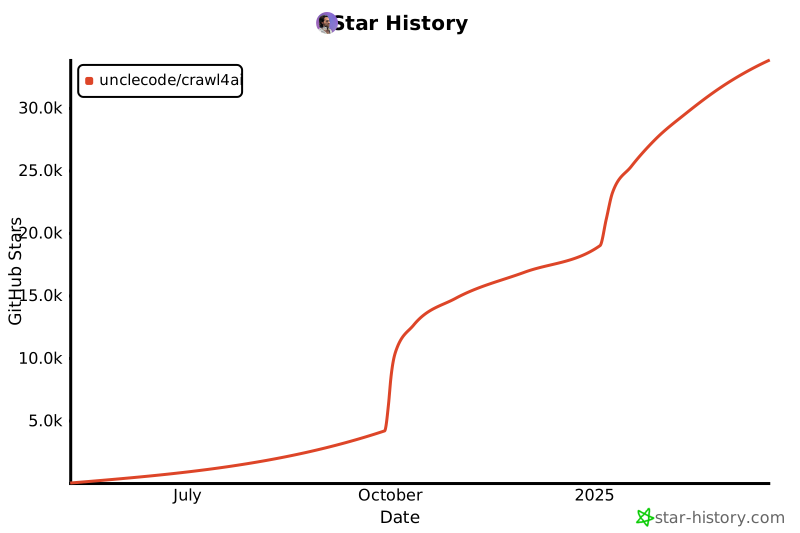](https://star-history.com/#unclecode/crawl4ai&Date)
|
||||
|
||||
@@ -29,6 +29,12 @@ from .extraction_strategy import (
|
||||
)
|
||||
from .chunking_strategy import ChunkingStrategy, RegexChunking
|
||||
from .markdown_generation_strategy import DefaultMarkdownGenerator
|
||||
from .table_extraction import (
|
||||
TableExtractionStrategy,
|
||||
DefaultTableExtraction,
|
||||
NoTableExtraction,
|
||||
LLMTableExtraction,
|
||||
)
|
||||
from .content_filter_strategy import (
|
||||
PruningContentFilter,
|
||||
BM25ContentFilter,
|
||||
@@ -156,6 +162,9 @@ __all__ = [
|
||||
"ChunkingStrategy",
|
||||
"RegexChunking",
|
||||
"DefaultMarkdownGenerator",
|
||||
"TableExtractionStrategy",
|
||||
"DefaultTableExtraction",
|
||||
"NoTableExtraction",
|
||||
"RelevantContentFilter",
|
||||
"PruningContentFilter",
|
||||
"BM25ContentFilter",
|
||||
|
||||
@@ -1,7 +1,7 @@
|
||||
# crawl4ai/__version__.py
|
||||
|
||||
# This is the version that will be used for stable releases
|
||||
__version__ = "0.7.3"
|
||||
__version__ = "0.7.4"
|
||||
|
||||
# For nightly builds, this gets set during build process
|
||||
__nightly_version__ = None
|
||||
|
||||
@@ -20,6 +20,7 @@ from .chunking_strategy import ChunkingStrategy, RegexChunking
|
||||
from .markdown_generation_strategy import MarkdownGenerationStrategy, DefaultMarkdownGenerator
|
||||
from .content_scraping_strategy import ContentScrapingStrategy, LXMLWebScrapingStrategy
|
||||
from .deep_crawling import DeepCrawlStrategy
|
||||
from .table_extraction import TableExtractionStrategy, DefaultTableExtraction
|
||||
|
||||
from .cache_context import CacheMode
|
||||
from .proxy_strategy import ProxyRotationStrategy
|
||||
@@ -982,6 +983,8 @@ class CrawlerRunConfig():
|
||||
Default: False.
|
||||
table_score_threshold (int): Minimum score threshold for processing a table.
|
||||
Default: 7.
|
||||
table_extraction (TableExtractionStrategy): Strategy to use for table extraction.
|
||||
Default: DefaultTableExtraction with table_score_threshold.
|
||||
|
||||
# Virtual Scroll Parameters
|
||||
virtual_scroll_config (VirtualScrollConfig or dict or None): Configuration for handling virtual scroll containers.
|
||||
@@ -1108,6 +1111,7 @@ class CrawlerRunConfig():
|
||||
image_description_min_word_threshold: int = IMAGE_DESCRIPTION_MIN_WORD_THRESHOLD,
|
||||
image_score_threshold: int = IMAGE_SCORE_THRESHOLD,
|
||||
table_score_threshold: int = 7,
|
||||
table_extraction: TableExtractionStrategy = None,
|
||||
exclude_external_images: bool = False,
|
||||
exclude_all_images: bool = False,
|
||||
# Link and Domain Handling Parameters
|
||||
@@ -1224,6 +1228,12 @@ class CrawlerRunConfig():
|
||||
self.exclude_external_images = exclude_external_images
|
||||
self.exclude_all_images = exclude_all_images
|
||||
self.table_score_threshold = table_score_threshold
|
||||
|
||||
# Table extraction strategy (default to DefaultTableExtraction if not specified)
|
||||
if table_extraction is None:
|
||||
self.table_extraction = DefaultTableExtraction(table_score_threshold=table_score_threshold)
|
||||
else:
|
||||
self.table_extraction = table_extraction
|
||||
|
||||
# Link and Domain Handling Parameters
|
||||
self.exclude_social_media_domains = (
|
||||
@@ -1495,6 +1505,7 @@ class CrawlerRunConfig():
|
||||
"image_score_threshold", IMAGE_SCORE_THRESHOLD
|
||||
),
|
||||
table_score_threshold=kwargs.get("table_score_threshold", 7),
|
||||
table_extraction=kwargs.get("table_extraction", None),
|
||||
exclude_all_images=kwargs.get("exclude_all_images", False),
|
||||
exclude_external_images=kwargs.get("exclude_external_images", False),
|
||||
# Link and Domain Handling Parameters
|
||||
@@ -1603,6 +1614,7 @@ class CrawlerRunConfig():
|
||||
"image_description_min_word_threshold": self.image_description_min_word_threshold,
|
||||
"image_score_threshold": self.image_score_threshold,
|
||||
"table_score_threshold": self.table_score_threshold,
|
||||
"table_extraction": self.table_extraction,
|
||||
"exclude_all_images": self.exclude_all_images,
|
||||
"exclude_external_images": self.exclude_external_images,
|
||||
"exclude_social_media_domains": self.exclude_social_media_domains,
|
||||
|
||||
@@ -2129,3 +2129,265 @@ class AsyncPlaywrightCrawlerStrategy(AsyncCrawlerStrategy):
|
||||
return True # Default to scrolling if check fails
|
||||
|
||||
|
||||
####################################################################################################
|
||||
# HTTP Crawler Strategy
|
||||
####################################################################################################
|
||||
|
||||
class HTTPCrawlerError(Exception):
|
||||
"""Base error class for HTTP crawler specific exceptions"""
|
||||
pass
|
||||
|
||||
|
||||
class ConnectionTimeoutError(HTTPCrawlerError):
|
||||
"""Raised when connection timeout occurs"""
|
||||
pass
|
||||
|
||||
|
||||
class HTTPStatusError(HTTPCrawlerError):
|
||||
"""Raised for unexpected status codes"""
|
||||
def __init__(self, status_code: int, message: str):
|
||||
self.status_code = status_code
|
||||
super().__init__(f"HTTP {status_code}: {message}")
|
||||
|
||||
|
||||
class AsyncHTTPCrawlerStrategy(AsyncCrawlerStrategy):
|
||||
"""
|
||||
Fast, lightweight HTTP-only crawler strategy optimized for memory efficiency.
|
||||
"""
|
||||
|
||||
__slots__ = ('logger', 'max_connections', 'dns_cache_ttl', 'chunk_size', '_session', 'hooks', 'browser_config')
|
||||
|
||||
DEFAULT_TIMEOUT: Final[int] = 30
|
||||
DEFAULT_CHUNK_SIZE: Final[int] = 64 * 1024
|
||||
DEFAULT_MAX_CONNECTIONS: Final[int] = min(32, (os.cpu_count() or 1) * 4)
|
||||
DEFAULT_DNS_CACHE_TTL: Final[int] = 300
|
||||
VALID_SCHEMES: Final = frozenset({'http', 'https', 'file', 'raw'})
|
||||
|
||||
_BASE_HEADERS: Final = MappingProxyType({
|
||||
'Accept': 'text/html,application/xhtml+xml,application/xml;q=0.9,*/*;q=0.8',
|
||||
'Accept-Language': 'en-US,en;q=0.5',
|
||||
'Accept-Encoding': 'gzip, deflate, br',
|
||||
'Connection': 'keep-alive',
|
||||
'Upgrade-Insecure-Requests': '1',
|
||||
'User-Agent': 'Mozilla/5.0 (Windows NT 10.0; Win64; x64) AppleWebKit/537.36'
|
||||
})
|
||||
|
||||
def __init__(
|
||||
self,
|
||||
browser_config: Optional[HTTPCrawlerConfig] = None,
|
||||
logger: Optional[AsyncLogger] = None,
|
||||
max_connections: int = DEFAULT_MAX_CONNECTIONS,
|
||||
dns_cache_ttl: int = DEFAULT_DNS_CACHE_TTL,
|
||||
chunk_size: int = DEFAULT_CHUNK_SIZE
|
||||
):
|
||||
"""Initialize the HTTP crawler with config"""
|
||||
self.browser_config = browser_config or HTTPCrawlerConfig()
|
||||
self.logger = logger
|
||||
self.max_connections = max_connections
|
||||
self.dns_cache_ttl = dns_cache_ttl
|
||||
self.chunk_size = chunk_size
|
||||
self._session: Optional[aiohttp.ClientSession] = None
|
||||
|
||||
self.hooks = {
|
||||
k: partial(self._execute_hook, k)
|
||||
for k in ('before_request', 'after_request', 'on_error')
|
||||
}
|
||||
|
||||
# Set default hooks
|
||||
self.set_hook('before_request', lambda *args, **kwargs: None)
|
||||
self.set_hook('after_request', lambda *args, **kwargs: None)
|
||||
self.set_hook('on_error', lambda *args, **kwargs: None)
|
||||
|
||||
|
||||
async def __aenter__(self) -> AsyncHTTPCrawlerStrategy:
|
||||
await self.start()
|
||||
return self
|
||||
|
||||
async def __aexit__(self, exc_type, exc_val, exc_tb) -> None:
|
||||
await self.close()
|
||||
|
||||
@contextlib.asynccontextmanager
|
||||
async def _session_context(self):
|
||||
try:
|
||||
if not self._session:
|
||||
await self.start()
|
||||
yield self._session
|
||||
finally:
|
||||
pass
|
||||
|
||||
def set_hook(self, hook_type: str, hook_func: Callable) -> None:
|
||||
if hook_type in self.hooks:
|
||||
self.hooks[hook_type] = partial(self._execute_hook, hook_type, hook_func)
|
||||
else:
|
||||
raise ValueError(f"Invalid hook type: {hook_type}")
|
||||
|
||||
async def _execute_hook(
|
||||
self,
|
||||
hook_type: str,
|
||||
hook_func: Callable,
|
||||
*args: Any,
|
||||
**kwargs: Any
|
||||
) -> Any:
|
||||
if asyncio.iscoroutinefunction(hook_func):
|
||||
return await hook_func(*args, **kwargs)
|
||||
return hook_func(*args, **kwargs)
|
||||
|
||||
async def start(self) -> None:
|
||||
if not self._session:
|
||||
connector = aiohttp.TCPConnector(
|
||||
limit=self.max_connections,
|
||||
ttl_dns_cache=self.dns_cache_ttl,
|
||||
use_dns_cache=True,
|
||||
force_close=False
|
||||
)
|
||||
self._session = aiohttp.ClientSession(
|
||||
headers=dict(self._BASE_HEADERS),
|
||||
connector=connector,
|
||||
timeout=ClientTimeout(total=self.DEFAULT_TIMEOUT)
|
||||
)
|
||||
|
||||
async def close(self) -> None:
|
||||
if self._session and not self._session.closed:
|
||||
try:
|
||||
await asyncio.wait_for(self._session.close(), timeout=5.0)
|
||||
except asyncio.TimeoutError:
|
||||
if self.logger:
|
||||
self.logger.warning(
|
||||
message="Session cleanup timed out",
|
||||
tag="CLEANUP"
|
||||
)
|
||||
finally:
|
||||
self._session = None
|
||||
|
||||
async def _stream_file(self, path: str) -> AsyncGenerator[memoryview, None]:
|
||||
async with aiofiles.open(path, mode='rb') as f:
|
||||
while chunk := await f.read(self.chunk_size):
|
||||
yield memoryview(chunk)
|
||||
|
||||
async def _handle_file(self, path: str) -> AsyncCrawlResponse:
|
||||
if not os.path.exists(path):
|
||||
raise FileNotFoundError(f"Local file not found: {path}")
|
||||
|
||||
chunks = []
|
||||
async for chunk in self._stream_file(path):
|
||||
chunks.append(chunk.tobytes().decode('utf-8', errors='replace'))
|
||||
|
||||
return AsyncCrawlResponse(
|
||||
html=''.join(chunks),
|
||||
response_headers={},
|
||||
status_code=200
|
||||
)
|
||||
|
||||
async def _handle_raw(self, content: str) -> AsyncCrawlResponse:
|
||||
return AsyncCrawlResponse(
|
||||
html=content,
|
||||
response_headers={},
|
||||
status_code=200
|
||||
)
|
||||
|
||||
|
||||
async def _handle_http(
|
||||
self,
|
||||
url: str,
|
||||
config: CrawlerRunConfig
|
||||
) -> AsyncCrawlResponse:
|
||||
async with self._session_context() as session:
|
||||
timeout = ClientTimeout(
|
||||
total=config.page_timeout or self.DEFAULT_TIMEOUT,
|
||||
connect=10,
|
||||
sock_read=30
|
||||
)
|
||||
|
||||
headers = dict(self._BASE_HEADERS)
|
||||
if self.browser_config.headers:
|
||||
headers.update(self.browser_config.headers)
|
||||
|
||||
request_kwargs = {
|
||||
'timeout': timeout,
|
||||
'allow_redirects': self.browser_config.follow_redirects,
|
||||
'ssl': self.browser_config.verify_ssl,
|
||||
'headers': headers
|
||||
}
|
||||
|
||||
if self.browser_config.method == "POST":
|
||||
if self.browser_config.data:
|
||||
request_kwargs['data'] = self.browser_config.data
|
||||
if self.browser_config.json:
|
||||
request_kwargs['json'] = self.browser_config.json
|
||||
|
||||
await self.hooks['before_request'](url, request_kwargs)
|
||||
|
||||
try:
|
||||
async with session.request(self.browser_config.method, url, **request_kwargs) as response:
|
||||
content = memoryview(await response.read())
|
||||
|
||||
if not (200 <= response.status < 300):
|
||||
raise HTTPStatusError(
|
||||
response.status,
|
||||
f"Unexpected status code for {url}"
|
||||
)
|
||||
|
||||
encoding = response.charset
|
||||
if not encoding:
|
||||
encoding = chardet.detect(content.tobytes())['encoding'] or 'utf-8'
|
||||
|
||||
result = AsyncCrawlResponse(
|
||||
html=content.tobytes().decode(encoding, errors='replace'),
|
||||
response_headers=dict(response.headers),
|
||||
status_code=response.status,
|
||||
redirected_url=str(response.url)
|
||||
)
|
||||
|
||||
await self.hooks['after_request'](result)
|
||||
return result
|
||||
|
||||
except aiohttp.ServerTimeoutError as e:
|
||||
await self.hooks['on_error'](e)
|
||||
raise ConnectionTimeoutError(f"Request timed out: {str(e)}")
|
||||
|
||||
except aiohttp.ClientConnectorError as e:
|
||||
await self.hooks['on_error'](e)
|
||||
raise ConnectionError(f"Connection failed: {str(e)}")
|
||||
|
||||
except aiohttp.ClientError as e:
|
||||
await self.hooks['on_error'](e)
|
||||
raise HTTPCrawlerError(f"HTTP client error: {str(e)}")
|
||||
|
||||
except asyncio.exceptions.TimeoutError as e:
|
||||
await self.hooks['on_error'](e)
|
||||
raise ConnectionTimeoutError(f"Request timed out: {str(e)}")
|
||||
|
||||
except Exception as e:
|
||||
await self.hooks['on_error'](e)
|
||||
raise HTTPCrawlerError(f"HTTP request failed: {str(e)}")
|
||||
|
||||
async def crawl(
|
||||
self,
|
||||
url: str,
|
||||
config: Optional[CrawlerRunConfig] = None,
|
||||
**kwargs
|
||||
) -> AsyncCrawlResponse:
|
||||
config = config or CrawlerRunConfig.from_kwargs(kwargs)
|
||||
|
||||
parsed = urlparse(url)
|
||||
scheme = parsed.scheme.rstrip('/')
|
||||
|
||||
if scheme not in self.VALID_SCHEMES:
|
||||
raise ValueError(f"Unsupported URL scheme: {scheme}")
|
||||
|
||||
try:
|
||||
if scheme == 'file':
|
||||
return await self._handle_file(parsed.path)
|
||||
elif scheme == 'raw':
|
||||
return await self._handle_raw(parsed.path)
|
||||
else: # http or https
|
||||
return await self._handle_http(url, config)
|
||||
|
||||
except Exception as e:
|
||||
if self.logger:
|
||||
self.logger.error(
|
||||
message="Crawl failed: {error}",
|
||||
tag="CRAWL",
|
||||
params={"error": str(e), "url": url}
|
||||
)
|
||||
raise
|
||||
|
||||
@@ -22,7 +22,7 @@ from urllib.parse import urlparse
|
||||
import random
|
||||
from abc import ABC, abstractmethod
|
||||
|
||||
from .memory_utils import get_true_memory_usage_percent
|
||||
from .utils import get_true_memory_usage_percent
|
||||
|
||||
|
||||
class RateLimiter:
|
||||
|
||||
@@ -586,117 +586,6 @@ class LXMLWebScrapingStrategy(ContentScrapingStrategy):
|
||||
|
||||
return root
|
||||
|
||||
def is_data_table(self, table: etree.Element, **kwargs) -> bool:
|
||||
score = 0
|
||||
# Check for thead and tbody
|
||||
has_thead = len(table.xpath(".//thead")) > 0
|
||||
has_tbody = len(table.xpath(".//tbody")) > 0
|
||||
if has_thead:
|
||||
score += 2
|
||||
if has_tbody:
|
||||
score += 1
|
||||
|
||||
# Check for th elements
|
||||
th_count = len(table.xpath(".//th"))
|
||||
if th_count > 0:
|
||||
score += 2
|
||||
if has_thead or table.xpath(".//tr[1]/th"):
|
||||
score += 1
|
||||
|
||||
# Check for nested tables
|
||||
if len(table.xpath(".//table")) > 0:
|
||||
score -= 3
|
||||
|
||||
# Role attribute check
|
||||
role = table.get("role", "").lower()
|
||||
if role in {"presentation", "none"}:
|
||||
score -= 3
|
||||
|
||||
# Column consistency
|
||||
rows = table.xpath(".//tr")
|
||||
if not rows:
|
||||
return False
|
||||
col_counts = [len(row.xpath(".//td|.//th")) for row in rows]
|
||||
avg_cols = sum(col_counts) / len(col_counts)
|
||||
variance = sum((c - avg_cols)**2 for c in col_counts) / len(col_counts)
|
||||
if variance < 1:
|
||||
score += 2
|
||||
|
||||
# Caption and summary
|
||||
if table.xpath(".//caption"):
|
||||
score += 2
|
||||
if table.get("summary"):
|
||||
score += 1
|
||||
|
||||
# Text density
|
||||
total_text = sum(len(''.join(cell.itertext()).strip()) for row in rows for cell in row.xpath(".//td|.//th"))
|
||||
total_tags = sum(1 for _ in table.iterdescendants())
|
||||
text_ratio = total_text / (total_tags + 1e-5)
|
||||
if text_ratio > 20:
|
||||
score += 3
|
||||
elif text_ratio > 10:
|
||||
score += 2
|
||||
|
||||
# Data attributes
|
||||
data_attrs = sum(1 for attr in table.attrib if attr.startswith('data-'))
|
||||
score += data_attrs * 0.5
|
||||
|
||||
# Size check
|
||||
if avg_cols >= 2 and len(rows) >= 2:
|
||||
score += 2
|
||||
|
||||
threshold = kwargs.get("table_score_threshold", 7)
|
||||
return score >= threshold
|
||||
|
||||
def extract_table_data(self, table: etree.Element) -> dict:
|
||||
caption = table.xpath(".//caption/text()")
|
||||
caption = caption[0].strip() if caption else ""
|
||||
summary = table.get("summary", "").strip()
|
||||
|
||||
# Extract headers with colspan handling
|
||||
headers = []
|
||||
thead_rows = table.xpath(".//thead/tr")
|
||||
if thead_rows:
|
||||
header_cells = thead_rows[0].xpath(".//th")
|
||||
for cell in header_cells:
|
||||
text = cell.text_content().strip()
|
||||
colspan = int(cell.get("colspan", 1))
|
||||
headers.extend([text] * colspan)
|
||||
else:
|
||||
first_row = table.xpath(".//tr[1]")
|
||||
if first_row:
|
||||
for cell in first_row[0].xpath(".//th|.//td"):
|
||||
text = cell.text_content().strip()
|
||||
colspan = int(cell.get("colspan", 1))
|
||||
headers.extend([text] * colspan)
|
||||
|
||||
# Extract rows with colspan handling
|
||||
rows = []
|
||||
for row in table.xpath(".//tr[not(ancestor::thead)]"):
|
||||
row_data = []
|
||||
for cell in row.xpath(".//td"):
|
||||
text = cell.text_content().strip()
|
||||
colspan = int(cell.get("colspan", 1))
|
||||
row_data.extend([text] * colspan)
|
||||
if row_data:
|
||||
rows.append(row_data)
|
||||
|
||||
# Align rows with headers
|
||||
max_columns = len(headers) if headers else (max(len(row) for row in rows) if rows else 0)
|
||||
aligned_rows = []
|
||||
for row in rows:
|
||||
aligned = row[:max_columns] + [''] * (max_columns - len(row))
|
||||
aligned_rows.append(aligned)
|
||||
|
||||
if not headers:
|
||||
headers = [f"Column {i+1}" for i in range(max_columns)]
|
||||
|
||||
return {
|
||||
"headers": headers,
|
||||
"rows": aligned_rows,
|
||||
"caption": caption,
|
||||
"summary": summary,
|
||||
}
|
||||
|
||||
def _scrap(
|
||||
self,
|
||||
@@ -839,12 +728,16 @@ class LXMLWebScrapingStrategy(ContentScrapingStrategy):
|
||||
**kwargs,
|
||||
)
|
||||
|
||||
# Extract tables using the table extraction strategy if provided
|
||||
if 'table' not in excluded_tags:
|
||||
tables = body.xpath(".//table")
|
||||
for table in tables:
|
||||
if self.is_data_table(table, **kwargs):
|
||||
table_data = self.extract_table_data(table)
|
||||
media["tables"].append(table_data)
|
||||
table_extraction = kwargs.get('table_extraction')
|
||||
if table_extraction:
|
||||
# Pass logger to the strategy if it doesn't have one
|
||||
if not table_extraction.logger:
|
||||
table_extraction.logger = self.logger
|
||||
# Extract tables using the strategy
|
||||
extracted_tables = table_extraction.extract_tables(body, **kwargs)
|
||||
media["tables"].extend(extracted_tables)
|
||||
|
||||
# Handle only_text option
|
||||
if kwargs.get("only_text", False):
|
||||
|
||||
@@ -1,79 +0,0 @@
|
||||
import psutil
|
||||
import platform
|
||||
import subprocess
|
||||
from typing import Tuple
|
||||
|
||||
|
||||
def get_true_available_memory_gb() -> float:
|
||||
"""Get truly available memory including inactive pages (cross-platform)"""
|
||||
vm = psutil.virtual_memory()
|
||||
|
||||
if platform.system() == 'Darwin': # macOS
|
||||
# On macOS, we need to include inactive memory too
|
||||
try:
|
||||
# Use vm_stat to get accurate values
|
||||
result = subprocess.run(['vm_stat'], capture_output=True, text=True)
|
||||
lines = result.stdout.split('\n')
|
||||
|
||||
page_size = 16384 # macOS page size
|
||||
pages = {}
|
||||
|
||||
for line in lines:
|
||||
if 'Pages free:' in line:
|
||||
pages['free'] = int(line.split()[-1].rstrip('.'))
|
||||
elif 'Pages inactive:' in line:
|
||||
pages['inactive'] = int(line.split()[-1].rstrip('.'))
|
||||
elif 'Pages speculative:' in line:
|
||||
pages['speculative'] = int(line.split()[-1].rstrip('.'))
|
||||
elif 'Pages purgeable:' in line:
|
||||
pages['purgeable'] = int(line.split()[-1].rstrip('.'))
|
||||
|
||||
# Calculate total available (free + inactive + speculative + purgeable)
|
||||
total_available_pages = (
|
||||
pages.get('free', 0) +
|
||||
pages.get('inactive', 0) +
|
||||
pages.get('speculative', 0) +
|
||||
pages.get('purgeable', 0)
|
||||
)
|
||||
available_gb = (total_available_pages * page_size) / (1024**3)
|
||||
|
||||
return available_gb
|
||||
except:
|
||||
# Fallback to psutil
|
||||
return vm.available / (1024**3)
|
||||
else:
|
||||
# For Windows and Linux, psutil.available is accurate
|
||||
return vm.available / (1024**3)
|
||||
|
||||
|
||||
def get_true_memory_usage_percent() -> float:
|
||||
"""
|
||||
Get memory usage percentage that accounts for platform differences.
|
||||
|
||||
Returns:
|
||||
float: Memory usage percentage (0-100)
|
||||
"""
|
||||
vm = psutil.virtual_memory()
|
||||
total_gb = vm.total / (1024**3)
|
||||
available_gb = get_true_available_memory_gb()
|
||||
|
||||
# Calculate used percentage based on truly available memory
|
||||
used_percent = 100.0 * (total_gb - available_gb) / total_gb
|
||||
|
||||
# Ensure it's within valid range
|
||||
return max(0.0, min(100.0, used_percent))
|
||||
|
||||
|
||||
def get_memory_stats() -> Tuple[float, float, float]:
|
||||
"""
|
||||
Get comprehensive memory statistics.
|
||||
|
||||
Returns:
|
||||
Tuple[float, float, float]: (used_percent, available_gb, total_gb)
|
||||
"""
|
||||
vm = psutil.virtual_memory()
|
||||
total_gb = vm.total / (1024**3)
|
||||
available_gb = get_true_available_memory_gb()
|
||||
used_percent = get_true_memory_usage_percent()
|
||||
|
||||
return used_percent, available_gb, total_gb
|
||||
1396
crawl4ai/table_extraction.py
Normal file
1396
crawl4ai/table_extraction.py
Normal file
File diff suppressed because it is too large
Load Diff
@@ -16,7 +16,7 @@ from .config import MIN_WORD_THRESHOLD, IMAGE_DESCRIPTION_MIN_WORD_THRESHOLD, IM
|
||||
import httpx
|
||||
from socket import gaierror
|
||||
from pathlib import Path
|
||||
from typing import Dict, Any, List, Optional, Callable
|
||||
from typing import Dict, Any, List, Optional, Callable, Generator, Tuple, Iterable
|
||||
from urllib.parse import urljoin
|
||||
import requests
|
||||
from requests.exceptions import InvalidSchema
|
||||
@@ -40,8 +40,7 @@ from typing import Sequence
|
||||
|
||||
from itertools import chain
|
||||
from collections import deque
|
||||
from typing import Generator, Iterable
|
||||
|
||||
import psutil
|
||||
import numpy as np
|
||||
|
||||
from urllib.parse import (
|
||||
@@ -3414,3 +3413,79 @@ def cosine_distance(vec1: np.ndarray, vec2: np.ndarray) -> float:
|
||||
"""Calculate cosine distance (1 - similarity) between two vectors"""
|
||||
return 1 - cosine_similarity(vec1, vec2)
|
||||
|
||||
|
||||
# Memory utilities
|
||||
|
||||
def get_true_available_memory_gb() -> float:
|
||||
"""Get truly available memory including inactive pages (cross-platform)"""
|
||||
vm = psutil.virtual_memory()
|
||||
|
||||
if platform.system() == 'Darwin': # macOS
|
||||
# On macOS, we need to include inactive memory too
|
||||
try:
|
||||
# Use vm_stat to get accurate values
|
||||
result = subprocess.run(['vm_stat'], capture_output=True, text=True)
|
||||
lines = result.stdout.split('\n')
|
||||
|
||||
page_size = 16384 # macOS page size
|
||||
pages = {}
|
||||
|
||||
for line in lines:
|
||||
if 'Pages free:' in line:
|
||||
pages['free'] = int(line.split()[-1].rstrip('.'))
|
||||
elif 'Pages inactive:' in line:
|
||||
pages['inactive'] = int(line.split()[-1].rstrip('.'))
|
||||
elif 'Pages speculative:' in line:
|
||||
pages['speculative'] = int(line.split()[-1].rstrip('.'))
|
||||
elif 'Pages purgeable:' in line:
|
||||
pages['purgeable'] = int(line.split()[-1].rstrip('.'))
|
||||
|
||||
# Calculate total available (free + inactive + speculative + purgeable)
|
||||
total_available_pages = (
|
||||
pages.get('free', 0) +
|
||||
pages.get('inactive', 0) +
|
||||
pages.get('speculative', 0) +
|
||||
pages.get('purgeable', 0)
|
||||
)
|
||||
available_gb = (total_available_pages * page_size) / (1024**3)
|
||||
|
||||
return available_gb
|
||||
except:
|
||||
# Fallback to psutil
|
||||
return vm.available / (1024**3)
|
||||
else:
|
||||
# For Windows and Linux, psutil.available is accurate
|
||||
return vm.available / (1024**3)
|
||||
|
||||
|
||||
def get_true_memory_usage_percent() -> float:
|
||||
"""
|
||||
Get memory usage percentage that accounts for platform differences.
|
||||
|
||||
Returns:
|
||||
float: Memory usage percentage (0-100)
|
||||
"""
|
||||
vm = psutil.virtual_memory()
|
||||
total_gb = vm.total / (1024**3)
|
||||
available_gb = get_true_available_memory_gb()
|
||||
|
||||
# Calculate used percentage based on truly available memory
|
||||
used_percent = 100.0 * (total_gb - available_gb) / total_gb
|
||||
|
||||
# Ensure it's within valid range
|
||||
return max(0.0, min(100.0, used_percent))
|
||||
|
||||
|
||||
def get_memory_stats() -> Tuple[float, float, float]:
|
||||
"""
|
||||
Get comprehensive memory statistics.
|
||||
|
||||
Returns:
|
||||
Tuple[float, float, float]: (used_percent, available_gb, total_gb)
|
||||
"""
|
||||
vm = psutil.virtual_memory()
|
||||
total_gb = vm.total / (1024**3)
|
||||
available_gb = get_true_available_memory_gb()
|
||||
used_percent = get_true_memory_usage_percent()
|
||||
|
||||
return used_percent, available_gb, total_gb
|
||||
@@ -12,6 +12,7 @@
|
||||
- [Python SDK](#python-sdk)
|
||||
- [Understanding Request Schema](#understanding-request-schema)
|
||||
- [REST API Examples](#rest-api-examples)
|
||||
- [Asynchronous Jobs with Webhooks](#asynchronous-jobs-with-webhooks)
|
||||
- [Additional API Endpoints](#additional-api-endpoints)
|
||||
- [HTML Extraction Endpoint](#html-extraction-endpoint)
|
||||
- [Screenshot Endpoint](#screenshot-endpoint)
|
||||
@@ -648,6 +649,146 @@ async def test_stream_crawl(token: str = None): # Made token optional
|
||||
# asyncio.run(test_stream_crawl())
|
||||
```
|
||||
|
||||
### Asynchronous Jobs with Webhooks
|
||||
|
||||
For long-running crawls or when you want to avoid keeping connections open, use the job queue endpoints. Instead of polling for results, configure a webhook to receive notifications when jobs complete.
|
||||
|
||||
#### Why Use Jobs & Webhooks?
|
||||
|
||||
- **No Polling Required** - Get notified when crawls complete instead of constantly checking status
|
||||
- **Better Resource Usage** - Free up client connections while jobs run in the background
|
||||
- **Scalable Architecture** - Ideal for high-volume crawling with TypeScript/Node.js clients or microservices
|
||||
- **Reliable Delivery** - Automatic retry with exponential backoff (5 attempts: 1s → 2s → 4s → 8s → 16s)
|
||||
|
||||
#### How It Works
|
||||
|
||||
1. **Submit Job** → POST to `/crawl/job` with optional `webhook_config`
|
||||
2. **Get Task ID** → Receive a `task_id` immediately
|
||||
3. **Job Runs** → Crawl executes in the background
|
||||
4. **Webhook Fired** → Server POSTs completion notification to your webhook URL
|
||||
5. **Fetch Results** → If data wasn't included in webhook, GET `/crawl/job/{task_id}`
|
||||
|
||||
#### Quick Example
|
||||
|
||||
```bash
|
||||
# Submit a crawl job with webhook notification
|
||||
curl -X POST http://localhost:11235/crawl/job \
|
||||
-H "Content-Type: application/json" \
|
||||
-d '{
|
||||
"urls": ["https://example.com"],
|
||||
"webhook_config": {
|
||||
"webhook_url": "https://myapp.com/webhooks/crawl-complete",
|
||||
"webhook_data_in_payload": false
|
||||
}
|
||||
}'
|
||||
|
||||
# Response: {"task_id": "crawl_a1b2c3d4"}
|
||||
```
|
||||
|
||||
**Your webhook receives:**
|
||||
```json
|
||||
{
|
||||
"task_id": "crawl_a1b2c3d4",
|
||||
"task_type": "crawl",
|
||||
"status": "completed",
|
||||
"timestamp": "2025-10-21T10:30:00.000000+00:00",
|
||||
"urls": ["https://example.com"]
|
||||
}
|
||||
```
|
||||
|
||||
Then fetch the results:
|
||||
```bash
|
||||
curl http://localhost:11235/crawl/job/crawl_a1b2c3d4
|
||||
```
|
||||
|
||||
#### Include Data in Webhook
|
||||
|
||||
Set `webhook_data_in_payload: true` to receive the full crawl results directly in the webhook:
|
||||
|
||||
```bash
|
||||
curl -X POST http://localhost:11235/crawl/job \
|
||||
-H "Content-Type: application/json" \
|
||||
-d '{
|
||||
"urls": ["https://example.com"],
|
||||
"webhook_config": {
|
||||
"webhook_url": "https://myapp.com/webhooks/crawl-complete",
|
||||
"webhook_data_in_payload": true
|
||||
}
|
||||
}'
|
||||
```
|
||||
|
||||
**Your webhook receives the complete data:**
|
||||
```json
|
||||
{
|
||||
"task_id": "crawl_a1b2c3d4",
|
||||
"task_type": "crawl",
|
||||
"status": "completed",
|
||||
"timestamp": "2025-10-21T10:30:00.000000+00:00",
|
||||
"urls": ["https://example.com"],
|
||||
"data": {
|
||||
"markdown": "...",
|
||||
"html": "...",
|
||||
"links": {...},
|
||||
"metadata": {...}
|
||||
}
|
||||
}
|
||||
```
|
||||
|
||||
#### Webhook Authentication
|
||||
|
||||
Add custom headers for authentication:
|
||||
|
||||
```json
|
||||
{
|
||||
"urls": ["https://example.com"],
|
||||
"webhook_config": {
|
||||
"webhook_url": "https://myapp.com/webhooks/crawl",
|
||||
"webhook_data_in_payload": false,
|
||||
"webhook_headers": {
|
||||
"X-Webhook-Secret": "your-secret-token",
|
||||
"X-Service-ID": "crawl4ai-prod"
|
||||
}
|
||||
}
|
||||
}
|
||||
```
|
||||
|
||||
#### Global Default Webhook
|
||||
|
||||
Configure a default webhook URL in `config.yml` for all jobs:
|
||||
|
||||
```yaml
|
||||
webhooks:
|
||||
enabled: true
|
||||
default_url: "https://myapp.com/webhooks/default"
|
||||
data_in_payload: false
|
||||
retry:
|
||||
max_attempts: 5
|
||||
initial_delay_ms: 1000
|
||||
max_delay_ms: 32000
|
||||
timeout_ms: 30000
|
||||
```
|
||||
|
||||
Now jobs without `webhook_config` automatically use the default webhook.
|
||||
|
||||
#### Job Status Polling (Without Webhooks)
|
||||
|
||||
If you prefer polling instead of webhooks, just omit `webhook_config`:
|
||||
|
||||
```bash
|
||||
# Submit job
|
||||
curl -X POST http://localhost:11235/crawl/job \
|
||||
-H "Content-Type: application/json" \
|
||||
-d '{"urls": ["https://example.com"]}'
|
||||
# Response: {"task_id": "crawl_xyz"}
|
||||
|
||||
# Poll for status
|
||||
curl http://localhost:11235/crawl/job/crawl_xyz
|
||||
```
|
||||
|
||||
The response includes `status` field: `"processing"`, `"completed"`, or `"failed"`.
|
||||
|
||||
> 💡 **Pro tip**: See [WEBHOOK_EXAMPLES.md](./WEBHOOK_EXAMPLES.md) for detailed examples including TypeScript client code, Flask webhook handlers, and failure handling.
|
||||
|
||||
---
|
||||
|
||||
## Metrics & Monitoring
|
||||
@@ -827,10 +968,11 @@ We're here to help you succeed with Crawl4AI! Here's how to get support:
|
||||
|
||||
In this guide, we've covered everything you need to get started with Crawl4AI's Docker deployment:
|
||||
- Building and running the Docker container
|
||||
- Configuring the environment
|
||||
- Configuring the environment
|
||||
- Using the interactive playground for testing
|
||||
- Making API requests with proper typing
|
||||
- Using the Python SDK
|
||||
- Asynchronous job queues with webhook notifications
|
||||
- Leveraging specialized endpoints for screenshots, PDFs, and JavaScript execution
|
||||
- Connecting via the Model Context Protocol (MCP)
|
||||
- Monitoring your deployment
|
||||
|
||||
378
deploy/docker/WEBHOOK_EXAMPLES.md
Normal file
378
deploy/docker/WEBHOOK_EXAMPLES.md
Normal file
@@ -0,0 +1,378 @@
|
||||
# Webhook Feature Examples
|
||||
|
||||
This document provides examples of how to use the webhook feature for crawl jobs in Crawl4AI.
|
||||
|
||||
## Overview
|
||||
|
||||
The webhook feature allows you to receive notifications when crawl jobs complete, eliminating the need for polling. Webhooks are sent with exponential backoff retry logic to ensure reliable delivery.
|
||||
|
||||
## Configuration
|
||||
|
||||
### Global Configuration (config.yml)
|
||||
|
||||
You can configure default webhook settings in `config.yml`:
|
||||
|
||||
```yaml
|
||||
webhooks:
|
||||
enabled: true
|
||||
default_url: null # Optional: default webhook URL for all jobs
|
||||
data_in_payload: false # Optional: default behavior for including data
|
||||
retry:
|
||||
max_attempts: 5
|
||||
initial_delay_ms: 1000 # 1s, 2s, 4s, 8s, 16s exponential backoff
|
||||
max_delay_ms: 32000
|
||||
timeout_ms: 30000 # 30s timeout per webhook call
|
||||
headers: # Optional: default headers to include
|
||||
User-Agent: "Crawl4AI-Webhook/1.0"
|
||||
```
|
||||
|
||||
## API Usage Examples
|
||||
|
||||
### Example 1: Basic Webhook (Notification Only)
|
||||
|
||||
Send a webhook notification without including the crawl data in the payload.
|
||||
|
||||
**Request:**
|
||||
```bash
|
||||
curl -X POST http://localhost:11235/crawl/job \
|
||||
-H "Content-Type: application/json" \
|
||||
-d '{
|
||||
"urls": ["https://example.com"],
|
||||
"webhook_config": {
|
||||
"webhook_url": "https://myapp.com/webhooks/crawl-complete",
|
||||
"webhook_data_in_payload": false
|
||||
}
|
||||
}'
|
||||
```
|
||||
|
||||
**Response:**
|
||||
```json
|
||||
{
|
||||
"task_id": "crawl_a1b2c3d4"
|
||||
}
|
||||
```
|
||||
|
||||
**Webhook Payload Received:**
|
||||
```json
|
||||
{
|
||||
"task_id": "crawl_a1b2c3d4",
|
||||
"task_type": "crawl",
|
||||
"status": "completed",
|
||||
"timestamp": "2025-10-21T10:30:00.000000+00:00",
|
||||
"urls": ["https://example.com"]
|
||||
}
|
||||
```
|
||||
|
||||
Your webhook handler should then fetch the results:
|
||||
```bash
|
||||
curl http://localhost:11235/crawl/job/crawl_a1b2c3d4
|
||||
```
|
||||
|
||||
### Example 2: Webhook with Data Included
|
||||
|
||||
Include the full crawl results in the webhook payload.
|
||||
|
||||
**Request:**
|
||||
```bash
|
||||
curl -X POST http://localhost:11235/crawl/job \
|
||||
-H "Content-Type: application/json" \
|
||||
-d '{
|
||||
"urls": ["https://example.com"],
|
||||
"webhook_config": {
|
||||
"webhook_url": "https://myapp.com/webhooks/crawl-complete",
|
||||
"webhook_data_in_payload": true
|
||||
}
|
||||
}'
|
||||
```
|
||||
|
||||
**Webhook Payload Received:**
|
||||
```json
|
||||
{
|
||||
"task_id": "crawl_a1b2c3d4",
|
||||
"task_type": "crawl",
|
||||
"status": "completed",
|
||||
"timestamp": "2025-10-21T10:30:00.000000+00:00",
|
||||
"urls": ["https://example.com"],
|
||||
"data": {
|
||||
"markdown": "...",
|
||||
"html": "...",
|
||||
"links": {...},
|
||||
"metadata": {...}
|
||||
}
|
||||
}
|
||||
```
|
||||
|
||||
### Example 3: Webhook with Custom Headers
|
||||
|
||||
Include custom headers for authentication or identification.
|
||||
|
||||
**Request:**
|
||||
```bash
|
||||
curl -X POST http://localhost:11235/crawl/job \
|
||||
-H "Content-Type: application/json" \
|
||||
-d '{
|
||||
"urls": ["https://example.com"],
|
||||
"webhook_config": {
|
||||
"webhook_url": "https://myapp.com/webhooks/crawl-complete",
|
||||
"webhook_data_in_payload": false,
|
||||
"webhook_headers": {
|
||||
"X-Webhook-Secret": "my-secret-token",
|
||||
"X-Service-ID": "crawl4ai-production"
|
||||
}
|
||||
}
|
||||
}'
|
||||
```
|
||||
|
||||
The webhook will be sent with these additional headers plus the default headers from config.
|
||||
|
||||
### Example 4: Failure Notification
|
||||
|
||||
When a crawl job fails, a webhook is sent with error details.
|
||||
|
||||
**Webhook Payload on Failure:**
|
||||
```json
|
||||
{
|
||||
"task_id": "crawl_a1b2c3d4",
|
||||
"task_type": "crawl",
|
||||
"status": "failed",
|
||||
"timestamp": "2025-10-21T10:30:00.000000+00:00",
|
||||
"urls": ["https://example.com"],
|
||||
"error": "Connection timeout after 30s"
|
||||
}
|
||||
```
|
||||
|
||||
### Example 5: Using Global Default Webhook
|
||||
|
||||
If you set a `default_url` in config.yml, jobs without webhook_config will use it:
|
||||
|
||||
**config.yml:**
|
||||
```yaml
|
||||
webhooks:
|
||||
enabled: true
|
||||
default_url: "https://myapp.com/webhooks/default"
|
||||
data_in_payload: false
|
||||
```
|
||||
|
||||
**Request (no webhook_config needed):**
|
||||
```bash
|
||||
curl -X POST http://localhost:11235/crawl/job \
|
||||
-H "Content-Type: application/json" \
|
||||
-d '{
|
||||
"urls": ["https://example.com"]
|
||||
}'
|
||||
```
|
||||
|
||||
The webhook will be sent to the default URL configured in config.yml.
|
||||
|
||||
### Example 6: LLM Extraction Job with Webhook
|
||||
|
||||
Use webhooks with the LLM extraction endpoint for asynchronous processing.
|
||||
|
||||
**Request:**
|
||||
```bash
|
||||
curl -X POST http://localhost:11235/llm/job \
|
||||
-H "Content-Type: application/json" \
|
||||
-d '{
|
||||
"url": "https://example.com/article",
|
||||
"q": "Extract the article title, author, and publication date",
|
||||
"schema": "{\"type\": \"object\", \"properties\": {\"title\": {\"type\": \"string\"}, \"author\": {\"type\": \"string\"}, \"date\": {\"type\": \"string\"}}}",
|
||||
"cache": false,
|
||||
"provider": "openai/gpt-4o-mini",
|
||||
"webhook_config": {
|
||||
"webhook_url": "https://myapp.com/webhooks/llm-complete",
|
||||
"webhook_data_in_payload": true
|
||||
}
|
||||
}'
|
||||
```
|
||||
|
||||
**Response:**
|
||||
```json
|
||||
{
|
||||
"task_id": "llm_1698765432_12345"
|
||||
}
|
||||
```
|
||||
|
||||
**Webhook Payload Received:**
|
||||
```json
|
||||
{
|
||||
"task_id": "llm_1698765432_12345",
|
||||
"task_type": "llm_extraction",
|
||||
"status": "completed",
|
||||
"timestamp": "2025-10-21T10:30:00.000000+00:00",
|
||||
"urls": ["https://example.com/article"],
|
||||
"data": {
|
||||
"extracted_content": {
|
||||
"title": "Understanding Web Scraping",
|
||||
"author": "John Doe",
|
||||
"date": "2025-10-21"
|
||||
}
|
||||
}
|
||||
}
|
||||
```
|
||||
|
||||
## Webhook Handler Example
|
||||
|
||||
Here's a simple Python Flask webhook handler that supports both crawl and LLM extraction jobs:
|
||||
|
||||
```python
|
||||
from flask import Flask, request, jsonify
|
||||
import requests
|
||||
|
||||
app = Flask(__name__)
|
||||
|
||||
@app.route('/webhooks/crawl-complete', methods=['POST'])
|
||||
def handle_crawl_webhook():
|
||||
payload = request.json
|
||||
|
||||
task_id = payload['task_id']
|
||||
task_type = payload['task_type']
|
||||
status = payload['status']
|
||||
|
||||
if status == 'completed':
|
||||
# If data not in payload, fetch it
|
||||
if 'data' not in payload:
|
||||
# Determine endpoint based on task type
|
||||
endpoint = 'crawl' if task_type == 'crawl' else 'llm'
|
||||
response = requests.get(f'http://localhost:11235/{endpoint}/job/{task_id}')
|
||||
data = response.json()
|
||||
else:
|
||||
data = payload['data']
|
||||
|
||||
# Process based on task type
|
||||
if task_type == 'crawl':
|
||||
print(f"Processing crawl results for {task_id}")
|
||||
# Handle crawl results
|
||||
results = data.get('results', [])
|
||||
for result in results:
|
||||
print(f" - {result.get('url')}: {len(result.get('markdown', ''))} chars")
|
||||
|
||||
elif task_type == 'llm_extraction':
|
||||
print(f"Processing LLM extraction for {task_id}")
|
||||
# Handle LLM extraction
|
||||
# Note: Webhook sends 'extracted_content', API returns 'result'
|
||||
extracted = data.get('extracted_content', data.get('result', {}))
|
||||
print(f" - Extracted: {extracted}")
|
||||
|
||||
# Your business logic here...
|
||||
|
||||
elif status == 'failed':
|
||||
error = payload.get('error', 'Unknown error')
|
||||
print(f"{task_type} job {task_id} failed: {error}")
|
||||
# Handle failure...
|
||||
|
||||
return jsonify({"status": "received"}), 200
|
||||
|
||||
if __name__ == '__main__':
|
||||
app.run(port=8080)
|
||||
```
|
||||
|
||||
## Retry Logic
|
||||
|
||||
The webhook delivery service uses exponential backoff retry logic:
|
||||
|
||||
- **Attempts:** Up to 5 attempts by default
|
||||
- **Delays:** 1s → 2s → 4s → 8s → 16s
|
||||
- **Timeout:** 30 seconds per attempt
|
||||
- **Retry Conditions:**
|
||||
- Server errors (5xx status codes)
|
||||
- Network errors
|
||||
- Timeouts
|
||||
- **No Retry:**
|
||||
- Client errors (4xx status codes)
|
||||
- Successful delivery (2xx status codes)
|
||||
|
||||
## Benefits
|
||||
|
||||
1. **No Polling Required** - Eliminates constant API calls to check job status
|
||||
2. **Real-time Notifications** - Immediate notification when jobs complete
|
||||
3. **Reliable Delivery** - Exponential backoff ensures webhooks are delivered
|
||||
4. **Flexible** - Choose between notification-only or full data delivery
|
||||
5. **Secure** - Support for custom headers for authentication
|
||||
6. **Configurable** - Global defaults or per-job configuration
|
||||
7. **Universal Support** - Works with both `/crawl/job` and `/llm/job` endpoints
|
||||
|
||||
## TypeScript Client Example
|
||||
|
||||
```typescript
|
||||
interface WebhookConfig {
|
||||
webhook_url: string;
|
||||
webhook_data_in_payload?: boolean;
|
||||
webhook_headers?: Record<string, string>;
|
||||
}
|
||||
|
||||
interface CrawlJobRequest {
|
||||
urls: string[];
|
||||
browser_config?: Record<string, any>;
|
||||
crawler_config?: Record<string, any>;
|
||||
webhook_config?: WebhookConfig;
|
||||
}
|
||||
|
||||
interface LLMJobRequest {
|
||||
url: string;
|
||||
q: string;
|
||||
schema?: string;
|
||||
cache?: boolean;
|
||||
provider?: string;
|
||||
webhook_config?: WebhookConfig;
|
||||
}
|
||||
|
||||
async function createCrawlJob(request: CrawlJobRequest) {
|
||||
const response = await fetch('http://localhost:11235/crawl/job', {
|
||||
method: 'POST',
|
||||
headers: { 'Content-Type': 'application/json' },
|
||||
body: JSON.stringify(request)
|
||||
});
|
||||
|
||||
const { task_id } = await response.json();
|
||||
return task_id;
|
||||
}
|
||||
|
||||
async function createLLMJob(request: LLMJobRequest) {
|
||||
const response = await fetch('http://localhost:11235/llm/job', {
|
||||
method: 'POST',
|
||||
headers: { 'Content-Type': 'application/json' },
|
||||
body: JSON.stringify(request)
|
||||
});
|
||||
|
||||
const { task_id } = await response.json();
|
||||
return task_id;
|
||||
}
|
||||
|
||||
// Usage - Crawl Job
|
||||
const crawlTaskId = await createCrawlJob({
|
||||
urls: ['https://example.com'],
|
||||
webhook_config: {
|
||||
webhook_url: 'https://myapp.com/webhooks/crawl-complete',
|
||||
webhook_data_in_payload: false,
|
||||
webhook_headers: {
|
||||
'X-Webhook-Secret': 'my-secret'
|
||||
}
|
||||
}
|
||||
});
|
||||
|
||||
// Usage - LLM Extraction Job
|
||||
const llmTaskId = await createLLMJob({
|
||||
url: 'https://example.com/article',
|
||||
q: 'Extract the main points from this article',
|
||||
provider: 'openai/gpt-4o-mini',
|
||||
webhook_config: {
|
||||
webhook_url: 'https://myapp.com/webhooks/llm-complete',
|
||||
webhook_data_in_payload: true,
|
||||
webhook_headers: {
|
||||
'X-Webhook-Secret': 'my-secret'
|
||||
}
|
||||
}
|
||||
});
|
||||
```
|
||||
|
||||
## Monitoring and Debugging
|
||||
|
||||
Webhook delivery attempts are logged at INFO level:
|
||||
- Successful deliveries
|
||||
- Retry attempts with delays
|
||||
- Final failures after max attempts
|
||||
|
||||
Check the application logs for webhook delivery status:
|
||||
```bash
|
||||
docker logs crawl4ai-container | grep -i webhook
|
||||
```
|
||||
@@ -44,6 +44,7 @@ from utils import (
|
||||
get_llm_api_key,
|
||||
validate_llm_provider
|
||||
)
|
||||
from webhook import WebhookDeliveryService
|
||||
|
||||
import psutil, time
|
||||
|
||||
@@ -115,9 +116,13 @@ async def process_llm_extraction(
|
||||
instruction: str,
|
||||
schema: Optional[str] = None,
|
||||
cache: str = "0",
|
||||
provider: Optional[str] = None
|
||||
provider: Optional[str] = None,
|
||||
webhook_config: Optional[Dict] = None
|
||||
) -> None:
|
||||
"""Process LLM extraction in background."""
|
||||
# Initialize webhook service
|
||||
webhook_service = WebhookDeliveryService(config)
|
||||
|
||||
try:
|
||||
# Validate provider
|
||||
is_valid, error_msg = validate_llm_provider(config, provider)
|
||||
@@ -126,6 +131,16 @@ async def process_llm_extraction(
|
||||
"status": TaskStatus.FAILED,
|
||||
"error": error_msg
|
||||
})
|
||||
|
||||
# Send webhook notification on failure
|
||||
await webhook_service.notify_job_completion(
|
||||
task_id=task_id,
|
||||
task_type="llm_extraction",
|
||||
status="failed",
|
||||
urls=[url],
|
||||
webhook_config=webhook_config,
|
||||
error=error_msg
|
||||
)
|
||||
return
|
||||
api_key = get_llm_api_key(config, provider)
|
||||
llm_strategy = LLMExtractionStrategy(
|
||||
@@ -154,17 +169,40 @@ async def process_llm_extraction(
|
||||
"status": TaskStatus.FAILED,
|
||||
"error": result.error_message
|
||||
})
|
||||
|
||||
# Send webhook notification on failure
|
||||
await webhook_service.notify_job_completion(
|
||||
task_id=task_id,
|
||||
task_type="llm_extraction",
|
||||
status="failed",
|
||||
urls=[url],
|
||||
webhook_config=webhook_config,
|
||||
error=result.error_message
|
||||
)
|
||||
return
|
||||
|
||||
try:
|
||||
content = json.loads(result.extracted_content)
|
||||
except json.JSONDecodeError:
|
||||
content = result.extracted_content
|
||||
|
||||
result_data = {"extracted_content": content}
|
||||
|
||||
await redis.hset(f"task:{task_id}", mapping={
|
||||
"status": TaskStatus.COMPLETED,
|
||||
"result": json.dumps(content)
|
||||
})
|
||||
|
||||
# Send webhook notification on successful completion
|
||||
await webhook_service.notify_job_completion(
|
||||
task_id=task_id,
|
||||
task_type="llm_extraction",
|
||||
status="completed",
|
||||
urls=[url],
|
||||
webhook_config=webhook_config,
|
||||
result=result_data
|
||||
)
|
||||
|
||||
except Exception as e:
|
||||
logger.error(f"LLM extraction error: {str(e)}", exc_info=True)
|
||||
await redis.hset(f"task:{task_id}", mapping={
|
||||
@@ -172,6 +210,16 @@ async def process_llm_extraction(
|
||||
"error": str(e)
|
||||
})
|
||||
|
||||
# Send webhook notification on failure
|
||||
await webhook_service.notify_job_completion(
|
||||
task_id=task_id,
|
||||
task_type="llm_extraction",
|
||||
status="failed",
|
||||
urls=[url],
|
||||
webhook_config=webhook_config,
|
||||
error=str(e)
|
||||
)
|
||||
|
||||
async def handle_markdown_request(
|
||||
url: str,
|
||||
filter_type: FilterType,
|
||||
@@ -248,7 +296,8 @@ async def handle_llm_request(
|
||||
schema: Optional[str] = None,
|
||||
cache: str = "0",
|
||||
config: Optional[dict] = None,
|
||||
provider: Optional[str] = None
|
||||
provider: Optional[str] = None,
|
||||
webhook_config: Optional[Dict] = None,
|
||||
) -> JSONResponse:
|
||||
"""Handle LLM extraction requests."""
|
||||
base_url = get_base_url(request)
|
||||
@@ -279,7 +328,8 @@ async def handle_llm_request(
|
||||
cache,
|
||||
base_url,
|
||||
config,
|
||||
provider
|
||||
provider,
|
||||
webhook_config
|
||||
)
|
||||
|
||||
except Exception as e:
|
||||
@@ -324,7 +374,8 @@ async def create_new_task(
|
||||
cache: str,
|
||||
base_url: str,
|
||||
config: dict,
|
||||
provider: Optional[str] = None
|
||||
provider: Optional[str] = None,
|
||||
webhook_config: Optional[Dict] = None
|
||||
) -> JSONResponse:
|
||||
"""Create and initialize a new task."""
|
||||
decoded_url = unquote(input_path)
|
||||
@@ -333,12 +384,18 @@ async def create_new_task(
|
||||
|
||||
from datetime import datetime
|
||||
task_id = f"llm_{int(datetime.now().timestamp())}_{id(background_tasks)}"
|
||||
|
||||
await redis.hset(f"task:{task_id}", mapping={
|
||||
|
||||
task_data = {
|
||||
"status": TaskStatus.PROCESSING,
|
||||
"created_at": datetime.now().isoformat(),
|
||||
"url": decoded_url
|
||||
})
|
||||
}
|
||||
|
||||
# Store webhook config if provided
|
||||
if webhook_config:
|
||||
task_data["webhook_config"] = json.dumps(webhook_config)
|
||||
|
||||
await redis.hset(f"task:{task_id}", mapping=task_data)
|
||||
|
||||
background_tasks.add_task(
|
||||
process_llm_extraction,
|
||||
@@ -349,7 +406,8 @@ async def create_new_task(
|
||||
query,
|
||||
schema,
|
||||
cache,
|
||||
provider
|
||||
provider,
|
||||
webhook_config
|
||||
)
|
||||
|
||||
return JSONResponse({
|
||||
@@ -567,6 +625,7 @@ async def handle_crawl_job(
|
||||
browser_config: Dict,
|
||||
crawler_config: Dict,
|
||||
config: Dict,
|
||||
webhook_config: Optional[Dict] = None,
|
||||
) -> Dict:
|
||||
"""
|
||||
Fire-and-forget version of handle_crawl_request.
|
||||
@@ -574,13 +633,24 @@ async def handle_crawl_job(
|
||||
lets /crawl/job/{task_id} polling fetch the result.
|
||||
"""
|
||||
task_id = f"crawl_{uuid4().hex[:8]}"
|
||||
await redis.hset(f"task:{task_id}", mapping={
|
||||
|
||||
# Store task data in Redis
|
||||
task_data = {
|
||||
"status": TaskStatus.PROCESSING, # <-- keep enum values consistent
|
||||
"created_at": datetime.utcnow().isoformat(),
|
||||
"url": json.dumps(urls), # store list as JSON string
|
||||
"result": "",
|
||||
"error": "",
|
||||
})
|
||||
}
|
||||
|
||||
# Store webhook config if provided
|
||||
if webhook_config:
|
||||
task_data["webhook_config"] = json.dumps(webhook_config)
|
||||
|
||||
await redis.hset(f"task:{task_id}", mapping=task_data)
|
||||
|
||||
# Initialize webhook service
|
||||
webhook_service = WebhookDeliveryService(config)
|
||||
|
||||
async def _runner():
|
||||
try:
|
||||
@@ -594,6 +664,17 @@ async def handle_crawl_job(
|
||||
"status": TaskStatus.COMPLETED,
|
||||
"result": json.dumps(result),
|
||||
})
|
||||
|
||||
# Send webhook notification on successful completion
|
||||
await webhook_service.notify_job_completion(
|
||||
task_id=task_id,
|
||||
task_type="crawl",
|
||||
status="completed",
|
||||
urls=urls,
|
||||
webhook_config=webhook_config,
|
||||
result=result
|
||||
)
|
||||
|
||||
await asyncio.sleep(5) # Give Redis time to process the update
|
||||
except Exception as exc:
|
||||
await redis.hset(f"task:{task_id}", mapping={
|
||||
@@ -601,5 +682,15 @@ async def handle_crawl_job(
|
||||
"error": str(exc),
|
||||
})
|
||||
|
||||
# Send webhook notification on failure
|
||||
await webhook_service.notify_job_completion(
|
||||
task_id=task_id,
|
||||
task_type="crawl",
|
||||
status="failed",
|
||||
urls=urls,
|
||||
webhook_config=webhook_config,
|
||||
error=str(exc)
|
||||
)
|
||||
|
||||
background_tasks.add_task(_runner)
|
||||
return {"task_id": task_id}
|
||||
@@ -88,4 +88,17 @@ observability:
|
||||
enabled: True
|
||||
endpoint: "/metrics"
|
||||
health_check:
|
||||
endpoint: "/health"
|
||||
endpoint: "/health"
|
||||
|
||||
# Webhook Configuration
|
||||
webhooks:
|
||||
enabled: true
|
||||
default_url: null # Optional: default webhook URL for all jobs
|
||||
data_in_payload: false # Optional: default behavior for including data
|
||||
retry:
|
||||
max_attempts: 5
|
||||
initial_delay_ms: 1000 # 1s, 2s, 4s, 8s, 16s exponential backoff
|
||||
max_delay_ms: 32000
|
||||
timeout_ms: 30000 # 30s timeout per webhook call
|
||||
headers: # Optional: default headers to include
|
||||
User-Agent: "Crawl4AI-Webhook/1.0"
|
||||
@@ -12,6 +12,7 @@ from api import (
|
||||
handle_crawl_job,
|
||||
handle_task_status,
|
||||
)
|
||||
from schemas import WebhookConfig
|
||||
|
||||
# ------------- dependency placeholders -------------
|
||||
_redis = None # will be injected from server.py
|
||||
@@ -37,12 +38,14 @@ class LlmJobPayload(BaseModel):
|
||||
schema: Optional[str] = None
|
||||
cache: bool = False
|
||||
provider: Optional[str] = None
|
||||
webhook_config: Optional[WebhookConfig] = None
|
||||
|
||||
|
||||
class CrawlJobPayload(BaseModel):
|
||||
urls: list[HttpUrl]
|
||||
browser_config: Dict = {}
|
||||
crawler_config: Dict = {}
|
||||
webhook_config: Optional[WebhookConfig] = None
|
||||
|
||||
|
||||
# ---------- LLM job ---------------------------------------------------------
|
||||
@@ -53,6 +56,10 @@ async def llm_job_enqueue(
|
||||
request: Request,
|
||||
_td: Dict = Depends(lambda: _token_dep()), # late-bound dep
|
||||
):
|
||||
webhook_config = None
|
||||
if payload.webhook_config:
|
||||
webhook_config = payload.webhook_config.model_dump(mode='json')
|
||||
|
||||
return await handle_llm_request(
|
||||
_redis,
|
||||
background_tasks,
|
||||
@@ -63,6 +70,7 @@ async def llm_job_enqueue(
|
||||
cache=payload.cache,
|
||||
config=_config,
|
||||
provider=payload.provider,
|
||||
webhook_config=webhook_config,
|
||||
)
|
||||
|
||||
|
||||
@@ -72,7 +80,7 @@ async def llm_job_status(
|
||||
task_id: str,
|
||||
_td: Dict = Depends(lambda: _token_dep())
|
||||
):
|
||||
return await handle_task_status(_redis, task_id)
|
||||
return await handle_task_status(_redis, task_id, base_url=str(request.base_url))
|
||||
|
||||
|
||||
# ---------- CRAWL job -------------------------------------------------------
|
||||
@@ -82,6 +90,10 @@ async def crawl_job_enqueue(
|
||||
background_tasks: BackgroundTasks,
|
||||
_td: Dict = Depends(lambda: _token_dep()),
|
||||
):
|
||||
webhook_config = None
|
||||
if payload.webhook_config:
|
||||
webhook_config = payload.webhook_config.model_dump(mode='json')
|
||||
|
||||
return await handle_crawl_job(
|
||||
_redis,
|
||||
background_tasks,
|
||||
@@ -89,6 +101,7 @@ async def crawl_job_enqueue(
|
||||
payload.browser_config,
|
||||
payload.crawler_config,
|
||||
config=_config,
|
||||
webhook_config=webhook_config,
|
||||
)
|
||||
|
||||
|
||||
|
||||
@@ -12,6 +12,6 @@ pydantic>=2.11
|
||||
rank-bm25==0.2.2
|
||||
anyio==4.9.0
|
||||
PyJWT==2.10.1
|
||||
mcp>=1.6.0
|
||||
mcp>=1.18.0
|
||||
websockets>=15.0.1
|
||||
httpx[http2]>=0.27.2
|
||||
|
||||
@@ -1,6 +1,6 @@
|
||||
from typing import List, Optional, Dict
|
||||
from enum import Enum
|
||||
from pydantic import BaseModel, Field
|
||||
from pydantic import BaseModel, Field, HttpUrl
|
||||
from utils import FilterType
|
||||
|
||||
|
||||
@@ -39,4 +39,22 @@ class JSEndpointRequest(BaseModel):
|
||||
scripts: List[str] = Field(
|
||||
...,
|
||||
description="List of separated JavaScript snippets to execute"
|
||||
)
|
||||
)
|
||||
|
||||
|
||||
class WebhookConfig(BaseModel):
|
||||
"""Configuration for webhook notifications."""
|
||||
webhook_url: HttpUrl
|
||||
webhook_data_in_payload: bool = False
|
||||
webhook_headers: Optional[Dict[str, str]] = None
|
||||
|
||||
|
||||
class WebhookPayload(BaseModel):
|
||||
"""Payload sent to webhook endpoints."""
|
||||
task_id: str
|
||||
task_type: str # "crawl", "llm_extraction", etc.
|
||||
status: str # "completed" or "failed"
|
||||
timestamp: str # ISO 8601 format
|
||||
urls: List[str]
|
||||
error: Optional[str] = None
|
||||
data: Optional[Dict] = None # Included only if webhook_data_in_payload=True
|
||||
159
deploy/docker/webhook.py
Normal file
159
deploy/docker/webhook.py
Normal file
@@ -0,0 +1,159 @@
|
||||
"""
|
||||
Webhook delivery service for Crawl4AI.
|
||||
|
||||
This module provides webhook notification functionality with exponential backoff retry logic.
|
||||
"""
|
||||
import asyncio
|
||||
import httpx
|
||||
import logging
|
||||
from typing import Dict, Optional
|
||||
from datetime import datetime, timezone
|
||||
|
||||
logger = logging.getLogger(__name__)
|
||||
|
||||
|
||||
class WebhookDeliveryService:
|
||||
"""Handles webhook delivery with exponential backoff retry logic."""
|
||||
|
||||
def __init__(self, config: Dict):
|
||||
"""
|
||||
Initialize the webhook delivery service.
|
||||
|
||||
Args:
|
||||
config: Application configuration dictionary containing webhook settings
|
||||
"""
|
||||
self.config = config.get("webhooks", {})
|
||||
self.max_attempts = self.config.get("retry", {}).get("max_attempts", 5)
|
||||
self.initial_delay = self.config.get("retry", {}).get("initial_delay_ms", 1000) / 1000
|
||||
self.max_delay = self.config.get("retry", {}).get("max_delay_ms", 32000) / 1000
|
||||
self.timeout = self.config.get("retry", {}).get("timeout_ms", 30000) / 1000
|
||||
|
||||
async def send_webhook(
|
||||
self,
|
||||
webhook_url: str,
|
||||
payload: Dict,
|
||||
headers: Optional[Dict[str, str]] = None
|
||||
) -> bool:
|
||||
"""
|
||||
Send webhook with exponential backoff retry logic.
|
||||
|
||||
Args:
|
||||
webhook_url: The URL to send the webhook to
|
||||
payload: The JSON payload to send
|
||||
headers: Optional custom headers
|
||||
|
||||
Returns:
|
||||
bool: True if delivered successfully, False otherwise
|
||||
"""
|
||||
default_headers = self.config.get("headers", {})
|
||||
merged_headers = {**default_headers, **(headers or {})}
|
||||
merged_headers["Content-Type"] = "application/json"
|
||||
|
||||
async with httpx.AsyncClient(timeout=self.timeout) as client:
|
||||
for attempt in range(self.max_attempts):
|
||||
try:
|
||||
logger.info(
|
||||
f"Sending webhook (attempt {attempt + 1}/{self.max_attempts}) to {webhook_url}"
|
||||
)
|
||||
|
||||
response = await client.post(
|
||||
webhook_url,
|
||||
json=payload,
|
||||
headers=merged_headers
|
||||
)
|
||||
|
||||
# Success or client error (don't retry client errors)
|
||||
if response.status_code < 500:
|
||||
if 200 <= response.status_code < 300:
|
||||
logger.info(f"Webhook delivered successfully to {webhook_url}")
|
||||
return True
|
||||
else:
|
||||
logger.warning(
|
||||
f"Webhook rejected with status {response.status_code}: {response.text[:200]}"
|
||||
)
|
||||
return False # Client error - don't retry
|
||||
|
||||
# Server error - retry with backoff
|
||||
logger.warning(
|
||||
f"Webhook failed with status {response.status_code}, will retry"
|
||||
)
|
||||
|
||||
except httpx.TimeoutException as exc:
|
||||
logger.error(f"Webhook timeout (attempt {attempt + 1}): {exc}")
|
||||
except httpx.RequestError as exc:
|
||||
logger.error(f"Webhook request error (attempt {attempt + 1}): {exc}")
|
||||
except Exception as exc:
|
||||
logger.error(f"Webhook delivery error (attempt {attempt + 1}): {exc}")
|
||||
|
||||
# Calculate exponential backoff delay
|
||||
if attempt < self.max_attempts - 1:
|
||||
delay = min(self.initial_delay * (2 ** attempt), self.max_delay)
|
||||
logger.info(f"Retrying in {delay}s...")
|
||||
await asyncio.sleep(delay)
|
||||
|
||||
logger.error(
|
||||
f"Webhook delivery failed after {self.max_attempts} attempts to {webhook_url}"
|
||||
)
|
||||
return False
|
||||
|
||||
async def notify_job_completion(
|
||||
self,
|
||||
task_id: str,
|
||||
task_type: str,
|
||||
status: str,
|
||||
urls: list,
|
||||
webhook_config: Optional[Dict],
|
||||
result: Optional[Dict] = None,
|
||||
error: Optional[str] = None
|
||||
):
|
||||
"""
|
||||
Notify webhook of job completion.
|
||||
|
||||
Args:
|
||||
task_id: The task identifier
|
||||
task_type: Type of task (e.g., "crawl", "llm_extraction")
|
||||
status: Task status ("completed" or "failed")
|
||||
urls: List of URLs that were crawled
|
||||
webhook_config: Webhook configuration from the job request
|
||||
result: Optional crawl result data
|
||||
error: Optional error message if failed
|
||||
"""
|
||||
# Determine webhook URL
|
||||
webhook_url = None
|
||||
data_in_payload = self.config.get("data_in_payload", False)
|
||||
custom_headers = None
|
||||
|
||||
if webhook_config:
|
||||
webhook_url = webhook_config.get("webhook_url")
|
||||
data_in_payload = webhook_config.get("webhook_data_in_payload", data_in_payload)
|
||||
custom_headers = webhook_config.get("webhook_headers")
|
||||
|
||||
if not webhook_url:
|
||||
webhook_url = self.config.get("default_url")
|
||||
|
||||
if not webhook_url:
|
||||
logger.debug("No webhook URL configured, skipping notification")
|
||||
return
|
||||
|
||||
# Check if webhooks are enabled
|
||||
if not self.config.get("enabled", True):
|
||||
logger.debug("Webhooks are disabled, skipping notification")
|
||||
return
|
||||
|
||||
# Build payload
|
||||
payload = {
|
||||
"task_id": task_id,
|
||||
"task_type": task_type,
|
||||
"status": status,
|
||||
"timestamp": datetime.now(timezone.utc).isoformat(),
|
||||
"urls": urls
|
||||
}
|
||||
|
||||
if error:
|
||||
payload["error"] = error
|
||||
|
||||
if data_in_payload and result:
|
||||
payload["data"] = result
|
||||
|
||||
# Send webhook (fire and forget - don't block on completion)
|
||||
await self.send_webhook(webhook_url, payload, custom_headers)
|
||||
305
docs/blog/release-v0.7.4.md
Normal file
305
docs/blog/release-v0.7.4.md
Normal file
@@ -0,0 +1,305 @@
|
||||
# 🚀 Crawl4AI v0.7.4: The Intelligent Table Extraction & Performance Update
|
||||
|
||||
*August 17, 2025 • 6 min read*
|
||||
|
||||
---
|
||||
|
||||
Today I'm releasing Crawl4AI v0.7.4—the Intelligent Table Extraction & Performance Update. This release introduces revolutionary LLM-powered table extraction with intelligent chunking, significant performance improvements for concurrent crawling, enhanced browser management, and critical stability fixes that make Crawl4AI more robust for production workloads.
|
||||
|
||||
## 🎯 What's New at a Glance
|
||||
|
||||
- **🚀 LLMTableExtraction**: Revolutionary table extraction with intelligent chunking for massive tables
|
||||
- **⚡ Enhanced Concurrency**: True concurrency improvements for fast-completing tasks in batch operations
|
||||
- **🧹 Memory Management Refactor**: Streamlined memory utilities and better resource management
|
||||
- **🔧 Browser Manager Fixes**: Resolved race conditions in concurrent page creation
|
||||
- **⌨️ Cross-Platform Browser Profiler**: Improved keyboard handling and quit mechanisms
|
||||
- **🔗 Advanced URL Processing**: Better handling of raw URLs and base tag link resolution
|
||||
- **🛡️ Enhanced Proxy Support**: Flexible proxy configuration with dict and string formats
|
||||
- **🐳 Docker Improvements**: Better API handling and raw HTML support
|
||||
|
||||
## 🚀 LLMTableExtraction: Revolutionary Table Processing
|
||||
|
||||
**The Problem:** Complex tables with rowspan, colspan, nested structures, or massive datasets that traditional HTML parsing can't handle effectively. Large tables that exceed token limits crash extraction processes.
|
||||
|
||||
**My Solution:** I developed LLMTableExtraction—an intelligent table extraction strategy that uses Large Language Models with automatic chunking to handle tables of any size and complexity.
|
||||
|
||||
### Technical Implementation
|
||||
|
||||
```python
|
||||
from crawl4ai import (
|
||||
AsyncWebCrawler,
|
||||
CrawlerRunConfig,
|
||||
LLMConfig,
|
||||
LLMTableExtraction,
|
||||
CacheMode
|
||||
)
|
||||
|
||||
# Configure LLM for table extraction
|
||||
llm_config = LLMConfig(
|
||||
provider="openai/gpt-4.1-mini",
|
||||
api_token="env:OPENAI_API_KEY",
|
||||
temperature=0.1, # Low temperature for consistency
|
||||
max_tokens=32000
|
||||
)
|
||||
|
||||
# Create intelligent table extraction strategy
|
||||
table_strategy = LLMTableExtraction(
|
||||
llm_config=llm_config,
|
||||
verbose=True,
|
||||
max_tries=2,
|
||||
enable_chunking=True, # Handle massive tables
|
||||
chunk_token_threshold=5000, # Smart chunking threshold
|
||||
overlap_threshold=100, # Maintain context between chunks
|
||||
extraction_type="structured" # Get structured data output
|
||||
)
|
||||
|
||||
# Apply to crawler configuration
|
||||
config = CrawlerRunConfig(
|
||||
table_extraction_strategy=table_strategy,
|
||||
cache_mode=CacheMode.BYPASS
|
||||
)
|
||||
|
||||
async with AsyncWebCrawler() as crawler:
|
||||
# Extract complex tables with intelligence
|
||||
result = await crawler.arun(
|
||||
"https://en.wikipedia.org/wiki/List_of_countries_by_GDP",
|
||||
config=config
|
||||
)
|
||||
|
||||
# Access extracted tables directly
|
||||
for i, table in enumerate(result.tables):
|
||||
print(f"Table {i}: {len(table['data'])} rows × {len(table['headers'])} columns")
|
||||
|
||||
# Convert to pandas DataFrame instantly
|
||||
import pandas as pd
|
||||
df = pd.DataFrame(table['data'], columns=table['headers'])
|
||||
print(df.head())
|
||||
```
|
||||
|
||||
**Intelligent Chunking for Massive Tables:**
|
||||
|
||||
```python
|
||||
# Handle tables that exceed token limits
|
||||
large_table_strategy = LLMTableExtraction(
|
||||
llm_config=llm_config,
|
||||
enable_chunking=True,
|
||||
chunk_token_threshold=3000, # Conservative threshold
|
||||
overlap_threshold=150, # Preserve context
|
||||
max_concurrent_chunks=3, # Parallel processing
|
||||
merge_strategy="intelligent" # Smart chunk merging
|
||||
)
|
||||
|
||||
# Process Wikipedia comparison tables, financial reports, etc.
|
||||
config = CrawlerRunConfig(
|
||||
table_extraction_strategy=large_table_strategy,
|
||||
# Target specific table containers
|
||||
css_selector="div.wikitable, table.sortable",
|
||||
delay_before_return_html=2.0
|
||||
)
|
||||
|
||||
result = await crawler.arun(
|
||||
"https://en.wikipedia.org/wiki/Comparison_of_operating_systems",
|
||||
config=config
|
||||
)
|
||||
|
||||
# Tables are automatically chunked, processed, and merged
|
||||
print(f"Extracted {len(result.tables)} complex tables")
|
||||
for table in result.tables:
|
||||
print(f"Merged table: {len(table['data'])} total rows")
|
||||
```
|
||||
|
||||
**Advanced Features:**
|
||||
|
||||
- **Intelligent Chunking**: Automatically splits massive tables while preserving structure
|
||||
- **Context Preservation**: Overlapping chunks maintain column relationships
|
||||
- **Parallel Processing**: Concurrent chunk processing for speed
|
||||
- **Smart Merging**: Reconstructs complete tables from processed chunks
|
||||
- **Complex Structure Support**: Handles rowspan, colspan, nested tables
|
||||
- **Metadata Extraction**: Captures table context, captions, and relationships
|
||||
|
||||
**Expected Real-World Impact:**
|
||||
- **Financial Analysis**: Extract complex earnings tables and financial statements
|
||||
- **Research & Academia**: Process large datasets from Wikipedia, research papers
|
||||
- **E-commerce**: Handle product comparison tables with complex layouts
|
||||
- **Government Data**: Extract census data, statistical tables from official sources
|
||||
- **Competitive Intelligence**: Process competitor pricing and feature tables
|
||||
|
||||
## ⚡ Enhanced Concurrency: True Performance Gains
|
||||
|
||||
**The Problem:** The `arun_many()` method wasn't achieving true concurrency for fast-completing tasks, leading to sequential processing bottlenecks in batch operations.
|
||||
|
||||
**My Solution:** I implemented true concurrency improvements in the dispatcher that enable genuine parallel processing for fast-completing tasks.
|
||||
|
||||
### Performance Optimization
|
||||
|
||||
```python
|
||||
# Before v0.7.4: Sequential-like behavior for fast tasks
|
||||
# After v0.7.4: True concurrency
|
||||
|
||||
async with AsyncWebCrawler() as crawler:
|
||||
# These will now run with true concurrency
|
||||
urls = [
|
||||
"https://httpbin.org/delay/1",
|
||||
"https://httpbin.org/delay/1",
|
||||
"https://httpbin.org/delay/1",
|
||||
"https://httpbin.org/delay/1"
|
||||
]
|
||||
|
||||
# Processes in truly parallel fashion
|
||||
results = await crawler.arun_many(urls)
|
||||
|
||||
# Performance improvement: ~4x faster for fast-completing tasks
|
||||
print(f"Processed {len(results)} URLs with true concurrency")
|
||||
```
|
||||
|
||||
**Expected Real-World Impact:**
|
||||
- **API Crawling**: 3-4x faster processing of REST endpoints and API documentation
|
||||
- **Batch URL Processing**: Significant speedup for large URL lists
|
||||
- **Monitoring Systems**: Faster health checks and status page monitoring
|
||||
- **Data Aggregation**: Improved performance for real-time data collection
|
||||
|
||||
## 🧹 Memory Management Refactor: Cleaner Architecture
|
||||
|
||||
**The Problem:** Memory utilities were scattered and difficult to maintain, with potential import conflicts and unclear organization.
|
||||
|
||||
**My Solution:** I consolidated all memory-related utilities into the main `utils.py` module, creating a cleaner, more maintainable architecture.
|
||||
|
||||
### Improved Memory Handling
|
||||
|
||||
```python
|
||||
# All memory utilities now consolidated
|
||||
from crawl4ai.utils import get_true_memory_usage_percent, MemoryMonitor
|
||||
|
||||
# Enhanced memory monitoring
|
||||
monitor = MemoryMonitor()
|
||||
monitor.start_monitoring()
|
||||
|
||||
async with AsyncWebCrawler() as crawler:
|
||||
# Memory-efficient batch processing
|
||||
results = await crawler.arun_many(large_url_list)
|
||||
|
||||
# Get accurate memory metrics
|
||||
memory_usage = get_true_memory_usage_percent()
|
||||
memory_report = monitor.get_report()
|
||||
|
||||
print(f"Memory efficiency: {memory_report['efficiency']:.1f}%")
|
||||
print(f"Peak usage: {memory_report['peak_mb']:.1f} MB")
|
||||
```
|
||||
|
||||
**Expected Real-World Impact:**
|
||||
- **Production Stability**: More reliable memory tracking and management
|
||||
- **Code Maintainability**: Cleaner architecture for easier debugging
|
||||
- **Import Clarity**: Resolved potential conflicts and import issues
|
||||
- **Developer Experience**: Simpler API for memory monitoring
|
||||
|
||||
## 🔧 Critical Stability Fixes
|
||||
|
||||
### Browser Manager Race Condition Resolution
|
||||
|
||||
**The Problem:** Concurrent page creation in persistent browser contexts caused "Target page/context closed" errors during high-concurrency operations.
|
||||
|
||||
**My Solution:** Implemented thread-safe page creation with proper locking mechanisms.
|
||||
|
||||
```python
|
||||
# Fixed: Safe concurrent page creation
|
||||
browser_config = BrowserConfig(
|
||||
browser_type="chromium",
|
||||
use_persistent_context=True, # Now thread-safe
|
||||
max_concurrent_sessions=10 # Safely handle concurrent requests
|
||||
)
|
||||
|
||||
async with AsyncWebCrawler(config=browser_config) as crawler:
|
||||
# These concurrent operations are now stable
|
||||
tasks = [crawler.arun(url) for url in url_list]
|
||||
results = await asyncio.gather(*tasks) # No more race conditions
|
||||
```
|
||||
|
||||
### Enhanced Browser Profiler
|
||||
|
||||
**The Problem:** Inconsistent keyboard handling across platforms and unreliable quit mechanisms.
|
||||
|
||||
**My Solution:** Cross-platform keyboard listeners with improved quit handling.
|
||||
|
||||
### Advanced URL Processing
|
||||
|
||||
**The Problem:** Raw URL formats (`raw://` and `raw:`) weren't properly handled, and base tag link resolution was incomplete.
|
||||
|
||||
**My Solution:** Enhanced URL preprocessing and base tag support.
|
||||
|
||||
```python
|
||||
# Now properly handles all URL formats
|
||||
urls = [
|
||||
"https://example.com",
|
||||
"raw://static-html-content",
|
||||
"raw:file://local-file.html"
|
||||
]
|
||||
|
||||
# Base tag links are now correctly resolved
|
||||
config = CrawlerRunConfig(
|
||||
include_links=True, # Links properly resolved with base tags
|
||||
resolve_absolute_urls=True
|
||||
)
|
||||
```
|
||||
|
||||
## 🛡️ Enhanced Proxy Configuration
|
||||
|
||||
**The Problem:** Proxy configuration only accepted specific formats, limiting flexibility.
|
||||
|
||||
**My Solution:** Enhanced ProxyConfig to support both dictionary and string formats.
|
||||
|
||||
```python
|
||||
# Multiple proxy configuration formats now supported
|
||||
from crawl4ai import BrowserConfig, ProxyConfig
|
||||
|
||||
# String format
|
||||
proxy_config = ProxyConfig("http://proxy.example.com:8080")
|
||||
|
||||
# Dictionary format
|
||||
proxy_config = ProxyConfig({
|
||||
"server": "http://proxy.example.com:8080",
|
||||
"username": "user",
|
||||
"password": "pass"
|
||||
})
|
||||
|
||||
# Use with crawler
|
||||
browser_config = BrowserConfig(proxy_config=proxy_config)
|
||||
async with AsyncWebCrawler(config=browser_config) as crawler:
|
||||
result = await crawler.arun("https://httpbin.org/ip")
|
||||
```
|
||||
|
||||
## 🐳 Docker & Infrastructure Improvements
|
||||
|
||||
This release includes several Docker and infrastructure improvements:
|
||||
|
||||
- **Better API Token Handling**: Improved Docker example scripts with correct endpoints
|
||||
- **Raw HTML Support**: Enhanced Docker API to handle raw HTML content properly
|
||||
- **Documentation Updates**: Comprehensive Docker deployment examples
|
||||
- **Test Coverage**: Expanded test suite with better coverage
|
||||
|
||||
## 📚 Documentation & Examples
|
||||
|
||||
Enhanced documentation includes:
|
||||
|
||||
- **LLM Table Extraction Guide**: Comprehensive examples and best practices
|
||||
- **Migration Documentation**: Updated patterns for new table extraction methods
|
||||
- **Docker Deployment**: Complete deployment guide with examples
|
||||
- **Performance Optimization**: Guidelines for concurrent crawling
|
||||
|
||||
## 🙏 Acknowledgments
|
||||
|
||||
Thanks to our contributors and community for feedback, bug reports, and feature requests that made this release possible.
|
||||
|
||||
## 📚 Resources
|
||||
|
||||
- [Full Documentation](https://docs.crawl4ai.com)
|
||||
- [GitHub Repository](https://github.com/unclecode/crawl4ai)
|
||||
- [Discord Community](https://discord.gg/crawl4ai)
|
||||
- [LLM Table Extraction Examples](https://github.com/unclecode/crawl4ai/blob/main/docs/examples/llm_table_extraction_example.py)
|
||||
|
||||
---
|
||||
|
||||
*Crawl4AI v0.7.4 delivers intelligent table extraction and significant performance improvements. The new LLMTableExtraction strategy handles complex tables that were previously impossible to process, while concurrency improvements make batch operations 3-4x faster. Try the intelligent table extraction—it's a game changer for data extraction workflows!*
|
||||
|
||||
**Happy Crawling! 🕷️**
|
||||
|
||||
*- The Crawl4AI Team*
|
||||
461
docs/examples/docker_webhook_example.py
Normal file
461
docs/examples/docker_webhook_example.py
Normal file
@@ -0,0 +1,461 @@
|
||||
"""
|
||||
Docker Webhook Example for Crawl4AI
|
||||
|
||||
This example demonstrates how to use webhooks with the Crawl4AI job queue API.
|
||||
Instead of polling for results, webhooks notify your application when jobs complete.
|
||||
|
||||
Supports both:
|
||||
- /crawl/job - Raw crawling with markdown extraction
|
||||
- /llm/job - LLM-powered content extraction
|
||||
|
||||
Prerequisites:
|
||||
1. Crawl4AI Docker container running on localhost:11234
|
||||
2. Flask installed: pip install flask requests
|
||||
3. LLM API key configured in .llm.env (for LLM extraction examples)
|
||||
|
||||
Usage:
|
||||
1. Run this script: python docker_webhook_example.py
|
||||
2. The webhook server will start on http://localhost:8080
|
||||
3. Jobs will be submitted and webhooks will be received automatically
|
||||
"""
|
||||
|
||||
import requests
|
||||
import json
|
||||
import time
|
||||
from flask import Flask, request, jsonify
|
||||
from threading import Thread
|
||||
|
||||
# Configuration
|
||||
CRAWL4AI_BASE_URL = "http://localhost:11234"
|
||||
WEBHOOK_BASE_URL = "http://localhost:8080" # Your webhook receiver URL
|
||||
|
||||
# Initialize Flask app for webhook receiver
|
||||
app = Flask(__name__)
|
||||
|
||||
# Store received webhook data for demonstration
|
||||
received_webhooks = []
|
||||
|
||||
|
||||
@app.route('/webhooks/crawl-complete', methods=['POST'])
|
||||
def handle_crawl_webhook():
|
||||
"""
|
||||
Webhook handler that receives notifications when crawl jobs complete.
|
||||
|
||||
Payload structure:
|
||||
{
|
||||
"task_id": "crawl_abc123",
|
||||
"task_type": "crawl",
|
||||
"status": "completed" or "failed",
|
||||
"timestamp": "2025-10-21T10:30:00.000000+00:00",
|
||||
"urls": ["https://example.com"],
|
||||
"error": "error message" (only if failed),
|
||||
"data": {...} (only if webhook_data_in_payload=True)
|
||||
}
|
||||
"""
|
||||
payload = request.json
|
||||
print(f"\n{'='*60}")
|
||||
print(f"📬 Webhook received for task: {payload['task_id']}")
|
||||
print(f" Status: {payload['status']}")
|
||||
print(f" Timestamp: {payload['timestamp']}")
|
||||
print(f" URLs: {payload['urls']}")
|
||||
|
||||
if payload['status'] == 'completed':
|
||||
# If data is in payload, process it directly
|
||||
if 'data' in payload:
|
||||
print(f" ✅ Data included in webhook")
|
||||
data = payload['data']
|
||||
# Process the crawl results here
|
||||
for result in data.get('results', []):
|
||||
print(f" - Crawled: {result.get('url')}")
|
||||
print(f" - Markdown length: {len(result.get('markdown', ''))}")
|
||||
else:
|
||||
# Fetch results from API if not included
|
||||
print(f" 📥 Fetching results from API...")
|
||||
task_id = payload['task_id']
|
||||
result_response = requests.get(f"{CRAWL4AI_BASE_URL}/crawl/job/{task_id}")
|
||||
if result_response.ok:
|
||||
data = result_response.json()
|
||||
print(f" ✅ Results fetched successfully")
|
||||
# Process the crawl results here
|
||||
for result in data['result'].get('results', []):
|
||||
print(f" - Crawled: {result.get('url')}")
|
||||
print(f" - Markdown length: {len(result.get('markdown', ''))}")
|
||||
|
||||
elif payload['status'] == 'failed':
|
||||
print(f" ❌ Job failed: {payload.get('error', 'Unknown error')}")
|
||||
|
||||
print(f"{'='*60}\n")
|
||||
|
||||
# Store webhook for demonstration
|
||||
received_webhooks.append(payload)
|
||||
|
||||
# Return 200 OK to acknowledge receipt
|
||||
return jsonify({"status": "received"}), 200
|
||||
|
||||
|
||||
@app.route('/webhooks/llm-complete', methods=['POST'])
|
||||
def handle_llm_webhook():
|
||||
"""
|
||||
Webhook handler that receives notifications when LLM extraction jobs complete.
|
||||
|
||||
Payload structure:
|
||||
{
|
||||
"task_id": "llm_1698765432_12345",
|
||||
"task_type": "llm_extraction",
|
||||
"status": "completed" or "failed",
|
||||
"timestamp": "2025-10-21T10:30:00.000000+00:00",
|
||||
"urls": ["https://example.com/article"],
|
||||
"error": "error message" (only if failed),
|
||||
"data": {"extracted_content": {...}} (only if webhook_data_in_payload=True)
|
||||
}
|
||||
"""
|
||||
payload = request.json
|
||||
print(f"\n{'='*60}")
|
||||
print(f"🤖 LLM Webhook received for task: {payload['task_id']}")
|
||||
print(f" Task Type: {payload['task_type']}")
|
||||
print(f" Status: {payload['status']}")
|
||||
print(f" Timestamp: {payload['timestamp']}")
|
||||
print(f" URL: {payload['urls'][0]}")
|
||||
|
||||
if payload['status'] == 'completed':
|
||||
# If data is in payload, process it directly
|
||||
if 'data' in payload:
|
||||
print(f" ✅ Data included in webhook")
|
||||
data = payload['data']
|
||||
# Webhook wraps extracted content in 'extracted_content' field
|
||||
extracted = data.get('extracted_content', {})
|
||||
print(f" - Extracted content:")
|
||||
print(f" {json.dumps(extracted, indent=8)}")
|
||||
else:
|
||||
# Fetch results from API if not included
|
||||
print(f" 📥 Fetching results from API...")
|
||||
task_id = payload['task_id']
|
||||
result_response = requests.get(f"{CRAWL4AI_BASE_URL}/llm/job/{task_id}")
|
||||
if result_response.ok:
|
||||
data = result_response.json()
|
||||
print(f" ✅ Results fetched successfully")
|
||||
# API returns unwrapped content in 'result' field
|
||||
extracted = data['result']
|
||||
print(f" - Extracted content:")
|
||||
print(f" {json.dumps(extracted, indent=8)}")
|
||||
|
||||
elif payload['status'] == 'failed':
|
||||
print(f" ❌ Job failed: {payload.get('error', 'Unknown error')}")
|
||||
|
||||
print(f"{'='*60}\n")
|
||||
|
||||
# Store webhook for demonstration
|
||||
received_webhooks.append(payload)
|
||||
|
||||
# Return 200 OK to acknowledge receipt
|
||||
return jsonify({"status": "received"}), 200
|
||||
|
||||
|
||||
def start_webhook_server():
|
||||
"""Start the Flask webhook server in a separate thread"""
|
||||
app.run(host='0.0.0.0', port=8080, debug=False, use_reloader=False)
|
||||
|
||||
|
||||
def submit_crawl_job_with_webhook(urls, webhook_url, include_data=False):
|
||||
"""
|
||||
Submit a crawl job with webhook notification.
|
||||
|
||||
Args:
|
||||
urls: List of URLs to crawl
|
||||
webhook_url: URL to receive webhook notifications
|
||||
include_data: Whether to include full results in webhook payload
|
||||
|
||||
Returns:
|
||||
task_id: The job's task identifier
|
||||
"""
|
||||
payload = {
|
||||
"urls": urls,
|
||||
"browser_config": {"headless": True},
|
||||
"crawler_config": {"cache_mode": "bypass"},
|
||||
"webhook_config": {
|
||||
"webhook_url": webhook_url,
|
||||
"webhook_data_in_payload": include_data,
|
||||
# Optional: Add custom headers for authentication
|
||||
# "webhook_headers": {
|
||||
# "X-Webhook-Secret": "your-secret-token"
|
||||
# }
|
||||
}
|
||||
}
|
||||
|
||||
print(f"\n🚀 Submitting crawl job...")
|
||||
print(f" URLs: {urls}")
|
||||
print(f" Webhook: {webhook_url}")
|
||||
print(f" Include data: {include_data}")
|
||||
|
||||
response = requests.post(
|
||||
f"{CRAWL4AI_BASE_URL}/crawl/job",
|
||||
json=payload,
|
||||
headers={"Content-Type": "application/json"}
|
||||
)
|
||||
|
||||
if response.ok:
|
||||
data = response.json()
|
||||
task_id = data['task_id']
|
||||
print(f" ✅ Job submitted successfully")
|
||||
print(f" Task ID: {task_id}")
|
||||
return task_id
|
||||
else:
|
||||
print(f" ❌ Failed to submit job: {response.text}")
|
||||
return None
|
||||
|
||||
|
||||
def submit_llm_job_with_webhook(url, query, webhook_url, include_data=False, schema=None, provider=None):
|
||||
"""
|
||||
Submit an LLM extraction job with webhook notification.
|
||||
|
||||
Args:
|
||||
url: URL to extract content from
|
||||
query: Instruction for the LLM (e.g., "Extract article title and author")
|
||||
webhook_url: URL to receive webhook notifications
|
||||
include_data: Whether to include full results in webhook payload
|
||||
schema: Optional JSON schema for structured extraction
|
||||
provider: Optional LLM provider (e.g., "openai/gpt-4o-mini")
|
||||
|
||||
Returns:
|
||||
task_id: The job's task identifier
|
||||
"""
|
||||
payload = {
|
||||
"url": url,
|
||||
"q": query,
|
||||
"cache": False,
|
||||
"webhook_config": {
|
||||
"webhook_url": webhook_url,
|
||||
"webhook_data_in_payload": include_data,
|
||||
# Optional: Add custom headers for authentication
|
||||
# "webhook_headers": {
|
||||
# "X-Webhook-Secret": "your-secret-token"
|
||||
# }
|
||||
}
|
||||
}
|
||||
|
||||
if schema:
|
||||
payload["schema"] = schema
|
||||
|
||||
if provider:
|
||||
payload["provider"] = provider
|
||||
|
||||
print(f"\n🤖 Submitting LLM extraction job...")
|
||||
print(f" URL: {url}")
|
||||
print(f" Query: {query}")
|
||||
print(f" Webhook: {webhook_url}")
|
||||
print(f" Include data: {include_data}")
|
||||
if provider:
|
||||
print(f" Provider: {provider}")
|
||||
|
||||
response = requests.post(
|
||||
f"{CRAWL4AI_BASE_URL}/llm/job",
|
||||
json=payload,
|
||||
headers={"Content-Type": "application/json"}
|
||||
)
|
||||
|
||||
if response.ok:
|
||||
data = response.json()
|
||||
task_id = data['task_id']
|
||||
print(f" ✅ Job submitted successfully")
|
||||
print(f" Task ID: {task_id}")
|
||||
return task_id
|
||||
else:
|
||||
print(f" ❌ Failed to submit job: {response.text}")
|
||||
return None
|
||||
|
||||
|
||||
def submit_job_without_webhook(urls):
|
||||
"""
|
||||
Submit a job without webhook (traditional polling approach).
|
||||
|
||||
Args:
|
||||
urls: List of URLs to crawl
|
||||
|
||||
Returns:
|
||||
task_id: The job's task identifier
|
||||
"""
|
||||
payload = {
|
||||
"urls": urls,
|
||||
"browser_config": {"headless": True},
|
||||
"crawler_config": {"cache_mode": "bypass"}
|
||||
}
|
||||
|
||||
print(f"\n🚀 Submitting crawl job (without webhook)...")
|
||||
print(f" URLs: {urls}")
|
||||
|
||||
response = requests.post(
|
||||
f"{CRAWL4AI_BASE_URL}/crawl/job",
|
||||
json=payload
|
||||
)
|
||||
|
||||
if response.ok:
|
||||
data = response.json()
|
||||
task_id = data['task_id']
|
||||
print(f" ✅ Job submitted successfully")
|
||||
print(f" Task ID: {task_id}")
|
||||
return task_id
|
||||
else:
|
||||
print(f" ❌ Failed to submit job: {response.text}")
|
||||
return None
|
||||
|
||||
|
||||
def poll_job_status(task_id, timeout=60):
|
||||
"""
|
||||
Poll for job status (used when webhook is not configured).
|
||||
|
||||
Args:
|
||||
task_id: The job's task identifier
|
||||
timeout: Maximum time to wait in seconds
|
||||
"""
|
||||
print(f"\n⏳ Polling for job status...")
|
||||
start_time = time.time()
|
||||
|
||||
while time.time() - start_time < timeout:
|
||||
response = requests.get(f"{CRAWL4AI_BASE_URL}/crawl/job/{task_id}")
|
||||
|
||||
if response.ok:
|
||||
data = response.json()
|
||||
status = data.get('status', 'unknown')
|
||||
|
||||
if status == 'completed':
|
||||
print(f" ✅ Job completed!")
|
||||
return data
|
||||
elif status == 'failed':
|
||||
print(f" ❌ Job failed: {data.get('error', 'Unknown error')}")
|
||||
return data
|
||||
else:
|
||||
print(f" ⏳ Status: {status}, waiting...")
|
||||
time.sleep(2)
|
||||
else:
|
||||
print(f" ❌ Failed to get status: {response.text}")
|
||||
return None
|
||||
|
||||
print(f" ⏰ Timeout reached")
|
||||
return None
|
||||
|
||||
|
||||
def main():
|
||||
"""Run the webhook demonstration"""
|
||||
|
||||
# Check if Crawl4AI is running
|
||||
try:
|
||||
health = requests.get(f"{CRAWL4AI_BASE_URL}/health", timeout=5)
|
||||
print(f"✅ Crawl4AI is running: {health.json()}")
|
||||
except:
|
||||
print(f"❌ Cannot connect to Crawl4AI at {CRAWL4AI_BASE_URL}")
|
||||
print(" Please make sure Docker container is running:")
|
||||
print(" docker run -d -p 11234:11234 --name crawl4ai unclecode/crawl4ai:latest")
|
||||
return
|
||||
|
||||
# Start webhook server in background thread
|
||||
print(f"\n🌐 Starting webhook server at {WEBHOOK_BASE_URL}...")
|
||||
webhook_thread = Thread(target=start_webhook_server, daemon=True)
|
||||
webhook_thread.start()
|
||||
time.sleep(2) # Give server time to start
|
||||
|
||||
# Example 1: Job with webhook (notification only, fetch data separately)
|
||||
print(f"\n{'='*60}")
|
||||
print("Example 1: Webhook Notification Only")
|
||||
print(f"{'='*60}")
|
||||
task_id_1 = submit_crawl_job_with_webhook(
|
||||
urls=["https://example.com"],
|
||||
webhook_url=f"{WEBHOOK_BASE_URL}/webhooks/crawl-complete",
|
||||
include_data=False
|
||||
)
|
||||
|
||||
# Example 2: Job with webhook (data included in payload)
|
||||
time.sleep(5) # Wait a bit between requests
|
||||
print(f"\n{'='*60}")
|
||||
print("Example 2: Webhook with Full Data")
|
||||
print(f"{'='*60}")
|
||||
task_id_2 = submit_crawl_job_with_webhook(
|
||||
urls=["https://www.python.org"],
|
||||
webhook_url=f"{WEBHOOK_BASE_URL}/webhooks/crawl-complete",
|
||||
include_data=True
|
||||
)
|
||||
|
||||
# Example 3: LLM extraction with webhook (notification only)
|
||||
time.sleep(5) # Wait a bit between requests
|
||||
print(f"\n{'='*60}")
|
||||
print("Example 3: LLM Extraction with Webhook (Notification Only)")
|
||||
print(f"{'='*60}")
|
||||
task_id_3 = submit_llm_job_with_webhook(
|
||||
url="https://www.example.com",
|
||||
query="Extract the main heading and description from this page.",
|
||||
webhook_url=f"{WEBHOOK_BASE_URL}/webhooks/llm-complete",
|
||||
include_data=False,
|
||||
provider="openai/gpt-4o-mini"
|
||||
)
|
||||
|
||||
# Example 4: LLM extraction with webhook (data included + schema)
|
||||
time.sleep(5) # Wait a bit between requests
|
||||
print(f"\n{'='*60}")
|
||||
print("Example 4: LLM Extraction with Schema and Full Data")
|
||||
print(f"{'='*60}")
|
||||
|
||||
# Define a schema for structured extraction
|
||||
schema = json.dumps({
|
||||
"type": "object",
|
||||
"properties": {
|
||||
"title": {"type": "string", "description": "Page title"},
|
||||
"description": {"type": "string", "description": "Page description"}
|
||||
},
|
||||
"required": ["title"]
|
||||
})
|
||||
|
||||
task_id_4 = submit_llm_job_with_webhook(
|
||||
url="https://www.python.org",
|
||||
query="Extract the title and description of this website",
|
||||
webhook_url=f"{WEBHOOK_BASE_URL}/webhooks/llm-complete",
|
||||
include_data=True,
|
||||
schema=schema,
|
||||
provider="openai/gpt-4o-mini"
|
||||
)
|
||||
|
||||
# Example 5: Traditional polling (no webhook)
|
||||
time.sleep(5) # Wait a bit between requests
|
||||
print(f"\n{'='*60}")
|
||||
print("Example 5: Traditional Polling (No Webhook)")
|
||||
print(f"{'='*60}")
|
||||
task_id_5 = submit_job_without_webhook(
|
||||
urls=["https://github.com"]
|
||||
)
|
||||
if task_id_5:
|
||||
result = poll_job_status(task_id_5)
|
||||
if result and result.get('status') == 'completed':
|
||||
print(f" ✅ Results retrieved via polling")
|
||||
|
||||
# Wait for webhooks to arrive
|
||||
print(f"\n⏳ Waiting for webhooks to be received...")
|
||||
time.sleep(30) # Give jobs time to complete and webhooks to arrive (longer for LLM)
|
||||
|
||||
# Summary
|
||||
print(f"\n{'='*60}")
|
||||
print("Summary")
|
||||
print(f"{'='*60}")
|
||||
print(f"Total webhooks received: {len(received_webhooks)}")
|
||||
|
||||
crawl_webhooks = [w for w in received_webhooks if w['task_type'] == 'crawl']
|
||||
llm_webhooks = [w for w in received_webhooks if w['task_type'] == 'llm_extraction']
|
||||
|
||||
print(f"\n📊 Breakdown:")
|
||||
print(f" - Crawl webhooks: {len(crawl_webhooks)}")
|
||||
print(f" - LLM extraction webhooks: {len(llm_webhooks)}")
|
||||
|
||||
print(f"\n📋 Details:")
|
||||
for i, webhook in enumerate(received_webhooks, 1):
|
||||
task_type = webhook['task_type']
|
||||
icon = "🕷️" if task_type == "crawl" else "🤖"
|
||||
print(f"{i}. {icon} Task {webhook['task_id']}: {webhook['status']} ({task_type})")
|
||||
|
||||
print(f"\n✅ Demo completed!")
|
||||
print(f"\n💡 Pro tips:")
|
||||
print(f" - In production, your webhook URL should be publicly accessible")
|
||||
print(f" (e.g., https://myapp.com/webhooks) or use ngrok for testing")
|
||||
print(f" - Both /crawl/job and /llm/job support the same webhook configuration")
|
||||
print(f" - Use webhook_data_in_payload=true to get results directly in the webhook")
|
||||
print(f" - LLM jobs may take longer, adjust timeouts accordingly")
|
||||
|
||||
|
||||
if __name__ == "__main__":
|
||||
main()
|
||||
356
docs/examples/llm_table_extraction_example.py
Normal file
356
docs/examples/llm_table_extraction_example.py
Normal file
@@ -0,0 +1,356 @@
|
||||
#!/usr/bin/env python3
|
||||
"""
|
||||
Example demonstrating LLM-based table extraction in Crawl4AI.
|
||||
|
||||
This example shows how to use the LLMTableExtraction strategy to extract
|
||||
complex tables from web pages, including handling rowspan, colspan, and nested tables.
|
||||
"""
|
||||
|
||||
import os
|
||||
import sys
|
||||
|
||||
# Get the grandparent directory
|
||||
grandparent_dir = os.path.dirname(os.path.dirname(os.path.dirname(os.path.abspath(__file__))))
|
||||
sys.path.append(grandparent_dir)
|
||||
__location__ = os.path.realpath(os.path.join(os.getcwd(), os.path.dirname(__file__)))
|
||||
|
||||
|
||||
|
||||
import asyncio
|
||||
from crawl4ai import (
|
||||
AsyncWebCrawler,
|
||||
CrawlerRunConfig,
|
||||
LLMConfig,
|
||||
LLMTableExtraction,
|
||||
CacheMode
|
||||
)
|
||||
import pandas as pd
|
||||
|
||||
|
||||
# Example 1: Basic LLM Table Extraction
|
||||
async def basic_llm_extraction():
|
||||
"""Extract tables using LLM with default settings."""
|
||||
print("\n=== Example 1: Basic LLM Table Extraction ===")
|
||||
|
||||
# Configure LLM (using OpenAI GPT-4o-mini for cost efficiency)
|
||||
llm_config = LLMConfig(
|
||||
provider="openai/gpt-4.1-mini",
|
||||
api_token="env:OPENAI_API_KEY", # Uses environment variable
|
||||
temperature=0.1, # Low temperature for consistency
|
||||
max_tokens=32000
|
||||
)
|
||||
|
||||
# Create LLM table extraction strategy
|
||||
table_strategy = LLMTableExtraction(
|
||||
llm_config=llm_config,
|
||||
verbose=True,
|
||||
# css_selector="div.mw-content-ltr",
|
||||
max_tries=2,
|
||||
enable_chunking=True,
|
||||
chunk_token_threshold=5000, # Lower threshold to force chunking
|
||||
min_rows_per_chunk=10,
|
||||
max_parallel_chunks=3
|
||||
)
|
||||
|
||||
# Configure crawler with the strategy
|
||||
config = CrawlerRunConfig(
|
||||
cache_mode=CacheMode.BYPASS,
|
||||
table_extraction=table_strategy
|
||||
)
|
||||
|
||||
async with AsyncWebCrawler() as crawler:
|
||||
# Extract tables from a Wikipedia page
|
||||
result = await crawler.arun(
|
||||
url="https://en.wikipedia.org/wiki/List_of_chemical_elements",
|
||||
config=config
|
||||
)
|
||||
|
||||
if result.success:
|
||||
print(f"✓ Found {len(result.tables)} tables")
|
||||
|
||||
# Display first table
|
||||
if result.tables:
|
||||
first_table = result.tables[0]
|
||||
print(f"\nFirst table:")
|
||||
print(f" Headers: {first_table['headers'][:5]}...")
|
||||
print(f" Rows: {len(first_table['rows'])}")
|
||||
|
||||
# Convert to pandas DataFrame
|
||||
df = pd.DataFrame(
|
||||
first_table['rows'],
|
||||
columns=first_table['headers']
|
||||
)
|
||||
print(f"\nDataFrame shape: {df.shape}")
|
||||
print(df.head())
|
||||
else:
|
||||
print(f"✗ Extraction failed: {result.error}")
|
||||
|
||||
|
||||
# Example 2: Focused Extraction with CSS Selector
|
||||
async def focused_extraction():
|
||||
"""Extract tables from specific page sections using CSS selectors."""
|
||||
print("\n=== Example 2: Focused Extraction with CSS Selector ===")
|
||||
|
||||
# HTML with multiple tables
|
||||
test_html = """
|
||||
<html>
|
||||
<body>
|
||||
<div class="sidebar">
|
||||
<table role="presentation">
|
||||
<tr><td>Navigation</td></tr>
|
||||
</table>
|
||||
</div>
|
||||
|
||||
<div class="main-content">
|
||||
<table id="data-table">
|
||||
<caption>Quarterly Sales Report</caption>
|
||||
<thead>
|
||||
<tr>
|
||||
<th rowspan="2">Product</th>
|
||||
<th colspan="3">Q1 2024</th>
|
||||
</tr>
|
||||
<tr>
|
||||
<th>Jan</th>
|
||||
<th>Feb</th>
|
||||
<th>Mar</th>
|
||||
</tr>
|
||||
</thead>
|
||||
<tbody>
|
||||
<tr>
|
||||
<td>Widget A</td>
|
||||
<td>100</td>
|
||||
<td>120</td>
|
||||
<td>140</td>
|
||||
</tr>
|
||||
<tr>
|
||||
<td>Widget B</td>
|
||||
<td>200</td>
|
||||
<td>180</td>
|
||||
<td>220</td>
|
||||
</tr>
|
||||
</tbody>
|
||||
</table>
|
||||
</div>
|
||||
</body>
|
||||
</html>
|
||||
"""
|
||||
|
||||
llm_config = LLMConfig(
|
||||
provider="openai/gpt-4.1-mini",
|
||||
api_token="env:OPENAI_API_KEY"
|
||||
)
|
||||
|
||||
# Focus only on main content area
|
||||
table_strategy = LLMTableExtraction(
|
||||
llm_config=llm_config,
|
||||
css_selector=".main-content", # Only extract from main content
|
||||
verbose=True
|
||||
)
|
||||
|
||||
config = CrawlerRunConfig(
|
||||
cache_mode=CacheMode.BYPASS,
|
||||
table_extraction=table_strategy
|
||||
)
|
||||
|
||||
async with AsyncWebCrawler() as crawler:
|
||||
result = await crawler.arun(
|
||||
url=f"raw:{test_html}",
|
||||
config=config
|
||||
)
|
||||
|
||||
if result.success and result.tables:
|
||||
table = result.tables[0]
|
||||
print(f"✓ Extracted table: {table.get('caption', 'No caption')}")
|
||||
print(f" Headers: {table['headers']}")
|
||||
print(f" Metadata: {table['metadata']}")
|
||||
|
||||
# The LLM should have handled the rowspan/colspan correctly
|
||||
print("\nProcessed data (rowspan/colspan handled):")
|
||||
for i, row in enumerate(table['rows']):
|
||||
print(f" Row {i+1}: {row}")
|
||||
|
||||
|
||||
# Example 3: Comparing with Default Extraction
|
||||
async def compare_strategies():
|
||||
"""Compare LLM extraction with default extraction on complex tables."""
|
||||
print("\n=== Example 3: Comparing LLM vs Default Extraction ===")
|
||||
|
||||
# Complex table with nested structure
|
||||
complex_html = """
|
||||
<html>
|
||||
<body>
|
||||
<table>
|
||||
<tr>
|
||||
<th rowspan="3">Category</th>
|
||||
<th colspan="2">2023</th>
|
||||
<th colspan="2">2024</th>
|
||||
</tr>
|
||||
<tr>
|
||||
<th>H1</th>
|
||||
<th>H2</th>
|
||||
<th>H1</th>
|
||||
<th>H2</th>
|
||||
</tr>
|
||||
<tr>
|
||||
<td colspan="4">All values in millions</td>
|
||||
</tr>
|
||||
<tr>
|
||||
<td>Revenue</td>
|
||||
<td>100</td>
|
||||
<td>120</td>
|
||||
<td>130</td>
|
||||
<td>145</td>
|
||||
</tr>
|
||||
<tr>
|
||||
<td>Profit</td>
|
||||
<td>20</td>
|
||||
<td>25</td>
|
||||
<td>28</td>
|
||||
<td>32</td>
|
||||
</tr>
|
||||
</table>
|
||||
</body>
|
||||
</html>
|
||||
"""
|
||||
|
||||
async with AsyncWebCrawler() as crawler:
|
||||
# Test with default extraction
|
||||
from crawl4ai import DefaultTableExtraction
|
||||
|
||||
default_strategy = DefaultTableExtraction(
|
||||
table_score_threshold=3,
|
||||
verbose=True
|
||||
)
|
||||
|
||||
config_default = CrawlerRunConfig(
|
||||
cache_mode=CacheMode.BYPASS,
|
||||
table_extraction=default_strategy
|
||||
)
|
||||
|
||||
result_default = await crawler.arun(
|
||||
url=f"raw:{complex_html}",
|
||||
config=config_default
|
||||
)
|
||||
|
||||
# Test with LLM extraction
|
||||
llm_strategy = LLMTableExtraction(
|
||||
llm_config=LLMConfig(
|
||||
provider="openai/gpt-4.1-mini",
|
||||
api_token="env:OPENAI_API_KEY"
|
||||
),
|
||||
verbose=True
|
||||
)
|
||||
|
||||
config_llm = CrawlerRunConfig(
|
||||
cache_mode=CacheMode.BYPASS,
|
||||
table_extraction=llm_strategy
|
||||
)
|
||||
|
||||
result_llm = await crawler.arun(
|
||||
url=f"raw:{complex_html}",
|
||||
config=config_llm
|
||||
)
|
||||
|
||||
# Compare results
|
||||
print("\nDefault Extraction:")
|
||||
if result_default.tables:
|
||||
table = result_default.tables[0]
|
||||
print(f" Headers: {table.get('headers', [])}")
|
||||
print(f" Rows: {len(table.get('rows', []))}")
|
||||
for i, row in enumerate(table.get('rows', [])[:3]):
|
||||
print(f" Row {i+1}: {row}")
|
||||
|
||||
print("\nLLM Extraction (handles complex structure better):")
|
||||
if result_llm.tables:
|
||||
table = result_llm.tables[0]
|
||||
print(f" Headers: {table.get('headers', [])}")
|
||||
print(f" Rows: {len(table.get('rows', []))}")
|
||||
for i, row in enumerate(table.get('rows', [])):
|
||||
print(f" Row {i+1}: {row}")
|
||||
print(f" Metadata: {table.get('metadata', {})}")
|
||||
|
||||
# Example 4: Batch Processing Multiple Pages
|
||||
async def batch_extraction():
|
||||
"""Extract tables from multiple pages efficiently."""
|
||||
print("\n=== Example 4: Batch Table Extraction ===")
|
||||
|
||||
urls = [
|
||||
"https://www.worldometers.info/geography/alphabetical-list-of-countries/",
|
||||
# "https://en.wikipedia.org/wiki/List_of_chemical_elements",
|
||||
]
|
||||
|
||||
llm_config = LLMConfig(
|
||||
provider="openai/gpt-4.1-mini",
|
||||
api_token="env:OPENAI_API_KEY",
|
||||
temperature=0.1,
|
||||
max_tokens=1500
|
||||
)
|
||||
|
||||
table_strategy = LLMTableExtraction(
|
||||
llm_config=llm_config,
|
||||
css_selector="div.datatable-container", # Wikipedia data tables
|
||||
verbose=False,
|
||||
enable_chunking=True,
|
||||
chunk_token_threshold=5000, # Lower threshold to force chunking
|
||||
min_rows_per_chunk=10,
|
||||
max_parallel_chunks=3
|
||||
)
|
||||
|
||||
config = CrawlerRunConfig(
|
||||
table_extraction=table_strategy,
|
||||
cache_mode=CacheMode.BYPASS
|
||||
)
|
||||
|
||||
all_tables = []
|
||||
|
||||
async with AsyncWebCrawler() as crawler:
|
||||
for url in urls:
|
||||
print(f"\nProcessing: {url.split('/')[-1][:50]}...")
|
||||
result = await crawler.arun(url=url, config=config)
|
||||
|
||||
if result.success and result.tables:
|
||||
print(f" ✓ Found {len(result.tables)} tables")
|
||||
# Store first table from each page
|
||||
if result.tables:
|
||||
all_tables.append({
|
||||
'url': url,
|
||||
'table': result.tables[0]
|
||||
})
|
||||
|
||||
# Summary
|
||||
print(f"\n=== Summary ===")
|
||||
print(f"Extracted {len(all_tables)} tables from {len(urls)} pages")
|
||||
for item in all_tables:
|
||||
table = item['table']
|
||||
print(f"\nFrom {item['url'].split('/')[-1][:30]}:")
|
||||
print(f" Columns: {len(table['headers'])}")
|
||||
print(f" Rows: {len(table['rows'])}")
|
||||
|
||||
|
||||
async def main():
|
||||
"""Run all examples."""
|
||||
print("=" * 60)
|
||||
print("LLM TABLE EXTRACTION EXAMPLES")
|
||||
print("=" * 60)
|
||||
|
||||
# Run examples (comment out ones you don't want to run)
|
||||
|
||||
# Basic extraction
|
||||
await basic_llm_extraction()
|
||||
|
||||
# # Focused extraction with CSS
|
||||
# await focused_extraction()
|
||||
|
||||
# # Compare strategies
|
||||
# await compare_strategies()
|
||||
|
||||
# # Batch processing
|
||||
# await batch_extraction()
|
||||
|
||||
print("\n" + "=" * 60)
|
||||
print("ALL EXAMPLES COMPLETED")
|
||||
print("=" * 60)
|
||||
|
||||
|
||||
if __name__ == "__main__":
|
||||
asyncio.run(main())
|
||||
276
docs/examples/table_extraction_example.py
Normal file
276
docs/examples/table_extraction_example.py
Normal file
@@ -0,0 +1,276 @@
|
||||
"""
|
||||
Example: Using Table Extraction Strategies in Crawl4AI
|
||||
|
||||
This example demonstrates how to use different table extraction strategies
|
||||
to extract tables from web pages.
|
||||
"""
|
||||
|
||||
import asyncio
|
||||
import pandas as pd
|
||||
from crawl4ai import (
|
||||
AsyncWebCrawler,
|
||||
CrawlerRunConfig,
|
||||
CacheMode,
|
||||
DefaultTableExtraction,
|
||||
NoTableExtraction,
|
||||
TableExtractionStrategy
|
||||
)
|
||||
from typing import Dict, List, Any
|
||||
|
||||
|
||||
async def example_default_extraction():
|
||||
"""Example 1: Using default table extraction (automatic)."""
|
||||
print("\n" + "="*50)
|
||||
print("Example 1: Default Table Extraction")
|
||||
print("="*50)
|
||||
|
||||
async with AsyncWebCrawler() as crawler:
|
||||
# No need to specify table_extraction - uses DefaultTableExtraction automatically
|
||||
config = CrawlerRunConfig(
|
||||
cache_mode=CacheMode.BYPASS,
|
||||
table_score_threshold=7 # Adjust sensitivity (default: 7)
|
||||
)
|
||||
|
||||
result = await crawler.arun(
|
||||
"https://en.wikipedia.org/wiki/List_of_countries_by_GDP_(nominal)",
|
||||
config=config
|
||||
)
|
||||
|
||||
if result.success and result.tables:
|
||||
print(f"Found {len(result.tables)} tables")
|
||||
|
||||
# Convert first table to pandas DataFrame
|
||||
if result.tables:
|
||||
first_table = result.tables[0]
|
||||
df = pd.DataFrame(
|
||||
first_table['rows'],
|
||||
columns=first_table['headers'] if first_table['headers'] else None
|
||||
)
|
||||
print(f"\nFirst table preview:")
|
||||
print(df.head())
|
||||
print(f"Shape: {df.shape}")
|
||||
|
||||
|
||||
async def example_custom_configuration():
|
||||
"""Example 2: Custom table extraction configuration."""
|
||||
print("\n" + "="*50)
|
||||
print("Example 2: Custom Table Configuration")
|
||||
print("="*50)
|
||||
|
||||
async with AsyncWebCrawler() as crawler:
|
||||
# Create custom extraction strategy with specific settings
|
||||
table_strategy = DefaultTableExtraction(
|
||||
table_score_threshold=5, # Lower threshold for more permissive detection
|
||||
min_rows=3, # Only extract tables with at least 3 rows
|
||||
min_cols=2, # Only extract tables with at least 2 columns
|
||||
verbose=True
|
||||
)
|
||||
|
||||
config = CrawlerRunConfig(
|
||||
cache_mode=CacheMode.BYPASS,
|
||||
table_extraction=table_strategy,
|
||||
# Target specific tables using CSS selector
|
||||
css_selector="div.main-content"
|
||||
)
|
||||
|
||||
result = await crawler.arun(
|
||||
"https://example.com/data",
|
||||
config=config
|
||||
)
|
||||
|
||||
if result.success:
|
||||
print(f"Found {len(result.tables)} tables matching criteria")
|
||||
|
||||
for i, table in enumerate(result.tables):
|
||||
print(f"\nTable {i+1}:")
|
||||
print(f" Caption: {table.get('caption', 'No caption')}")
|
||||
print(f" Size: {table['metadata']['row_count']} rows × {table['metadata']['column_count']} columns")
|
||||
print(f" Has headers: {table['metadata']['has_headers']}")
|
||||
|
||||
|
||||
async def example_disable_extraction():
|
||||
"""Example 3: Disable table extraction when not needed."""
|
||||
print("\n" + "="*50)
|
||||
print("Example 3: Disable Table Extraction")
|
||||
print("="*50)
|
||||
|
||||
async with AsyncWebCrawler() as crawler:
|
||||
# Use NoTableExtraction to skip table processing entirely
|
||||
config = CrawlerRunConfig(
|
||||
cache_mode=CacheMode.BYPASS,
|
||||
table_extraction=NoTableExtraction() # No tables will be extracted
|
||||
)
|
||||
|
||||
result = await crawler.arun(
|
||||
"https://example.com",
|
||||
config=config
|
||||
)
|
||||
|
||||
if result.success:
|
||||
print(f"Tables extracted: {len(result.tables)} (should be 0)")
|
||||
print("Table extraction disabled - better performance for non-table content")
|
||||
|
||||
|
||||
class FinancialTableExtraction(TableExtractionStrategy):
|
||||
"""
|
||||
Custom strategy for extracting financial tables with specific requirements.
|
||||
"""
|
||||
|
||||
def __init__(self, currency_symbols=None, **kwargs):
|
||||
super().__init__(**kwargs)
|
||||
self.currency_symbols = currency_symbols or ['$', '€', '£', '¥']
|
||||
|
||||
def extract_tables(self, element, **kwargs):
|
||||
"""Extract only tables that appear to contain financial data."""
|
||||
tables_data = []
|
||||
|
||||
for table in element.xpath(".//table"):
|
||||
# Check if table contains currency symbols
|
||||
table_text = ''.join(table.itertext())
|
||||
has_currency = any(symbol in table_text for symbol in self.currency_symbols)
|
||||
|
||||
if not has_currency:
|
||||
continue
|
||||
|
||||
# Extract using base logic (could reuse DefaultTableExtraction logic)
|
||||
headers = []
|
||||
rows = []
|
||||
|
||||
# Extract headers
|
||||
for th in table.xpath(".//thead//th | .//tr[1]//th"):
|
||||
headers.append(th.text_content().strip())
|
||||
|
||||
# Extract rows
|
||||
for tr in table.xpath(".//tbody//tr | .//tr[position()>1]"):
|
||||
row = []
|
||||
for td in tr.xpath(".//td"):
|
||||
cell_text = td.text_content().strip()
|
||||
# Clean currency values
|
||||
for symbol in self.currency_symbols:
|
||||
cell_text = cell_text.replace(symbol, '')
|
||||
row.append(cell_text)
|
||||
if row:
|
||||
rows.append(row)
|
||||
|
||||
if headers or rows:
|
||||
tables_data.append({
|
||||
"headers": headers,
|
||||
"rows": rows,
|
||||
"caption": table.xpath(".//caption/text()")[0] if table.xpath(".//caption") else "",
|
||||
"summary": table.get("summary", ""),
|
||||
"metadata": {
|
||||
"type": "financial",
|
||||
"has_currency": True,
|
||||
"row_count": len(rows),
|
||||
"column_count": len(headers) if headers else len(rows[0]) if rows else 0
|
||||
}
|
||||
})
|
||||
|
||||
return tables_data
|
||||
|
||||
|
||||
async def example_custom_strategy():
|
||||
"""Example 4: Custom table extraction strategy."""
|
||||
print("\n" + "="*50)
|
||||
print("Example 4: Custom Financial Table Strategy")
|
||||
print("="*50)
|
||||
|
||||
async with AsyncWebCrawler() as crawler:
|
||||
# Use custom strategy for financial tables
|
||||
config = CrawlerRunConfig(
|
||||
cache_mode=CacheMode.BYPASS,
|
||||
table_extraction=FinancialTableExtraction(
|
||||
currency_symbols=['$', '€'],
|
||||
verbose=True
|
||||
)
|
||||
)
|
||||
|
||||
result = await crawler.arun(
|
||||
"https://finance.yahoo.com/",
|
||||
config=config
|
||||
)
|
||||
|
||||
if result.success:
|
||||
print(f"Found {len(result.tables)} financial tables")
|
||||
|
||||
for table in result.tables:
|
||||
if table['metadata'].get('type') == 'financial':
|
||||
print(f" ✓ Financial table with {table['metadata']['row_count']} rows")
|
||||
|
||||
|
||||
async def example_combined_extraction():
|
||||
"""Example 5: Combine table extraction with other strategies."""
|
||||
print("\n" + "="*50)
|
||||
print("Example 5: Combined Extraction Strategies")
|
||||
print("="*50)
|
||||
|
||||
from crawl4ai import LLMExtractionStrategy, LLMConfig
|
||||
|
||||
async with AsyncWebCrawler() as crawler:
|
||||
# Define schema for structured extraction
|
||||
schema = {
|
||||
"type": "object",
|
||||
"properties": {
|
||||
"page_title": {"type": "string"},
|
||||
"main_topic": {"type": "string"},
|
||||
"key_figures": {
|
||||
"type": "array",
|
||||
"items": {"type": "string"}
|
||||
}
|
||||
}
|
||||
}
|
||||
|
||||
config = CrawlerRunConfig(
|
||||
cache_mode=CacheMode.BYPASS,
|
||||
# Table extraction
|
||||
table_extraction=DefaultTableExtraction(
|
||||
table_score_threshold=6,
|
||||
min_rows=2
|
||||
),
|
||||
# LLM extraction for structured data
|
||||
extraction_strategy=LLMExtractionStrategy(
|
||||
llm_config=LLMConfig(provider="openai"),
|
||||
schema=schema
|
||||
)
|
||||
)
|
||||
|
||||
result = await crawler.arun(
|
||||
"https://en.wikipedia.org/wiki/Economy_of_the_United_States",
|
||||
config=config
|
||||
)
|
||||
|
||||
if result.success:
|
||||
print(f"Tables found: {len(result.tables)}")
|
||||
|
||||
# Tables are in result.tables
|
||||
if result.tables:
|
||||
print(f"First table has {len(result.tables[0]['rows'])} rows")
|
||||
|
||||
# Structured data is in result.extracted_content
|
||||
if result.extracted_content:
|
||||
import json
|
||||
structured_data = json.loads(result.extracted_content)
|
||||
print(f"Page title: {structured_data.get('page_title', 'N/A')}")
|
||||
print(f"Main topic: {structured_data.get('main_topic', 'N/A')}")
|
||||
|
||||
|
||||
async def main():
|
||||
"""Run all examples."""
|
||||
print("\n" + "="*60)
|
||||
print("CRAWL4AI TABLE EXTRACTION EXAMPLES")
|
||||
print("="*60)
|
||||
|
||||
# Run examples
|
||||
await example_default_extraction()
|
||||
await example_custom_configuration()
|
||||
await example_disable_extraction()
|
||||
await example_custom_strategy()
|
||||
# await example_combined_extraction() # Requires OpenAI API key
|
||||
|
||||
print("\n" + "="*60)
|
||||
print("EXAMPLES COMPLETED")
|
||||
print("="*60)
|
||||
|
||||
|
||||
if __name__ == "__main__":
|
||||
asyncio.run(main())
|
||||
@@ -20,136 +20,22 @@ Ever wondered why your AI coding assistant struggles with your library despite c
|
||||
|
||||
## Latest Release
|
||||
|
||||
### [Crawl4AI v0.7.3 – The Multi-Config Intelligence Update](releases/0.7.3.md)
|
||||
*August 6, 2025*
|
||||
### [Crawl4AI v0.7.4 – The Intelligent Table Extraction & Performance Update](../blog/release-v0.7.4.md)
|
||||
*August 17, 2025*
|
||||
|
||||
Crawl4AI v0.7.3 brings smarter URL-specific configurations, flexible Docker deployments, and critical stability improvements. Configure different crawling strategies for different URL patterns in a single batch—perfect for mixed content sites with docs, blogs, and APIs.
|
||||
Crawl4AI v0.7.4 introduces revolutionary LLM-powered table extraction with intelligent chunking, performance improvements for concurrent crawling, enhanced browser management, and critical stability fixes that make Crawl4AI more robust for production workloads.
|
||||
|
||||
Key highlights:
|
||||
- **Multi-URL Configurations**: Different strategies for different URL patterns in one crawl
|
||||
- **Flexible Docker LLM Providers**: Configure providers via environment variables
|
||||
- **Bug Fixes**: Critical stability improvements for production deployments
|
||||
- **Documentation Updates**: Clearer examples and improved API documentation
|
||||
- **🚀 LLMTableExtraction**: Revolutionary table extraction with intelligent chunking for massive tables
|
||||
- **⚡ Dispatcher Bug Fix**: Fixed sequential processing issue in arun_many for fast-completing tasks
|
||||
- **🧹 Memory Management Refactor**: Streamlined memory utilities and better resource management
|
||||
- **🔧 Browser Manager Fixes**: Resolved race conditions in concurrent page creation
|
||||
- **🔗 Advanced URL Processing**: Better handling of raw URLs and base tag link resolution
|
||||
|
||||
[Read full release notes →](releases/0.7.3.md)
|
||||
[Read full release notes →](../blog/release-v0.7.4.md)
|
||||
|
||||
---
|
||||
|
||||
## Previous Releases
|
||||
|
||||
### [Crawl4AI v0.7.0 – The Adaptive Intelligence Update](releases/0.7.0.md)
|
||||
*January 28, 2025*
|
||||
|
||||
Introduced groundbreaking intelligence features including Adaptive Crawling, Virtual Scroll support, intelligent Link Preview, and the Async URL Seeder for massive URL discovery.
|
||||
|
||||
[Read release notes →](releases/0.7.0.md)
|
||||
|
||||
### [Crawl4AI v0.6.0 – World-Aware Crawling, Pre-Warmed Browsers, and the MCP API](releases/0.6.0.md)
|
||||
*December 23, 2024*
|
||||
|
||||
Crawl4AI v0.6.0 brought major architectural upgrades including world-aware crawling (set geolocation, locale, and timezone), real-time traffic capture, and a memory-efficient crawler pool with pre-warmed pages.
|
||||
|
||||
The Docker server now exposes a full-featured MCP socket + SSE interface, supports streaming, and comes with a new Playground UI. Plus, table extraction is now native, and the new stress-test framework supports crawling 1,000+ URLs.
|
||||
|
||||
Other key changes:
|
||||
|
||||
* Native support for `result.media["tables"]` to export DataFrames
|
||||
* Full network + console logs and MHTML snapshot per crawl
|
||||
* Browser pooling and pre-warming for faster cold starts
|
||||
* New streaming endpoints via MCP API and Playground
|
||||
* Robots.txt support, proxy rotation, and improved session handling
|
||||
* Deprecated old markdown names, legacy modules cleaned up
|
||||
* Massive repo cleanup: ~36K insertions, ~5K deletions across 121 files
|
||||
|
||||
[Read full release notes →](releases/0.6.0.md)
|
||||
|
||||
---
|
||||
|
||||
### [Crawl4AI v0.5.0: Deep Crawling, Scalability, and a New CLI!](releases/0.5.0.md)
|
||||
|
||||
My dear friends and crawlers, there you go, this is the release of Crawl4AI v0.5.0! This release brings a wealth of new features, performance improvements, and a more streamlined developer experience. Here's a breakdown of what's new:
|
||||
|
||||
**Major New Features:**
|
||||
|
||||
* **Deep Crawling:** Explore entire websites with configurable strategies (BFS, DFS, Best-First). Define custom filters and URL scoring for targeted crawls.
|
||||
* **Memory-Adaptive Dispatcher:** Handle large-scale crawls with ease! Our new dispatcher dynamically adjusts concurrency based on available memory and includes built-in rate limiting.
|
||||
* **Multiple Crawler Strategies:** Choose between the full-featured Playwright browser-based crawler or a new, *much* faster HTTP-only crawler for simpler tasks.
|
||||
* **Docker Deployment:** Deploy Crawl4AI as a scalable, self-contained service with built-in API endpoints and optional JWT authentication.
|
||||
* **Command-Line Interface (CLI):** Interact with Crawl4AI directly from your terminal. Crawl, configure, and extract data with simple commands.
|
||||
* **LLM Configuration (`LLMConfig`):** A new, unified way to configure LLM providers (OpenAI, Anthropic, Ollama, etc.) for extraction, filtering, and schema generation. Simplifies API key management and switching between models.
|
||||
|
||||
**Minor Updates & Improvements:**
|
||||
|
||||
* **LXML Scraping Mode:** Faster HTML parsing with `LXMLWebScrapingStrategy`.
|
||||
* **Proxy Rotation:** Added `ProxyRotationStrategy` with a `RoundRobinProxyStrategy` implementation.
|
||||
* **PDF Processing:** Extract text, images, and metadata from PDF files.
|
||||
* **URL Redirection Tracking:** Automatically follows and records redirects.
|
||||
* **Robots.txt Compliance:** Optionally respect website crawling rules.
|
||||
* **LLM-Powered Schema Generation:** Automatically create extraction schemas using an LLM.
|
||||
* **`LLMContentFilter`:** Generate high-quality, focused markdown using an LLM.
|
||||
* **Improved Error Handling & Stability:** Numerous bug fixes and performance enhancements.
|
||||
* **Enhanced Documentation:** Updated guides and examples.
|
||||
|
||||
**Breaking Changes & Migration:**
|
||||
|
||||
This release includes several breaking changes to improve the library's structure and consistency. Here's what you need to know:
|
||||
|
||||
* **`arun_many()` Behavior:** Now uses the `MemoryAdaptiveDispatcher` by default. The return type depends on the `stream` parameter in `CrawlerRunConfig`. Adjust code that relied on unbounded concurrency.
|
||||
* **`max_depth` Location:** Moved to `CrawlerRunConfig` and now controls *crawl depth*.
|
||||
* **Deep Crawling Imports:** Import `DeepCrawlStrategy` and related classes from `crawl4ai.deep_crawling`.
|
||||
* **`BrowserContext` API:** Updated; the old `get_context` method is deprecated.
|
||||
* **Optional Model Fields:** Many data model fields are now optional. Handle potential `None` values.
|
||||
* **`ScrapingMode` Enum:** Replaced with strategy pattern (`WebScrapingStrategy`, `LXMLWebScrapingStrategy`).
|
||||
* **`content_filter` Parameter:** Removed from `CrawlerRunConfig`. Use extraction strategies or markdown generators with filters.
|
||||
* **Removed Functionality:** The synchronous `WebCrawler`, the old CLI, and docs management tools have been removed.
|
||||
* **Docker:** Significant changes to deployment. See the [Docker documentation](../deploy/docker/README.md).
|
||||
* **`ssl_certificate.json`:** This file has been removed.
|
||||
* **Config**: FastFilterChain has been replaced with FilterChain
|
||||
* **Deep-Crawl**: DeepCrawlStrategy.arun now returns Union[CrawlResultT, List[CrawlResultT], AsyncGenerator[CrawlResultT, None]]
|
||||
* **Proxy**: Removed synchronous WebCrawler support and related rate limiting configurations
|
||||
* **LLM Parameters:** Use the new `LLMConfig` object instead of passing `provider`, `api_token`, `base_url`, and `api_base` directly to `LLMExtractionStrategy` and `LLMContentFilter`.
|
||||
|
||||
**In short:** Update imports, adjust `arun_many()` usage, check for optional fields, and review the Docker deployment guide.
|
||||
|
||||
## License Change
|
||||
|
||||
Crawl4AI v0.5.0 updates the license to Apache 2.0 *with a required attribution clause*. This means you are free to use, modify, and distribute Crawl4AI (even commercially), but you *must* clearly attribute the project in any public use or distribution. See the updated `LICENSE` file for the full legal text and specific requirements.
|
||||
|
||||
**Get Started:**
|
||||
|
||||
* **Installation:** `pip install "crawl4ai[all]"` (or use the Docker image)
|
||||
* **Documentation:** [https://docs.crawl4ai.com](https://docs.crawl4ai.com)
|
||||
* **GitHub:** [https://github.com/unclecode/crawl4ai](https://github.com/unclecode/crawl4ai)
|
||||
|
||||
I'm very excited to see what you build with Crawl4AI v0.5.0!
|
||||
|
||||
---
|
||||
|
||||
### [0.4.2 - Configurable Crawlers, Session Management, and Smarter Screenshots](releases/0.4.2.md)
|
||||
*December 12, 2024*
|
||||
|
||||
The 0.4.2 update brings massive improvements to configuration, making crawlers and browsers easier to manage with dedicated objects. You can now import/export local storage for seamless session management. Plus, long-page screenshots are faster and cleaner, and full-page PDF exports are now possible. Check out all the new features to make your crawling experience even smoother.
|
||||
|
||||
[Read full release notes →](releases/0.4.2.md)
|
||||
|
||||
---
|
||||
|
||||
### [0.4.1 - Smarter Crawling with Lazy-Load Handling, Text-Only Mode, and More](releases/0.4.1.md)
|
||||
*December 8, 2024*
|
||||
|
||||
This release brings major improvements to handling lazy-loaded images, a blazing-fast Text-Only Mode, full-page scanning for infinite scrolls, dynamic viewport adjustments, and session reuse for efficient crawling. If you're looking to improve speed, reliability, or handle dynamic content with ease, this update has you covered.
|
||||
|
||||
[Read full release notes →](releases/0.4.1.md)
|
||||
|
||||
---
|
||||
|
||||
### [0.4.0 - Major Content Filtering Update](releases/0.4.0.md)
|
||||
*December 1, 2024*
|
||||
|
||||
Introduced significant improvements to content filtering, multi-threaded environment handling, and user-agent generation. This release features the new PruningContentFilter, enhanced thread safety, and improved test coverage.
|
||||
|
||||
[Read full release notes →](releases/0.4.0.md)
|
||||
|
||||
## Project History
|
||||
|
||||
Curious about how Crawl4AI has evolved? Check out our [complete changelog](https://github.com/unclecode/crawl4ai/blob/main/CHANGELOG.md) for a detailed history of all versions and updates.
|
||||
|
||||
807
docs/md_v2/core/table_extraction.md
Normal file
807
docs/md_v2/core/table_extraction.md
Normal file
@@ -0,0 +1,807 @@
|
||||
# Table Extraction Strategies
|
||||
|
||||
## Overview
|
||||
|
||||
**New in v0.7.3+**: Table extraction now follows the **Strategy Design Pattern**, providing unprecedented flexibility and power for handling different table structures. Don't worry - **your existing code still works!** We maintain full backward compatibility while offering new capabilities.
|
||||
|
||||
### What's Changed?
|
||||
- **Architecture**: Table extraction now uses pluggable strategies
|
||||
- **Backward Compatible**: Your existing code with `table_score_threshold` continues to work
|
||||
- **More Power**: Choose from multiple strategies or create your own
|
||||
- **Same Default Behavior**: By default, uses `DefaultTableExtraction` (same as before)
|
||||
|
||||
### Key Points
|
||||
✅ **Old code still works** - No breaking changes
|
||||
✅ **Same default behavior** - Uses the proven extraction algorithm
|
||||
✅ **New capabilities** - Add LLM extraction or custom strategies when needed
|
||||
✅ **Strategy pattern** - Clean, extensible architecture
|
||||
|
||||
## Quick Start
|
||||
|
||||
### The Simplest Way (Works Like Before)
|
||||
|
||||
If you're already using Crawl4AI, nothing changes:
|
||||
|
||||
```python
|
||||
import asyncio
|
||||
from crawl4ai import AsyncWebCrawler, CrawlerRunConfig
|
||||
|
||||
async def extract_tables():
|
||||
async with AsyncWebCrawler() as crawler:
|
||||
# This works exactly like before - uses DefaultTableExtraction internally
|
||||
result = await crawler.arun("https://example.com/data")
|
||||
|
||||
# Tables are automatically extracted and available in result.tables
|
||||
for table in result.tables:
|
||||
print(f"Table with {len(table['rows'])} rows and {len(table['headers'])} columns")
|
||||
print(f"Headers: {table['headers']}")
|
||||
print(f"First row: {table['rows'][0] if table['rows'] else 'No data'}")
|
||||
|
||||
asyncio.run(extract_tables())
|
||||
```
|
||||
|
||||
### Using the Old Configuration (Still Supported)
|
||||
|
||||
Your existing code with `table_score_threshold` continues to work:
|
||||
|
||||
```python
|
||||
# This old approach STILL WORKS - we maintain backward compatibility
|
||||
config = CrawlerRunConfig(
|
||||
table_score_threshold=7 # Internally creates DefaultTableExtraction(table_score_threshold=7)
|
||||
)
|
||||
result = await crawler.arun(url, config)
|
||||
```
|
||||
|
||||
## Table Extraction Strategies
|
||||
|
||||
### Understanding the Strategy Pattern
|
||||
|
||||
The strategy pattern allows you to choose different table extraction algorithms at runtime. Think of it as having different tools in a toolbox - you pick the right one for the job:
|
||||
|
||||
- **No explicit strategy?** → Uses `DefaultTableExtraction` automatically (same as v0.7.2 and earlier)
|
||||
- **Need complex table handling?** → Choose `LLMTableExtraction` (costs money, use sparingly)
|
||||
- **Want to disable tables?** → Use `NoTableExtraction`
|
||||
- **Have special requirements?** → Create a custom strategy
|
||||
|
||||
### Available Strategies
|
||||
|
||||
| Strategy | Description | Use Case | Cost | When to Use |
|
||||
|----------|-------------|----------|------|-------------|
|
||||
| `DefaultTableExtraction` | **RECOMMENDED**: Same algorithm as before v0.7.3 | General purpose (default) | Free | **Use this first - handles 95% of cases** |
|
||||
| `LLMTableExtraction` | AI-powered extraction for complex tables | Tables with complex rowspan/colspan | **$$$ Per API call** | Only when DefaultTableExtraction fails |
|
||||
| `NoTableExtraction` | Disables table extraction | When tables aren't needed | Free | For text-only extraction |
|
||||
| Custom strategies | User-defined extraction logic | Specialized requirements | Free | Domain-specific needs |
|
||||
|
||||
> **⚠️ CRITICAL COST WARNING for LLMTableExtraction**:
|
||||
>
|
||||
> **DO NOT USE `LLMTableExtraction` UNLESS ABSOLUTELY NECESSARY!**
|
||||
>
|
||||
> - **Always try `DefaultTableExtraction` first** - It's free and handles most tables perfectly
|
||||
> - LLM extraction **costs money** with every API call
|
||||
> - For large tables (100+ rows), LLM extraction can be **very slow**
|
||||
> - **For large tables**: If you must use LLM, choose fast providers:
|
||||
> - ✅ **Groq** (fastest inference)
|
||||
> - ✅ **Cerebras** (optimized for speed)
|
||||
> - ⚠️ Avoid: OpenAI, Anthropic for large tables (slower)
|
||||
>
|
||||
> **🚧 WORK IN PROGRESS**:
|
||||
> We are actively developing an **advanced non-LLM algorithm** that will handle complex table structures (rowspan, colspan, nested tables) for **FREE**. This will replace the need for costly LLM extraction in most cases. Coming soon!
|
||||
|
||||
### DefaultTableExtraction
|
||||
|
||||
The default strategy uses a sophisticated scoring system to identify data tables:
|
||||
|
||||
```python
|
||||
from crawl4ai import DefaultTableExtraction, CrawlerRunConfig
|
||||
|
||||
# Customize the default extraction
|
||||
table_strategy = DefaultTableExtraction(
|
||||
table_score_threshold=7, # Scoring threshold (default: 7)
|
||||
min_rows=2, # Minimum rows required
|
||||
min_cols=2, # Minimum columns required
|
||||
verbose=True # Enable detailed logging
|
||||
)
|
||||
|
||||
config = CrawlerRunConfig(
|
||||
table_extraction=table_strategy
|
||||
)
|
||||
```
|
||||
|
||||
#### Scoring System
|
||||
|
||||
The scoring system evaluates multiple factors:
|
||||
|
||||
| Factor | Score Impact | Description |
|
||||
|--------|--------------|-------------|
|
||||
| Has `<thead>` | +2 | Semantic table structure |
|
||||
| Has `<tbody>` | +1 | Organized table body |
|
||||
| Has `<th>` elements | +2 | Header cells present |
|
||||
| Headers in correct position | +1 | Proper semantic structure |
|
||||
| Consistent column count | +2 | Regular data structure |
|
||||
| Has caption | +2 | Descriptive caption |
|
||||
| Has summary | +1 | Summary attribute |
|
||||
| High text density | +2 to +3 | Content-rich cells |
|
||||
| Data attributes | +0.5 each | Data-* attributes |
|
||||
| Nested tables | -3 | Often indicates layout |
|
||||
| Role="presentation" | -3 | Explicitly non-data |
|
||||
| Too few rows | -2 | Insufficient data |
|
||||
|
||||
### LLMTableExtraction (Use Sparingly!)
|
||||
|
||||
**⚠️ WARNING**: Only use this when `DefaultTableExtraction` fails with complex tables!
|
||||
|
||||
LLMTableExtraction uses AI to understand complex table structures that traditional parsers struggle with. It automatically handles large tables through intelligent chunking and parallel processing:
|
||||
|
||||
```python
|
||||
from crawl4ai import LLMTableExtraction, LLMConfig, CrawlerRunConfig
|
||||
|
||||
# Configure LLM (costs money per call!)
|
||||
llm_config = LLMConfig(
|
||||
provider="groq/llama-3.3-70b-versatile", # Fast provider for large tables
|
||||
api_token="your_api_key",
|
||||
temperature=0.1
|
||||
)
|
||||
|
||||
# Create LLM extraction strategy with smart chunking
|
||||
table_strategy = LLMTableExtraction(
|
||||
llm_config=llm_config,
|
||||
max_tries=3, # Retry up to 3 times if extraction fails
|
||||
css_selector="table", # Optional: focus on specific tables
|
||||
enable_chunking=True, # Automatically chunk large tables (default: True)
|
||||
chunk_token_threshold=3000, # Split tables larger than this (default: 3000 tokens)
|
||||
min_rows_per_chunk=10, # Minimum rows per chunk (default: 10)
|
||||
max_parallel_chunks=5, # Process up to 5 chunks in parallel (default: 5)
|
||||
verbose=True
|
||||
)
|
||||
|
||||
config = CrawlerRunConfig(
|
||||
table_extraction=table_strategy
|
||||
)
|
||||
|
||||
result = await crawler.arun(url, config)
|
||||
```
|
||||
|
||||
#### When to Use LLMTableExtraction
|
||||
|
||||
✅ **Use ONLY when**:
|
||||
- Tables have complex merged cells (rowspan/colspan) that break DefaultTableExtraction
|
||||
- Nested tables that need semantic understanding
|
||||
- Tables with irregular structures
|
||||
- You've tried DefaultTableExtraction and it failed
|
||||
|
||||
❌ **Never use when**:
|
||||
- DefaultTableExtraction works (99% of cases)
|
||||
- Tables are simple or well-structured
|
||||
- You're processing many pages (costs add up!)
|
||||
- Tables have 100+ rows (very slow)
|
||||
|
||||
#### How Smart Chunking Works
|
||||
|
||||
LLMTableExtraction automatically handles large tables through intelligent chunking:
|
||||
|
||||
1. **Automatic Detection**: Tables exceeding the token threshold are automatically split
|
||||
2. **Smart Splitting**: Chunks are created at row boundaries, preserving table structure
|
||||
3. **Header Preservation**: Each chunk includes the original headers for context
|
||||
4. **Parallel Processing**: Multiple chunks are processed simultaneously for speed
|
||||
5. **Intelligent Merging**: Results are merged back into a single, complete table
|
||||
|
||||
**Chunking Parameters**:
|
||||
- `enable_chunking` (default: `True`): Automatically handle large tables
|
||||
- `chunk_token_threshold` (default: `3000`): When to split tables
|
||||
- `min_rows_per_chunk` (default: `10`): Ensures meaningful chunk sizes
|
||||
- `max_parallel_chunks` (default: `5`): Concurrent processing for speed
|
||||
|
||||
The chunking is completely transparent - you get the same output format whether the table was processed in one piece or multiple chunks.
|
||||
|
||||
#### Performance Optimization for LLMTableExtraction
|
||||
|
||||
**Provider Recommendations by Table Size**:
|
||||
|
||||
| Table Size | Recommended Providers | Why |
|
||||
|------------|----------------------|-----|
|
||||
| Small (<50 rows) | Any provider | Fast enough |
|
||||
| Medium (50-200 rows) | Groq, Cerebras | Optimized inference |
|
||||
| Large (200+ rows) | **Groq** (best), Cerebras | Fastest inference + automatic chunking |
|
||||
| Very Large (500+ rows) | Groq with chunking | Parallel processing keeps it fast |
|
||||
|
||||
### NoTableExtraction
|
||||
|
||||
Disable table extraction for better performance when tables aren't needed:
|
||||
|
||||
```python
|
||||
from crawl4ai import NoTableExtraction, CrawlerRunConfig
|
||||
|
||||
config = CrawlerRunConfig(
|
||||
table_extraction=NoTableExtraction()
|
||||
)
|
||||
|
||||
# Tables won't be extracted, improving performance
|
||||
result = await crawler.arun(url, config)
|
||||
assert len(result.tables) == 0
|
||||
```
|
||||
|
||||
## Extracted Table Structure
|
||||
|
||||
Each extracted table contains:
|
||||
|
||||
```python
|
||||
{
|
||||
"headers": ["Column 1", "Column 2", ...], # Column headers
|
||||
"rows": [ # Data rows
|
||||
["Row 1 Col 1", "Row 1 Col 2", ...],
|
||||
["Row 2 Col 1", "Row 2 Col 2", ...],
|
||||
],
|
||||
"caption": "Table Caption", # If present
|
||||
"summary": "Table Summary", # If present
|
||||
"metadata": {
|
||||
"row_count": 10, # Number of rows
|
||||
"column_count": 3, # Number of columns
|
||||
"has_headers": True, # Headers detected
|
||||
"has_caption": True, # Caption exists
|
||||
"has_summary": False, # Summary exists
|
||||
"id": "data-table-1", # Table ID if present
|
||||
"class": "financial-data" # Table class if present
|
||||
}
|
||||
}
|
||||
```
|
||||
|
||||
## Configuration Options
|
||||
|
||||
### Basic Configuration
|
||||
|
||||
```python
|
||||
config = CrawlerRunConfig(
|
||||
# Table extraction settings
|
||||
table_score_threshold=7, # Default threshold (backward compatible)
|
||||
table_extraction=strategy, # Optional: custom strategy
|
||||
|
||||
# Filter what to process
|
||||
css_selector="main", # Focus on specific area
|
||||
excluded_tags=["nav", "aside"] # Exclude page sections
|
||||
)
|
||||
```
|
||||
|
||||
### Advanced Configuration
|
||||
|
||||
```python
|
||||
from crawl4ai import DefaultTableExtraction, CrawlerRunConfig
|
||||
|
||||
# Fine-tuned extraction
|
||||
strategy = DefaultTableExtraction(
|
||||
table_score_threshold=5, # Lower = more permissive
|
||||
min_rows=3, # Require at least 3 rows
|
||||
min_cols=2, # Require at least 2 columns
|
||||
verbose=True # Detailed logging
|
||||
)
|
||||
|
||||
config = CrawlerRunConfig(
|
||||
table_extraction=strategy,
|
||||
css_selector="article.content", # Target specific content
|
||||
exclude_domains=["ads.com"], # Exclude ad domains
|
||||
cache_mode=CacheMode.BYPASS # Fresh extraction
|
||||
)
|
||||
```
|
||||
|
||||
## Working with Extracted Tables
|
||||
|
||||
### Convert to Pandas DataFrame
|
||||
|
||||
```python
|
||||
import pandas as pd
|
||||
|
||||
async def tables_to_dataframes(url):
|
||||
async with AsyncWebCrawler() as crawler:
|
||||
result = await crawler.arun(url)
|
||||
|
||||
dataframes = []
|
||||
for table_data in result.tables:
|
||||
# Create DataFrame
|
||||
if table_data['headers']:
|
||||
df = pd.DataFrame(
|
||||
table_data['rows'],
|
||||
columns=table_data['headers']
|
||||
)
|
||||
else:
|
||||
df = pd.DataFrame(table_data['rows'])
|
||||
|
||||
# Add metadata as DataFrame attributes
|
||||
df.attrs['caption'] = table_data.get('caption', '')
|
||||
df.attrs['metadata'] = table_data.get('metadata', {})
|
||||
|
||||
dataframes.append(df)
|
||||
|
||||
return dataframes
|
||||
```
|
||||
|
||||
### Filter Tables by Criteria
|
||||
|
||||
```python
|
||||
async def extract_large_tables(url):
|
||||
async with AsyncWebCrawler() as crawler:
|
||||
# Configure minimum size requirements
|
||||
strategy = DefaultTableExtraction(
|
||||
min_rows=10,
|
||||
min_cols=3,
|
||||
table_score_threshold=6
|
||||
)
|
||||
|
||||
config = CrawlerRunConfig(
|
||||
table_extraction=strategy
|
||||
)
|
||||
|
||||
result = await crawler.arun(url, config)
|
||||
|
||||
# Further filter results
|
||||
large_tables = [
|
||||
table for table in result.tables
|
||||
if table['metadata']['row_count'] > 10
|
||||
and table['metadata']['column_count'] > 3
|
||||
]
|
||||
|
||||
return large_tables
|
||||
```
|
||||
|
||||
### Export Tables to Different Formats
|
||||
|
||||
```python
|
||||
import json
|
||||
import csv
|
||||
|
||||
async def export_tables(url):
|
||||
async with AsyncWebCrawler() as crawler:
|
||||
result = await crawler.arun(url)
|
||||
|
||||
for i, table in enumerate(result.tables):
|
||||
# Export as JSON
|
||||
with open(f'table_{i}.json', 'w') as f:
|
||||
json.dump(table, f, indent=2)
|
||||
|
||||
# Export as CSV
|
||||
with open(f'table_{i}.csv', 'w', newline='') as f:
|
||||
writer = csv.writer(f)
|
||||
if table['headers']:
|
||||
writer.writerow(table['headers'])
|
||||
writer.writerows(table['rows'])
|
||||
|
||||
# Export as Markdown
|
||||
with open(f'table_{i}.md', 'w') as f:
|
||||
# Write headers
|
||||
if table['headers']:
|
||||
f.write('| ' + ' | '.join(table['headers']) + ' |\n')
|
||||
f.write('|' + '---|' * len(table['headers']) + '\n')
|
||||
|
||||
# Write rows
|
||||
for row in table['rows']:
|
||||
f.write('| ' + ' | '.join(str(cell) for cell in row) + ' |\n')
|
||||
```
|
||||
|
||||
## Creating Custom Strategies
|
||||
|
||||
Extend `TableExtractionStrategy` to create custom extraction logic:
|
||||
|
||||
### Example: Financial Table Extractor
|
||||
|
||||
```python
|
||||
from crawl4ai import TableExtractionStrategy
|
||||
from typing import List, Dict, Any
|
||||
import re
|
||||
|
||||
class FinancialTableExtractor(TableExtractionStrategy):
|
||||
"""Extract tables containing financial data."""
|
||||
|
||||
def __init__(self, currency_symbols=None, require_numbers=True, **kwargs):
|
||||
super().__init__(**kwargs)
|
||||
self.currency_symbols = currency_symbols or ['$', '€', '£', '¥']
|
||||
self.require_numbers = require_numbers
|
||||
self.number_pattern = re.compile(r'\d+[,.]?\d*')
|
||||
|
||||
def extract_tables(self, element, **kwargs):
|
||||
tables_data = []
|
||||
|
||||
for table in element.xpath(".//table"):
|
||||
# Check if table contains financial indicators
|
||||
table_text = ''.join(table.itertext())
|
||||
|
||||
# Must contain currency symbols
|
||||
has_currency = any(sym in table_text for sym in self.currency_symbols)
|
||||
if not has_currency:
|
||||
continue
|
||||
|
||||
# Must contain numbers if required
|
||||
if self.require_numbers:
|
||||
numbers = self.number_pattern.findall(table_text)
|
||||
if len(numbers) < 3: # Arbitrary minimum
|
||||
continue
|
||||
|
||||
# Extract the table data
|
||||
table_data = self._extract_financial_data(table)
|
||||
if table_data:
|
||||
tables_data.append(table_data)
|
||||
|
||||
return tables_data
|
||||
|
||||
def _extract_financial_data(self, table):
|
||||
"""Extract and clean financial data from table."""
|
||||
headers = []
|
||||
rows = []
|
||||
|
||||
# Extract headers
|
||||
for th in table.xpath(".//thead//th | .//tr[1]//th"):
|
||||
headers.append(th.text_content().strip())
|
||||
|
||||
# Extract and clean rows
|
||||
for tr in table.xpath(".//tbody//tr | .//tr[position()>1]"):
|
||||
row = []
|
||||
for td in tr.xpath(".//td"):
|
||||
text = td.text_content().strip()
|
||||
# Clean currency formatting
|
||||
text = re.sub(r'[$€£¥,]', '', text)
|
||||
row.append(text)
|
||||
if row:
|
||||
rows.append(row)
|
||||
|
||||
return {
|
||||
"headers": headers,
|
||||
"rows": rows,
|
||||
"caption": self._get_caption(table),
|
||||
"summary": table.get("summary", ""),
|
||||
"metadata": {
|
||||
"type": "financial",
|
||||
"row_count": len(rows),
|
||||
"column_count": len(headers) or len(rows[0]) if rows else 0
|
||||
}
|
||||
}
|
||||
|
||||
def _get_caption(self, table):
|
||||
caption = table.xpath(".//caption/text()")
|
||||
return caption[0].strip() if caption else ""
|
||||
|
||||
# Usage
|
||||
strategy = FinancialTableExtractor(
|
||||
currency_symbols=['$', 'EUR'],
|
||||
require_numbers=True
|
||||
)
|
||||
|
||||
config = CrawlerRunConfig(
|
||||
table_extraction=strategy
|
||||
)
|
||||
```
|
||||
|
||||
### Example: Specific Table Extractor
|
||||
|
||||
```python
|
||||
class SpecificTableExtractor(TableExtractionStrategy):
|
||||
"""Extract only tables matching specific criteria."""
|
||||
|
||||
def __init__(self,
|
||||
required_headers=None,
|
||||
id_pattern=None,
|
||||
class_pattern=None,
|
||||
**kwargs):
|
||||
super().__init__(**kwargs)
|
||||
self.required_headers = required_headers or []
|
||||
self.id_pattern = id_pattern
|
||||
self.class_pattern = class_pattern
|
||||
|
||||
def extract_tables(self, element, **kwargs):
|
||||
tables_data = []
|
||||
|
||||
for table in element.xpath(".//table"):
|
||||
# Check ID pattern
|
||||
if self.id_pattern:
|
||||
table_id = table.get('id', '')
|
||||
if not re.match(self.id_pattern, table_id):
|
||||
continue
|
||||
|
||||
# Check class pattern
|
||||
if self.class_pattern:
|
||||
table_class = table.get('class', '')
|
||||
if not re.match(self.class_pattern, table_class):
|
||||
continue
|
||||
|
||||
# Extract headers to check requirements
|
||||
headers = self._extract_headers(table)
|
||||
|
||||
# Check if required headers are present
|
||||
if self.required_headers:
|
||||
if not all(req in headers for req in self.required_headers):
|
||||
continue
|
||||
|
||||
# Extract full table data
|
||||
table_data = self._extract_table_data(table, headers)
|
||||
tables_data.append(table_data)
|
||||
|
||||
return tables_data
|
||||
```
|
||||
|
||||
## Combining with Other Strategies
|
||||
|
||||
Table extraction works seamlessly with other Crawl4AI strategies:
|
||||
|
||||
```python
|
||||
from crawl4ai import (
|
||||
AsyncWebCrawler,
|
||||
CrawlerRunConfig,
|
||||
DefaultTableExtraction,
|
||||
LLMExtractionStrategy,
|
||||
JsonCssExtractionStrategy
|
||||
)
|
||||
|
||||
async def combined_extraction(url):
|
||||
async with AsyncWebCrawler() as crawler:
|
||||
config = CrawlerRunConfig(
|
||||
# Table extraction
|
||||
table_extraction=DefaultTableExtraction(
|
||||
table_score_threshold=6,
|
||||
min_rows=2
|
||||
),
|
||||
|
||||
# CSS-based extraction for specific elements
|
||||
extraction_strategy=JsonCssExtractionStrategy({
|
||||
"title": "h1",
|
||||
"summary": "p.summary",
|
||||
"date": "time"
|
||||
}),
|
||||
|
||||
# Focus on main content
|
||||
css_selector="main.content"
|
||||
)
|
||||
|
||||
result = await crawler.arun(url, config)
|
||||
|
||||
# Access different extraction results
|
||||
tables = result.tables # Table data
|
||||
structured = json.loads(result.extracted_content) # CSS extraction
|
||||
|
||||
return {
|
||||
"tables": tables,
|
||||
"structured_data": structured,
|
||||
"markdown": result.markdown
|
||||
}
|
||||
```
|
||||
|
||||
## Performance Considerations
|
||||
|
||||
### Optimization Tips
|
||||
|
||||
1. **Disable when not needed**: Use `NoTableExtraction` if tables aren't required
|
||||
2. **Target specific areas**: Use `css_selector` to limit processing scope
|
||||
3. **Set minimum thresholds**: Filter out small/irrelevant tables early
|
||||
4. **Cache results**: Use appropriate cache modes for repeated extractions
|
||||
|
||||
```python
|
||||
# Optimized configuration for large pages
|
||||
config = CrawlerRunConfig(
|
||||
# Only process main content area
|
||||
css_selector="article.main-content",
|
||||
|
||||
# Exclude navigation and sidebars
|
||||
excluded_tags=["nav", "aside", "footer"],
|
||||
|
||||
# Higher threshold for stricter filtering
|
||||
table_extraction=DefaultTableExtraction(
|
||||
table_score_threshold=8,
|
||||
min_rows=5,
|
||||
min_cols=3
|
||||
),
|
||||
|
||||
# Enable caching for repeated access
|
||||
cache_mode=CacheMode.ENABLED
|
||||
)
|
||||
```
|
||||
|
||||
## Migration Guide
|
||||
|
||||
### Important: Your Code Still Works!
|
||||
|
||||
**No changes required!** The transition to the strategy pattern is **fully backward compatible**.
|
||||
|
||||
### How It Works Internally
|
||||
|
||||
#### v0.7.2 and Earlier
|
||||
```python
|
||||
# Old way - directly passing table_score_threshold
|
||||
config = CrawlerRunConfig(
|
||||
table_score_threshold=7
|
||||
)
|
||||
# Internally: No strategy pattern, direct implementation
|
||||
```
|
||||
|
||||
#### v0.7.3+ (Current)
|
||||
```python
|
||||
# Old way STILL WORKS - we handle it internally
|
||||
config = CrawlerRunConfig(
|
||||
table_score_threshold=7
|
||||
)
|
||||
# Internally: Automatically creates DefaultTableExtraction(table_score_threshold=7)
|
||||
```
|
||||
|
||||
### Taking Advantage of New Features
|
||||
|
||||
While your old code works, you can now use the strategy pattern for more control:
|
||||
|
||||
```python
|
||||
# Option 1: Keep using the old way (perfectly fine!)
|
||||
config = CrawlerRunConfig(
|
||||
table_score_threshold=7 # Still supported
|
||||
)
|
||||
|
||||
# Option 2: Use the new strategy pattern (more flexibility)
|
||||
from crawl4ai import DefaultTableExtraction
|
||||
|
||||
strategy = DefaultTableExtraction(
|
||||
table_score_threshold=7,
|
||||
min_rows=2, # New capability!
|
||||
min_cols=2 # New capability!
|
||||
)
|
||||
|
||||
config = CrawlerRunConfig(
|
||||
table_extraction=strategy
|
||||
)
|
||||
|
||||
# Option 3: Use advanced strategies when needed
|
||||
from crawl4ai import LLMTableExtraction, LLMConfig
|
||||
|
||||
# Only for complex tables that DefaultTableExtraction can't handle
|
||||
# Automatically handles large tables with smart chunking
|
||||
llm_strategy = LLMTableExtraction(
|
||||
llm_config=LLMConfig(
|
||||
provider="groq/llama-3.3-70b-versatile",
|
||||
api_token="your_key"
|
||||
),
|
||||
max_tries=3,
|
||||
enable_chunking=True, # Automatically chunk large tables
|
||||
chunk_token_threshold=3000, # Chunk when exceeding 3000 tokens
|
||||
max_parallel_chunks=5 # Process up to 5 chunks in parallel
|
||||
)
|
||||
|
||||
config = CrawlerRunConfig(
|
||||
table_extraction=llm_strategy # Advanced extraction with automatic chunking
|
||||
)
|
||||
```
|
||||
|
||||
### Summary
|
||||
|
||||
- ✅ **No breaking changes** - Old code works as-is
|
||||
- ✅ **Same defaults** - DefaultTableExtraction is automatically used
|
||||
- ✅ **Gradual adoption** - Use new features when you need them
|
||||
- ✅ **Full compatibility** - result.tables structure unchanged
|
||||
|
||||
## Best Practices
|
||||
|
||||
### 1. Choose the Right Strategy (Cost-Conscious Approach)
|
||||
|
||||
**Decision Flow**:
|
||||
```
|
||||
1. Do you need tables?
|
||||
→ No: Use NoTableExtraction
|
||||
→ Yes: Continue to #2
|
||||
|
||||
2. Try DefaultTableExtraction first (FREE)
|
||||
→ Works? Done! ✅
|
||||
→ Fails? Continue to #3
|
||||
|
||||
3. Is the table critical and complex?
|
||||
→ No: Accept DefaultTableExtraction results
|
||||
→ Yes: Continue to #4
|
||||
|
||||
4. Use LLMTableExtraction (COSTS MONEY)
|
||||
→ Small table (<50 rows): Any LLM provider
|
||||
→ Large table (50+ rows): Use Groq or Cerebras
|
||||
→ Very large (500+ rows): Reconsider - maybe chunk the page
|
||||
```
|
||||
|
||||
**Strategy Selection Guide**:
|
||||
- **DefaultTableExtraction**: Use for 99% of cases - it's free and effective
|
||||
- **LLMTableExtraction**: Only for complex tables with merged cells that break DefaultTableExtraction
|
||||
- **NoTableExtraction**: When you only need text/markdown content
|
||||
- **Custom Strategy**: For specialized requirements (financial, scientific, etc.)
|
||||
|
||||
### 2. Validate Extracted Data
|
||||
|
||||
```python
|
||||
def validate_table(table):
|
||||
"""Validate table data quality."""
|
||||
# Check structure
|
||||
if not table.get('rows'):
|
||||
return False
|
||||
|
||||
# Check consistency
|
||||
if table.get('headers'):
|
||||
expected_cols = len(table['headers'])
|
||||
for row in table['rows']:
|
||||
if len(row) != expected_cols:
|
||||
return False
|
||||
|
||||
# Check minimum content
|
||||
total_cells = sum(len(row) for row in table['rows'])
|
||||
non_empty = sum(1 for row in table['rows']
|
||||
for cell in row if cell.strip())
|
||||
|
||||
if non_empty / total_cells < 0.5: # Less than 50% non-empty
|
||||
return False
|
||||
|
||||
return True
|
||||
|
||||
# Filter valid tables
|
||||
valid_tables = [t for t in result.tables if validate_table(t)]
|
||||
```
|
||||
|
||||
### 3. Handle Edge Cases
|
||||
|
||||
```python
|
||||
async def robust_table_extraction(url):
|
||||
"""Extract tables with error handling."""
|
||||
async with AsyncWebCrawler() as crawler:
|
||||
try:
|
||||
config = CrawlerRunConfig(
|
||||
table_extraction=DefaultTableExtraction(
|
||||
table_score_threshold=6,
|
||||
verbose=True
|
||||
)
|
||||
)
|
||||
|
||||
result = await crawler.arun(url, config)
|
||||
|
||||
if not result.success:
|
||||
print(f"Crawl failed: {result.error}")
|
||||
return []
|
||||
|
||||
# Process tables safely
|
||||
processed_tables = []
|
||||
for table in result.tables:
|
||||
try:
|
||||
# Validate and process
|
||||
if validate_table(table):
|
||||
processed_tables.append(table)
|
||||
except Exception as e:
|
||||
print(f"Error processing table: {e}")
|
||||
continue
|
||||
|
||||
return processed_tables
|
||||
|
||||
except Exception as e:
|
||||
print(f"Extraction error: {e}")
|
||||
return []
|
||||
```
|
||||
|
||||
## Troubleshooting
|
||||
|
||||
### Common Issues and Solutions
|
||||
|
||||
| Issue | Cause | Solution |
|
||||
|-------|-------|----------|
|
||||
| No tables extracted | Score too high | Lower `table_score_threshold` |
|
||||
| Layout tables included | Score too low | Increase `table_score_threshold` |
|
||||
| Missing tables | CSS selector too specific | Broaden or remove `css_selector` |
|
||||
| Incomplete data | Complex table structure | Create custom strategy |
|
||||
| Performance issues | Processing entire page | Use `css_selector` to limit scope |
|
||||
|
||||
### Debug Logging
|
||||
|
||||
Enable verbose logging to understand extraction decisions:
|
||||
|
||||
```python
|
||||
import logging
|
||||
|
||||
# Configure logging
|
||||
logging.basicConfig(level=logging.DEBUG)
|
||||
|
||||
# Enable verbose mode in strategy
|
||||
strategy = DefaultTableExtraction(
|
||||
table_score_threshold=7,
|
||||
verbose=True # Detailed extraction logs
|
||||
)
|
||||
|
||||
config = CrawlerRunConfig(
|
||||
table_extraction=strategy,
|
||||
verbose=True # General crawler logs
|
||||
)
|
||||
```
|
||||
|
||||
## See Also
|
||||
|
||||
- [Extraction Strategies](extraction-strategies.md) - Overview of all extraction strategies
|
||||
- [Content Selection](content-selection.md) - Using CSS selectors and filters
|
||||
- [Performance Optimization](../optimization/performance-tuning.md) - Speed up extraction
|
||||
- [Examples](../examples/table_extraction_example.py) - Complete working examples
|
||||
376
docs/md_v2/migration/table_extraction_v073.md
Normal file
376
docs/md_v2/migration/table_extraction_v073.md
Normal file
@@ -0,0 +1,376 @@
|
||||
# Migration Guide: Table Extraction v0.7.3
|
||||
|
||||
## Overview
|
||||
|
||||
Version 0.7.3 introduces the **Table Extraction Strategy Pattern**, providing a more flexible and extensible approach to table extraction while maintaining full backward compatibility.
|
||||
|
||||
## What's New
|
||||
|
||||
### Strategy Pattern Implementation
|
||||
|
||||
Table extraction now follows the same strategy pattern used throughout Crawl4AI:
|
||||
|
||||
- **Consistent Architecture**: Aligns with extraction, chunking, and markdown strategies
|
||||
- **Extensibility**: Easy to create custom table extraction strategies
|
||||
- **Better Separation**: Table logic moved from content scraping to dedicated module
|
||||
- **Full Control**: Fine-grained control over table detection and extraction
|
||||
|
||||
### New Classes
|
||||
|
||||
```python
|
||||
from crawl4ai import (
|
||||
TableExtractionStrategy, # Abstract base class
|
||||
DefaultTableExtraction, # Current implementation (default)
|
||||
NoTableExtraction # Explicitly disable extraction
|
||||
)
|
||||
```
|
||||
|
||||
## Backward Compatibility
|
||||
|
||||
**✅ All existing code continues to work without changes.**
|
||||
|
||||
### No Changes Required
|
||||
|
||||
If your code looks like this, it will continue to work:
|
||||
|
||||
```python
|
||||
# This still works exactly the same
|
||||
config = CrawlerRunConfig(
|
||||
table_score_threshold=7
|
||||
)
|
||||
result = await crawler.arun(url, config)
|
||||
tables = result.tables # Same structure, same data
|
||||
```
|
||||
|
||||
### What Happens Behind the Scenes
|
||||
|
||||
When you don't specify a `table_extraction` strategy:
|
||||
|
||||
1. `CrawlerRunConfig` automatically creates `DefaultTableExtraction`
|
||||
2. It uses your `table_score_threshold` parameter
|
||||
3. Tables are extracted exactly as before
|
||||
4. Results appear in `result.tables` with the same structure
|
||||
|
||||
## New Capabilities
|
||||
|
||||
### 1. Explicit Strategy Configuration
|
||||
|
||||
You can now explicitly configure table extraction:
|
||||
|
||||
```python
|
||||
# New: Explicit control
|
||||
strategy = DefaultTableExtraction(
|
||||
table_score_threshold=7,
|
||||
min_rows=2, # New: minimum row filter
|
||||
min_cols=2, # New: minimum column filter
|
||||
verbose=True # New: detailed logging
|
||||
)
|
||||
|
||||
config = CrawlerRunConfig(
|
||||
table_extraction=strategy
|
||||
)
|
||||
```
|
||||
|
||||
### 2. Disable Table Extraction
|
||||
|
||||
Improve performance when tables aren't needed:
|
||||
|
||||
```python
|
||||
# New: Skip table extraction entirely
|
||||
config = CrawlerRunConfig(
|
||||
table_extraction=NoTableExtraction()
|
||||
)
|
||||
# No CPU cycles spent on table detection/extraction
|
||||
```
|
||||
|
||||
### 3. Custom Extraction Strategies
|
||||
|
||||
Create specialized extractors:
|
||||
|
||||
```python
|
||||
class MyTableExtractor(TableExtractionStrategy):
|
||||
def extract_tables(self, element, **kwargs):
|
||||
# Custom extraction logic
|
||||
return custom_tables
|
||||
|
||||
config = CrawlerRunConfig(
|
||||
table_extraction=MyTableExtractor()
|
||||
)
|
||||
```
|
||||
|
||||
## Migration Scenarios
|
||||
|
||||
### Scenario 1: Basic Usage (No Changes Needed)
|
||||
|
||||
**Before (v0.7.2):**
|
||||
```python
|
||||
config = CrawlerRunConfig()
|
||||
result = await crawler.arun(url, config)
|
||||
for table in result.tables:
|
||||
print(table['headers'])
|
||||
```
|
||||
|
||||
**After (v0.7.3):**
|
||||
```python
|
||||
# Exactly the same - no changes required
|
||||
config = CrawlerRunConfig()
|
||||
result = await crawler.arun(url, config)
|
||||
for table in result.tables:
|
||||
print(table['headers'])
|
||||
```
|
||||
|
||||
### Scenario 2: Custom Threshold (No Changes Needed)
|
||||
|
||||
**Before (v0.7.2):**
|
||||
```python
|
||||
config = CrawlerRunConfig(
|
||||
table_score_threshold=5
|
||||
)
|
||||
```
|
||||
|
||||
**After (v0.7.3):**
|
||||
```python
|
||||
# Still works the same
|
||||
config = CrawlerRunConfig(
|
||||
table_score_threshold=5
|
||||
)
|
||||
|
||||
# Or use new explicit approach for more control
|
||||
strategy = DefaultTableExtraction(
|
||||
table_score_threshold=5,
|
||||
min_rows=2 # Additional filtering
|
||||
)
|
||||
config = CrawlerRunConfig(
|
||||
table_extraction=strategy
|
||||
)
|
||||
```
|
||||
|
||||
### Scenario 3: Advanced Filtering (New Feature)
|
||||
|
||||
**Before (v0.7.2):**
|
||||
```python
|
||||
# Had to filter after extraction
|
||||
config = CrawlerRunConfig(
|
||||
table_score_threshold=5
|
||||
)
|
||||
result = await crawler.arun(url, config)
|
||||
|
||||
# Manual filtering
|
||||
large_tables = [
|
||||
t for t in result.tables
|
||||
if len(t['rows']) >= 5 and len(t['headers']) >= 3
|
||||
]
|
||||
```
|
||||
|
||||
**After (v0.7.3):**
|
||||
```python
|
||||
# Filter during extraction (more efficient)
|
||||
strategy = DefaultTableExtraction(
|
||||
table_score_threshold=5,
|
||||
min_rows=5,
|
||||
min_cols=3
|
||||
)
|
||||
config = CrawlerRunConfig(
|
||||
table_extraction=strategy
|
||||
)
|
||||
result = await crawler.arun(url, config)
|
||||
# result.tables already filtered
|
||||
```
|
||||
|
||||
## Code Organization Changes
|
||||
|
||||
### Module Structure
|
||||
|
||||
**Before (v0.7.2):**
|
||||
```
|
||||
crawl4ai/
|
||||
content_scraping_strategy.py
|
||||
- LXMLWebScrapingStrategy
|
||||
- is_data_table() # Table detection
|
||||
- extract_table_data() # Table extraction
|
||||
```
|
||||
|
||||
**After (v0.7.3):**
|
||||
```
|
||||
crawl4ai/
|
||||
content_scraping_strategy.py
|
||||
- LXMLWebScrapingStrategy
|
||||
# Table methods removed, uses strategy
|
||||
|
||||
table_extraction.py (NEW)
|
||||
- TableExtractionStrategy # Base class
|
||||
- DefaultTableExtraction # Moved logic here
|
||||
- NoTableExtraction # New option
|
||||
```
|
||||
|
||||
### Import Changes
|
||||
|
||||
**New imports available (optional):**
|
||||
```python
|
||||
# These are now available but not required for existing code
|
||||
from crawl4ai import (
|
||||
TableExtractionStrategy,
|
||||
DefaultTableExtraction,
|
||||
NoTableExtraction
|
||||
)
|
||||
```
|
||||
|
||||
## Performance Implications
|
||||
|
||||
### No Performance Impact
|
||||
|
||||
For existing code, performance remains identical:
|
||||
- Same extraction logic
|
||||
- Same scoring algorithm
|
||||
- Same processing time
|
||||
|
||||
### Performance Improvements Available
|
||||
|
||||
New options for better performance:
|
||||
|
||||
```python
|
||||
# Skip tables entirely (faster)
|
||||
config = CrawlerRunConfig(
|
||||
table_extraction=NoTableExtraction()
|
||||
)
|
||||
|
||||
# Process only specific areas (faster)
|
||||
config = CrawlerRunConfig(
|
||||
css_selector="main.content",
|
||||
table_extraction=DefaultTableExtraction(
|
||||
min_rows=5, # Skip small tables
|
||||
min_cols=3
|
||||
)
|
||||
)
|
||||
```
|
||||
|
||||
## Testing Your Migration
|
||||
|
||||
### Verification Script
|
||||
|
||||
Run this to verify your extraction still works:
|
||||
|
||||
```python
|
||||
import asyncio
|
||||
from crawl4ai import AsyncWebCrawler, CrawlerRunConfig
|
||||
|
||||
async def verify_extraction():
|
||||
url = "your_url_here"
|
||||
|
||||
async with AsyncWebCrawler() as crawler:
|
||||
# Test 1: Old approach
|
||||
config_old = CrawlerRunConfig(
|
||||
table_score_threshold=7
|
||||
)
|
||||
result_old = await crawler.arun(url, config_old)
|
||||
|
||||
# Test 2: New explicit approach
|
||||
from crawl4ai import DefaultTableExtraction
|
||||
config_new = CrawlerRunConfig(
|
||||
table_extraction=DefaultTableExtraction(
|
||||
table_score_threshold=7
|
||||
)
|
||||
)
|
||||
result_new = await crawler.arun(url, config_new)
|
||||
|
||||
# Compare results
|
||||
assert len(result_old.tables) == len(result_new.tables)
|
||||
print(f"✓ Both approaches extracted {len(result_old.tables)} tables")
|
||||
|
||||
# Verify structure
|
||||
for old, new in zip(result_old.tables, result_new.tables):
|
||||
assert old['headers'] == new['headers']
|
||||
assert old['rows'] == new['rows']
|
||||
|
||||
print("✓ Table content identical")
|
||||
|
||||
asyncio.run(verify_extraction())
|
||||
```
|
||||
|
||||
## Deprecation Notes
|
||||
|
||||
### No Deprecations
|
||||
|
||||
- All existing parameters continue to work
|
||||
- `table_score_threshold` in `CrawlerRunConfig` is still supported
|
||||
- No breaking changes
|
||||
|
||||
### Internal Changes (Transparent to Users)
|
||||
|
||||
- `LXMLWebScrapingStrategy.is_data_table()` - Moved to `DefaultTableExtraction`
|
||||
- `LXMLWebScrapingStrategy.extract_table_data()` - Moved to `DefaultTableExtraction`
|
||||
|
||||
These methods were internal and not part of the public API.
|
||||
|
||||
## Benefits of Upgrading
|
||||
|
||||
While not required, using the new pattern provides:
|
||||
|
||||
1. **Better Control**: Filter tables during extraction, not after
|
||||
2. **Performance Options**: Skip extraction when not needed
|
||||
3. **Extensibility**: Create custom extractors for specific needs
|
||||
4. **Consistency**: Same pattern as other Crawl4AI strategies
|
||||
5. **Future-Proof**: Ready for upcoming advanced strategies
|
||||
|
||||
## Troubleshooting
|
||||
|
||||
### Issue: Different Number of Tables
|
||||
|
||||
**Cause**: Threshold or filtering differences
|
||||
|
||||
**Solution**:
|
||||
```python
|
||||
# Ensure same threshold
|
||||
strategy = DefaultTableExtraction(
|
||||
table_score_threshold=7, # Match your old setting
|
||||
min_rows=0, # No filtering (default)
|
||||
min_cols=0 # No filtering (default)
|
||||
)
|
||||
```
|
||||
|
||||
### Issue: Import Errors
|
||||
|
||||
**Cause**: Using new classes without importing
|
||||
|
||||
**Solution**:
|
||||
```python
|
||||
# Add imports if using new features
|
||||
from crawl4ai import (
|
||||
DefaultTableExtraction,
|
||||
NoTableExtraction,
|
||||
TableExtractionStrategy
|
||||
)
|
||||
```
|
||||
|
||||
### Issue: Custom Strategy Not Working
|
||||
|
||||
**Cause**: Incorrect method signature
|
||||
|
||||
**Solution**:
|
||||
```python
|
||||
class CustomExtractor(TableExtractionStrategy):
|
||||
def extract_tables(self, element, **kwargs): # Correct signature
|
||||
# Not: extract_tables(self, html)
|
||||
# Not: extract(self, element)
|
||||
return tables_list
|
||||
```
|
||||
|
||||
## Getting Help
|
||||
|
||||
If you encounter issues:
|
||||
|
||||
1. Check your `table_score_threshold` matches previous settings
|
||||
2. Verify imports if using new classes
|
||||
3. Enable verbose logging: `DefaultTableExtraction(verbose=True)`
|
||||
4. Review the [Table Extraction Documentation](../core/table_extraction.md)
|
||||
5. Check [examples](../examples/table_extraction_example.py)
|
||||
|
||||
## Summary
|
||||
|
||||
- ✅ **Full backward compatibility** - No code changes required
|
||||
- ✅ **Same results** - Identical extraction behavior by default
|
||||
- ✅ **New options** - Additional control when needed
|
||||
- ✅ **Better architecture** - Consistent with Crawl4AI patterns
|
||||
- ✅ **Ready for future** - Foundation for advanced strategies
|
||||
|
||||
The migration to v0.7.3 is seamless with no required changes while providing new capabilities for those who need them.
|
||||
401
test_llm_webhook_feature.py
Normal file
401
test_llm_webhook_feature.py
Normal file
@@ -0,0 +1,401 @@
|
||||
#!/usr/bin/env python3
|
||||
"""
|
||||
Test script to validate webhook implementation for /llm/job endpoint.
|
||||
|
||||
This tests that the /llm/job endpoint now supports webhooks
|
||||
following the same pattern as /crawl/job.
|
||||
"""
|
||||
|
||||
import sys
|
||||
import os
|
||||
|
||||
# Add deploy/docker to path
|
||||
sys.path.insert(0, os.path.join(os.path.dirname(__file__), 'deploy', 'docker'))
|
||||
|
||||
def test_llm_job_payload_model():
|
||||
"""Test that LlmJobPayload includes webhook_config field"""
|
||||
print("=" * 60)
|
||||
print("TEST 1: LlmJobPayload Model")
|
||||
print("=" * 60)
|
||||
|
||||
try:
|
||||
from job import LlmJobPayload
|
||||
from schemas import WebhookConfig
|
||||
from pydantic import ValidationError
|
||||
|
||||
# Test with webhook_config
|
||||
payload_dict = {
|
||||
"url": "https://example.com",
|
||||
"q": "Extract main content",
|
||||
"schema": None,
|
||||
"cache": False,
|
||||
"provider": None,
|
||||
"webhook_config": {
|
||||
"webhook_url": "https://myapp.com/webhook",
|
||||
"webhook_data_in_payload": True,
|
||||
"webhook_headers": {"X-Secret": "token"}
|
||||
}
|
||||
}
|
||||
|
||||
payload = LlmJobPayload(**payload_dict)
|
||||
|
||||
print(f"✅ LlmJobPayload accepts webhook_config")
|
||||
print(f" - URL: {payload.url}")
|
||||
print(f" - Query: {payload.q}")
|
||||
print(f" - Webhook URL: {payload.webhook_config.webhook_url}")
|
||||
print(f" - Data in payload: {payload.webhook_config.webhook_data_in_payload}")
|
||||
|
||||
# Test without webhook_config (should be optional)
|
||||
minimal_payload = {
|
||||
"url": "https://example.com",
|
||||
"q": "Extract content"
|
||||
}
|
||||
|
||||
payload2 = LlmJobPayload(**minimal_payload)
|
||||
assert payload2.webhook_config is None, "webhook_config should be optional"
|
||||
print(f"✅ LlmJobPayload works without webhook_config (optional)")
|
||||
|
||||
return True
|
||||
except Exception as e:
|
||||
print(f"❌ Failed: {e}")
|
||||
import traceback
|
||||
traceback.print_exc()
|
||||
return False
|
||||
|
||||
def test_handle_llm_request_signature():
|
||||
"""Test that handle_llm_request accepts webhook_config parameter"""
|
||||
print("\n" + "=" * 60)
|
||||
print("TEST 2: handle_llm_request Function Signature")
|
||||
print("=" * 60)
|
||||
|
||||
try:
|
||||
from api import handle_llm_request
|
||||
import inspect
|
||||
|
||||
sig = inspect.signature(handle_llm_request)
|
||||
params = list(sig.parameters.keys())
|
||||
|
||||
print(f"Function parameters: {params}")
|
||||
|
||||
if 'webhook_config' in params:
|
||||
print(f"✅ handle_llm_request has webhook_config parameter")
|
||||
|
||||
# Check that it's optional with default None
|
||||
webhook_param = sig.parameters['webhook_config']
|
||||
if webhook_param.default is None or webhook_param.default == inspect.Parameter.empty:
|
||||
print(f"✅ webhook_config is optional (default: {webhook_param.default})")
|
||||
else:
|
||||
print(f"⚠️ webhook_config default is: {webhook_param.default}")
|
||||
|
||||
return True
|
||||
else:
|
||||
print(f"❌ handle_llm_request missing webhook_config parameter")
|
||||
return False
|
||||
|
||||
except Exception as e:
|
||||
print(f"❌ Failed: {e}")
|
||||
import traceback
|
||||
traceback.print_exc()
|
||||
return False
|
||||
|
||||
def test_process_llm_extraction_signature():
|
||||
"""Test that process_llm_extraction accepts webhook_config parameter"""
|
||||
print("\n" + "=" * 60)
|
||||
print("TEST 3: process_llm_extraction Function Signature")
|
||||
print("=" * 60)
|
||||
|
||||
try:
|
||||
from api import process_llm_extraction
|
||||
import inspect
|
||||
|
||||
sig = inspect.signature(process_llm_extraction)
|
||||
params = list(sig.parameters.keys())
|
||||
|
||||
print(f"Function parameters: {params}")
|
||||
|
||||
if 'webhook_config' in params:
|
||||
print(f"✅ process_llm_extraction has webhook_config parameter")
|
||||
|
||||
webhook_param = sig.parameters['webhook_config']
|
||||
if webhook_param.default is None or webhook_param.default == inspect.Parameter.empty:
|
||||
print(f"✅ webhook_config is optional (default: {webhook_param.default})")
|
||||
else:
|
||||
print(f"⚠️ webhook_config default is: {webhook_param.default}")
|
||||
|
||||
return True
|
||||
else:
|
||||
print(f"❌ process_llm_extraction missing webhook_config parameter")
|
||||
return False
|
||||
|
||||
except Exception as e:
|
||||
print(f"❌ Failed: {e}")
|
||||
import traceback
|
||||
traceback.print_exc()
|
||||
return False
|
||||
|
||||
def test_webhook_integration_in_api():
|
||||
"""Test that api.py properly integrates webhook notifications"""
|
||||
print("\n" + "=" * 60)
|
||||
print("TEST 4: Webhook Integration in process_llm_extraction")
|
||||
print("=" * 60)
|
||||
|
||||
try:
|
||||
api_file = os.path.join(os.path.dirname(__file__), 'deploy', 'docker', 'api.py')
|
||||
|
||||
with open(api_file, 'r') as f:
|
||||
api_content = f.read()
|
||||
|
||||
# Check for WebhookDeliveryService initialization
|
||||
if 'webhook_service = WebhookDeliveryService(config)' in api_content:
|
||||
print("✅ process_llm_extraction initializes WebhookDeliveryService")
|
||||
else:
|
||||
print("❌ Missing WebhookDeliveryService initialization in process_llm_extraction")
|
||||
return False
|
||||
|
||||
# Check for notify_job_completion calls with llm_extraction
|
||||
if 'task_type="llm_extraction"' in api_content:
|
||||
print("✅ Uses correct task_type='llm_extraction' for notifications")
|
||||
else:
|
||||
print("❌ Missing task_type='llm_extraction' in webhook notifications")
|
||||
return False
|
||||
|
||||
# Count webhook notification calls (should have at least 3: success + 2 failure paths)
|
||||
notification_count = api_content.count('await webhook_service.notify_job_completion')
|
||||
# Find only in process_llm_extraction function
|
||||
llm_func_start = api_content.find('async def process_llm_extraction')
|
||||
llm_func_end = api_content.find('\nasync def ', llm_func_start + 1)
|
||||
if llm_func_end == -1:
|
||||
llm_func_end = len(api_content)
|
||||
|
||||
llm_func_content = api_content[llm_func_start:llm_func_end]
|
||||
llm_notification_count = llm_func_content.count('await webhook_service.notify_job_completion')
|
||||
|
||||
print(f"✅ Found {llm_notification_count} webhook notification calls in process_llm_extraction")
|
||||
|
||||
if llm_notification_count >= 3:
|
||||
print(f"✅ Sufficient notification points (success + failure paths)")
|
||||
else:
|
||||
print(f"⚠️ Expected at least 3 notification calls, found {llm_notification_count}")
|
||||
|
||||
return True
|
||||
except Exception as e:
|
||||
print(f"❌ Failed: {e}")
|
||||
import traceback
|
||||
traceback.print_exc()
|
||||
return False
|
||||
|
||||
def test_job_endpoint_integration():
|
||||
"""Test that /llm/job endpoint extracts and passes webhook_config"""
|
||||
print("\n" + "=" * 60)
|
||||
print("TEST 5: /llm/job Endpoint Integration")
|
||||
print("=" * 60)
|
||||
|
||||
try:
|
||||
job_file = os.path.join(os.path.dirname(__file__), 'deploy', 'docker', 'job.py')
|
||||
|
||||
with open(job_file, 'r') as f:
|
||||
job_content = f.read()
|
||||
|
||||
# Find the llm_job_enqueue function
|
||||
llm_job_start = job_content.find('async def llm_job_enqueue')
|
||||
llm_job_end = job_content.find('\n\n@router', llm_job_start + 1)
|
||||
if llm_job_end == -1:
|
||||
llm_job_end = job_content.find('\n\nasync def', llm_job_start + 1)
|
||||
|
||||
llm_job_func = job_content[llm_job_start:llm_job_end]
|
||||
|
||||
# Check for webhook_config extraction
|
||||
if 'webhook_config = None' in llm_job_func:
|
||||
print("✅ llm_job_enqueue initializes webhook_config variable")
|
||||
else:
|
||||
print("❌ Missing webhook_config initialization")
|
||||
return False
|
||||
|
||||
if 'if payload.webhook_config:' in llm_job_func:
|
||||
print("✅ llm_job_enqueue checks for payload.webhook_config")
|
||||
else:
|
||||
print("❌ Missing webhook_config check")
|
||||
return False
|
||||
|
||||
if 'webhook_config = payload.webhook_config.model_dump(mode=\'json\')' in llm_job_func:
|
||||
print("✅ llm_job_enqueue converts webhook_config to dict")
|
||||
else:
|
||||
print("❌ Missing webhook_config.model_dump conversion")
|
||||
return False
|
||||
|
||||
if 'webhook_config=webhook_config' in llm_job_func:
|
||||
print("✅ llm_job_enqueue passes webhook_config to handle_llm_request")
|
||||
else:
|
||||
print("❌ Missing webhook_config parameter in handle_llm_request call")
|
||||
return False
|
||||
|
||||
return True
|
||||
except Exception as e:
|
||||
print(f"❌ Failed: {e}")
|
||||
import traceback
|
||||
traceback.print_exc()
|
||||
return False
|
||||
|
||||
def test_create_new_task_integration():
|
||||
"""Test that create_new_task stores webhook_config in Redis"""
|
||||
print("\n" + "=" * 60)
|
||||
print("TEST 6: create_new_task Webhook Storage")
|
||||
print("=" * 60)
|
||||
|
||||
try:
|
||||
api_file = os.path.join(os.path.dirname(__file__), 'deploy', 'docker', 'api.py')
|
||||
|
||||
with open(api_file, 'r') as f:
|
||||
api_content = f.read()
|
||||
|
||||
# Find create_new_task function
|
||||
create_task_start = api_content.find('async def create_new_task')
|
||||
create_task_end = api_content.find('\nasync def ', create_task_start + 1)
|
||||
if create_task_end == -1:
|
||||
create_task_end = len(api_content)
|
||||
|
||||
create_task_func = api_content[create_task_start:create_task_end]
|
||||
|
||||
# Check for webhook_config storage
|
||||
if 'if webhook_config:' in create_task_func:
|
||||
print("✅ create_new_task checks for webhook_config")
|
||||
else:
|
||||
print("❌ Missing webhook_config check in create_new_task")
|
||||
return False
|
||||
|
||||
if 'task_data["webhook_config"] = json.dumps(webhook_config)' in create_task_func:
|
||||
print("✅ create_new_task stores webhook_config in Redis task data")
|
||||
else:
|
||||
print("❌ Missing webhook_config storage in task_data")
|
||||
return False
|
||||
|
||||
# Check that webhook_config is passed to process_llm_extraction
|
||||
if 'webhook_config' in create_task_func and 'background_tasks.add_task' in create_task_func:
|
||||
print("✅ create_new_task passes webhook_config to background task")
|
||||
else:
|
||||
print("⚠️ Could not verify webhook_config passed to background task")
|
||||
|
||||
return True
|
||||
except Exception as e:
|
||||
print(f"❌ Failed: {e}")
|
||||
import traceback
|
||||
traceback.print_exc()
|
||||
return False
|
||||
|
||||
def test_pattern_consistency():
|
||||
"""Test that /llm/job follows the same pattern as /crawl/job"""
|
||||
print("\n" + "=" * 60)
|
||||
print("TEST 7: Pattern Consistency with /crawl/job")
|
||||
print("=" * 60)
|
||||
|
||||
try:
|
||||
api_file = os.path.join(os.path.dirname(__file__), 'deploy', 'docker', 'api.py')
|
||||
|
||||
with open(api_file, 'r') as f:
|
||||
api_content = f.read()
|
||||
|
||||
# Find handle_crawl_job to compare pattern
|
||||
crawl_job_start = api_content.find('async def handle_crawl_job')
|
||||
crawl_job_end = api_content.find('\nasync def ', crawl_job_start + 1)
|
||||
if crawl_job_end == -1:
|
||||
crawl_job_end = len(api_content)
|
||||
crawl_job_func = api_content[crawl_job_start:crawl_job_end]
|
||||
|
||||
# Find process_llm_extraction
|
||||
llm_extract_start = api_content.find('async def process_llm_extraction')
|
||||
llm_extract_end = api_content.find('\nasync def ', llm_extract_start + 1)
|
||||
if llm_extract_end == -1:
|
||||
llm_extract_end = len(api_content)
|
||||
llm_extract_func = api_content[llm_extract_start:llm_extract_end]
|
||||
|
||||
print("Checking pattern consistency...")
|
||||
|
||||
# Both should initialize WebhookDeliveryService
|
||||
crawl_has_service = 'webhook_service = WebhookDeliveryService(config)' in crawl_job_func
|
||||
llm_has_service = 'webhook_service = WebhookDeliveryService(config)' in llm_extract_func
|
||||
|
||||
if crawl_has_service and llm_has_service:
|
||||
print("✅ Both initialize WebhookDeliveryService")
|
||||
else:
|
||||
print(f"❌ Service initialization mismatch (crawl: {crawl_has_service}, llm: {llm_has_service})")
|
||||
return False
|
||||
|
||||
# Both should call notify_job_completion on success
|
||||
crawl_notifies_success = 'status="completed"' in crawl_job_func and 'notify_job_completion' in crawl_job_func
|
||||
llm_notifies_success = 'status="completed"' in llm_extract_func and 'notify_job_completion' in llm_extract_func
|
||||
|
||||
if crawl_notifies_success and llm_notifies_success:
|
||||
print("✅ Both notify on success")
|
||||
else:
|
||||
print(f"❌ Success notification mismatch (crawl: {crawl_notifies_success}, llm: {llm_notifies_success})")
|
||||
return False
|
||||
|
||||
# Both should call notify_job_completion on failure
|
||||
crawl_notifies_failure = 'status="failed"' in crawl_job_func and 'error=' in crawl_job_func
|
||||
llm_notifies_failure = 'status="failed"' in llm_extract_func and 'error=' in llm_extract_func
|
||||
|
||||
if crawl_notifies_failure and llm_notifies_failure:
|
||||
print("✅ Both notify on failure")
|
||||
else:
|
||||
print(f"❌ Failure notification mismatch (crawl: {crawl_notifies_failure}, llm: {llm_notifies_failure})")
|
||||
return False
|
||||
|
||||
print("✅ /llm/job follows the same pattern as /crawl/job")
|
||||
return True
|
||||
|
||||
except Exception as e:
|
||||
print(f"❌ Failed: {e}")
|
||||
import traceback
|
||||
traceback.print_exc()
|
||||
return False
|
||||
|
||||
def main():
|
||||
"""Run all tests"""
|
||||
print("\n🧪 LLM Job Webhook Feature Validation")
|
||||
print("=" * 60)
|
||||
print("Testing that /llm/job now supports webhooks like /crawl/job")
|
||||
print("=" * 60 + "\n")
|
||||
|
||||
results = []
|
||||
|
||||
# Run all tests
|
||||
results.append(("LlmJobPayload Model", test_llm_job_payload_model()))
|
||||
results.append(("handle_llm_request Signature", test_handle_llm_request_signature()))
|
||||
results.append(("process_llm_extraction Signature", test_process_llm_extraction_signature()))
|
||||
results.append(("Webhook Integration", test_webhook_integration_in_api()))
|
||||
results.append(("/llm/job Endpoint", test_job_endpoint_integration()))
|
||||
results.append(("create_new_task Storage", test_create_new_task_integration()))
|
||||
results.append(("Pattern Consistency", test_pattern_consistency()))
|
||||
|
||||
# Print summary
|
||||
print("\n" + "=" * 60)
|
||||
print("TEST SUMMARY")
|
||||
print("=" * 60)
|
||||
|
||||
passed = sum(1 for _, result in results if result)
|
||||
total = len(results)
|
||||
|
||||
for test_name, result in results:
|
||||
status = "✅ PASS" if result else "❌ FAIL"
|
||||
print(f"{status} - {test_name}")
|
||||
|
||||
print(f"\n{'=' * 60}")
|
||||
print(f"Results: {passed}/{total} tests passed")
|
||||
print(f"{'=' * 60}")
|
||||
|
||||
if passed == total:
|
||||
print("\n🎉 All tests passed! /llm/job webhook feature is correctly implemented.")
|
||||
print("\n📝 Summary of changes:")
|
||||
print(" 1. LlmJobPayload model includes webhook_config field")
|
||||
print(" 2. /llm/job endpoint extracts and passes webhook_config")
|
||||
print(" 3. handle_llm_request accepts webhook_config parameter")
|
||||
print(" 4. create_new_task stores webhook_config in Redis")
|
||||
print(" 5. process_llm_extraction sends webhook notifications")
|
||||
print(" 6. Follows the same pattern as /crawl/job")
|
||||
return 0
|
||||
else:
|
||||
print(f"\n⚠️ {total - passed} test(s) failed. Please review the output above.")
|
||||
return 1
|
||||
|
||||
if __name__ == "__main__":
|
||||
exit(main())
|
||||
307
test_webhook_implementation.py
Normal file
307
test_webhook_implementation.py
Normal file
@@ -0,0 +1,307 @@
|
||||
"""
|
||||
Simple test script to validate webhook implementation without running full server.
|
||||
|
||||
This script tests:
|
||||
1. Webhook module imports and syntax
|
||||
2. WebhookDeliveryService initialization
|
||||
3. Payload construction logic
|
||||
4. Configuration parsing
|
||||
"""
|
||||
|
||||
import sys
|
||||
import os
|
||||
import json
|
||||
from datetime import datetime, timezone
|
||||
|
||||
# Add deploy/docker to path to import modules
|
||||
# sys.path.insert(0, '/home/user/crawl4ai/deploy/docker')
|
||||
sys.path.insert(0, os.path.join(os.path.dirname(__file__), 'deploy', 'docker'))
|
||||
|
||||
def test_imports():
|
||||
"""Test that all webhook-related modules can be imported"""
|
||||
print("=" * 60)
|
||||
print("TEST 1: Module Imports")
|
||||
print("=" * 60)
|
||||
|
||||
try:
|
||||
from webhook import WebhookDeliveryService
|
||||
print("✅ webhook.WebhookDeliveryService imported successfully")
|
||||
except Exception as e:
|
||||
print(f"❌ Failed to import webhook module: {e}")
|
||||
return False
|
||||
|
||||
try:
|
||||
from schemas import WebhookConfig, WebhookPayload
|
||||
print("✅ schemas.WebhookConfig imported successfully")
|
||||
print("✅ schemas.WebhookPayload imported successfully")
|
||||
except Exception as e:
|
||||
print(f"❌ Failed to import schemas: {e}")
|
||||
return False
|
||||
|
||||
return True
|
||||
|
||||
def test_webhook_service_init():
|
||||
"""Test WebhookDeliveryService initialization"""
|
||||
print("\n" + "=" * 60)
|
||||
print("TEST 2: WebhookDeliveryService Initialization")
|
||||
print("=" * 60)
|
||||
|
||||
try:
|
||||
from webhook import WebhookDeliveryService
|
||||
|
||||
# Test with default config
|
||||
config = {
|
||||
"webhooks": {
|
||||
"enabled": True,
|
||||
"default_url": None,
|
||||
"data_in_payload": False,
|
||||
"retry": {
|
||||
"max_attempts": 5,
|
||||
"initial_delay_ms": 1000,
|
||||
"max_delay_ms": 32000,
|
||||
"timeout_ms": 30000
|
||||
},
|
||||
"headers": {
|
||||
"User-Agent": "Crawl4AI-Webhook/1.0"
|
||||
}
|
||||
}
|
||||
}
|
||||
|
||||
service = WebhookDeliveryService(config)
|
||||
|
||||
print(f"✅ Service initialized successfully")
|
||||
print(f" - Max attempts: {service.max_attempts}")
|
||||
print(f" - Initial delay: {service.initial_delay}s")
|
||||
print(f" - Max delay: {service.max_delay}s")
|
||||
print(f" - Timeout: {service.timeout}s")
|
||||
|
||||
# Verify calculations
|
||||
assert service.max_attempts == 5, "Max attempts should be 5"
|
||||
assert service.initial_delay == 1.0, "Initial delay should be 1.0s"
|
||||
assert service.max_delay == 32.0, "Max delay should be 32.0s"
|
||||
assert service.timeout == 30.0, "Timeout should be 30.0s"
|
||||
|
||||
print("✅ All configuration values correct")
|
||||
|
||||
return True
|
||||
except Exception as e:
|
||||
print(f"❌ Service initialization failed: {e}")
|
||||
import traceback
|
||||
traceback.print_exc()
|
||||
return False
|
||||
|
||||
def test_webhook_config_model():
|
||||
"""Test WebhookConfig Pydantic model"""
|
||||
print("\n" + "=" * 60)
|
||||
print("TEST 3: WebhookConfig Model Validation")
|
||||
print("=" * 60)
|
||||
|
||||
try:
|
||||
from schemas import WebhookConfig
|
||||
from pydantic import ValidationError
|
||||
|
||||
# Test valid config
|
||||
valid_config = {
|
||||
"webhook_url": "https://example.com/webhook",
|
||||
"webhook_data_in_payload": True,
|
||||
"webhook_headers": {"X-Secret": "token123"}
|
||||
}
|
||||
|
||||
config = WebhookConfig(**valid_config)
|
||||
print(f"✅ Valid config accepted:")
|
||||
print(f" - URL: {config.webhook_url}")
|
||||
print(f" - Data in payload: {config.webhook_data_in_payload}")
|
||||
print(f" - Headers: {config.webhook_headers}")
|
||||
|
||||
# Test minimal config
|
||||
minimal_config = {
|
||||
"webhook_url": "https://example.com/webhook"
|
||||
}
|
||||
|
||||
config2 = WebhookConfig(**minimal_config)
|
||||
print(f"✅ Minimal config accepted (defaults applied):")
|
||||
print(f" - URL: {config2.webhook_url}")
|
||||
print(f" - Data in payload: {config2.webhook_data_in_payload}")
|
||||
print(f" - Headers: {config2.webhook_headers}")
|
||||
|
||||
# Test invalid URL
|
||||
try:
|
||||
invalid_config = {
|
||||
"webhook_url": "not-a-url"
|
||||
}
|
||||
config3 = WebhookConfig(**invalid_config)
|
||||
print(f"❌ Invalid URL should have been rejected")
|
||||
return False
|
||||
except ValidationError as e:
|
||||
print(f"✅ Invalid URL correctly rejected")
|
||||
|
||||
return True
|
||||
except Exception as e:
|
||||
print(f"❌ Model validation test failed: {e}")
|
||||
import traceback
|
||||
traceback.print_exc()
|
||||
return False
|
||||
|
||||
def test_payload_construction():
|
||||
"""Test webhook payload construction logic"""
|
||||
print("\n" + "=" * 60)
|
||||
print("TEST 4: Payload Construction")
|
||||
print("=" * 60)
|
||||
|
||||
try:
|
||||
# Simulate payload construction from notify_job_completion
|
||||
task_id = "crawl_abc123"
|
||||
task_type = "crawl"
|
||||
status = "completed"
|
||||
urls = ["https://example.com"]
|
||||
|
||||
payload = {
|
||||
"task_id": task_id,
|
||||
"task_type": task_type,
|
||||
"status": status,
|
||||
"timestamp": datetime.now(timezone.utc).isoformat(),
|
||||
"urls": urls
|
||||
}
|
||||
|
||||
print(f"✅ Basic payload constructed:")
|
||||
print(json.dumps(payload, indent=2))
|
||||
|
||||
# Test with error
|
||||
error_payload = {
|
||||
"task_id": "crawl_xyz789",
|
||||
"task_type": "crawl",
|
||||
"status": "failed",
|
||||
"timestamp": datetime.now(timezone.utc).isoformat(),
|
||||
"urls": ["https://example.com"],
|
||||
"error": "Connection timeout"
|
||||
}
|
||||
|
||||
print(f"\n✅ Error payload constructed:")
|
||||
print(json.dumps(error_payload, indent=2))
|
||||
|
||||
# Test with data
|
||||
data_payload = {
|
||||
"task_id": "crawl_def456",
|
||||
"task_type": "crawl",
|
||||
"status": "completed",
|
||||
"timestamp": datetime.now(timezone.utc).isoformat(),
|
||||
"urls": ["https://example.com"],
|
||||
"data": {
|
||||
"results": [
|
||||
{"url": "https://example.com", "markdown": "# Example"}
|
||||
]
|
||||
}
|
||||
}
|
||||
|
||||
print(f"\n✅ Data payload constructed:")
|
||||
print(json.dumps(data_payload, indent=2))
|
||||
|
||||
return True
|
||||
except Exception as e:
|
||||
print(f"❌ Payload construction failed: {e}")
|
||||
import traceback
|
||||
traceback.print_exc()
|
||||
return False
|
||||
|
||||
def test_exponential_backoff():
|
||||
"""Test exponential backoff calculation"""
|
||||
print("\n" + "=" * 60)
|
||||
print("TEST 5: Exponential Backoff Calculation")
|
||||
print("=" * 60)
|
||||
|
||||
try:
|
||||
initial_delay = 1.0 # 1 second
|
||||
max_delay = 32.0 # 32 seconds
|
||||
|
||||
print("Backoff delays for 5 attempts:")
|
||||
for attempt in range(5):
|
||||
delay = min(initial_delay * (2 ** attempt), max_delay)
|
||||
print(f" Attempt {attempt + 1}: {delay}s")
|
||||
|
||||
# Verify the sequence: 1s, 2s, 4s, 8s, 16s
|
||||
expected = [1.0, 2.0, 4.0, 8.0, 16.0]
|
||||
actual = [min(initial_delay * (2 ** i), max_delay) for i in range(5)]
|
||||
|
||||
assert actual == expected, f"Expected {expected}, got {actual}"
|
||||
print("✅ Exponential backoff sequence correct")
|
||||
|
||||
return True
|
||||
except Exception as e:
|
||||
print(f"❌ Backoff calculation failed: {e}")
|
||||
return False
|
||||
|
||||
def test_api_integration():
|
||||
"""Test that api.py imports webhook module correctly"""
|
||||
print("\n" + "=" * 60)
|
||||
print("TEST 6: API Integration")
|
||||
print("=" * 60)
|
||||
|
||||
try:
|
||||
# Check if api.py can import webhook module
|
||||
api_path = os.path.join(os.path.dirname(__file__), 'deploy', 'docker', 'api.py')
|
||||
with open(api_path, 'r') as f:
|
||||
api_content = f.read()
|
||||
|
||||
if 'from webhook import WebhookDeliveryService' in api_content:
|
||||
print("✅ api.py imports WebhookDeliveryService")
|
||||
else:
|
||||
print("❌ api.py missing webhook import")
|
||||
return False
|
||||
|
||||
if 'WebhookDeliveryService(config)' in api_content:
|
||||
print("✅ api.py initializes WebhookDeliveryService")
|
||||
else:
|
||||
print("❌ api.py doesn't initialize WebhookDeliveryService")
|
||||
return False
|
||||
|
||||
if 'notify_job_completion' in api_content:
|
||||
print("✅ api.py calls notify_job_completion")
|
||||
else:
|
||||
print("❌ api.py doesn't call notify_job_completion")
|
||||
return False
|
||||
|
||||
return True
|
||||
except Exception as e:
|
||||
print(f"❌ API integration check failed: {e}")
|
||||
return False
|
||||
|
||||
def main():
|
||||
"""Run all tests"""
|
||||
print("\n🧪 Webhook Implementation Validation Tests")
|
||||
print("=" * 60)
|
||||
|
||||
results = []
|
||||
|
||||
# Run tests
|
||||
results.append(("Module Imports", test_imports()))
|
||||
results.append(("Service Initialization", test_webhook_service_init()))
|
||||
results.append(("Config Model", test_webhook_config_model()))
|
||||
results.append(("Payload Construction", test_payload_construction()))
|
||||
results.append(("Exponential Backoff", test_exponential_backoff()))
|
||||
results.append(("API Integration", test_api_integration()))
|
||||
|
||||
# Print summary
|
||||
print("\n" + "=" * 60)
|
||||
print("TEST SUMMARY")
|
||||
print("=" * 60)
|
||||
|
||||
passed = sum(1 for _, result in results if result)
|
||||
total = len(results)
|
||||
|
||||
for test_name, result in results:
|
||||
status = "✅ PASS" if result else "❌ FAIL"
|
||||
print(f"{status} - {test_name}")
|
||||
|
||||
print(f"\n{'=' * 60}")
|
||||
print(f"Results: {passed}/{total} tests passed")
|
||||
print(f"{'=' * 60}")
|
||||
|
||||
if passed == total:
|
||||
print("\n🎉 All tests passed! Webhook implementation is valid.")
|
||||
return 0
|
||||
else:
|
||||
print(f"\n⚠️ {total - passed} test(s) failed. Please review the output above.")
|
||||
return 1
|
||||
|
||||
if __name__ == "__main__":
|
||||
exit(main())
|
||||
251
tests/WEBHOOK_TEST_README.md
Normal file
251
tests/WEBHOOK_TEST_README.md
Normal file
@@ -0,0 +1,251 @@
|
||||
# Webhook Feature Test Script
|
||||
|
||||
This directory contains a comprehensive test script for the webhook feature implementation.
|
||||
|
||||
## Overview
|
||||
|
||||
The `test_webhook_feature.sh` script automates the entire process of testing the webhook feature:
|
||||
|
||||
1. ✅ Fetches and switches to the webhook feature branch
|
||||
2. ✅ Activates the virtual environment
|
||||
3. ✅ Installs all required dependencies
|
||||
4. ✅ Starts Redis server in background
|
||||
5. ✅ Starts Crawl4AI server in background
|
||||
6. ✅ Runs webhook integration test
|
||||
7. ✅ Verifies job completion via webhook
|
||||
8. ✅ Cleans up and returns to original branch
|
||||
|
||||
## Prerequisites
|
||||
|
||||
- Python 3.10+
|
||||
- Virtual environment already created (`venv/` in project root)
|
||||
- Git repository with the webhook feature branch
|
||||
- `redis-server` (script will attempt to install if missing)
|
||||
- `curl` and `lsof` commands available
|
||||
|
||||
## Usage
|
||||
|
||||
### Quick Start
|
||||
|
||||
From the project root:
|
||||
|
||||
```bash
|
||||
./tests/test_webhook_feature.sh
|
||||
```
|
||||
|
||||
Or from the tests directory:
|
||||
|
||||
```bash
|
||||
cd tests
|
||||
./test_webhook_feature.sh
|
||||
```
|
||||
|
||||
### What the Script Does
|
||||
|
||||
#### Step 1: Branch Management
|
||||
- Saves your current branch
|
||||
- Fetches the webhook feature branch from remote
|
||||
- Switches to the webhook feature branch
|
||||
|
||||
#### Step 2: Environment Setup
|
||||
- Activates your existing virtual environment
|
||||
- Installs dependencies from `deploy/docker/requirements.txt`
|
||||
- Installs Flask for the webhook receiver
|
||||
|
||||
#### Step 3: Service Startup
|
||||
- Starts Redis server on port 6379
|
||||
- Starts Crawl4AI server on port 11235
|
||||
- Waits for server health check to pass
|
||||
|
||||
#### Step 4: Webhook Test
|
||||
- Creates a webhook receiver on port 8080
|
||||
- Submits a crawl job for `https://example.com` with webhook config
|
||||
- Waits for webhook notification (60s timeout)
|
||||
- Verifies webhook payload contains expected data
|
||||
|
||||
#### Step 5: Cleanup
|
||||
- Stops webhook receiver
|
||||
- Stops Crawl4AI server
|
||||
- Stops Redis server
|
||||
- Returns to your original branch
|
||||
|
||||
## Expected Output
|
||||
|
||||
```
|
||||
[INFO] Starting webhook feature test script
|
||||
[INFO] Project root: /path/to/crawl4ai
|
||||
[INFO] Step 1: Fetching PR branch...
|
||||
[INFO] Current branch: develop
|
||||
[SUCCESS] Branch fetched
|
||||
[INFO] Step 2: Switching to branch: claude/implement-webhook-crawl-feature-011CULZY1Jy8N5MUkZqXkRVp
|
||||
[SUCCESS] Switched to webhook feature branch
|
||||
[INFO] Step 3: Activating virtual environment...
|
||||
[SUCCESS] Virtual environment activated
|
||||
[INFO] Step 4: Installing server dependencies...
|
||||
[SUCCESS] Dependencies installed
|
||||
[INFO] Step 5a: Starting Redis...
|
||||
[SUCCESS] Redis started (PID: 12345)
|
||||
[INFO] Step 5b: Starting server on port 11235...
|
||||
[INFO] Server started (PID: 12346)
|
||||
[INFO] Waiting for server to be ready...
|
||||
[SUCCESS] Server is ready!
|
||||
[INFO] Step 6: Creating webhook test script...
|
||||
[INFO] Running webhook test...
|
||||
|
||||
🚀 Submitting crawl job with webhook...
|
||||
✅ Job submitted successfully, task_id: crawl_abc123
|
||||
⏳ Waiting for webhook notification...
|
||||
|
||||
✅ Webhook received: {
|
||||
"task_id": "crawl_abc123",
|
||||
"task_type": "crawl",
|
||||
"status": "completed",
|
||||
"timestamp": "2025-10-22T00:00:00.000000+00:00",
|
||||
"urls": ["https://example.com"],
|
||||
"data": { ... }
|
||||
}
|
||||
|
||||
✅ Webhook received!
|
||||
Task ID: crawl_abc123
|
||||
Status: completed
|
||||
URLs: ['https://example.com']
|
||||
✅ Data included in webhook payload
|
||||
📄 Crawled 1 URL(s)
|
||||
- https://example.com: 1234 chars
|
||||
|
||||
🎉 Webhook test PASSED!
|
||||
|
||||
[INFO] Step 7: Verifying test results...
|
||||
[SUCCESS] ✅ Webhook test PASSED!
|
||||
[SUCCESS] All tests completed successfully! 🎉
|
||||
[INFO] Cleanup will happen automatically...
|
||||
[INFO] Starting cleanup...
|
||||
[INFO] Stopping webhook receiver...
|
||||
[INFO] Stopping server...
|
||||
[INFO] Stopping Redis...
|
||||
[INFO] Switching back to branch: develop
|
||||
[SUCCESS] Cleanup complete
|
||||
```
|
||||
|
||||
## Troubleshooting
|
||||
|
||||
### Server Failed to Start
|
||||
|
||||
If the server fails to start, check the logs:
|
||||
|
||||
```bash
|
||||
tail -100 /tmp/crawl4ai_server.log
|
||||
```
|
||||
|
||||
Common issues:
|
||||
- Port 11235 already in use: `lsof -ti:11235 | xargs kill -9`
|
||||
- Missing dependencies: Check that all packages are installed
|
||||
|
||||
### Redis Connection Failed
|
||||
|
||||
Check if Redis is running:
|
||||
|
||||
```bash
|
||||
redis-cli ping
|
||||
# Should return: PONG
|
||||
```
|
||||
|
||||
If not running:
|
||||
|
||||
```bash
|
||||
redis-server --port 6379 --daemonize yes
|
||||
```
|
||||
|
||||
### Webhook Not Received
|
||||
|
||||
The script has a 60-second timeout for webhook delivery. If the webhook isn't received:
|
||||
|
||||
1. Check server logs: `/tmp/crawl4ai_server.log`
|
||||
2. Verify webhook receiver is running on port 8080
|
||||
3. Check network connectivity between components
|
||||
|
||||
### Script Interruption
|
||||
|
||||
If the script is interrupted (Ctrl+C), cleanup happens automatically via trap. The script will:
|
||||
- Kill all background processes
|
||||
- Stop Redis
|
||||
- Return to your original branch
|
||||
|
||||
To manually cleanup if needed:
|
||||
|
||||
```bash
|
||||
# Kill processes by port
|
||||
lsof -ti:11235 | xargs kill -9 # Server
|
||||
lsof -ti:8080 | xargs kill -9 # Webhook receiver
|
||||
lsof -ti:6379 | xargs kill -9 # Redis
|
||||
|
||||
# Return to your branch
|
||||
git checkout develop # or your branch name
|
||||
```
|
||||
|
||||
## Testing Different URLs
|
||||
|
||||
To test with a different URL, modify the script or create a custom test:
|
||||
|
||||
```python
|
||||
payload = {
|
||||
"urls": ["https://your-url-here.com"],
|
||||
"browser_config": {"headless": True},
|
||||
"crawler_config": {"cache_mode": "bypass"},
|
||||
"webhook_config": {
|
||||
"webhook_url": "http://localhost:8080/webhook",
|
||||
"webhook_data_in_payload": True
|
||||
}
|
||||
}
|
||||
```
|
||||
|
||||
## Files Generated
|
||||
|
||||
The script creates temporary files:
|
||||
|
||||
- `/tmp/crawl4ai_server.log` - Server output logs
|
||||
- `/tmp/test_webhook.py` - Webhook test Python script
|
||||
|
||||
These are not cleaned up automatically so you can review them after the test.
|
||||
|
||||
## Exit Codes
|
||||
|
||||
- `0` - All tests passed successfully
|
||||
- `1` - Test failed (check output for details)
|
||||
|
||||
## Safety Features
|
||||
|
||||
- ✅ Automatic cleanup on exit, interrupt, or error
|
||||
- ✅ Returns to original branch on completion
|
||||
- ✅ Kills all background processes
|
||||
- ✅ Comprehensive error handling
|
||||
- ✅ Colored output for easy reading
|
||||
- ✅ Detailed logging at each step
|
||||
|
||||
## Notes
|
||||
|
||||
- The script uses `set -e` to exit on any command failure
|
||||
- All background processes are tracked and cleaned up
|
||||
- The virtual environment must exist before running
|
||||
- Redis must be available (installed or installable via apt-get/brew)
|
||||
|
||||
## Integration with CI/CD
|
||||
|
||||
This script can be integrated into CI/CD pipelines:
|
||||
|
||||
```yaml
|
||||
# Example GitHub Actions
|
||||
- name: Test Webhook Feature
|
||||
run: |
|
||||
chmod +x tests/test_webhook_feature.sh
|
||||
./tests/test_webhook_feature.sh
|
||||
```
|
||||
|
||||
## Support
|
||||
|
||||
If you encounter issues:
|
||||
|
||||
1. Check the troubleshooting section above
|
||||
2. Review server logs at `/tmp/crawl4ai_server.log`
|
||||
3. Ensure all prerequisites are met
|
||||
4. Open an issue with the full output of the script
|
||||
170
tests/test_llm_simple_url.py
Normal file
170
tests/test_llm_simple_url.py
Normal file
@@ -0,0 +1,170 @@
|
||||
#!/usr/bin/env python3
|
||||
"""
|
||||
Test LLMTableExtraction with controlled HTML
|
||||
"""
|
||||
|
||||
import os
|
||||
import sys
|
||||
sys.path.insert(0, os.path.dirname(os.path.abspath(__file__)))
|
||||
|
||||
import asyncio
|
||||
from crawl4ai import (
|
||||
AsyncWebCrawler,
|
||||
CrawlerRunConfig,
|
||||
LLMConfig,
|
||||
LLMTableExtraction,
|
||||
DefaultTableExtraction,
|
||||
CacheMode
|
||||
)
|
||||
|
||||
async def test_controlled_html():
|
||||
"""Test with controlled HTML content."""
|
||||
print("\n" + "=" * 60)
|
||||
print("LLM TABLE EXTRACTION TEST")
|
||||
print("=" * 60)
|
||||
|
||||
url = "https://en.wikipedia.org/wiki/List_of_chemical_elements"
|
||||
# url = "https://en.wikipedia.org/wiki/List_of_prime_ministers_of_India"
|
||||
|
||||
# Configure LLM
|
||||
llm_config = LLMConfig(
|
||||
# provider="openai/gpt-4.1-mini",
|
||||
# api_token=os.getenv("OPENAI_API_KEY"),
|
||||
provider="groq/llama-3.3-70b-versatile",
|
||||
api_token="GROQ_API_TOKEN",
|
||||
temperature=0.1,
|
||||
max_tokens=32000
|
||||
)
|
||||
|
||||
print("\n1. Testing LLMTableExtraction:")
|
||||
|
||||
# Create LLM extraction strategy
|
||||
llm_strategy = LLMTableExtraction(
|
||||
llm_config=llm_config,
|
||||
verbose=True,
|
||||
# css_selector="div.w3-example"
|
||||
css_selector="div.mw-content-ltr",
|
||||
# css_selector="table.wikitable",
|
||||
max_tries=2,
|
||||
|
||||
enable_chunking=True,
|
||||
chunk_token_threshold=5000, # Lower threshold to force chunking
|
||||
min_rows_per_chunk=10,
|
||||
max_parallel_chunks=3
|
||||
)
|
||||
|
||||
config_llm = CrawlerRunConfig(
|
||||
cache_mode=CacheMode.BYPASS,
|
||||
table_extraction=llm_strategy
|
||||
)
|
||||
|
||||
async with AsyncWebCrawler() as crawler:
|
||||
# Test with LLM extraction
|
||||
result_llm = await crawler.arun(
|
||||
# url=f"raw:{test_html}",
|
||||
url=url,
|
||||
config=config_llm
|
||||
)
|
||||
|
||||
if result_llm.success:
|
||||
print(f"\n ✓ LLM Extraction: Found {len(result_llm.tables)} table(s)")
|
||||
|
||||
for i, table in enumerate(result_llm.tables, 1):
|
||||
print(f"\n Table {i}:")
|
||||
print(f" - Caption: {table.get('caption', 'No caption')}")
|
||||
print(f" - Headers: {table['headers']}")
|
||||
print(f" - Rows: {len(table['rows'])}")
|
||||
|
||||
# Show how colspan/rowspan were handled
|
||||
print(f" - Sample rows:")
|
||||
for j, row in enumerate(table['rows'][:2], 1):
|
||||
print(f" Row {j}: {row}")
|
||||
|
||||
metadata = table.get('metadata', {})
|
||||
print(f" - Metadata:")
|
||||
print(f" • Has merged cells: {metadata.get('has_merged_cells', False)}")
|
||||
print(f" • Table type: {metadata.get('table_type', 'unknown')}")
|
||||
|
||||
# # Compare with default extraction
|
||||
# print("\n2. Comparing with DefaultTableExtraction:")
|
||||
|
||||
# default_strategy = DefaultTableExtraction(
|
||||
# table_score_threshold=3,
|
||||
# verbose=False
|
||||
# )
|
||||
|
||||
# config_default = CrawlerRunConfig(
|
||||
# cache_mode=CacheMode.BYPASS,
|
||||
# table_extraction=default_strategy
|
||||
# )
|
||||
|
||||
# result_default = await crawler.arun(
|
||||
# # url=f"raw:{test_html}",
|
||||
# url=url,
|
||||
# config=config_default
|
||||
# )
|
||||
|
||||
# if result_default.success:
|
||||
# print(f" ✓ Default Extraction: Found {len(result_default.tables)} table(s)")
|
||||
|
||||
# # Compare handling of complex structures
|
||||
# print("\n3. Comparison Summary:")
|
||||
# print(f" LLM found: {len(result_llm.tables)} tables")
|
||||
# print(f" Default found: {len(result_default.tables)} tables")
|
||||
|
||||
# if result_llm.tables and result_default.tables:
|
||||
# llm_first = result_llm.tables[0]
|
||||
# default_first = result_default.tables[0]
|
||||
|
||||
# print(f"\n First table comparison:")
|
||||
# print(f" LLM headers: {len(llm_first['headers'])} columns")
|
||||
# print(f" Default headers: {len(default_first['headers'])} columns")
|
||||
|
||||
# # Check if LLM better handled the complex structure
|
||||
# if llm_first.get('metadata', {}).get('has_merged_cells'):
|
||||
# print(" ✓ LLM correctly identified merged cells")
|
||||
|
||||
# # Test pandas compatibility
|
||||
# try:
|
||||
# import pandas as pd
|
||||
|
||||
# print("\n4. Testing Pandas compatibility:")
|
||||
|
||||
# # Create DataFrame from LLM extraction
|
||||
# df_llm = pd.DataFrame(
|
||||
# llm_first['rows'],
|
||||
# columns=llm_first['headers']
|
||||
# )
|
||||
# print(f" ✓ LLM table -> DataFrame: Shape {df_llm.shape}")
|
||||
|
||||
# # Create DataFrame from default extraction
|
||||
# df_default = pd.DataFrame(
|
||||
# default_first['rows'],
|
||||
# columns=default_first['headers']
|
||||
# )
|
||||
# print(f" ✓ Default table -> DataFrame: Shape {df_default.shape}")
|
||||
|
||||
# print("\n LLM DataFrame preview:")
|
||||
# print(df_llm.head(2).to_string())
|
||||
|
||||
# except ImportError:
|
||||
# print("\n4. Pandas not installed, skipping DataFrame test")
|
||||
|
||||
print("\n✅ Test completed successfully!")
|
||||
|
||||
async def main():
|
||||
"""Run the test."""
|
||||
|
||||
# Check for API key
|
||||
if not os.getenv("OPENAI_API_KEY"):
|
||||
print("⚠️ OPENAI_API_KEY not set. Please set it to test LLM extraction.")
|
||||
print(" You can set it with: export OPENAI_API_KEY='your-key-here'")
|
||||
return
|
||||
|
||||
await test_controlled_html()
|
||||
|
||||
if __name__ == "__main__":
|
||||
asyncio.run(main())
|
||||
|
||||
|
||||
|
||||
@@ -4,7 +4,7 @@
|
||||
import psutil
|
||||
import platform
|
||||
import time
|
||||
from crawl4ai.memory_utils import get_true_memory_usage_percent, get_memory_stats, get_true_available_memory_gb
|
||||
from crawl4ai.utils import get_true_memory_usage_percent, get_memory_stats, get_true_available_memory_gb
|
||||
|
||||
|
||||
def test_memory_calculation():
|
||||
|
||||
305
tests/test_webhook_feature.sh
Executable file
305
tests/test_webhook_feature.sh
Executable file
@@ -0,0 +1,305 @@
|
||||
#!/bin/bash
|
||||
|
||||
#############################################################################
|
||||
# Webhook Feature Test Script
|
||||
#
|
||||
# This script tests the webhook feature implementation by:
|
||||
# 1. Switching to the webhook feature branch
|
||||
# 2. Installing dependencies
|
||||
# 3. Starting the server
|
||||
# 4. Running webhook tests
|
||||
# 5. Cleaning up and returning to original branch
|
||||
#
|
||||
# Usage: ./test_webhook_feature.sh
|
||||
#############################################################################
|
||||
|
||||
set -e # Exit on error
|
||||
|
||||
# Colors for output
|
||||
RED='\033[0;31m'
|
||||
GREEN='\033[0;32m'
|
||||
YELLOW='\033[1;33m'
|
||||
BLUE='\033[0;34m'
|
||||
NC='\033[0m' # No Color
|
||||
|
||||
# Configuration
|
||||
BRANCH_NAME="claude/implement-webhook-crawl-feature-011CULZY1Jy8N5MUkZqXkRVp"
|
||||
VENV_PATH="venv"
|
||||
SERVER_PORT=11235
|
||||
WEBHOOK_PORT=8080
|
||||
PROJECT_ROOT="$(cd "$(dirname "$0")/.." && pwd)"
|
||||
|
||||
# PID files for cleanup
|
||||
REDIS_PID=""
|
||||
SERVER_PID=""
|
||||
WEBHOOK_PID=""
|
||||
|
||||
#############################################################################
|
||||
# Utility Functions
|
||||
#############################################################################
|
||||
|
||||
log_info() {
|
||||
echo -e "${BLUE}[INFO]${NC} $1"
|
||||
}
|
||||
|
||||
log_success() {
|
||||
echo -e "${GREEN}[SUCCESS]${NC} $1"
|
||||
}
|
||||
|
||||
log_warning() {
|
||||
echo -e "${YELLOW}[WARNING]${NC} $1"
|
||||
}
|
||||
|
||||
log_error() {
|
||||
echo -e "${RED}[ERROR]${NC} $1"
|
||||
}
|
||||
|
||||
cleanup() {
|
||||
log_info "Starting cleanup..."
|
||||
|
||||
# Kill webhook receiver if running
|
||||
if [ ! -z "$WEBHOOK_PID" ] && kill -0 $WEBHOOK_PID 2>/dev/null; then
|
||||
log_info "Stopping webhook receiver (PID: $WEBHOOK_PID)..."
|
||||
kill $WEBHOOK_PID 2>/dev/null || true
|
||||
fi
|
||||
|
||||
# Kill server if running
|
||||
if [ ! -z "$SERVER_PID" ] && kill -0 $SERVER_PID 2>/dev/null; then
|
||||
log_info "Stopping server (PID: $SERVER_PID)..."
|
||||
kill $SERVER_PID 2>/dev/null || true
|
||||
fi
|
||||
|
||||
# Kill Redis if running
|
||||
if [ ! -z "$REDIS_PID" ] && kill -0 $REDIS_PID 2>/dev/null; then
|
||||
log_info "Stopping Redis (PID: $REDIS_PID)..."
|
||||
kill $REDIS_PID 2>/dev/null || true
|
||||
fi
|
||||
|
||||
# Also kill by port if PIDs didn't work
|
||||
lsof -ti:$SERVER_PORT | xargs kill -9 2>/dev/null || true
|
||||
lsof -ti:$WEBHOOK_PORT | xargs kill -9 2>/dev/null || true
|
||||
lsof -ti:6379 | xargs kill -9 2>/dev/null || true
|
||||
|
||||
# Return to original branch
|
||||
if [ ! -z "$ORIGINAL_BRANCH" ]; then
|
||||
log_info "Switching back to branch: $ORIGINAL_BRANCH"
|
||||
git checkout $ORIGINAL_BRANCH 2>/dev/null || true
|
||||
fi
|
||||
|
||||
log_success "Cleanup complete"
|
||||
}
|
||||
|
||||
# Set trap to cleanup on exit
|
||||
trap cleanup EXIT INT TERM
|
||||
|
||||
#############################################################################
|
||||
# Main Script
|
||||
#############################################################################
|
||||
|
||||
log_info "Starting webhook feature test script"
|
||||
log_info "Project root: $PROJECT_ROOT"
|
||||
|
||||
cd "$PROJECT_ROOT"
|
||||
|
||||
# Step 1: Save current branch and fetch PR
|
||||
log_info "Step 1: Fetching PR branch..."
|
||||
ORIGINAL_BRANCH=$(git rev-parse --abbrev-ref HEAD)
|
||||
log_info "Current branch: $ORIGINAL_BRANCH"
|
||||
|
||||
git fetch origin $BRANCH_NAME
|
||||
log_success "Branch fetched"
|
||||
|
||||
# Step 2: Switch to new branch
|
||||
log_info "Step 2: Switching to branch: $BRANCH_NAME"
|
||||
git checkout $BRANCH_NAME
|
||||
log_success "Switched to webhook feature branch"
|
||||
|
||||
# Step 3: Activate virtual environment
|
||||
log_info "Step 3: Activating virtual environment..."
|
||||
if [ ! -d "$VENV_PATH" ]; then
|
||||
log_error "Virtual environment not found at $VENV_PATH"
|
||||
log_info "Creating virtual environment..."
|
||||
python3 -m venv $VENV_PATH
|
||||
fi
|
||||
|
||||
source $VENV_PATH/bin/activate
|
||||
log_success "Virtual environment activated: $(which python)"
|
||||
|
||||
# Step 4: Install server dependencies
|
||||
log_info "Step 4: Installing server dependencies..."
|
||||
pip install -q -r deploy/docker/requirements.txt
|
||||
log_success "Dependencies installed"
|
||||
|
||||
# Check if Redis is available
|
||||
log_info "Checking Redis availability..."
|
||||
if ! command -v redis-server &> /dev/null; then
|
||||
log_warning "Redis not found, attempting to install..."
|
||||
if command -v apt-get &> /dev/null; then
|
||||
sudo apt-get update && sudo apt-get install -y redis-server
|
||||
elif command -v brew &> /dev/null; then
|
||||
brew install redis
|
||||
else
|
||||
log_error "Cannot install Redis automatically. Please install Redis manually."
|
||||
exit 1
|
||||
fi
|
||||
fi
|
||||
|
||||
# Step 5: Start Redis in background
|
||||
log_info "Step 5a: Starting Redis..."
|
||||
redis-server --port 6379 --daemonize yes
|
||||
sleep 2
|
||||
REDIS_PID=$(pgrep redis-server)
|
||||
log_success "Redis started (PID: $REDIS_PID)"
|
||||
|
||||
# Step 5b: Start server in background
|
||||
log_info "Step 5b: Starting server on port $SERVER_PORT..."
|
||||
cd deploy/docker
|
||||
|
||||
# Start server in background
|
||||
python3 -m uvicorn server:app --host 0.0.0.0 --port $SERVER_PORT > /tmp/crawl4ai_server.log 2>&1 &
|
||||
SERVER_PID=$!
|
||||
cd "$PROJECT_ROOT"
|
||||
|
||||
log_info "Server started (PID: $SERVER_PID)"
|
||||
|
||||
# Wait for server to be ready
|
||||
log_info "Waiting for server to be ready..."
|
||||
for i in {1..30}; do
|
||||
if curl -s http://localhost:$SERVER_PORT/health > /dev/null 2>&1; then
|
||||
log_success "Server is ready!"
|
||||
break
|
||||
fi
|
||||
if [ $i -eq 30 ]; then
|
||||
log_error "Server failed to start within 30 seconds"
|
||||
log_info "Server logs:"
|
||||
tail -50 /tmp/crawl4ai_server.log
|
||||
exit 1
|
||||
fi
|
||||
echo -n "."
|
||||
sleep 1
|
||||
done
|
||||
echo ""
|
||||
|
||||
# Step 6: Create and run webhook test
|
||||
log_info "Step 6: Creating webhook test script..."
|
||||
|
||||
cat > /tmp/test_webhook.py << 'PYTHON_SCRIPT'
|
||||
import requests
|
||||
import json
|
||||
import time
|
||||
from flask import Flask, request, jsonify
|
||||
from threading import Thread, Event
|
||||
|
||||
# Configuration
|
||||
CRAWL4AI_BASE_URL = "http://localhost:11235"
|
||||
WEBHOOK_BASE_URL = "http://localhost:8080"
|
||||
|
||||
# Flask app for webhook receiver
|
||||
app = Flask(__name__)
|
||||
webhook_received = Event()
|
||||
webhook_data = {}
|
||||
|
||||
@app.route('/webhook', methods=['POST'])
|
||||
def handle_webhook():
|
||||
global webhook_data
|
||||
webhook_data = request.json
|
||||
webhook_received.set()
|
||||
print(f"\n✅ Webhook received: {json.dumps(webhook_data, indent=2)}")
|
||||
return jsonify({"status": "received"}), 200
|
||||
|
||||
def start_webhook_server():
|
||||
app.run(host='0.0.0.0', port=8080, debug=False, use_reloader=False)
|
||||
|
||||
# Start webhook server in background
|
||||
webhook_thread = Thread(target=start_webhook_server, daemon=True)
|
||||
webhook_thread.start()
|
||||
time.sleep(2)
|
||||
|
||||
print("🚀 Submitting crawl job with webhook...")
|
||||
|
||||
# Submit job with webhook
|
||||
payload = {
|
||||
"urls": ["https://example.com"],
|
||||
"browser_config": {"headless": True},
|
||||
"crawler_config": {"cache_mode": "bypass"},
|
||||
"webhook_config": {
|
||||
"webhook_url": f"{WEBHOOK_BASE_URL}/webhook",
|
||||
"webhook_data_in_payload": True
|
||||
}
|
||||
}
|
||||
|
||||
response = requests.post(
|
||||
f"{CRAWL4AI_BASE_URL}/crawl/job",
|
||||
json=payload,
|
||||
headers={"Content-Type": "application/json"}
|
||||
)
|
||||
|
||||
if not response.ok:
|
||||
print(f"❌ Failed to submit job: {response.text}")
|
||||
exit(1)
|
||||
|
||||
task_id = response.json()['task_id']
|
||||
print(f"✅ Job submitted successfully, task_id: {task_id}")
|
||||
|
||||
# Wait for webhook (with timeout)
|
||||
print("⏳ Waiting for webhook notification...")
|
||||
if webhook_received.wait(timeout=60):
|
||||
print(f"✅ Webhook received!")
|
||||
print(f" Task ID: {webhook_data.get('task_id')}")
|
||||
print(f" Status: {webhook_data.get('status')}")
|
||||
print(f" URLs: {webhook_data.get('urls')}")
|
||||
|
||||
if webhook_data.get('status') == 'completed':
|
||||
if 'data' in webhook_data:
|
||||
print(f" ✅ Data included in webhook payload")
|
||||
results = webhook_data['data'].get('results', [])
|
||||
if results:
|
||||
print(f" 📄 Crawled {len(results)} URL(s)")
|
||||
for result in results:
|
||||
print(f" - {result.get('url')}: {len(result.get('markdown', ''))} chars")
|
||||
print("\n🎉 Webhook test PASSED!")
|
||||
exit(0)
|
||||
else:
|
||||
print(f" ❌ Job failed: {webhook_data.get('error')}")
|
||||
exit(1)
|
||||
else:
|
||||
print("❌ Webhook not received within 60 seconds")
|
||||
# Try polling as fallback
|
||||
print("⏳ Trying to poll job status...")
|
||||
for i in range(10):
|
||||
status_response = requests.get(f"{CRAWL4AI_BASE_URL}/crawl/job/{task_id}")
|
||||
if status_response.ok:
|
||||
status = status_response.json()
|
||||
print(f" Status: {status.get('status')}")
|
||||
if status.get('status') in ['completed', 'failed']:
|
||||
break
|
||||
time.sleep(2)
|
||||
exit(1)
|
||||
PYTHON_SCRIPT
|
||||
|
||||
# Install Flask for webhook receiver
|
||||
pip install -q flask
|
||||
|
||||
# Run the webhook test
|
||||
log_info "Running webhook test..."
|
||||
python3 /tmp/test_webhook.py &
|
||||
WEBHOOK_PID=$!
|
||||
|
||||
# Wait for test to complete
|
||||
wait $WEBHOOK_PID
|
||||
TEST_EXIT_CODE=$?
|
||||
|
||||
# Step 7: Verify results
|
||||
log_info "Step 7: Verifying test results..."
|
||||
if [ $TEST_EXIT_CODE -eq 0 ]; then
|
||||
log_success "✅ Webhook test PASSED!"
|
||||
else
|
||||
log_error "❌ Webhook test FAILED (exit code: $TEST_EXIT_CODE)"
|
||||
log_info "Server logs:"
|
||||
tail -100 /tmp/crawl4ai_server.log
|
||||
exit 1
|
||||
fi
|
||||
|
||||
# Step 8: Cleanup happens automatically via trap
|
||||
log_success "All tests completed successfully! 🎉"
|
||||
log_info "Cleanup will happen automatically..."
|
||||
Reference in New Issue
Block a user